Correct, it would also be in line with past LST100 acquisition programs (such as the RAN’s current LCH program)Yes. I agree the LSM should be easier. I also agree the Marines can be expected to resist attempts to turn the ship into something more than it is.
It sounds like Damen will be doing the integration of US kit into the design.
If I am reading this correctly, Damen will do the engineering and then hand over the technical data package to the Navy which will takes bids from multiple US yards to build the thing.
Is that your take?

You are using an out of date browser. It may not display this or other websites correctly.
You should upgrade or use an alternative browser.
You should upgrade or use an alternative browser.
FFG(X) - NEWS Only
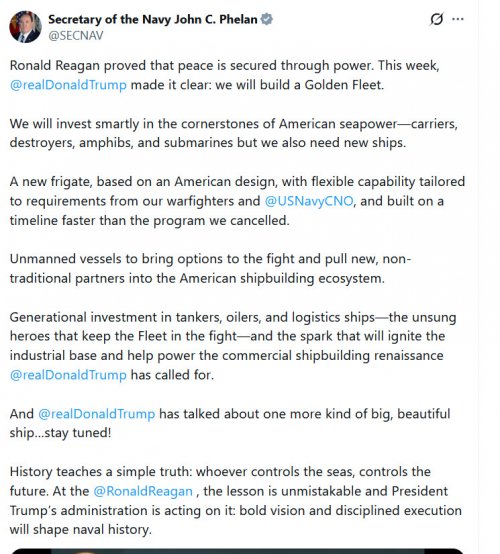
Interesting words from Phelan. I suspect the future FFG will be somewhat more capable than Constellation (48-64 cells) but will retain a similar sonar suite (TA and VDS). I further predict that it will be a sensor focused “shooter” with an expanded capability to use off board weapon systems (read heavy LUSV integration for magazine depth and ASW). Alternatively it will be LCS or NSC derived which will be a really bad choice. Given Burke Flt III has a three year overlap with DDG(X), I suspect this platform will commence construction after that point or sooner if derived from an existing hull. Also the Big Beautiful Ship will be fun, NAVSEA might tie it up in development hell to avoid actually building the thing if we’re lucky
Attachments

Forest Green
ACCESS: USAP
- Joined
- 11 June 2019
- Messages
- 14,727
- Reaction score
- 32,027
I think the prefix 'Golden' has been used one too many times now.
https://insidedefense.com/daily-new...-trump-backed-golden-fleet-big-beautiful-ship
https://insidedefense.com/daily-new...-trump-backed-golden-fleet-big-beautiful-ship

- Joined
- 16 April 2008
- Messages
- 10,614
- Reaction score
- 18,236
I suspect the future FFG will be somewhat more capable than Constellation (48-64 cells)
If it's based on the only existing US "frigate" it will be much less capable than Constellation. Because the only existing US design that fits the description is the National Security Cutter derivative PF 4921. That had a grand total of 12 ESSM cells. There's a reason HII didn't show anything about their bid for FFG(X). Compared to the other offerings, it was very underwhelming.

- Joined
- 11 February 2007
- Messages
- 4,173
- Reaction score
- 8,959
Asahi only commissioned in 2018, after the RfI in 2017 specifying an in-service ship (which also ruled out Type 26), so they would have been playing catch-up, with less evidence of being successfully in service without issues. It might have been contractually possible to put in a bid, but it would depend on precise due dates.Speaking of Japanese ships, why were the Asahi ASW second-rank destroyers never considered for FFG-X? On the face of it they seem perfect; fully Americanised systems, and reasonable growth margin if you did want to add your own systems, like a 4x2x3 SPY-6 or CAPTAS-4.
The big issue might have been whether the proposal would have been judged by the Japanese government to be an arms export, in which case they'd need to negotiate all the issues there - the regs were relaxed in 2014, but there have been very few actual sales prior to the Mogamis to Australia.

- Joined
- 6 November 2010
- Messages
- 6,381
- Reaction score
- 8,302
I sincerely hope so. At this rate, somewhere in the next century?I suspect the future FFG will be somewhat more capable than Constellation
The US is in an arms race with China. It be a mistake to make perfect be the enemy of good.
Conflict may not wait for the us to make the "perfect" frigate. It might not wait for us to field more than a couple of them.
Conflict may not wait for the us to make the "perfect" frigate. It might not wait for us to field more than a couple of them.
- Joined
- 11 February 2007
- Messages
- 4,173
- Reaction score
- 8,959
Just pray it doesn't turn into another F126! (Huge questions over whether Damen is adequately managing transfer of data between its Catia setup and those of the German shipyards)If I am reading this correctly, Damen will do the engineering and then hand over the technical data package to the Navy which will takes bids from multiple US yards to build the thing.
Airbus A340
ACCESS: Confidential
- Joined
- 1 August 2020
- Messages
- 107
- Reaction score
- 172

Kat Tsun
eeeeeeeeeeeeeee
- Joined
- 16 June 2013
- Messages
- 1,887
- Reaction score
- 2,669
The US is in an arms race with China. It be a mistake to make perfect be the enemy of good.
Conflict may not wait for the us to make the "perfect" frigate. It might not wait for us to field more than a couple of them.
Most of DOD expects the war to happen long before the Connies commission, and conclude well before they hit the water, but some crazy people in DA say around 2032 because supposedly COVID might've fucked up the Chinese MIC's deliveries.
Yes, this is the worst case scenario for reasons already extensively outlined. Reportedly Tuesday's announcement is either going to be the decision on the new FFG or the announcement of the new Battleship program so we may not have to wait long to find out.If it's based on the only existing US "frigate" it will be much less capable than Constellation. Because the only existing US design that fits the description is the National Security Cutter derivative PF 4921. That had a grand total of 12 ESSM cells. There's a reason HII didn't show anything about their bid for FFG(X). Compared to the other offerings, it was very underwhelming.
- Joined
- 16 April 2008
- Messages
- 10,614
- Reaction score
- 18,236
Yes, this is the worst case scenario for reasons already extensively outlined. Reportedly Tuesday's announcement is either going to be the decision on the new FFG or the announcement of the new Battleship program so we may not have to wait long to find out.
I'm sure it's going to be a new "battleship." With luck it will be closer to ArShip than an lowa, but I'm not holding my breath.
It will not get built, the program will take at least 10 years, if not longer and future Presidents will cancel it. That is unless it's an arsenal ship based off a commercial tanker or it's just a propaganda term for the DPM planned for DDG(X)I'm sure it's going to be a new "battleship." With luck it will be closer to ArShip than an lowa, but I'm not holding my breath.
At this point they are better than nothing. Probably order some while a proper frigate is designed.If it's based on the only existing US "frigate" it will be much less capable than Constellation. Because the only existing US design that fits the description is the National Security Cutter derivative PF 4921. That had a grand total of 12 ESSM cells. There's a reason HII didn't show anything about their bid for FFG(X). Compared to the other offerings, it was very underwhelming.
They are fundamentally not better than nothing. They draw manpower and money from the combat fleet while adding no new capability. Want a PF? You’ve got it, that’s LCS. Want an FFG? Neither an NSC or MMSC type design works. Nothing is indeed better than something in this caseAt this point they are better than nothing. Probably order some while a proper frigate is designed.
Yes it is, LCS don't have the range/endurance for alot of peacetime missions and theres alot of peacetime missions being conducted by Burkes that dont need a Burke or even a Constellation. Saving the Burkes from wear and tear is a capability that the Navy desperately needs and does not have.
A lot of detail lacking but we now have an idea of the general direction.
https://www.defenseone.com/business/2025/12/and-just-navys-frigate-program-back-sort/409993/
https://www.defenseone.com/business/2025/12/and-just-navys-frigate-program-back-sort/409993/
Last edited:
- Joined
- 16 April 2008
- Messages
- 10,614
- Reaction score
- 18,236
A lot of detail lacking but we now have an idea of the general direction.
https://www.defenseone.com/business/2025/12/and-just-navys-frigate-program-back-sort/409993/
I think they are delusional if they think a new start is going to deliver any sooner than FFG(X).
I think they are delusional if they think a new start is going to deliver any sooner than FFG(X).
That depends on how jacked-up FFGX is.
I think they are delusional if they think a new start is going to deliver any sooner than FFG(X).
Phelan's new 'frigate' might just be the Saronic Corsair or something else equally AI-enabled
Kat Tsun
eeeeeeeeeeeeeee
- Joined
- 16 June 2013
- Messages
- 1,887
- Reaction score
- 2,669
The Golden Shower Ship (GSS, formerly Global Strike Ship) carrying 4-24 Trident tubes for delivering CPGS payloads to North Korea.
It's a hull plug Burke Flt III.
I am in broad agreement with this.
FFG(X) is slated for fewer than 48 months out and that's even being 36-40 months overdue. The original FFG(X) was supposed to be 72 months. The smart move would be to pull an "LRS-B" to "NGB" and just rename the existing Connies into an "FF(X)" or something to refresh the budget. The USAF did this with B-21 and everyone is singing praises because they shut up about it for five years.
Granted, this is way harder to pull off with a shipyard, but maybe they can claim FMM had a "backup design" or some other vague fiction.
It's a hull plug Burke Flt III.
I think they are delusional if they think a new start is going to deliver any sooner than FFG(X).
I am in broad agreement with this.
FFG(X) is slated for fewer than 48 months out and that's even being 36-40 months overdue. The original FFG(X) was supposed to be 72 months. The smart move would be to pull an "LRS-B" to "NGB" and just rename the existing Connies into an "FF(X)" or something to refresh the budget. The USAF did this with B-21 and everyone is singing praises because they shut up about it for five years.
Granted, this is way harder to pull off with a shipyard, but maybe they can claim FMM had a "backup design" or some other vague fiction.
The Golden Shower Ship (GSS, formerly Global Strike Ship) carrying 4-24 Trident tubes for delivering CPGS payloads to North Korea.
It's a hull plug Burke Flt III.
I am in broad agreement with this.
FFG(X) is slated for fewer than 48 months out and that's even being 36-40 months overdue. The original FFG(X) was supposed to be 72 months. The smart move would be to pull an "LRS-B" to "NGB" and just rename the existing Connies into an "FF(X)" or something to refresh the budget. The USAF did this with B-21 and everyone is singing praises because they shut up about it for five years.
Granted, this is way harder to pull off with a shipyard, but maybe they can claim FMM had a "backup design" or some other vague fiction.
So far, FFGX hasn't hit any date or metric it's slated for.
Somehow I doubt it hit's the next one.
The Navy is seemingly going to Plan B.
Kat Tsun
eeeeeeeeeeeeeee
- Joined
- 16 June 2013
- Messages
- 1,887
- Reaction score
- 2,669
So far, FFGX hasn't hit any date or metric it's slated for.
Somehow I doubt it hit's the next one.
The Navy is seemingly going to Plan B.
The actual Plan B is to order more Burkes to replace the 20-ish FFG(X) because that will result in hulls in the water, eventually, which isn't much different than the Connies.
The actual Plan B is to order more Burkes to replace the 20-ish FFG(X) because that will result in hulls in the water, eventually, which isn't much different than the Connies.
Maybe, but what was reported today sounds like they want to pivot to an American-designed frigate (whatever that might be).
Hi,@ PFJN, a few comments on your recent full post on the video
...
Thanks for your feedback.
With respect to the percent of design complete, I agree that it makes sense that the "Functional Design" should really be mostly fully complete (baring any small items normally typical of a design, that would typically be covered by the Contract Mod Margin).
My concerns instead relate to the Detail Design of the ship, which should include having the 3D model 80% complete at Contract Award, and would be expected to continue throughout the building of the ship. From what I have read and seen it appears that the full definition of "80% complete" really means was not well defined and may have been misleading.
As for habitability issues, I think the main issue here isn't so much how many people per living space but rather where those living spaces are located and how far separated the spaces are to ensure some degree of potential survivability in the event of a collision or weapon strike. I think that I read somewhere that based on lessons learned from several recent collisions and the attack on the USS Cole that there have been recommendations on spacing out habitability spaces to ensure that a "single" collision or weapon impact wouldn't potentially affect all (or at least a large portion of all) hab spaces.
Kat Tsun
eeeeeeeeeeeeeee
- Joined
- 16 June 2013
- Messages
- 1,887
- Reaction score
- 2,669
Maybe, but what was reported today sounds like they want to pivot to an American-designed frigate (whatever that might be).
Again, the USAF spent about 25 years developing B-21. Next Generation Bomber turned into LRS-B, but this merely a pencil whipping of the budget line item, as so much from NGB went into LRS-B I'm not sure you can say there's an actual difference between the two programs.
If the USN is smart, it will do the same with the Connies by pausing their construction after the first two, finishing the detailed design, and then just claiming that the now 100% design complete Connie is "100% American designed" and a "ground up clean sheet" after the fact. Ignore the suspiciously FREMM shaped bow, and the machinery plant installation being identical to the Connies, that's mere coincidence. Essentially, you'd just end the concurrency and treat the first two Connies as prototype ships, and round out the rest for construction in 203X or whatever.
Calling the "new" FFG(X) the Chesapeake-class would be hilarious and make this self-evident.
It won't be faster than finishing the Connies, but it will certainly result in a FFG(X) with fewer lemons in the production run, and it's still faster than actual clean sheet design because that takes about 8-10 years at the quickest.
If it is stupid it will actually try to do a clean sheet design, and get nothing at all, but Bath will appreciate the eventual new orders for DDGs.
We'll get to see if the USN has any of its brains left.
Hi,...
It's a hull plug Burke Flt III.
...
I think as others have pointed out before, anything based on adding a hull plug to a Burke would likely be a non-starter.
Specifically, warships need to be able to meet certain damage stability standards assuming certain damage cases. For USN vessels the size of the Burke one of these damage cases includes a hull opening 15% of the ship's length between perpendiculars, and the internal transverse bulkheads of a vessel tend to get positioned to meet these type of criterion.
However, if you add a "plug" to an existing design, the length between perpendiculars of the ship would increase, potentially resulting in some instances of the bulkheads in the bow and stern of the ship not being far enough apart to contain this 15% of shell opening between them resulting in the hull opening extending to another adjacent compartment (as discussed in this document paragraph 8.4.2.2.2).
For example, if a notional ship has a length between perpendiculars of 466ft, a 15% hull opening would equate to 69.9ft. As such if some of the main transverse bulkheads in the bow or stern are spaced about say 35ft apart then that 69.9ft hull opening would typically only flood three adjacent subdivisions (if the damage is in way of those bulkheads) since a 69.9ft length of damage would only be able to impact two adjacent transverse bulkheads in that length.
However, if you add a 35ft hull "plug" to that 466ft long ship, its length between perpendiculars would now be 501ft, meaning that a 15% hull opening would now be 75.15ft, meaning that damage in way of any bulkheads that are in the bow and stern of the ship (which only had to be about 35ft apart, as noted above, to limit flooding to only three adjacent compartments, would potentially now be able to flood up to "four" adjacent compartments.
In addition to the above, there is also the issue of redundancy. I recently ran across an article that notes that one of the major issues with the FFG(X) design involve machinery separation.
In this article from TWZ dated Jan 29, 2019 it states that;
"Austal had to dispense with the waterjet propulsion system on the Independence-class in favor of traditional drive shafts and propellers. This has been a standing Navy requirement from the beginning and the service also required that certain engine and drive chain components be sufficiently spaced apart to reduce the chances that a single hit from an opponent could leave an FFG(X) dead in the water.
These requirements have also impacted Lockheed Martin’s offering, which is derived from their Freedom-class LCS design. As a result, the company’s frigate design is also longer overall than the Freedoms.
“It does require the ship to be longer, given those separation requirements and how you plan to stagger your port and starboard configuration of the combining gear/reduction gear, running into a single shaft into a screw on either side,” Joe DePietro, Lockheed Martin’s Vice President of Small Combatants and Ship Systems, told Defense News
in October 2018. “You have to have a certain amount of separation and they have to be fully independent.”"
[I added the bolding for emphasis]
I may be mistaken but I believe that this, along with the requirement for an electrical propulsion transmission system, represent some of the NAVSEA requirements that have been noted that have led to the need for more changes to the parent FREMM hull than originally anticipated for the FFG(X).
[Edited to correct error in discussion about damage to watertight compartments in way of 15% Lbp extent of damage]
Last edited:
Airbus A340
ACCESS: Confidential
- Joined
- 1 August 2020
- Messages
- 107
- Reaction score
- 172
If they do a clean sheet design they might as well go big. 8000 tons at least. 2 helps and plenty of VL cells. What they are making is really a light DDG. Cut back on resilience some, make the crew smaller. Think about a true escort that has a very small crew and might be optionally crewed.
So MMSC (LCS derived) or NSC (no longer in production) will be able to fill the gap??? You're delusional. We've already run the numbers in this very thread, it is not economical and it is not needed. LCS is the PF, FFG(X) is a surface combatant. No NSC or MMSC derived designs can fill the gap the navy needs to fill. More burkes would be the better choice.Yes it is, LCS don't have the range/endurance for alot of peacetime missions and theres alot of peacetime missions being conducted by Burkes that dont need a Burke or even a Constellation. Saving the Burkes from wear and tear is a capability that the Navy desperately needs and does not have.
Sort of. The NAVSEA requirements on the surface appear more easily met by basing off FREMM. Just certain changes, particularly survivability, have an outsized effect on program and design complexity, as well as the integration of American built partsI may be mistaken but I believe that this, along with the requirement for an electrical propulsion transmission system, represent some of the NAVSEA requirements that have been noted that have led to the need for more changes to the parent FREMM hull than originally anticipated for the FFG(X).
Cutting back on resilience is fundamentally the worst idea, worse than cutting back in other areas as the USN prioritizes survivability. Losing a ship is losing trained crew as well as a combat platformCut back on resilience
Why does everyone think that FFG(X) or it's successor is just a simple escort? This is categorically false and not what the program aimed to produceThink about a true escort that has a very small crew and might be optionally crewed.
Ainen
I really should change my personal text
- Joined
- 25 August 2011
- Messages
- 2,917
- Reaction score
- 5,055
At some point survivability turns into political virtue signalling. Which is very hard to push against.Cutting back on resilience is fundamentally the worst idea, worse than cutting back in other areas as the USN prioritizes survivability. Losing a ship is losing trained crew as well as a combat platform
Losing ship is ot equal to losing a trained crew, crew can be taken off. And vise versa, survivable ship is only survivable when you are in permissible enough situation, and stars align. US frigates-destroyers are traditionally quite survivable, but they shown that in hospitable enough waters. They are and never were german capital ships, and even those ended up like Blucher, Scharnhorst or Bismarck when caught. Remember that West Pacific is not a hospitable theater. Cripple will get his ASBM and this is it, there won't be baby-sitting like USS Canberra of Formosa(and even baby-sitting always can go Hiei way).
What however is worse than losing a government ship/uniformed crew is not having it at all. For better or worse, navy sailors know what they sign up for. Commercials didn't, and burning on some undefended LNG tanker isn't exactly in their contract.
Kat Tsun
eeeeeeeeeeeeeee
- Joined
- 16 June 2013
- Messages
- 1,887
- Reaction score
- 2,669
If they do a clean sheet design they might as well go big. 8000 tons at least. 2 helps and plenty of VL cells. What they are making is really a light DDG. Cut back on resilience some, make the crew smaller. Think about a true escort that has a very small crew and might be optionally crewed.
Just build more Burkes at that point lol. They'll get in the water faster.
Cutting back on resilience is fundamentally the worst idea, worse than cutting back in other areas as the USN prioritizes survivability.
The ship and the crew are inherently expendable, like ammunition, and they serve as shields to protect the HVU of a battle group.
If you don't have enough, and you need more, you need to accept that first of all. You are not going to save the crew, because they will not have a ship to man when they get back, and anyway they will likely become POWs. You only need the ship to last long enough to evacuate the crew to rafts at the end of the day. An FFG should be expendable, but a DDG may not necessarily need to be, if it is similar to Burke.
Otherwise, the Navy is better off adding another 20 Burkes to its back order and having FMM produce them. It can just seize the design rights using force from Bath or whoever owns the DDG-51 TDP, if it has to, since it's a matter of national security at this point.
Last edited:
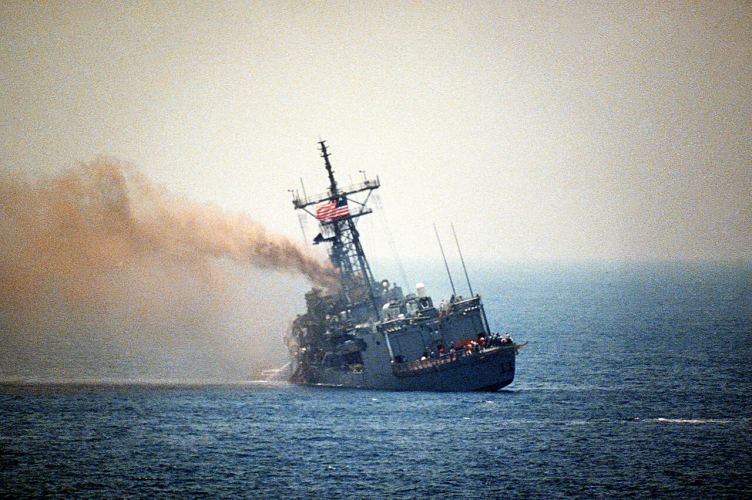
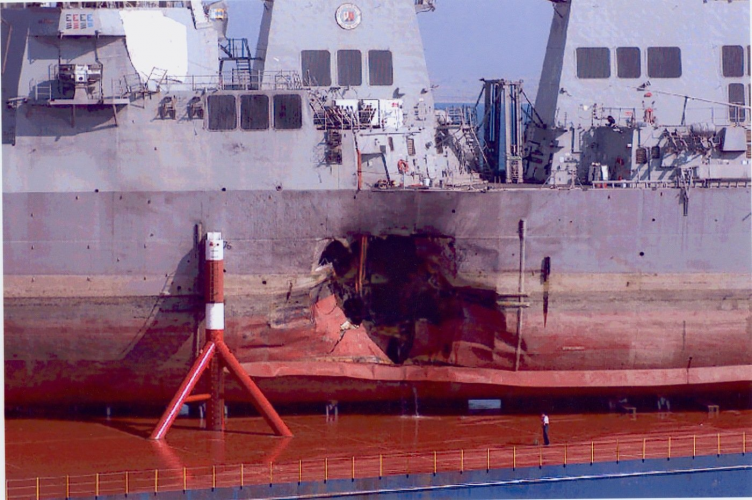
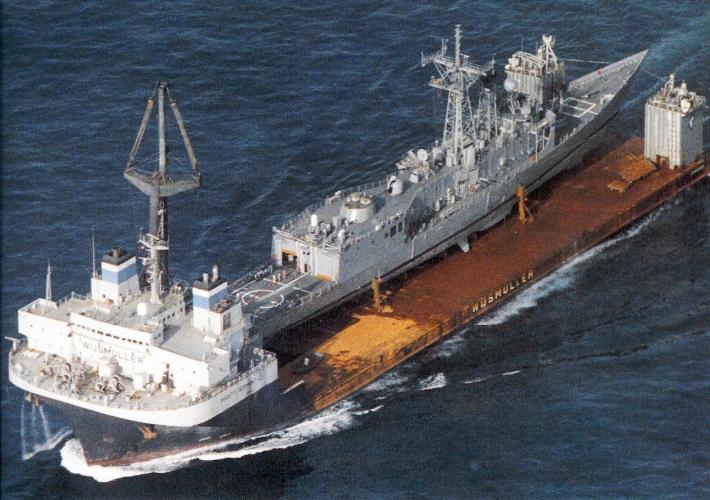
What the hell are you talking about? Should we refer to precedent? FFGs that sustain serious combat related damage (mine and missile hits) do not sink, they are saved, patched up, and returned to service. That is standards, not virtue signaling.At some point survivability turns into political virtue signalling. Which is very hard to push against.
Losing ship is ot equal to losing a trained crew, crew can be taken off. And vise versa, survivable ship is only survivable when you are in permissible enough situation, and stars align. US frigates-destroyers are traditionally quite survivable, but they shown that in hospitable enough waters. They are and never were german capital ships, and even those ended up like Blucher, Scharnhorst or Bismarck when caught. Remember that West Pacific is not a hospitable theater. Cripple will get his ASBM and this is it, there won't be baby-sitting like USS Canberra of Formosa(and even baby-sitting always can go Hiei way).
What however is worse than losing a government ship/uniformed crew is not having it at all. For better or worse, navy sailors know what they sign up for. Commercials didn't, and burning on some undefended LNG tanker isn't exactly in their contract.
You are stuck about 80 years out of date. Even the OHPs didn't subscribe to this philosophyThe ship and the crew are inherently expendable, like ammunition, and they serve as shields to protect the HVU of a battle group.
If you don't have enough, and you need more, you need to accept that first of all. You are not going to save the crew, because they will not have a ship to man when they get back, and anyway they will likely become POWs. You only need the ship to last long enough to evacuate the crew to rafts at the end of the day. An FFG should be expendable, but a DDG may not necessarily need to be, if it is similar to Burke.
Both of you need to go tell the sailors of the USN they are "inherently expendable" and see how that goes over. It's 2025, no one on a ship is inherently expendable. They need more crew as it is anyway
FMM cannot produce Burkes due to the shipyard location iircOtherwise, the Navy is better off adding another 20 Burkes to its back order and having FMM produce them. It can just seize the design rights using force from Bath or whoever owns the DDG-51 TDP, if it has to, since it's a matter of national security at this point.
Attachments
Ainen
I really should change my personal text
- Joined
- 25 August 2011
- Messages
- 2,917
- Reaction score
- 5,055
That's peacetime emergency, more or less.What the hell are you talking about? Should we refer to precedent? FFGs that sustain serious combat related damage (mine and missile hits) do not sink, they are saved, patched up, and returned to service. That is standards, not virtue signaling.
If you're talking about eastpac action against China - you are not talking about presumed sea superiority at all. Opponent is on a trajectory to have more than you upfront. This wasn't the case even during the CW - Soviet navy was powerful, but always second and never truly aimed at sea superiority. China very much aims exactly at that.
If standards mean you have less units - you use seas to your advantage less, more people die doing that/disobey orders. More people die due to not receiving what seas should've brought.
If you still went for all that, and your rare resilent damaged unit get finished off/scuttled by your own forces - it's even more of a waste.
Human presense at sea is tied to artificial units - ships. You're present in exactly as many points as you have ships.
There is no substitution to numbers in maritime domain.
He's referring to literally last big naval war in history; everything afterwards can work as reference only to a very limited degree, it just didn't go all that hot. Especially in this particular region.You are stuck about 80 years out of date. Even the OHPs didn't subscribe to this philosophy
Kat Tsun
eeeeeeeeeeeeeee
- Joined
- 16 June 2013
- Messages
- 1,887
- Reaction score
- 2,669
You are stuck about 80 years out of date. Even the OHPs didn't subscribe to this philosophy
The PLAN is 80 years out of date then. Regrettably, 2025 America cannot produce a fleet to rival a 1990s fleet produced in 1970s numbers.
This isn't true BTW, but the Silent Service is gonna be putting in fat hours, and pulling guys from the Obama admin back in probably.
Both of you need to go tell the sailors of the USN they are "inherently expendable" and see how that goes over.
It's already drilled into you when you learn the SEIE is useless outside of like 2% or 5% of the world ocean or whatever LOL.
The only part of the Navy that isn't expendable is Fleet Ballistic Missile, at least until they empty their tubes, but I don't make the rules.
It's 2025, no one on a ship is inherently expendable.
Escorts are expendable. That's their job. If they cannot be expended then you don't have a navy because the BATGRU is too scared to attack.
Carriers are expendable at a really high level, if you can form a FCTF or two, which we just about do. That's a NSC decision at the end of it.
FMM cannot produce Burkes due to the shipyard location iirc
I bet they could rip the bow sonar off like they did the FFGs tbf.
But yeah maybe that 2 meters design draft really makes the difference idk. Digging a deeper canal would probably be cheaper.
That's peacetime emergency, more or less.
My expectation is that the PRC has the yards and ship capacity to perform timely battle damage repair comparable to WW2 but their ships will behave more like Japanese or Norwegian ships.
If you're talking about eastpac action against China - you are not talking about presumed sea superiority at all. Opponent is on a trajectory to have more than you upfront. This wasn't the case even during the CW - Soviet navy was powerful, but always second and never truly aimed at sea superiority. China very much aims exactly at that.
Local sea superiority, not global. The PRC will have more force generated in EASTPAC than DON wants to commit, but they're unlikely to exceed 6 attack carriers, and one of those is a permanent training ship. The other is a Kuznetsov. So it's really four attack carriers and maybe six or eight gators.
If the hammer has to come down, the USN can swing 5th, 2nd, and 3rd Fleets simultaneously, along with the gator navy, when 7th Fleet BATGRU and the Marine Clittoral Regiments all get axe murdered. Hopefully 7th isn't too high on dope and can kill a carrier before they die but I know that's asking a lot of them so I wouldn't expect it. That's six supercarriers against four and a medium. It just means telling the Europeans to eat a sock while we beat the Chinese Navy to death and vice versa.
USN and bad opening moves during run ups to a Pacific War is the second worst American tradition.
If standards mean you have less units - you use seas to your advantage less, more people die doing that/disobey orders. More people die due to not receiving what seas should've brought.
If you still went for all that, and your rare resilent damaged unit get finished off/scuttled by your own forces - it's even more of a waste.
The most concerning element for USN is how much 7th Fleet embraces death over living another day longer under 7th Fleet.
Human presense at sea is tied to artificial units - ships. You're present in exactly as many points as you have ships.
There is no substitution to numbers in maritime domain.
The USN has an advantage the Chinese have yet to meet: submarines.
Submarines mulch surface units largley, and in a close sea zone like the South China Sea or any of First Island Chain seas, submarines dominate because sanitizing corridors is hard as hell. We have more subs and more fleet units than the PLAN and when you add in the Japanese we have about as many including their diesels. I think between the Air Force's stealth bombers and the 774s, plus Japan's Soryus, the USN is more evenly matched than you're expecting since subs are the modern day capital ship.
~48 Improved Kilos, and half a dozen 688is, crewed by the lowest scoring and least motivated crews you've seen (outside of TF 70) aren't gonna be doing so hot against 30 774s, maybe 20 688is, and 30 Japanese diesels crewed by actually competent people.
Carriers were the last war's great powerful weapon. Battleships were the one before that. Submarines are the next great weapon.
Last edited:
I am not a shipbuilding expert, but the Navy needs to back to the requirements. The fact that they were trying to build a DDG lite indicates something - a surface combatant that could fill the ASW role in the CSG, serve as an escort for Amphibs and Auxiliaries in lower threat environment, and show the flag in peacetime in import regions of the world. The broad requirements were either too ambitious or technically too difficult to meet currently within the cost and size constraints. The OHPs might have been a valuable assets in the 80s but today's threat environment may require something else?
Perhaps the Navy needs something like the Spruance Class, or at least what the Spruance Class eventually became with the installation of its forward VLS cells. It was focused on ASW but had point defense missile capabilities. With current technology its AAW capability could be more robust. Something that uses modular construction and easily producible.
Maybe the Navy should accept that what it needs cannot fit within the hull of frigate. Could Bath or Ingalls built an stripped down Burke for $1 billion?
One aspect of the Constellation Class I've always been curious about. The Class supposedly had better ASW capabilities than the Burkes. If that is true why could it only embark 1 SH-60R when the OHPs could embark 2? Doesn't one less negatively impact the ship's ability to search for a prosecute submarines?
Perhaps the Navy needs something like the Spruance Class, or at least what the Spruance Class eventually became with the installation of its forward VLS cells. It was focused on ASW but had point defense missile capabilities. With current technology its AAW capability could be more robust. Something that uses modular construction and easily producible.
Maybe the Navy should accept that what it needs cannot fit within the hull of frigate. Could Bath or Ingalls built an stripped down Burke for $1 billion?
One aspect of the Constellation Class I've always been curious about. The Class supposedly had better ASW capabilities than the Burkes. If that is true why could it only embark 1 SH-60R when the OHPs could embark 2? Doesn't one less negatively impact the ship's ability to search for a prosecute submarines?

TwoTribes
ACCESS: Secret
- Joined
- 3 July 2025
- Messages
- 444
- Reaction score
- 1,668
So what exactly is the FFG(X) supposed to do?
Is it meant to take on land-attack missions—if so, it requires strike module MK41s.
Does it need to handle complex air and missile defense tasks? Then it needs 24RMA+ SPY-6 and strike module MK41s.
Is it tasked with escorting merchant ships? In the Atlantic or the Pacific? In that case, it requires a high endurance of over 3,000 or 5,000 nautical miles.
If its mission is to protect the U.S. merchant fleet and Marine Corps fleet, block waterways and straits between Southeast Asian archipelagos, identify, inspect, and seize merchant ships in low-to-medium threat maritime areas, protect key islands and ports along the Second Island Chain from reconnaissance and harassment by submarines, unmanned submarines, drones, and unmanned vessels, and serve as a radar picket ship for vital islands and ports along the Second Island Chain...
If it does not need to enter the hazardous zones of the First Island Chain but operates only near and beyond the Second Island Chain...
If it is not required to accompany carrier strike groups and can flexibly join operations as an optional asset...
Then it does not require many advanced capabilities, such as Tomahawk and Standard Missile-6, a three-faced 9RMA SPY-6 radar, or more and deeper MK41s.
First, clarify what kind of car you want, then consider its configuration. How should the U.S. Navy engage in a naval war with China? Has the U.S. Navy figured that out? If you don’t even know what kind of war you're preparing for, then the FFG(X) discussion will be a complete mess.
Is it meant to take on land-attack missions—if so, it requires strike module MK41s.
Does it need to handle complex air and missile defense tasks? Then it needs 24RMA+ SPY-6 and strike module MK41s.
Is it tasked with escorting merchant ships? In the Atlantic or the Pacific? In that case, it requires a high endurance of over 3,000 or 5,000 nautical miles.
If its mission is to protect the U.S. merchant fleet and Marine Corps fleet, block waterways and straits between Southeast Asian archipelagos, identify, inspect, and seize merchant ships in low-to-medium threat maritime areas, protect key islands and ports along the Second Island Chain from reconnaissance and harassment by submarines, unmanned submarines, drones, and unmanned vessels, and serve as a radar picket ship for vital islands and ports along the Second Island Chain...
If it does not need to enter the hazardous zones of the First Island Chain but operates only near and beyond the Second Island Chain...
If it is not required to accompany carrier strike groups and can flexibly join operations as an optional asset...
Then it does not require many advanced capabilities, such as Tomahawk and Standard Missile-6, a three-faced 9RMA SPY-6 radar, or more and deeper MK41s.
First, clarify what kind of car you want, then consider its configuration. How should the U.S. Navy engage in a naval war with China? Has the U.S. Navy figured that out? If you don’t even know what kind of war you're preparing for, then the FFG(X) discussion will be a complete mess.
Last edited:
Scott Kenny
ACCESS: USAP
- Joined
- 15 May 2023
- Messages
- 19,802
- Reaction score
- 28,419
You can stretch the design to hold 32-48 tactical cells.If it's based on the only existing US "frigate" it will be much less capable than Constellation. Because the only existing US design that fits the description is the National Security Cutter derivative PF 4921. That had a grand total of 12 ESSM cells. There's a reason HII didn't show anything about their bid for FFG(X). Compared to the other offerings, it was very underwhelming.
Scott Kenny
ACCESS: USAP
- Joined
- 15 May 2023
- Messages
- 19,802
- Reaction score
- 28,419
So what exactly is the FFG(X) supposed to do?
- I'd argue no land-attack missions.
- Does need SPY6, but maybe not GPI or SM6s (depends on exactly what threat levels we're expecting).
- And honestly, we're getting pretty close to no longer needing to escort merchant ships. Certainly no need to escort container ships, they're averaging too fast for even a 35kt submarine to get in front of easily.
- I will go ahead and assume Pacific endurance (IIRC the USN standard for skimmer targets is Pacific Range but Winter North Atlantic seakeeping)
- I expect it will end up as being fast enough to keep up with carriers, though there are some arguments to be made for only fast enough to keep up with the Amphibious fleet.
Very much agree here.First, clarify what kind of car you want, then consider its configuration. How should the U.S. Navy engage in a naval war with China? Has the U.S. Navy figured that out? If you don’t even know what kind of war you're preparing for, then the FFG(X) discussion will be a complete mess.
I admit, I've probably been spending too much time thinking "a modern Perry", not actually about what a 21stC FFG needs to be.
TwoTribes
ACCESS: Secret
- Joined
- 3 July 2025
- Messages
- 444
- Reaction score
- 1,668
I still think the 3-faced, 9RMA SPY-6 is a bit of an "overkill."Does need SPY6, but maybe not GPI or SM6s (depends on exactly what threat levels we're expecting).
In my view, a rotating 2-faced, 8RMA SPY-6 or a rotating single-faced, 10RMA SPY-6 would be more suitable.
Also, it’s better not to have more than 32 MK-41s.
Similar threads
-
 Royal Navy frigates in the 70s
- Started by uk 75
- Replies: 45
-
-

-