RedLegion

ACCESS: Confidential
Joined
3 December 2019
Messages
63
Reaction score
56
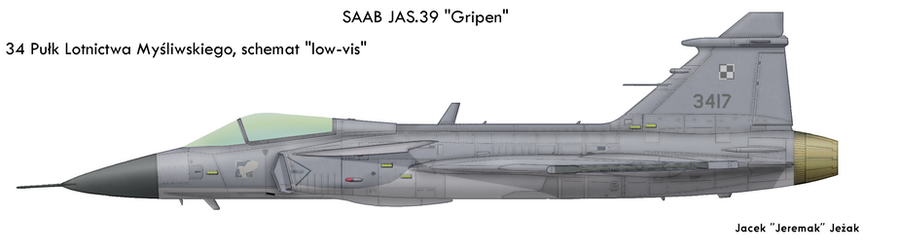
Let’s assume that in the mid-1990s, the governments of Poland, the Czech Republic, Slovakia, and Hungary signed a joint agreement to purchase around 250 new fighter jets. Such a large order would likely attract the attention of the European Eurofighter consortium. Due to limited availability of early deliveries, particularly of Tranche 2 aircraft, the consortium signs a partnership agreement with SAAB. As a result, the countries are offered an upgraded version of the Gripen equipped with the more powerful EJ230 engine with thrust vectoring.


The aircraft proves successful in the joint procurement process for Poland and the Czech Republic. Slovakia and Hungary, however, withdraw from the program due to rapidly increasing costs. In 2002, a contract is signed under which the Polish-Czech side orders approximately 110 JAS-39 EuroGripen fighters in the C/D variant. Additionally, Poland orders 40 Eurofighter Typhoon Tranche 2/3 aircraft with EJ230 engines to maintain compatibility and standardization.


How would such a large order affect the global promotion of the Gripen? And what impact would it have on the Eurofighter program?

1747617704750.png
 
Then the Gripen would be less of a sales failure, but Eurofighter sales would be largely unaffected as none of these are/were/would be Eurofighter users.

But overall? I wouldn't really see this is somehow promoting the JAS 39 any more than it was in reality. The market for an aircraft like the Gripen is in the end somewhat limited. Countries who can afford it and get access go for the F-35. Countries who want to stick to made-in-EU and have the necessary money tend to gravitate to the Eurofighter and the Rafale. A large portion of Asia is very into the Flanker series, with newer offerings from China like the J-10CE or JF-17 being rumored to have repeatedly attracted attention with regards to potential foreign sales. Latin America in large parts is either broke, doesn't have the threat level to justify the still rather pricey Gripen or is like Argentina virtually prohibited from buying anything with UK components in it.

That's why the Gripen is in the real world and your scenario limited to a select few markets in Europe and South East Asia. South Africa is a bit of an outlier but they can't even keep their Gripens operational IIRC. It has very tough competition, faces political adversity and it isn't actually all that cheap, especially the Gripen E/F which is basically what most countries would want.
 
Last edited:
There was a time in the early 80s when Eurofighter wasn't looking so good when the British Aerospace P.106 looks like it might be a goer, with talks with Sweden and India on coproduction.
1980-p106b-3-jpg.1042

1980-p106b-1-jpg.1038


p-106-jpg.562838


Anglo-Swedish Gripen in the early 1990s could be succeeded by Eastern European sales in the mid/late1990s.
 
With 40 more Typhoons and 110 more Gripens in total plus a commensurate increase in weapons production, and those based in Central-East Europe, I can't help but think the Russia-Ukraine wars might be a bit different.
 
With 40 more Typhoons and 110 more Gripens in total plus a commensurate increase in weapons production, and those based in Central-East Europe, I can't help but think the Russia-Ukraine wars might be a bit different.
In the region, I see that after some time, Slovakia and Hungary will return to the subject of purchasing a new fighter and Gripen will be in a better position.

Most likely, a large part of these 110 is produced between Poland and the Czech Republic, similarly to the EJ230, so that it does not affect the delivery schedule of Typhoon to the original recipients.

This may also encourage the Baltic states to jointly purchase, for example, 20 machines, to partially independently implement the protection of their own skies, and not only rely on BAP.

This also changes the dynamics, for the years after 2015, just as in Finland in the HX program the F-35 will probably win anyway, so Poland, having a still young fleet and jointly modernized, may postpone the subject of purchasing next-generation aircraft after 2025.

Somewhere between 2005 and 2010, a program for purchasing a new training aircraft will be conducted in Poland, so this may mean that there will be a strong temptation on the Polish side for its own program in cooperation with SAAB. Could it be the T-7 Red Hawk from the Vistula?
 
As for Ukraine, the question of the fate of Polish Mig-29s, after the introduction of the EF-2000, around 2010. I most likely see the abandonment of American weapons in favor of European ones in such conditions. (Of course, everything that can be replaced, e.g. Meteor, IRIS-T or ASSM).

Returning to the Mig-29, several machines in the best condition will remain in the role of aggressors for exercises, several will be sold to Draken, perhaps, several machines may be purchased by Ukraine as part of the reconstruction of aviation after 2014.

The Swedish side will most likely deliver about 30 machines on lease from its air force in Poland, they will replace Mig-21s until the production of the target variant is launched, in the Czech Republic everything else.

Now the question of the possibility of financing the purchase of Gripen to third countries. If possible, then right after Slovakia and Hungary, the next recipients will be Romania, Bulgaria and Croatia and this joint Baltic squadron.

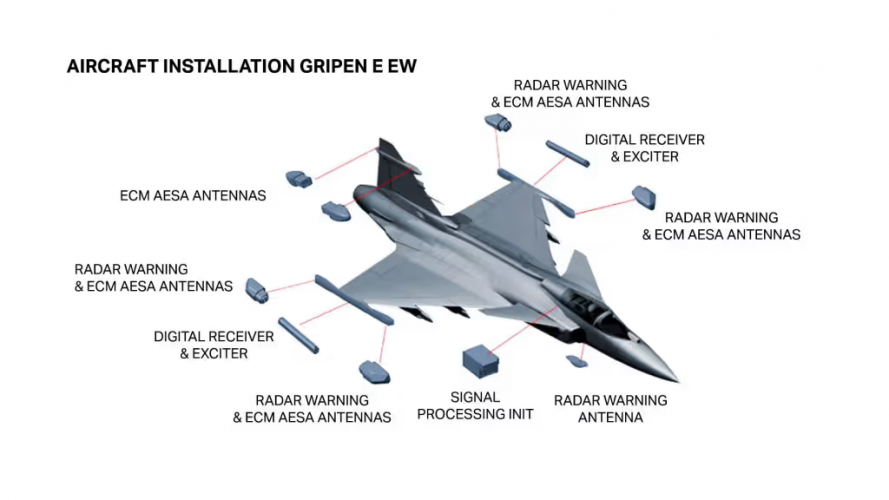
A decision will be made around 2020 to purchase new machines more similar to the Gripen NG version. Still a question of Polish capabilities because maybe we will see the evolution of Gripen into the EW version. 1747786423517.png
 
If Poland and Czechia buy 150 Typhoon and Gripen does the Rafale get a sales boost, as the nieghbours get a case of 'keeping up with the Joneses'? Maybe they buy some Gripens, which the OP hopes and I can't fault that, but maybe they buy other 4.5 gen fighters such as Rafales and Super Hornets.
 

Similar threads

Back
Top Bottom