
You are using an out of date browser. It may not display this or other websites correctly.
You should upgrade or use an alternative browser.
You should upgrade or use an alternative browser.
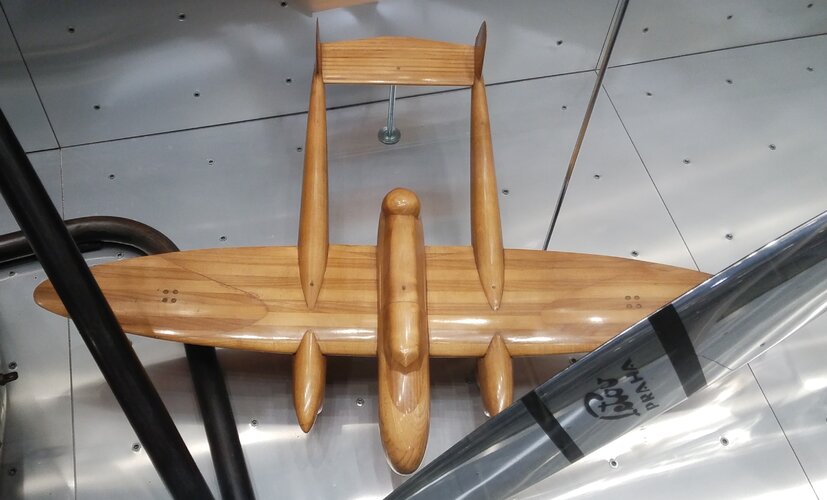
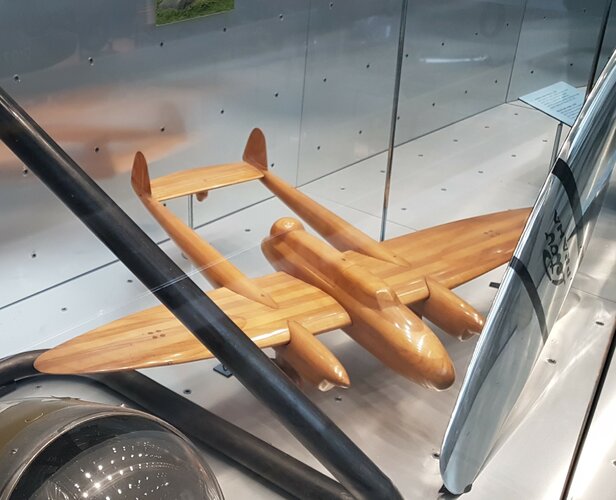
Early Praga E-51 design ?
- Thread starter hesham
- Start date

- Joined
- 11 March 2006
- Messages
- 8,538
- Reaction score
- 5,022
There's a site (http://www.fliegerweb.com/geschichte/flugzeuge/lexikon.php?show=lexikon-462) mentioning,
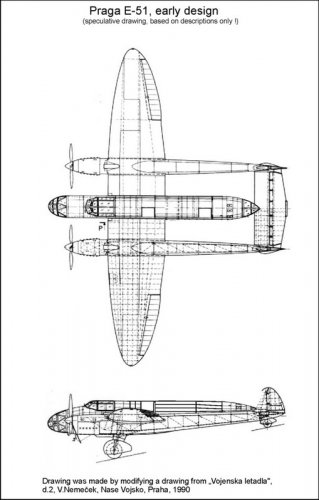
that in the first design, the fuselage was much longer to allow the crew of four sitting in a row. The aft of the
fuselage would have been connected to the tailplane in this design.
The drawing is just an assumption, what it could have looked like, based on a drawing from V.Nemecek
"Vojenska letadla" of the later E-51. So it shouldn't be taken too seriously !
that in the first design, the fuselage was much longer to allow the crew of four sitting in a row. The aft of the
fuselage would have been connected to the tailplane in this design.
The drawing is just an assumption, what it could have looked like, based on a drawing from V.Nemecek
"Vojenska letadla" of the later E-51. So it shouldn't be taken too seriously !
Attachments
- Joined
- 11 March 2006
- Messages
- 8,538
- Reaction score
- 5,022
You're welcome ! After some thoughts afterwards, I think, the fuselage would have been not
only longer, but somewhat slimmer. Think, I'll try to further modify the drawing a little bit ...
only longer, but somewhat slimmer. Think, I'll try to further modify the drawing a little bit ...
- Joined
- 11 March 2006
- Messages
- 8,538
- Reaction score
- 5,022
Wow, thank you very much !
Aesthetically it was a development to a much more elegant design without doubt !
What isn't shown is a stage of the development, where the fuselage is connected
to the tail plane, which could have resulted in an aircraft somewhat similar to the
SNCAC NC.1070 (the only such type, that comes to my mind in the moment)
http://www.aviastar.org/air/france/sncac_nc-1070.php
Aesthetically it was a development to a much more elegant design without doubt !
What isn't shown is a stage of the development, where the fuselage is connected
to the tail plane, which could have resulted in an aircraft somewhat similar to the
SNCAC NC.1070 (the only such type, that comes to my mind in the moment)
http://www.aviastar.org/air/france/sncac_nc-1070.php

- Joined
- 26 May 2006
- Messages
- 38,285
- Reaction score
- 20,424
From old site on Net,
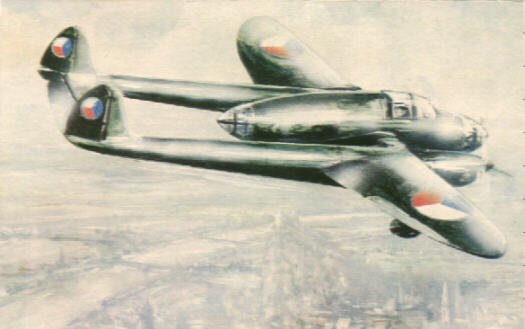
in 1936, the Czechoslovak Ministry of National Defense (MNO) formed detailed tactical and technical requirements for a modern tactical observation and reconnaissance aircraft to operate in the immediate frontline area. Based on these requirements, the Letov plant began working on the Š-50 aircraft design; the Aero plant modified the A-204 passenger plane into its military version, the A-304; and the ČKD-Prague (ČKD = Českomoravská Kolben-Daněk) plant began implementing the E-51 project, developed earlier by engineer Jaroslav Šlechta.
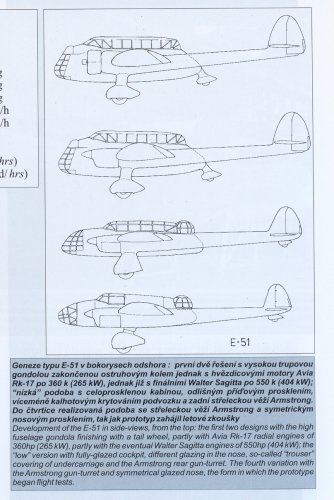
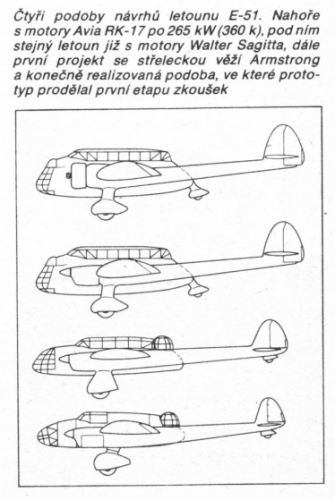
In early 1936, Šlechta designed three different aircraft with an unconventional twin-aisle layout and a central fuselage nacelle. These were the E-48 medium bomber, constructed to the same specifications as the Aero A-300 and Avia B-158 aircraft; the E-52 light fighter; and the E-51 reconnaissance aircraft. The initial design was intended to feature a spacious fuselage nacelle and a single long cabin, with fixed landing gear and a tailwheel located at the end of the nacelle. However, during development, the aircraft's aerodynamics were significantly modified to achieve higher performance. While the fixed landing gear was retained, the main wheels were carefully contoured, and the tailwheel was relocated beneath the horizontal stabilizer connecting the fuselage beams. The fuselage nacelle was also lengthened and its cross-section reduced, dividing the crew into three separate stations: the observer in the glass-enclosed nose, the pilot in the cockpit located slightly higher and above, and the tail gunner in the rear of the nacelle. The observer had a set of cameras separated in the rotating front part of the canopy. This design allowed for photographing a larger area in a single pass, thus reducing the time spent over the target to the bare minimum. Three types of engines were considered for powering the aircraft: the Praga FR inline with 456 kW (620 hp) or the Walter "Sagitta" with 404 kW (550 hp), and the Avia Rk-17 radial with 261 kW (355 hp). Ultimately, the Walter engine was chosen, as the Rk-17 was underpowered and the Praga FR was still in development. The E-51 thus became the first Czechoslovak aircraft to use this very successful engine.
The E-51 prototype was completed in the winter of 1937/38 and first flew on May 26, 1938. Initially, the aircraft was equipped with a rotating gun turret at the end of the fuselage gondola, but tests showed that it significantly increased the aircraft's aerodynamic drag and reduced the effectiveness of the tail. The turret was removed, and in its place, engineer Šlechta designed a glazed gunner's station, integrated into the gondola's outline, rotating along the longitudinal axis, which adequately protected the aircraft's rear hemisphere. In the summer of 1938, the wing structure was also modified, as the original design proved too heavy. The improved prototype first flew on February 11, 1939, almost in the final days of Czechoslovak independence. During tests, the aircraft reached a top speed of 380 km/h – a whopping 80 km/h faster than the MNO requirements.
Following the occupation of Czechoslovakia, the E-51 aircraft was captured by the Germans and subjected to intensive testing. In June 1940, it was delivered to the Luftwaffe research center in Rechlin, and later to the Klemm factory airfield in Böblingen. Its subsequent fate is unknown.
in 1936, the Czechoslovak Ministry of National Defense (MNO) formed detailed tactical and technical requirements for a modern tactical observation and reconnaissance aircraft to operate in the immediate frontline area. Based on these requirements, the Letov plant began working on the Š-50 aircraft design; the Aero plant modified the A-204 passenger plane into its military version, the A-304; and the ČKD-Prague (ČKD = Českomoravská Kolben-Daněk) plant began implementing the E-51 project, developed earlier by engineer Jaroslav Šlechta.
In early 1936, Šlechta designed three different aircraft with an unconventional twin-aisle layout and a central fuselage nacelle. These were the E-48 medium bomber, constructed to the same specifications as the Aero A-300 and Avia B-158 aircraft; the E-52 light fighter; and the E-51 reconnaissance aircraft. The initial design was intended to feature a spacious fuselage nacelle and a single long cabin, with fixed landing gear and a tailwheel located at the end of the nacelle. However, during development, the aircraft's aerodynamics were significantly modified to achieve higher performance. While the fixed landing gear was retained, the main wheels were carefully contoured, and the tailwheel was relocated beneath the horizontal stabilizer connecting the fuselage beams. The fuselage nacelle was also lengthened and its cross-section reduced, dividing the crew into three separate stations: the observer in the glass-enclosed nose, the pilot in the cockpit located slightly higher and above, and the tail gunner in the rear of the nacelle. The observer had a set of cameras separated in the rotating front part of the canopy. This design allowed for photographing a larger area in a single pass, thus reducing the time spent over the target to the bare minimum. Three types of engines were considered for powering the aircraft: the Praga FR inline with 456 kW (620 hp) or the Walter "Sagitta" with 404 kW (550 hp), and the Avia Rk-17 radial with 261 kW (355 hp). Ultimately, the Walter engine was chosen, as the Rk-17 was underpowered and the Praga FR was still in development. The E-51 thus became the first Czechoslovak aircraft to use this very successful engine.
The E-51 prototype was completed in the winter of 1937/38 and first flew on May 26, 1938. Initially, the aircraft was equipped with a rotating gun turret at the end of the fuselage gondola, but tests showed that it significantly increased the aircraft's aerodynamic drag and reduced the effectiveness of the tail. The turret was removed, and in its place, engineer Šlechta designed a glazed gunner's station, integrated into the gondola's outline, rotating along the longitudinal axis, which adequately protected the aircraft's rear hemisphere. In the summer of 1938, the wing structure was also modified, as the original design proved too heavy. The improved prototype first flew on February 11, 1939, almost in the final days of Czechoslovak independence. During tests, the aircraft reached a top speed of 380 km/h – a whopping 80 km/h faster than the MNO requirements.
Following the occupation of Czechoslovakia, the E-51 aircraft was captured by the Germans and subjected to intensive testing. In June 1940, it was delivered to the Luftwaffe research center in Rechlin, and later to the Klemm factory airfield in Böblingen. Its subsequent fate is unknown.
Attachments
Similar threads
-

-
Praga E-52 Twin Boom Single Seat Fighter Project
- Started by hesham
- Replies: 4
-
Avia B-42 two seat recce/light bomber project
- Started by hesham
- Replies: 5
-

-