Gessler
ACCESS: Confidential
- Joined
- 30 June 2026
- Messages
- 54
- Reaction score
- 194
Fascinating how this Chinese user has posted only 9 messages on the forum, all of them targeting the Rafale.
Account created in 2022, inactive for 3 years, and was suddenly reactivated right after the indo-pak war….
https://www.secretprojects.co.uk/members/lik.38837/#recent-content
One of the French sources (a former Marine Nationale pilot) who amplified Chinese messaging following Sindoor (IIRC, one of the first 'credible' voices to sing praises of the J-10C's greatness vis-a-vis Rafale, using his position as a former Rafale-M pilot to add weight to his statements), is being investigated by French authorities for espionage on behalf of PRC:
https://timesofindia.indiatimes.com...ed-spying-for-china/articleshow/132743456.cms
These types of PR activities go deeper than forum wars it would seem. It's obviously a multi-level information warfare program.
Normally, that's exactly what a self-defense jammer should be doing, and Spectra is an immediate "ugh?".
It's ok for systems to fail (especially jammers, it's soft kill after all), but Spectra in particular is the single largest, heaviest, and most extravagant internal self-defense system of this kind - squeezed into a relatively small fighter, at a great cost (both absolute and in design terms). It's a damn expensive system on a very expensive fighter.
Was this (unusual) bet wrong?
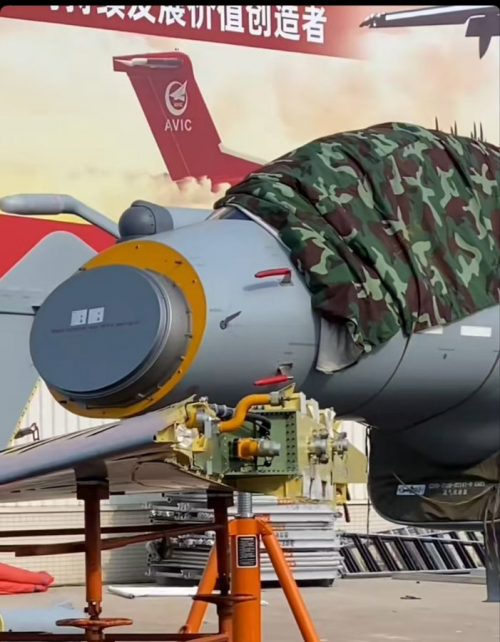
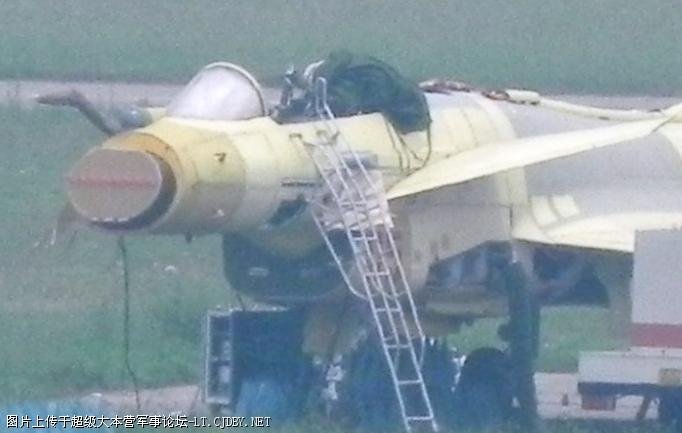
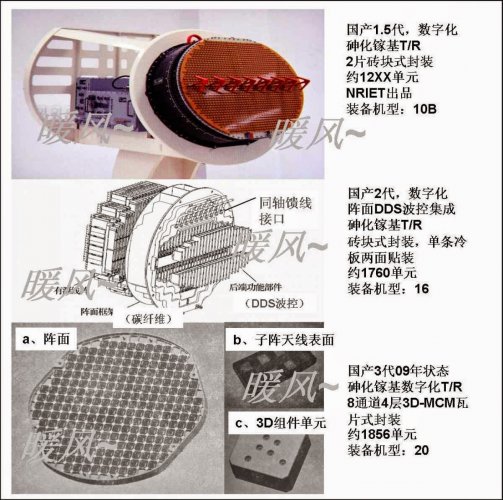
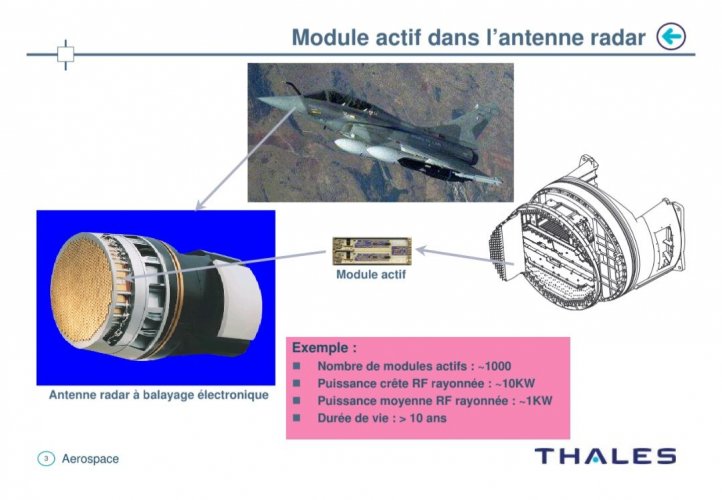
I'm not a 100% on this but what about the fact that PL-15 supposedly has an AESA-based seeker? I haven't done the math on this but judging by some typical Ka/Ku-band AESA heads I've seen, these things can have TRM counts of up to 64 or more. A typical internal jammer array (like the SPECTRA emitters near Rafale's canard roots, or the ELT-568 used on a number of planes including Indian MiG-29UPGs) have about 14-18 emitters maximum if display models are anything to go by. Very hard for a single array to cover all the frequency-hopping of a larger no. of TRMs on a modern threat AAM. Legacy missiles (R77, AMRAAM, MICA etc) are probably much easier to spoof for these emitters.
I would think it's entirely possible that an AESA seeker can overwhelm the ECM of an internal suite with relatively tiny emitters. Externally-carried SPJs (like ELL-8222SB that Tejas Mk1A is getting) are likely to be stronger and more un-hindered by limitations such as space, power, cooling & so on.
For example, J-10 family doesn't bother with a substantial internal jammer at all, and can only bring a smallish KG600 on a chin station (which they only really bring on A2G missions). Maybe you're better off investing whatever weight, power, and volume margins into a bigger radar?
Perhaps this (also unusual) bet was the right call?
I'm inclined to agree. The Typhoon EK going for an external Arexis add-on for the high/mid-band regions is an indication that they don't believe the internal Praetorian emitters (on most days, an equivalent of SPECTRA) can get the job done.
Rafale (in Indian service & elsewhere) will likely require a similar upgrade.
SEAD was probably out of the question altogether. One thing is "striking terrorists"(who happen to be Pakistani civilian families, sentenced to death by a foreign government without any appeal; but at least there's some warped logic there), another thing is simply attacking military early warning assets of a (nuclear) Pakistan in a blinding strike.
Another aspect (speaking of which) - SEAD, meaning ARM strikes? I am not sure, but deployed indian sead capability is Kh-31p via either MKI (see RWR commentary from above) or MiG-29UPG (with a combined Indian/Italian(ELT-568) self-defense system; can it provide targeting to russian ARM?).
There were two different stages to that conflict. With different ROEs for each. The first was the initial strikes on 9 or so terrorist targets, in which no declared Pakistani military facility was targeted. It was in sortie(s) during this phase where all known A2A combat of any consequence occurred (night of May 6-7). Pakistan launched attacks via drones/missiles on a number of targets in J&K (Indian Kashmir) in response by the night of May 7-8.
May 9 saw Pakistani attacks escalate into usage of long-range MBRLs (Fatah-I/II), with a confirmed interception over Sirsa, Haryana.
The second phase, with much more liberalized ROEs with regard to targeting of official Pakistani military facilities, began on May 9 and continued into the early hours of the 10th. There was quite an extensive SEAD/DEAD campaign targeting Pakistani radars, AA sites & power-generation/distribution infrastructure housed within AFBs. Satellite imagery showed up to 5-6 destroyed radars (including one used for guiding Pakistan's SPADA-2000 system). A lot of effectors were used in these attacks, including Harop, Rampage etc, not just missiles with ARH heads. Most of these were static sites but I guess updated location intel was available for the mobile ones (like SPADA's RAC-3D destroyed at PAF's Jacobabad base).
Whenever people talk about Indian attacks on Pakistani AFBs (hangars, runways, aprons, C&C trailers etc) using BrahMos/SCALP/SAAW/others, they always forget to mention the extensive SEAD/DEAD campaign that immediately preceded those strikes. In fact if it wasn't for that campaign, those strikes would probably not have caused half as much damage as they did.
Pakistani launch authority, if my memory serves me right, is with the military, in a style not too dissimilar from what we now see in Iran. Disrupt communications and radar picture too much - and officer on duty may decide that, well, that's it. Nuclear combat, toe to toe with the Bharatskis.
View: https://www.youtube.com/watch?v=qXp8SnXUvEo
That's the other thing regarding this conflict that requires very deep study but for some reason nobody wants to offer any comprehensive reading of what exactly happened. The way the initial ROEs (hitting military targets strictly forbidden) were formulated leaves space for debate, but they are at least somewhat understandable.
What followed in the 2nd phase of the conflict defies all understanding. There is evidence (mostly sat imagery, along with some ground-level videos) of Indian attacks on known/suspected Pakistani nuclear weapon-storage sites, one at Kirana Hills & the other at Murid air base. The attack on Kirana Hills may be dismissed as a grazing hit/warning shot (a couple BrahMos won't do much against a hardened underground facility) but the impact at Murid base appears to be a penetrator of some sort that buried into an underground complex (that sits inside a double-fenced compound, inside the base perimeter).
This is the kind of direct targeting of nuclear sites that should lead to unambiguous escalation. Yet all it lead to was a ceasefire.
There are so many questions regarding the events of Op. Sindoor, and so few answers.