Did the SPECTRA EW suite contribute to the alleged IAF Rafale loss on the 7th May 2025?

Fascinating how this Chinese user has posted only 9 messages on the forum, all of them targeting the Rafale.
Account created in 2022, inactive for 3 years, and was suddenly reactivated right after the indo-pak war….
https://www.secretprojects.co.uk/members/lik.38837/#recent-content

One of the French sources (a former Marine Nationale pilot) who amplified Chinese messaging following Sindoor (IIRC, one of the first 'credible' voices to sing praises of the J-10C's greatness vis-a-vis Rafale, using his position as a former Rafale-M pilot to add weight to his statements), is being investigated by French authorities for espionage on behalf of PRC:

https://timesofindia.indiatimes.com...ed-spying-for-china/articleshow/132743456.cms

These types of PR activities go deeper than forum wars it would seem. It's obviously a multi-level information warfare program.

Normally, that's exactly what a self-defense jammer should be doing, and Spectra is an immediate "ugh?".
It's ok for systems to fail (especially jammers, it's soft kill after all), but Spectra in particular is the single largest, heaviest, and most extravagant internal self-defense system of this kind - squeezed into a relatively small fighter, at a great cost (both absolute and in design terms). It's a damn expensive system on a very expensive fighter.
Was this (unusual) bet wrong?

I'm not a 100% on this but what about the fact that PL-15 supposedly has an AESA-based seeker? I haven't done the math on this but judging by some typical Ka/Ku-band AESA heads I've seen, these things can have TRM counts of up to 64 or more. A typical internal jammer array (like the SPECTRA emitters near Rafale's canard roots, or the ELT-568 used on a number of planes including Indian MiG-29UPGs) have about 14-18 emitters maximum if display models are anything to go by. Very hard for a single array to cover all the frequency-hopping of a larger no. of TRMs on a modern threat AAM. Legacy missiles (R77, AMRAAM, MICA etc) are probably much easier to spoof for these emitters.

I would think it's entirely possible that an AESA seeker can overwhelm the ECM of an internal suite with relatively tiny emitters. Externally-carried SPJs (like ELL-8222SB that Tejas Mk1A is getting) are likely to be stronger and more un-hindered by limitations such as space, power, cooling & so on.

For example, J-10 family doesn't bother with a substantial internal jammer at all, and can only bring a smallish KG600 on a chin station (which they only really bring on A2G missions). Maybe you're better off investing whatever weight, power, and volume margins into a bigger radar?
Perhaps this (also unusual) bet was the right call?

I'm inclined to agree. The Typhoon EK going for an external Arexis add-on for the high/mid-band regions is an indication that they don't believe the internal Praetorian emitters (on most days, an equivalent of SPECTRA) can get the job done.

Rafale (in Indian service & elsewhere) will likely require a similar upgrade.

SEAD was probably out of the question altogether. One thing is "striking terrorists"(who happen to be Pakistani civilian families, sentenced to death by a foreign government without any appeal; but at least there's some warped logic there), another thing is simply attacking military early warning assets of a (nuclear) Pakistan in a blinding strike.

Another aspect (speaking of which) - SEAD, meaning ARM strikes? I am not sure, but deployed indian sead capability is Kh-31p via either MKI (see RWR commentary from above) or MiG-29UPG (with a combined Indian/Italian(ELT-568) self-defense system; can it provide targeting to russian ARM?).

There were two different stages to that conflict. With different ROEs for each. The first was the initial strikes on 9 or so terrorist targets, in which no declared Pakistani military facility was targeted. It was in sortie(s) during this phase where all known A2A combat of any consequence occurred (night of May 6-7). Pakistan launched attacks via drones/missiles on a number of targets in J&K (Indian Kashmir) in response by the night of May 7-8.

May 9 saw Pakistani attacks escalate into usage of long-range MBRLs (Fatah-I/II), with a confirmed interception over Sirsa, Haryana.

The second phase, with much more liberalized ROEs with regard to targeting of official Pakistani military facilities, began on May 9 and continued into the early hours of the 10th. There was quite an extensive SEAD/DEAD campaign targeting Pakistani radars, AA sites & power-generation/distribution infrastructure housed within AFBs. Satellite imagery showed up to 5-6 destroyed radars (including one used for guiding Pakistan's SPADA-2000 system). A lot of effectors were used in these attacks, including Harop, Rampage etc, not just missiles with ARH heads. Most of these were static sites but I guess updated location intel was available for the mobile ones (like SPADA's RAC-3D destroyed at PAF's Jacobabad base).

Whenever people talk about Indian attacks on Pakistani AFBs (hangars, runways, aprons, C&C trailers etc) using BrahMos/SCALP/SAAW/others, they always forget to mention the extensive SEAD/DEAD campaign that immediately preceded those strikes. In fact if it wasn't for that campaign, those strikes would probably not have caused half as much damage as they did.

Pakistani launch authority, if my memory serves me right, is with the military, in a style not too dissimilar from what we now see in Iran. Disrupt communications and radar picture too much - and officer on duty may decide that, well, that's it. Nuclear combat, toe to toe with the Bharatskis.
View: https://www.youtube.com/watch?v=qXp8SnXUvEo

That's the other thing regarding this conflict that requires very deep study but for some reason nobody wants to offer any comprehensive reading of what exactly happened. The way the initial ROEs (hitting military targets strictly forbidden) were formulated leaves space for debate, but they are at least somewhat understandable.

What followed in the 2nd phase of the conflict defies all understanding. There is evidence (mostly sat imagery, along with some ground-level videos) of Indian attacks on known/suspected Pakistani nuclear weapon-storage sites, one at Kirana Hills & the other at Murid air base. The attack on Kirana Hills may be dismissed as a grazing hit/warning shot (a couple BrahMos won't do much against a hardened underground facility) but the impact at Murid base appears to be a penetrator of some sort that buried into an underground complex (that sits inside a double-fenced compound, inside the base perimeter).

This is the kind of direct targeting of nuclear sites that should lead to unambiguous escalation. Yet all it lead to was a ceasefire.

There are so many questions regarding the events of Op. Sindoor, and so few answers.
 
I'm not a 100% on this but what about the fact that PL-15 supposedly has an AESA-based seeker? I haven't done the math on this but judging by some typical Ka/Ku-band AESA heads I've seen, these things can have TRM counts of up to 64 or more. A typical internal jammer array (like the SPECTRA emitters near Rafale's canard roots, or the ELT-568 used on a number of planes including Indian MiG-29UPGs) have about 14-18 emitters maximum if display models are anything to go by. Very hard for a single array to cover all the frequency-hopping of a larger no. of TRMs on a modern threat AAM. Legacy missiles (R77, AMRAAM, MICA etc) are probably much easier to spoof for these emitters.

I would think it's entirely possible that an AESA seeker can overwhelm the ECM of an internal suite with relatively tiny emitters. Externally-carried SPJs (like ELL-8222SB that Tejas Mk1A is getting) are likely to be stronger and more un-hindered by limitations such as space, power, cooling & so on.
We'd need more radio guys here, but my understanding is that their primary target is fighter jet radar, rather than missiles. Still, it's a problem with somewhat dated self-escort sets (SPECTRA is certainly in this group).

For seekers specifically, IAF wanted the X-Guard, but per current evidence, it isn't integrated yet (I somewhat wonder if it'll even work out; integrating alien high-power radio components into an integrated high-power set sounds like a very...military request).
AESA seeker proliferation & recent move to higher frequencies is indeed a problem.
 
Last edited:
It isn't advancedness. It's different airframe priority order and concept (838TRM radar v ~1200TRM one).
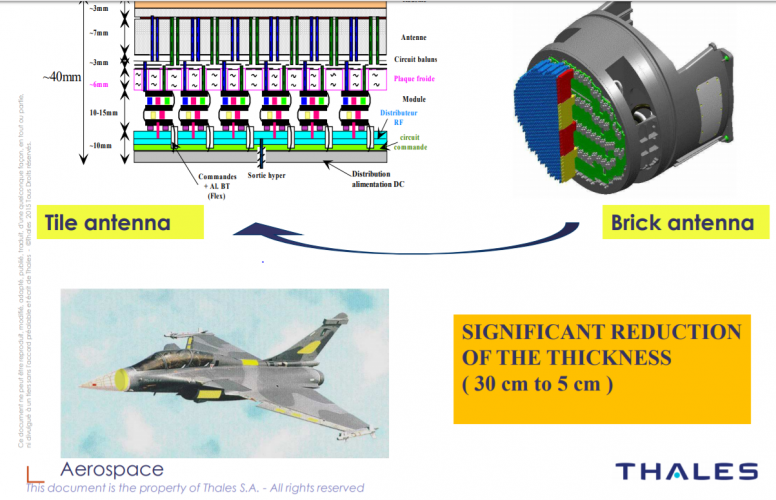
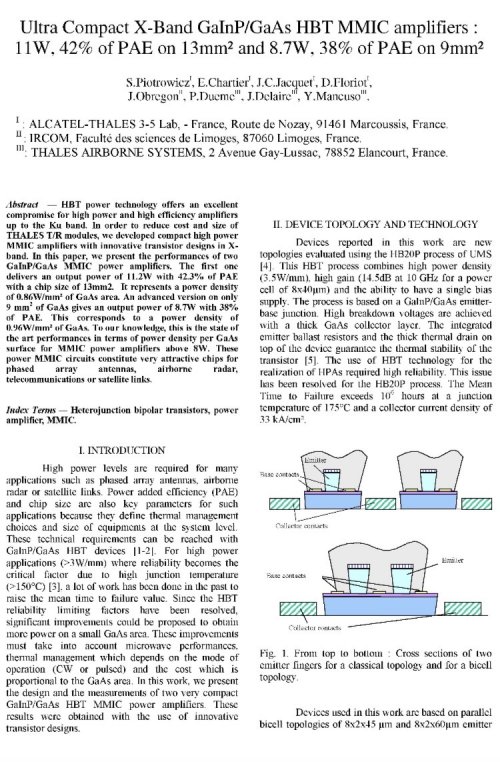
As several noobs here, you are misuderstanding the number of the T/R modules of the prototyp (called RBE2 AA for Antenne Active), made of US modules, bigger, with the serially produce, made of european smaller modules.
The sole pic available of the RBE2 AESA antenna, is the one with US modules....
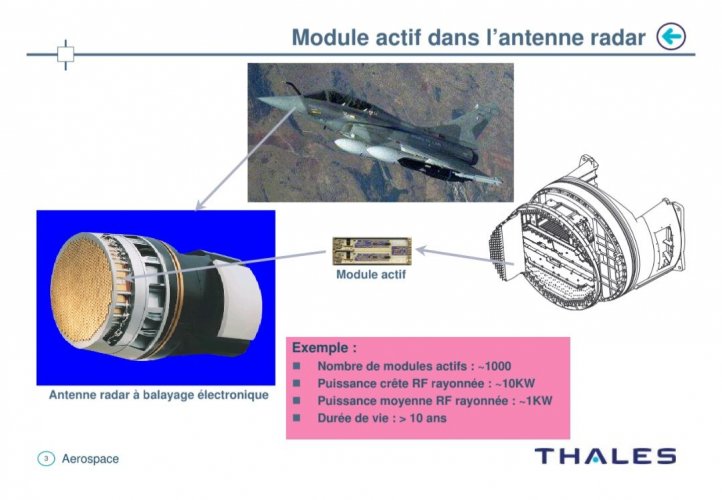
According to Thales official datas, the RBE2 AESA radar is made of "more than 1000 modules".
 
i deeply agree with you, F-3R's electronic warfare systems and sensors are outdated; in fact, the F-4 version is also inferior to the J-10C. The current Rafale is not suitable for top-level battlefield combat; it might be more suitable for the Ukrainian theater. Frenchman blame the Rafale's failures on Indian pilots. This is unfair.However, Pakistan and there partner have already established a technological advantage, making it difficult for India to counter them, whether India cooperates with France or Russia.
It is why the Rafale is not suited to counter china and Pakistan that India is bargaining to purchase 114 more for air force, and 31 more for Navy.... Sure !

In a couple of days you will assure us that even JF-17 is more potent than F22.....
 
But to be fair, even if meteor would be there in 2025, and even with proper RoE it appears it wouldn't have helped. Rafale and MKI need radar upgrade to match J-10c.
J10 in Sindoor didn't use their radar. They used SAAB AWACS datas to fire their AA missile.
The recent but unofficial news of the Rafale loss during Sindoor are : 1 loss, 1 damaged. But how many missiles were fired at them? A lot if not some weren't found nearly intact on the indian soil. And why intact? because of Spectra....
Pak used so many AA missile that PAK air force totally diseapear of their own sky the day after because... shortage on AA missile.
 
I don’t think anything is wrong with the rbe2 radar technology. I just think the technology level is relatively comparable and the J-10 radar is larger. Module wise UMS was very good for the era.
J10 radar isn't air cooled? Reducing the perf.
 
As several noobs here, you are misuderstanding the number of the T/R modules of the prototyp (called RBE2 AA for Antenne Active), made of US modules, bigger, with the serially produce, made of european smaller modules.
The sole pic available of the RBE2 AESA antenna, is the one with US modules....
According to Thales official datas, the RBE2 AESA radar is made of "more than 1000 modules".
"More than 1000" is 2020s ECRS mk.1/2 level, with GaN usage. Changes in TRM numbers (density) also don't happen easily - as it changes backend significantly.
It'll be very impressive, but very doubtful until F.5. I.e. I won't mind admitting I'm wrong, but I will be surprised.
J10 in Sindoor didn't use their radar. They used SAAB AWACS datas to fire their AA missile.
Per current Chinese admission, it's just fighter radar engagement, no fancy data fusions. And frankly this is within realm of doable for a somewhat larger radar to achieve.
A good radar, sure, but it's perfectly reasonable for a larger radar. Keep in mind that per current expectation it isn't all that far from Su-57/J-35/F-35 radars in size and TRM count.

Also, a bucket of cold water: above we mentioned than Chinese Rafales don't carry L- band Indian datalinks with usable data bandwidth.
Well, this is also true for PAF J-10CEs, and apparently link-17 works via VHF/UHF voice comm antenna. Bit rate will be limited, more like CW fighter direction lines.

Many(me included) apparently underestimate how ahead of it's time link 16 was on a global scale. Not so much as technology, but as an actually deployed fleet level capability.
The recent but unofficial news of the Rafale loss during Sindoor are : 1 loss, 1 damaged. But how many missiles were fired at them? A lot if not some weren't found nearly intact on the indian soil. And why intact? because of Spectra....
Yes, I agree that we don't know some of the most important pieces.
Though it's very normal for AAMs to miss and then lie more or less like that. Happens every time there's aa/sam combat.
Iirc, we saw a similar number of AIM-120C missiles in 2019 as we saw this time. I.e. broadly it was something similar in terms of scale of ambush.
 
Last edited:
J10 radar isn't air cooled? Reducing the perf.
I think they are both liquid cooled. Without having any real proof I suspect the plumbing for AESA is a major reason for the J-10b/c redesign. RBE2 I believe is also liquid cooled, just on the F3r constrained by having to fit the Pesa footprint.
 
"More than 1000" is 2020s ECRS mk.1/2 level, with GaN usage. Changes in TRM numbers (density) also don't happen easily - as it changes backend significantly.
the prototyp of RBE2 with active modules was just that : a prototyp, hand made with US modules. It was called RBE2 AA (for Active Antenna)

Deceiptfull modules as they shown "only" a 20% increase of range over PESA. This is why Thales proposed a 13.5 kw antenna, instead of 9,6 kw, with a totally new and complexe collong system so as to fit the UAE requests in 2010 circa.

Then arrived the US active modules, smaller and more efficients. Thales used it to produce the RBE2 AESA, with a totally new antenna with more modules as they were smaller and less cooling greedy (thant to a best energy efficiency). The serially produce RBE2 AESA show a 100% improve in range over PESA, where the one made wuith US modules only a 20%.

No backend change : it was studied from the beginning to accomodate a PESA and a AESA antenna. And since the first radar produce, you can be sure the calculation power evolved, as with the EMTI, thanks to new electronic cards. So no problem to deal with more than 1000 modules.
 
I think they are both liquid cooled. Without having any real proof I suspect the plumbing for AESA is a major reason for the J-10b/c redesign. RBE2 I believe is also liquid cooled, just on the F3r constrained by having to fit the Pesa footprint.
RBE2 is liquid cooled.
The backend was studied from scratch to use a PESA and a AESA antenna. PESA was only a transition technology, as the bird should have been ready in 1996 (before the iron wall collapse). AESA was already in the air, but lacks a european active modules plant.
 
The serially produce RBE2 AESA show a 100% improve in range over PESA
13 times the power? That's for example >2 times that GaN (a generational jump) achieves in the field...
100% improvement in range is expensive thing, unless it's very conditional (against a very specific target, such as low rcs/low altitude, which previous radar couldn't handle).
Otherwise, in broad light, range AESA range advantage over PESA or mech scan(planar) is rather incremental.
 
Keep in mind that per current expectation it isn't all that far from Su-57/J-35/F-35 radars in size and TRM count.
Do you mean in terms of meaningful overall PD50/PD90 ranges against non-LO targets; or specifically TRM count, cooling, and power output?

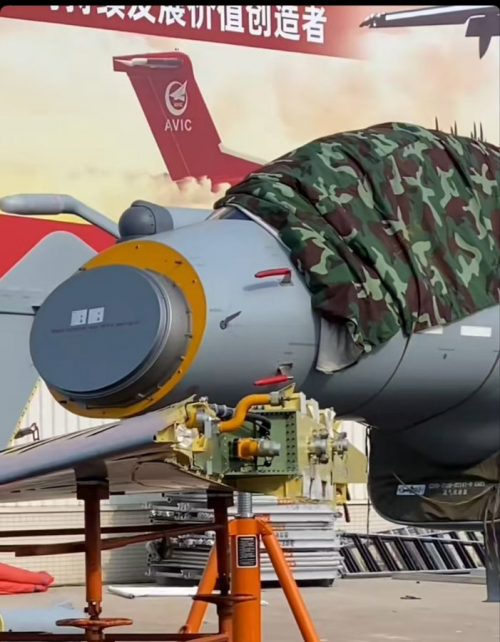
Because all of these radars are mounted on 5th-gens with significantly more available volume as well as power and cooling to draw from. In terms of TRM count alone, we're looking at ~1514 for the N036-1 vs ~1676 for the APG-81, while the J-35's should be broadly similar, if not a tad higher.

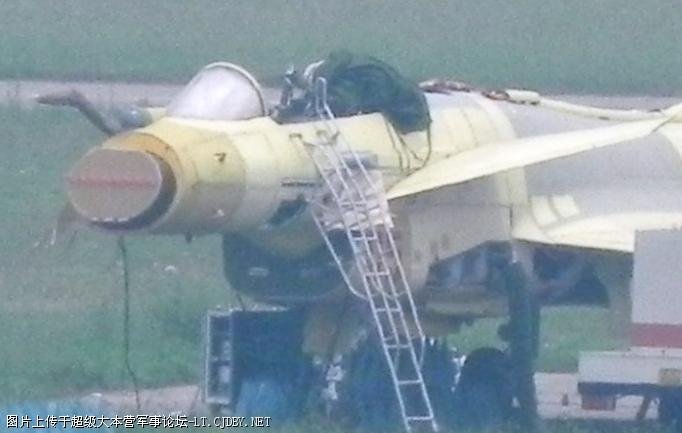
We do know that the J-20/J-16/J-10C all switched from GaAs to GaN around 2021 (although the antennas on the -10B and -10C look similar, so the change may have been limited to the TR modules, IMPO).

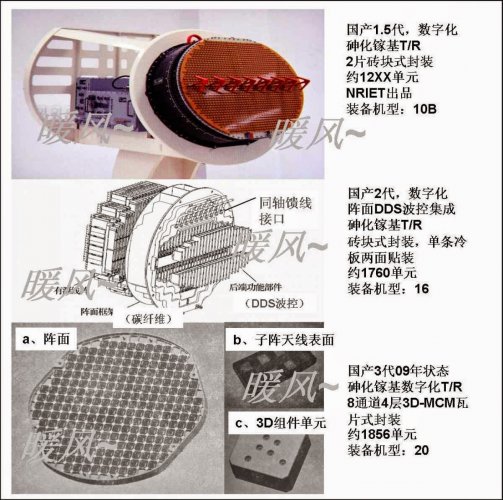
However, they may or may not have exported the top-of-the-line GaN of the J-10C to the PAF, instead opting to export an older GaAs design with the J-10CEs. We do know that the older, GaAs radar of the J-10C has a TRM count in the 12xx range.

Again, feel free to correct me if my memory is off...
 

Attachments

  • Gb8EKAJbgAAkYp_.png
    Gb8EKAJbgAAkYp_.png
    1.1 MB · Views: 30
  • Chinese J-10B Fighter Jet with AESA Radar.jpg
    Chinese J-10B Fighter Jet with AESA Radar.jpg
    32.1 KB · Views: 15
  • Chinese fighter AESA.jpg
    Chinese fighter AESA.jpg
    217.9 KB · Views: 23
13 times the power? That's for example >2 times that GaN (a generational jump) achieves in the field...
100% improvement in range is expensive thing, unless it's very conditional (against a very specific target, such as low rcs/low altitude, which previous radar couldn't handle).
Otherwise, in broad light, range AESA range advantage over PESA or mech scan(planar) is rather incremental.
You are comparing 2 very different technology. PESA use a TOP (it's the french word : Tube à Onde Progressive) as a classical radar, and the modules used for the signal sweep are energycally greedy and reduce the precision. It was said at the very beginning of the PESA RBE2 that the radar was nearsighted ! Thales made improvements on it. AESA is a more efficient technology.
 
Do you mean in terms of meaningful overall PD50/PD90 ranges against non-LO targets; or specifically TRM count, cooling, and power output?

Because all of these radars are mounted on 5th-gens with significantly more available volume as well as power and cooling to draw from. In terms of TRM count alone, we're looking at ~1514 for the N036-1 vs ~1676 for the APG-81, while the J-35's should be broadly similar, if not a tad higher.

We do know that the J-20/J-16/J-10C all switched from GaAs to GaN around 2021 (although the antennas on the -10B and -10C look similar, so the change may have been limited to the TR modules, IMPO).

However, they may or may not have exported the top-of-the-line GaN of the J-10C to the PAF, instead opting to export an older GaAs design with the J-10CEs. We do know that the older, GaAs radar of the J-10C has a TRM count in the 12xx range.

Again, feel free to correct me if my memory is off...
number of modules... OK !
but what about quality of modules ?

You can purchase an Intel I9 with 6100 to 10500 CPU-Z ! all are called i9....

As far as I know, China is struggle te meet the best in the electronical technology (this is one reason thay want to take Taiwan)..
 
You are comparing 2 very different technology. PESA use a TOP (it's the french word : Tube à Onde Progressive) as a classical radar, and the modules used for the signal sweep are energycally greedy and reduce the precision. It was said at the very beginning of the PESA RBE2 that the radar was nearsighted ! Thales made improvements on it. AESA is a more efficient technology.
It rather means RBE2 was /originally/ a shitty PESA along the lines of early J/APG-1, rather than RBE2A is some world beater.
Which, as we know, it is just not.

AESA has advantages in SNR, but more broadly Captor has substantially better clear sky ranges, and RDY is quite competitive as well.
 
View: https://x.com/raptor1991007/status/2059204788521455620


Vivaldi TSA module pattern for high bandwidth, this is implies the hardware is more capable then some of those earlier articles and the production AESA might have changed after the first use bid.

It looks like the 838 module array and I think that number is right as at 9.6kw that implies 11.45 watts per module. That’s comparable to apg-79 and Klj-7a

Apg-79 15.02kw with 1368 modules is 11 watts.

“The KLJ-7A active phased array radar antenna is 550 mm in diameter, and about 1,000 T/R modules can be installed, and the radar peak power can reach 12 kilowatts, the average power is not less than 4 kilowatts,”
https://m.sohu.com/a/515620893_121118976/?pvid=000115_3w_a#google_vignette


Someone on Pak defense counted 1075 module. 11.16 watts per module


This image from a Thales presentation I expect is rounded up but gives duty cycle.
 

Attachments

  • 702245e55f840e3269d0208801e72b59e18eae32.jpeg
    702245e55f840e3269d0208801e72b59e18eae32.jpeg
    91.4 KB · Views: 20
  • IMG_9533.png
    IMG_9533.png
    551.3 KB · Views: 29
It rather means RBE2 was /originally/ a shitty PESA along the lines of early J/APG-1, rather than RBE2A is some world beater.
Which, as we know, it is just not.

AESA has advantages in SNR, but more broadly Captor has substantially better clear sky ranges, and RDY is quite competitive as well.
RBE2 AESA has at least 20% more range than RDY-2.
 
RBE2 AESA has at least 20% more range than RDY-2.
The problem is that it's hard to work with percentages when they're outside of context.

For example, was this improvement with Rafale radar architecture tied to the UAE? Comments above say that Indians, for instance, didn't take this option for 2019 delivery. Was it available?
I.e., it's a 2010 request (well before F3 deliveries), but a 2021 deal/2026 delivery.
And, checking comments above, was the 14 kW version eventually procured by the UAE (or anyone)? Or is it a path untaken/more or less a pathway to F5 radar now? The UAE was supposed to finance F5 (but walked away); was it related?

In any case, even assuming full parity of radars (which I am very unsold on, given available information), if we take 130@1m2, 190@5m2 alone gives sufficient performance bracket for a2a configured J-10CEs to launch and win. I.e., it's potentially a very clear case of how much operational RCS really matters on a non-stealth plane.
The problem for 130/190 itself(claimed AN/APG80 numbers), though, is that these are almost exact theoretical values. Every time someone claims value from an equation, it feels fishy.
Because all of these radars are mounted on 5th-gens with significantly more available volume as well as power and cooling to draw from. In terms of TRM count alone, we're looking at ~1514 for the N036-1 vs ~1676 for the APG-81, while the J-35's should be broadly similar, if not a tad higher.

We do know that the J-20/J-16/J-10C all switched from GaAs to GaN around 2021 (although the antennas on the -10B and -10C look similar, so the change may have been limited to the TR modules, IMPO).

However, they may or may not have exported the top-of-the-line GaN of the J-10C to the PAF, instead opting to export an older GaAs design with the J-10CEs. We do know that the older, GaAs radar of the J-10C has a TRM count in the 12xx range.
Yes, my assumption, broadly, is that Rafale (available) is ~8xx TRM, i.e., within light fighter range; most other medium 25t range fighters sit are roughly at 1000+; J-10C 12xx, next to Super Hornet; "smaller 5" is 1500-1700, bigger 5 is 1800+.
 
Last edited:
For example, was this improvement with Rafale radar architecture tied to the UAE? Comments above say that Indians, for instance, didn't take this option for 2019 delivery. Was it available?
I.e., it's a 2010 request (well before F3 deliveries), but a 2021 deal/2026 delivery.
And, checking comments above, was the 14 kW version eventually procured by the UAE (or anyone)? Or is it a path untaken/more or less a pathway to F5 radar now? The UAE was supposed to finance F5 (but walked away); was it related?

In any case, even assuming full parity of radars (which I am very unsold on, given available information), if we take 130@1m2, 190@5m2 alone gives sufficient performance bracket for a2a configured J-10CEs to launch and win. I.e., it's potentially a very clear case of how much operational RCS really matters on a non-stealth plane.
The problem for 130/190 itself(claimed AN/APG80 numbers), though, is that these are almost exact theoretical values. Every time someone claims value from an equation, it feels fishy.
The 14kw AESA figure studied for UAE was with the US active modules. Never heard anything about the same aboit the antenna with european modules.
To reach 14kw, a new and costly cooling system was needed. the 9,6kW european modules antenna has at least the same range than 14Kw US modules one.
Indians, as UAE, purchased the legacy AESA RBE2, without any hardware change. India required or urged some specifics, as GMTI.
No information about the power of RBE2XG.
 
I don’t think they mean the rbe2 is 14kw, rather Thales was able to increase performance by changing the antenna design in response to the UAE competition. Notably articles before that paint the rbe2 as a very basic add on that’s mostly just range while after I have evidence of high bandwidth, electronic attack, etc.
 
I don’t think they mean the rbe2 is 14kw, rather Thales was able to increase performance by changing the antenna design in response to the UAE competition. Notably articles before that paint the rbe2 as a very basic add on that’s mostly just range while after I have evidence of high bandwidth, electronic attack, etc.
?
The full story :
1) RBE2 AA (the prototyp), with its US modules made antenna shown only modeste increase over Mirage 2000 RDY.
2) UAE, near 2010, was interested by Rafale, but they wanted a radar with a better range than the one of F16-bk60. And they also wanted a most powerfull engine, of 9tons.
3) Thales developped a 14kw US modules antenna, to reach the targeted range. It was costly. The engine change was also costly as the frame has to be fully modified. A Dassault specialist at those time said "UAE want a christmas tree !". But the price was also very bright !
4) UAE didn't purchased it. They waited, seeing the french Rafale of the Dahfra air base on duty.
5) The european modules antenna arrived in 2013. UAE had the possibility to test it, and to operationnaly saw that the 7,5 tons engine, even in hot weather was fine. Finally they purchase it.
 
I don’t think they mean the rbe2 is 14kw, rather Thales was able to increase performance by changing the antenna design in response to the UAE competition. Notably articles before that paint the rbe2 as a very basic add on that’s mostly just range while after I have evidence of high bandwidth, electronic attack, etc.
RBE2 AESA has the hability to exploit all the softwares studied for PESA (the reverse is not 100% true). Ie it was mature and multi role from the beginning in 2013.
Since some modes were added, for export but not only, as GMTI.
Every standard evolution bring new modes for Spectra & radar.
Next step : RBE2 XG with GaN, and a totally new Spectra. The actuel Spectra is said to have GaN antennas... (found too coslty to day to be used on radar).
 
He also claimed that an Indian Su-30MKI was shot down during Op Swift Retreat when in reality it was a PAF F-16

There are multiple videos of two pilots coming down in parachutes in PoK. These parachutes are white in colour. Half of the chute of ACES II of early F-16 variants is white in colour. The other half looks like the Indian Tricolour to the gullible. One of the two F-16 pilots were lynched and has to be admitted to the CMH. Locals lynched him thinking him to be an Indian pilot. Even then DG ISPR, Maj Gen Gafoora has talked about having three and then two Indian pilots in custody.

Chutes used by K-36DM 3.5 used in our Su-30MKI have Made in India white and orange latitudinal patches which is visually distinct from the white chutes of ACES II of F-16.
Nah, there wasn’t any evidence of either a Su-30 or an F-16 being shot down in that specific incident. There was only one confirmed shootdown, and it was a MiG-21.
Initially, plenty Indian users even claimed that the MiG-21 pilot had shot down an F-16 in a mutual kill, with some going as far as claiming that the wreckage shown was actually from an F-16. However, that claim was later debunked after someone posted photos showing the internal structure of the MiG-21 fuselage, as well as the wreckage of an R-73 missile still attached to the pylon.
All the talk about chute color and lynched pilot is pretty much all cope with no evidence
 
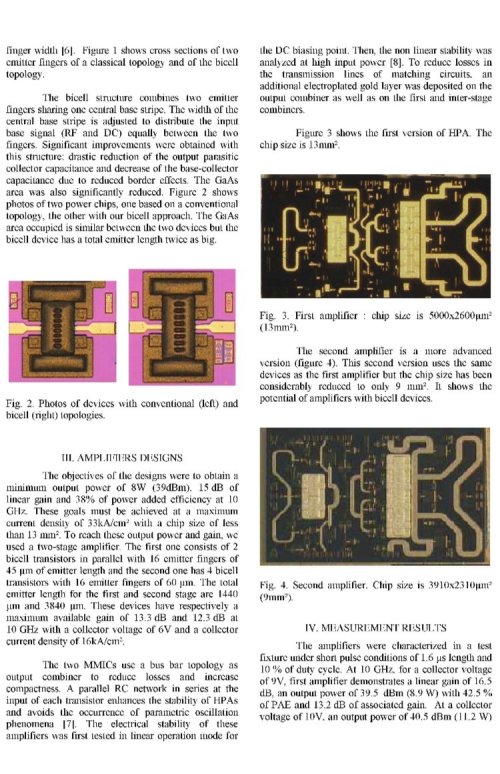
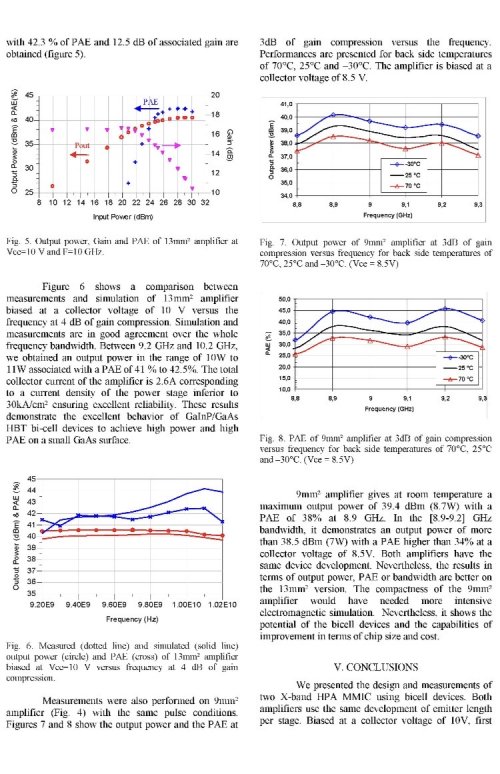
These I think are fairly close to the rbe2 tr modules. The timing is about when the first European modules were test flown
 

Attachments

  • IMG_0423.jpeg
    IMG_0423.jpeg
    333.5 KB · Views: 10
  • IMG_0424.jpeg
    IMG_0424.jpeg
    301.9 KB · Views: 12
  • IMG_0425.jpeg
    IMG_0425.jpeg
    286 KB · Views: 11
  • IMG_0426.jpeg
    IMG_0426.jpeg
    192.8 KB · Views: 11

Similar threads

Back
Top Bottom