Developments and News in clean energy: Wind, solar and batteries grow despite economic challenges

Combustion is possible thanks to the production of oxygen by microorganisms. The fossil fuels that we burn, as naturally as we eat fruit, are solar energy chemically condensed by microorganisms through a process called photosynthesis that uses various levels of quantum technology that we are not yet able to produce in the laboratory. Both phenomena are safe, natural and durable, the renewable hydroelectric energy generated by a double dam system is also safe. Wind generators are a mechanical folly, and photovoltaic generators are a declaration of technological impotence, both systems generate great pollution during the process of their manufacture and during transport from the third world, they are not reliable and make us depend on the sun and the wind like the caravels of Columbus.


Dear GTX, you shouldn't find my statements, strictly scientific, funny, because the consequences of the misuse of this type of device have caused the death of several people in my country, you can always accuse me of politicizing the thread, but you won't be able to eliminate reality, many have tried before you.

 
process called photosynthesis that uses various levels of quantum technology that we are not yet able to produce in the laboratory
Laboratory: work in progress.
In 2021, researchers from Toyota Central R&D Labs developed a large, cost-effective artificial photosynthesis system that produces industrial formate at a solar-to-chemical conversion efficiency (ηSTC) of 10.5%1. Researchers from the lab say that, to their knowlege, this ηSTC is a first for a one metre squared cell.

Within the next 10 years, the company aims to establish artificial photosynthesis technology for wide-scale production of useful carbon compounds.
[...]
The researchers used solar cells connected to electrodes immersed in carbonated water to initiate the redox reactions that produce formate, explains Naohiko Kato, a principal researcher at Toyota Central R&D Labs. This coupling of electrodes with semiconductors and molecular catalysts allowed for CO2 reduction to occur using minimal energy and relatively inexpensive components.

Advances at the lab have been quick. In March 2021, a 36 centimetre squared cell produced by the company was shown to have a ηSTC of 7.2%^2. Then in November 2021, the group demonstrated a one metre squared cell with a ηSTC of 10.5%, yielding a formate production rate of 1.2 mole per hour.
More at the link.
Search for artificial photosynthesis on your search engine of choice for more results.
The chemistry involved is fairly straightforward. I have always found the finesses of electro-chemical processes involved in neurotransmission to be much harder to get my head around. Especially where gaps in the myelin sheath of axons speed up signal transmission.
 
Last edited:
Too absolute, wind power, photovoltaic power generation and microbial power generation each have their own advantages and disadvantages, as far as I know, wind power generation and photovoltaic power generation have been very good in my country, and there have been no accidents.
 
Now solar technology is even thinner

Other Green topics

Oil exploration

Aviation overlooked?

Worrying to me

Water rationing

Are we not even supposed to have chairs now?
 
Last edited:
An astounding green energy find

In a recent study published in the journal Chem, researchers revealed curved anthracene derivatives—organic molecules found in coal tar—that undergo structural changes upon absorbing sunlight and, when triggered to return to their original shape, release the stored solar energy as heat.

The anthracene systems, derived from a by-product of the fossil fuel industry, exhibited high energy storage densities, making them promising solvent-free alternatives to traditional thermal energy storage systems.

Molecular solar thermal (or MOST) energy storage works on the principle of storing energy in chemical bonds.


Artificial photosynthesis

On carbon handling

Electricity generation

Good news

Bad news

Life hack?
View: https://m.youtube.com/watch?v=2-7Y4Z88BeE&pp=0gcJCccJAYcqIYzv

Low energy carbon capture
 
Last edited:
In some respects, tariffs are green--make your own--so no ships burn as much bunker oil

Transportation

Oil

PFAS reduced

Advances in green energy this week:

Solar advances

Keep energized

New book

According to Roy Scranton, director of the University of Notre Dame's Environmental Humanities Initiative, the biggest problem we face with climate change isn't excessive carbon emissions or energy usage. And it isn't the fundamental imbalance created by human activities that threatens ecosystems and has pushed the planet into instability.

The deeper problem, he argues, lies in the complexity of civilization itself—a global industrial society that has grown both unsustainably expensive and dangerously vulnerable to the environmental stresses that accompany climate change.

Because of this, he says, humanity is at an impasse.

In his most recent book, "Impasse: Climate Change and the Limits of Progress," Scranton, an associate professor of English, defines the impasse he sees as "not only political and institutional, but cognitive, existential and narrative" and asserts that the only path forward is through embracing what he terms ethical pessimism.

Other views

Housing

Climate spies

Clean air sensor
 
Last edited:
Everyone knows that solar panels stop generating energy at night and that their production decreases by up to fifty percent because of clouds, but what is happening in my country is that during the hours when solar radiation is at its peak, the disgusting solar panels lose twenty percent of their capacity... because they heat up. A true feat of design, creativity, technological efficiency and political management. Solar panels also degrade over time and need to be changed often, especially when they receive too much solar radiation.

In my country we are having a good year with renewable energy.
 

Attachments

  • 63c3f4d7e2b27.jpeg
    63c3f4d7e2b27.jpeg
    36.2 KB · Views: 10
  • 5faa7146dab21.jpeg
    5faa7146dab21.jpeg
    383.2 KB · Views: 6
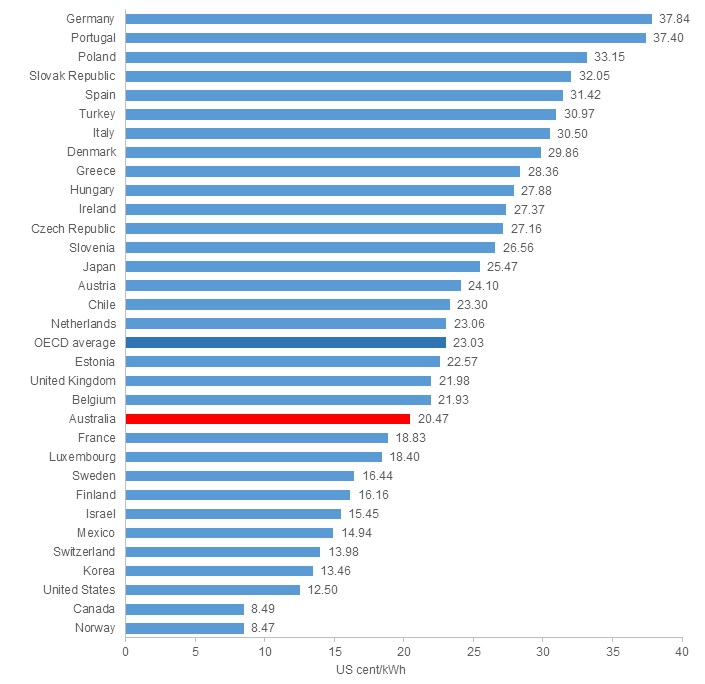
Until you look at the per kwh cost...

bde12e5c-00b6-4b00-8a74-86bffd343dcd


Yes, that's 2020, but it isn't getting cheaper...
And for 2025...

2016-04-27-figure-1-electricity-prices.jpg


"Renewables" (which really aren't renewable) aka, solar and wind, drive the price of electricity sky high everywhere they've been introduced in mass. More solar and wind = higher electricity bills often triple to quadruple what they were before.
 
Until you look at the per kwh cost...

bde12e5c-00b6-4b00-8a74-86bffd343dcd


Yes, that's 2020, but it isn't getting cheaper...
And for 2025...

2016-04-27-figure-1-electricity-prices.jpg


"Renewables" (which really aren't renewable) aka, solar and wind, drive the price of electricity sky high everywhere they've been introduced in mass. More solar and wind = higher electricity bills often triple to quadruple what they were before.
You are assuming that any price increases are due to the renewables. That sounds like a case of correlation does not imply causation. One would need to dig more into the fact before making such assertions.
 
You are assuming that any price increases are due to the renewables. That sounds like a case of correlation does not imply causation. One would need to dig more into the fact before making such assertions.
They generally are. Operating costs skyrocket with solar and wind. One of the biggest reasons is you have to idle conventional generation plants while using solar and wind, then bring these on-line when solar and wind shutdown. Battery storage is insanely too expensive--even at $50 a kwh compared to the current cost of about $225 a kwh they're unaffordable--to make a workable alternative.

So, you have to have natural gas, coal, oil, nuclear, something for base loading and for operation when your solar and wind aren't generating. With solar, this means often having a natural gas plant hot and idling to take the load when solar isn't generating. It takes time to bring such a plant on-line or take it off-line.

In all reality you end up duplicating your generation facilities rather than building an efficient and cost effective system. Then there's the attempt at a "smart" grid. Germany is still floundering with that and their cost is approaching a trillion USD. Germany's neighbors have largely disconnected from the German grid due to Germany dumping electricity when their solar and wind systems over produce. California pays--PAYS--Arizona and Nevada to take their excess solar and wind generation when that occurs. That cost is passed onto Calforina's consumers. Arizona and Nevada are being compensated to idle conventional generation plants and have the cost of that covered.

Then there's the cost of brown and blackouts caused by unstable solar and wind sources. Toss in that solar and wind require more transmission lines because they are often placed in remote locations and you have a recipe for insanely expensive electricity.

Look at it this way:

To get a kilowatt-day (kwd, 24 hours of 1 kilowatt of power) using solar you need an installed capacity of about 5 kwh in solar panels and 3 kwh in batteries. This is rough. I base that on a capacity factor of .25 which is pretty typical for large commercial solar arrays. What you are doing is producing 1 kwh of power and storing another 3 kwh of power. But because the panels aren't all that efficient much of the time, or completely no generating, you need 5 kwh to get 1 kwh steadily for an entire day. You might even need more batteries if you have issues with clouds and weather.

With a natural gas generation plant you need 1 kwh of installed capacity to get 1 kwd of power. Even with the cost of fuel included, it's cheaper to run this plant than build and run the above solar plant. The extra installed capacity and batteries absolutely destroy the solar plant's cost efficiency.

 
Last edited:
Here is a history of solar advancements
A new MIT study drills down on specific innovations that enabled such dramatic cost reductions, revealing that technical advances across a web of diverse research efforts and industries played a pivotal role. The research appears in PLOS ONE.


Solar wall

Carbon carrier

Green Chemistry


Farming pitfalls and promises


What?

 
Last edited:
COPENHAGEN, Aug 25 (Reuters) - Orsted (ORSTED.CO), opens new tab said on Monday it would continue with a plan to raise capital after the Trump administration ordered the offshore wind farm developer to stop construction on a near-completed project off Rhode Island, sending its shares down 17%.

The company, 50.1% owned by the Danish state, said earlier this month it would seek to shore up its finances through a $9.4 billion emergency rights issue.
(Subscription or registration may be required)

EDIT:
Non-paywalled link.
 
It's looking more and more like wind power isn't so climate friendly too...


Hydrogen deposit found and other green news

Solar farms in place of forests?

Better

This kind of invective is not helpful
That fuel keeps people from freezing too.

The case for farm dams

Hawaii crops

Windfarms
 
Last edited:
Fuel cells for aerospace:

The 800 kg “monolith” will replace the six ton system needed for MOXIE (Mars ISRU).


Other novel discoveries
 
Last edited:
‘Scots ‘mafia’ force Miliband change of heart on North Sea oil [The Daily Telegraph]
(Registration or subscription may be required)

Ed Miliband’s plan to backtrack on his North Sea oil and gas drilling ban has been forced on him by a “Scotia Nostra” grouping of Scottish politicians who fear that his move would see Labour humiliated in next year’s Holyrood election, opponents claim.

Beware the Scotia Nostra!
 
New methane storage

Other finds

 
Last edited:
Renewables are expensive and ultimately may be unaffordable.


An energy system soley relying on solar and wind is not doable. Germany claims more than 60 % regenerative energy, but this only works if you use your neighbour countries as virtuel battery. Sometimes, electricity is exported for a negative price and on other times (like today) electricity is imported for a very high price.

 
Another reason to have a mix is to prevent price gouging.

That and I don't think sun and wind will get us into Cheney-esque wars.

I think California's governor was daft in going after dams --but he was thinking about insulin production. Better than car-tags prisoners used to make. That scared the drug kingpins that don't have their heads hit B-pillars of cop cars.

I think DoE should build sites. But old plants need to remain in operation too.

I would prefer America sit on hydrocarbon deposits and use up Saudi oil in the meantime. With that former wealth gone --you will have fewer fundies funding. Then aerospace firms will come around to support space-based solar with no oil wars to prop them up.

Rumblings

Other news
 
Last edited:
You need a good mix of different systems. Nuclear is great for base power but not good for peaks. Wind is great for intermediate loads. Hydro depending on the setup can be either base or peak (but usually not both). Gas and solar-thermal (and some hydro) are good for regulating the grid. While PV solar is great in hot climates for peak power as it generally produces most when its need the most (ACs). There is not one-size-fits-all solution.
 
France and Belgium (no longer) covered almost 80 % of its electricity with nuclear power, proving that nuclear power is well suited for flexibel electricity production (between 50 to 100%).

Wind is purly random, the worst kind of electricity production.

The combination of solar and AC works great in countries were AC is mainly used in offices during long summer days (e.g. Germany). in California, sunset is much earlier and when people come home from work, they switch on the AC when solar power is allready low. This peak demand is hard to cover with photovoltaic, thermal solar energy works much better in this regard.


Regards,
I would take that particular piece of research with more than a pinch of salt.
 
reconsider
In no particular order: climate change, atmospheric pollution causing respiratorial diseases and various form of cancer, acid rain, environmental saturation by nitrates and nitrous oxides cause eutrophication of the environment leading to loss of biological diversity which in turn induces disease-ridden monocultures.

Signed: a lapsed aquatic ecologist.
 
Flint is still in trouble

On pollution and decarbonization

Solutions?

Recalculation needed?

Some fixes are questioned
An analysis of forest-based projects funded through the sale of carbon credits shows that 10% of them may have a net warming effect on the climate because of the way they alter Earth's albedo, or how much sunlight is reflected back into space.

The study led by scientists at the Oregon State University College of Forestry also offers recommendations for how to avoid this unintended climate warming by incorporating albedo accounting into carbon crediting protocols. Additionally, the research indicates most projects come with comparatively minimal albedo consequences.


Studies like this make folks wonder if Greens care about them at all

TRUST has to be established--not just gatekeeping:
https://phys.org/news/2025-10-important-climate-policy.html
"When people have low political trust, they are more likely to overestimate the costs of climate policies," says Malcolm Fairbrother, professor of sociology, who led the study. "This explains the particularly low support for fossil fuel or carbon taxes—a policy that many economists consider the most cost-effective climate policy of all, but which, paradoxically, is least popular with the public."

A medical story--but this article has wisdom
We should always encourage people to ask questions—not automatically mistake them for skepticism or antagonism.

Coal miners were reliably Democrat--until Hillary ran them off:

It is hard for the Right to Red-Bait them:

Now, we think tailings may have rare earths---that keeps the folks in place without telling them "learn to code."
That is something libertarian zealots used to tell them. Anti-union businessmen and Greens have the self-same blind spot-
--looking at their fellow human beings as a problem and not a resource.
 
Last edited:
In fact, in my country, electricity consumption continues to increase year by year, and relying solely on clean energy is not enough to meet the national electricity demand. New thermal power plants are still being built, but recently, the newly added clean energy generation has for the first time surpassed the newly added thermal power generation.
However, it is clear that current clean energy does not yet have the capacity to completely replace traditional energy. Hoping to replace all traditional energy with clean energy right now is an unrealistic, unreasonable, and irresponsible attitude.
 
Wind is purly random, the worst kind of electricity production.
Completely untrue. Wind patterns are well know and well studied. A properly designed wind farm will take advantage of locations with steady and constant wind flows. A wind farm in a location with random wind patterns is a very poorly planned wind farm.

The AC issue you mentioned can be easily mitigated with smart thermostats, we have the technology, just have to implement it.
 
You can't influence the wind, so it is still completly random. Sometimes it blows on a sunny Sunday when the price for electricity is negative and stops blowing on Monday whe
n it would be needed.

Here is the last week in Germany, very little wind (green) from Monday to Friday and plenty of wind on the weekend...


Smart thermostats wont help a lot when you needd cooling without sunlight. of course you could start earlier and shave off the peak a bit, but than you increase the amount of energy needed.
 
Last edited:
"Green" energy has often been heavily subsidized. The article is a bit ambiguous about facts given. For example it says in certain regions solar power has become the least expensive form of power generation. The regions mentioned lead me to think it is cheap because of government programs in place, trying to artificially spur on development in hope that it ultimately lowers cost and institutionalizes these forms of power generation. What do you guys think?
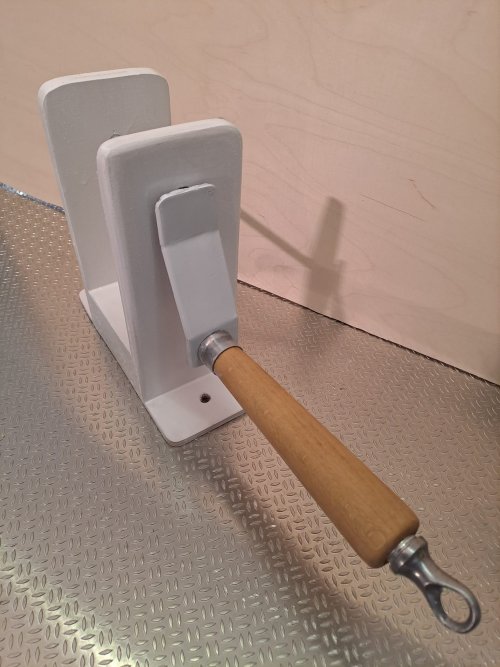
I made an innovation almost 11 years ago in VAWT systems....and got 5 K once for it.

I am now on the 6 th prototype.

But I am happy someone got heavily subsidized.

käämi2.jpg
 
You can't influence the wind, so it is still completly random. Sometimes it blows on a sunny Sunday when the price for electricity is negative and stops blowing on Monday whe
n it would be needed.

Smart thermostats wont help a lot when you needd cooling without sunlight. of course you could start earlier and shave off the peak a bit, but than you increase the amount of energy needed.
But wind blows more in the winter where I live and this H-Darrieus of mine produces energy at 2,5 m/s windspeed.

IMHO the Ulrich Hutter designed systems ought to be history as they consume the rainforests....90% of them are balsawood.
 

Similar threads

Back
Top Bottom