- Joined
- 21 April 2009
- Messages
- 14,348
- Reaction score
- 9,429


It seems unlikely the US pulls back from missile defense with the advent of hypersonics and the large scale deployment of intermediate range missiles by China.
Also the verification would be incredibly hard - basically every Aegis ship at this point could be an ABM system (most actually do not have that upgrade for the moment, but any given one could). I think weapons proliferation will be here to stay, most especially because I think China sees every advantage to outbuilding its opponents and sees no reason to limit its capability to do so.
By 2026, likely neither side will have an interest in maintaining the treaty unless China enters it as well.

I mean China still feels like the can achieve a Political victory via Military force RE: Taiwan without a huge backlash from the US. As long as this ignorant thinking proliferates in the upper echelons of the CCP & PLA, they are in for a harsh awakening. I don't know what assumptions they are operating under but the American people wouldn't tolerate such an attack against US forces in the region, independent of sentiment of the US political establishment.I think China is rethinking its entire nuclear and ballistic missile posture and I think US ABM systems are a relatively secondary concern (as compared to the Russians who have always had a nearly irrational fear of ABM weapons). I think China has war gamed out a conventional conflict with the US and realized they lose every escalation cycle that doesn't involve at least a draw. At any given moment there are a probably a couple hundred cruise missiles on naval platforms within range of their coast line, and every effort to extend the fight to US regional installations increases the likelihood that a US counter strike targets production facilities and other vulnerable economic/military infrastructure. Escalating to a nuclear exchange similarly boxes them in to a devastating war they can't win. I think they will seek to achieve nuclear parity regardless of what the US or Russia does so that any future conflict with the US can be on even terms.
As for the Russians and Avangarde, I think they did that not to lump hypersonics into future treaties as much as to keep the US in NewSTART. I doubt even Biden would agree to a treaty that left an entire class of deployed strategic weapons outside its purview*. The fact that the Russians wanted NewSTART makes me assume that while the US doesn't have any nuclear weapons in production, it has sufficient warheads in storage to rapidly re MIRV such that the Russians would not want a return to that posture. I don't know if this means they have fewer strategic weapons in storage or a similar number but maintained in worse condition, or some other deployment problem (spending even more money while recapitalizing the deterrence force?), but they have always made it clear they wanted to return to NewSTART.
* To some extent Poseidon/Status 6 would come under 'uncontrolled strategic weapon', but these are effectively second strike weapons with a very limited target set and slow delivery, even when the type becomes operational.
They are not yet in a position to do so economically or militarily, the 2030 timeline that's provided by defense analysts would be more favorable as China continues on its path towards Hegemonic leadership.I think China is aware of the repercussions of open conflict with Taiwan and that's why there isn't open conflict with Taiwan.
I think China is rethinking its entire nuclear and ballistic missile posture and I think US ABM systems are a relatively secondary concern (as compared to the Russians who have always had a nearly irrational fear of ABM weapons).
As for the Russians and Avangarde, I think they did that not to lump hypersonics into future treaties as much as to keep the US in NewSTART. I doubt even Biden would agree to a treaty that left an entire class of deployed strategic weapons outside its purview*.
I don't know if this means they have fewer strategic weapons in storage or a similar number but maintained in worse condition, or some other deployment problem (spending even more money while recapitalizing the deterrence force?), but they have always made it clear they wanted to return to NewSTART.
* To some extent Poseidon/Status 6 would come under 'uncontrolled strategic weapon', but these are effectively second strike weapons with a very limited target set and slow delivery, even when the type becomes operational.

1967 Outer Space TreatyI sort of follow the purpose of the ABM and Start treaty, but is there one(or there should be one) for lets say sending a megawatt powered nuclear satellite that is EW capable like the Ekipazh that might target our satellite tracking projects? There was some paranoia of what Russia sends to space without disclosing what they sent.
I don't think that bans nuclear power, just nuclear weapons. The US orbited the SNAP series of satellites and the Soviets orbited numerous RORSATs which also had a nuclear power reactors (and not just RTGs). In fact I believe two of those reactors failed to boost into grave yard orbits and fell back to earth, at least one breaking up over (and contaminating) Canada.1967 Outer Space TreatyI sort of follow the purpose of the ABM and Start treaty, but is there one(or there should be one) for lets say sending a megawatt powered nuclear satellite that is EW capable like the Ekipazh that might target our satellite tracking projects? There was some paranoia of what Russia sends to space without disclosing what they sent.
I don't know if this means they have fewer strategic weapons in storage or a similar number but maintained in worse condition, or some other deployment problem (spending even more money while recapitalizing the deterrence force?), but they have always made it clear they wanted to return to NewSTART.
I suspect it's money - conventional wisdom has the Russian stored arsenal larger IIRC. It is certainly interesting though to note that the US has FAR more upload potential than typical New START critics (who tend to act like it's a uniquely Russian capability) like to acknowledge!
Not nuclear power, no, but the weaponization of space.I don't think that bans nuclear power, just nuclear weapons. The US orbited the SNAP series of satellites and the Soviets orbited numerous RORSATs which also had a nuclear power reactors (and not just RTGs). In fact I believe two of those reactors failed to boost into grave yard orbits and fell back to earth, at least one breaking up over (and contaminating) Canada.1967 Outer Space TreatyI sort of follow the purpose of the ABM and Start treaty, but is there one(or there should be one) for lets say sending a megawatt powered nuclear satellite that is EW capable like the Ekipazh that might target our satellite tracking projects? There was some paranoia of what Russia sends to space without disclosing what they sent.
It would be obvious if any satellite was nuclear powered; the IR signature would be massive.
I haven't read it, but I thought it specifically banned placing nuclear weapons in space, not ASAT warfare.Not nuclear power, no, but the weaponization of space.I don't think that bans nuclear power, just nuclear weapons. The US orbited the SNAP series of satellites and the Soviets orbited numerous RORSATs which also had a nuclear power reactors (and not just RTGs). In fact I believe two of those reactors failed to boost into grave yard orbits and fell back to earth, at least one breaking up over (and contaminating) Canada.1967 Outer Space TreatyI sort of follow the purpose of the ABM and Start treaty, but is there one(or there should be one) for lets say sending a megawatt powered nuclear satellite that is EW capable like the Ekipazh that might target our satellite tracking projects? There was some paranoia of what Russia sends to space without disclosing what they sent.
It would be obvious if any satellite was nuclear powered; the IR signature would be massive.

They have been since the Kh-22 entered service.
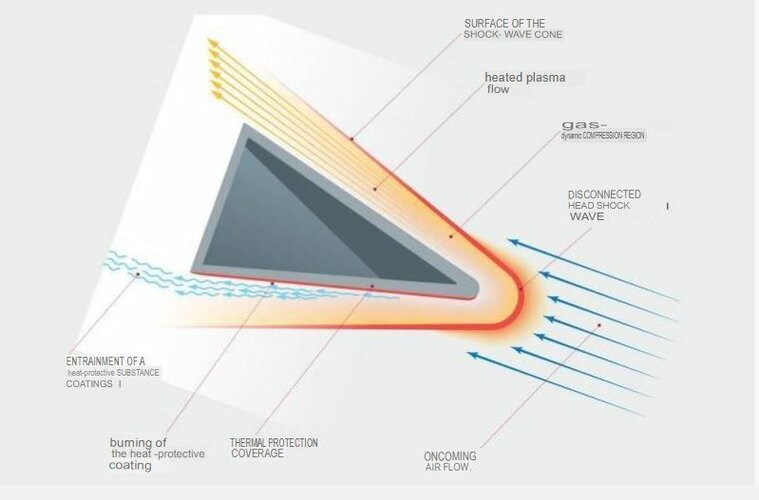
Last I've checked, the plasma sheath is useless against defending UV-wavelength pulse lasers. Also, please note that by the time you get into the megawatt range of lasers, atmospherics tend to take a very distant second seat.sferrin said:Even radar has problems getting through the plasma layer. With Sprint they needed quite a bit of power to communicate through it. I would think it would be even more difficult for a much shorter wavelength laser.
I thought that plasma sheaths were actually more permeable to shorter wavelengths...
That isn't exactly the case, I'm afraid. Unless you want to have a world war every two decades at best and world trade practically going up in smoke... which leads to wars over resources.Thankfully the geo-political tables have turned and we no longer have administrations that choose to look the other way on this kind of thing. Hang em, shoot em, we need to protect our country from a rising authoritarian superpower.

You know just from look at the title and a quick skimming...
View: https://twitter.com/RaytheonDefense/status/1461825932193378318Missile Defense Agency Awards Contracts for Glide Phase Interceptor Design
21-NEWS-0016
November 19, 2021
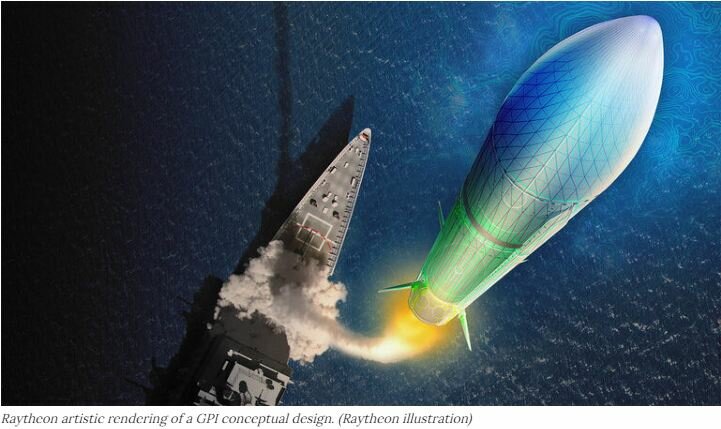
The Missile Defense Agency (MDA) has awarded Other Transactional (OT) Agreements to Lockheed Martin, Northrop Grumman, and Raytheon Missiles and Defense to complete an accelerated concept design of the Glide Phase Interceptor (GPI) for MDA’s regional hypersonic missile defense program.
Any prototypes designed will fit into the current Aegis Ballistic Missile Defense system.
Interceptors will be fired from Navy Aegis Ballistic Missile Defense destroyers using the standard Vertical Launch System (VLS) and will also integrate with the modified Baseline 9 Aegis Weapon System to detect, track, control, and engage hypersonic threats in the glide phase of the missile’s flight.
“We are pleased to have these contractors working with us to develop design concepts for the GPI,” said Rear Adm. Tom Druggan, MDA’s Sea-based Weapon Systems program executive. “Multiple awards allow us to execute a risk reduction phase to explore industry concepts and maximize the benefits of a competitive environment to demonstrate the most effective and reliable Glide Phase Interceptor for regional hypersonic defense, as soon as possible.”
The GPI concept fits into the MDA’s missile defense architecture to provide the warfighter and its allies with reliable layered defense against regional hypersonic missile threats from rogue-nations.