- Joined
- 25 July 2007
- Messages
- 4,918
- Reaction score
- 5,538
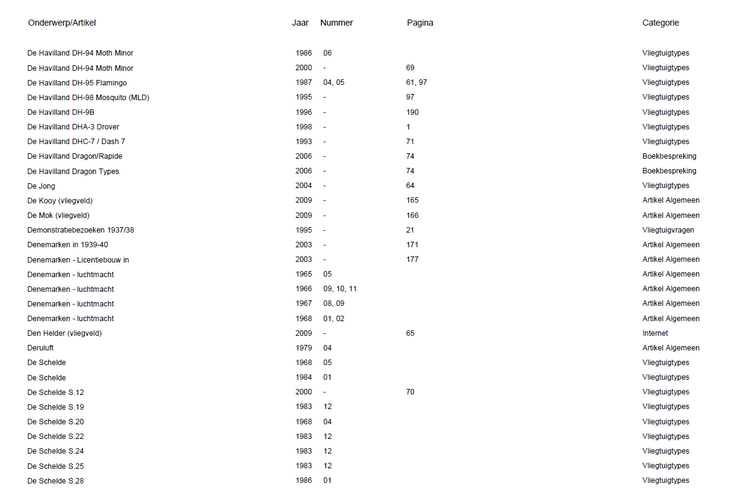
More holes than filling but here's a start on De Schelde designations. Can anyone fill gaps or add other designations?
________________________________________________________
De Schelde Aircraft Designations
De Schelde inherited staff and designs when it took over the failed Pander & zonen firm. Both the services of chief designer Theodorus Slot and his as-yet-unbuilt designs were part of that deal. Thus, from Pander, de Schelde took on the 'S' (for T.E. Slot) designation style as well as a construction number sequence. As a result, the very first aircraft designed at de Schelde - the S.12 monoplane prototype - was assigned c/n 48.
Although Theo Slot designed the unfortunate S.12, it is not clear whether 'S' still stood for Slot at that time ... or if it simply stood for 'Schelde'.
_________________________________________________
De Schelde 'S' Series Aircraft Designations
De Schelde S.1 - (Project) Pander commercial transport/airliner*
- De Schelde S.1 : Engines in leading edge driving tractor props
-- Light engines; but sources differ on whether 4- or 6-engined
-- * Claims of ' twin-booms' probably confusion with larger S.26
De Schelde S.2 - (Project) Pander commercial transport/airliner
- De Schelde S.2: Wing-mounted engines driving pusher props
- De Schelde S.2: 4 x 120 hp De Havilland Gipsys;* span (??)
-- * Pander: Een Haagse vliegtuigbouwer, Harm Hazewinkel
De Schelde S.3 - (Project) Pander commercial transport/airliner
- De Schelde S.3: High-wing trimotor; underwing engine gondolas
- De Schelde S.3: Proceeded final S.4 concepts; no other details
De Schelde S.4 - (Project) 1934 Militair; S.4 Postjager devel.
- De Schelde S.4: Long range recce/medium bomber monoplane*
-- * Derived from Slot's Pander S.4 Postjager mailplane
- De Schelde S.4: Listed as the S.4-militair (not a name)
- De Schelde S.4: Retractable dorsal & ventral gun positions**
-- * 6 x fwd-firing cowling mgs; 1 x dorsal mg; 1 x 'dustbin' mg
-- https://www.secretprojects.co.uk/th...aft-projects-and-prototypes.5276/#post-222783
De Schelde S.5 - (??) hypothetical designation
De Schelde S.6 - (Project) 1934 Pander* monoplane airliner study
-- Discussions with KLM after 1934 DC-2 'Uiver (PH-AJU) crash
- De Schelde S.6: 8-pax in cabin; low-wings;** rear-retr. main u/c
- De Schelde S.6: 2 x 650 hp Wright SR-1820-F2s; [1] span (??) m
- De Schelde S.6: Common airframe with inline De Schelde S.8
-- * In 12 Jan 1935 letter, S.6 described as "Postjager type"
-- * Unclear if this refers to constr. type or simply a monoplane
-- ** Wings tapering fuselage-to-tips (despite clear DC-2 influ.)
- De Schelde S.6: aka 'Schelde I' (marked on the display model)
-- NB: Model showed radial S.6 to starboard; inline S.8 to port
De Schelde S.7 - (??) hypothetical designation
De Schelde S.8 - (Project) 1934-35 low-wing monoplane airliner
- De Schelde S.8: Common airframe with radial-engined S.6
- De Schelde S.8: 8-pax in cabin; low-wings; rear-retr. main u/c
- De Schelde S.8: 2 x 620 hp Jumo 205 diesels;* span (??) m
- De Schelde S.8: Prob. meant as medium type for KLM NEI routes
-- * Junkers orig. desig. Jumo 5; 9-205 was an RLM desig.
- De Schelde S.8: aka 'Schelde I' (marked on the display model)
-- NB: Model showed inline S.8 on portside; radial S.6 on stbd.
De Schelde S.9 - (??) hypothetical designation
De Schelde S.10 - (Project?) Several suggested possibilities
- S.10 : Poss. a monoplane airliner type in S.6 & S.8 series*
-- * Peter Knippels mentions "S.10" together with S.6 & S.8
- S.10 : Poss. number for jachtkruiser marked as 'Schelde II'
-- https://www.secretprojects.co.uk/th...ojects-and-prototypes.5276/page-3#post-805063
De Schelde S.11 - (??) hypothetical designation
De Schelde S.12 - 1935 3-/4-seat,* low-winged cabin aircraft; x 1
- S.12: Slender fuselaged monoplane w/ trousered main u/c legs
- S.12: 1 x 130 hp DH Gipsy Major inverted 4-cyl.; span (??)
- S.12: Theo Slot design for Klaas de Geus van den Heuvel [2]
- S.12: Proved seriously overweight but was accepted anyway [3]
-- * Seating may have been reduced to allow for weight gain
-- NB: Peter Knippels makes no mentions an "S.12" together with the S.6 & S.8
De Schelde S.13 - (Project?) unconfirmed
De Schelde S.14 - (Project?) unconfirmed
De Schelde S.15 - S.18 - (??) hypothetical designations
De Schelde S.19 - (Project) Twin-engined, 4-seat 'jachtkruiser'*
- S.19: Twin-boomed; mid-placed wings; metal constr.; tricycle u/c
- S.19: 2 x engines (various V-12 or radial types);** span (??) m
- S.19: Armament: 2 x moveable cannons in the nose (20 or 23 mm)
- S.19: Armament: 4 x fixed wing mgs; flexible 7.9 mm mg in rear
- S.19: Armament: Offensive payload, 250-500 kg bombs in fuselage
- S.19: No drawings; presumed similar to Fokker ontwerp 163 [4]
-- * Jachtkruisers were bomber-sized multi-seat heavy fighters
-- ** Suggested engines = 2 x 1,080 hp Daimler-Benz DB 600G IV-12s
-- ** Alt. engines = 2 x 1,050 hp Rolls-Royce Merlin II V-12s
-- ** Alt. engines = 2 x 1,282 hp Bristol Hercules 14-cyl. radials
-- The S.19 met requirements but IML placed no order for the type [5]
De Schelde S.20 - 1940 twin-boomed pusher cabin monoplane; x 1
- S.20: 4-seater (1+3) sports a/c; mixed constr.; retract. tricycle u/c
- S.20: 1 x 160 hp Hirth HM 506A inverted 6-cyl.; span 11.35 m
- S.20: (As flown) metal booms; plywood-covered wooden wings
- S.20: (Planned) production aircraft to have metal wing constr.
De Schelde S.21 - (Project) Single-seat, twin-boomed fighter; x 1*
- S.21: Low-winged; twin-boomed; pusher-propeller; tricycle u/c
- S.21: 1 x 1,085 hp Daimler-Benz DB600G IV-12;** span 9.00 m
- S.21: Highly-glazed cockpit w/ flexibly-mounted Madsen 23 mm
-- * Prototype constr. near complete in May 1940; seized by DE
-- ** Alt. engine 1,030 hp R-R Merlin II (or confusion with S.22?)
-- https://www.secretprojects.co.uk/threads/de-schelde-s-21-fighter.7327/
De Schelde S.22 - (Project) Single-seat, twin-boomed fighter a/c
- S.22: High-winged S.21 alternative to 1938 fighter specification
- S.22: 1 x 1,030 hp Rolls-Royce Merlin II pusher; span 9.00 m
- S.22: Flex nose cannon; 2 x cannons in wings; 2 x 7.9 mm mgs
De Schelde S.23 - (??) hypothetical designation
De Schelde S.24 - (Project) 2-seat recce aircraft; related to S.22
- S.24: All-metal constr.; twin-boom; high-winged; pusher prop
- S.24: 1 x 650 hp Isotta Fraschini Asso 120 IRC.40; span 9.00 m
- S.24: Armament: 3-4 fixed mg in nose; 1 x flexible mg in rear*
-- * Optional additional armament: 1 x rear-firing mg motor-gun
-- * Optional additional armament: Wing racks for 50 kg bombs
- S.24: Initially passed over, work renewed in 1939; cancelled**
-- ** Cancelled due to purchase of Fokker G.1s meant for Spain
De Schelde S.25 - (Project) 2-seat 'combat' aircraft (recce type?)
- S.25: All-metal; twin-boom; mid-placed gull-wing; pusher prop
- S.25: 1 x 690 hp Isotta Fraschini Asso 120 IRC.40; span 9.00 m
- S.25: Armament: 3-4 fixed mg in nose; 1 x flexible mg in rear*
-- * Optional additional armament: 1 x rear-firing mg motor-gun
-- * Optional additional armament: Wing racks for 50 kg bombs
- S.25: Oct 1938, IML recommended further development of type
De Schelde S.26 - (Project) 50-pax long-range KLM airliner concept
- S.26: Large airliner for NEI routes; pax in fuselage & in wings
- S.26: Twin-boomed airframe; 6 x engines driving pusher-props
- S.26: 6 x wing-mounted engines (type unknown); span (??) m
- S.26: aka ontwerp 75
-- https://www.secretprojects.co.uk/attachments/de-schelde-s-26-jpg.132791/
De Schelde S.27 - (Project) Poss. ontwerp 76 4-engine mailplane [6]
-- Ontwerp 76: Long-range mailplane for KLM (planned route unknown)
De Schelde S.28 - (Project) High-winged monoplane sportsplane
- S.28: 2-seat* monoplane outgrowth of biplane Scheldemusch
- S.28: 1 x 100 hp engine** mounted on top of wing; span 12.00 m
- S.28: Wing profile same as used by Scheldemusch; wing area 18 m²
- S.28: Wings braced to fuselage & tailplane; retractable trike u/c
-- * Tandem "tweezitter met korten neus" (short-nosed 2-seater)
-- ** Hirth engine (HM 504?) used for S.28 performance calculations
De Schelde S.29 - S.31 - (??) hypothetical designations
De Schelde S.32 - (Project) Twin-engined dive bomber; no details (??)
De Schelde S.33 - (Project) Single-engined, single-seat racing aircraft
- S.33: 1 x (??) hp (??) inline engine (3-blade prop); span 13.00 m
- S.33: Un-numbered 3-view drawing (28 Feb 1940) shows the layout*
-- * Low-winged monoplane; very short main u/c; cockpit set well aft
- S.33: Some say high-speed mailplane (perhaps suggested by size?)
_________________________________________________
[1] Note: Powering ratings given are translated from pk. For the De Schelde S.6, Wright SR-1820-F2 Cyclone engines were probably spec'd (along with NACA cowls and 3-bladed, variable-speed Hamilton-Standard propellers) for easier comparison with KLM/KNILM's inservice DC-2s. (The KNILM being the NEI airline, Koninklijke Nederlandsch-Indische Luchtvaart Maatschappij.)
[2] Along with his brother Bas, Klaas de Geus van den Heuvel was an Amsterdam construction magnate. While the older brother became better-known for his art collection, Klaas became known as a sport aviator.
[3] The S.12 was built at the Bedrijfsschool, Vlissingen. Some sources say that the wooden wing structure was weakened by poor construction practices. As a result of this (or just of being overweight), the S.12 was incapable of carrying passengers. Nonetheless, Klaas de Geus van den Heuvel took delivery of the aircraft which he registered (for his initials) as PH-KGH.
[4] Designed to an IML specification, the ontwerp 163 jachtkruiser was derived from Fokker's G.1 twin-boomed heavy fighter. As the jachtkruiser operational concept faded from favour, the ontwerp 163 was re-imagined as a strategic reconnaissance aircraft.
[5] IML stood for Inspectie der Militaire Luchtvaart )or Military Aviation Inspectorate). Formed in 1935, the role of the IML was to coordinate between the LVA (Luchtvaartafdeeling or Army Aviation) and the LVB (Luchtvaartbedrijf or Technical Branch).
[6] The connect between the designation S.27 and ontwerp 76 is speculative. Ontwerp 76 was the first of four submissions for KLM's South Atlantic airmail route to Paramaribo in Suriname. It had a span of 24.00 m; 4 x Junkers Jumo 205 diesels; and carried 4 passengers + mail. Another submission was a trimotor with 3 x 1,000 hp Wright Cyclones, resembling an enlarged, mid-winged Pander S.4 Postjager.
________________________________________________________
De Schelde Aircraft Designations
De Schelde inherited staff and designs when it took over the failed Pander & zonen firm. Both the services of chief designer Theodorus Slot and his as-yet-unbuilt designs were part of that deal. Thus, from Pander, de Schelde took on the 'S' (for T.E. Slot) designation style as well as a construction number sequence. As a result, the very first aircraft designed at de Schelde - the S.12 monoplane prototype - was assigned c/n 48.
Although Theo Slot designed the unfortunate S.12, it is not clear whether 'S' still stood for Slot at that time ... or if it simply stood for 'Schelde'.
_________________________________________________
De Schelde 'S' Series Aircraft Designations
De Schelde S.1 - (Project) Pander commercial transport/airliner*
- De Schelde S.1 : Engines in leading edge driving tractor props
-- Light engines; but sources differ on whether 4- or 6-engined
-- * Claims of ' twin-booms' probably confusion with larger S.26
De Schelde S.2 - (Project) Pander commercial transport/airliner
- De Schelde S.2: Wing-mounted engines driving pusher props
- De Schelde S.2: 4 x 120 hp De Havilland Gipsys;* span (??)
-- * Pander: Een Haagse vliegtuigbouwer, Harm Hazewinkel
De Schelde S.3 - (Project) Pander commercial transport/airliner
- De Schelde S.3: High-wing trimotor; underwing engine gondolas
- De Schelde S.3: Proceeded final S.4 concepts; no other details
De Schelde S.4 - (Project) 1934 Militair; S.4 Postjager devel.
- De Schelde S.4: Long range recce/medium bomber monoplane*
-- * Derived from Slot's Pander S.4 Postjager mailplane
- De Schelde S.4: Listed as the S.4-militair (not a name)
- De Schelde S.4: Retractable dorsal & ventral gun positions**
-- * 6 x fwd-firing cowling mgs; 1 x dorsal mg; 1 x 'dustbin' mg
-- https://www.secretprojects.co.uk/th...aft-projects-and-prototypes.5276/#post-222783
De Schelde S.5 - (??) hypothetical designation
De Schelde S.6 - (Project) 1934 Pander* monoplane airliner study
-- Discussions with KLM after 1934 DC-2 'Uiver (PH-AJU) crash
- De Schelde S.6: 8-pax in cabin; low-wings;** rear-retr. main u/c
- De Schelde S.6: 2 x 650 hp Wright SR-1820-F2s; [1] span (??) m
- De Schelde S.6: Common airframe with inline De Schelde S.8
-- * In 12 Jan 1935 letter, S.6 described as "Postjager type"
-- * Unclear if this refers to constr. type or simply a monoplane
-- ** Wings tapering fuselage-to-tips (despite clear DC-2 influ.)
- De Schelde S.6: aka 'Schelde I' (marked on the display model)
-- NB: Model showed radial S.6 to starboard; inline S.8 to port
De Schelde S.7 - (??) hypothetical designation
De Schelde S.8 - (Project) 1934-35 low-wing monoplane airliner
- De Schelde S.8: Common airframe with radial-engined S.6
- De Schelde S.8: 8-pax in cabin; low-wings; rear-retr. main u/c
- De Schelde S.8: 2 x 620 hp Jumo 205 diesels;* span (??) m
- De Schelde S.8: Prob. meant as medium type for KLM NEI routes
-- * Junkers orig. desig. Jumo 5; 9-205 was an RLM desig.
- De Schelde S.8: aka 'Schelde I' (marked on the display model)
-- NB: Model showed inline S.8 on portside; radial S.6 on stbd.
De Schelde S.9 - (??) hypothetical designation
De Schelde S.10 - (Project?) Several suggested possibilities
- S.10 : Poss. a monoplane airliner type in S.6 & S.8 series*
-- * Peter Knippels mentions "S.10" together with S.6 & S.8
- S.10 : Poss. number for jachtkruiser marked as 'Schelde II'
-- https://www.secretprojects.co.uk/th...ojects-and-prototypes.5276/page-3#post-805063
De Schelde S.11 - (??) hypothetical designation
De Schelde S.12 - 1935 3-/4-seat,* low-winged cabin aircraft; x 1
- S.12: Slender fuselaged monoplane w/ trousered main u/c legs
- S.12: 1 x 130 hp DH Gipsy Major inverted 4-cyl.; span (??)
- S.12: Theo Slot design for Klaas de Geus van den Heuvel [2]
- S.12: Proved seriously overweight but was accepted anyway [3]
-- * Seating may have been reduced to allow for weight gain
-- NB: Peter Knippels makes no mentions an "S.12" together with the S.6 & S.8
De Schelde S.13 - (Project?) unconfirmed
De Schelde S.14 - (Project?) unconfirmed
De Schelde S.15 - S.18 - (??) hypothetical designations
De Schelde S.19 - (Project) Twin-engined, 4-seat 'jachtkruiser'*
- S.19: Twin-boomed; mid-placed wings; metal constr.; tricycle u/c
- S.19: 2 x engines (various V-12 or radial types);** span (??) m
- S.19: Armament: 2 x moveable cannons in the nose (20 or 23 mm)
- S.19: Armament: 4 x fixed wing mgs; flexible 7.9 mm mg in rear
- S.19: Armament: Offensive payload, 250-500 kg bombs in fuselage
- S.19: No drawings; presumed similar to Fokker ontwerp 163 [4]
-- * Jachtkruisers were bomber-sized multi-seat heavy fighters
-- ** Suggested engines = 2 x 1,080 hp Daimler-Benz DB 600G IV-12s
-- ** Alt. engines = 2 x 1,050 hp Rolls-Royce Merlin II V-12s
-- ** Alt. engines = 2 x 1,282 hp Bristol Hercules 14-cyl. radials
-- The S.19 met requirements but IML placed no order for the type [5]
De Schelde S.20 - 1940 twin-boomed pusher cabin monoplane; x 1
- S.20: 4-seater (1+3) sports a/c; mixed constr.; retract. tricycle u/c
- S.20: 1 x 160 hp Hirth HM 506A inverted 6-cyl.; span 11.35 m
- S.20: (As flown) metal booms; plywood-covered wooden wings
- S.20: (Planned) production aircraft to have metal wing constr.
De Schelde S.21 - (Project) Single-seat, twin-boomed fighter; x 1*
- S.21: Low-winged; twin-boomed; pusher-propeller; tricycle u/c
- S.21: 1 x 1,085 hp Daimler-Benz DB600G IV-12;** span 9.00 m
- S.21: Highly-glazed cockpit w/ flexibly-mounted Madsen 23 mm
-- * Prototype constr. near complete in May 1940; seized by DE
-- ** Alt. engine 1,030 hp R-R Merlin II (or confusion with S.22?)
-- https://www.secretprojects.co.uk/threads/de-schelde-s-21-fighter.7327/
De Schelde S.22 - (Project) Single-seat, twin-boomed fighter a/c
- S.22: High-winged S.21 alternative to 1938 fighter specification
- S.22: 1 x 1,030 hp Rolls-Royce Merlin II pusher; span 9.00 m
- S.22: Flex nose cannon; 2 x cannons in wings; 2 x 7.9 mm mgs
De Schelde S.23 - (??) hypothetical designation
De Schelde S.24 - (Project) 2-seat recce aircraft; related to S.22
- S.24: All-metal constr.; twin-boom; high-winged; pusher prop
- S.24: 1 x 650 hp Isotta Fraschini Asso 120 IRC.40; span 9.00 m
- S.24: Armament: 3-4 fixed mg in nose; 1 x flexible mg in rear*
-- * Optional additional armament: 1 x rear-firing mg motor-gun
-- * Optional additional armament: Wing racks for 50 kg bombs
- S.24: Initially passed over, work renewed in 1939; cancelled**
-- ** Cancelled due to purchase of Fokker G.1s meant for Spain
De Schelde S.25 - (Project) 2-seat 'combat' aircraft (recce type?)
- S.25: All-metal; twin-boom; mid-placed gull-wing; pusher prop
- S.25: 1 x 690 hp Isotta Fraschini Asso 120 IRC.40; span 9.00 m
- S.25: Armament: 3-4 fixed mg in nose; 1 x flexible mg in rear*
-- * Optional additional armament: 1 x rear-firing mg motor-gun
-- * Optional additional armament: Wing racks for 50 kg bombs
- S.25: Oct 1938, IML recommended further development of type
De Schelde S.26 - (Project) 50-pax long-range KLM airliner concept
- S.26: Large airliner for NEI routes; pax in fuselage & in wings
- S.26: Twin-boomed airframe; 6 x engines driving pusher-props
- S.26: 6 x wing-mounted engines (type unknown); span (??) m
- S.26: aka ontwerp 75
-- https://www.secretprojects.co.uk/attachments/de-schelde-s-26-jpg.132791/
De Schelde S.27 - (Project) Poss. ontwerp 76 4-engine mailplane [6]
-- Ontwerp 76: Long-range mailplane for KLM (planned route unknown)
De Schelde S.28 - (Project) High-winged monoplane sportsplane
- S.28: 2-seat* monoplane outgrowth of biplane Scheldemusch
- S.28: 1 x 100 hp engine** mounted on top of wing; span 12.00 m
- S.28: Wing profile same as used by Scheldemusch; wing area 18 m²
- S.28: Wings braced to fuselage & tailplane; retractable trike u/c
-- * Tandem "tweezitter met korten neus" (short-nosed 2-seater)
-- ** Hirth engine (HM 504?) used for S.28 performance calculations
De Schelde S.29 - S.31 - (??) hypothetical designations
De Schelde S.32 - (Project) Twin-engined dive bomber; no details (??)
De Schelde S.33 - (Project) Single-engined, single-seat racing aircraft
- S.33: 1 x (??) hp (??) inline engine (3-blade prop); span 13.00 m
- S.33: Un-numbered 3-view drawing (28 Feb 1940) shows the layout*
-- * Low-winged monoplane; very short main u/c; cockpit set well aft
- S.33: Some say high-speed mailplane (perhaps suggested by size?)
_________________________________________________
[1] Note: Powering ratings given are translated from pk. For the De Schelde S.6, Wright SR-1820-F2 Cyclone engines were probably spec'd (along with NACA cowls and 3-bladed, variable-speed Hamilton-Standard propellers) for easier comparison with KLM/KNILM's inservice DC-2s. (The KNILM being the NEI airline, Koninklijke Nederlandsch-Indische Luchtvaart Maatschappij.)
[2] Along with his brother Bas, Klaas de Geus van den Heuvel was an Amsterdam construction magnate. While the older brother became better-known for his art collection, Klaas became known as a sport aviator.
[3] The S.12 was built at the Bedrijfsschool, Vlissingen. Some sources say that the wooden wing structure was weakened by poor construction practices. As a result of this (or just of being overweight), the S.12 was incapable of carrying passengers. Nonetheless, Klaas de Geus van den Heuvel took delivery of the aircraft which he registered (for his initials) as PH-KGH.
[4] Designed to an IML specification, the ontwerp 163 jachtkruiser was derived from Fokker's G.1 twin-boomed heavy fighter. As the jachtkruiser operational concept faded from favour, the ontwerp 163 was re-imagined as a strategic reconnaissance aircraft.
[5] IML stood for Inspectie der Militaire Luchtvaart )or Military Aviation Inspectorate). Formed in 1935, the role of the IML was to coordinate between the LVA (Luchtvaartafdeeling or Army Aviation) and the LVB (Luchtvaartbedrijf or Technical Branch).
[6] The connect between the designation S.27 and ontwerp 76 is speculative. Ontwerp 76 was the first of four submissions for KLM's South Atlantic airmail route to Paramaribo in Suriname. It had a span of 24.00 m; 4 x Junkers Jumo 205 diesels; and carried 4 passengers + mail. Another submission was a trimotor with 3 x 1,000 hp Wright Cyclones, resembling an enlarged, mid-winged Pander S.4 Postjager.
Last edited: