
You are using an out of date browser. It may not display this or other websites correctly.
You should upgrade or use an alternative browser.
You should upgrade or use an alternative browser.
Davis "Manta"

- Joined
- 26 May 2006
- Messages
- 38,289
- Reaction score
- 20,430
Justo Miranda said:Here some pics of the twin booms version from
-"Die Deutsche Sportflieger" sept 1942
-"Aeronautical Engineering Review" june 1942
-"Luftahrt International" No 25
-"Le Fanatique de l´Aviation" 216-217
My dear Lark,
in first page of topic,my dear Justo mentioned that,there was a twin boom version.
I know Justo's work very well Hesham.
Please, read the tekst with the illustration you posted.
Blended wing/fuselages and pusher prop's were the fashion of the day then
for striking publicity adverts..
Please, read the tekst with the illustration you posted.
Blended wing/fuselages and pusher prop's were the fashion of the day then
for striking publicity adverts..

- Joined
- 11 March 2006
- Messages
- 8,540
- Reaction score
- 5,027
Translation:
"Picture 6: In an advert about the theme "Planes of the Future", the General Tire & Rubber Co. Akron, Ohio
showed in June 1942 this design of a MANTA-like (!) aircraft with twin fins and pusher prop"
"Picture 6: In an advert about the theme "Planes of the Future", the General Tire & Rubber Co. Akron, Ohio
showed in June 1942 this design of a MANTA-like (!) aircraft with twin fins and pusher prop"

- Joined
- 25 June 2009
- Messages
- 15,515
- Reaction score
- 9,447
hesham said:and I thought it was anther variant of it at first,but obviously I was wrong.
... which is why I have told you several times, hesham, not to jump to conclusions if you do not speak the language!!

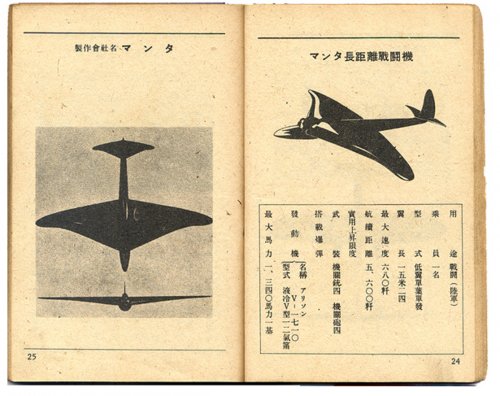
blackkite said:There was a Manta description in Japanese enemy aircrafts list in 1944.
http://www.tante2.com/tekki-ichiran.html
Cool period ID book, Blackkite, do you know if the intel was shared with Germany?
Or if there was discussion about Allied aircraft performance that included types used only in PTO, or ETO?
Like, did the Luftwaffe want to know about the B-29, & Nippon air forces about the Typhoon/Tempest etc?

blackkite
Don't laugh, don't cry, don't even curse, but.....
- Joined
- 31 May 2007
- Messages
- 9,515
- Reaction score
- 9,661
Hmmm...Your questions are little hard for me.J.A.W. said:blackkite said:There was a Manta description in Japanese enemy aircrafts list in 1944.
http://www.tante2.com/tekki-ichiran.html
Cool period ID book, Blackkite, do you know if the intel was shared with Germany?
Or if there was discussion about Allied aircraft performance that included types used only in PTO, or ETO?
Like, did the Luftwaffe want to know about the B-29, & Nippon air forces about the Typhoon/Tempest etc?
J
joncarrfarrelly
Guest
The top and front view photos of the Manta model used in the Japanese ID book appeared in several commercial publications,
the earliest in my possession is the September 1941 Air Trails. So if the Jpanese had the images, I'm sure the Germans did
as well.
the earliest in my possession is the September 1941 Air Trails. So if the Jpanese had the images, I'm sure the Germans did
as well.
KJ_Lesnick
ACCESS: Top Secret
- Joined
- 13 February 2008
- Messages
- 1,042
- Reaction score
- 125
I did some research on this and I've found some interesting details
- Justo Miranda's drawings while beautiful and details were based upon the premise of the aircraft having a V-3420: It didn't, it in fact was based around the V-1710
- In an effort to obtain money to develop his ideas, David R. Davis exaggerated the capabilities of the airplane quite a bit: It's improbable (except perhaps in a dive) that the aircraft would have been capable of exceeding 400 mph with a V-1710
- From what it would appear, the design might have started baseline development as early as 1935 though I have no idea how much different the concept at that time was in terms of size, weight, and armament.
- Far as I know, it was pitched as a long-range fighter: This might have been the biggest thing against it as the USAAC didn't really wish to develop long-ranged escort fighters
[list type=decimal] - While there were some who felt long-ranged fighters were inherently useful, it would appear they did not believe they were absolutely needed
- They also had self-imposed certain restrictions on such fighter designs: No drop-tanks, the plane had to fly the whole way on internal fuel alone; speed had to be equivalent to enemy interceptors; early proposals even included a rear-gunner (while many would be lead to believe after the Consolidated P-30/PB-2 that they gave up on it, the YFM-1 Airacuda had a waist gunner)
- They also felt they would be greatly more expensive compared to regular fighters and wanted to build up a massive bomber force, as a result they didn't fund them as a rule: The only "exception" was the YFM-1 Airacuda because it was predominantly a long-ranged bomber-destroyer that was also be an escort fighter
KJ_Lesnick
ACCESS: Top Secret
- Joined
- 13 February 2008
- Messages
- 1,042
- Reaction score
- 125
Does anybody have the dimensions of the twin-boomer?
- Joined
- 25 June 2009
- Messages
- 15,515
- Reaction score
- 9,447
KJ_Lesnick said:I did some research on this and I've found some interesting details
Thanks for the new input, KJ.
KJ_Lesnick
ACCESS: Top Secret
- Joined
- 13 February 2008
- Messages
- 1,042
- Reaction score
- 125
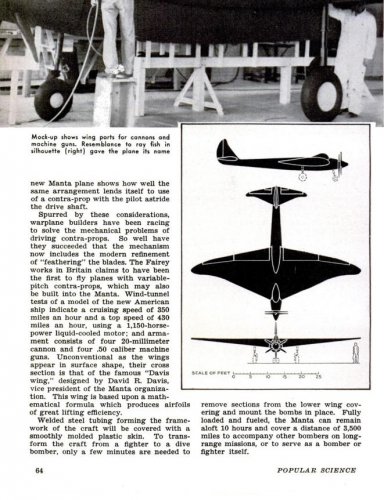
Though this is an old thread, I'm curious about something stated in the June 1942 Popular Science article that was posted by Skyblazer in reply #21 (I attached the same file for convenience).
That's a pretty advanced feature, I'm curious if anybody has any idea what kind of plastic could have been used in those days -- the only thing I can think of is PVC (the Vickers Windsor used it) and bakelite (The Yak-9 used it)Welded steel tubing the framework of the craft will be covered with a smoothly molded plastic skin.
Attachments

- Joined
- 8 March 2009
- Messages
- 1,173
- Reaction score
- 1,745
KJ_Lesnick said:Though this is an old thread, I'm curious about something stated in the June 1942 Popular Science article that was posted by Skyblazer in reply #21 (I attached the same file for convenience).
That's a pretty advanced feature, I'm curious if anybody has any idea what kind of plastic could have been used in those days -- the only thing I can think of is PVC (the Vickers Windsor used it) and bakelite (The Yak-9 used it)Welded steel tubing the framework of the craft will be covered with a smoothly molded plastic skin.
Maybe related to "chemurgy" and the soybean and hemp plastics that ford and others were promoting during that time.

- Joined
- 6 November 2010
- Messages
- 6,361
- Reaction score
- 8,244
Polikarpov I-16 and Lavochkin LaGG-1/3 used shpon - a birchwood-bakelite compound - for skin panels.KJ_Lesnick said:That's a pretty advanced feature, I'm curious if anybody has any idea what kind of plastic could have been used in those days -- the only thing I can think of is PVC (the Vickers Windsor used it) and bakelite (The Yak-9 used it)Welded steel tubing the framework of the craft will be covered with a smoothly molded plastic skin.


- Joined
- 25 July 2007
- Messages
- 4,919
- Reaction score
- 5,547
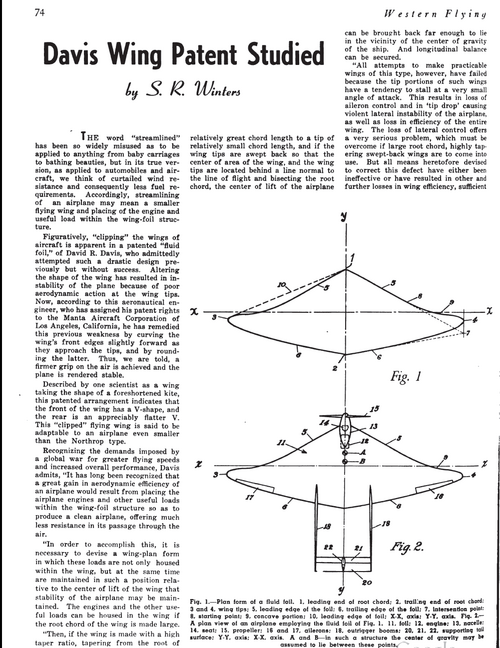
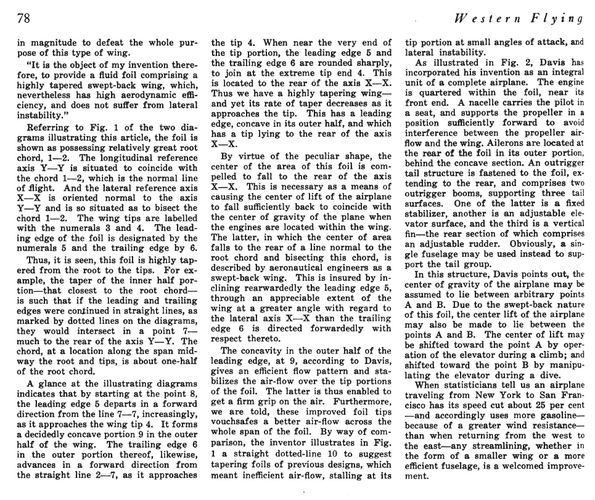
From, Western_Aviation_Missiles_and_Space 1943
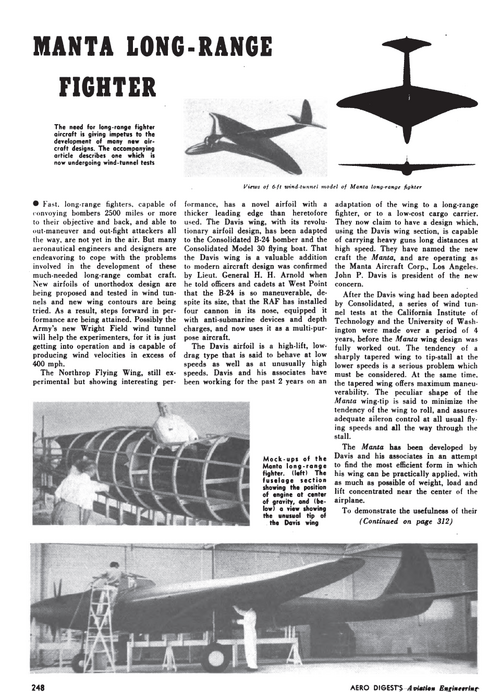
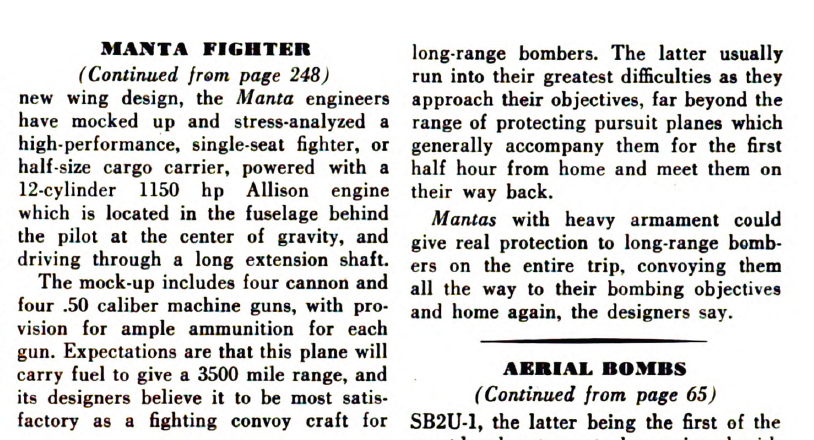
Source: Western Flying, Vol XXIII, No. 1, January 1943, Davis Wing Patent Studied by S.R. Winters, pages 74 and 78
hesham: As noted elsewhere, Western Aviation, Missiles, and Space did not exist in the 1940s. Please don't repeat Google Books' unhelpful 'Western_Aviation_Missiles_and_Space' name clumpings!
Between 1926 and 1951, the name of this magazine was Western Flying. After that, LA-based Western Aviation Magazine, Inc. rebranded their publication as the trade magazine: Western Flying before tagging on "including Missile and Space Industries" in 1959. By 1961, it was Western Aviation Missile and Space then, in 1963, it became Western Aerospace.
If you are referencing Google Books for Western Flying, et al, select Section 1 and you will be able to find the actual magazine name, date, volume, number, etc.
CaseyKnight
I really should change my personal text
- Joined
- 25 July 2011
- Messages
- 112
- Reaction score
- 110
Was there ever any estimates as to how much this design would weigh? I figure the plastic skin would have lowered the weight over traditional metal skin.

southwestforests
ACCESS: Top Secret
- Joined
- 28 June 2012
- Messages
- 1,018
- Reaction score
- 1,981
While most of the conversation has been about design and sources, I'm struck by how serious they were about making holes in the other guys' planes.About the 'Manta' fighter.
...
armament :4x20mmm cannon
4x 12.5 mmMG
Davis Manta Fighter
In 1934 the American engineer David R. Davis registered a patent for the concept denominated Fluid Foil. It was a new type of thick-root manta ray-shaped wing which chord/thick ratio was constant thanks to the special crescent design of the leading edge.
This wing is based upon a mathematical formula which produces airfoils of great aerodynamic efficiency.
The advantages of this wing configuration resided in its thick central section which did not produce excessive drag and could also be used to house a big engine and huge amounts of fuel.
In 1940 Davis designed a long-range escort fighter, which sophisticated aerodynamics should have offered incredible performance and 3,500 miles range. It should have been propelled by an Allison V-3420 of 2,600 hp. a very bulky and heavy engine formed by two 12-cylinder V-1710 engines (which powered the P-38, P-39 and P-40 fighters) joined in a common crankcase.
The Davis fighter, named Bat, was a twin boom design very much alike the British Vampire with the engine fully submerged in the wing and extended prop shaft driving contra-rotating propellers.
Would it have ever been built, it would have been very easy to replace the reciprocating engine with one of the centrifugal De Havilland turbojet engines, without any substantial change to the design.
Unfortunately, the concept was too radical for his time, in 1940 the USAAC believed that the big bombers could defend themselves without any fighter’s escort.
Another good reason to reject its manufacturing was the difficulties that the pusher propellers presented in case the pilot bailed out.
Despite the different devices designed to this purpose, the truth is that neither the Bat nor any other similar design (Curtiss XP-55, Northrop XP-56, Vultee XP-54 and Gluhareff Delta) ever entered service in the USAAC.
Two years of wind-tunnel research went into the planning of a new airframe.
In 1942 the Bat was fully redesigned as the Manta, with tractor propellers and conventional fuselage and empennages. The Manta Aircraft Corporation was created in Los Angeles-California for its manufacturing.
The new airplane, named Manta Fighter was a very promising design, faster than the Thunderbolt, it had six times its range and a weight of fire 31% superior.
Unfortunately for the manufacturer the Manta had a propulsion system like the Bell P-39 Airacobra which, at the time, was giving dreadful performances in combat against the Japanese fighters.
The engine mounted amid ship had been a fiasco and the USAAF lost interest in the Manta project of which only a mockup was ever built in 1942.
Bat technical data
Engine: one 2,600 hp Allison V-3420-B2 of 24 cylinders in ‘W’, liquid cooled, driving six-bladed contra-rotating airscrews.
Armament: four 20-mm Hispano M1 cannons, wingspan: 49 ft. (14.94 m), length: 33 ft. (10.08 m), height: 9 ft. (2.77 m), wing surface: 411 sq. ft. (37 sq. m), range: 3,500 miles (5,600 km).
Manta technical data
Engine: one 2,600 hp Allison V-3420-B2 of 24 cylinders in ‘W’, liquid cooled, driving six-bladed contra-rotating airscrews.
Armament: four 20-mm Hispano M1 cannons and four Browning 0.5-in M3 machine guns, wingspan: 49 ft. (14.94 m), length: 38 ft. (11.63 m), height: 11 ft. (3.38 m), wing surface: 389 sq. ft. (35 sq. m), service ceiling: 39,360 ft (12,000 m).
SPECULATIVE DRAWINGS
Attachments
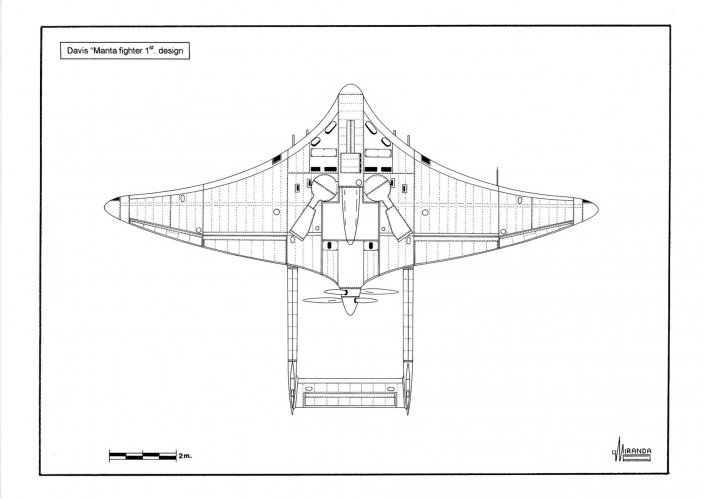
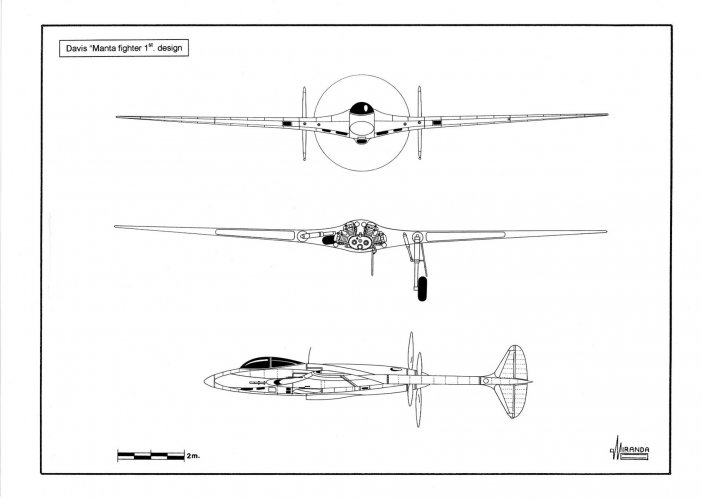
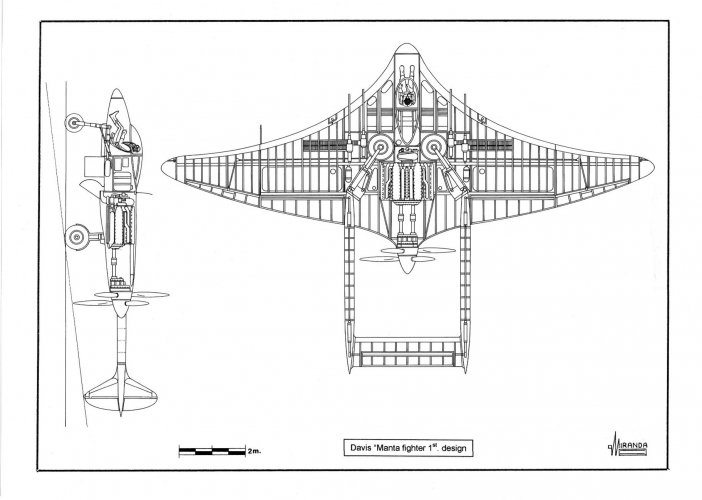
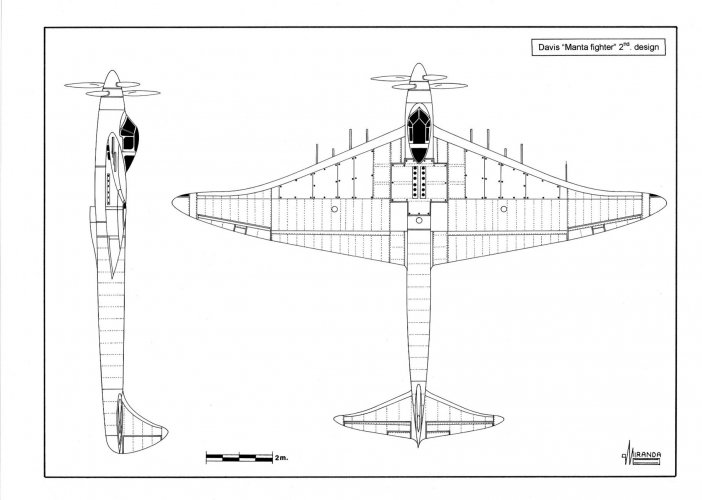
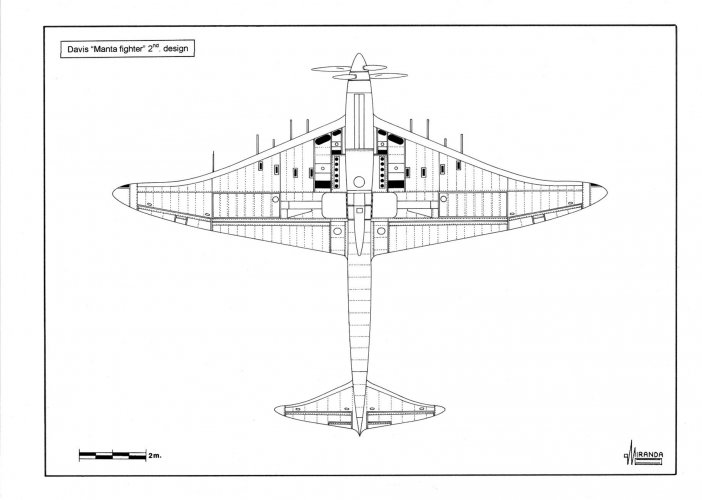
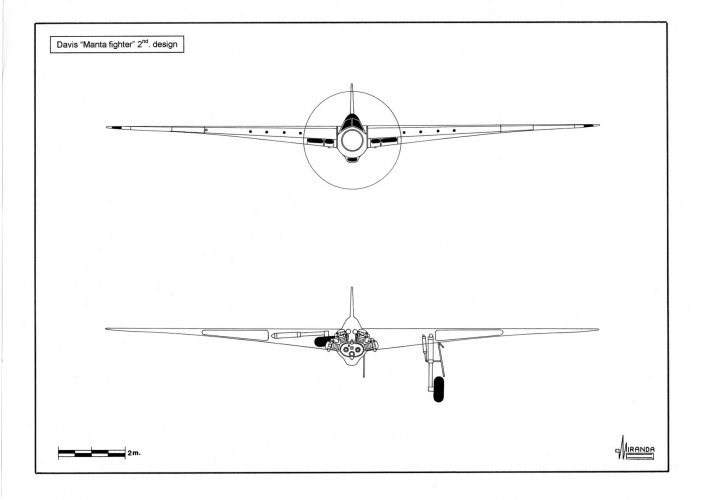
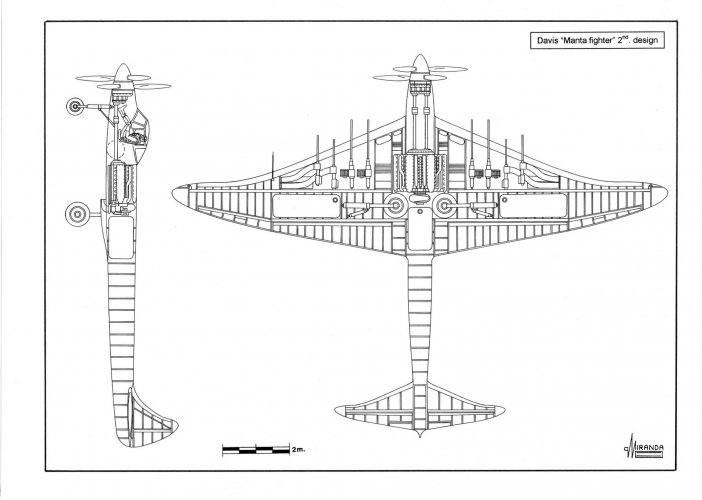
- Joined
- 25 June 2009
- Messages
- 15,515
- Reaction score
- 9,447
Thanks for this great article, @Justo. Where was it published?
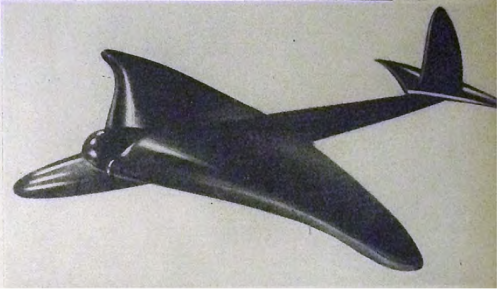
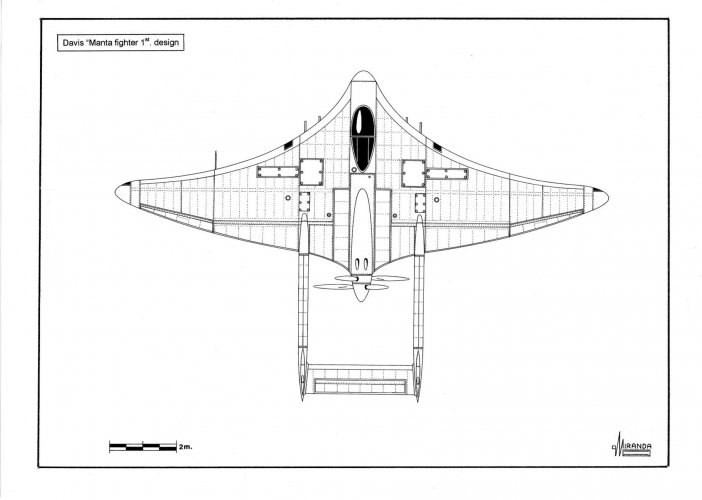
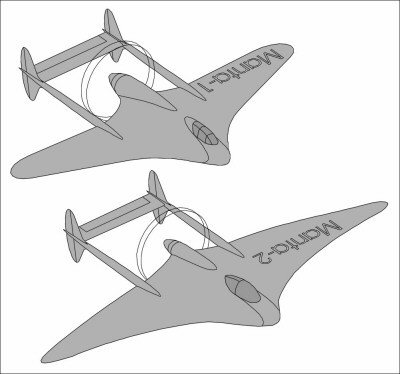
Also, let's not forget that the Bat was redesigned at some point. The version you drew, with a similar wing shape as the later Manta fighter, was the revised design. Here is the original one, from the September 1942 issue of Die Deutsche Sportflieger. Also, the late Tophe did a beautiful rendering of both versions, although he named them "Manta-1" and "Manta-2", probably for lack of a better name.


Also, let's not forget that the Bat was redesigned at some point. The version you drew, with a similar wing shape as the later Manta fighter, was the revised design. Here is the original one, from the September 1942 issue of Die Deutsche Sportflieger. Also, the late Tophe did a beautiful rendering of both versions, although he named them "Manta-1" and "Manta-2", probably for lack of a better name.
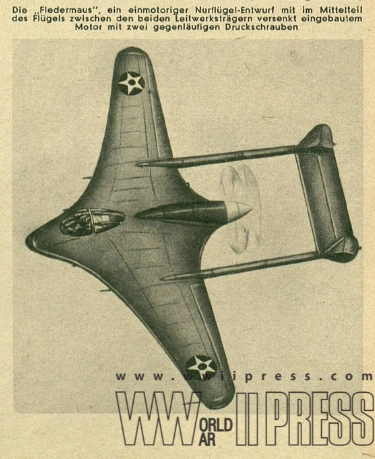
https://www.amazon.es/Ultimate-Allied-Fighters-Second-World/dp/1781558884Thanks for this great article, @Justo. Where was it published?
Also, let's not forget that the Bat was redesigned at some point. The version you drew, with a similar wing shape as the later Manta fighter, was the revised design. Here is the original one, from the September 1942 issue of Die Deutsche Sportflieger. Also, the late Tophe did a beautiful rendering of both versions, although he named them "Manta-1" and "Manta-2", probably for lack of a better name.
View attachment 774423 View attachment 774424
Attachments
I have one quibble. The Allison was neither particularly bulky nor particularly heavy for engines of its power and vintage. See the following list of dry weights found at multiple sites on the internet:... It should have been propelled by an Allison V-3420 of 2,600 hp. a very bulky and heavy engine formed by two 12-cylinder V-1710 engines (which powered the P-38, P-39 and P-40 fighters) joined in a common crankcase...
2,655 lb (1,204 kg) V-3420
2,360 lb (1,073 kg) R-2800
2,360 lb (1,070 kg) Napier Sabre
2,450 lb (1,111 kg) RR Vulture
2,670 lb (1,210 kg) Wright R-3350-13
2,695 lb (1,222 kg) Bristol Centaurus
At 40 in (102 cm), the Allison was wider than the other liquid-cooled engines, of course. This was due to the 30-degree angle between the two consituent 60-degree V-12s. But, unlike the Vulture, it also proved to be well-balanced. It was also narrower than the The R-2800 at 52.8 in (1,342 mm), the Centaurus at 55.3 in (1,400 mm) and the R-3350 at 55.78 in (1,417 mm).
Last edited:
- Joined
- 26 May 2006
- Messages
- 38,289
- Reaction score
- 20,430
From Wikipedia and Aerofiles,you feel there are two aircraft not one ?!,
https://en.wikipedia.org/wiki/List_of_aircraft_(M–Ma)
http://www.aerofiles.com/_ma.html
https://en.wikipedia.org/wiki/List_of_aircraft_(M–Ma)
http://www.aerofiles.com/_ma.html
Two projects: conventional and twin booms airframesFrom Wikipedia and Aerofiles,you feel there are two aircraft not one ?!,
https://en.wikipedia.org/wiki/List_of_aircraft_(M–Ma)
http://www.aerofiles.com/_ma.html
CaseyKnight
I really should change my personal text
- Joined
- 25 July 2011
- Messages
- 112
- Reaction score
- 110
Though the aircraft was intended to be powered by a V-1710, the V-3420 would have been a decidedly better choice (while there were other high-power engines available such as the X-1800 and H-2470, they were less powerful) as it would actually have had enough power to achieve much of the speed and climb-rates needed, the engine design began in 1934 (which predated the X-1800 and H-2470 and, by 1937 the decision was made to rework the engine from the X-3420 to the V-3420), and should have had sufficient high-altitude performance with a turbosupercharger to make for a workable convoy-fighter.Davis Manta Fighter
The difference between a convoy-fighter and an escort-fighter had to do with the fact that...
1. Escorts were to fly with the bomber in close-proximity. Because of the fact that fighters usually naturally had a higher cruise-speeds than bombers; the fact that a higher speed was often necessary for tactical-effectiveness: One had to fly an S-weave in order to avoid leaving the bombers in dust, and all of this greatly cut into range.
2. Convoy-fighters flew in a set of waves made of small formations that flew in the general area of the bomber at their own speeds which were based on range or tactical-requirements: It was effectively like doing a whole bunch of long-ranged fighter-sweeps in the general area of the bombers with the idea of clearing out the way. It avoided the S-weaving requirement and one could time these waves to arrive over the bomber-formation when necessary and, as the first wave cleared out the way, even cover the formation again on it's way back home of desired.
The bomber-guys tended to feel more comfortable with the close-escort because the fighters gave them a psychological feeling of security whereas the fighter-guys preferred the convoy concept as it allowed more freedom of action and the ability to cover the bombers out to a longer distance. This wasn't something unique to the United States: The Germans also preferred to have their Zerstorers tied-up in close-escort operations (which did them no favors).
Now, it's important to understand that there were additional complications that undermined a fighters (and bombers) radius of action in this role: For starters, there's the ferry range which had almost no range-free allowances built in and seemed to be little more than a theoretical maximum (anybody with more knowledge, feel free to correct me here); then there's the actual combat range and radius which included some basic variables such as: Start-up, warm-up, takeoff, form-up, the outbound and return legs, additional fuel to cover loitering, diverting to alternate fields, go-around, and the means to taxi-back to the tarmac; there were also the matter of combat which required higher engine-power settings and maneuvers of various types, and all of these cut into the theoretical figures. This affected fighters more than bombers because, while both fighters and bombers were expected to fly some of the mission at higher speeds (and power-settings by extension), as well as incorporate various maneuvers: Fighters spent more time maneuvering aggressively and flying at high power-settings. The upshot of all of this is that combat-range affects fighters more than bombers: The bomber's combat radius is 40% of the ferry-range, the fighter's combat-radius ends up being around 30% of the ferry range. If both aircraft had the same ferry range, the fighter would have 75% the combat-radius of the bomber and, for the combat radii to be equal: The fighter would require a ferry range 133% that of the bomber (Unsurprinslgy, people who did look into the idea of close-escorts and convoy-fighters often proposed having fighters cover segments of the bomber's route rather than provide continuous cover over the whole flight).
Regardless, I like your artistic license as it really captures the spirit of the design. I can only see three small things that would be noteworthy
1. The V-3420's inner cylinder banks likely would require a small set of blister like fairings similar to those seen on the forward fuselage of the later Griffon-Powered Supermarine Spitfires: This is the most noteworthy since it seems the only thing that would have trouble "fitting" in the confines of the airframe.
2. The Manta had an 8-bladed contra-rotating propeller: Generally, most planes of the time period had three-blades as the norm as the alternative would have been twin-bladed props of a prohibitively large diameter. As engine power increased, it wasn't uncommon to see 4-bladed props becoming the norm to handle the extra-power, with some engines like the Griffon-powered Spitfires would see 5-bladed props, and the Seafire Mk. 47 fitted with a 6-bladed contra-rotating propeller. Taking this the other way, one could reduce the diameter on a given amount of horsepower with more blades, and this seems to have been what Davis appeared to be going for (the diameter was all of 6'2" – most propellers at this time were around 9 or 10 feet) and with the V-3420 substituted in, to maintain the disc-loading, you'd need to double the propeller-disc area, and that would give a prop pretty close to the size you produced (10'0" give or take a few inches). This of course is dependent on the 8-bladed layout being retained.
3. It seems that the actual design had a nose-gear around the same height as the main-gear, as the plane sat fairly level with the ground in the mockup (your design appears to have the mains slightly taller), which could be quite useful since there are minimum clearance requirements for propellers. While these requirements had relaxed during the course of WWII, the design began development before this point. Though, I'm unsure what the exact clearance requirements were: I *do* know the USSR used 250 cm (9.8") and I'd imagine we probably had a similar requirements since some things are based on common sense (i.e. you need around this much to avoid hitting the ground with your props).
Yeah, I've noticed that too: It really did have a spectacular amount of firepower. The XP-75 also had a lot too (6x0.50 + 4x0.50) though it started out as a fast-climbing interceptor which was then turned into a long-ranged escort-fighter.While most of the conversation has been about design and sources, I'm struck by how serious they were about making holes in the other guys' planes.
Honestly, I'd have been more than satisfied had I been a fighter-pilot in those days taking a good fighter with 4 x 20mm into the skies.
Last edited:
Similar threads
-

-
-

-
 Detroit ZMC-2 Metal-Skinned Airship (1929-1941)
- Started by Boxman
- Replies: 4
-
U.S.Navy-BuAer Specification SD 112.14 (1938)
- Started by lark
- Replies: 9