
You are using an out of date browser. It may not display this or other websites correctly.
You should upgrade or use an alternative browser.
You should upgrade or use an alternative browser.
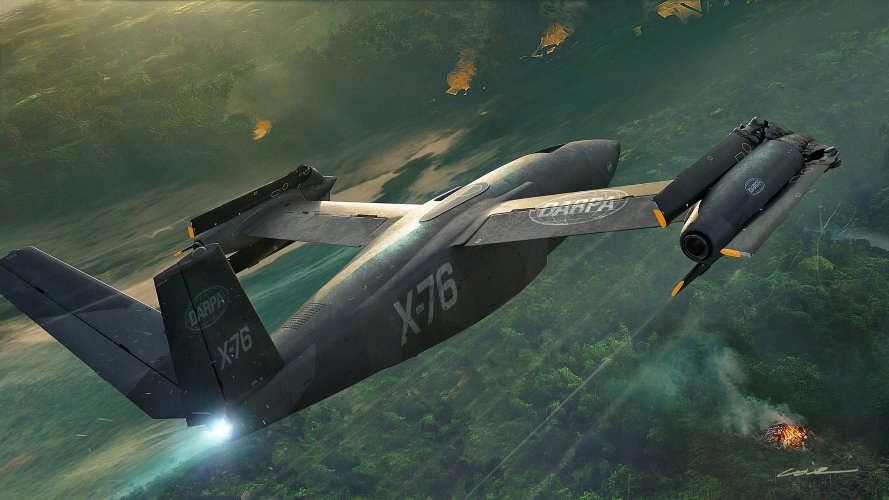
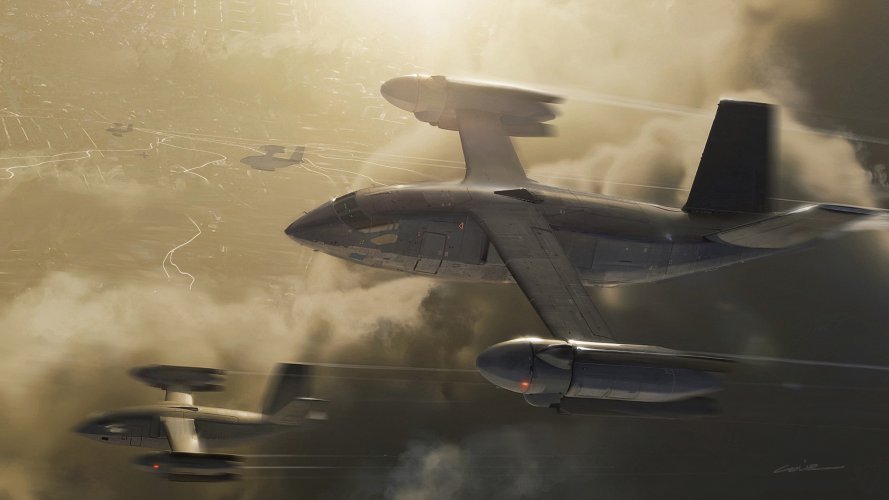
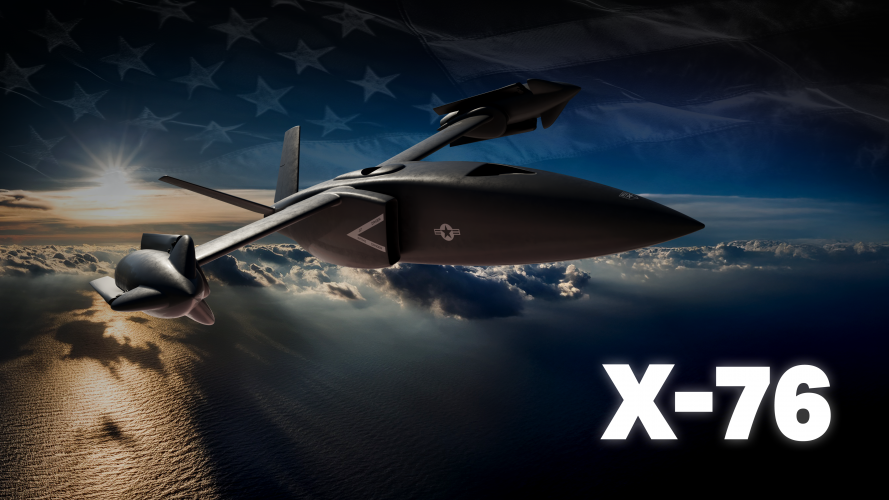
DARPA/SOCOM X-76 Speed and Runway Independent Technologies (SPRINT)
- Thread starter steelpillow
- Start date
aonestudio
I really should change my personal text
- Joined
- 11 March 2018
- Messages
- 3,381
- Reaction score
- 9,228

scautomoton
ACCESS: Secret
- Joined
- 19 January 2024
- Messages
- 316
- Reaction score
- 789
Interesting. I wonder how well the transition from turboprop to turbojet for the wing mounted engines will work in practice.

- Joined
- 18 October 2006
- Messages
- 4,782
- Reaction score
- 6,847
Indeed. Bell has done a lot of work on stop-fold rotors over a number of decades. I seem to recall that there was concern with flutter (may be the wrong term) of the blades as they fold due to the twist of the blades. This may have been overcome with modern technology and Fly By Wire control laws.Interesting. I wonder how well the transition from turboprop to turbojet for the wing mounted engines will work in practice.

Reaper
ACCESS: Secret
- Joined
- 31 March 2009
- Messages
- 328
- Reaction score
- 196
Interesting. I wonder how well the transition from turboprop to turbojet for the wing mounted engines will work in practice.
Reaper
ACCESS: Secret
- Joined
- 31 March 2009
- Messages
- 328
- Reaction score
- 196
martinbayer
ACCESS: Above Top Secret
- Joined
- 6 January 2009
- Messages
- 5,081
- Reaction score
- 6,998
Well, that's a time honored DARPA practice - big on advertising showmanship, dismal at hardware follow-through...Will never get built, sadly.
- Joined
- 18 October 2006
- Messages
- 4,782
- Reaction score
- 6,847
Most DARPA efforts do not materialize because none of the services are willing to pick up the financial burden when the program demonstrated Technical Readiness Level 6. For example the UCAR program was significantly close to that level when the U.S. Army clearly indicated it would not pursue further funding. Had they done so, it is very possible that we would have had "loyal wingman" platforms in service by now. In fairness, most of the billions available were going to GWOT.

exclaimedleech8
ACCESS: Top Secret
- Joined
- 30 September 2024
- Messages
- 826
- Reaction score
- 1,001
not with that attitude it won'tWill never get built, sadly.

- Joined
- 6 August 2007
- Messages
- 4,539
- Reaction score
- 10,261
Most DARPA efforts do not materialize because none of the services are willing to pick up the financial burden when the program demonstrated Technical Readiness Level 6. For example the UCAR program was significantly close to that level when the U.S. Army clearly indicated it would not pursue further funding. Had they done so, it is very possible that we would have had "loyal wingman" platforms in service by now. In fairness, most of the billions available were going to GWOT.
Interestingly enough some of “early” CCA / MUMT work was based on UCAR experience.
That’s because prototypes and demos are the “easy” part. Look at how long it took to go from YF-22 to F-22 and X-35 to F-35. Demonstrators are basically minimum viable products to show the principle that it is physically possible to make a DARPA hard thing work. Demonstrators is not necessarily concern with how reliable the 100,000th transition from prop rotor to a turbojet for example.Most DARPA efforts do not materialize because none of the services are willing to pick up the financial burden when the program demonstrated Technical Readiness Level 6. For example the UCAR program was significantly close to that level when the U.S. Army clearly indicated it would not pursue further funding. Had they done so, it is very possible that we would have had "loyal wingman" platforms in service by now. In fairness, most of the billions available were going to GWOT.
Like DARPA UCAV for example; by all accounts it was a very successful program and it all of the program goals of basically demonstrating CCA. But if you turn that into a production program, you easily have 10x the amount of engineering problems that you have to solve(; things like how to integrate UCAVs into an airport traffic pattern with human pilots and ATC. They might have demonstrated positive control with a UCAV over C-band local antenna, but you might have to have a manned aircraft to stay within its vicinity to relay commands. Even back then you have sat comm links but those dishes are larger and difficult to fit on to stealth aircraft and still have high latency and low bandwidth. Remember, X-45’s first flight came only about a year after MQ-9’s first flight. The TTP, the infrastructure, the culture of using an unmanned aircraft even for low risk missions were simply not there by the time the UCAV program came to an end in 2005. Really even the concept of using unmanned aircraft at scale haven’t really been proven out yet.
These problems and many others like it have been solved by other platforms and programs over the last 2 decades. It is why only now CCAs are finally on the cusp of being a useful deployable product. To turn a successful DARPA program into an operation asset at the conclusion of the demonstration phase may simply not be feasible both financially and from a deployed at scale engineering perspective. I think stealth and the history of it gives most people the wrong impression of how the progression of DARPA is suppose to go vs how it typically goes. The natural progression of Have Blue to F-117A to B-2 and F-22 was unique and out of norm.

red admiral
ACCESS: Top Secret
- Joined
- 16 September 2006
- Messages
- 2,199
- Reaction score
- 3,472
DARPA isn't there to do a full scale development and acquisition programme. As you say, it's to see whether the "hard" bit of a problem can be done, before making a massive commitment into full scale development that includes a massive amount of "easy" tasks.That’s because prototypes and demos are the “easy” part. Look at how long it took to go from YF-22 to F-22 and X-35 to F-35. Demonstrators are basically minimum viable products to show the principle that it is physically possible to make a DARPA hard thing work.
Even with Have Blue / F-117 then it rapidly tranisitioned out of DARPA to a USAF funded development programme.
Amongst the "failed" DARPA programmes then there's still tranisition of materiel and knowledge into other efforts, but this tends to be more hidden.
At the same point there's other programmes where you've no idea why DARPA bothered to start them
- Joined
- 18 October 2006
- Messages
- 4,782
- Reaction score
- 6,847
https://www.twz.com/air/bells-x-76-fold-away-rotor-aircraft-is-darpas-newest-x-plane
"DARPA announced today that the X-76 had successfully completed its critical design review (CDR) and has now entered production. "
"DARPA announced today that the X-76 had successfully completed its critical design review (CDR) and has now entered production. "
Last edited:
I was wondering how the X-plane series had jumped to -76 since last time I checked, they were at 60-something. Then I red "76 is because 1776 and 250 years" okay... the US designation system is definitively frucked up.
I still think it would be easier to use 2x Pegasus from the harrier, much simpler, keeps the fuselage clear for you know fuselage things. So basically like the German vtol from the 60’s.
This seems like a lot of complexity to get to 450kts.
This seems like a lot of complexity to get to 450kts.

Forest Green
ACCESS: USAP
- Joined
- 11 June 2019
- Messages
- 14,600
- Reaction score
- 31,713
New X-Plane Promises Jet-Like Speed Without the Need for Runways
https://www.airandspaceforces.com/new-x-plane-jet-like-speed-without-runways/
- Joined
- 3 June 2011
- Messages
- 20,999
- Reaction score
- 19,278
Jet blast. Osprey is bad enough. Two Pegasus? LMAO. Also fuel economy, weight, etc.I still think it would be easier to use 2x Pegasus from the harrier, much simpler, keeps the fuselage clear for you know fuselage things. So basically like the German vtol from the 60’s.
This seems like a lot of complexity to get to 450kts.
- Joined
- 18 October 2006
- Messages
- 4,782
- Reaction score
- 6,847
I remember reading somewhere that the Harrier was capable of "digging it's own grave" in an open field. The SOF community will want a platform with the minimum restrictions on operations.
Scott Kenny
ACCESS: USAP
- Joined
- 15 May 2023
- Messages
- 19,678
- Reaction score
- 28,163
69. 66 is the truss-wing, 67 is a General Atomics bird, 68 is the DARPA Longshot.I was wondering how the X-plane series had jumped to -76 since last time I checked, they were at 60-something. Then I red "76 is because 1776 and 250 years" okay... the US designation system is definitively frucked up.
exclaimedleech8
ACCESS: Top Secret
- Joined
- 30 September 2024
- Messages
- 826
- Reaction score
- 1,001
Nice69. 66 is the truss-wing, 67 is a General Atomics bird, 68 is the DARPA Longshot.

piginapoke
I really should change my personal text
- Joined
- 11 March 2013
- Messages
- 111
- Reaction score
- 142
Hopefully, so we can fill in the X blanks, the NGAD/FAXX demonstrators feature in the designations somewhere?69. 66 is the truss-wing, 67 is a General Atomics bird, 68 is the DARPA Longshot.
Scott Kenny
ACCESS: USAP
- Joined
- 15 May 2023
- Messages
- 19,678
- Reaction score
- 28,163
There is the X-39 designation that's been reserved for the "Future Aircraft Technology Enhancements" or FATE program.Hopefully, so we can fill in the X blanks, the NGAD/FAXX demonstrators feature in the designations somewhere?
Similar threads
-
 Westland VTOL convertiplane projects
- Started by overscan (PaulMM)
- Replies: 52
-
 McDonnell Douglas & Boeing canard rotor wing (CRW) concepts
- Started by flateric
- Replies: 65
-
 Convair Model 49 Advanced Aerial Fire Support System
- Started by Triton
- Replies: 144
-
-
