China Aims for a Double Play
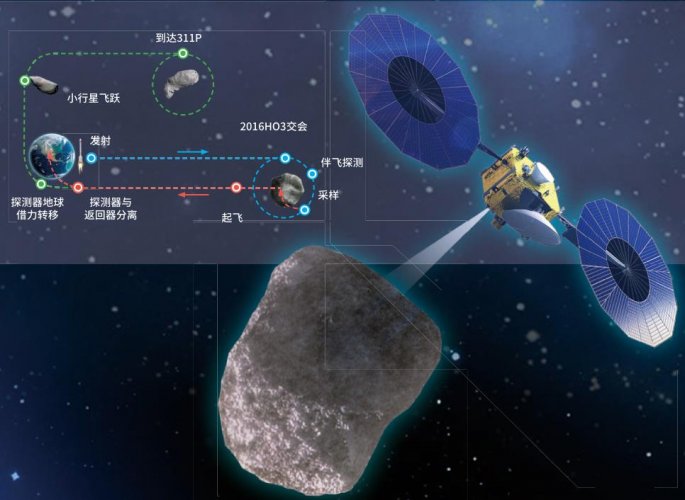
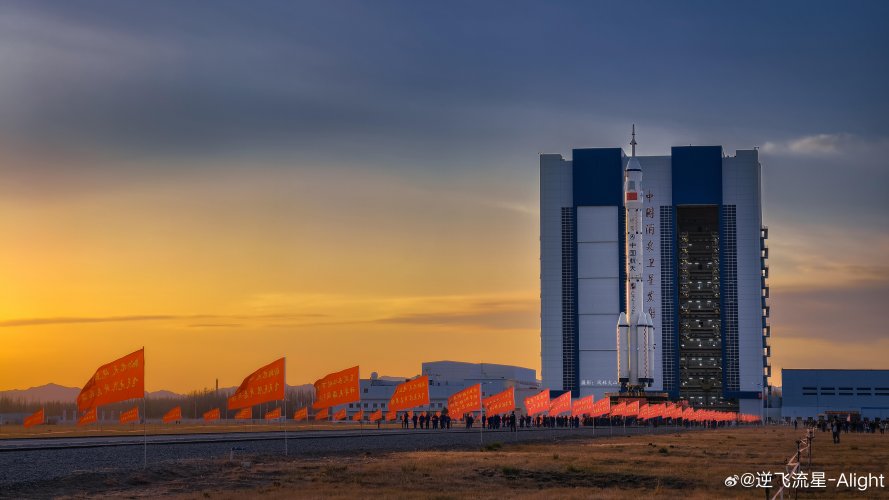
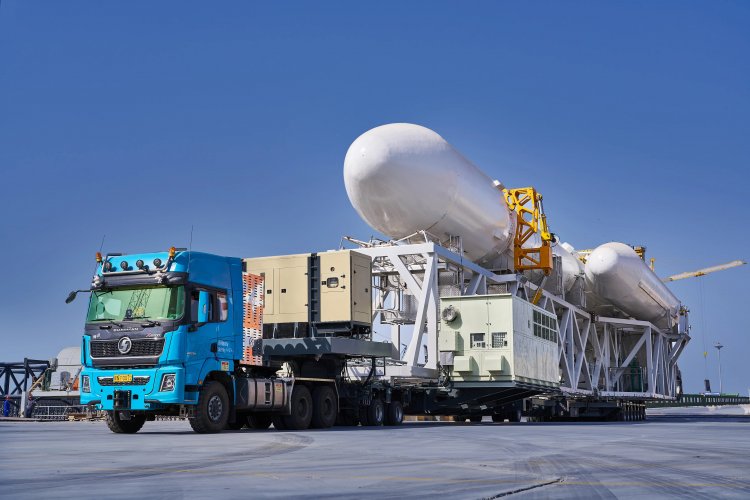
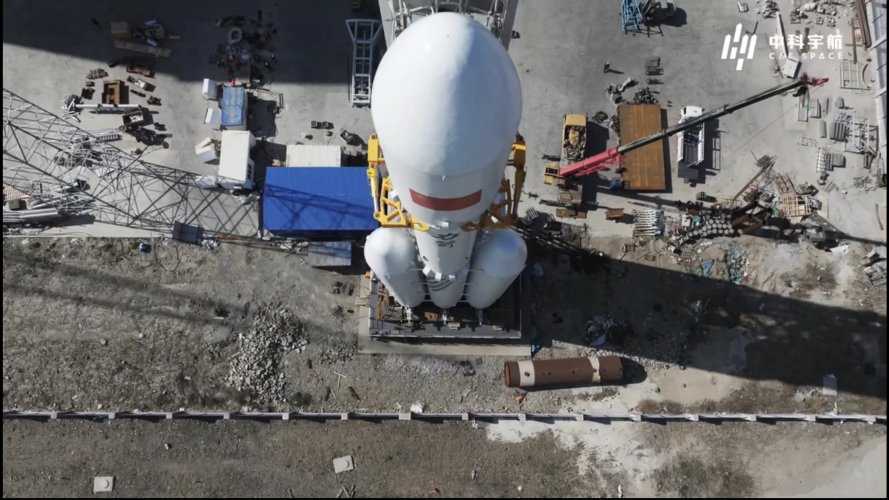
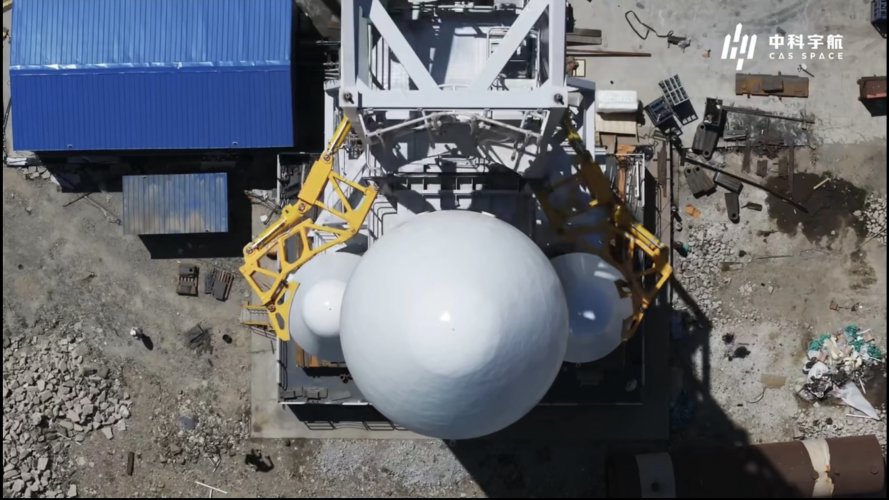
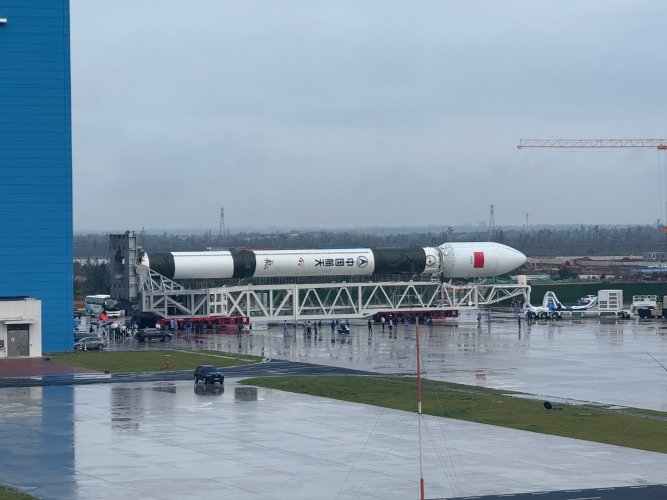
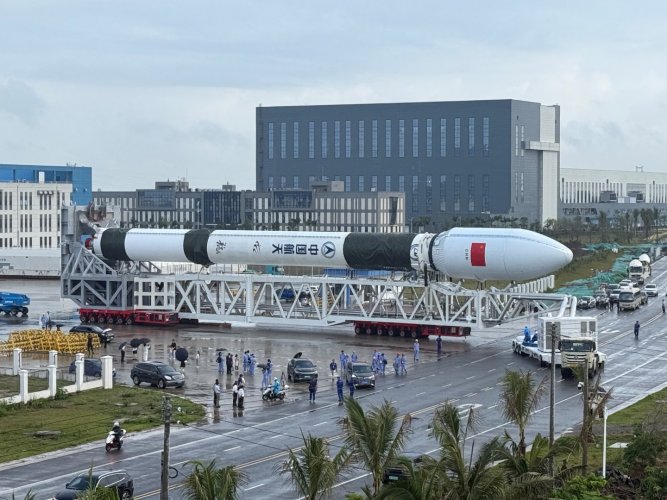
The Tianwen-2 probe is set to launch on May 29 from the Xichang Satellite Launch Center. This decade-long mission has an ambitious dual objective: collecting samples from a unique near-Earth asteroid and then exploring a comet in the main asteroid belt. As part of China’s solar system exploration program, this mission promises to provide insights into the origins of our planetary system and the distribution of water.
Act One: Rendezvous with an Asteroid
Kamoʻoalewa: An Exceptional Near-Earth Asteroid
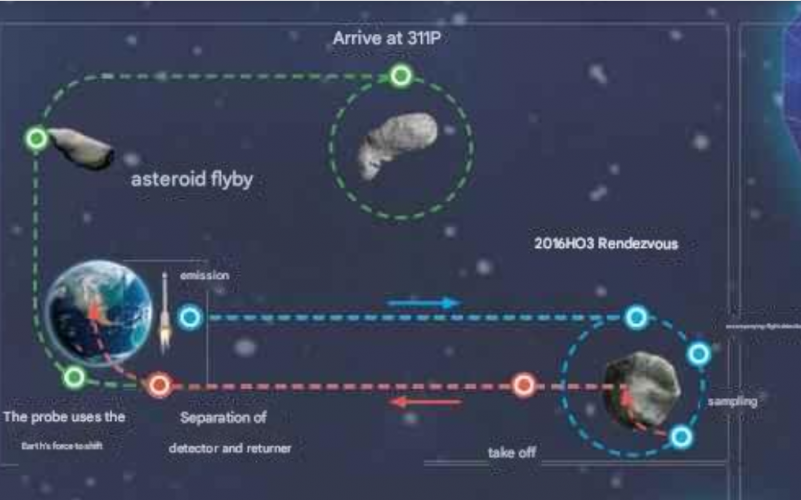
Tianwen-2’s first target is the near-Earth asteroid designated 2016HO3, also known as Kamoʻoalewa. This object is a quasi-satellite of Earth, orbiting in a path similar to our own. Kamoʻoalewa holds significant scientific interest because it may have undergone minimal changes since the formation of the solar system 4.6 billion years ago. Its quasi-satellite orbit makes it relatively accessible from Earth, but its physical characteristics pose technical challenges. With an estimated diameter of just 40 to 100 meters, Kamoʻoalewa has extremely weak gravity. Additionally, it rotates rapidly, completing a full spin every 28 minutes.
Kamoʻoalewa: A Fragment of the Moon?
Why such interest in such a small body? Kamoʻoalewa is particularly intriguing because it may be a fragment of the Moon, ejected during an impact. This piece could have originated from the Giordano Bruno crater on the Moon’s far side. If confirmed, analyzing the samples would allow scientists to study material ejected from a mid-sized impact and directly link it to its source crater. This would also improve our understanding of impact physics.
Beyond fundamental research, studying Kamoʻoalewa has implications for planetary defense. Its size is comparable to the object responsible for the 1908 Tunguska event. Understanding its structure and cohesion is crucial for future asteroid deflection strategies. In this regard, Tianwen-2 would complement U.S. missions like DART or Hera, set to launch in October 2024 [NTL: And China's upcoming asteroid divert mission set for 2027-29]
Touch-and-Go and Anchoring
One of Tianwen-2’s primary tasks at Kamoʻoalewa is sample collection—a first for China. The probe is expected to gather between 100 grams and 1 kilogram of material. To overcome the challenges posed by the asteroid’s weak gravity and rapid rotation, Chinese engineers have devised two methods. The first is a "touch-and-go" maneuver, similar to those used by Japan’s Hayabusa2 and NASA’s OSIRIS-REx. The second, more daring approach involves robotic arms equipped with drills to anchor into the rock—akin to the Philae lander’s attempt. This would mark the first time such an anchoring method is used on an asteroid.
Once samples are collected, the probe will return to Earth to release the sample capsule around 2027-2028. The capsule will enter Earth’s atmosphere and be slowed by a supersonic parachute—another first for Chinese engineers. A mid-air helicopter recovery is planned to prevent contamination.
Act Two: Exploring 311P/PANSTARRS
A Hybrid Comet in the Main Belt
After delivering the samples, Tianwen-2 will use Earth’s gravity to slingshot toward its second target: the comet 311P/PANSTARRS. Located in the main asteroid belt between Mars and Jupiter, this object exhibits hybrid characteristics of both an asteroid and a comet. Its activity—possibly due to impacts or the release of volatiles—remains a mystery.
The study of 311P/PANSTARRS, expected to be reached around 2033-2034, will help classify this new family of objects and determine their water content. The presence of ice in the asteroid belt is a key clue in tracing the origin of Earth’s water. Orbiting between 398 and 555 million kilometers from the Sun, it will be the most distant object ever studied by a Chinese probe at that time.
A Cutting-Edge Scientific Arsenal
Objectives and Instruments
To achieve these goals, the probe carries a total of 11 scientific instruments, including eight remote-sensing devices. These include cameras (color, navigation, multispectral, hyperspectral) and spectrometers (visible/infrared, thermal) to analyze composition and surface features—particularly water and organic compounds. The probe is also equipped with a laser detector, a ground-penetrating radar (a first for an object of this size, capable of probing internal structure), a magnetometer, and particle and dust detectors—one of which was developed in collaboration with Russia.