- Joined
- 29 July 2009
- Messages
- 1,949
- Reaction score
- 3,298



Here is NASA's report on a piloted simulation study in connection with the aircraft.
http://ntrs.nasa.gov/archive/nasa/casi.ntrs.nasa.gov/19940022099_1994022099.pdf

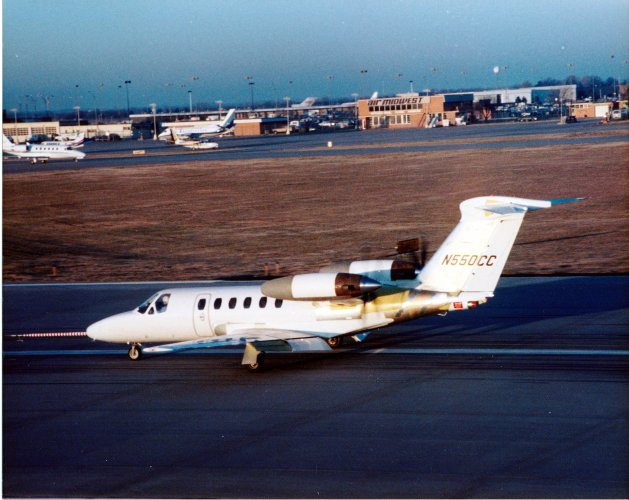
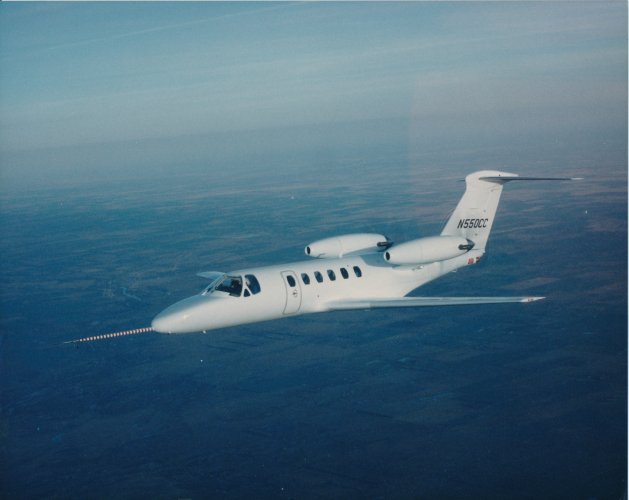

Thanks for your testimony and the beautiful photos!I worked at Cessna Wallace Division between 1979 and 1987, in experimental flight test. I was a flight test engineer on the Citation I and II, later the Citation S/II programs for my entire time at Cessna, which means I logged a lot of flying time in N550CC. [...] I flew co-pilot on the first seven flights of the ATPTB, starting at the end of 1986 and early 1987. I flew it (handled the controls) some in cruise flight and I made one landing. [...] Here are a couple photos of N550CC in the ATPTB configuration.
Hi Chris,Lovely stuff. In your time at Cessna did you ever come across any Brits who had worked for Beagle Aircraft in the UK?
Ta
Chris
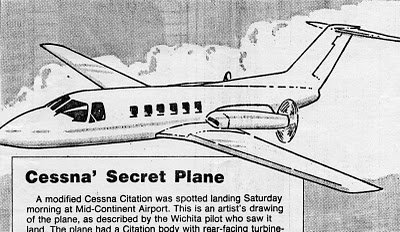
That is a pretty aircraft!This is a great thread and I was surprised to find it. I worked at Cessna Wallace Division between 1979 and 1987, in experimental flight test. I was a flight test engineer on the Citation I and II, later the Citation S/II programs for my entire time at Cessna, which means I logged a lot of flying time in N550CC. N550CC started life as the first Citation II prototype in 1977, then became the first S/II prototype in January 1984. It became the ATPTB to do research into the twin pusher turboprop configuration in 1986. The vertical tail, horizontal stab and elevator are from the Citation III.
I flew co-pilot on the first seven flights of the ATPTB, starting at the end of 1986 and early 1987. I flew it (handled the controls) some in cruise flight and I made one landing.
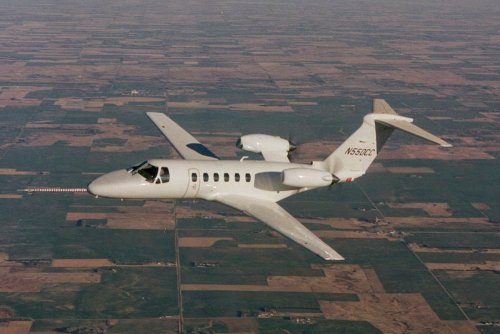
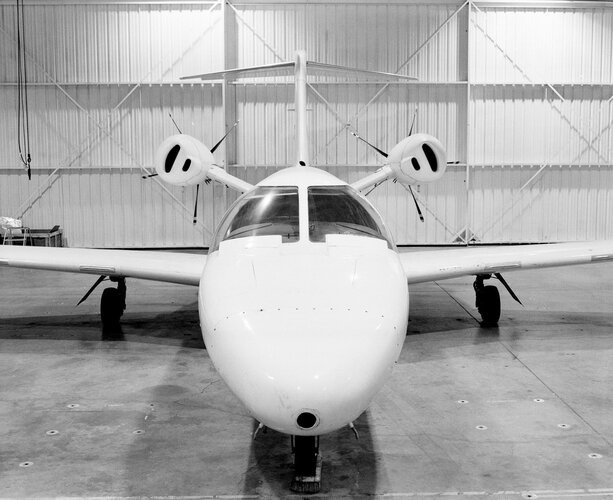
Here are a couple photos of N550CC in the ATPTB configuration. The landing photo is from the first flight. The inflight shot shows the original engine inlet configuration. There were oil cooling problems with that configuration, and we were not able to do any cruise performance until the inlet was modified and additional cooling flow routed to the oil cooler. The oil cooling modification was made after I left Cessna in early 1987.
View attachment 771096View attachment 771097

Thanks. I was pondering where the designers of the Beagle B.228 had ended up after the company ceased trading. The Beechcraft Starship, Piaggio Aaaaah-vanti and now the Cessna ATPTB share the same basic configuration.Hi Chris,
Sorry, I don't recall meeting anyone who had worked at Beagle Aircraft.
Craig
Thanks, Scott. I can't really comment on interior noise levels because we wore helmets (and parachutes) for all 7 flights I participated in. As you can imagine, the safety gear was a requirement on new airframe configurations. For the first five flights we concentrated on handling qualities at forward and aft c.g. On the third flight we also performed inflight engine shutdowns and restarts. Flight 6 was our first attempt to get to higher altitude and that was when the oil cooling problems began to limit our efforts. The 7th flight was performed after some changes were made, but there wasn't enough improvement to continue with cruise performance or high altitude stability tests.That is a pretty aircraft!
How was cockpit/cabin noise with the pushers?
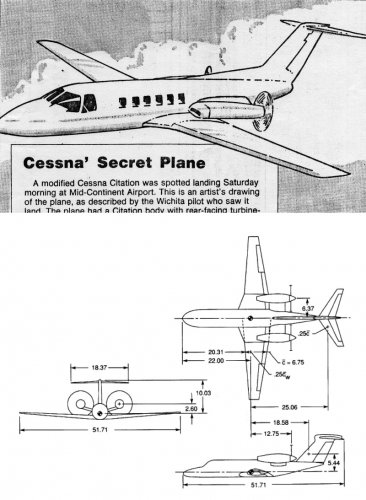
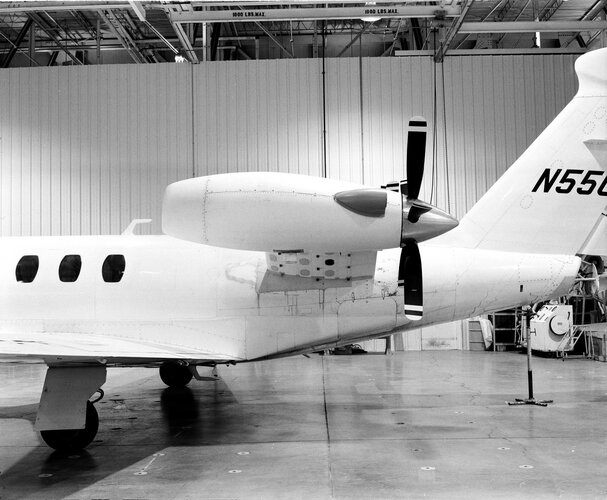
Front and side views of Cessna ATPTB.
The NASA report cited in response #2 and #6, above, mention 0.6 mach and 41,000 ft. I'm not sure at what altitude 0.6 mach was achieved.What kind of performance did this bird have?
Not too shabby- faster than the CBA Vector and NAL Saras.The NASA report cited in response #2 and #6, above, mention 0.6 mach and 41,000 ft. I'm not sure at what altitude 0.6 mach was achieved.
Updated download link: https://ntrs.nasa.gov/search?q=19940022099Here is NASA's report on a piloted simulation study in connection with the aircraft.
http://ntrs.nasa.gov/archive/nasa/casi.ntrs.nasa.gov/19940022099_1994022099.pdf