jsport
what do you know about surfing Major? you're from-
- Joined
- 27 July 2011
- Messages
- 8,635
- Reaction score
- 6,931
https://breakingdefense.com/2026/02...-bradley-replacement-sources-see-major-signs/AMPV may still be considered.


If they want delivery speed, a better position to be in would be manufacturing the hulls while selecting vendors for mission modules and equipment, like protection kits, C-UAS kits, armaments, etc.https://breakingdefense.com/2026/02...-bradley-replacement-sources-see-major-signs/AMPV may still be considered.


Sounds like 19 of the Lynx design.Plan to procure 19 vehicles in 2027? Is that plan to procure 19 of the winning design, or 19 each of the two remaining competitors?
What makes you say that? I'm partial to Lynx but haven't seen anything on it.Sounds like 19 of the Lynx design.

What makes you say that? I'm partial to Lynx but haven't seen anything on it.
Phrasing from the report. "The US Army moves Lynx XM30 into procurement..."What makes you say that? I'm partial to Lynx but haven't seen anything on it.
Remember that MPF had at least a dozen M8s and M10s built for it (iirc 6 of each), which would track with a platoon and a command section of each type. The current mechanized-infantry platoon has 6 Bradleys in it, so you'd be looking at buying 6+2 or 6+3 of each design for troop tests. Buying a full company of each would be better, but you can probably get away with leaving 2 platoons in Bradleys and rotate the whole company through a single platoon of vehicles on exercises.There has been no announced down-select. It would make no sense to go into EMF with two designs, so I guess they expect to pick one before they obligated these funds.
19x Lynx would be a full company or just about.The budget docs are public, we don't need to speculate. The budget doesn't specify, it just requests a quantity of 19 for XM30 under a procurement line item (rather than RDT&E).

Regardless of how crucial obtaining and utilizing air superiority is, you still need men and vehicles on the ground to take and hold anything. The infantry fighting vehicle is an important piece in enabling the infantryman to be more useful than just serving as a target for the flying things trying to kill him.
The IFV is a tool of maneuver. Holding already controlled ground is not maneuver.They're doing just fine holding terrain with airpower and artillery, unless a camera or a robotic machine gun counts as "men and vehicles", but isn't that just an unmanned sensor?
The numbers of the current fighting in Lebanon:We're already seeing what happens when a Western mechanized force runs into a Russo-Ukrainian-style defense in Lebanon: it dies by a thousand cuts. This is not at all surprising.
Exactly.The IFV is a tool of maneuver. Holding already controlled ground is not maneuver.
Ground is better held by light infantry, or what some call "territorials". They do not need IFVs, and are typically mobile on light trucks, lightly armored or unarmored.

No one accepts control of territory until you have a soulful human plant a flag there, and in a world of numerous tiny killer robots, having armored transports with good defensive firepower lets you do that without painstaking mine warfare stages.They're doing just fine holding terrain with airpower and artillery, unless a camera or a robotic machine gun counts as "men and vehicles", but isn't that just an unmanned sensor?
Humans are large, visible and limited, robots are not. The reason why the front can be maintained by short ranged robots is because they are invisible and move faster than historical firepower systems can be brought to bear.The limit for attack and defense used to be locating targets. Now, everything is visible, and the only limit is how quickly firepower can be brought to bear.
The reason why the front can be maintained by short ranged robots is because they are invisible and move faster than historical firepower systems can be brought to bear.
Drones regularly conduct "impossible" missions like penetrate ten to thousands of kilometers behind the front. Neither the sensors nor shooters was up to the task without a generational upgrade with the same technologies that enabled drones.Robots are destroyed at a much greater rate than human troops die in Ukraine, presently.

It's a non-defence publication, did the author even know there are two competitors?Phrasing from the report. "The US Army moves Lynx XM30 into procurement..."
One can even say that IFVs have little impact on actually extending command and logistical infrastructure if one is not relying on infantry to dig holes. With robot arms maturing fast, I see no strong need for meat to do the job of keeping robots operating in the 2030s.Holding territory isn't just planting a flag. In new territory it is the translation of your command and logistical infrastructure and capabilities further in to this territory.
The weaker force desires a static front, to stall out a weak position and wait for change in strategic situation. This is much better than a rapid maneuver war that would logically quickly resolve favorably for the stronger side.But typically you want maneuver because you do not want to be static. When you maneuver, you disrupt an enemy's capabilities.
The relatively static front line in Ukraine is NOT a desirable situation for any warring nation. It is only one level more desirable than defeat.
The point of drone operation is that the human don't need to be in rifle range. Frankly hiding under mountains seems like a great play with the current conflict.....The human element is not replaced by drones, but augmented by them. And drone operation is a very manpower-intensive work.
Fair point, but it should be fairly simple to look up. (Yes, I know I'm expecting basic fact checking out of modern journalists)It's a non-defence publication, did the author even know there are two competitors?
You could say that since the 50's. Yet with ever increasing computation and autonomy, the experience does not point to any manpower reduction.With robot arms maturing fast, I see no strong need for meat to do the job of keeping robots operating in the 2030s.
CEVs are far rarer than APCs/IFVs, so on a per vehicle basis a CEV has more impact.Just about any engineering variant have more impact than the troop carrying type.
So you advocate to be weaker.The weaker force desires a static front, to stall out a weak position and wait for change in strategic situation. This is much better than a rapid maneuver war that would logically quickly resolve favorably for the stronger side
I wonder how anyone can look at Iran and say "I wanna be like that!"The point of drone operation is that the human don't need to be in rifle range. Frankly hiding under mountains seems like a great play with the current conflict.....
If you have no APCs/IFVs, your CEVs can become your APCs/IFVs, which is apparently what happened with the Dutch Boxer Geniegroeps.Example: If you have no APCs/IFVs, a CEV is pointless.

Army's 1st Cav to test next-generation vehicle prototypes
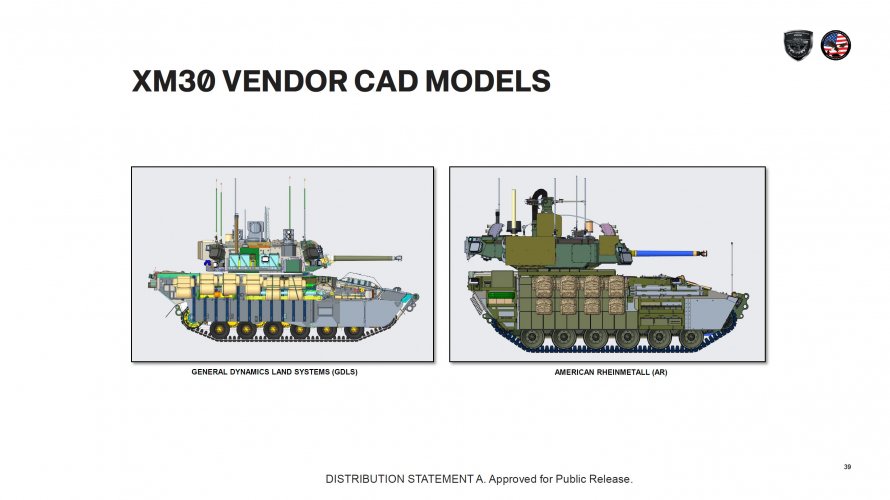
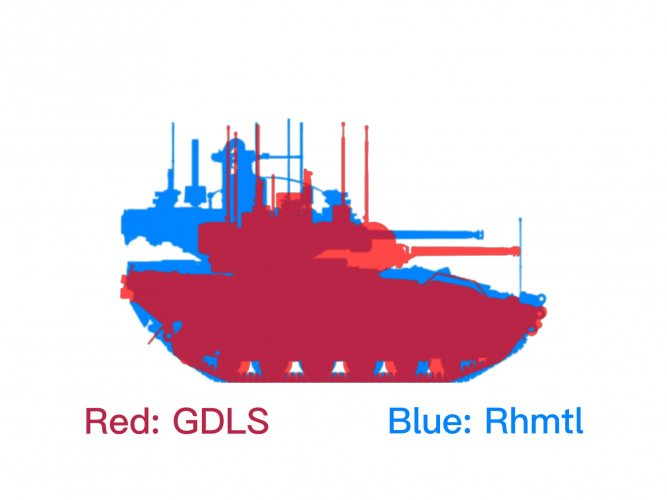
Lynx isn't small, here it is next to CV90 MK.IV and ASCOD. But that's kind of the price you pay for underbody protection and decent internal volume.I used the XM913 as a reference while doing the overlay, is the Rheinmetall one really that much more...voluminous?
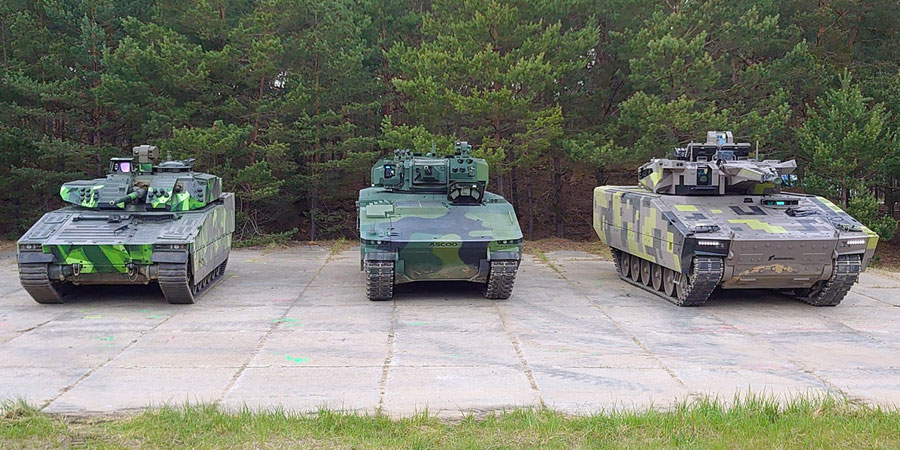
One of the big drivers in apparent size is ground clearance. If you look at old wheeled vehicles, they have 12-16" of ground clearance. Things like the JLTV or MATV have more clearanceI used the XM913 as a reference while doing the overlay, is the Rheinmetall one really that much more...voluminous?

Mine resistance has been an increasingly important consideration since the GWOT, when everyone and their friends found out how vulnerable their AFVs were to IEDs which opened up the bottom of various vehicles like tincans.Eyeah, all new APC types are going to a mine resistant type due to that. Which means its going to be bigger then the old ones to allow that blast to be survived.
..Just would argue a crew member needs to physically exit a top turret hatch & ammo up to 50mm size should be accommodated in decent numbers.A lot of extra volume on the Lynx derived vehicle seemingly comes from the turret, I may have missed it in this thread if it was written, but are they going to put a manned turret on an IFV in this day and age? Otherwise I fail to see why it should be so large in comparison to the GDLS one.
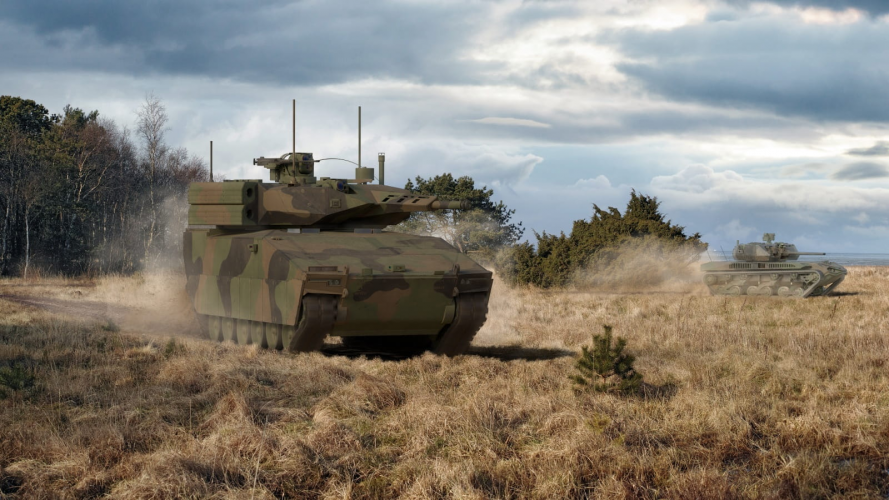
I should point out that AmeriLynx is not the same as HungaroLynx so it's possible that it's gotten somewhat smaller vs the comparison photo I posted. As to the turret, they could have armored the uncrewed turret, or they could just have put some sheet metal on to look cool (which Rheinmetall has done in the past). Rheinmetall also may be suffering from the US Army opting to mount a less coherently integrated and far bulkier APS (looks like Iron Fist?) vs the StrikeShield it was presumably designed for.Mine resistance has been an increasingly important consideration since the GWOT, when everyone and their friends found out how vulnerable their AFVs were to IEDs which opened up the bottom of various vehicles like tincans.
Since then mine and IED protection has become in many ways a standard for new AFVs. I'd be surprised if the GDLS design has no mine protection at all, although admittedly for WESTPAC that's less of a consideration than in the MENA region or continental Europe.
A lot of extra volume on the Lynx derived vehicle seemingly comes from the turret, I may have missed it in this thread if it was written, but are they going to put a manned turret on an IFV in this day and age? Otherwise I fail to see why it should be so large in comparison to the GDLS one.
Point of order!ammo up to 50mm size should be accommodated in decent numbers.