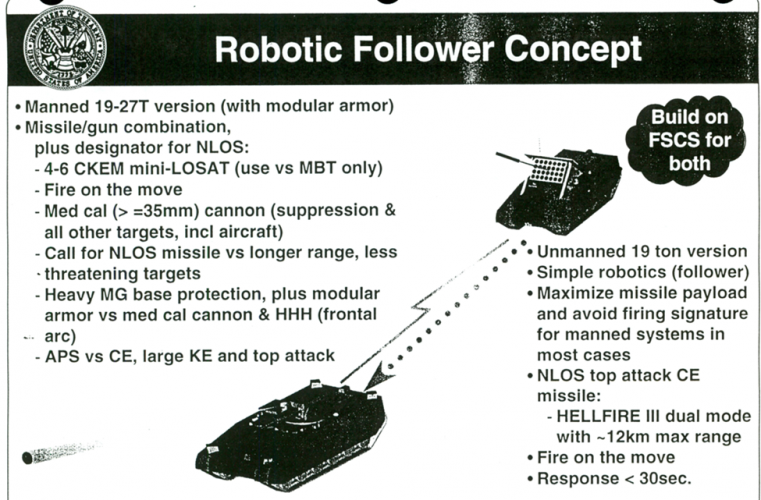
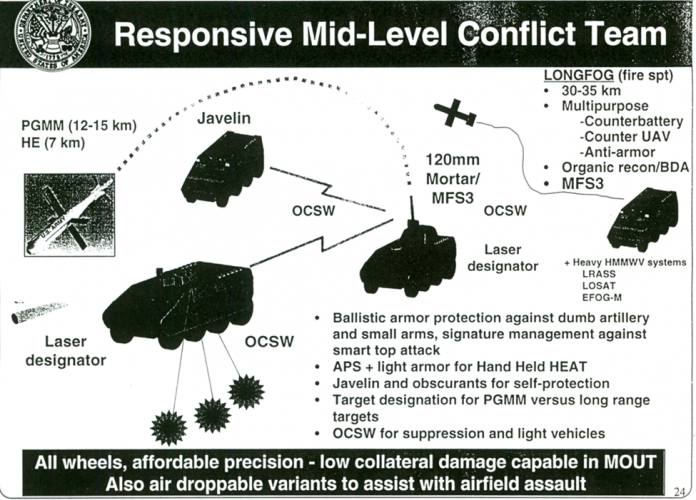
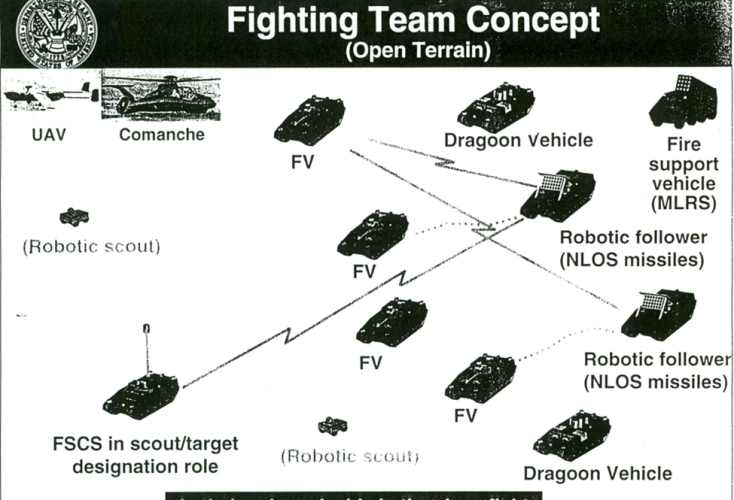
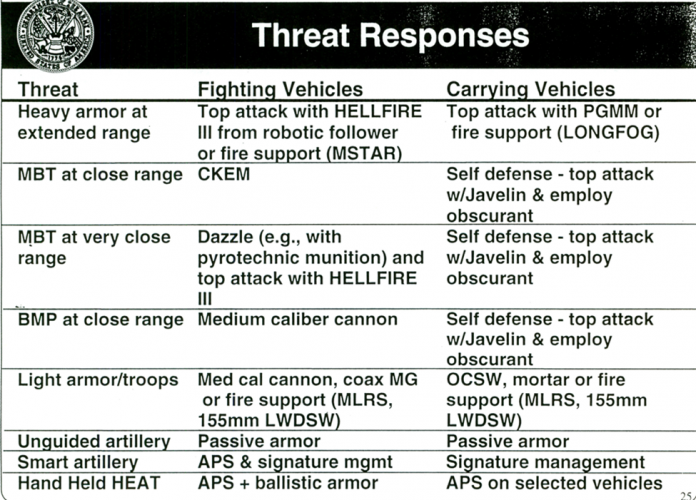
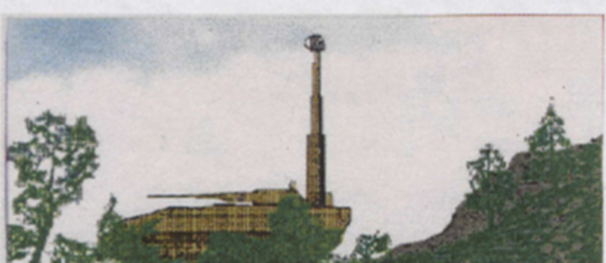
When systems that can spoof or shoot down supersonic ATGMs are entirely feasible to put on an AFV its damn well possible to have systems to counter cheap drones far less capable than a modern ATGM. The notion that drones can't be countered is entirely nonsensical.
They're entirely feasible and that's why they don't exist in service. Engineering things is easy. Producing them in quantity, sustaining a contract, and getting political support is hard. Always has been. A lot of faith gets put into engineering things as if that's the end of it. No, that's merely the beginning. You now have to push it through MTAs or LTAs and acquisitions has to sustain a multi-year effort to get it deployed. Then it can be killed at the drop of a hat because it turned out it was too heavy with too many competing requirements.
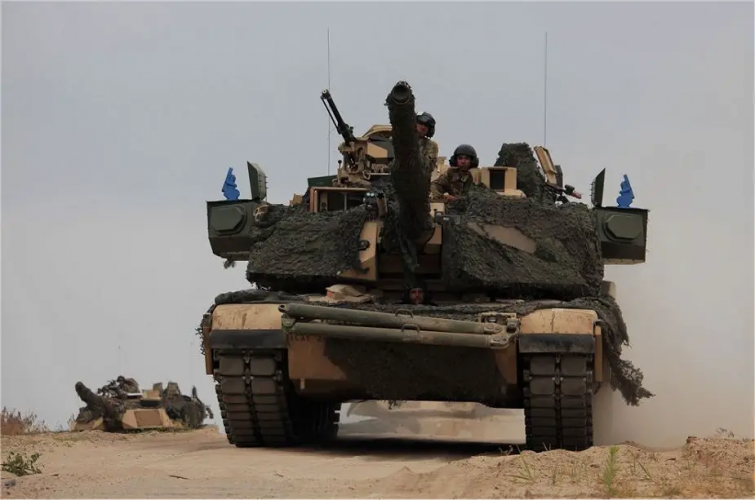
This is what ultimately killed Quick Kill and M10 Booker alike. So sure, you can shoot down a supersonic ATGM in theory, but in practice the bulk of the U.S. Army has protection standards in line with 2008 and RPG-29 protection than it does with Kornets and drones.
C-UAS develops far more rapidly than drones.
I'll rephrase. Drones are not advancing. They are constantly rebuilt to incorporate more and more established items and tech, to their own detriment.
Ukraine and Russia didn't invent the fiber optic guided munition. Those existed for decades before the war.
They didn't invent the mesh network or encrypted radio. Or the accelerometer. Stuff that's standard on a lot of munitions since before most users here were born.
They don't have to invent them. They just have to be first adopters while their enemies are still mired in thinking how to assemble a short range air defense platoon due to decades of weak business practice. It's a strong bet that DOD will continue to vacillate instead of seeing things clearly because it isn't sure what clear means anymore.
The funniest thing about the whole drone thing is that, yes, they've existed for decades. Yes, the entire concept was invented by the U.S. Army and DARPA. Too bad they literally forgot about it. These people aren't going to be sitting around reading DTIC PDFs, when there are Sandboxxx and War Zone articles, because they're senior citizen generals who think newspapers like the Atlantic still matter.
How certain are you that a realistic objective will involve eviction and not prevention?
The U.S. is weakly equipped to prevent a landing operation aside from its submarine force. This will degrade, as the surface fleet has, over time. The USAF will rely on the USN to be able to leverage combat power against landing. Besides that, the initiative lies with the attacker, and a landing operation can be done as the island is close and airborne troops are quick.
If the landing never happens and gets stopped before it hits the island that would be a good victory, even if it means a few carriers sink, but that's not a guarantee, and more importantly, the U.S. is likely going to face third world countries arming themselves similar to Ukraine or Russia courtesy Chinese drone factories.
The SMO was supposed to be a lightning war on par with Iraq. It went from a low intensity police action to a LSCO due to a mistaken estimate of resilience, by quite literally everyone watching, on part of a tiny economically dilapidated country to fight. The U.S. is not immune to this either. It happened in Korea.
If anything this touches on the viability of landing operations but has no bearing on the XM-30.
It does if the U.S. Army needs to engage in ground operations in a LSCO, or a LIC turned LSCO, and the enemy has weapons similar to Ukraine.
Defeatism is the ideology/doctrine that asserts that defeat is assured so preparation for victory is a waste of resources.
Why fight if we'll lose anyway?
The U.S. is in a bit of a pickle because a lot of its most modern procurement decisions came about a decade ago and things have changed. It's not unlike how it was sitting in the 1970s and needed to rethink a lot of its procurement from the Vietnam era. The big difference is that what once took the U.S. Army about 5-6 years to do now needs about 15-18 years.
Teachable moments produce 2 things:
1. Lessons to learn.
2. Lessons NOT to learn.
It is easier to learn the wrong lessons than the right ones. Or in other words to overlearn.
The two most overused wrong lessons from Ukraine are:
1. Drones are the current wunderwaffe.
2. Ukraine is indicative of future wars everywhere.
The truth is that drones are just a much less robust, or more fragile, variant of something we had for a very long time.
And no war is like the other. Every major or headline-generating war is somehow fundamentally different from the last one.
For example there was a huge crowd of MALE fans after the Azerbaijan-Armenia war of 2020. In 2022, just a little over a year later, MALE drones died out within less than a month. It was just a phase, one that ignored the prior decades of extensive MALE drone use.
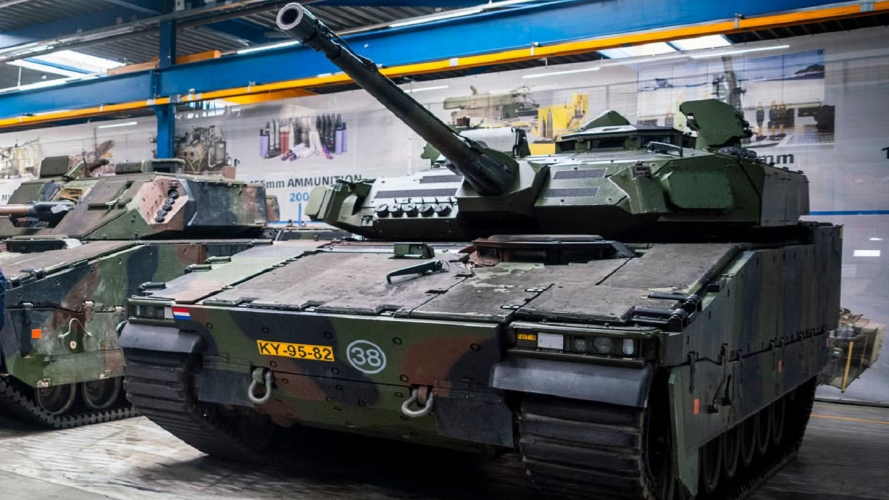
The lessons of Ukraine are that drones are that it is difficult to defend against drone attack on the battlefield and casualties are inevitable. Cold War armored vehicles, and their design descendants like KF41 and ASCOD II, are not ideal in protection scheme. There's been enough dead BMP-3s and M2A2s to show that. Most M2A2s aren't better protected than M2A3 either, considering Iron Fist is years away from being common, and the U.S. Army of 2027 or 2032 is likely going to look more like the U.S. Army of 2020 than not.
The lesson of GWOT is that retrofitting equipment with off the shelf systems is extremely difficult in the DOD procurement framework, and can be dragged out for years for literally no good reason, as shown with the M2A4E1 and Trophy APS. However, IMVs and MRAPs are extremely affordable, and scaleable in production.
The merger of this is that LSCO units will look less like an ABCT and more like an IBCT. ABCTs are better for low intensity combat and police actions, where their protective qualities are optimized against short-range anti-tank weapons, and their firepower can be brought to bear without fear of long range interdiction.
What infantry? You said the VLS comes at the cost of infantry. i.e. they're not deployed to the battlefield.
I wasn't aware infantry can't go anywhere without a large and highly visible tracked vehicle following them. I was mistaken.
The XM30 could produce a Namer-level of protection. We don't know it yet. The KF41 and AS21 were in the running and they're both 50-ton GVW vehicles.
The XM30 could. The Namer does. The Namer has growth margin beyond its existing GVW, since 50-tons is a light tank now. It's not the perfect solution, but it's better than what is essentially a Bradley -A3 level of protection with an improved SWAP. I'm a bit skeptical XM30 will actually be procured in large quantities though, if at all, given how M10 Booker turned out and how DOD seems to be viewing Ukraine as an oracle of future LSCO.
This is not necessarily bad since everything important XM30 purports to do can be done with a powerpack change on the Bradley I'd think.
This is probably what cavalrymen in 1916 were saying, tbf. Russian infiltration tactics are not some magic bullet. They're also not a clever method. They're a necessity when two opponents, on a macroeconomic level, are broadly evenly matched and cannot overcome each other decisively.
The U.S. doesn't have the industry of WW2 to simply bully its closest superpower opponent into submission anymore. That has actually switched over and the PRC has far more of an industry to rely on. The U.S. would probably win a thermonuclear exchange, because China has a small arsenal and few highly concentrated industrial zones, but anything less than, or a fight against a Chinese African proxy like Venezuela, is a hard sell.
War is ultimately determined by macroeconomics and at these large national economic levels things are hard to change. Not the outcome, but the shape and nature of it, and what Russia predicted to be a quick campaign was undone by a lack of initial mass. The U.S. probably isn't in the same boat, unless it needs to occupy Mexico or a similarly big country, but there are definitely places where it can be a problem.
The most obvious one today would be if a war with China doesn't end with a failed invasion, but continues to be laterally escalated into India or peninsular Southeast Asia, or the American Southwest.