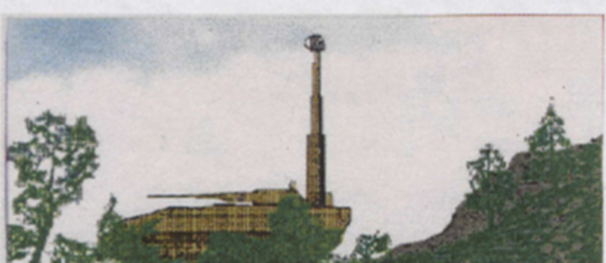
Some sort of UAV as an automated (determines a potential threat area on its own) as pre-emptive component of an APS... (just not a quadrotor fan--a single ringed prop w/airfoil balanced flight.) plus
An offensive loitering drone which might need be fixed wing & returnable w/ its mission planned by a cdr. Posted a PLA tank proposal which had 3x separate fixed & rotor UAS types in the Asian tank thread
I'm gonna assume that APS are somehow integrated to the BMS nowadays. Maybe to mark shooters, but maybe also to spend more computational power and scan energy on places marked with hostiles.
That I can definitely see.

Here is a new take:

Infantry is functionally landmines/demining forces: A kind of off route mine that jumps out of and into holes. IFV/Tanks are basically engineering vehicles for clearing a particular form of meat mines.

Back when infantry was the firepower arm, massed musket fire won the field. Back when tank was the firepower arm, massed tanks punched through defenses.

In the current era, the killing is done by artillery, missiles and drones and massing short ranged forces just increases the number of targets without increasing actual firepower to suppress the opponent. You wouldn't expect masses of engineering forces to oppose firepower and you wouldn't mount powerful weapons on them either as no weapon or defenses can reverse their tactical position of being extremely exposed and shot at by theater worth of fires if the enemy can allocate it.

Some other vehicle will do the artillery thing, others do the CRAM and others do drones. The stand in force can be just cheap and cheerful and die in numbers when supporting forces don't overmatch enough.

Did people try to but 50,000ton ships for mine warfare "because the enemy artillery could be shelling at the minefield, remember the Dardanelles campaign!" Alternatively, there was no 50,000ton landing craft that is designed to survive 1ton aerial torpedo spam, naval mines and counterfire pop up artillery. The survivability onion is "let combined arms kill the other side first."

The idea of the 10+ men infantry squad that is based on machinegun suppress and flank tactics is also very outdated in a drone spam smart explosive throwing era. Given the sheer dominance of aerial observation, stand in forces is really needed to clear urban/forest forces that is mostly underground where the MG is irrelevant, its not like infantry can survive effective anti-drone firepower and hiding is the only solution.
No reason why the modern day infantry shouldn't be well protected.
Yes there's drones and all that, but for the first time in history since the invention of the personal shield, a stand-in force actually has the means to protect itself and shoot down whatever's fired at it.

Killing the enemy faster to make it kill you slower has always been a desirable outcome.

Introduction of the APS in 2009 meant that an attacker had to invest more energy into killing a single tank than it could feasibly deploy in one place, unless it was prepared to confront 2 tank platoons.
Current C-UAS do that with drones. There's so little you actually need to do to kill a drone swarm that it's time to ask whether all the manpower and logistics of deploying said drone swarms even worth it.
 
Drones are currently responsible for more casualties in Ukraine than artillery, against both AFV and infantry, so they seem to be worth a considerable amount. APS wasn't "introduced" in 2009 in the U.S. Army, the RFP goes back to 2006, and the orders have only now extended (since 2024) beyond "a single tank battalion". The only army in the world that has considerable APS usage remains Israel. Likewise, the only armies that have considerable drone protection is Ukraine and Russia. Military lessons are learned in blood not in attaches' observations.

It will be a rough first year or two for the U.S. Army (and the PLA) if they ever have to come to blows in a ground campaign like Korea.
 
Last edited:
Drones are currently responsible for more casualties in Ukraine than artillery, against both AFV and infantry, so they seem to be worth a considerable amount.
They are the go-to weapon for both sides because both sides neglected to develop and create modern fires (artillery, air and land based PGMs etc) and are playing catch-up.
Drones individually are cheaper and simpler to procure than something containing a rocket or jet motor, but they also have to expend them at x10-x100 the usual rate because there's nothing robust about them.
Given that the U.S. Army has only this year begun deploying an APS it had requested to purchase in 2008 in an amount greater than "a single battalion", any projected wide area defense against drones (themselves a far more significant threat than men with 84mm and MBT-LAW, as was the case in 2022-2023, to Russian armored vehicles) will be equally delayed.
The US wanted Trophy at first, which entered service at about that time. Raytheon lobbied for a proprietary system called Quickly Killed, and so they went for a single supplier. Raytheon waited and waited. The Army waited and waited. Army asked what's going on, Raytheon said they forgot that was even a thing. Fast forward the US just bought an APS later.
Just because that was a thing doesn't mean the C-UAS is going to be the same. There are C-UAS systems that are in service across multiple branches. It's actually going well.
A lot of capabilities relevant to countering drones are actually just variants of existing stuff. So it's not like we're starting at 0.
 
They are the go-to weapon for both sides because both sides neglected to develop and create modern fires (artillery, air and land based PGMs etc) and are playing catch-up.

Drones have proven to be better than AFATDS/M777 combination, and similar systems provided by NATO or developed by Russia, as it turned out. They went from playing second fiddle to artillery to being the main frontline killers once the artillery situation had stabilized.

Things like Brimstone are woefully inadequate compared to a Lancet in volume of fire and magazine depth.

Drones individually are cheaper and simpler to procure than something containing a rocket or jet motor, but they also have to expend them at x10-x100 the usual rate because there's nothing robust about them.

Easily affordable when the cost of protecting a sizeable formation of vehicles against such weapons is literally unknown.

Russia doesn't even need to buy their vehicles since they came free from Soviet era depots, unlike most Western militaries that already cashed out, and would need to repurchase their sold armor. They still couldn't keep battalions from getting blasted so they stopped attacking with battalions. Bear in mind both sides of the Ukraine War are essentially footed entirely by Hong Kong/Shenzen's UAV industry alone.

Just because that was a thing doesn't mean the C-UAS is going to be the same. There are C-UAS systems that are in service across multiple branches. It's actually going well.
A lot of capabilities relevant to countering drones are actually just variants of existing stuff. So it's not like we're starting at 0.

Russia and Ukraine make extensive use of UHF/VHF jammers similar to THOR and DUKE. Their drones have still managed to adapt even given the relatively primitive industries. It isn't clear what the actual way forward is for ground forces at the moment, except that it won't look anything like the late 20th century mechanized battles, because that is how Russia lost 10,000 tanks and IFVs between 2022-2024. Making the battalions bigger and more closely spaced target groups won't really help much.

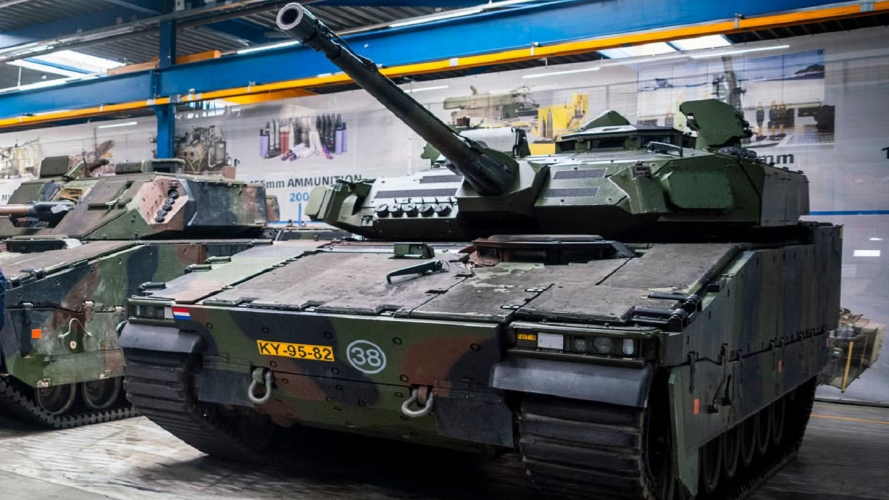
XM30 seems very much like a vehicle that would be more at home in 1985 than 2035. Perhaps if they buy Lynx they can ask Germany to put a Skyshield turret on it for the Air Defense Artillery though. That would be a pretty sensible move so likely an impossible ask for DA.
 
Last edited:
Individual village properties on the current front can have as many four basements which need to be cleared for safe occupation. Thinkin a hella amount...
Structures can scale up to tens of thousands of inhabitants, the logical solution is to use multiple vehicles instead of a single vehicle carrying arbitrary large forces like it is 40k or something.

The point for single vehicle is for command and control, and in a world of personal radio for everyone and drone ISR on friendly forces for C&C, large operations can be controlled even when forces are moved single men at a time. Traditional force structures haven't caught up to technical realities.
Introduction of the APS in 2009 meant that an attacker had to invest more energy into killing a single tank than it could feasibly deploy in one place, unless it was prepared to confront 2 tank platoons.
Current C-UAS do that with drones. There's so little you actually need to do to kill a drone swarm that it's time to ask whether all the manpower and logistics of deploying said drone swarms even worth it.
It is common to have enough deployed to kill 2 tank platoons, because tanks are slow, short ranged and not stealthy and large amount of long ranged fire can be massed against it if such a force is to do anything against a real mine field. The tank engagement cycle is just slow, having to reach line of sight to fire and search for targets, while being terrain constrained making it hard to overwhelm the opponent since large numbers simply do not fit.

Artillery and drones with ever increasing range (ramjets hitting 100+km, low cost TBM, fpv motherships enabling 50km+ ops), BLOS ATGMs becoming cheap, low cost jet aircraft in CCA and so on means massing fires is easier than ever.

This is all unlike airpower where mass is unconstrained due to 3d volume and exceed the force density of any land based air defense.

That doesn't necessarily translate to land forces being doomed, but it will rely on other branches winning air superiority and counter battery superiority.

They are the go-to weapon for both sides because both sides neglected to develop and create modern fires (artillery, air and land based PGMs etc) and are playing catch-up.
Drones individually are cheaper and simpler to procure than something containing a rocket or jet motor, but they also have to expend them at x10-x100 the usual rate because there's nothing robust about them.
x10~x100 the production means the rate of consumption also scales up directly. A lot of speculative, low value attacks are attempted because the munition is so cheap and available.

Consider that every individual infantry man can get allocated multiple drone shots and other expandable low cost targets like monitoring cameras, land drones or small munition dumps can also allocated drone attacks. Drones are used for things like search and destroy into forests and buildings, which can automatically fail if no target is found regardless of countermeasures. Drones are also used with unclear EW environment, because it is okay to waste them for a chance of success instead of hoarding for good conditions like with expensive munitions.

Modernization isn't bigger and fancier. Sometimes it is plain more for cheap, like how machineguns is simply plainly more bullets, even if most of the bullets isn't aimed and inaccurate. The pre-ww1 generals can tell you machineguns are just wasteful weapons for bad troops that can't properly aim rifles.
 
Last edited:
Structures can scale up to tens of thousands of inhabitants, the logical solution is to use multiple vehicles instead of a single vehicle carrying arbitrary large forces like it is 40k or something.
semi disposable Biped robotics are going to be thing as world's urbanization only increases. The question is how many humans controllers & how to protect them and what is the exact skill set of the forward controller. Combat though should be last resort. Patience will be the highest warfare attribute. Rushing into violence is always bad. Scary to say these terminators will not need to focus on lethal action or carry a weapon but simply arrest. ala I robot movie.

It is common to have enough deployed to kill 2 tank platoons, because tanks are slow, short ranged and not stealthy and large amount of long ranged fire can be massed against it if such a force is to do anything against a real mine field. The tank engagement cycle is just slow, having to reach line of sight to fire and search for targets, while being terrain constrained making it hard to overwhelm the opponent since large numbers simply do not fit.
For the foreseeable future any open terrain battle will remain in/direct fire artillery, tanks, UGVs,& loitering & kamikaze drones. As BZ states the swarming drone is eminently defeatable w/ evolving APS tech. IMO a bullet or little smart EW and they crash in droves. The issue is all the lithium waste across your fields.
Artillery and drones with ever increasing range (ramjets hitting 100+km, low cost TBM, fpv motherships enabling 50km+ ops), BLOS ATGMs becoming cheap, low cost jet aircraft in CCA and so on means massing fires is easier than ever.
Low cost at range is a growing operational & strategic issue. Both sides reduced to DEW protected nodes. The close & tactical completely abandoned.
Consider that every individual infantry man can get allocated multiple drone shots and other expandable low cost targets like monitoring cameras, land drones or small munition dumps can also allocated drone attacks. Drones are used for things like search and destroy into forests and buildings, which can automatically fail if no target is found regardless of countermeasures. Drones are also used with unclear EW environment, because it is okay to waste them for a chance of success instead of hoarding for good conditions like with expensive munitions.
Disagree, soon Military complexes will stop supporting stupid trash filled skies. So called attritable precision mass.

eventually mercantile motivation will be swayed as the customer will see the light and stop paying for low range low capability. Flying trash .

For the close & tactical the exquisite may well return as the customer wants survivable 'do something' rather than do nothing clouds of crap. Very low altitude duct fans & ringed props which can also detect mines come to m mind.
Modernization isn't bigger and fancier. Sometimes it is plain more for cheap, like how machineguns is simply plainly more bullets, even if most of the bullets isn't aimed and inaccurate. The pre-ww1 generals can tell you machineguns are just wasteful weapons for bad troops that can't properly aim rifles.
As the US Army officer corp is generally a 'bonfire of vanities' using up each other's fuel for usually nothing until reality punches them in the face, the US Army adoption of by the severely autistic collective took way too many years and killed way too many US troops. Anyone experiencing a MG knows the psychological. effect they have. SOCOMs assault MG may well focus on actually engaging targets, but even the inventors knew the MG was to "suppress" not hit. Suppress so you can advance w/o taking a fist to the face. Many officers held the opinion you have that they dont hit anything so why do you need them. History and future will continue to prove them wrong. Even the new emphasis on fires not feet (fires over maneuver) needs the MG to herd the adversary into a grenade target area.
 
WW3 will be a repeat of the WW1 paradigm as offensive power eclipses defense in total exchange rates (manpower/capital/material resources) but with a new entrant: omnipresent persistent observation. The only way of out maneuvering the other player is hammering their roads with rockets and drones and fight under obscurants with superior mass. The later armoured assaults on Pokrovsk(?) initiated under a duration of bad weather that shielded them from Ukrainian interdiction and unloaded the troopers that started major sectoring of the city.

If the US Army wants to be relevant in any potential WW3 it should approach any issues like a RTS player. If not, just buy Namer or ask for Israeli assistance in forming CONOPS.
 
Drones have proven to be better than AFATDS/M777 combination, and similar systems provided by NATO or developed by Russia, as it turned out. They went from playing second fiddle to artillery to being the main frontline killers once the artillery situation had stabilized.
Yeah towed howitzers aren't really all that useful in 2025 as they were 40 years ago.
I'd compare to mobile howitzers and mortars.

Things like Brimstone are woefully inadequate compared to a Lancet in volume of fire and magazine depth.
Lancet is entirely unsophisticated with very poor results. The stone is a good thing on paper, if only it was bought and used in quantity and wasn't treated as the premier long range munition of the UK's F-35 fleet.

Easily affordable when the cost of protecting a sizeable formation of vehicles against such weapons is literally unknown.
It's not unknown. We just give it a low value because most C-UAS stuff don't really cost any money.

Russia doesn't even need to buy their vehicles since they came free from Soviet era depots, unlike most Western militaries that already cashed out, and would need to repurchase their sold armor. They still couldn't keep battalions from getting blasted so they stopped attacking with battalions. Bear in mind both sides of the Ukraine War are essentially footed entirely by Hong Kong/Shenzen's UAV industry alone.
I don't understand your point here.
Does Russia's stupid decision to rely entirely on early Ukrainian capitulation have a bearing on drones?

Russia and Ukraine make extensive use of UHF/VHF jammers similar to THOR and DUKE. Their drones have still managed to adapt even given the relatively primitive industries. It isn't clear what the actual way forward is for ground forces at the moment, except that it won't look anything like the late 20th century mechanized battles, because that is how Russia lost 10,000 tanks and IFVs between 2022-2024. Making the battalions bigger and more closely spaced target groups won't really help much.
And in the process, they installed equipment making every drone x20 more expensive, yet still not nearly as robust as a proper munition. Making them overall less effective and about as expensive. That is one reason why drones have mostly entered in recon roles and in very limited numbers and niches for strike roles.

We do actually have a solid idea of what C-UAS stuff looks like, and how tactics are evolving to better cope with the situation.

XM30 seems very much like a vehicle that would be more at home in 1985 than 2035. Perhaps if they buy Lynx they can ask Germany to put a Skyshield turret on it for the Air Defense Artillery though. That would be a pretty sensible move so likely an impossible ask for DA.
But the XM30 is already supposed to come with a similar turret. Why make 2 turret types?

It is common to have enough deployed to kill 2 tank platoons, because tanks are slow, short ranged and not stealthy and large amount of long ranged fire can be massed against it if such a force is to do anything against a real mine field.
But what will you do then when you have to kill not 1 tank but 2 platoons of them?
See my point? What was once a comfortable amount of resources in one spot just multiplied several times because of one simple trick.
And then suddenly you cannot amass that amount of firepower because it's just not enough.
Also going straight into a well defended area kinda misses the point of maneuver in the maneuver warfare.
The tank engagement cycle is just slow, having to reach line of sight to fire and search for targets, while being terrain constrained making it hard to overwhelm the opponent since large numbers simply do not fit.
Are you proposing to disengage from targets within LoS? There's actually well established technology for that. It's called the white flag.
Artillery and drones with ever increasing range (ramjets hitting 100+km, low cost TBM, fpv motherships enabling 50km+ ops), BLOS ATGMs becoming cheap, low cost jet aircraft in CCA and so on means massing fires is easier than ever.
So is shooting them down. So we're back at square 1.
Consider that every individual infantry man can get allocated multiple drone shots and other expandable low cost targets like monitoring cameras, land drones or small munition dumps can also allocated drone attacks. Drones are used for things like search and destroy into forests and buildings, which can automatically fail if no target is found regardless of countermeasures. Drones are also used with unclear EW environment, because it is okay to waste them for a chance of success instead of hoarding for good conditions like with expensive munitions.
Then you don't have to wait for the enemy to kill your infantry. You incapacitated them yourself, making them use drones they'll most likely just lose instead of doing their actual job.
Modernization isn't bigger and fancier. Sometimes it is plain more for cheap, like how machineguns is simply plainly more bullets, even if most of the bullets isn't aimed and inaccurate. The pre-ww1 generals can tell you machineguns are just wasteful weapons for bad troops that can't properly aim rifles.
Machine guns do a lot more than that. They were never a compromise, and shielding against them required significant resources.
 
For the close & tactical the exquisite may well return as the customer wants survivable 'do something' rather than do nothing clouds of crap. Very low altitude duct fans & ringed props which can also detect mines come to m mind.
Farmers are already using drones to map rocks (I know it sounds silly but rocks are a pain for farmers) and to map out optimal routes for skid loaders to pick them up. I can see this tech easily being used with a UGV to clear a minefield.

 
Yeah towed howitzers aren't really all that useful in 2025 as they were 40 years ago.
I'd compare to mobile howitzers and mortars.

Casualty rates would disagree. Towed guns are the only ones surviving. This was already demonstrated in 1973 though. Incidentally, either Russia's entire stockpile of self-propelled pieces has finally disappeared this year, or they're being husbanded far away.

Lancet is entirely unsophisticated with very poor results.

Poor results are the ability to effectively interdict movement of vehicle traffic 25 kilometers deep? Russia expects 75 kilometers by the end of next year or whatever. That seems plausible. These are distances that in the Cold War would have extended well into the Corps rear area and were only practical by much less effective interdictors, like the Su-24 or Tornado IDS, and likely at rates that they could be safely ignored for all intents and purposes.

Lancet and its contemporaries are pretty good about interdicting vehicle traffic in either case. Far better at it than aircraft and artillery.

And in the process, they installed equipment making every drone x20 more expensive, yet still not nearly as robust as a proper munition.

Said "proper munitions" are so expensive that they might as well be absent? Besides that, the launch signature of a rocket like Brimstone is likely visible to SBIRS or similar futuristic/present low orbit constellations, so they will be easier to kill than a propeller missile. In the future, they'll probably grow little jet engines and be just as fast as normal rockets, while still being cheaper. Europe has some interesting designs here.

But the XM30 is already supposed to come with a similar turret. Why make 2 turret types?

Wide area air defense will be necessary down to individual vehicle level because concentrations of more than a couple vehicles get interdicted dozens of miles away from the battlefield. Sometimes that doesn't even help. XM30 being a warmed over Bradley/1980s IFV, as opposed to something like an air defense turret with a VLS silo instead of troop seats, is a devastating decline of the army that invented the theory of tank mulching with lightly equipped OPs backed by long range anti-tank missiles alongside DARPA in the 1990s.

But what will you do then when you have to kill not 1 tank but 2 platoons of them?

Russia already figured this out when it watched entire battalions of troops disappear into smoke and resorted to sending them in penny packets instead. It started getting results and the troops lived longer because they weren't detected so far out and brought under attack until they were on top of the enemy.

Concentration of troops in a highly PGM saturated environment is akin to a collective suicide. The correct analogy for Ukraine is tactical nuclear combat. You do not drive around in large formations in nuclear combat because you will be killed by massed anti-tank fire. You rapidly assemble individual or pairs of vehicles and then attack in small numbers (company level), before scattering to the four corners of the Earth to avoid retaliation.
 
Last edited:
.


Russia already figured this out when it watched entire battalions of troops disappear into smoke and resorted to sending them in penny packets instead. It started getting results and the troops lived longer because they weren't detected so far out and brought under attack until they were on top of the enemy.

Concentration of troops in a highly PGM saturated environment is akin to a collective suicide. The correct analogy for Ukraine is tactical nuclear combat. You do not drive around in large formations in nuclear combat because you will be killed by massed anti-tank fire. You rapidly assemble individual or pairs of vehicles and then attack in small numbers (company level), before scattering to the four corners of the Earth to avoid retaliation.
Makes me think that we are eventually going to see a reamergance of the Pentagonal concept considering it was made for exactly this purpose. namely spreading out divisions so that they wont be hit with nukes then forming together fast, may even work better these days then in the 50's thanks to much better communications.
 
Casualty rates would disagree. Towed guns are the only ones surviving. This was already demonstrated in 1973 though. Incidentally, either Russia's entire stockpile of self-propelled pieces has finally disappeared this year, or they're being husbanded far away.
I already said that 40 years ago maybe they had an important role. Goes without saying that it applies to 50 years ago as well.
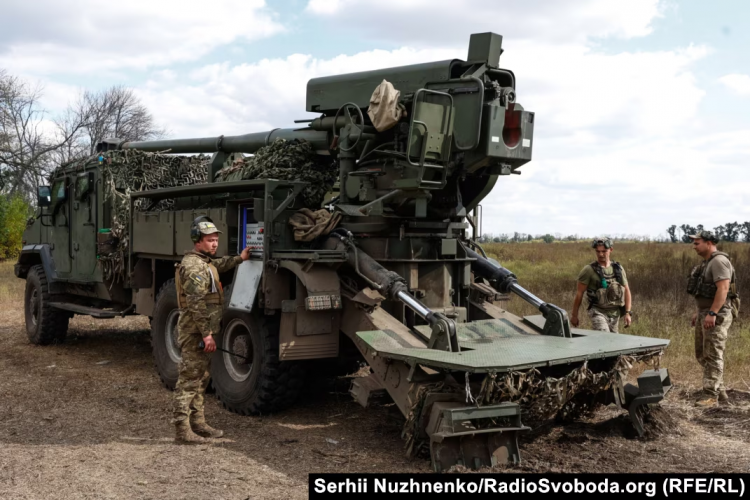
Last analysis I saw on the subject was months ago so I cannot link it. What other piece of evidence I have is that Ukraine is manufacturing Bohdanas.

1764056383508.png

What we know about Bohdanas is that they're literally just a gun on a truck, like it was popular to do in the 90's - early 2000's.
It takes more energy to put it directly on a truck instead of just towing it with one.
What can Ukraine's preference for mobile howitzers tell us about their threat perception?

Poor results are the ability to effectively interdict movement of vehicle traffic 25 kilometers deep? Russia expects 75 kilometers by the end of next year or whatever. That seems plausible. These are distances that in the Cold War would have extended well into the Corps rear area and were only practical by much less effective interdictors, like the Su-24 or Tornado IDS, and likely at rates that they could be safely ignored for all intents and purposes.

Lancet and its contemporaries are pretty good about interdicting vehicle traffic in either case. Far better at it than aircraft and artillery.
Lancet is an LM. If we're going to be mixing all classes of UAS here we'll be going in circles all day.
LMs are a somewhat popular thing. You know what's also popular but Ukraine doesn't have? mobile air defenses.
There's no reason for a somewhat well equipped armed force to allow LMs to roam freely 25km deep. Especially not the US.
LMs are very easy to intercept. Constant 2 way communication, slow, large and loud.

Said "proper munitions" are so expensive that they might as well be absent? Besides that, the launch signature of a rocket like Brimstone is likely visible to SBIRS or similar futuristic/present low orbit constellations, so they will be easier to kill than a propeller missile. In the future, they'll probably grow little jet engines and be just as fast as normal rockets, while still being cheaper. Europe has some interesting designs here.
Why are we talking specifically Brim again? You do know there are other munitions, right?
For the same range I'd rather rely on mortars, ATGMs, or are we back to LMs again?

Wide area air defense will be necessary down to individual vehicle level because concentrations of more than a couple vehicles get interdicted dozens of miles away from the battlefield.
Wide area? Are we talking Patriot on every vehicle, or just NASAMS?

The average AFV starts at about 4-6 drone intercepts right from the start with just its APS. That's already infinitely better than what you can get in Ukraine. Next you got rudimentary C-UAS equipment that'll run out when your MGs run out of ammo. You can couple that with basic jammers to better utilize your ammo. Then if you're rolling with IFVs there's a bunch of extra and more effective ammo.
The mobile force is not defenseless. Not against more sophisticated ATGMs, not against slow drones.

XM30 being a warmed over Bradley/1980s IFV, as opposed to something like an air defense turret with a VLS silo instead of troop seats, is a devastating decline of the army that invented the theory of tank mulching with lightly equipped OPs backed by long range anti-tank missiles alongside DARPA in the 1990s.
I really like the VLS part because why would an IFV even need the I? It's just an FV. Let the infantry walk.

Russia already figured this out when it watched entire battalions of troops disappear into smoke and resorted to sending them in penny packets instead. It started getting results and the troops lived longer because they weren't detected so far out and brought under attack until they were on top of the enemy.
Russia doesn't field APS-equipped vehicles. If they had APS, you'd have to spend a lot more munitions on them. If they had C-UAS as well, expended munitions multiply again.

That switch from tanks and APCs to motorcycles and barntanks was a masterstroke, sans the master.

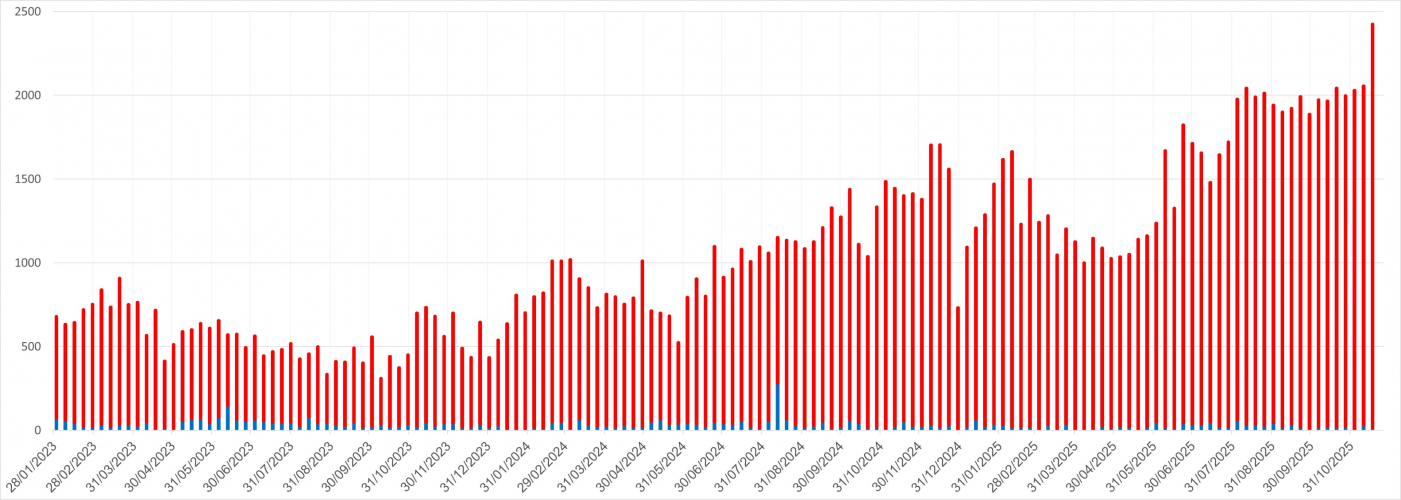
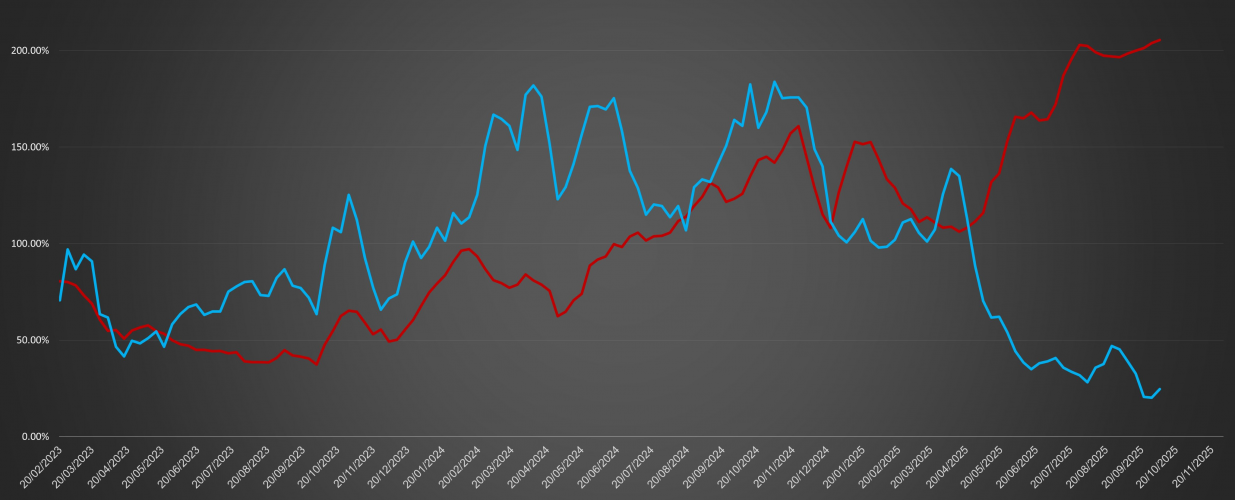
Hey who put this graph of Russian KIA?
1764056332943.png

What? Why is this graph of infantry losses (red) vs AFV losses (blue) here? (relative to average)
1764056839397.png

Concentration of troops in a highly PGM saturated environment is akin to a collective suicide. The correct analogy for Ukraine is tactical nuclear combat. You do not drive around in large formations in nuclear combat because you will be killed by massed anti-tank fire. You rapidly assemble individual or pairs of vehicles and then attack in small numbers (company level), before scattering to the four corners of the Earth to avoid retaliation.
For absolutely no good reason every successful Ukrainian offensive involved a very large concentration of troops, and every failed assault can be narrowed down to failure to bring sufficient mass quickly enough to theater.
 
Makes me think that we are eventually going to see a reamergance of the Pentagonal concept considering it was made for exactly this purpose. namely spreading out divisions so that they wont be hit with nukes then forming together fast, may even work better these days then in the 50's thanks to much better communications.
No, Pentomic Divisions didn't work, the Generals couldn't handle running that many "things". (Span of control is 2-7 "things" at best and the average person can handle more like 3-5 "things", and while the Pentomic Division had something like 9-12 "things" to control between the 5 combat elements, the Div Cav, DivArty, Attack Helos, DivHQ stuff...)

Edit: A standard division has 5 "things" to control: 3x combat brigades, HQ Brigade, Support Brigade
 
Last edited:
Kat Tsun said:
XM30 being a warmed over Bradley/1980s IFV, as opposed to something like an air defense turret with a VLS silo instead of troop seats, is a devastating decline of the army that invented the theory of tank mulching with lightly equipped OPs backed by long range anti-tank missiles alongside DARPA in the 1990s.

Every AFV has to be part air defense vehicle, in the future yes.
Forward Observers are not in the purist sense Infantry, although their missions often and increasingly are going to overlap..
..am a big fan of separate VLS vehicles ala Netfires, but that is not a IFV.
 
I already said that 40 years ago maybe they had an important role. Goes without saying that it applies to 50 years ago as well.
Last analysis I saw on the subject was months ago so I cannot link it. What other piece of evidence I have is that Ukraine is manufacturing Bohdanas.

View attachment 793075

What we know about Bohdanas is that they're literally just a gun on a truck, like it was popular to do in the 90's - early 2000's.
It takes more energy to put it directly on a truck instead of just towing it with one.
What can Ukraine's preference for mobile howitzers tell us about their threat perception?


Lancet is an LM. If we're going to be mixing all classes of UAS here we'll be going in circles all day.
LMs are a somewhat popular thing. You know what's also popular but Ukraine doesn't have? mobile air defenses.
There's no reason for a somewhat well equipped armed force to allow LMs to roam freely 25km deep. Especially not the US.
LMs are very easy to intercept. Constant 2 way communication, slow, large and loud.


Why are we talking specifically Brim again? You do know there are other munitions, right?
For the same range I'd rather rely on mortars, ATGMs, or are we back to LMs again?


Wide area? Are we talking Patriot on every vehicle, or just NASAMS?

The average AFV starts at about 4-6 drone intercepts right from the start with just its APS. That's already infinitely better than what you can get in Ukraine. Next you got rudimentary C-UAS equipment that'll run out when your MGs run out of ammo. You can couple that with basic jammers to better utilize your ammo. Then if you're rolling with IFVs there's a bunch of extra and more effective ammo.
The mobile force is not defenseless. Not against more sophisticated ATGMs, not against slow drones.


I really like the VLS part because why would an IFV even need the I? It's just an FV. Let the infantry walk.


Russia doesn't field APS-equipped vehicles. If they had APS, you'd have to spend a lot more munitions on them. If they had C-UAS as well, expended munitions multiply again.

That switch from tanks and APCs to motorcycles and barntanks was a masterstroke, sans the master.

Hey who put this graph of Russian KIA?
View attachment 793074

What? Why is this graph of infantry losses (red) vs AFV losses (blue) here? (relative to average)
View attachment 793078


For absolutely no good reason every successful Ukrainian offensive involved a very large concentration of troops, and every failed assault can be narrowed down to failure to bring sufficient mass quickly enough to theater.

Reminder: There haven't been any successful counteroffensives except where the Russians had already evacuated their positions.

Ukraine and Russia aren't "not maneuvering enough", they're simply fighting a modern war, which looks a lot more like WW1's attrition than WW2's maneuver. Ukraine is a battlefield where reconnaissance doesn't matter anymore, thanks to Global Hawks on the U.S./Ukrainian side providing accurate real time targeting data, and a massive wall of Orlans and whatnot for the Russians. When you can see everything, everything dies, and the only things that matter are mass production and the ability to take losses. It becomes a very attritional affair.

This is the shape of future wars to come between two similarly economically positioned powers, which the U.S. and China definitely are.

Vehicles become less relevant because they are high signature and can be attacked at further ranges than walking infantry. Armor protection matters less because individual elements can be attacked. Once people start putting nano SARs and HSORs on drones that will change even more heavily in favor of the principle of mass. Then even the tactics of Ukraine won't apply anymore, because four or six men and a support team of twenty guys with CSWs and sniper rifles will be detected and destroyed, and new tactics will need to be found.

It's quite a pernicious problem, because it means a country like China can simply dig in and defend its beachhead against anything, short of nuclear bombardment by ICBMs I suppose. Hard to see where XM30 factors into it either given that the infantry won't be riding in an IFV in a LSCO/HIC. They'll be walking, and casualties will be high, because that's simply the nature of a battlefield saturated by cheap reconnaissance systems and PGMs.

IFVs, of course, will still be necessary for police actions and low intensity conflict. At least until the cartels catch up to modern armies. Then again, given the way DOD procurement has been moving, XM30 might never even see a pre-production run. This would be unfortunate for sure (Bradley is old and needs a new powerpack sometime) but it's not exactly a load bearing piece of the future Army either.

XM30 is very backwards, because it's not a vehicle designed to survive Ukraine, it's a vehicle designed to give Bradley back its mobility.
 
Last edited:
Good job for correctly identifying the symptoms but not the solution. Ukraine is a battlefield where reconnaissance doesn't matter anymore thanks to Global Hawks on the U.S./Ukrainian side providing accurate real time targeting data and a massive wall of Orlans and A-50s for the Russians. When you can see everything, everything dies, and the only things that matter are mass production and the ability to take losses. It becomes a very attritional affair.
NATO is unwilling to kinetically step in or supply the latest equipment, and neither Ukraine nor Russia posses the capability to disrupt and deny each other's capabilities.
But for every Ukraine-like stalemate situation, we see a battlefield with successful denial of capabilities.

The US is not some 3rd world country or rehabilitating former soviet republic. It's at the forefront of technology and capability. So it should make some provisions for attrition (and indeed that is a frequently discussed topic) but it should primarily prepare for fighting effectively and utilize its capabilities, which means to disrupt the enemy.

Vehicles become less relevant because they are high signature and can be attacked at further ranges than walking infantry. Once people start putting nano SARs and HSORs on drones that will change. Then even the tactics of Ukraine won't apply anymore, because four or six men and a support team of twenty guys with CSWs and sniper rifles will be detected and destroyed.
There is a shield to the arrow. You cannot daydream about the evolution of drones without taking into account the rapid development of a massive variety of countermeasures.

It's quite a pernicious problem, because it means a country like China can simply dig in and defend its beachhead against anything, short of nuclear bombardment by ICBMs I suppose. Hard to see where XM30 factors into it either given that the infantry won't be riding in an IFV either. They'll be walking, and casualties will be high, because that's simply the nature of a battlefield saturated by cheap reconnaissance systems and PGMs.
Why do you assume a landing scenario in China?
Over many years I heard the same repeating argument that an Israel-Iran war is doomed to fail because it'll require a ground invasion and that's too difficult etc. But the June war showed us that a war can be successfully prosecuted with mostly air power.

For a war to succeed one must also set measurable objectives. What possible objective will a ground invasion achieve?

IFVs, of course, will still be necessary for police actions and low intensity conflict. At least until the cartels catch up to modern armies.
I struggle to reconcile a defeatist approach and debating a weapon of war.
 
NATO is unwilling to kinetically step in or supply the latest equipment, and neither Ukraine nor Russia posses the capability to disrupt and deny each other's capabilities.
But for every Ukraine-like stalemate situation, we see a battlefield with successful denial of capabilities.

For sure, but they'll be small and irrelevant wars against countries massively economically overpowered, like Venezuela or something.

The US is not some 3rd world country or rehabilitating former soviet republic.

This ethnocentric argument has no place here.

Ukraine and Russia are not in a stalemate because they are genetically and culturally Slavic. They're in a stalemate because neither has sufficient macroeconomic capability to decisively overcome the other. In the past it was Germany and Britain during their air war that were in a similar situation, because neither had the economic potential to decisively overcome the other, and it was NATO and the Warsaw Pact after that. Nobody would accuse the British Empire or literal NATO of being "some third world countries". It's merely a result of equivalent economies clashing.

The United States is in a similar situation against China, with China leading on a tactical level, because it has a big dual use industry.

It's at the forefront of technology and capability. So it should make some provisions for attrition (and indeed that is a frequently discussed topic) but it should primarily prepare for fighting effectively and utilize its capabilities, which means to disrupt the enemy.

The only provision for attrition is mass. The U.S., like Europe and (thankfully) China, has no mass. Russia and Ukraine had mass. Once. People don't like hearing it but maneuver is kind of dead when you can see everything on the battlefield. I'm not even sure Poland can credibly threaten Kaliningrad or Belarus anymore.

There is a shield to the arrow. You cannot daydream about the evolution of drones without taking into account the rapid development of a massive variety of countermeasures.

The shield isn't working yet, it may never work, given the pace of development of drones.

Regardless, mechanized combat is no longer viable on present battlefields because mechanized vehicles die when they expose themselves outside their hides. Every mechanized vehicle is an artillery piece now. It's somewhat Korean War-esque, but instead of the theater itself being starved of resources (on the contrary, it has resulted in tremendous gains in the world's % of GDP investment in armaments), it's because reconnaissance and strike capabilities at all levels have utterly paralyzed the battlefield.

In this case, the only thing that matters is the ability to fight for years, perhaps even a decade, until you can twist the arm of the opponent to achieve political concessions. C'est la guerre.

Will it be viable in 2-7 years? Who knows. That's too far out to make any predictions except that there might be a major world war. All we know is that a vehicle that looks and is designed like XM30 will be increasingly out of place in that world since the trend of needing anti-tank levels of protection on all sides is only going to go up.

Why do you assume a landing scenario in China?

Because their entire strategic focus is on landing in Taiwan. They'll need to be evicted at some point.

Over many years I heard the same repeating argument that an Israel-Iran war is doomed to fail because it'll require a ground invasion and that's too difficult etc. But the June war showed us that a war can be successfully prosecuted with mostly air power.

When Iran detonates their atom bomb that war will seem very silly in hindsight.

For a war to succeed one must also set measurable objectives. What possible objective will a ground invasion achieve?

Getting the PRC out of Taiwan.

I struggle to reconcile a defeatist approach and debating a weapon of war.

I have no idea what this means.

My point is that mechanized vehicles are high signature and easily tracked/destroyed by modern methods. Walking is lower signature and has a higher chance of going unnoticed. At least for now. It's a very simple statement, it just feels wrong presumably because it goes against the traditional late Cold War idea of "modern warfare", rather than actually being wrong.

It's exactly what is happening in Ukraine. They started out very 2003-esque with Thunder Runs and mechanized convoys. Now they're using drones, towed artillery, aviation bombs, and infantry short attacks more like 1953. Not because they are stupid, but because they both tried to do the 2003 Thunder Runs, and they ended up with a lot of dead armor and crewmen.

XM30 hasn't absorbed the lessons of Ukraine because it predates Ukraine by a number of years. It started in 2018, and it was supposed to be extremely modest because it was supposed to be done quickly, which never happens nowadays. Regrettably, because the U.S. Army is very Indian in its procurement now, it will take DOD something like 15 years to procure a mostly off-the-shelf European fighting vehicle, and there's a modest chance it never makes it to production.

I'm not sure that would matter much for WW3 but it would be regrettable for another Banana War or something.

A vehicle like GCV, or something more adventurous and imaginative, may have been able to survive Ukraine. But that would require the U.S. Army to know the future I suppose, or at least get very lucky in assuming concepts like DARPA SUO would be materialized in the next 10 years, which they didn't.

This is less a problem with XM30 and more a problem with the general flux of warfare changing. We've managed to weaponize iPhones. They're something of an RMA now, to an extent not seen since the atomic bomb (but still immeasurably less than that one as they're only significant in affecting ground operations), but one that was predicted by both Russian and U.S. theorists in the 1990's after Desert Storm. That said, even the Russian Army forgot about it.

I'm not sure if the best option is to eliminate XM30 or to try to redesign it into a modular weapons carrier.

IFVs in Ukraine have ended up being used as mobile air defense systems and indirect fire support vehicles. Especially true for BMP-1 and T-64B. The Leopard 1s are also being used as artillery pieces. An XM30 with a rack of vertical launch fiber optic missiles, like the Type 96 MPMS, and an air defense gun turret with the 50mm would be excellent for that battlefield. It can defend itself and its hide position from drone attack and it can support nearby infantry at ranges in excess of 20 kilometers.

This would probably take actual decades to implement due to the Byzantine process of DOD procurement. In a war, it might take a few years.

The point here, of course, is that a vehicle with a conventional frontal armor focus against light cannons (KF41 Lynx and ASCOD II i.e. the two XM30 contenders) is not useful on the battlefield of Ukraine where attack often comes from above or the sides. You need GCV-like passive protection with FCS-like active defense, at least. Namer with a LEDS-type APS would be great but both of those are done and dusted.
 
Last edited:
When systems that can spoof or shoot down supersonic ATGMs are entirely feasible to put on an AFV its damn well possible to have systems to counter cheap drones far less capable than a modern ATGM. The notion that drones can't be countered is entirely nonsensical.
 
This ethnocentric argument has no place here.

Ukraine and Russia are not in a stalemate because they are genetically and culturally Slavic. They're in a stalemate because neither has sufficient macroeconomic capability to decisively overcome the other. In the past it was Germany and Britain during their air war that were in a similar situation, because neither had the economic potential to decisively overcome the other, and it was NATO and the Warsaw Pact after that. Nobody would accuse the British Empire or literal NATO of being "some third world countries". It's merely a result of equivalent economies clashing.

The United States is in a similar situation against China, with China leading on a tactical level, because it has a big dual use industry.
This wasn't an ethnic argument. Re-evaluate.

The only provision for attrition is mass. The U.S., like Europe and (thankfully) China, has no mass. Russia and Ukraine had mass. Once. People don't like hearing it but maneuver is kind of dead when you can see everything on the battlefield. I'm not even sure Poland can credibly threaten Kaliningrad or Belarus anymore.
Not everything on the battlefield is easily visible.
And Poland certainly can.

The shield isn't working yet, it may never work, given the pace of development of drones.
C-UAS develops far more rapidly than drones.
I'll rephrase. Drones are not advancing. They are constantly rebuilt to incorporate more and more established items and tech, to their own detriment.
Ukraine and Russia didn't invent the fiber optic guided munition. Those existed for decades before the war.
They didn't invent the mesh network or encrypted radio. Or the accelerometer. Stuff that's standard on a lot of munitions since before most users here were born.

All a drone does differently from a missile is maybe reduce the cost to 30% of it, and provide 3% of its value.

C-UAS on the other hand, has evolved rapidly into solutions from the individual soldier to the division level and above. First through adapted sights. Every vehicle with a 25 - 50mm cannon can shoot down drones if its FCS is modified for it and its BMS transfers drone sightings among units.
Every installed MG can do that as well by slaving to the APS. Not to mention the APS can also shoot down drones.
Then you have mobile soft kill methods like jamming and microwave, to medium power laser (operational since 2024).
And interceptor drones are also a thing since at least 2018 IIRC.
And of course offensive capabilities like spotting a controller's emissions and closing the loop on him before their drones arrive.

Personal firearms, backpack and vehicle mounted jammers, rapid fire and medium caliber cannons, airbursting munitions, drones and missiles, DEW, SIGINT and EW, and more.

Because their entire strategic focus is on landing in Taiwan. They'll need to be evicted at some point.
How certain are you that a realistic objective will involve eviction and not prevention?
If anything this touches on the viability of landing operations but has no bearing on the XM-30.


When Iran detonates their atom bomb that war will seem very silly in hindsight
That's entirely the point.

I have no idea what this means.

My point is that mechanized vehicles are high signature and easily tracked/destroyed by modern methods. Walking is lower signature and has a higher chance of going unnoticed. At least for now. It's a very simple statement, it just feels wrong presumably because it goes against the traditional late Cold War idea of "modern warfare", rather than actually being wrong.
Defeatism is the ideology/doctrine that asserts that defeat is assured so preparation for victory is a waste of resources.
Why fight if we'll lose anyway?


It's exactly what is happening in Ukraine. They started out very 2003-esque with Thunder Runs and mechanized convoys. Now they're using drones, towed artillery, aviation bombs, and infantry short attacks more like 1953. Not because they are stupid, but because they both tried to do the 2003 Thunder Runs, and they ended up with a lot of dead armor and crewmen.

XM30 hasn't absorbed the lessons of Ukraine because it predates Ukraine by a number of years. It started in 2018, and it was supposed to be extremely modest because it was supposed to be done quickly, which never happens nowadays. Regrettably, because the U.S. Army is very Indian in its procurement now, it will take DOD something like 15 years to procure a mostly off-the-shelf European fighting vehicle, and there's a modest chance it never makes it to production.
Teachable moments produce 2 things:
1. Lessons to learn.
2. Lessons NOT to learn.

It is easier to learn the wrong lessons than the right ones. Or in other words to overlearn.

The two most overused wrong lessons from Ukraine are:
1. Drones are the current wunderwaffe.
2. Ukraine is indicative of future wars everywhere.

The truth is that drones are just a much less robust, or more fragile, variant of something we had for a very long time.
And no war is like the other. Every major or headline-generating war is somehow fundamentally different from the last one.

For example there was a huge crowd of MALE fans after the Azerbaijan-Armenia war of 2020. In 2022, just a little over a year later, MALE drones died out within less than a month. It was just a phase, one that ignored the prior decades of extensive MALE drone use.

It can defend itself and its hide position from drone attack and it can support nearby infantry at ranges in excess of 20 kilometers.
What infantry? You said the VLS comes at the cost of infantry. i.e. they're not deployed to the battlefield.

The point here, of course, is that a vehicle with a conventional frontal armor focus against light cannons (KF41 Lynx and ASCOD II i.e. the two XM30 contenders) is not useful on the battlefield of Ukraine where attack often comes from above or the sides. You need GCV-like passive protection with FCS-like active defense, at least. Namer with a LEDS-type APS would be great but both of those are done and dusted.
The XM30 could produce a Namer-level of protection. We don't know it yet. The KF41 and AS21 were in the running and they're both 50-ton GVW vehicles.
 
My point is that mechanized vehicles are high signature and easily tracked/destroyed by modern methods. Walking is lower signature and has a higher chance of going unnoticed. At least for now. It's a very simple statement, it just feels wrong presumably because it goes against the traditional late Cold War idea of "modern warfare", rather than actually being wrong.
Walking is also a hell of a lot slower, so good luck moving your troops into a concentration to break through in some place.
 
When systems that can spoof or shoot down supersonic ATGMs are entirely feasible to put on an AFV its damn well possible to have systems to counter cheap drones far less capable than a modern ATGM. The notion that drones can't be countered is entirely nonsensical.

They're entirely feasible and that's why they don't exist in service. Engineering things is easy. Producing them in quantity, sustaining a contract, and getting political support is hard. Always has been. A lot of faith gets put into engineering things as if that's the end of it. No, that's merely the beginning. You now have to push it through MTAs or LTAs and acquisitions has to sustain a multi-year effort to get it deployed. Then it can be killed at the drop of a hat because it turned out it was too heavy with too many competing requirements.

This is what ultimately killed Quick Kill and M10 Booker alike. So sure, you can shoot down a supersonic ATGM in theory, but in practice the bulk of the U.S. Army has protection standards in line with 2008 and RPG-29 protection than it does with Kornets and drones.

C-UAS develops far more rapidly than drones.
I'll rephrase. Drones are not advancing. They are constantly rebuilt to incorporate more and more established items and tech, to their own detriment.
Ukraine and Russia didn't invent the fiber optic guided munition. Those existed for decades before the war.
They didn't invent the mesh network or encrypted radio. Or the accelerometer. Stuff that's standard on a lot of munitions since before most users here were born.

They don't have to invent them. They just have to be first adopters while their enemies are still mired in thinking how to assemble a short range air defense platoon due to decades of weak business practice. It's a strong bet that DOD will continue to vacillate instead of seeing things clearly because it isn't sure what clear means anymore.

The funniest thing about the whole drone thing is that, yes, they've existed for decades. Yes, the entire concept was invented by the U.S. Army and DARPA. Too bad they literally forgot about it. These people aren't going to be sitting around reading DTIC PDFs, when there are Sandboxxx and War Zone articles, because they're senior citizen generals who think newspapers like the Atlantic still matter.

How certain are you that a realistic objective will involve eviction and not prevention?

The U.S. is weakly equipped to prevent a landing operation aside from its submarine force. This will degrade, as the surface fleet has, over time. The USAF will rely on the USN to be able to leverage combat power against landing. Besides that, the initiative lies with the attacker, and a landing operation can be done as the island is close and airborne troops are quick.

If the landing never happens and gets stopped before it hits the island that would be a good victory, even if it means a few carriers sink, but that's not a guarantee, and more importantly, the U.S. is likely going to face third world countries arming themselves similar to Ukraine or Russia courtesy Chinese drone factories.

The SMO was supposed to be a lightning war on par with Iraq. It went from a low intensity police action to a LSCO due to a mistaken estimate of resilience, by quite literally everyone watching, on part of a tiny economically dilapidated country to fight. The U.S. is not immune to this either. It happened in Korea.

If anything this touches on the viability of landing operations but has no bearing on the XM-30.

It does if the U.S. Army needs to engage in ground operations in a LSCO, or a LIC turned LSCO, and the enemy has weapons similar to Ukraine.

Defeatism is the ideology/doctrine that asserts that defeat is assured so preparation for victory is a waste of resources.
Why fight if we'll lose anyway?

The U.S. is in a bit of a pickle because a lot of its most modern procurement decisions came about a decade ago and things have changed. It's not unlike how it was sitting in the 1970s and needed to rethink a lot of its procurement from the Vietnam era. The big difference is that what once took the U.S. Army about 5-6 years to do now needs about 15-18 years.

Teachable moments produce 2 things:
1. Lessons to learn.
2. Lessons NOT to learn.

It is easier to learn the wrong lessons than the right ones. Or in other words to overlearn.

The two most overused wrong lessons from Ukraine are:
1. Drones are the current wunderwaffe.
2. Ukraine is indicative of future wars everywhere.

The truth is that drones are just a much less robust, or more fragile, variant of something we had for a very long time.
And no war is like the other. Every major or headline-generating war is somehow fundamentally different from the last one.

For example there was a huge crowd of MALE fans after the Azerbaijan-Armenia war of 2020. In 2022, just a little over a year later, MALE drones died out within less than a month. It was just a phase, one that ignored the prior decades of extensive MALE drone use.

The lessons of Ukraine are that drones are that it is difficult to defend against drone attack on the battlefield and casualties are inevitable. Cold War armored vehicles, and their design descendants like KF41 and ASCOD II, are not ideal in protection scheme. There's been enough dead BMP-3s and M2A2s to show that. Most M2A2s aren't better protected than M2A3 either, considering Iron Fist is years away from being common, and the U.S. Army of 2027 or 2032 is likely going to look more like the U.S. Army of 2020 than not.

The lesson of GWOT is that retrofitting equipment with off the shelf systems is extremely difficult in the DOD procurement framework, and can be dragged out for years for literally no good reason, as shown with the M2A4E1 and Trophy APS. However, IMVs and MRAPs are extremely affordable, and scaleable in production.

The merger of this is that LSCO units will look less like an ABCT and more like an IBCT. ABCTs are better for low intensity combat and police actions, where their protective qualities are optimized against short-range anti-tank weapons, and their firepower can be brought to bear without fear of long range interdiction.

What infantry? You said the VLS comes at the cost of infantry. i.e. they're not deployed to the battlefield.

I wasn't aware infantry can't go anywhere without a large and highly visible tracked vehicle following them. I was mistaken.

The XM30 could produce a Namer-level of protection. We don't know it yet. The KF41 and AS21 were in the running and they're both 50-ton GVW vehicles.

The XM30 could. The Namer does. The Namer has growth margin beyond its existing GVW, since 50-tons is a light tank now. It's not the perfect solution, but it's better than what is essentially a Bradley -A3 level of protection with an improved SWAP. I'm a bit skeptical XM30 will actually be procured in large quantities though, if at all, given how M10 Booker turned out and how DOD seems to be viewing Ukraine as an oracle of future LSCO.

This is not necessarily bad since everything important XM30 purports to do can be done with a powerpack change on the Bradley I'd think.


This is probably what cavalrymen in 1916 were saying, tbf. Russian infiltration tactics are not some magic bullet. They're also not a clever method. They're a necessity when two opponents, on a macroeconomic level, are broadly evenly matched and cannot overcome each other decisively.

The U.S. doesn't have the industry of WW2 to simply bully its closest superpower opponent into submission anymore. That has actually switched over and the PRC has far more of an industry to rely on. The U.S. would probably win a thermonuclear exchange, because China has a small arsenal and few highly concentrated industrial zones, but anything less than, or a fight against a Chinese African proxy like Venezuela, is a hard sell.

War is ultimately determined by macroeconomics and at these large national economic levels things are hard to change. Not the outcome, but the shape and nature of it, and what Russia predicted to be a quick campaign was undone by a lack of initial mass. The U.S. probably isn't in the same boat, unless it needs to occupy Mexico or a similarly big country, but there are definitely places where it can be a problem.

The most obvious one today would be if a war with China doesn't end with a failed invasion, but continues to be laterally escalated into India or peninsular Southeast Asia, or the American Southwest.

 
Last edited:
The XM30 could. The Namer does. The Namer has growth margin beyond its existing GVW, since 50-tons is a light tank now. It's not the perfect solution, but it's better than what is essentially a Bradley -A3 level of protection with an improved SWAP. I'm a bit skeptical XM30 will actually be procured in large quantities though, if at all, given how M10 Booker turned out and how DOD seems to be viewing Ukraine as an oracle of future LSCO.
M10 should have NOTHING to do with how XM30 works.

M10's issue was that the selected vehicle was too heavy for the job.
 
M10 should have NOTHING to do with how XM30 works.

It was a vehicle that was inadequate for its role given the situation. It probably won't be weight for XM30. It might be protection or it might be integration of an active protection complex. If they pick ASCOD II over KF41, it might be vibration, at least if Scout-SV if any indicator. There are lots of failure points for it and it isn't helped by the fact that acquisitions moves at a glacial pace these days.

If XM30 had gone 2018-2025 to procurement it would've been fine. No particular reason buying a decade old combat vehicle takes so long.

M10's issue was that the selected vehicle was too heavy for the job.

This is true. It's also true it's something that should have been foreseen years ago that was missed entirely and made it into production.

The reason OMFV got restarted in 2021 was because Griffin III/ASCOD II was too fat aside that Lynx never showed.

That seems eminently applicable to XM30, in a broad sense, and more generally applicable to DOD's procurement outside of the Air Force. Even then, the USAF still picked Pratt to supply engines, for some reason. ERCA literally died because Picatinny and Benet forgot that Crusader and Paladin HIP shredded copper bands with the L/52 and L/58 barrels. Something an intern had written about less than 6 years before ERCA was initiated! XM30 has issues, but its biggest one is it isn't substantially different from the previous M2A5 since they removed the optional manning, and it will end up in a very short while at the same place Bradley -A4 is at: too little mobility and likely not enough electrical power.

It's also not going to seriously displace the Bradley fleet until the '40's, if ever, but if they pick KF41 with the GD turret it could be a decent little thing. Here's hoping they have the sense to get a KF41 with a proper air defense turret like MANTIS, and some sort of VLS missile like FAADS-NLOS to go with it, for the big wars that matter. The ones where infantry have no hope but to walk to objectives from a 30 kilometer dismount point, supported by company and battalion level drones, and engage in operations more similar to SF work in Belize than the Fulda Gap.

Richard Simpkin's words about needing two armies, one for the high intensity battle and one for the intervention forces, is eternally true.
 
Last edited:
There is a shield to the arrow. You cannot daydream about the evolution of drones without taking into account the rapid development of a massive variety of countermeasures.
When systems that can spoof or shoot down supersonic ATGMs are entirely feasible to put on an AFV its damn well possible to have systems to counter cheap drones far less capable than a modern ATGM. The notion that drones can't be countered is entirely nonsensical.
One can always improve defenses, but the question is always the arms race.

For example, it is possible to make bullet proof armor, for any fixed sized capability of bullet. However warfare does not result in people hitting each other with warhammers, because for every improvement in armor, the opponent fields a bigger gun. As the host platform, may it be infantry, tank or ship can not scale to infinity and a gun that defeats the armor is a lot lighter and cheaper than the armor, in the end guns still work and the primary weapon and armor merely overmatch smaller, cheaper opponents like tanks against infantry.

It is possible to improve CRAM defenses, and we see it integrated in the naval sphere with 10,000+ ton ships costing billions each carrying powerful air defenses. This in no way invalidates aircraft, missiles or even drones however, and navies don't even attempt to move back towards heavy torpedoes or anti-ship guns (though gun projectiles can also be intercepted) because it still take order(s) of magnitude less in attack munitions to defeat defenses, all the defenses is just raise the minimum cost for effectiveness, not change what is the most effective.
-----
The demonstrated cost effectiveness of existing ground based air defenses is poor. The most visible example of failure is the Pantsir, a expensive, dedicated air defense vehicle with all the mass allocated to sensor and air defense weapons, and getting wrecked by stuff like glide bombs out of a bayraktar or FPVs launched from a drone boat. With that kind of performance, if Russia spent its entire budget on it and try to mass and attack with it, it'd get demolished by even light amounts of artillery and MRLS.

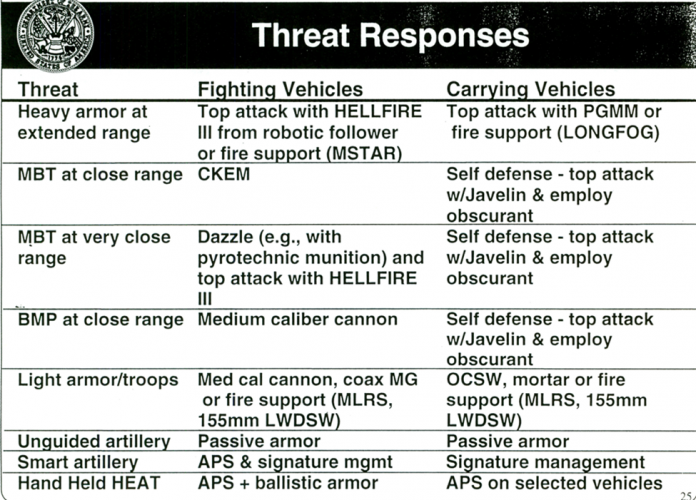
Some people point to APS as savior of tanks, but the actual performance of fielded systems are bad. So many systems do not cover top attack, and the interception range is often so poor that standard sensor fuzed EFP warhead would beat it out and that shrapnel from intercepted projectile is close enough to inflict damage to the sensors making repeat intercepts in question, and the intercept range is within the blast kill radius for common glide bombs. That is ignoring the issues with low cost sensors (if one wants to field in large numbers) that is easy to spoof as it takes very good target track to hit a fast projectile out of the air, while conversely it takes only a very bad sensor to target a large and practically stationary vehicles.

It is only a question of money for improved performance, but improved defenses means the offense would naturally adapt and allocate more resources to defeat the defense. If is only want the fight is utterly unfair and that one side can allocated all the resources to one tactic while the other side can not adapt, which is not what you'd call a peer fight.

The history of air defense have shown that a layered approach is necessary and no single system would work against a opponent that can adapt. For example, any short range only AD risks opponent doing things like mounting a gun on a missile/drone to standoff attack your sensor.

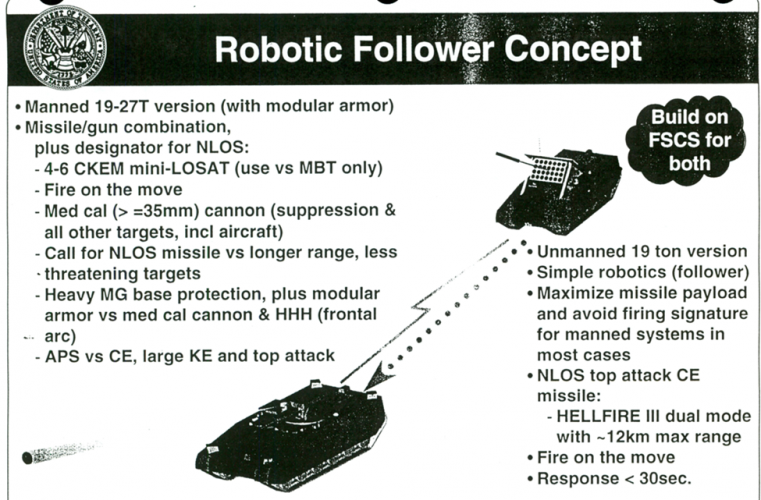
Which in practice means that while a 50million vehicles stuffed with complexity nearing a fighter can probably swat out temu drones easy, if the opponent has an budget and adapts he'd likely have a big batch of CKEM/LOSAT type munitions ready, or just sheer MRSI saturation or whatever attack strategy prepared. The big problem for land maneuver is that such munitions can be moved by air at high speed and as long as offense is cheaper than defense, overwhelm the defense if the land force stays around long enough and not hide after detection immediately.
-----
It is not impossible for the defense-offense cost curve to favor the defense given some technological change, but if it were to happen to anti-air it would likely happen at sea first, and it'd probably a new category of system like DEW. Everyone would know its a revolution in military affairs if someone rolls out affordable Megawatt solid state high beam quality lasers somewhere, but its not that close right now.
 
Last edited:
Richard Simpkin's words about needing two armies, one for the high intensity battle and one for the intervention forces, is eternally true.
I'd been debating that idea for a long time, would anyone be interested in debating/bouncing ideas off each other?

Obviously not in this thread, we can make a new one if there's interest.
 
I'd been debating that idea for a long time, would anyone be interested in debating/bouncing ideas off each other?

Obviously not in this thread, we can make a new one if there's interest.

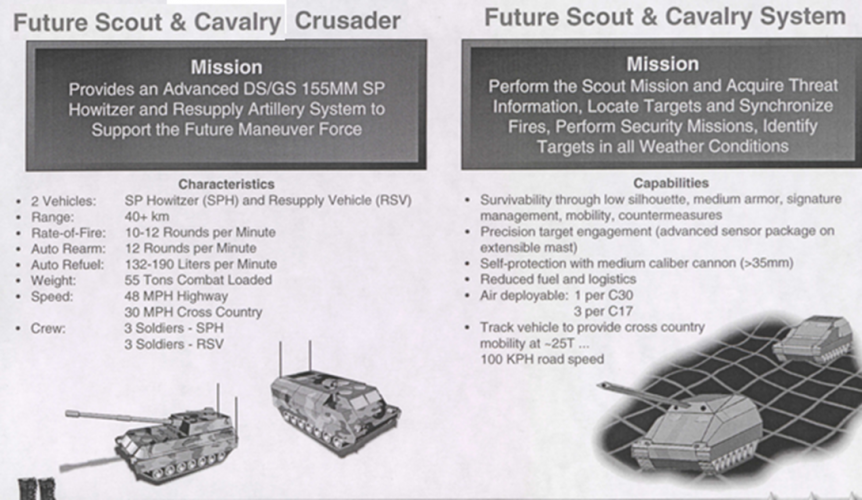
It was just a throwaway line in the introduction to Antitank but it's stuck with me for a while. He envisioned something similar to the FCS light armor forces, but about 30 years before, with a Merkava equipped force for the "NATO Central Front" at the time.

I should read Race to the Swift at some point though I think it just congeals Antitank, Mechanized Infantry, and Human Factors into one. KF41/XM30 would be good for an FCS-type medium weight force for the XVIII Airborne Corps to drag around on a leash. 30x165mm is the new 14.5x114mm so the FCS tankettes would be in a bad way these days anyway.
 
So, instead of infantry brigades, armor brigades, and Stryker brigades, he just had Stryker and armor brigades?
 
They're entirely feasible and that's why they don't exist in service. Engineering things is easy.
1764144184875.png
1764144314185.png

They don't have to invent them. They just have to be first adopters while their enemies are still mired in thinking how to assemble a short range air defense platoon due to decades of weak business practice. It's a strong bet that DOD will continue to vacillate instead of seeing things clearly because it isn't sure what clear means anymore.

The funniest thing about the whole drone thing is that, yes, they've existed for decades. Yes, the entire concept was invented by the U.S. Army and DARPA. Too bad they literally forgot about it. These people aren't going to be sitting around reading DTIC PDFs, when there are Sandboxxx and War Zone articles, because they're senior citizen generals who think newspapers like the Atlantic still matter.
Drones are the poor man's solution. The US can easily afford rocket motors.
The life span and hit probability of the average drone are so ridiculously low that you simply cannot trust them. In the crucial 5km a mechanized force are passing, you really don't know if you'll get them or not once you spotted them.
But a couple modern ATGMs are practically guaranteed to do the job.

The U.S. is in a bit of a pickle because a lot of its most modern procurement decisions came about a decade ago and things have changed. It's not unlike how it was sitting in the 1970s and needed to rethink a lot of its procurement from the Vietnam era. The big difference is that what once took the U.S. Army about 5-6 years to do now needs about 15-18 years.
What changed?

The lessons of Ukraine are that drones are that it is difficult to defend against drone attack on the battlefield and casualties are inevitable.
And artillery was difficult to defend against in WW1. Actually centuries before that as well, but there you really don't know you're shot at until you are.
Yet the world has successfully endured a century of warfare since then without actually intercepting artillery munitions.

If XM30 had gone 2018-2025 to procurement it would've been fine. No particular reason buying a decade old combat vehicle takes so long.
A lot of the core technologies for it are still under development. It may take time until they could be wrapped into a single working solution.

Some people point to APS as savior of tanks, but the actual performance of fielded systems are bad. So many systems do not cover top attack, and the interception range is often so poor that standard sensor fuzed EFP warhead would beat it out and that shrapnel from intercepted projectile is close enough to inflict damage to the sensors making repeat intercepts in question, and the intercept range is within the blast kill radius for common glide bombs. That is ignoring the issues with low cost sensors (if one wants to field in large numbers) that is easy to spoof as it takes very good target track to hit a fast projectile out of the air, while conversely it takes only a very bad sensor to target a large and practically stationary vehicles.
The only operational APS is Trophy, and with a solid combat record. So that kinda invalidates what you just said.
By not covering top attack I assume you mean Afghanit but it's not in service and not indicative of APS capable of defeating top attack like Trophy, Iron Fist, and StrikeShield.

So performance of fielded systems is good.

It was written in the 1970s so it was more like a CVR(T) and Chieftain/Warrior. The archetypal colonial police force and continental BEF.
Have you considered perhaps that a VLS-equipped vehicle can be alongside, and not replace, an IFV?
 
Broke:
Drones kill all the tanks, drones don't kill all the tanks.

Woke:
The ability for the offense to collapse the defense depends on the offense's ability to move faster than the defense. A ground based offense can not move faster than an airpower based defense, and a ground based force can not mass more than an air mobile force not constrained by 2d terrain.

It requires that land force as being cheaper and more effective than aerial forces to overturn the above, however aerial movement gets cheaper overtime, aerial projection of power to ground improves with sensors to make distant snap shots effective and micro aerial vehicles that can fly into terrain, while the same rate of improvement does not happen to land vehicles. (people still talking about leo2 hulls into 2040s)
 
Regardless of how crucial obtaining and utilizing air superiority is, you still need men and vehicles on the ground to take and hold anything. The infantry fighting vehicle is an important piece in enabling the infantryman to be more useful than just serving as a target for the flying things trying to kill him.
 
Last edited:

Similar threads

Back
Top Bottom