While I have my doubts about the entire Boom / Symphony propulsion project, using the core of the engine (minus the medium bypass fan) is not out of the question as an industrial gas turbine.

While many of the purpose built industrial power plants are built with plain journal bearings with pressurized oil supply delivered by external oil pumps, there have been other aeroderivative industrial engines with standard roller and ball bearings, such as the P&W GG4 (J75 derivative) and the GE LM2500 (CF6 derivative).

The Boom industrial engine capability to provide full power at ambient temperatures up to 110F is reflective of the need for rotor speed and TIT margin to maintain performance under the M1.6 target cruise speed inlet conditions, so it may not be so far beyond belief that the two missions could use a closely related engine design.
I really do hope I am wrong, but from what I know about the program, this is not going to end well for the checkbooks. As far as the common use of the turbine, I do not even belong in the same league as you, Doctor. So, I stand corrected. I am sort of curious about how a natural gas powered industrial turbine is going to improve the odds of Boom successfully completing a supersonic medium bypass engine.
 
I really do hope I am wrong, but from what I know about the program, this is not going to end well for the checkbooks. As far as the common use of the turbine, I do not even belong in the same league as you, Doctor. So, I stand corrected. I am sort of curious about how a natural gas powered industrial turbine is going to improve the odds of Boom successfully completing a supersonic medium bypass engine.
The obvious answer is that it makes more engines to sell, spreading the development costs over a wider market. For a new centerline engine developed by a new engine company, even with some knowledgeable personnel from P&W and GE, it is likely to cost in excess of $1B before the engine is ready for FAA certification. And how big will the market be for a supersonic business jet or small airliner?

I wish the project luck, but it is hard to see when it will become profitable. Definitely will need deep pockets to get it to the finish line.
 
But there are already plenty of gas Turbines derived for power generation out there. The opportunity for a technological market breakthrough are slim, given the technology involved for the mandatory centrifugal compressor. Hence expectations for rapid RoI on customer side would be curious, especially with the already present challenges in scaling up a server farm to the size and capacity at stake.

I am flabbergasted they went butt-head in that direction. They only had to build an airframe to sell at least a dozen of aircraft to enthusiastic customers that would have made with existing engines and architectured flight plans. Flying supersonic was it already.
 
Last edited:
But there are already plenty of gas Turbines derived for power generation out there. The opportunity for a technological market breakthrough are slim, given the technology involved for the mandatory centrifugal compressor. Hence expectations for rapid Roi on customer side would be curious, especially with the already present challenges in scaling up a server farm to the size and capacity at stake.

I am flabbergasted they went butt-head in that direction. They only had to build an airframe to sell at least a dozen of aircraft for complacent customers that would have made with exiting engines and architectured flight plans. Flying supersonic was it already.
I don’t believe that Boom is going with a centrifugal aft compressor stage. Per the video, the cores are identical except for a natural gas fuel nozzle in place of the Jet-A fuel nozzles.

They think they have to advantage of being flat rated to 110F inlet condition, not needing water injection under the hot day conditions that many other engines need. I see a maintenance disadvantage in they have an annular combustor (maybe can annular?) that requires engine removal to replace, versus the external can combustors seen on many dedicated industrial turbines, which also seem to have a full end to end split case, allowing the whole rotor to be removed while the lower case remains in the assembly.
 
I don’t believe that Boom is going with a centrifugal aft compressor stage. Per the video, the cores are identical except for a natural gas fuel nozzle in place of the Jet-A fuel nozzles.

They think they have to advantage of being flat rated to 110F inlet condition, not needing water injection under the hot day conditions that many other engines need. I see a maintenance disadvantage in they have an annular combustor (maybe can annular?) that requires engine removal to replace, versus the external can combustors seen on many dedicated industrial turbines, which also seem to have a full end to end split case, allowing the whole rotor to be removed while the lower case remains in the assembly.
I would like to apologize. I completely failed my post with that centrifugal compressor statement.

Here is a typical product to compare with what makes the market specific.
 

Attachments

  • CM20150703-52095-12880.pdf
    325.9 KB · Views: 18
I noticed that also. However, engines are very hard to develop and typically take longer than the airframe. Without a suitable engine available, the airframe is just a very slow tricycle.

And, they seem to be focusing the engine development initially toward the power generation market as a more near term cash flow source that could stand alone even if the supersonic aircraft never comes to fruition.
 
I noticed that also. However, engines are very hard to develop and typically take longer than the airframe. Without a suitable engine available, the airframe is just a very slow tricycle.

And, they seem to be focusing the engine development initially toward the power generation market as a more near term cash flow source that could stand alone even if the supersonic aircraft never comes to fruition.
Sounds an awful lot like the garden path that HOTOL went down by focusing on the RB545/Swallow engine - I've seen this show before...
 
And, they seem to be focusing the engine development initially toward the power generation market as a more near term cash flow source that could stand alone even if the supersonic aircraft never comes to fruition.
And since this is a big engine, ~35,000lb thrust/~70,000hp/100MW, it should make a pretty good industrial beast.
 
I have no idea what conclusions to draw. They've talked about integrating their jet engine manufacturing vertically, but single crystal turbine blades are incredibly complicated. They're going to make those themselves? On the other hand, I'm not sure if there are any jet engine manufacturers who sell these parts or buy them in (I've never heard of this).
 
I have no idea what conclusions to draw. They've talked about integrating their jet engine manufacturing vertically, but single crystal turbine blades are incredibly complicated. They're going to make those themselves? On the other hand, I'm not sure if there are any jet engine manufacturers who sell these parts or buy them in (I've never heard of this).

There are specialized foundries that advertise doing single-crystal blade manufacturing outside the main engine manufacturers (places like GF Casting Solutions, PCC Airfoils, etc.). I assume Boom would have to go to one of them, at least initially, because it is a very specialized skill.
 
Besides turbine blades and vanes, there is also iso-thermal powder metal forging for compressor and turbine disks that is complicated and very capital intensive.
Do you think Boom Supersonic has any chance of succeeding at quickly becoming a high performance jet engine OEM? They're framing this like a simple business decision rather than a massive engineering gambit.
 
Sounds like they could push older tech to a high limit that when substituted with the proper components gives them a nice high safety/capability margin? It’s not bad logic when just trying to validate the design with some real world capabilities.
 
There are specialized foundries that advertise doing single-crystal blade manufacturing outside the main engine manufacturers (places like GF Casting Solutions, PCC Airfoils, etc.). I assume Boom would have to go to one of them, at least initially, because it is a very specialized skill.
I'd assume most of the Americans on the forum know the name Ruger.

That's the name of one of the biggest specialist castings companies in the US, that happens to also have a firearms division.
 
I'd assume most of the Americans on the forum know the name Ruger.

That's the name of one of the biggest specialist castings companies in the US, that happens to also have a firearms division.

Pine Tree Casting (Ruger's investment casting division) doesn't talk about single-crystal casting, which is specialized even within the casting biz.
 
Talking about single-crystal turbine blades here's this interesting video from Asianometry concerning them:


Errata:
  • Thanks to David W for informing me that temperature comparisons should be done in Kelvin not Celsius. The operating inlet temperature is only 2.4 times hotter than the pizza oven, not 3 times.
 
Supersonics were all the rage when testing began for commercial flights in the 1960s, but the planes ran into problems because of high costs and pollution concerns. Ultimately, The US SST system was quietly scrapped; only the Concorde, a British-French collaboration, ever saw long-term commercial service. The development of that aircraft was famously expensive, costing about 10 times its initial budget.

The underlying problems of supersonic flight won’t be easily overcome. A key barrier is noise itself. Despite its talk about “quiet” SSTs, Boom spent years lobbying Congress for supporting legislation that would exempt these jets from updated stringent noise standards for takeoffs and landings for new aircraft. That’s a pretty stunning lack of confidence in its ability to deliver “quiet.”

Airlines generally preferred lower operating costs over higher speed. That's why airliners today are even slower than they were 50 years ago. A Boeing 707 flew 600+ miles an hour, todays jets average cruise is 550. By shaving 50-60 mph, they cut fuel consumption 15-20%. AND no airline would buy a plane to serve ONE or two specific routes. Super sonic flights sounds like a good idea, but in order for the company to be successful they have to make more routes. By diverting routes over regions rural/low population density or less lobbying power, Race/socioeconomic groups will raise lawsuits, I'm already imagining the lawyers drooling over this.
 
Speed is what attracted the public to pay for a flight in early jet aircraft. The argument around Supersonic being irrelevant doesn´t stand factual analysis when that´s how it all began...
There will be people willing to pay more for the thrill of speed and the unparallel conveniency of back and forth business trip in the same day. A few perhaps in the early days.

And then it will spread and be a popular thing and that old story of mass transportation and communication will be played all over again.*

*A long time ago came a man on a track and blablabla
 
Last edited:
Speed is what attracted the public to pay for a flight in early jet aircraft. The argument around Supersonic being irrelevant doesn´t stand factual analysis when that´s how it all began...
There will be people willing to pay more for the thrill of speed and the unparallel conveniency of back and forth business trip in the same day. A few perhaps in the early days.

And then it will spread and be a popular thing and the old story of mass transportation all over again.
That economic reality falls apart past transsonic threshold.
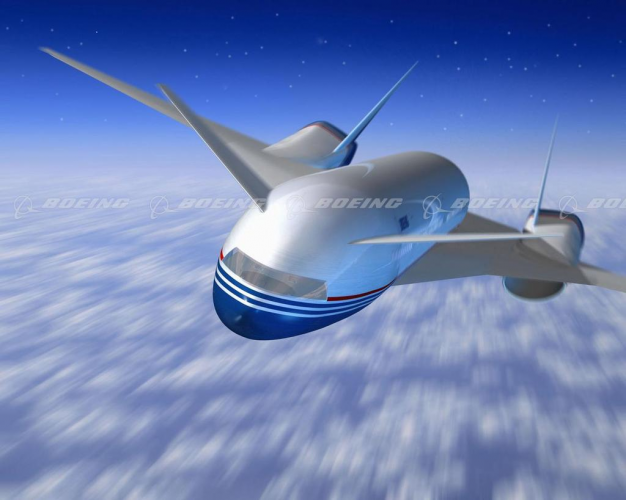
Boeing spent 1990s on idea improved sonic flow, Developed Sonic Cruiser with flight speed Mach 0.98.
1776105736365.png

Swiftly cancelled. At transonic threshold, weird things happen (Mach 0.8 - 1.2)
But swift acceleration automatically increases fuel load demand. if drag is proportional to the square of speed, then the power needed to overcome that drag is proportional to the cube of speed. YOU double the speed you quadruple! the drag. So a plane doing Mach 2 generates FOUR times more drag than a plane going mach 1 and must achieve higher altitude above 45,000 feet.

Aerodynamic drag, also generates friction, and friction means temperature. To overcome that airplanes pushing those speeds, Concorde required special aluminum alloy, modern aviation industry now embracing composites to save weight. They also forget another aspect; Every technological improvement that boosts the efficiency of supersonic flight, aircraft skin, engines, etc. Serves the needs of subsonic flight; when the fuel economy of the supersonic airliner improves 10-20%; by the time SST's manage to reach that; subsonic planes will have doubled their fuel economy. Meaning airlines will have a lower plateau standardized operating costs.

 
People buy 100k+$ car when they could ride a horse, run shopping mall alleys with several thousand € bags when they could hold one made of jute, with clockwork watches at their wrist when quartz mechanisms are everywhere for a couple of Swiss Franc... Physics is not the leading factor.
 
People buy 100k+$ car when they could ride a horse, run shopping mall alleys with several thousand € bags when they could hold one made of jute, with clockwork watches at their wrist when quartz mechanisms are everywhere for a couple of Swiss Franc... Physics is not the leading factor.
Certain people maybe.
There are around 5.2 million private jet flights worldwide per year, that's 0.1% of 5 billion annual passenger aviation trips. A supersonic plane either has to have amortized by having a plane capable carrying 100 passengers or a small plane with 10-20 ranked at specifically high price. All having to compete against airlines offer services in exchange lower speed. Lastly No one can predict costs of operations for supersonic jets in regards hangar maintenance and airframe longevity. Only one speedy plane flew for civilian market and military keeps data on airframe upkeep. Commercial airplane requires 100 operational flight hours maintenance checks. Military plane needs 40-80 hours maintenance on ground for every hour in air.

Lastly biggest obstacle to these flights will be airspace and noise ordinance.
 
Certain people maybe.
There are around 5.2 million private jet flights worldwide per year, that's 0.1% of 5 billion annual passenger aviation trips. A supersonic plane either has to have amortized by having a plane capable carrying 100 passengers or a small plane with 10-20 ranked at specifically high price.
Not to mention that Concorde was flying on the high price model even for 100 passengers.
 
That economic reality falls apart past transsonic threshold.
Boeing spent 1990s on idea improved sonic flow, Developed Sonic Cruiser with flight speed Mach 0.98.
View attachment 808973

Swiftly cancelled. At transonic threshold, weird things happen (Mach 0.8 - 1.2)
But swift acceleration automatically increases fuel load demand. if drag is proportional to the square of speed, then the power needed to overcome that drag is proportional to the cube of speed. YOU double the speed you quadruple! the drag. So a plane doing Mach 2 generates FOUR times more drag than a plane going mach 1 and must achieve higher altitude above 45,000 feet.

Aerodynamic drag, also generates friction, and friction means temperature. To overcome that airplanes pushing those speeds, Concorde required special aluminum alloy, modern aviation industry now embracing composites to save weight. They also forget another aspect; Every technological improvement that boosts the efficiency of supersonic flight, aircraft skin, engines, etc. Serves the needs of subsonic flight; when the fuel economy of the supersonic airliner improves 10-20%; by the time SST's manage to reach that; subsonic planes will have doubled their fuel economy. Meaning airlines will have a lower plateau standardized operating costs.
If I am not mistaken, didn't Boeing design the Sonic Cruiser for just over Mach 1? I know the plan was to fly in the high trans-sonic regime at around 50,000 ft. I do know that Boeing kept their inlet design and propulsion pretty hush-hush during that timeframe.
 
YOU double the speed you quadruple! the drag. So a plane doing Mach 2 generates FOUR times more drag than a plane going mach 1 and must achieve higher altitude above 45,000 feet.
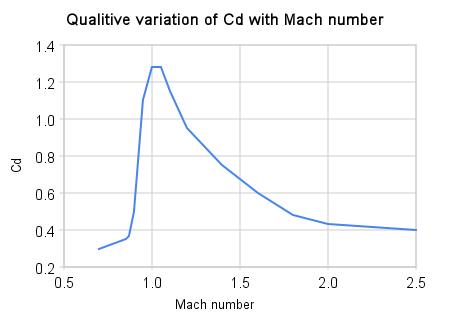
You are very wrong. You need to review drag rise thru the transonic region vs the drag in the mach 1,2 to 2 region. For ease of understanding, I attached a qualitative drag graph in the transonic to mach 2 region.
 

Attachments

  • 6ZNaj.png
    6ZNaj.png
    12.6 KB · Views: 26
You are very wrong. You need to review drag rise thru the transonic region vs the drag in the mach 1,2 to 2 region. For ease of understanding, I attached a qualitative drag graph in the transonic to mach 2 region.
The Cd drops off beyond the transonic range, but the air density continues to increase with increasing speed, so total drag does continue to increase. Just not by the V squared factor. Total drag rapidly increases thru M1, then levels off before starting to increase further beyond M1.3 (approximately)

Clarification - the density doesn’t go up with speed, but the increasing velocity effectively increases the resistance of the air. The drag equation is:

D = Cd * A * .5 * r * V^2

With r = density

While drag does increase with the square of velocity, Cd isn’t constant, decreasing beyond the transonic peak.

Going higher reduces the density factor, offsetting some of the increased speed drag.
 
Last edited:
but the air density continues to increase with increasing speed, so total drag does continue to increase
Doctor, I am not sure why you would even suggest that air density is directly related to V. I believe you know that is fundamentally wrong given your later clarification, nevertheless it is very confusing. But the real elephant in the room is the wave drag, which is really driving the Fd during the transonic transition, as well as the decrease of same as V approaches M2. I was trying to keep things simple for the readership, rather than overwhelming them with the underlying math. I realize there are many on this board quite capable of working thru the underlying derivation, but there are far more that are enthusiasts just wanting to better understand.

Have a great day
 
On the supersonic side the Cd varies approximately in proportion to:

1 / [(M^2 -1)^0.5)

for a given aircraft profile, with Cd generally being lower for higher sweep angles.
 
Scott Manley has made a long video about Boom Supersonic's jet-engine:


A couple of weeks ago I got to visit Boom's R&D facility in Colorado and I got a tour from CEO Blake Scholl, and I got to see the very first engine core in final assembly. This is a big deal the company spent a long time trying to convince Rolls Royce to develop an engine for the Overture supersonic airliner and in the end Rolls Royce stepped back.

Now 3 years later the engine is about to start testing, but the near term plans don't have this powering airliners, instead it's first job will be as part of gas turbine power generation, a task that there's a large market for right now.​

Unfortunately, my camera person hurt his ankle the day before this, so the camera work is by me....
 

Similar threads

Back
Top Bottom