Cross posting as relevant to this thread.

President Donald Trump signed an executive order Friday that directs the Federal Aviation Administration to lift the 52-year ban on supersonic flight over U.S. soil, marking a major policy shift that occurred just weeks after lawmakers introduced bipartisan legislation with the same aim. The order instructs the FAA to end the overland supersonic ban and create noise-based certification standards, allowing faster-than-sound travel as long as no audible sonic boom reaches the ground.

“The reality is that Americans should be able to fly from New York to LA in under four hours,” Michael Kratsios, the director of the White House Office of Science and Technology Policy, told reporters Friday.

Asked for comment Friday, Boom CEO Blake Scholl wrote “Booooom!” in an email to TechCrunch. Added Scholl, “The sound barrier was never physical — it was regulatory. With supersonic legalized, the return of supersonic passenger air travel is just a matter of time.”
 
View: https://x.com/boomaero/status/1931078659290349930


Breaking the sound barrier, again. Today,
@realDonaldTrump
issued an executive order that effectively lifts the 52-year ban on civil supersonic flight over land in the U.S. It directs the FAA to repeal the supersonic speed limit as long as aircraft don’t produce an audible sonic boom on the ground.

Thank you, President Trump, for unlocking the future of faster and quieter travel.
 
Is there any progress whatsoever on Boom Symphony?
 
:cool:
Blake Scholl - Founder & CEO of Boom Supersonic | SRS #225
Blake Scholl is the Founder and CEO of Boom Supersonic, a company he started in 2014 to revive commercial supersonic flight with the Overture airliner, designed to fly at Mach 1.7 and carry 64–80 passengers.
A Carnegie Mellon University computer science graduate (BS, 2001), Scholl began his career as a software engineer at Amazon, later owning a $300 million P&L at age 24, and co-founded Kima Labs, acquired by Groupon in 2012.
Inspired by seeing Concorde in a museum, he self-taught aerospace engineering to launch Boom, which achieved the first privately developed supersonic flight with the XB-1 demonstrator in January 2025. With orders from United, American, and Japan Airlines, Scholl aims to make sustainable supersonic travel mainstream using 100% sustainable aviation fuel, targeting passenger flights by 2030. [...]
Video:
View: https://www.youtube.com/watch?v=Fq9oB42TyMM

Link:
Code:
https://www.youtube.com/watch?v=Fq9oB42TyMM
 
How a Startup SOLVED The SONIC BOOM Problem!

Oct 11, 2025

The Supersonic Dream is Back! In this episode, we visit Boom Supersonic’s headquarters to explore the XB-1, the first independently developed supersonic jet — and the testbed for Overture, a full-size commercial airliner that will let passengers fly faster than the speed of sound.

We sit down with Boom’s chief engineers and test pilots to learn how they’re designing the future of flight — from advanced composite fuselages and external vision systems to Symphony, their in-house-built jet engine ready for sustainable aviation fuel.

00:00 - Intro
00:38 - The Goal For XB1
00:57 - Overture vs Concorde
02:24 - Challenges that Carry Over
03:11 - Vertical Integration
03:41 - Lessons Learned In XB1
05:41 - Supersonic Inlit Problem
06:26 - Home Made Engine
09:04 - The Iron Bird
09:48 - Cabin Vision
10:54 - Regulations
11:19 - Boomless Cruise
11:52 - The Simulators

View: https://www.youtube.com/watch?v=_Qv4e4swr8Q
 
"One of the cool things about boomless cruise is that you don't really have to tailor the aircraft to it, you can achieve boomless cruise by having an understanding of the atmosphere"

Sure, if you want to be stuck at M1.15.

Snake oil by the litre.
 
"One of the cool things about boomless cruise is that you don't really have to tailor the aircraft to it, you can achieve boomless cruise by having an understanding of the atmosphere"

Sure, if you want to be stuck at M1.15.

Snake oil by the litre.

Again with the Mach cutoff trick. I would assume that once they get 12 miles offshore, the plan is still to get properly supersonic. M1.15 isn't enough.
 
I’ve been contemplating on how Boom was going to achieve the necessary thrust for M1.8 cruise with a non-afterburning single fan stage engine, while meeting takeoff noise limits.

My initial thoughts were a large engine with a fan pressure ratio of approximately 2:1 (probably the most possible with a single stage fan), with a full power capability around 35K lbs, but derated to around 25K for takeoff. This would drop the exhaust velocity below sonic for takeoff, while providing the temperature and speed margin to get back up to the 2:1 FPR at supersonic cruise inlet temperatures (180F at M1.8, 40K+ standard day). With standard ram recovery of 1.89:1 at M1, the nozzle pressure ratio would 3.78:1 that would provide supersonic exhaust velocity. At M1.8 cruise, standard ram recovery of 5.43:1 would give a NPR of 10, even if the FPR was falling below 2 due to the inlet temperature. Just might work to provide the necessary cruise thrust. They still might need a Rutowski dive / climb maneuver to push thru the transonic drag rise - fun for the passengers!

The variable nozzle pictured gives them another knob to turn. Opening the nozzle at takeoff thrust would lower the FPR while increasing fan speed and airflow, lowering noise and increasing available thrust / propulsive efficiency at low speeds while still derating the core speed and temperature. Closing the nozzle raises FPR and exhaust velocity, while requiring the core to run harder to maintain fan speed and airflow under high speed conditions.

They are only showing a variable convergent nozzle, which only accellerates the exhaust to M1. You need a divergent expansion aft of the throat to efficiently turn NPR greater than 2 into supersonic exhaust flow. Since there is no afterburner, a center body plug nozzle inside the variable convergent nozzle might be the best choice. Not sure what Boom is planning.
 
Didn't expect to agree with him on any points but his critique of the X-59 had me nodding. Unscalable design, quiet only in a straight line ..

Not that Boom have an alternative quiet option at present, of course
The same critiques he has for the X-59 could be used for XB-1. It's just an all around dumb statement to make and tells me he doesn't have the faintest clue what the X-59 program is for.
 
They are only showing a variable convergent nozzle, which only accellerates the exhaust to M1. You need a divergent expansion aft of the throat to efficiently turn NPR greater than 2 into supersonic exhaust flow. Since there is no afterburner, a center body plug nozzle inside the variable convergent nozzle might be the best choice. Not sure what Boom is planning.

It is possible to go supersonic without using convergent-divergent nozzles or translating plugs, as shown by aircraft powered by the RB.199 and J85 - but it is inefficient and caps the maximum Mach. However for Boom it's probably sufficient.

Anyhow, what 1950s tech will they showcase next? Area rule? Autopilot?
 
It is possible to go supersonic without using convergent-divergent nozzles or translating plugs, as shown by aircraft powered by the RB.199 and J85 - but it is inefficient and caps the maximum Mach. However for Boom it's probably sufficient.

Anyhow, what 1950s tech will they showcase next? Area rule? Autopilot?
Both RB199 and J85 are using afterburner to go supersonic. The increased exhaust temperature from the AB raise the velocity of M1 thru the convergent nozzle by the square root of the absolute temperature increase. I believe the J85 installation in the T-38 / F-5 also has an ejector nozzle shroud that aerodynamically functions as a rudimentary divergent nozzle.

Boom trying to supercruise with a cool exhaust (no AB) and relatively low pressure ratio single stage fan. They need all of the efficient supersonic expansion they can get to succeed, along with a low supersonic drag airframe (probably with area rule).
 
Both RB199 and J85 are using afterburner to go supersonic. The increased exhaust temperature from the AB raise the velocity of M1 thru the convergent nozzle by the square root of the absolute temperature increase. I believe the J85 installation in the T-38 / F-5 also has an ejector nozzle shroud that aerodynamically functions as a rudimentary divergent nozzle.

Boom trying to supercruise with a cool exhaust (no AB) and relatively low pressure ratio single stage fan. They need all of the efficient supersonic expansion they can get to succeed, along with a low supersonic drag airframe (probably with area rule).
I am not a propulsion guy but seems a variable-cycle engine would be a good fit for Boom but also may be too expensive for a jet in this class type, F119Doctor, comment?
 
I am not a propulsion guy but seems a variable-cycle engine would be a good fit for Boom but also may be too expensive for a jet in this class type, F119Doctor, comment?
Possibly, but the engines being developed under the XA100/101 and XA102/103 programs are probably too high noise for a passenger aircraft, even in the high bypass mode. The technology is probably applicable, but may be too expensive for commercial use at this time.
 
[...]

They are only showing a variable convergent nozzle, which only accellerates the exhaust to M1. You need a divergent expansion aft of the throat to efficiently turn NPR greater than 2 into supersonic exhaust flow. Since there is no afterburner, a center body plug nozzle inside the variable convergent nozzle might be the best choice. Not sure what Boom is planning.
I'd expect a centerbody plug. Mix the fan and core exhaust together in a chamber with a bunch of sound deadening around the outside, then run it through the plug for supersonic expansion.
 
Why has Overture got four engines? Considering how much the pull on low operating costs, don’t they understand the rest of the industry has moved away from this to reduce costs?

Why has it got aero-conical shocks intakes under the wing leading edges? Aero-conical are notoriously sensitive to turbulence so normally have to be sited in clean airflow locations. Even when these are in the optimal location they still occasionally unstart (aka surge) with frightening handlings implications.

On that point can Overture survive an unstart (surge) on the outboard engine? The B58 struggled (two aircraft and crew lost in flight test) with this. Although a system was developed and demonstrated the B58 was heavily restricted from supersonic flight n service. Again the four engines makes this problem worse because of the increased moment arm of the outer engine.
 
Last edited:
Why has Overture got four engines? Considering how much the pull on low operating costs, don’t they understand the rest of the industry has moved away from this to reduce costs?
I'd assume that Boom has determined they need the raw thrust of 4 engines. Remember that the 2707 was talking about 4x 65,000lb turbojet engines. Concorde needed 4x 31/38k engines. Crud, Blackbird ran on 2x 35k engines.


Why has it got aero-conical shocks intakes under the wing leading edges? Aero-conical are notoriously sensitive to turbulence so normally have to be sited in clean airflow locations. Even when these are in the optimal location they still occasionally upstart with frightening handlings implications. Again the four engines makes this problem worse because of the increased moment arm of the outer engine.
Looks a lot like the 2707, and those inlets are well behind the leading edge of the wing.


On that point can Overture survive an unstated (surge) on the outboard engine? The B58 struggled (two aircraft and crew lost in flight test) with this. Although a system was developed and demonstrated the B58 was heavily restricted from supersonic flight n service.
And Blackbird would literally slap the flight crew upside the helmet hard when an inlet unstarted.

I would hope that Boom has read about B58 and how Concorde was designed around the idea of an outboard engine failure or unstart.
 
Both RB199 and J85 are using afterburner to go supersonic.

The prototype N-156 went supersonic on its first flight without afterburners installed...

Bear in mind that Boom's absolute focus has to be on reducing certification risk. This engine needs to be as verifiable as possible for FAA scrutiny, or the whole project collapses. Without the engine they have nothing, so they can't take any risks, and every hydraulic system they add is a risk.

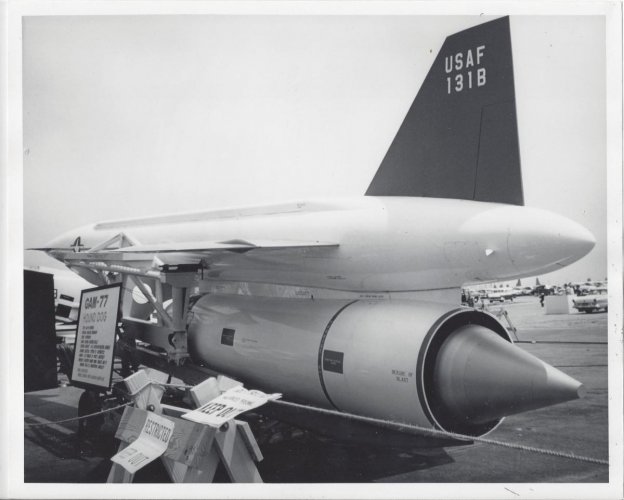
I don't think they're going to add the complication of a plug exhaust on top of the convergent nozzle. At that point they'd be better to discard the nozzle and go with a plain translating plug, like Hound Dog. xgam-77_www.ammsalumni.org_.jpg
 
I would hope that Boom has read about B58 and how Concorde was designed around the idea of an outboard engine failure or unstart.
Indeed. Concorde test pilots had a few scary stories about engine inlet unstarts. One of them happened with a french President onboard (Pompidou or Giscard, can't remember). I've checked : January 1977, Giscard is returning from Saudi Arabia aboard a Concorde. Wham, unstart of two ramps at supersonic velocity. The crew and Concorde handled it perfectly and the flight carried on.

The glorious days when Concorde was used as France Air Force One. In December 1971 Pompidou met Nixon in the Azores. Pompidou specifically requested a Concorde prototype to make Nixon jealous, with his old 707. Worked like a charm, alas it was a few months too late to bring the Boeing 2707-300 as the next AF1.
 
Last edited:
I know I've seen it on an SST design, but they're all blurring together. Wing shapes are too similar.

I just checked the 2707-300 general features PDF and it's showing ejector nozzles like the SR71.
The GE Affinity engines was for the Aerion business jet of the late 2010s. It was a medium bypass turbofan with 2 stage fan in front of a CFM56 core. https://en.wikipedia.org/wiki/General_Electric_Affinity The modern 2 stage fan would have capable of a FPR of 3.5 to 4.0, with a supersonic exhaust at full power, which would have been very noisy. They were also aiming for a M1.4 cruise speed which would have avoided the level of inlet heating engines encounter at higher speeds.

Definitely a more traditional path towards supercruise than the Boom engine design
 
Why has it got aero-conical shocks intakes under the wing leading edges? Aero-conical are notoriously sensitive to turbulence so normally have to be sited in clean airflow locations. Even when these are in the optimal location they still occasionally unstart (aka surge) with frightening handlings implications.
With a cruise speed of M1.8, the Boom cone inlets are most likely external compression with a single oblique shock from the fixed cone and a terminal normal shock at the inlet annulus. These type of inlets don’t inherently unstart like the mixed compression M3+ inlets of the SR-71 and XB-70. The external compression inlets are efficient enough at M1.8. I did not think the variable ramp inlets of the M2 Concorde were mixed compression with the associated unstart possibility, but I could be wrong. But variable ramps can certainly malfunction and cause all sorts of flow anomalies to the engines.

The fixed geometry inlets can become unstable and develop inlet buzz if the engine airflow is reduced below a minimum level. Most fighter engines are set up so that power cannot be reduced below Mil power when above M1.4 for this reason. For a supercruise engine with no AB to turn off, this can be a problem - how do you slow down?
The F-22 has the inlet bypass doors on the top of the aircraft to maintain inlet airflow when the throttles are retarded and engine airflow is reduced below Mil power. I wonder if Boom is including this type of variable inlet bypass?
 
I did not think the variable ramp inlets of the M2 Concorde were mixed compression with the associated unstart possibility, but I could be wrong.
Concorde had a mixed compression intake;- from memory 8-9 individual shocks in four groups. with the first across the intake face. But again I remember it was by design self starting.
 
Last edited:
I have in mind that using reverse thrust at supersonic speed or in-flight would have been quite rare. Given the geometry of the nozzles system, closing the divergent section would have created enough drag to slow down the whole airplane. Remember that Concorde was not a fighter jet with a gamut of excess power.

b9d472_fe17472ad29740b4bdbec197d99a1f05.jpg


For those that want to know more or check back on their knowledge, see the nozzle system in great details here:

 
Last edited:
Concorde had a mixed compression intake;- from memory 8-9 individual shocks in four groups. with the first across the intake face. But again I remember it was by design self starting.
Wikipedia shows multiple shocks inside the duct (I.e. mixed compression, but this ICAO paper says it is a three shock external compression system with 2 oblique shocks from the two ramps, and a terminal normal shock at the inlet entrance: https://www.icas.org/icas_archive/ICAS1996/ICAS-96-7.4.2.pdf

The Concorde inlet system does have an inlet dump door to vent air overboard. It described as a method to keep the inlet stable and functioning with the engine shut down, but it may also have been used during throttle down at the end of the supercruise segment.
 

Similar threads

Back
Top Bottom