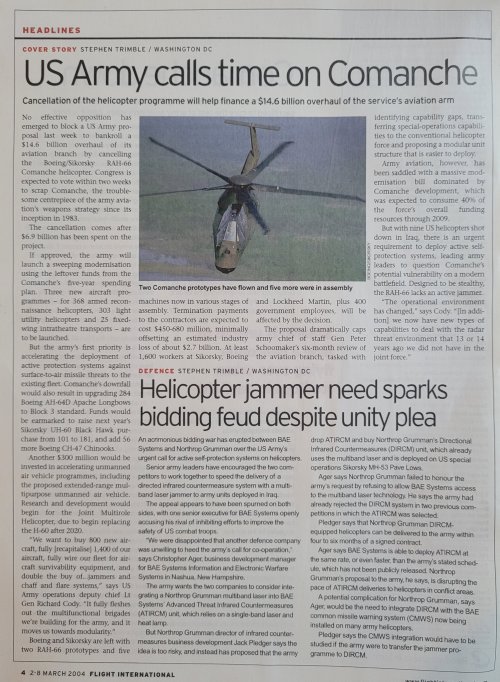
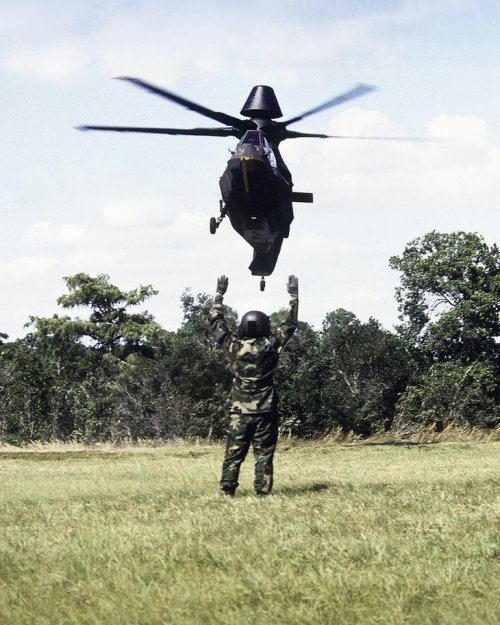
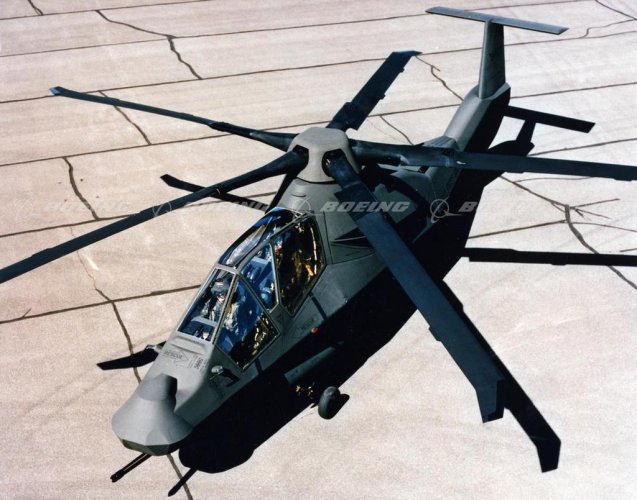
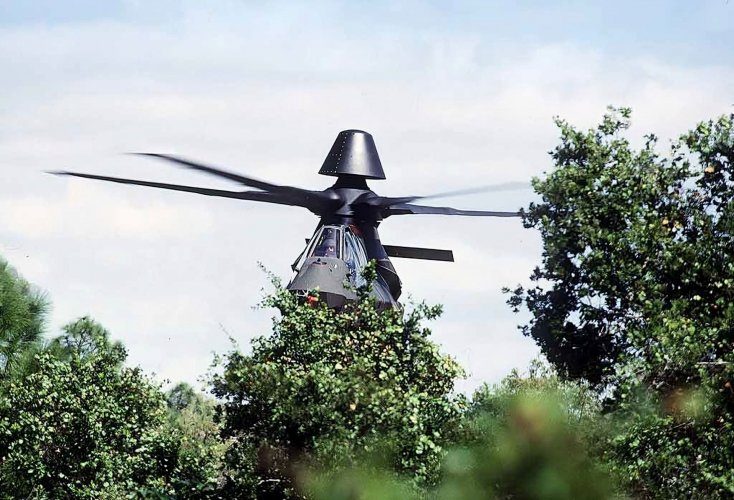
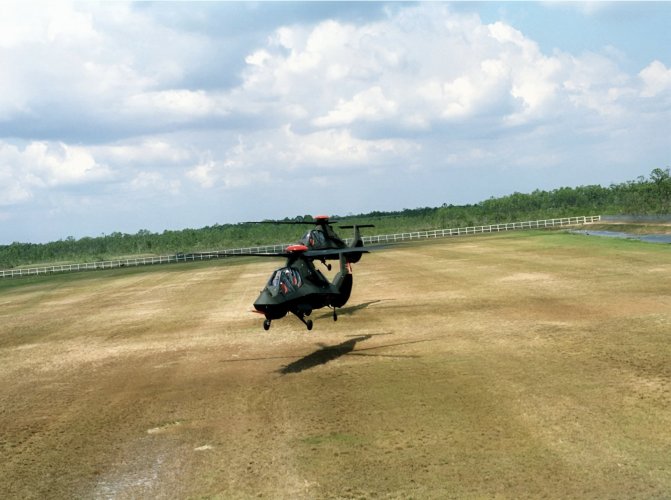
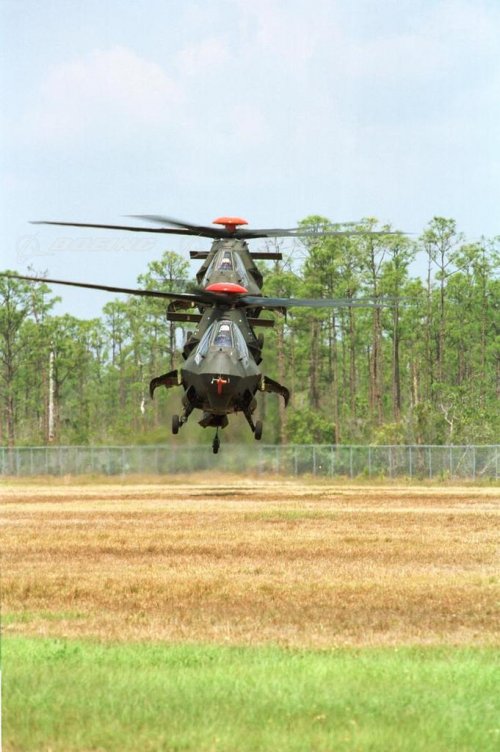
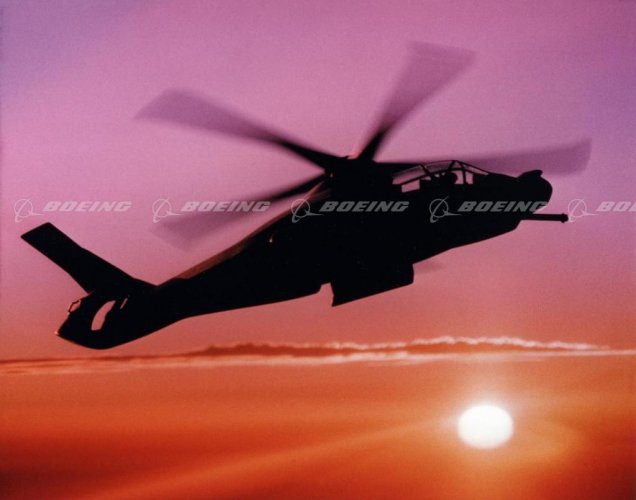
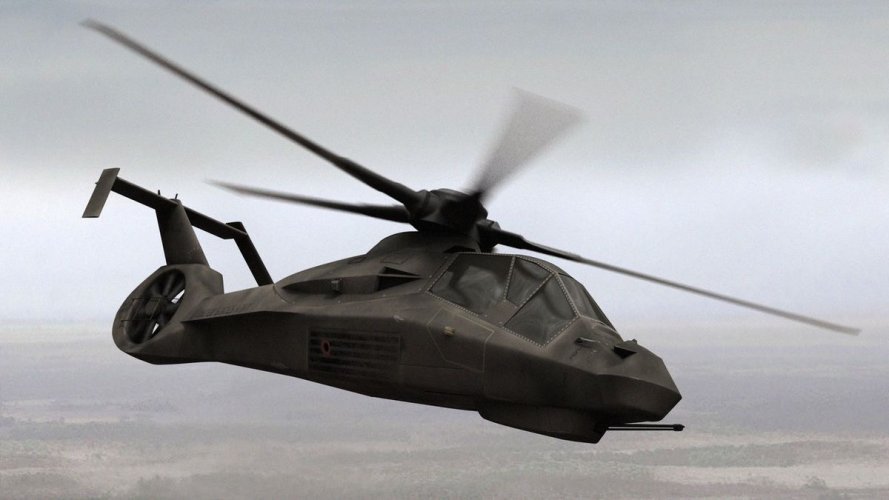
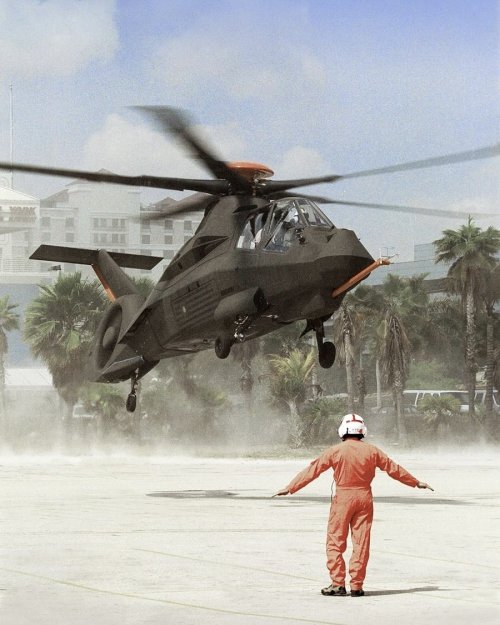
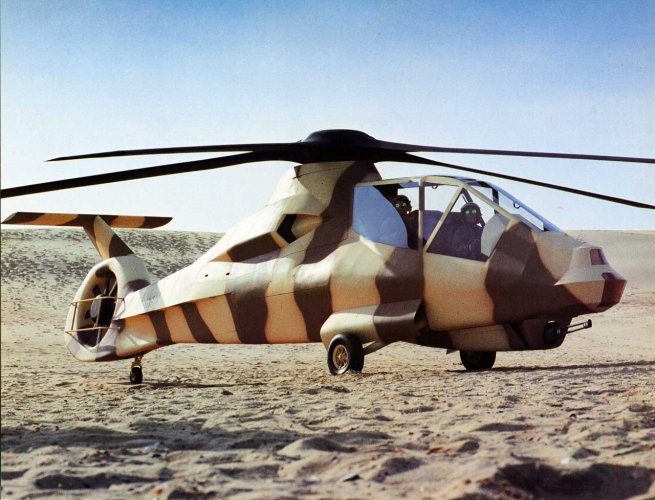
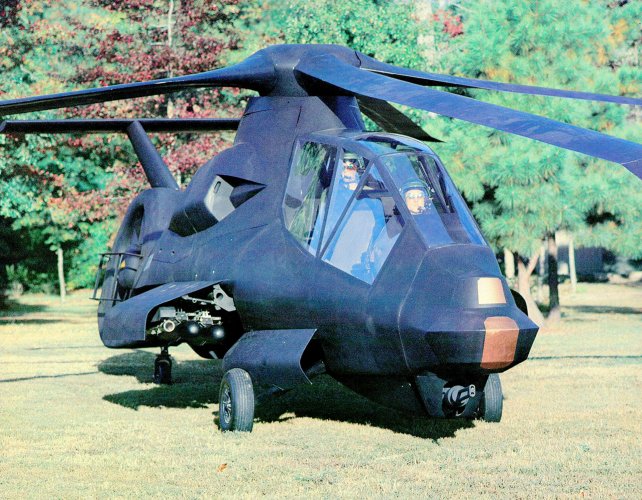
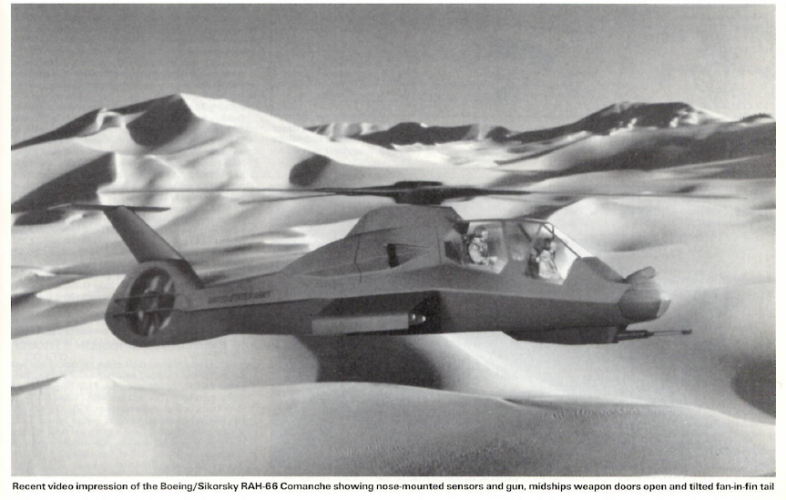
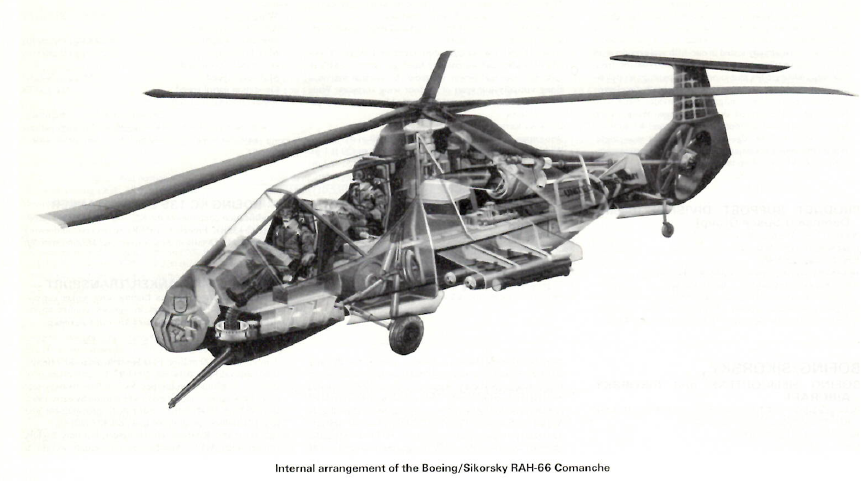
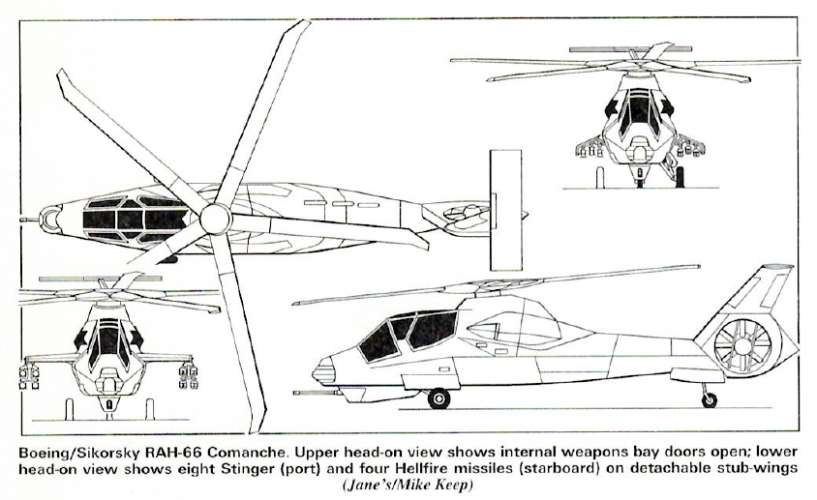
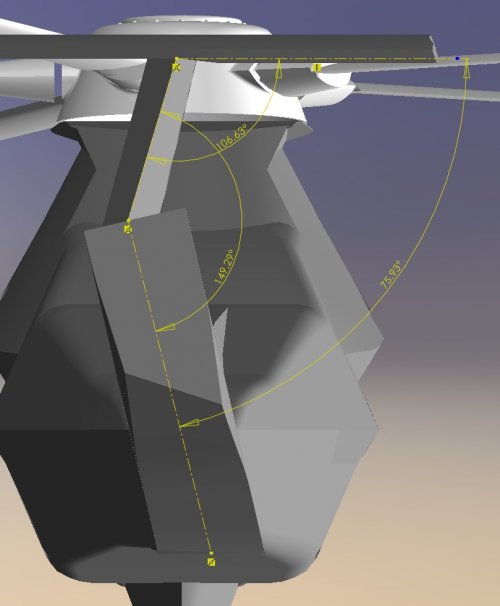
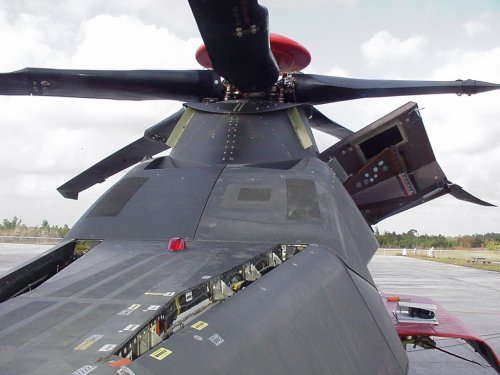
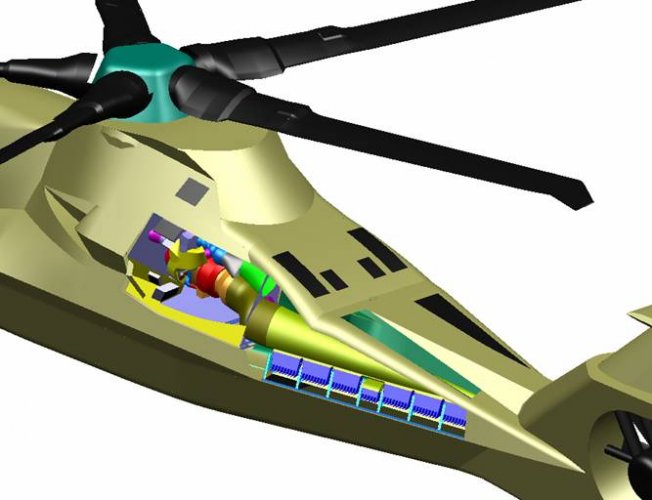
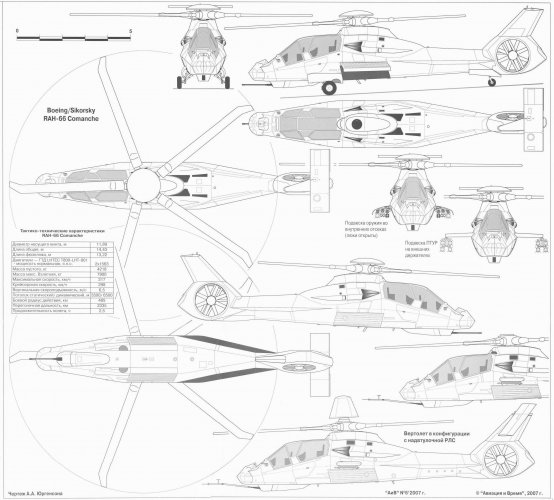
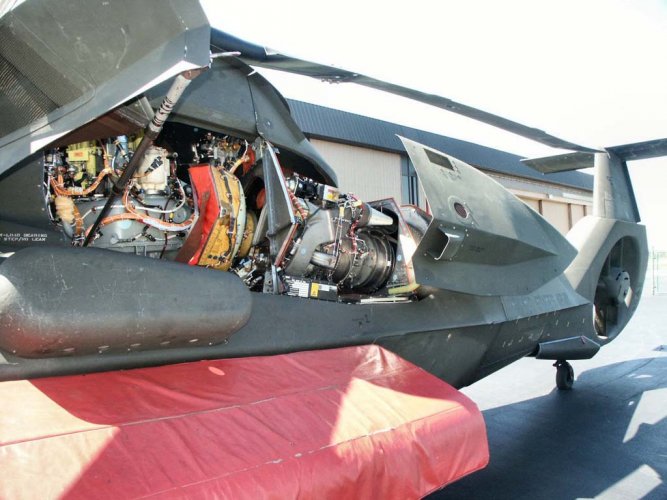
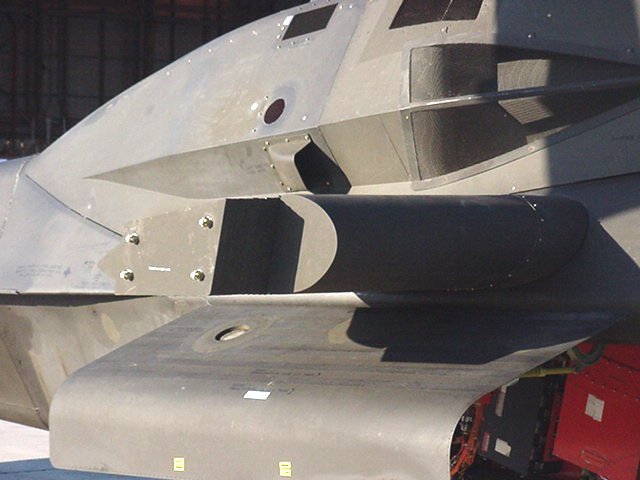
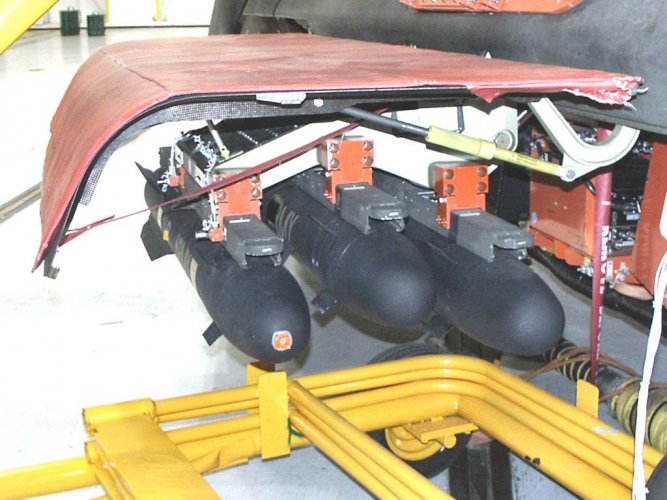
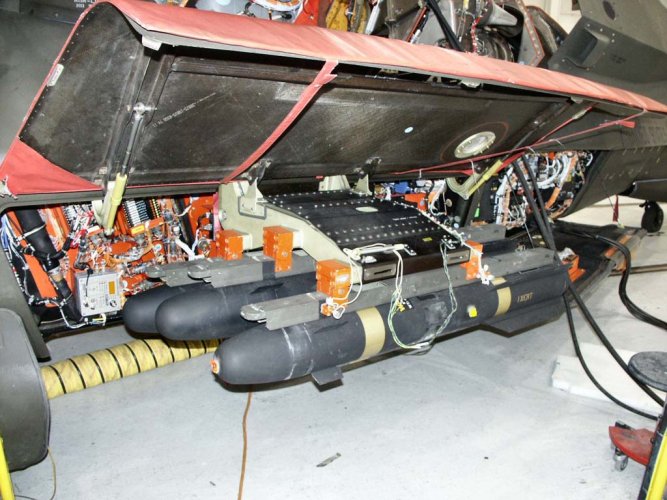
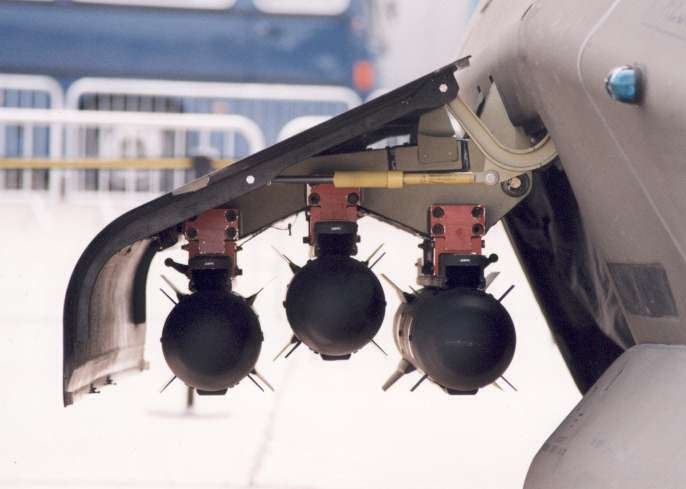
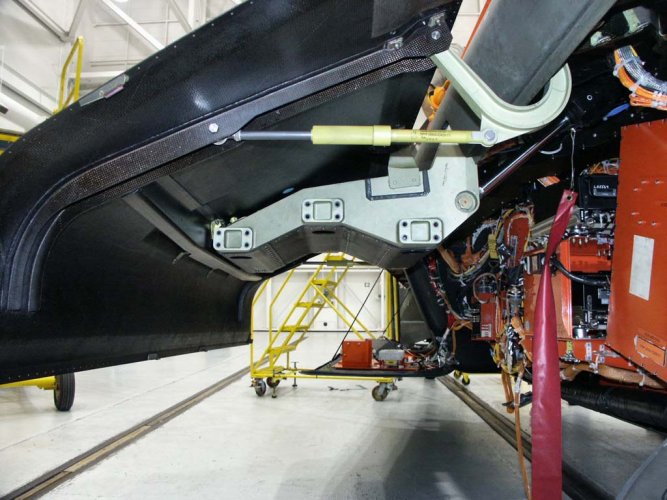
Boeing/Sikorsky RAH-66 Comanche

It seems to me that it still represented as stealthy as somebody could hope to make a helicopter with the technology of the day. Even with advancements since then I don't know if you could do that much better. A helicopter is inherently a challenging object to reduce the signature of.
I concur completely. It really was a good flying helicopter I have heard.
 
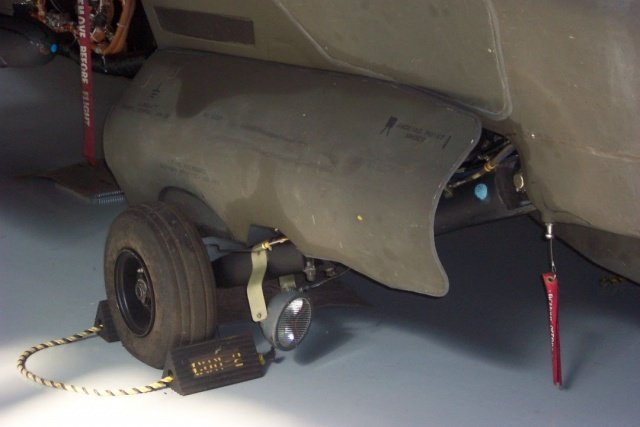
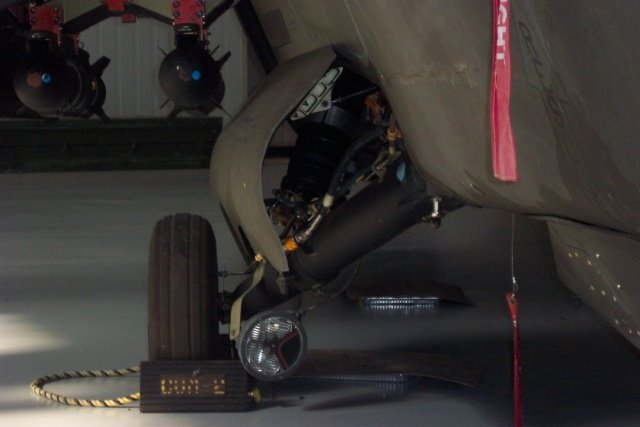
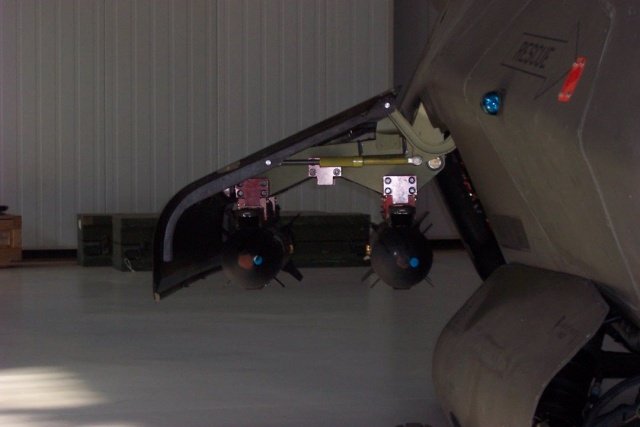
hi everyone @Halcyon66 first thank you halcyon for the incredible images you shared. came here looking for images in order for me to make a model, thinking die cast model if i can sculpt it, or a 3d printed display model. although I'm into papercraft and thinking of making a detailed papercraft model or models perhaps with different printed camouflage schemes question do you happen to have any pics or information about the wheels and the mechanism of how the wheel doors close and so forth? any other images is much welcome. again appreciate any help and the awesome pics you already shared. it really is a shame they cancelled the comanche, it is my favourite helicopter period! thinking to the modern era a Comanche with the ability to control drones and utilize its stealth would have been a major benefit. it could have been the quarter back control mod of various drones, and night time isr or raid support. its like a supercar model in the skies so sleek!
 
"While there are certainly advantaged to ducted fan from accoustic and radar considerations, not to mention protected rotors, it is not very efficient in a hover and has even worse downwash than tilt-rotors. It would be very handy for urban operations though. I hope it is not forgotten."

Fan in wing canards and electric systems as opposed to gas or shaft driven gets a 50-100 knot, 400ft, ESTOL which is 'good enough' when combined with a 250-350 knot cruise/max speed range because it allows you to operate far back from the FLOT and not have quite the target signature of an acre worth of PSP and tents that is an Army attack aviation FOB sitting out there in the middle of which-desert-is-it-this-time while the low intensity threat has missiles that can hit within 10m accuracy from 200 miles away, like the houthi. Or 1,000 miles away, like the Iranians. Never mind the Russians or Chinese.

Speedy ESTOL lets you choose the road basing mode you operate from. While still incorporating the stealth and large MEP to be able to out-slant the threat and 'send pictures' without losing the cost benefits of scaling a drone to bear the weight.


Your point about amount of hover is very relevant to the discussion. When LHX was originated, philosphically the Army was still locked into the focus of fighting WarPac forces by hovering behind hills and treelines observing and sniping at tank columns. Ironically today with the very different requirements; long ranges, rapid response, endurance and payload the tilt rotor is again a very viable option.


TR is only viable if it has an internal weapons bay and dropfire munitions. That means no AGR-20 and no AGM-114/179. SPEAR-3 and AGM-187 only.

Which were decades away when the attack tiltrotor was in consideration as a _centerline engined, twin outboard rotor_ system as the easiest way to keep the wings light and the power loading constant through a takeoff shaft. Engine on the centerline = no bay.

Since the size of the rotors and the fact that they are facing the radar is going to both permanently fix the gross weight range and cancel the stealth with very high velocity thrust posts in landing besides, why not just go for an ESTOL? The British SABA had a 1,000ft requirement with a 600ft takeoff. With a 5,000shp T55 engine and a ~10,000lb airframe, it accelerated faster than a carrier cat shot at launch and could turn inside an F-16 with ease. Give it Spartan TRN, give it decent ECM and FQ Ram treatment. Give it better than Hellfire standoff weapons.

Come further, use MUM/T to go the last 10km for target designation.


Also remember that the primary threat to rotorcraft are light and medium caliber guns, RPG and MANPADS. The MANPADS threat you have to overcome with technology, but RPG and guns still have less time to accurately engage the faster you go.

Sadly the fact that it takes so long to bring a new aircraft to fruition (like what happended to Comanche) means that programs will become increasingly hard to bring about in a world that changes in far less time. This is the epitate of the RAH-66.

Maybe in the Backwoods of Bumalia. In the modern environment where there is a real air defense, the truth looks like this-

S-300 shoots down Ka-52
View: https://www.youtube.com/shorts/EZ1k3p4KQiU


You couple that to an active seeker like NASAMS or 9K317M on the SA-27 or the 9M96 and 40N6 on the SA-21 and you're going to see a lot more BTH engagements by fully networked shooters, where the missile doesn't see the target, at launch but the target designation radar does. Either because it's an AEW&C or Surface Wave system that allows you to fire over the horizon.

Now, suddenly, stealth in the helicopter makes sense because it is going to be the one with 20-30km, Gen-3, sensors and the Satcomms to get the picture to Higher. But it's also going to carry the optical drones farther into enemy territory.

Now, there's nothing which says this has to be attached to a helicopter. A gyro on the pod removes 95% of the jitter from turbulent, low level, air and so 'from the hover' isn't a requirement for picture. While coming further to stay longer makes more (survivability) sense than playing whackamole with drone cued artillery and a fuel truck closer-in.

Now, you can argue about weapons on the aircraft and Johnson-McConnell or Key West or whatever, but the reality remains that, in a world of 20km FPV, 90km LAM and 2,500km Geran/Class 3, your only real survivability option is to be both small, distant and fleeting. And helicopters are NONE of these things in terms of footprint. While Class 2 UAVs are typically too light and small to get the job done (25kg) and Class 3, at 600kg, are still too light for high MEP lift with optimized Stealth/ASE and Speed survivability.

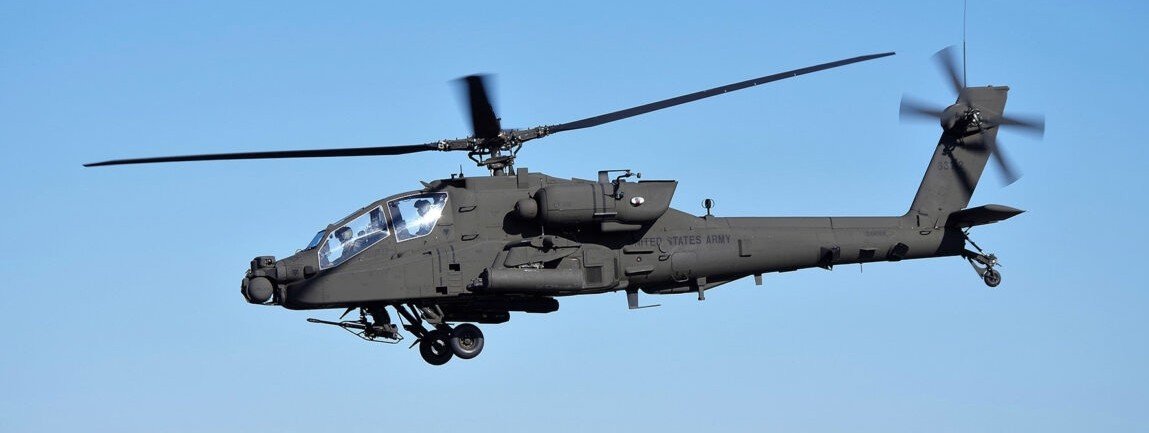
This is where we screwed up. Is a vanilla RAH-66 more survivable in this environment than an AH-64 with all the ATRJ/ATIRCM goodies? I don't know. But I know it is more survivable than a Reaper (2007) and less subject to spoofing and probably SHORADS as Pantsir/Tor than say a Shadow (2002), which was what we were running in 2004 when the RAH-66 was cancelled.

If there is something more egregious than 'Last War Syndrome' it is 'This War Syndrome'. Which cost us full buyout on the F-22 for something monstrously more expensive. And the RAH-66 which the GWOT treated as not needed. But which Ukraine highlights as the minimum starting point for high capability rotary wing attack aviation.

Today, we would probably go with a compound and/or coax ABC in something like the X-2 class. We might make it unmanned and capable of remote delivery as much as attack with a cargo/sensor/weapons pod like the A-160. It would have to be stealthy from the top and it would have to be fast enough to outrun any likely eventuation of an interceptor drone.

But if the TR was not the answer (and IMO, it was not) and something truly exotic like the MP-18 Dragon could not be used, then still it was foolish to damn LHX by cancelling Comanche. LHX brought us ACAP, ADOCS, SHADOW and a whole host of other enabling technologies which, put into a secondary _UTIL_ variant, would have assured market capture for the U.S. through another generation of Police, Aeromedical, Press, Oil Industry and Air Taxi/Executive Transport as well as other liaison type services which had been owned by the Hughes 500 and Bell 206, courtesy of the LOH program. That is where the real profitability lay. And it is now largely owned by Eurocopter.

That kind of technology base investment never would have been made for an oversized RC aircraft as a descendant of Amber.
 
I thought that pretty much supported the decision. Bunch of Apaches whacked by optically aimed AAA, against which the Comanche's stealth would have been useless. Or are you talking about the need for reconnaissance helos that could operate with the Apaches?

We don't operate by daylight. We don't need a massive replacement for the AH-1 and OH-58D force. We can't use what we cannot get to theater and keep in spares, munitions and gas which is likely going to be less than 50 helicopters in the opening hours of a hurry-up response. We sure as hell don't expose stealth assets to thrown-rock trashfire AD.

Here, I follow the Russian school on program costs: it costs what it needs to cost to develop it and we keep cooking until it's ready because it's all sunk anyway. We pay for this process in total block increments without allowing 'buy in' to jeopardize the company. As long as you make milestones you get progress payments even if difficulties in area X means you didn't get as far as you might have hoped. Next five year defense plan, you get more to clear that hurdle until the system is outdated or external technologies flow in to help you solve it.

If the platform or weapon makes it to service because independent (not service) trials say it does the job it was spec'd to do, then we pay the company a fixed percentage fee for a minimum sized force total and expand from there.

The DIB serves the state, not the other way around. Despite what everyone says, Comanche died because it could not get smaller to make those IR&D redlines go away unless we bought into a force size that was utterly unnecessary, post Cold War.

So rather than have 34 billion and 900 more SMA helicopters than needed, we had 2 prototypes, 7.9 billion dollars and...bupkis.

The point being that R&D should be immediately considered a sunk value and not in anyway be allowed to bloat the end price based on selling overpriced maintenance services and spares on the back end to make the company whole. Even within our messed up procurement system, if they had resized the total buy to 300 and accepted a doubling of individual per-unit costs the Comanche would be a winning move in a radar dense frontal IAMDS.

Once you understand that this is a national asset and not a toy which you can lose off the boat because someone was hot-dogging the approach or forgot to pull the engine inlet covers, you also tend to know just exactly which actions demand the capability and how close to the threat you want to get to MA.

The AH-64E is not safe in either environment but a drone designator allows you to put 16km AGM-179 or 21km AGM-114R-4 into that optical threat airspace and solve the problem of 'hidden artillery' or whatever other good time they though they were looking for over Najaf.

Upgrade this to the Jackal, Barracuda or CMMT and now you're cookin' with 200km gas.

But you still have to be able to survive the radar threat and the drone cannot do this, in the face of a Pantsir that can track a 6" GMLRS moving at 1,300 knots and give it a French kiss. It's not even that big a cost trade, using the smaller missiles and they carry enough of them to kill a LOT of drones.

If you want to get deep and target mobile or heavily camouflaged targets (and if you don't believe the overhead will last past second day in a major war...) then you either go max-LO and flying wing/lambda your way through the smaler numbers of the big stuff, using fast jet capabilities to come from a long ways out, to protect the basing mode.

Or you go as low as you can and allow the combination of LO and terrain masking and a two-transmitter interaction with the surface clutter bury your signature as you max out the range of the EOSS with the digital TV and Gen-3 FLIR in the second production block plus the bar-search and 1.2GB (yeah but remember, this was 1996) MSUVR that lets you snap shot an entire battlespace as target volume, go back beneath the LOS so that the TAS and RPA can do the cognitive interpretation to give you breakout on vehicles or structures that meet the description while you fly the helicopter.

In the prototypes the sensor was a 20km reach compared to the (pre MTADS) 10km of the AH-64. With the Block-2 production sensor it would have been closer to 35km. It's a lot easier to stay safe from 20+ miles out safe as one-button push the ATS as 'Auto Target Search' to rise up into LOS, take the picture and ATS again, back into masking.

From there it's all about understanding that a scope-

...***...
.******.
.******.
...***...

Is not a 'scene'-

***********************************
***********************************

In the same way that a portrait is not a selfie on your phone. And the fast 2D bar search is akin to an IRLS which grabs and close-ups every hotspot that meets the requirement for a vehicle size and then does a wheels vs. tires, barrels vs. turrets, engine front or back and antenna on the roof comparison which, with a 5-7 second exposure and 10-15 second cogitate, presents a numbered series of annotated \/ on the FLIR view with an under-row view of magnified thumbnails to what the scene shows you as Truck-ADV-MBT-IFV-Towed Gun-SPH 'detail rich dots'.

You then choose a grouping and send it to the Apache or A-10 or whatever via AFATDS and ATHS as a target folder and have-have-have-take! everyone launches on their targets, in an established sequence, with the missiles falling back into designation as you hit the ATS key once more to pop up and the dual band LRFD automatically cycles the targets with a very powerful (again, twice as good as the designator on the early Apache TADS), diode pumped, designator.

And as the last shot becomes a fireball, you duck back into the weeds and are gone again.

The prototypes actually had a problem here with the porpoise vs. bob-up flight modes, in that the sensor slew controls and the stabilization were 'stiff' and not working together to make the system function properly, there was a work around, predesignating the slew to search sector pie slice on the digital map, but it was hard to fine tune. Which is why the second production block would have had Gen-3 with a gyro on-mount to stabilize.

This could be done day or night and it worked better when you could use two sensors to perform the ATD/C process (resolution on the digital television was supposedly awesome), extending the range.

All of which is heavy. All of which requires a big, ugly, nose fairing to make work. None of which is 'drone compatible' as in RQ-7 Shadow which was 'new in 2002!' when rumors of Comanche cancellation started circling.

Now, I don't know whether this system would work today or not. With the hypervelocity version of the 3M88 missile and the much better third generation, PESA on the Pantsir, engagement envelopes are now out into the range point validated by the prototype sensor EOTADS on the RAH-66 prototypes. It the Pantsir S-1M might not be good enough to detect and track a nose-on Comanche with the block-2, Gen-3 FLIR. But that means a static bob-up from the hover as opposed to the at-speed porpoise mode which rapidly clears the target volume on a very heavy airframe.

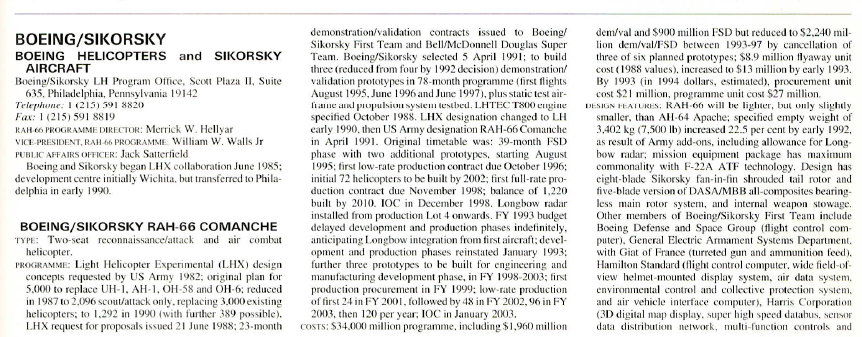
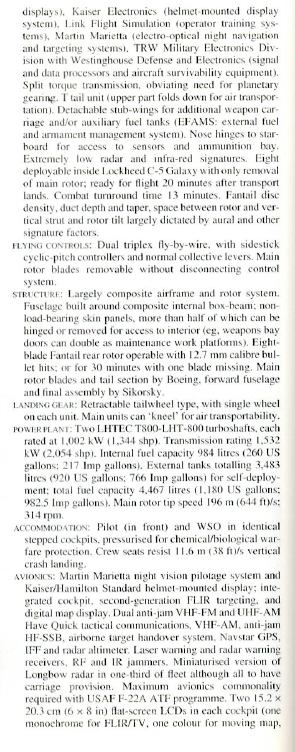
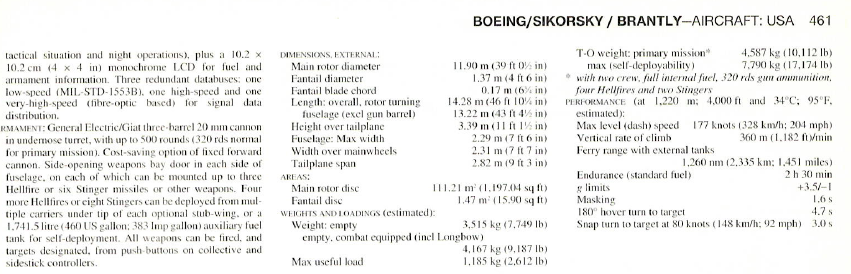
When the program began in 1983, as LHX, it had T800 engines rated at 1,200shp attached. When it transitioned to a named program in 1991, as the RAH-66 Comanche, those engines were making 1,350shp constant, in their rated emergency mode. In 2001 or so the -801 version of the LHTEC engine was rated to 1,565shp, just a little less than the original T700 had been on the AH-64.

Stealth is chunky. It adds incredible amounts of weight and the thrust to push the resulting brick absolutely sucks gas. Throw in the full ASE suite of ALQ-211/212 and CMWS and the resulting aircraft would have failed to meet radius and time KPP at service entry. With some of the weapons loads, it would have had a hard time, hot'n'hi, at OGE hover.

It should also be noted that, unlike the F-22, which nominally shared a lot of its JIAWG and ICNIA architecture (at least at first), the Comanche was essentially flying Gen-1 SDRs which could emulate a lot of the tactical radio networks from EPLRS to ATHS but could not do C or X band, directionally secure. We had not even designed an aperture for it. All the VHF/UHF stuff was sticky-noted onto the flying tail and verticals. The Satcoms had receiver issues and did not work, half the time. But there was nothing akin to IFDL or MADL, which would have also added weight.

Which means you cannot do secure-->secure-->LINK-16 pass back to a second RAH-66 outside the threat ring to get the target data out of a particularly high end ADGE where you have Krasukha doing half-pulse triangulations and BTH capable 40N6 or 9K317M dropping ballista rocks on you, from the sky.

The RAH-66 was not globally VLO and so a lot of what you did had to be tactics-sneaky as opposed to RF mechanics driven. It needed a way to get the raven out to the shooters. And it did not have it. Yet that is also not something which a drone natively does well, within it's own weight/volume limited MEP. When we started using Predator over FRY, we had to put up a Schweizer RG-8 I think it was to do MCS pass back because the Predator's comms sucked that much. When we 'discovered' that the Taliban were watching our drone video as readily as we were, it was not because we were magically unaware that Big Blue U did not have secure broadpipe video linkage. It was because they had a weight problem they _could not fix_.

Just because the helicopter has a weight problem, doesn't mean that you go drone. Ukraine has been a giant kick-to-the-balls 'learning experience' as to just how NON spectrum dominant we really are. That alone should prove a ready lesson in the limits of such systems in-close with a highly REC capable enemy.

 
It really was a good flying helicopter I have heard.
And she did fly, albeit vicariously, in the form of the Stealth Black Hawks that helped avenge us on the world's most wanted man: Osama Bin Laden. I've been to the US Navy SEAL Museum in Ft. Pierce, FL a couple of times (And I highly recommend it, bring a swimsuit, you can walk from the parking lot to the beach) where you can see a scale model of the Abbottabad compound complete with crashed Stealth Black Hawk, or rather, CBS 60 Minutes' version of the bird (pic below). The show had the model built for a segment on the raid and they donated it to the museum. Note the 4 rotors. A better representation of the chopper is likely that featured in "Zero Dark Thirty" (pic below) with 5 rotors, a feature on the Comanche to reduce 'blade passage frequency' - nerdspeak for noise. We all got grand look at the actual tail rotor (pic) which features a shroud on the hub but not the rotor, unlike Comanche, and I have read this sacrifice of stealth is for maneuverability.
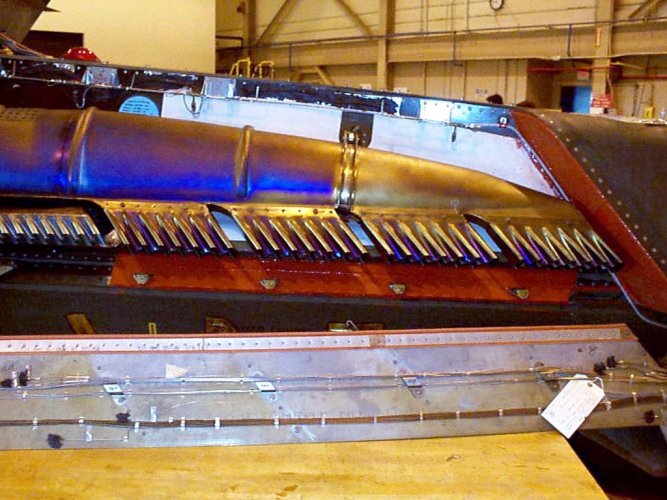
For those with inside baseball knowledge like yourself yasotay, you probably are aware that some argue all this was a vestige of a 1978 report by Sikorsky to the Army titled "Structural Concepts And Aerodynamic Analysis For Low Radar Cross Section (LRCS) Fuselage Configurations"


...and that this report was the grandaddy of chopper stealth (at least on paper) and the Black Hawks were on their own stealth path irrespective of the Comanche program. But it's hard to believe the RAH-66 did not provide considerable DNA to the Stealth Black Hawks. Flying prototypes beat conceptual studies any day in my book.
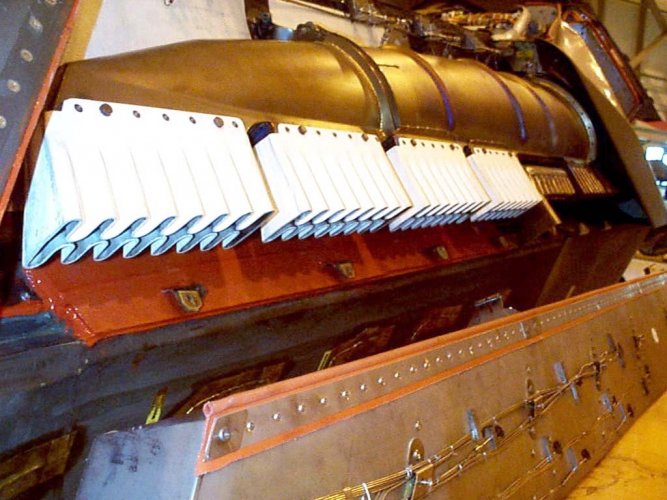
The Comanche has that same eternal light under it like the Northrop YF-23 Black Widow: Prototypes too cool for school. They just have a sexiness to them that is more Hollywood yet they really flew and really did what they said they were going to do. I am not among those who moan about the cost. When the Comanche program was canceled in 2004, Congress spent $2.3T annually. That works out to $15.3b every congressional workday... Comanche was just the money Congress spent one day between breakfast and lunch. The program was almost exactly the cost of the equipment we abandoned to the Taliban in Afghanistan on the "logic" it would have cost even more to transport it. And who knows, she may rise from the ashes in some form or another. Some of the buzz I hear from pilots on the Web about the F-47 boils down to two words: Black Widow. Maybe the Nineties are back.
 
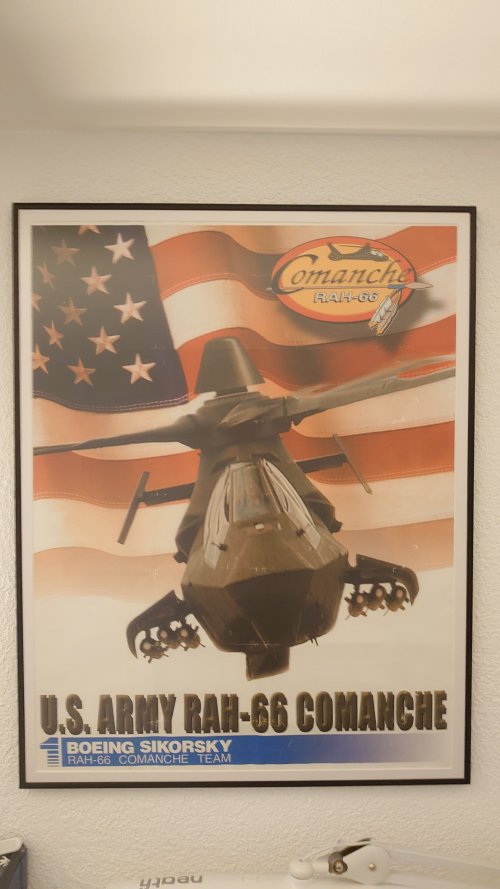
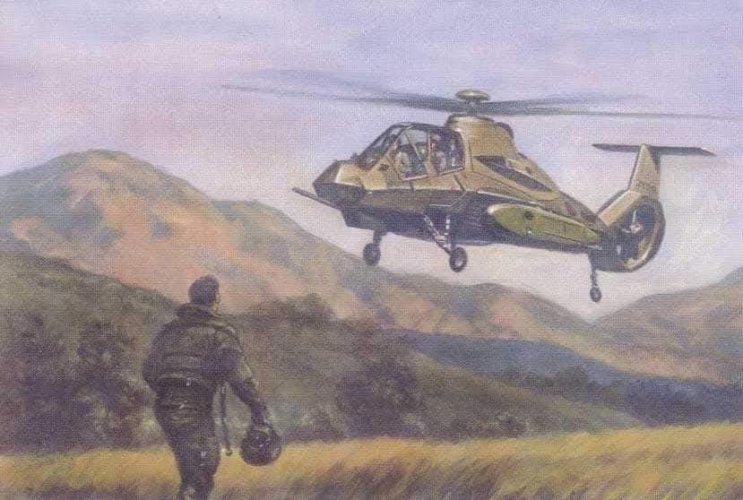
Got myself a treat that I found online. It's a poster known to some from Post #164 (Page 5) by @Triton.

I'm not sure if that was a official advertisement but it's quite large (approx 60cm x 70cm) and I would confidently say that it's from the mid 90s to early 2000s because of the paper, it's used look and... "nostalgic" smell. In person you can clearly see that it's not an inkjet or laser but a offsetprint.

Maybe someone knows something about this piece?
 

Attachments

  • DSC_5107.JPG
    DSC_5107.JPG
    723.6 KB · Views: 87
Got myself a treat that I found online. It's a poster known to some from Post #164 (Page 5) by @Triton.

I'm not sure if that was a official advertisement but it's quite large (approx 60cm x 70cm) and I would confidently say that it's from the mid 90s to early 2000s because of the paper, it's used look and... "nostalgic" smell. In person you can clearly see that it's not an inkjet or laser but a offsetprint.

Maybe someone knows something about this piece?
That prototype does feature later revisions such as the slanted stabilizers on sides of the tail, plus the Longbow radar housing. So it definitely would be towards the end of the program.
 
That prototype does feature later revisions such as the slanted stabilizers on sides of the tail, plus the Longbow radar housing. So it definitely would be towards the end of the program.

Yes that makes sense, it's definitely one of the later, maybe even last state of the Comanche. I'm wondering if there's any references for what this poster was used.
 
Happy New Year All and on this day 30 years ago the RAH-66 95-0001 first flew January 4th 1996


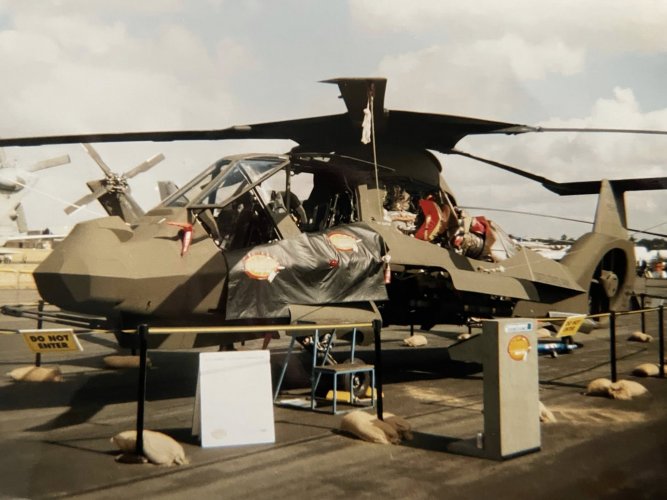
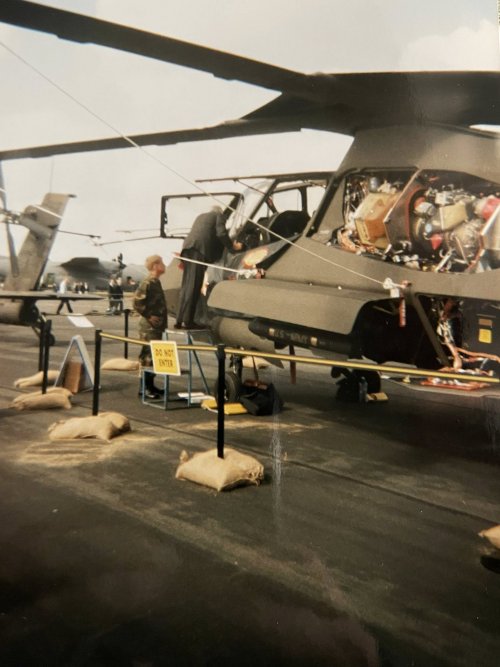
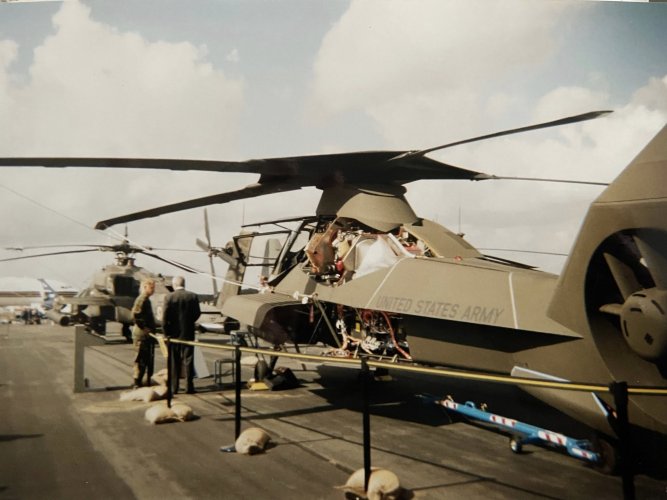
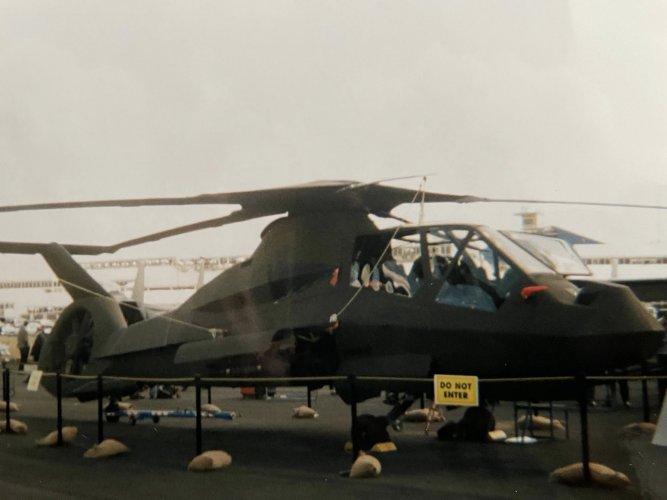
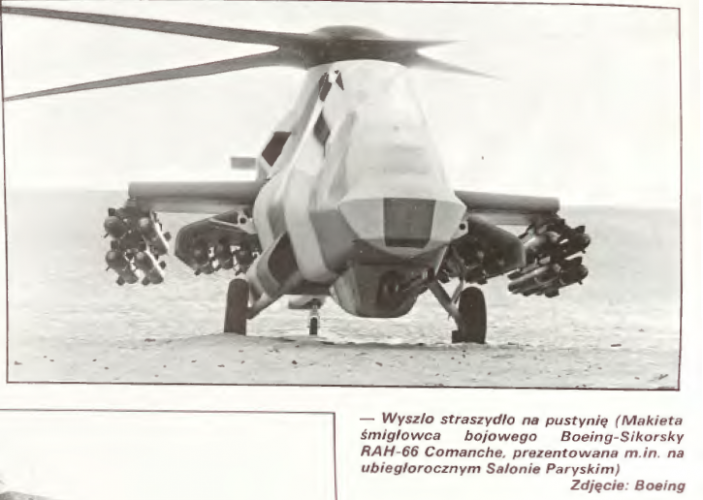
Two years later at Farnborough Air Show 1998 I saw the second prototype make its first international appearance so apologies again but here are my photos .

Boeing_Sikorsky_RAH66_1.jpg Boeing_Sikorsky_RAH66_2.jpg Boeing_Sikorsky_RAH66_3.jpg Boeing_Sikorsky_RAH66_4.jpg


Cheers
 
Happy New Year All and on this day 30 years ago the RAH-66 95-0001 first flew January 4th 1996

Two years later at Farnborough Air Show 1998 I saw the second prototype make its first international appearance so apologies again but here are my photos .

Cheers
Lord! I am ancient!
 
I still think it's a crying shame that the Comanche wasn't introduced.

Gotta print off a couple more models for gaming.
 
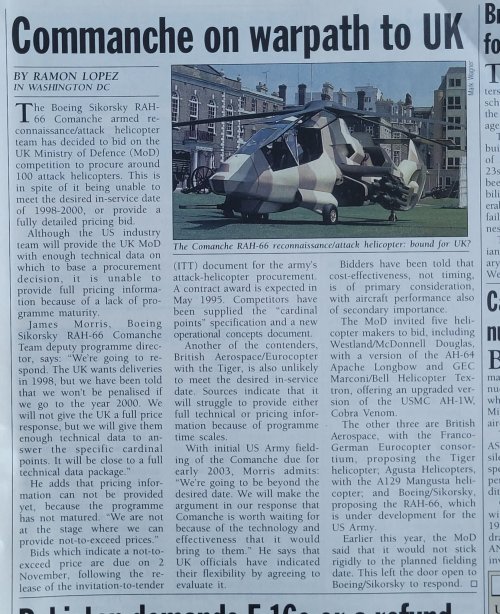
I recall seeing a promotional artwork around the time depicting the RAH-66 with UK. roundels as a possible Apache competitor ?

Yeppers it was offered 32 years ago for our Ah competition, also if you look at Avpro book s - theres an artist illustration of a Comanche with Avpro EXINT pod in AAC markings to pick up downed pilot.

cheers
 
The US Army, how to piss away $6B and screw up a potentially great chopper.
 
The US Army, how to piss away $6B and screw up a potentially great chopper.
From the remaining Comanche funds the U.S. Army created AH-64E, UH-60M, and CH-47F. These were the long term programs. A number of quick fixes were also applied to the existing versions.
As stated elsewhere the rational for a stealth reconnaissance/attack helicopter had diminished, given the combat environment at the time.
 
More photos
 

Attachments

  • IMG_3237.jpeg
    IMG_3237.jpeg
    282.7 KB · Views: 59
  • IMG_3230.jpeg
    IMG_3230.jpeg
    132.6 KB · Views: 64
  • 1770189079058_target.jpeg
    1770189079058_target.jpeg
    622.6 KB · Views: 58
  • 1770189210333_target.jpeg
    1770189210333_target.jpeg
    659.1 KB · Views: 53
  • IMG_3232.jpeg
    IMG_3232.jpeg
    105.2 KB · Views: 56
  • IMG_3231.jpeg
    IMG_3231.jpeg
    67.5 KB · Views: 56
  • IMG_3229.jpeg
    IMG_3229.jpeg
    117 KB · Views: 58
  • IMG_3210.jpeg
    IMG_3210.jpeg
    234.3 KB · Views: 51
  • IMG_7854.jpeg
    IMG_7854.jpeg
    145.3 KB · Views: 64
  • IMG_3277.jpeg
    IMG_3277.jpeg
    871.6 KB · Views: 75
I still fell like the Comanche needed both the Longbow radar and the EOTS from the OH-58D "eyeball" in the mast mounted system.
At the time I don't think you could fit both systems into a mast that is compact enough. Even today I don't know if you could manage it without too many compromises. I believe they were looking into an improved radar to allow for a smaller installation on some future block upgrade of the RAH-66, but all of the electro-optics and laser designator were still going to be in the nose.
 
At the time I don't think you could fit both systems into a mast that is compact enough. Even today I don't know if you could manage it without too many compromises. I believe they were looking into an improved radar to allow for a smaller installation on some future block upgrade of the RAH-66, but all of the electro-optics and laser designator were still going to be in the nose.
Easy... rooftop sight for the optics and radar on the mast. That was what was envisioned for the Eurocopter Tiger in the 90s, but they never got to installing the radar.
 

Similar threads

Back
Top Bottom