
You are using an out of date browser. It may not display this or other websites correctly.
You should upgrade or use an alternative browser.
You should upgrade or use an alternative browser.
Blohm und Voss Asymmetric Projects
- Thread starter hesham
- Start date
Tophe
ACCESS: Top Secret
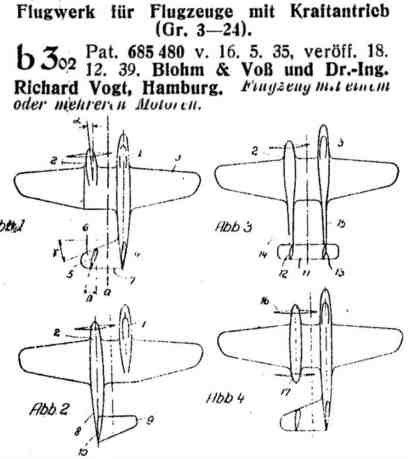
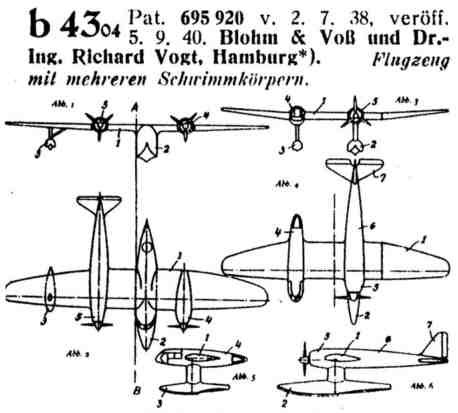
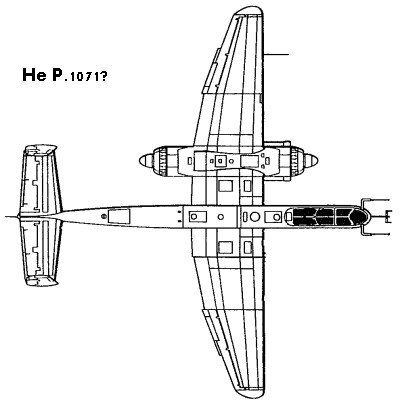
Have you ever seen pictures of the asymmetric unknown projects not illustrated in Igor’s http://www.geocities.com/asymmetrics/ nor in my http://cmeunier.chez-alice.fr/Asymm_addition.htm ?
They are the Blohm-und-Voss P.18, 40, 44, 62, 65, 72, 74, 75, 103, 112, 113, 114, 128, 135, 141, 155, 164, 176 and Heinkel P.1071 .
More details are on http://www.luft46.com/pjtlstbv.html , still without picture. Do you have other sources?
They are the Blohm-und-Voss P.18, 40, 44, 62, 65, 72, 74, 75, 103, 112, 113, 114, 128, 135, 141, 155, 164, 176 and Heinkel P.1071 .
More details are on http://www.luft46.com/pjtlstbv.html , still without picture. Do you have other sources?
Tophe
ACCESS: Top Secret
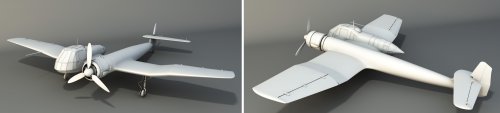
Tophe
ACCESS: Top Secret
It can be very useful for me as a what-ifer (for a double 141 and so on - into the CGI forum: "Scale Modelling, CGI and Profiles", I am going to send you a PM about it), but this is not the main subject here, hoping historical sources, if available. Thanks.osul said:Hi this is my model of the B&V 141. Made in Cinema 4d. I hope can be useful!

saturncanuck
Any landing you can walk away from, is a good one.
osul said:Hi this is my model of the B&V 141. Made in Cinema 4d. I hope can be useful!
I have the Airfix kit of this!

osul said:Hi this is my model of the B&V 141. Made in Cinema 4d. I hope can be useful!
Nice modelwork

Great job
Tophe
ACCESS: Top Secret

Tophe
ACCESS: Top Secret
It seems I have another source (still picture-less) than Igor’s and Dan’s: the wonderful Putnam book “German Aircraft of the Second World War” pages 728-734:
Blohm-und-Voss P.18 : asymmetric fighter, one 540hp Jumo210
P.40: asymmetric ground attack aircraft, one 910hp DB600
P.44: asymmetric reconnaissance aircraft, one Jumo210 or Bramo329 or DB600
P.62: asymmetric naval dive bomber, one 2,700hp DB606
P.72: attack version of Ha-141 (Bv 141), one 725hp BMW132A
P.74 & 75: multi-purpose versions of Ha-141, one 1,200hp Jumo211 or 1,550hp BMW139
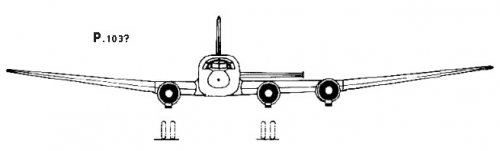
P.103: asymmetric airliner, three 1 ,580hp BMW801
P.112: development of P.111, three 1,500hp Jumo208
P.113: asymmetric seaplane, three 1,500hp Jumo208
P.114: heavy fighter version of Bv-141, one 1,600hp BMW801
P.128: asymmetric fighter
P.135: asymmetric fast bomber, one 3,800hp DB613
P.141: asymmetric passenger aircraft, three 1,000hp Bramo323
P.155: asymmetric dive bomber, one 2,500hp Jumo222 or 1,700hp BMW801
P.164: bomber, one 3,800hp DB613
P.176: armoured version of asymmetric Bv 237, one 1,700hp BMW801D
Heinkel P.1071: asymmetric fighter, two piston engines
Blohm-und-Voss P.18 : asymmetric fighter, one 540hp Jumo210
P.40: asymmetric ground attack aircraft, one 910hp DB600
P.44: asymmetric reconnaissance aircraft, one Jumo210 or Bramo329 or DB600
P.62: asymmetric naval dive bomber, one 2,700hp DB606
P.72: attack version of Ha-141 (Bv 141), one 725hp BMW132A
P.74 & 75: multi-purpose versions of Ha-141, one 1,200hp Jumo211 or 1,550hp BMW139
P.103: asymmetric airliner, three 1 ,580hp BMW801
P.112: development of P.111, three 1,500hp Jumo208
P.113: asymmetric seaplane, three 1,500hp Jumo208
P.114: heavy fighter version of Bv-141, one 1,600hp BMW801
P.128: asymmetric fighter
P.135: asymmetric fast bomber, one 3,800hp DB613
P.141: asymmetric passenger aircraft, three 1,000hp Bramo323
P.155: asymmetric dive bomber, one 2,500hp Jumo222 or 1,700hp BMW801
P.164: bomber, one 3,800hp DB613
P.176: armoured version of asymmetric Bv 237, one 1,700hp BMW801D
Heinkel P.1071: asymmetric fighter, two piston engines
Tophe
ACCESS: Top Secret
This could be something like that (based on the Fw200 Condor):Tophe said:P.103: asymmetric airliner, three 1 ,580hp BMW801
Attachments
Why build that? It seems to be simply making problems to overcome.
I can see the logic of a wide field of view from an asymmetric observation or even ground attack plane, but won't the asymmetric airliner just put off the customers?
I can see the logic of a wide field of view from an asymmetric observation or even ground attack plane, but won't the asymmetric airliner just put off the customers?
Tophe
ACCESS: Top Secret
Well, I think it is neither a stupid design nor a genius one. A 3-engined asymmetric version of the 747 has been designed this way, and rejected because customers were not ready to accept it, but why desiging such things? I may explain:smurf said:Why build that? It seems to be simply making problems to overcome.
I can see the logic of a wide field of view from an asymmetric observation or even ground attack plane, but won't the asymmetric airliner just put off the customers?
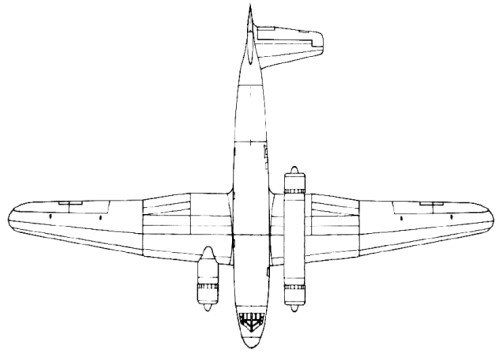
Sometimes, a 3-engined layout is required, for instance because the required power corresponds to 3 times the biggest (or cheapest) available engine. From a 2-engined basis (one port, one starboard), where to put the third engine? Either:
- on the tail (Trislander, DC-10, etc): but the tail becomes more fragile or need extra weight to be solid enough
- in the nose (Ju52/3m, S.M.-79-II, etc): but the cockpit has less view forward
- on a pylon over the fuselage : but this is much dragging
- laterally: dealing with asymmetry... Well, the best is not the design above but the less-dragging design below, hiding the third engine behind one of the 2 others:
Attachments
Thank you Tophe. I see some logic, and I don't think the designers stupid. But I still think an asymmetric layout makes needless difficulties. Wouldn't four engines (in in-line pairs if wanted) usually provide the power without the balance problems?
Tophe
ACCESS: Top Secret
You are right, and that is why asymmetric airplanes are so rare.
Anyway I love the oddity of the rare ones chosing such a layout ;D
Anyway I love the oddity of the rare ones chosing such a layout ;D

- Joined
- 4 May 2008
- Messages
- 2,445
- Reaction score
- 828
I've always been intrigued by asymmetric aircraft, as much by the physics behind them as the curious looks.
The May or June issue of "The Aeroplane" had a short article (not the main aircraft database article) by Alfred Price on the BV.141.
The author briefly described the balance of all the forces and moments which must obviously be zero for steady level flight. Does anyone have that article or can offer a similar explanation?
The May or June issue of "The Aeroplane" had a short article (not the main aircraft database article) by Alfred Price on the BV.141.
The author briefly described the balance of all the forces and moments which must obviously be zero for steady level flight. Does anyone have that article or can offer a similar explanation?

- Joined
- 26 May 2006
- Messages
- 38,289
- Reaction score
- 20,430
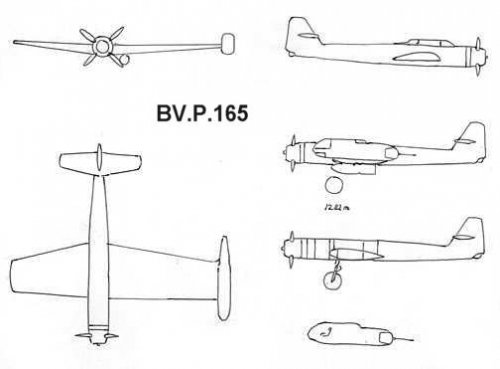
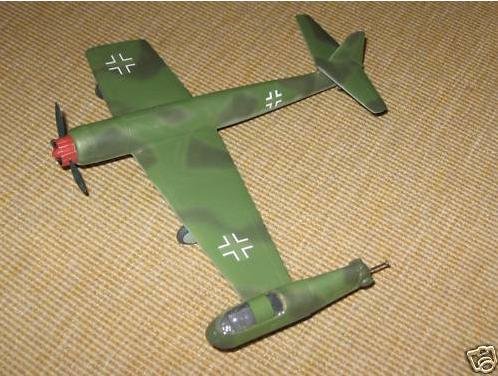
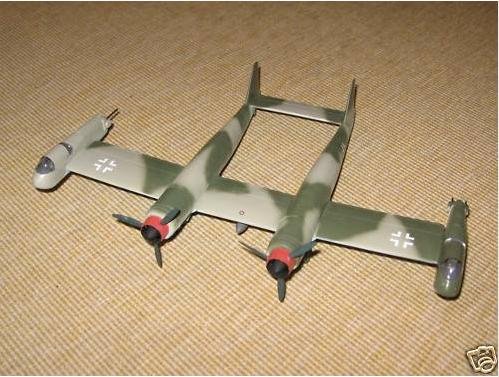
Blohm and Voss P.165 & P.166
Hi,
http://cgi.ebay.com/Blohm-Voss-BVP-165-1-72-Bird-Models-resin-kit-new-/230413328178?cmd=ViewItem&pt=UK_ToysGames_ModelKits_ModelKits_JN&hash=item35a5b45f32#ht_548wt_896
http://cgi.ebay.com/Blohm-Voss-BVP-166-1-72-Resinbausatz-Bird-Models-neu-/230487861360?cmd=ViewItem&pt=Standmodelle_Baus%C3%A4tze&hash=item35aa25a870#ht_1473wt_879
Hi,
http://cgi.ebay.com/Blohm-Voss-BVP-165-1-72-Bird-Models-resin-kit-new-/230413328178?cmd=ViewItem&pt=UK_ToysGames_ModelKits_ModelKits_JN&hash=item35a5b45f32#ht_548wt_896
http://cgi.ebay.com/Blohm-Voss-BVP-166-1-72-Resinbausatz-Bird-Models-neu-/230487861360?cmd=ViewItem&pt=Standmodelle_Baus%C3%A4tze&hash=item35aa25a870#ht_1473wt_879
Attachments

- Joined
- 27 December 2005
- Messages
- 19,230
- Reaction score
- 35,696
Re: Blohm and Voss P.165 & P.166
Again, just somewhat nasty looking model kits.
Again, just somewhat nasty looking model kits.


- Joined
- 13 August 2007
- Messages
- 10,428
- Reaction score
- 18,124
two ideas
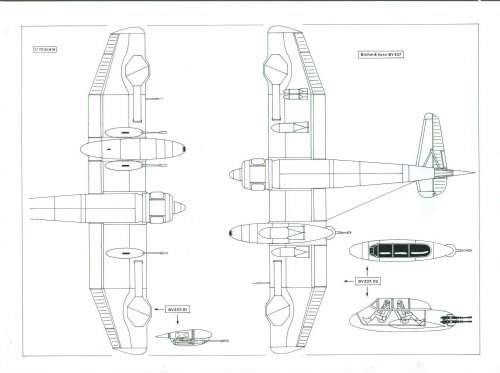
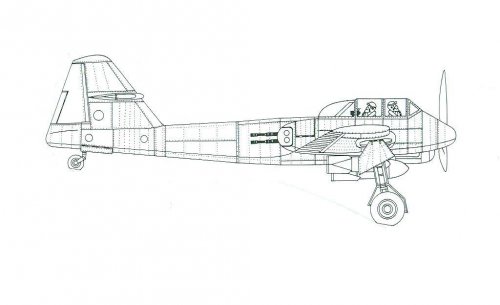
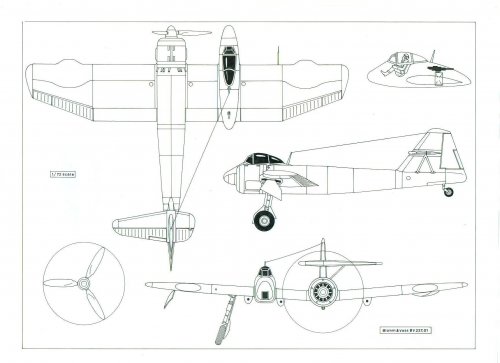
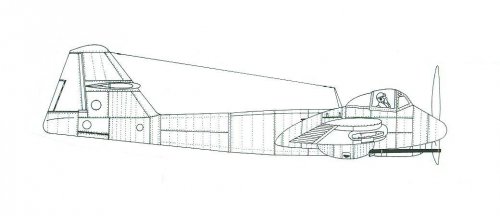
BV-237 a fighter based on BV-141 design
P.194 design for Stuka bomber/fighter
Source:
Die Deutsche Luftrüstung 1933-1945
Band 1 Flugzeugtypen AEG - Dornier
by Heinz J. Nowarra
Page 115 and 132
BV-237 a fighter based on BV-141 design
P.194 design for Stuka bomber/fighter
Source:
Die Deutsche Luftrüstung 1933-1945
Band 1 Flugzeugtypen AEG - Dornier
by Heinz J. Nowarra
Page 115 and 132
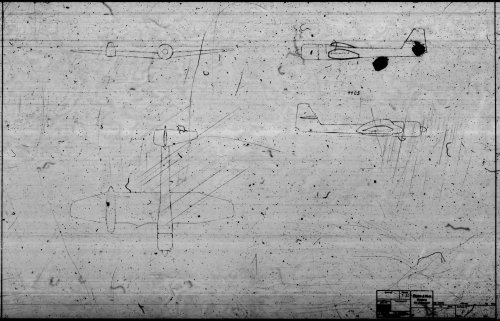
I disagree, in my opinion the unknown project is a midget attack variant of the BV 141 standard with 11,05 m. lenght and 13,63 m span. ,please see wing planform comparative.


- Joined
- 11 March 2006
- Messages
- 8,540
- Reaction score
- 5,027
I think, too, that it is a modification of a then already existing design, because of the
protruding leading edge, where the nacelle was on the Bv 141. The wing planform resembles
the Bv 141B, the larger fin may have been used to compensate for the nacelle set even
further out from the centerline.
AFAIK the reason for those designs just was a better visibility and better field of fire for the
flexible weapons and the fact, that problems due to the asymmetry could be solved with relative
ease. For the fighter/attack variants, additional advantages were seen for placing fixed
weapons, which didn't need synchronisation
protruding leading edge, where the nacelle was on the Bv 141. The wing planform resembles
the Bv 141B, the larger fin may have been used to compensate for the nacelle set even
further out from the centerline.
AFAIK the reason for those designs just was a better visibility and better field of fire for the
flexible weapons and the fact, that problems due to the asymmetry could be solved with relative
ease. For the fighter/attack variants, additional advantages were seen for placing fixed
weapons, which didn't need synchronisation

richard
ACCESS: Top Secret
- Joined
- 1 May 2006
- Messages
- 580
- Reaction score
- 174
At first , thank you for all the B&V designs you have posted here : it's great you shared them
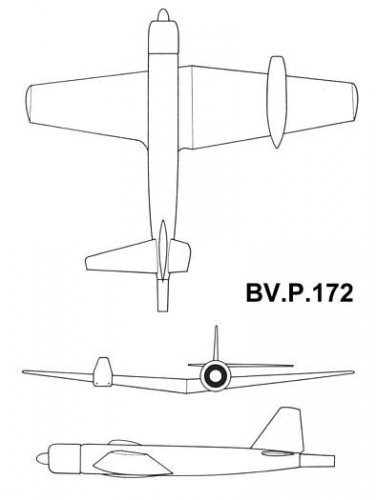
About this project , the main feature is the big distance between the engine and the nacelle : it's like the P.168 and the P.172 .
The P.172-01-01 is illustrated in " Stukas ! " by Herbert Leonard (a very interesting book (in french) describing the german dive bombers from 1933 to 1945 , with many projects): it's not our mystery bird .
The P.172-02-01 is only described , but all fit well : BMW 801D , single seat , right wing much bigger than the left one , same tail wheel than the P.168...
About this project , the main feature is the big distance between the engine and the nacelle : it's like the P.168 and the P.172 .
The P.172-01-01 is illustrated in " Stukas ! " by Herbert Leonard (a very interesting book (in french) describing the german dive bombers from 1933 to 1945 , with many projects): it's not our mystery bird .
The P.172-02-01 is only described , but all fit well : BMW 801D , single seat , right wing much bigger than the left one , same tail wheel than the P.168...
- Joined
- 13 August 2007
- Messages
- 10,428
- Reaction score
- 18,124
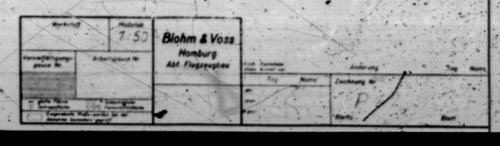
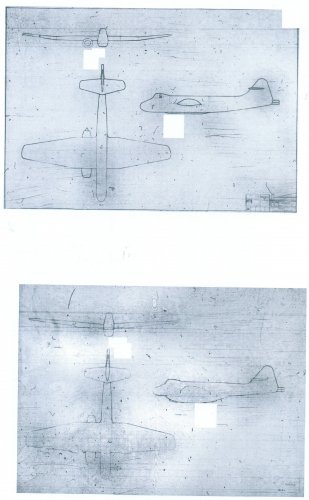
i look closer on this Scan
wat i can see on Project number is P 1/2 or P. 1/7 (/ is a long scartch on Microfilm). also is the number 1105 clear to see
it could be that is label as P. 172
wat i can see on Project number is P 1/2 or P. 1/7 (/ is a long scartch on Microfilm). also is the number 1105 clear to see
it could be that is label as P. 172
P.168 ....please see http://www.geocities.ws/asymmetrics/bv 168.htm

mrys
ACCESS: Confidential
Justo Miranda said:P.168 ....please see http://www.geocities.ws/asymmetrics/bv 168.htm
P.168 has cockpit for two persons. This one looks like for pilot alone - P.172 rather.
- Joined
- 13 August 2007
- Messages
- 10,428
- Reaction score
- 18,124
Thx Kiradog for close up of the Scan
i try to photoshop it if discover there more written, but sadly mostly unreadable.
the Number is P.1 scratch 7 and n or m and on far end a 1
after study closely the book
Die Deutsche Luftrüstung 1933-1945
Band 1 Flugzeugtypen AEG - Dornier
by Heinz J. Nowarra
i found this: B&V P.177
Development of asymmetric one seat Fighter-bomber with one Jumo 213 with 1750 hp.
Armament 6x 20 mm MG 151/20 in Cockpit (what let to the BV 237 study)
i try to photoshop it if discover there more written, but sadly mostly unreadable.
the Number is P.1 scratch 7 and n or m and on far end a 1
after study closely the book
Die Deutsche Luftrüstung 1933-1945
Band 1 Flugzeugtypen AEG - Dornier
by Heinz J. Nowarra
i found this: B&V P.177
Development of asymmetric one seat Fighter-bomber with one Jumo 213 with 1750 hp.
Armament 6x 20 mm MG 151/20 in Cockpit (what let to the BV 237 study)
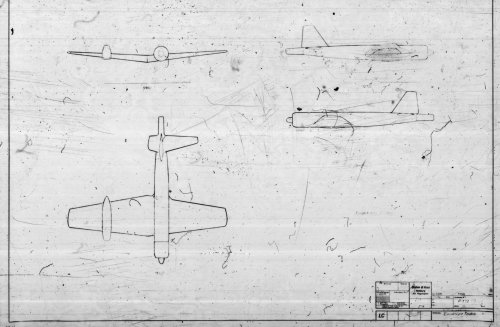
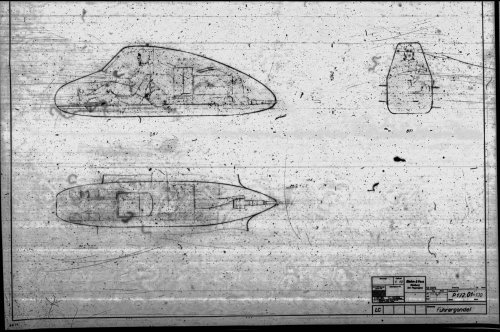
kiradog said:Here is what I have on the P.172
Did this have Pulse Jet assist?
Looked through my files and nothing on the P.177
Gary
Or solid fuel rockets
Attachments
- Joined
- 13 August 2007
- Messages
- 10,428
- Reaction score
- 18,124
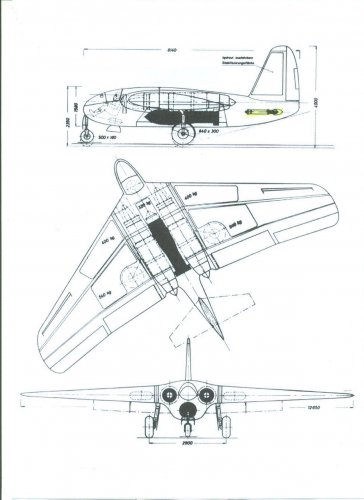
the P.172 had a rocket engine in tail section (Walter Engine ?)
for boost fast take off, for interception or if Airbase is under attack.
source
Die Deutsche Luftrüstung 1933-1945
Band 1 Flugzeugtypen AEG - Dornier
by Heinz J. Nowarra
for boost fast take off, for interception or if Airbase is under attack.
source
Die Deutsche Luftrüstung 1933-1945
Band 1 Flugzeugtypen AEG - Dornier
by Heinz J. Nowarra
- Joined
- 11 March 2006
- Messages
- 8,540
- Reaction score
- 5,027
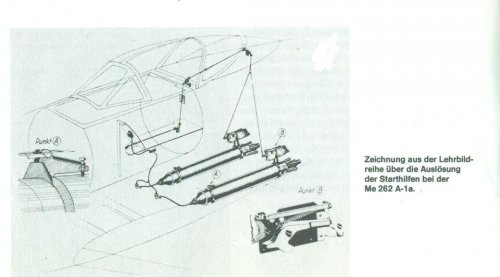
AFAIK, the Schmidding solid fuel boosters had a very short duration of a few seconds only
and so they were used as jettisonable take-off boosters, as it would have made not much
sense, to keep the burned out shells. Here it seems to be installed in the rear fuselage, so
I would think, it was a liquid fueled rocket engine.
and so they were used as jettisonable take-off boosters, as it would have made not much
sense, to keep the burned out shells. Here it seems to be installed in the rear fuselage, so
I would think, it was a liquid fueled rocket engine.
- Joined
- 13 August 2007
- Messages
- 10,428
- Reaction score
- 18,124
Jemiba said:AFAIK, the Schmidding solid fuel boosters had a very short duration of a few seconds only
and so they were used as jettisonable take-off boosters, as it would have made not much
sense, to keep the burned out shells. Here it seems to be installed in the rear fuselage, so
I would think, it was a liquid fueled rocket engine.
See as example, the Me 262-C Heimatschutzer I, II, III
in I version a Walter HWK 509 A-2 rocket engine was build into rear end.
it could fit in "cylinder" who stick out from P.172 tail unit
edit: the P.172 is a Stuka dive bomber, this cylinder must be part air brakes
sorry for that error
assymetrics air brakes? :
- Joined
- 11 March 2006
- Messages
- 8,540
- Reaction score
- 5,027
Michel might be right in relation to the fuselage they would be symmetric. Could be a
system similar to that of the Dornier Do 217, although the experiences weren't that
good, IIRC.
system similar to that of the Dornier Do 217, although the experiences weren't that
good, IIRC.
The tail drive brake of the Ar 240 V4 did not work well as well and both this and the Do 217 were symmetric planes.

Similar threads
-

-
Asymmetric aircraft drawings from Flight 1942
- Started by hesham
- Replies: 5
-

-
-
 Blohm & Voss outboard tail projects (origins and descendants)
- Started by negoshi8or
- Replies: 50