Forest Green
ACCESS: USAP
- Joined
- 11 June 2019
- Messages
- 14,499
- Reaction score
- 31,529



Yeah, I'm amazed that politicians managed to grok Industrial Policy...Whaaaat?
They actually plan to have a regular steady sequence of ship construction to keep the full workforce in place for decades?
I'm not sure my heart can take the shock!
Aussies need to add a couple more big drydocks. It's not as horrible a situation as the USN with yard space since Oz is smaller than the Lower 48, but you still need at least one 200+m drydock up north, one on the east coast, and one on the west coast.https://www.navalnews.com/naval-new...continueFlag=8c88c5325eae49577fb05b1c43164bd0
Hunter Class: 6 (-3)
Tier 2 FFG : +11
Optionally crewed LUSV : +6


"optionally crewed” large surface vessels, built in Western Australia and based on work underway in the United States on large-unmanned surface combatants, that will “significantly enhance” the RANs long-range strike capabilities. According to the review, they’ll be armed at least 32 vertical launch systems, and equipped with the AEGIS combat system.
In what respect?since Oz is smaller than the Lower 48,
Rough dimensions, and more importantly you don't have to detour clear down to freaking Panama to go from east coast to west coast...In what respect?
So:
'large'
optionally crewed
Aegis
32xVLS
That's an interestingly challenging design for Tier 2.
Then you're stuck with only having two such shipyards, and that's a much simpler attack problem. All the people who would work in the shipyards are down around the southern coast and halfway up the east coast.Probably wouldnt want it on the north coast anyway, right on the frontline if Australia attacked and unlike the sub base in Darwin where they could sail with reasonable notice of impending hostilities a ship in drydock would be vulnerable.
Then you're stuck with only having two such shipyards, and that's a much simpler attack problem. All the people who would work in the shipyards are down around the southern coast and halfway up the east coast.

Wikipedia data gives land area ofsince Oz is smaller than the Lower 48,
Right. And you don't have to detour an extra 1000+ miles south to get to the closest place to get from one coast to the other.Wikipedia data gives land area of
- Australia as 7,550,667 sq km (7,688,287 sq km total - 1.79% water area)
- USA Lower 48 as 7,649,506 sq km (9,147,590 USA total land - 1,481,346 (Alaska land) - 16,638 (Hawaii land))
Non-Hawaii US-islands thrown in with US Lower 48 total.
Australian islands thrown in with Australia total.
Australia is a big place.
they may want to attack but their ships have neither the range nor at-sea resupply capacity to extend their logistics chain beyond the Java Sea.
And I'm having a hell of a time finding a good place for the north coast drydock... Darwin is just too small a city to support that big a facility.
Not counting some 8000 miles of landlocked borders...US coastline 12,383 miles
Australian coastline 21,126 miles
5500 nautical miles to go from San Diego to Norfolk.Exactly the US is smaller than Australia and has the added benefit of geography.
5500 nautical miles to go from San Diego to Norfolk.
2050 nautical miles to go from Perth to Sydney.
Which one has the shorter trip again?
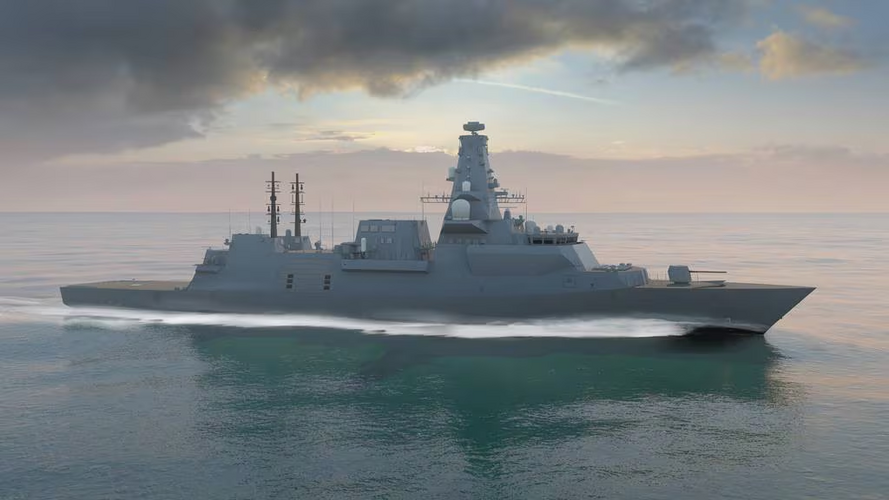
MELBOURNE, Australia — BAE Systems Australia ceremonially cut steel on the first batch of Hunter-class Anti-Submarine Warfare (ASW) frigates at the Osborne Naval Shipyard in South Australia on June 21.
The company also signed a production contract with the Commonwealth of Australia on the same day, for the first batch of three vessels.
The cutting of the steel, which is to be part of the understructure support for the port propeller shaft brake system, was initiated by South Australian Premier Peter Maklinauskas following the contract signature.
The first ship, HMAS Hunter, is due to be completed in 2032 and is expected to be fully operational by 2034.
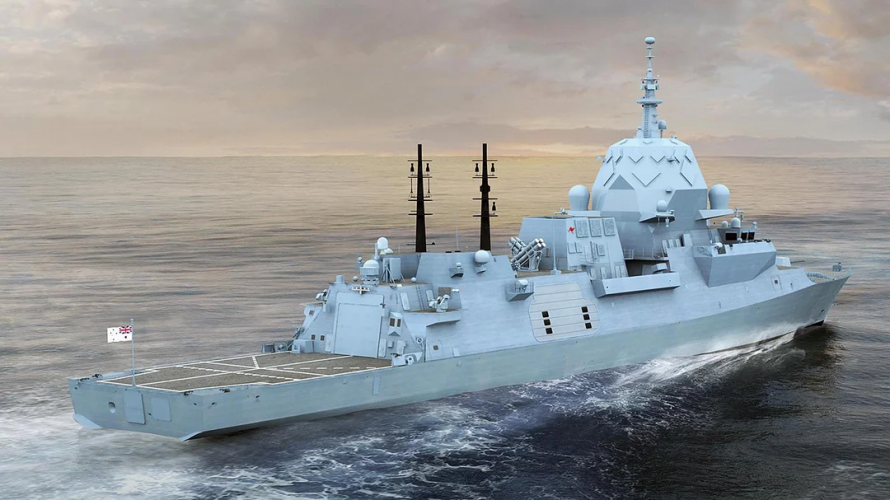
Probably functionally a great design on the Hunter but I'm definitely not a fan of the appearance.Re the updated image of the Hunter frigate anyone know the radar layout array panels on the deck house, understood the larger lower diamond shaped panels are the four CEAFAR2 L-band distributed 360 degrees for long range volume search, above each are twin medium sized CEAFAR2 S-band diamond shaped panels for its multi-function radar and on top pointing skywards what looks like the smaller CEAMOUNT X-band panels dedicated for target illumination for semi-active homing missiles. Speculating the other large and medium shaped isosceles triangle panels pointing downwards are EW jammers? If so it looks like a neater design solution than the SEWIP Block 3 fitted to USS Pinckney (DDG 91) under the DDG Modernization (MOD) 2.0 upgrade which from front and rear makes it look like a chubby cheek chipmunk.

I'm pretty sure only one of those panels per face is CEAFAR-S, I expect the other would be a large CEAMOUNT array for horizon search and illumination, especially given the small size of the zenith CEAMOUNT arrays, which would probably have problems conducting horizon search and illumination of sea-skimming missiles given the very small aperture size of the arrays at low angles of elevation.above each are twin medium sized CEAFAR2 S-band diamond shaped panels
Reminds me of the Long Beach and CVN-65 Enterprise.Re the updated image of the Hunter frigate anyone know the radar layout array panels on the deck house, understood the larger lower diamond shaped panels are the four CEAFAR2 L-band distributed 360 degrees for long range volume search, above each are twin medium sized CEAFAR2 S-band diamond shaped panels for its multi-function radar and on top pointing skywards what looks like the smaller CEAMOUNT X-band panels dedicated for target illumination for semi-active homing missiles. Speculating the other large and medium shaped isosceles triangle panels pointing downwards are EW jammers? If so it looks like a neater design solution than the SEWIP Block 3 fitted to USS Pinckney (DDG 91) under the DDG Modernization (MOD) 2.0 upgrade which from front and rear makes it look like a chubby cheek chipmunk.
You may well be correct, a puzzle as why have two separate S-band radars next to each other and not a single array, layout to make max use of space? understood CEAMOUNT is an X-band active phased array and purely a missile illuminator associated with the CEAFAR2 S multi-function radar similar in role to the USN continuous wave X-band AN/SPG-62 target illuminator for SPY-1.I'm pretty sure only one of those panels per face is CEAFAR-S, I expect the other would be a large CEAMOUNT array for horizon search and illumination, especially given the small size of the zenith CEAMOUNT arrays, which would probably have problems conducting horizon search and illumination of sea-skimming missiles given the very small aperture size of the arrays at low angles of elevation.