Astronomy and Planetary Science Thread

A video of what we'd see in the night sky after Alpha Orionis undergoes a Type-II core-collapse supernova:


The Night Sky When BETELGEUSE Goes SUPERNOVA
Betelgeuse, the nearest red hypergiant to Earth, is on the brink of a supernova. When it finally explodes, the event will be one of the brightest and most dramatic sights the night sky has ever offered.In this video, we explore what Earth would witness when Betelgeuse goes supernova. Through realistic visualizations, you'll see how the sky transforms, how bright the explosion would actually be, and what might be left behind.We also explore how this once-in-a-lifetime event would reshape the Orion constellation forever, marking the end of a star that has lit up our skies for millions of years.Whether it happens tomorrow or decades from now, the death of Betelgeuse is inevitable, and this is how it might look from here on Earth.
Time Codes:
00:00 Intro
00:17 Pre-Supernova
00:46 Supernova
01:23 Daytime Visible
01:40 Fading
01:57 Supernova Remnant
02:10 Post-Supernova
 
A star has been destroyed by a wandering supermassive black hole

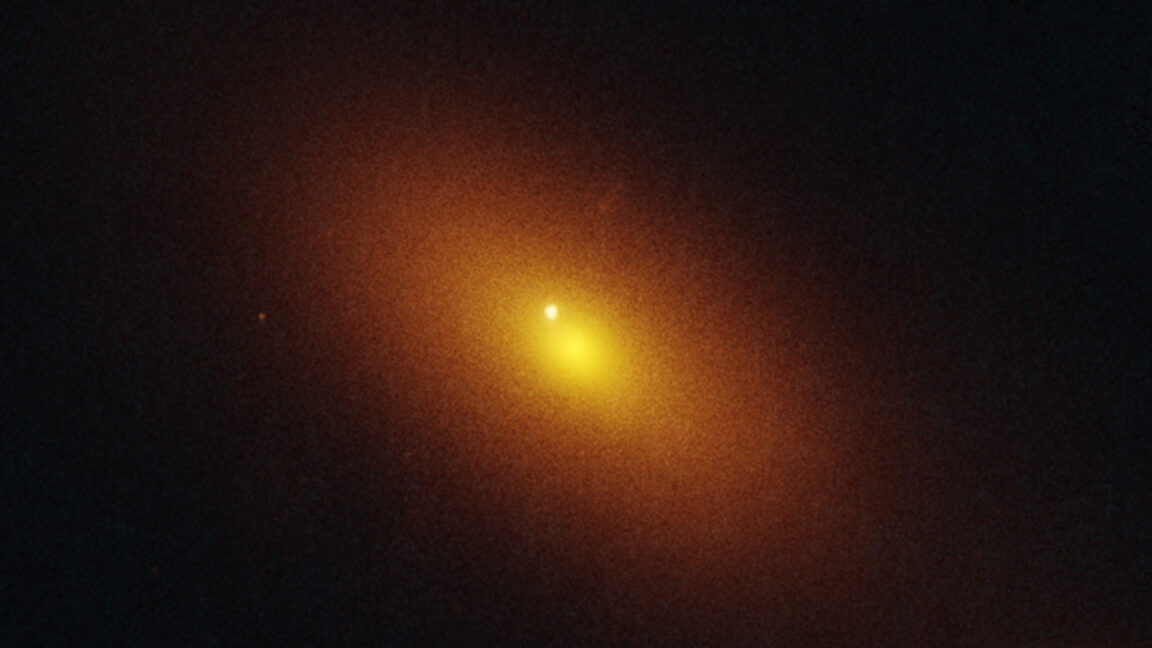
Back in 2024, a system set up to identify objects that suddenly brighten found something unusual. Unfortunately, the automated system that was supposed to identify it couldn't figure out what it was looking at. Now, about a year later, we know it's the first tidal disruption event—meaning a star being ripped apart by a supermassive black hole—identified at visual wavelengths. It's also a rather unusual one, in that the supermassive black hole in question does not reside at the center of its galaxy. Instead, there's an even more massive object there, which is feeding on matter at the same time.


Related paper:

 
Discovery of an unusual evaporating planet, from Anton Petrov:


0:00 Evaporating exoplanet that loses too much mass
1:00 Other similar planets
3:15 New extreme example and how it was found
5:30 What will happen here?
6:20 JWST observations
7:40 What will we find it here? Conclusions
 
So the whole world seems to have become very excited about the claim of a biosignature discovered in the atmosphere of the exoplanet K2-18b. And no sooner did those headlines hit the airwaves, astronomers came out in droves expressing skepticism and concerns. It feels a bit confusing to have two sides so certain of their position, and often the truth is more nuanced than either side will concede. So today, we're going to take a deep dive into K2-18b. You'll get the chance to hear both arguments and make up your own mind.

Written & presented by Prof. David Kipping. Special thanks to Nikku Madhusudhan and Ryan Macdonald for joining this episode.

View: https://youtu.be/zjDUG1_jfXU?si=uzHv3UXjsun-GxDz
 
Anton Petrov has a video out concerning the Local Bubble that the Solar system is currently in:


0:00 Local Bubble - enormous structure around us
1:20 What exactly is this structure? How was this discovered?
4:00 Map of the bubble
4:50 How this bubble formed
6:40 Chain reaction in the galaxy
7:35 Magnetic map and x ray observations reveal strange shapes
9:15 What are these tunnels?
9:55 South is hotter than north
10:25 Pulsar reveals a new scan of the region
12:40 Unusual discoveries and conclusions
14:00 What's next?
 
Anton Petrov has a video out concerning Hycean worlds with one focusing on K2-18b.


0:00 Hycean world updates
1:10 What are they?
2:25 Other candidates and other claims of possible life - TOI 270d
4:00 New study and a thorough analysis
4:50 Ammonia mystery
5:35 Rocky planet?
6:00 Atmospheric extremes and explanations
7:10 No hycean world - hylava worlds
8:40 Conclusions

Basically these claims of signs of life on K2-18b and other similar worlds appear to be premature.
 
Last edited:
Universe decays faster than thought, but still takes a long time

The universe is decaying much faster than thought. This is shown by calculations of three scientists at Radboud University on the so-called Hawking radiation. They calculate that the last stellar remnants take about 10^78 years (a 1 with 78 zeros) to perish. That is much shorter than the previously postulated 10^1100 years (a 1 with 1100 zeros). The researchers publish their findings, with a wink and dead-seriously, in the Journal of Cosmology and Astroparticle Physics.


Related paper:

 
‘Ocean’ of water found deep underground on Mars

There is new evidence pointing to a secret reservoir of water deep beneath the surface of Mars.

The international study involving researchers from The Australian National University (ANU) could change what we know about the Red Planet.

The study’s findings come from analysing seismic data gathered by the NASA Mars InSight mission. This analysis showed seismic waves slow down in a layer between 5.4 and 8 kilometres below the surface, which could be because of the presence of liquid water.

According to co-author Professor Hrvoje Tkalčić, it’s estimated the inferred volume of hidden water could form a global ocean 520 – 780 metres deep – exceeding the volume of water that would be formed if Antarctica’s ice sheet melted.


Related paper:

 
How far away would one have to travel before the Sun looked like just another star? From Scott Manley:


An easy question to answer.... but then I got sidetracked on to other questions like how many stars have night skies brighter than our own? How exactly does this magnitude scale work.
New discovery about how gold is created:


0:00 Alchemy and the goal of gold transmutation
1:10 Gold formation in the universe
1:50 Gravitational wave and a kilonova
3:48 Collapsing stars and black holes can also create gold?
6:00 New way to generate gold - strange new magnetar explosions
8:40 What was observed and why it was exciting
9:50 What's next? Conclusions
 
UMa3/U1: Is This The Smallest Galaxy Ever Discovered, Or Something Else?

While still not conclusive, the team believes it is more likely that UMa3/U1 is a star cluster than the smallest galaxy we have ever found.


Related paper:

 
UMa3/U1: Is This The Smallest Galaxy Ever Discovered, Or Something Else?


Related paper:


Anton Petrov has a video to do with this galaxy:


0:00 Discovery of Ursa Major III
1:40 It has two names because...what is this?
2:45 What is a galaxy though?
4:10 Can this be a cluster?
5:40 New study: classifying this mystery
6:30 Conclusion: bizarre cluster and not a galaxy?
7:45 Additional explanations and why it matters
 
The OzGeology channel put out a video over month ago concerning what would happen if the asteroid Aphis impacted Earth:


Dive into the remarkable story of asteroid 99942 Apophis, which is set to pass extremely close to Earth on April 13, 2029. This once-in-a-millennium astronomical event has captured the imagination of scientists, astronomers, and space enthusiasts worldwide, providing an unprecedented opportunity to observe a sizable asteroid with the naked eye as it journeys through our cosmic neighborhood.
Explore the fascinating history behind asteroid Apophis, including how it was first discovered in 2004 and why it quickly became one of the most carefully monitored objects in space. We delve deeply into the scientific breakthroughs made since its discovery, revealing how astronomers refined its trajectory and conclusively determined that Apophis poses no threat of impacting Earth during this close encounter—or anytime in the foreseeable future. You'll learn how Apophis’s orbit will be altered as it swings past our planet, shifting from an Aten-class asteroid orbit to an Apollo-class orbit due to Earth’s gravitational influence.
Throughout this detailed exploration, we explain exactly what makes asteroid Apophis so compelling: its impressive size, approximately 340 meters across—equivalent to several football fields in length—and the incredibly short distance it will pass from Earth's surface, closer than many satellites in geostationary orbit. We also break down how you can witness this historic celestial event with your own eyes, detailing its visibility, brightness, speed across the sky, and the best places around the globe from which observers can marvel at its passage.
But what if asteroid Apophis did collide with Earth? To truly appreciate the significance of planetary defense and asteroid detection programs, our video includes a scientifically grounded hypothetical scenario examining the consequences of an asteroid impact of Apophis’s magnitude. We vividly outline what such a catastrophic collision would entail, describing the energy released, comparable to hundreds of nuclear explosions, the formation of massive craters, and the regional devastation it would cause. We also discuss the global environmental impacts, including atmospheric changes, climate disruption, and widespread agricultural failures that would follow a hypothetical impact event of this size.
This video provides context by comparing asteroid Apophis to historical asteroid impact events, such as the 1908 Tunguska explosion and the more recent 2013 Chelyabinsk meteor. We help viewers grasp the scale and potential destructive power of Apophis, while emphasizing that this asteroid’s 2029 passage will remain a spectacular and safe observational opportunity rather than a real-life disaster.
By combining stunning visualizations, detailed explanations, and expert analysis, our video invites viewers to contemplate our planet’s place in the vast cosmos. It serves as a timely reminder of the ongoing importance of astronomy, space exploration, and planetary defense initiatives. Whether you're deeply interested in astrophysics, fascinated by celestial phenomena, or simply captivated by the wonders of our universe, this video offers an enlightening experience, thoroughly explaining the science and significance behind asteroid Apophis’s close approach.
Don’t miss this comprehensive journey into the story of asteroid 99942 Apophis, the breathtaking celestial spectacle set for 2029, and the compelling exploration of why such cosmic events both captivate and unite humanity in awe and curiosity.
Studies Used To Construct This Video:
Impact trajectories of the asteroid Apophis in the 21st century:
https://link.springer.com/article/10....https://www.youtube.com/redirect?ev...ticle/10.1134/S0038094612040077&v=PhtLTIB8lHA
Initial Trajectory Assessment of a low-thrust option for the RAMSES Mission to (99942) Apophis:
https://www.sciencedirect.com/science...https://www.youtube.com/redirect?ev...e/article/pii/S0273117724001340&v=PhtLTIB8lHA
00:00-04:17- Apophis 2029
04:18-07:21 - What Would Happen if Apophis Hit Earth
07:22-09:13 - If It Hit The Ocean
09:14-11:05 - Impact Winter & Global Famine
11:06-13:06 - Comparisons To Other Impacts
13:07-15:24 - Conclusion
15:25-15:40 - Patreon & Youtube Member Thank You
 
PBS Space Time has just put out an interesting video concerning the Fermi paradox:


Around 2 billion years ago, life had plateaued in complexity, ruined the atmosphere, and was on the verge of self-annihilation. But then something strange and potentially extremely lucky happened that enabled endless new evolutionary paths. The first eukaryote cell was born. This may also explain why there are no aliens.

Now something that was pointed out at the beginning of the video is that PBS is in serious danger because the witless fool currently occupying the Oval Office so we might not get these videos for much longer.
 
The Most Violent Solar Storm Ever Detected Hit Earth in 12350 BCE

A huge cosmic event some 14,300 years ago was so powerful, it left a discernible mark on our planet.

In the partially fossilized trunks of ancient trees, and excavated cores of millennia-old ice, scientists have found evidence that suggests some sort of massive space event took place in around 12350 BCE.

New work using a specially developed climate-chemistry model called SOCOL:14C-Ex clinches it. The culprit behind the huge particle influx during that time was a giant event from the Sun, pelting Earth with particles in the biggest geomagnetic storm we have on record.

"Compared to the largest event of the modern satellite era – the 2005 particle storm – the ancient 12350 BCE event was over 500 times more intense, according to our estimates," says space physicist Kseniia Golubenko of the University of Oulu in Finland.


The 12350 BCE event, however, is different from the others, which is why the team needed to design a model to understand it better.

"The ancient event in 12350 BCE is the only known extreme solar particle event outside of the Holocene epoch, the past ~12,000 years of stable warm climate," Golubenko says. "Our new model lifts the existing limitation to the Holocene and extends our ability to analyze radiocarbon data even for glacial climate conditions."

The researchers tested their model on the 774 CE event, and then, once it returned accurate results, used it to analyze the data from 12,350 BCE. This allowed them to probe the strength, timing, and terrestrial impact of the storm, confirming that it was the biggest solar particle storm that we know about.

"This event establishes a new worst-case scenario," Golubenko says. "Understanding its scale is critical for evaluating the risks posed by future solar storms to modern infrastructure like satellites, power grids, and communication systems."


Related paper:

 
Scientists discover possible evidence of a 116-million-year-old tsunami recorded in amber

Scientists believe they have found evidence of a 116-year-old tsunami in amber, potentially the oldest recording of one to date.

Investigating deep-sea sediment on Hokkaido Island in northern Japan, researchers Aya Kubota, Yusuke Takeda, Keewook Yi, Shin-ichi Sano and Yasuhiro Iba discovered “extraordinarily rich amber concentrations” in sediment from the early Cretaceous period, dating to between 116 and 114 million years ago.

In a report on their findings, published in Nature’s Scientific Reports, the researchers suggested the amber had likely been swept into the ocean by one or more tsunamis, with little contact with air.


Related paper:

 
Interesting Flyaway, fingers and toes all crossed that a similar event does not ever happen in modern times because if it did then we would all be living back in the stone ages or worse.
You’ve heard the theory that one of these ancient solar storms may have been caused by a comet hitting the sun?
 
Anton Petrov has put out this video concerning how CERN created Gold from Lead using particle-accelerators, this will no doubt be of great interest to astrophycists who study the creation of high mass elements by nucleosynthesis:


0:00 Cosmological alchemy - generation gold from lead
1:20 Ancient alchemy and chrysopoeia
3:00 Nucleosynthesis in 1981 - bismuth to gold
4:40 New method - lead to gold inside CERN
7:15 Production of a lot of elements
7:45 How much gold was produced?
8:40 Why this matters and conclusions
 
Mysteriously Perfect Sphere Spotted in Space by Astronomers

In data collected by a powerful radio telescope, astronomers have found what appears to be a perfectly spherical bubble. We know more or less what it is – it's the ball of expanding material ejected by an exploding star, a supernova remnant – but how it came to be is more of a puzzle.


Related paper:

 
It turns that the Universe will be evaporating sooner than expected, from Anton Petrov:


0:00 End of the Universe
0:54 Hawking vs Einstein - what happens at the end of the universe?
2:40 Hawking radiation and black hole evaporation
3:20 Unusual new effect proposed
5:30 New study - how long before universe disappears?
7:30 White dwarfs and last remnants
8:40 What this means and conclusions
 
There is no Fermi paradox, if there are intelligent civilizations out there with technological development and scientific curiosity with enough technology to survive natural disasters, there are only two possibilities to know them:

-If it is possible to exceed the speed of light, all technologically superior civilizations will communicate by systems other than radio.

-If it is not possible to exceed the speed of light, forget about Seti, we will never be able to communicate with anyone, and it is indifferent to speculate about whether or not the others exist.
 
A new study by scientists at the NASA Jet Propulsion Laboratory and several institutes across India and Saudi Arabia has reported 26 novel bacterial species growing inside cleanrooms associated with NASA space missions. These unknown and newly described species carry genetic traits associated with resilience to extreme environments such as those found in space, highlighting the importance of rigorous contamination control to prevent unintentional microbial transfer during space missions. The study can be read in Microbiome.


"Our study aimed to understand the risk of extremophiles being transferred in space missions and to identify which microorganisms might survive the harsh conditions of space. This effort is pivotal for monitoring the risk of microbial contamination and safeguarding against unintentional colonization of exploring planets," explained King Abdullah University of Science and Technology (KAUST) Professor Alexandre Rosado, the lead KAUST researcher on the project and a contributor to several NASA working groups on planetary protection and space microbiology.


"These findings not only raise important consideration for planetary protection but also open the door for biotechnological innovation,” said Junia Schultz, a postdoctoral fellow at KAUST who was the first author of the study. “Space travel provides an opportunity to study microorganisms that possess relevant stress-resistance genes. The genes identified in these newly discovered bacterial species could be engineered for applications in medicine, food preservation, and other industries."

In addition, the study assists NASA with anticipating the type of bacteria astronauts will encounter in their space missions and in developing strategies to mitigate microbial contamination in cleanrooms.


Related paper:

 
Not saying it's aliens: SETI survey reveals unexplained pulses from distant stars

In a recent paper, veteran NASA scientist Richard H. Stanton describes the results of his multi-year survey of more than 1,300 sun-like stars for optical SETI signals. As he indicates, this survey revealed two fast identical pulses from a sun-like star about 100 light-years from Earth that match similar pulses from a different star observed four years ago.


After years of searching, Stanton noted an unexpected "signal" on May 14th, 2023, while observing HD 89389, an F-type star slightly brighter and more massive than our sun, located in the constellation Ursa Major. According to Stanton's paper, this signal consisted of two fast, identical pulses 4.4 seconds apart that were not revealed in previous searches. He then ran comparisons against signals produced by airplanes, satellites, meteors, lightning, atmospheric scintillation, system noise, etc.


A re-examination of historical data for similar signals revealed another pair of pulses detected around HD 217014 (51 Pegasi) on September 30th, 2019. This main-sequence G-type star is located about 50.6 light-years from Earth and is similar in size, mass, and age to our sun. In 1995, astronomers at the Observatoire de Haute-Provence detected an exoplanet orbiting this star, a hot gas giant that has since been named Dimidium. This was one of the first exoplanets ever detected, and the first time an exoplanet was discovered around a main-sequence star.

At the time, said Stanton, the signal was dismissed as a false positive caused by birds. However, a detailed analysis ruled out this possibility for all the pulses observed.


"None of these explanations are really satisfying at this point," he said. "We don't know what kind of object could produce these pulses or how far away it is. We don't know if the two-pulse signal is produced by something passing between us and the star or if it is generated by something that modulates the star's light without moving across the field. Until we learn more, we can't even say whether or not extraterrestrials are involved!"


Related paper:


Related video:

View: https://youtu.be/h7-Y-Hs9Lfg?si=EW4Gq0TER9ZWgd8q
 
Last edited:
I don't know but according to the video a troy-ounce of Gold manufactured by the LHC would cost ~1 quadrillion dollars;):D.
I have seen mercury lowered into reactors transmute...I think antimatter drives would slowly convert rad shields...a tiny feeding black hole transmute any statute above the pole jets, etc.
 
New Scientist put out a short video five days ago concerning Gravitons:


We know that all the other forces governed by quantum mechanics are transmitted by indivisible particles: photons for the electromagnetic force, which governs light and the basic chemistry of matter; gluons for the strong force, which sticks together protons and neutrons inside atoms; and W and Z bosons for the weak force, which enables certain particles to radioactively decay. If gravity has the same underlying theory as these forces, it should also be carried by its own particle: a graviton. Now researchers, including Claudia Du Rham at Imperial in London, are in the hunt for these mysterious and vanishingly weak particles.
 
On the night of Saturday 17 May, skywatchers across the US as far south as New Mexico were treated to a peculiar sight: a brilliant stream of whitish light, stretching across the sky.


Spoiler though: the light was not actually STEVE, but a rocket stage dumping out methalox rocket fuel at an altitude of about 250 kilometers (155 miles), bang in the ionosphere, according to astronomer Jonathan McDowell, who tracks activity in Earth space.


At 04:12 UTC, Beijing-based startup LandSpace Technology launched its new Zhuque-2E Y2 methane-fueled carrier rocket, bearing six satellites into Earth orbit. About an hour later, the bright stripe appeared in the sky – not far from midnight over much of the US. That stripe, according to McDowell, was the result of a fuel dump from the rocket's upper stage.
 
Anton Petrov has a recent video out about a massive dark cloud discovered in the Local Bubble near our solar-system:


0:00 Dark cloud we never knew existed
0:50 Local bubble and stellar nurseries
3:25 Eos cloud and the dark cloud
4:30 How this was found and why it was so hard
7:00 How this cloud is produced and what's breaking it apart
8:50 Why this is unusual and so exciting
9:35 Conclusions and what's next?
 
There is no Fermi paradox, if there are intelligent civilizations out there with technological development and scientific curiosity with enough technology to survive natural disasters, there are only two possibilities to know them:

-If it is possible to exceed the speed of light, all technologically superior civilizations will communicate by systems other than radio.

-If it is not possible to exceed the speed of light, forget about Seti, we will never be able to communicate with anyone, and it is indifferent to speculate about whether or not the others exist.

This statement kinda bugged me a bit but scrolled through quickly enough to not give it a (conscious) second thought. A little while later though, I remembered a post by Paul Gilster in his blog about a visualization of a sub-lightspeed civilization spreading through the Milky Way really very quickly, at least in astronomical terms. The parameters of the simulation are actually pretty lax (ship launch cadence from new colonies 100kA, lifetime of a colony 100MA, ship range 3pc, speed 10kps, so nothing unimaginable). So I think this constitutes at least a third (or is it just the second given that your second scenario precludes any contact?) possibility to come into contact with whoever them are. Furthermore, I think even SETI has begun to look beyond radio a while ago. The papers this simulation is based on are also listed in the post. Anyway, here's the link:

 
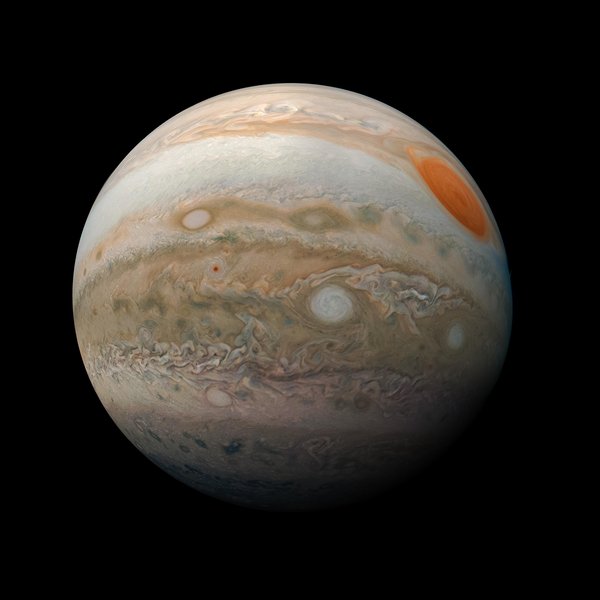
Jupiter Was Formerly Twice Its Current Size and Had a Much Stronger Magnetic Field

In a new study published in the journal Nature Astronomy, Konstantin Batygin (PhD '12), professor of planetary science at Caltech; and Fred C. Adams, professor of physics and astronomy at the University of Michigan; provide a detailed look into Jupiter's primordial state. Their calculations reveal that roughly 3.8 million years after the solar system's first solids formed—a key moment when the disk of material around the Sun, known as the protoplanetary nebula, was dissipating—Jupiter was significantly larger and had an even more powerful magnetic field.


Related paper:

 
Jupiter Was Formerly Twice Its Current Size and Had a Much Stronger Magnetic Field


Related paper:


Jupiter back then would've been significantly hotter and possibly glowing a dull red from its' internal heat.
 
TRAPPIST-1 Planets Could Be Swimming in Water, Study Shows

A seven-planet system some 40 light-years from Earth could be swimming in water, new research shows.

In February 2017 scientists announced the discovery of several exoplanets orbiting the red dwarf star TRAPPIST-1, and ever since astronomers have keenly monitored the system for potential signs of life (aka biosignatures).


Related paper:

 
Einstein Probe detects a peculiar X-ray transient

An international team of astronomers using the Einstein Probe reports the discovery of a new peculiar fast-evolving X-transient. The newfound transient exhibits an unprecedented long-lasting X-ray emission. The finding was detailed in a paper published May 12 on the arXiv preprint server.


Related paper:


Similar threads

Back
Top Bottom