Cue NewSpace moaningSo it would appear that the second WDR went without a hitch.
C-SPAN coverage of yesterday's WDR
Props to Honeycutt not punching out any reporters.
Last edited:

Cue NewSpace moaningSo it would appear that the second WDR went without a hitch.

Good to hear. As much as I dislike the SLS, I wish no ill will to the people whose role is to operate it. They didn’t choose for it to be the program of record.So it would appear that the second WDR went without a hitch.

Max Evans
@_MaxQ_
·
2m
NET March 6
During this morning's post-WDR press conference, teams expressed great confidence in both SLS's performance yesterday and that of teams supporting on the ground.
Launch director Charlie Blackwell-Thompson spoke about a rather "quiet" countdown, only encountering a communications issues before LH2 fast-fill and a booster avionics issue during the first run through terminal count, both of which were resolved and are not expected to reoccur come launch day.
LH2 leak rates in the TSMU didn't exceed more than 0.4% during the entirety of fast-fill operations and only peaked at 1.6% during LH2 tank pressurization during the first run through terminal count, far below the 16% stated limit. SLS Program Manager John Honeycutt stated that the newly replaced seals clearly did their job would be left in their current state leading to launch.
The vehicle and ground systems are happy. The team on the ground is happy. The crew is happy and expected to enter quarantine this afternoon.
Let's. GO!
NASA is taking steps to potentially roll back the Artemis II rocket and Orion spacecraft to the Vehicle Assembly Building (VAB) at the agency’s Kennedy Space Center in Florida after overnight Feb. 21 observing interrupted flow of helium in the SLS (Space Launch System) rocket’s interim cryogenic propulsion stage. Helium flow is required for launch. Teams are actively reviewing data, and taking steps to enable rollback positions for NASA to address the issue as soon as possible while engineers determine the best path forward. In order to protect for troubleshooting options at both Pad B and the VAB, teams are making preparations to remove the pad access platforms installed yesterday, which have wind-driven constraints and cannot be removed during high winds, which are forecasted for tomorrow. This will almost assuredly impact the March launch window. NASA will continue to provide updates.
As an update to my earlier post.
- The ICPS helium bottles are used to purge the engines, as well as for LH2 and LOX tank pressurization. The systems did work correctly during WDR1 and WDR2.
- Last evening, the team was unable to get helium flow through the vehicle. This occurred during a routine operation to repressurize the system.
- We observed a similar failure signature on Artemis I.
- The Artemis II vehicle is in a safe configuration, using ground ECS purge for the engines versus the onboard helium supply.
- Potential faults could include the final filter between the ground and flight vehicle, located on the umbilical, though this seems least likely based on the failure signature. It could also be a failed QD umbilical interface, where similar issues have been observed. It could also be a failed check valve onboard the vehicle, which would be consistent with Artemis I, though corrective actions were taken to minimize reoccurrence on Artemis II.
Regardless of the potential fault, accessing and remediating any of these issues can only be performed in the VAB.
As mentioned previously, we will begin preparations for rollback, and this will take the March launch window out of consideration.
I understand people are disappointed by this development. That disappointment is felt most by the team at NASA, who have been working tirelessly to prepare for this great endeavor. During the 1960s, when NASA achieved what most thought was impossible, and what has never been repeated since, there were many setbacks. One historic example is that Neil Armstrong spent less than 11 hours in space on Gemini 8 before his mission ended prematurely due to a technical issue. A little over three years later, he became the first man to walk on the Moon.
There are many differences between the 1960s and today, and expectations should rightfully be high after the time and expense invested in this program. I will say again, the President created Artemis as a program that will far surpass what America achieved during Apollo. We will return in the years ahead, we will build a Moon base, and undertake what should be continuous missions to and from the lunar environment. Where we begin with this architecture and flight rate is not where it will end.
Please expect a more extensive briefing later this week as we outline the path forward, not just for Artemis II, but for subsequent missions, to ensure NASA meets the President’s vision to return to the Moon and, this time, to stay.
NASA has announced this morning they are likely going to roll the Artemis II vehicle back to the VAB. I'll go through what they said and take questions.

That is troubling Flyaway, I wonder what was behind the recent problem with the Helium bottles? I can see the launch getting delayed to April now if they cannot get a fix of the issue.
Everyone else has already moved on from the successful Artemis II Wet Dress Rehearsal on Thursday, February 19th, because less than a day later something broke on the Interim Cryogenic Propulsion Stage and that means rollback and delays and an uncertain launch schedule. But before I move on, too, I'll run through my thoughts about NASA's coverage of the second WDR, which continues a pattern of obscuring or muting critical countdown events as they happen live.
NASA may be of the opinion that technical events only matter on launch day or are more dramatic if you only show or acknowledge them on launch day, but we're once again seeing that things matter before then, whether or not it's during big pre-launch tests.
Imagery is courtesy of NASA, except where noted.
Links to social media posts:
https://x.com/NASASpaceflight/status/...https://www.youtube.com/redirect?ev...ight/status/2024662082709533165&v=X8KvXDLbuXY
https://www.youtube.com/redirect?ev...://buymeacoffee.com/philipsloss&v=X8KvXDLbuXY
00:00 Intro
01:09 Overview of Wet Dress Rehearsal 2 and coverage
04:32 A short history of Artemis WDRs and WDR coverage
07:39 WDR 2, the good: more views, up-close views
12:36 The not quite as good: making it hard to tell what's happening
NASA Administrator Jared Isaacman
@NASAAdmin
As an update to my earlier post.
- The ICPS helium bottles are used to purge the engines, as well as for LH2 and LOX tank pressurization. The systems did work correctly during WDR1 and WDR2.
- Last evening, the team was unable to get helium flow through the vehicle. This occurred during a routine operation to repressurize the system.
- We observed a similar failure signature on Artemis I.
- The Artemis II vehicle is in a safe configuration, using ground ECS purge for the engines versus the onboard helium supply.
- Potential faults could include the final filter between the ground and flight vehicle, located on the umbilical, though this seems least likely based on the failure signature. It could also be a failed QD umbilical interface, where similar issues have been observed. It could also be a failed check valve onboard the vehicle, which would be consistent with Artemis I, though corrective actions were taken to minimize reoccurrence on Artemis II.
Regardless of the potential fault, accessing and remediating any of these issues can only be performed in the VAB.
As mentioned previously, we will begin preparations for rollback, and this will take the March launch window out of consideration.
I understand people are disappointed by this development. That disappointment is felt most by the team at NASA, who have been working tirelessly to prepare for this great endeavor. During the 1960s, when NASA achieved what most thought was impossible, and what has never been repeated since, there were many setbacks. One historic example is that Neil Armstrong spent less than 11 hours in space on Gemini 8 before his mission ended prematurely due to a technical issue. A little over three years later, he became the first man to walk on the Moon.
There are many differences between the 1960s and today, and expectations should rightfully be high after the time and expense invested in this program. I will say again, the President created Artemis as a program that will far surpass what America achieved during Apollo. We will return in the years ahead, we will build a Moon base, and undertake what should be continuous missions to and from the lunar environment. Where we begin with this architecture and flight rate is not where it will end.
Please expect a more extensive briefing later this week as we outline the path forward, not just for Artemis II, but for subsequent missions, to ensure NASA meets the President’s vision to return to the Moon and, this time, to stay.
Charles Boyer
@TheOldManPar
Bad News: Artemis II may not launch until April.
Good News: possible daylight or Jellyfish Primetime launch windows in April.

 www.americaspace.com

The same folks exploiting this run of hard luck would also oppose a new MSS to fix it, hoping no one notices the duplicity.
Having archaic hardware sit around for years without use generates its own "hard luck".
Weather pending, NASA will roll the SLS (Space Launch System) rocket and Orion spacecraft for Artemis II off the launch pad at the agency’s Kennedy Space Center in Florida as soon as Tuesday, Feb. 24.
Engineers are continuing to prepare for the move after encountering an issue with the flow of helium to the rocket’s upper stage.
On Feb. 21, managers decided to remove recently installed platforms before high winds descend on the Space Coast, which poised teams for rollback while discussions about the issue were ongoing. Returning to the Vehicle Assembly Building at Kennedy is required to determine the cause of the issue and fix it.
Teams are reviewing the exact time to begin the approximately 4 mile, multi-hour trek.
The quick work to begin preparations for rolling the rocket and spacecraft back to the VAB potentially preserves the April launch window, pending the outcome of data findings, repair efforts, and how the schedule comes to fruition in the coming days and weeks.
The Artemis II crew members were released from quarantine the evening of Feb. 21 and remain in Houston.
NASA will hold a media event in the coming days to discuss rollback, and plans for the Artemis II test flight.
You are clearly optimistic that the US will be successful with the ~50 orbital refuelings required to put a man on the Moon.China is way behind the US in terms of a Moon landing at present. I cannot see China landing on the Moon until the 2030s at least.
Omega was a POS. And it would have bigger nozzle problems. Vulcan is a much better vehicle.LEO only. I wanted the downselect to be Dragon and Dream Chaser...not Starliner. Falcon and OMega, not Vulcan.
Not using hydrogenYou are clearly optimistic that the US will be successful with the ~50 orbital refuelings required to put a man on the Moon.
They can't even refuel SLS with hydrogen on the ground without it leaking. You think they can do that in orbit or on the Moon?
in a useless orbit.Something that actually put a capsule in cis-lunar space is damage--you're funny
Your guy Hegseth had his picture taken with it, maybe you could pester him for a change--Dream Chaser has its own problems
Methane is far easier to handle, and Starship’s payload is in flux, but SpaceX has been continuously dropping the dry mass, so how many refueling flights are needed will shrink too. We can’t generalize the SLS’s problems to other vehicles that easily.You are clearly optimistic that the US will be successful with the ~50 orbital refuelings required to put a man on the Moon.
They can't even refuel SLS with hydrogen on the ground without it leaking. You think they can do that in orbit or on the Moon?
Blue origins lander uses hydrogen. It requires half a dozen propellant transfer in LEO into a dedicated cleansheet refueling ship that is yet to fly. This brand new refueling ship then needs to fly to the moon and refuel the Blue Origin moon lander in lunar orbit. This lander is also yet to fly. It also requires solving the hydrogen boil off issue. Good luck with that.Not using hydrogen
It has been 4 months since Starships last flight.Methane is far easier to handle, and Starship’s payload is in flux, but SpaceX has been continuously dropping the dry mass, so how many refueling flights are needed will shrink too.
None of this could arrive before 2030. China wins.Plus, Blue Origin is working on an interim architecture that needs no refueling, while baselining it for their mark 2 lander.
That's the Mark 2 variant. There are strong rumors Blue is shifting towards an interim architecture that doesn't need refueling.. Even a couple decades ago we could keep hydrogen boiloff to an acceptable minimum when planning multimonth journeys to Mars; the technology is still available today.Blue origins lander uses hydrogen. It requires half a dozen propellant transfer in LEO into a dedicated cleansheet refueling ship that is yet to fly. This brand new refueling ship then needs to fly to the moon and refuel the Blue Origin moon lander in lunar orbit. This lander is also yet to fly. It also requires solving the hydrogen boil off issue. Good luck with that.
If one is completely credulous towards China and incredulous towards the US, yes.If we are in a moon race the US is effectively running around in circles at the starting line while China is slowly jogging half way down the track.
You're assuming that Starship's flight rate won't change? That's a bold assumption. What evidence do you have for it? This must take into account what SpaceX has learned over the last year of flying and upgrading Starship, or it's just what you want to believe versus what's actually real.It has been 4 months since Starships last flight.
It requires 10+ launchs to do the unmanned moon landing test and another 10+ for the manned flight. So even if Starship started launching once per month it still can't meet the 2028 deadline of Artemis 3.
You're awfully confident that absolutely nothing about the American effort will improve.None of this could arrive before 2030. China wins.
It doesn't need to be able to send it in one launch. If you get stuck on that, you're not understanding Blue Origin.The current New Glenn rocket can't even send the lightweight Apollo lander to the moon. It only has a 7 ton payload to TLI and the Apollo lander is more than double that. Adding 2 extra engines to New Glenn will not allow a fully fueled lander to be sent to the moon.
It's a good thing we aren't starting from scratch, then. We would be doing that if we took Griffin's idea and pushed forward with a lander built by one of the traditional primes.It is too late for the US to start from scratch with a simple direct to moon solution. There is far too many points of failure and unproven tech in the current profile.
Meh. It doesn't "win", it gets 2nd place.None of this could arrive before 2030. China wins.

Meh. It doesn't "win", it gets 2nd place.
The US has no operstional rocket that can launch a fully refuelled lander direct to moon orbit. Falcon 9, New Glenn, Vulcan Centaur they can not even send the barebones Apollo lander to the moon.That's the Mark 2 variant. There are strong rumors Blue is shifting towards an interim architecture that doesn't need refueling..
I never said that. I just pointed out that the flight rate has to increase by 4 times and have zero failures to hit the target date. You are the one making the bold assumption if you think the flight rate can increase 10 fold in only a year.You're assuming that Starship's flight rate won't change? That's a bold assumption.
I understand clearly that Blue Origin wants to transfer liquid hydrogen in both Earth orbit and Lunar orbit. Very high risk.It doesn't need to be able to send it in one launch. If you get stuck on that, you're not understanding Blue Origin.
Most people reccomended starting from scratch approximately 10 years ago once the first Falcon 9 booster landed and Falcon Heavy was being proposed. SLS had been clearly leap frogged from a technology perspective. We would now be replicating the Chinese system. One Falcon Heavy with the crew and one Falcon Heavy with a small lander.It's a good thing we aren't starting from scratch, then. We would be doing that if we took Griffin's idea and pushed forward with a lander built by one of the traditional primes.
What "Chinese system" would that be? They still haven't landed a booster, nor have they flown a rocket that could take astronauts to the moon.The US has no operstional rocket that can launch a fully refuelled lander direct to moon orbit. Falcon 9, New Glenn, Vulcan Centaur they can not even send the barebones Apollo lander to the moon.
I never said that. I just pointed out that the flight rate has to increase by 4 times and have zero failures to hit the target date. You are the one making the bold assumption if you think the flight rate can increase 10 fold in only a year.
I understand clearly that Blue Origin wants to transfer liquid hydrogen in both Earth orbit and Lunar orbit. Very high risk.
Most people reccomended starting from scratch approximately 10 years ago once the first Falcon 9 booster landed and Falcon Heavy was being proposed. SLS had been clearly leap frogged from a technology perspective. We would now be replicating the Chinese system.
We don’t need to do that. There are more options than ‘direct flight’ and ‘orbital refueling.’The US has no operstional rocket that can launch a fully refuelled lander direct to moon orbit. Falcon 9, New Glenn, Vulcan Centaur they can not even send the barebones Apollo lander to the moon.
If you believe that anyone else here is unaware the flight rate needs to increase, you should check your assumptions; and while you didn’t say it directly, it’s implied. Also, it’s only February 2026; there’s far more than just a year between now and December 2028.I never said that. I just pointed out that the flight rate has to increase by 4 times and have zero failures to hit the target date. You are the one making the bold assumption if you think the flight rate can increase 10 fold in only a year.
So you are unaware of the proposed interim architecture that doesn’t rely on transferring hydrogen.I understand clearly that Blue Origin wants to transfer liquid hydrogen in both Earth orbit and Lunar orbit. Very high risk.
If you have a time machine, make use of it.Most people reccomended starting from scratch approximately 10 years ago once the first Falcon 9 booster landed and Falcon Heavy was being proposed. SLS had been clearly leap frogged from a technology perspective. We would now be replicating the Chinese system. One Falcon Heavy with the crew and one Falcon Heavy with a small lander.
Good luck convincing Congress!Falcon Heavy can put 64 ton of payload into LEO. This is the exact combined weight of the Delta cryogenic upper stage, European Service Module and Orion Capsule.
SpaceX is focused on building a spacecraft that can be used to reach multiple destinations. Their first target was Mars, but that didn’t preclude the Moon, as we now see (and which I personally prefer). NASA is constrained by what the White House is willing to propose, what Congress is willing to fund, and what the population is willing to see spent on civilian space. Private corporations have a very different set of limitations.10 years ago many people speculated the Raptor engine was for a Falcon Heavy upper stage for high velocity moon/mars missions. The numbers posted were so perfect it made an obvious choice. Higher ISP from methane gives a big boost in payload on these missions. With more than double the thrust it allows for a heavier upper stage so the core and boosters can stage earlier and be fully reusable with minimal penalty.
Obviously it would have taken NASA to approach spaceX as Elon clearly had his mind set on the ultimate and most complex solution.
The 4 fold increase in flight rate is an average increase needed between now and Artmeis 3 launch date. You can't just reach that flight rate on the last month as not enough ships would have flown. The 4 fold increase in flight rate has to be achieved by the half way point between now and then.Also, it’s only February 2026; there’s far more than just a year between now and December 2028.
The difference is China will not wait 6 years between the first unmanned test and manned landing attempt like with SLS.What "Chinese system" would that be? They still haven't landed a booster, nor have they flown a rocket that could take astronauts to the moon.
This is exactly why China will win this race.Good luck convincing Congress!
The US already won it over half a century ago.This is exactly why China will win this race.
So you’re assuming that the payload won’t increase, then? You’re attempting to make definitive statements off shifting numbers.The 4 fold increase in flight rate is an average increase needed between now and Artmeis 3 launch date. You can't just reach that flight rate on the last month as not enough ships would have flown. The 4 fold increase in flight rate has to be achieved by the half way point between now and then.
As I said: you seem extremely confident that SpaceX won’t increase the flight rate, and that China will achieve everything it intends to with absolutely no delays or challenges. You can only be so confident if you have robust inside knowledge, which you almost certainly don’t.2 weeks ago the NASA website said Artemis 3 was 2027. That is my point. SpaceX couldn't increase the flight rate 4+ times to achieve that. Now it says "by 2028". This means Jan 2028. But rest assured it will soon change to "end of 2028" and then changed ton2029 when Starship still hasn't demonstrated fuel transfer in 6 months time.
If it were solely up to Congress, but it isn’t. And all of this still ignores Blue’s interim architecture that doesn’t rely on refueling.This is exactly why China will win this race.
True none the less.True, but that sounds like Bama fans going on about the 'Bear when Tubby beat them nine times straight.
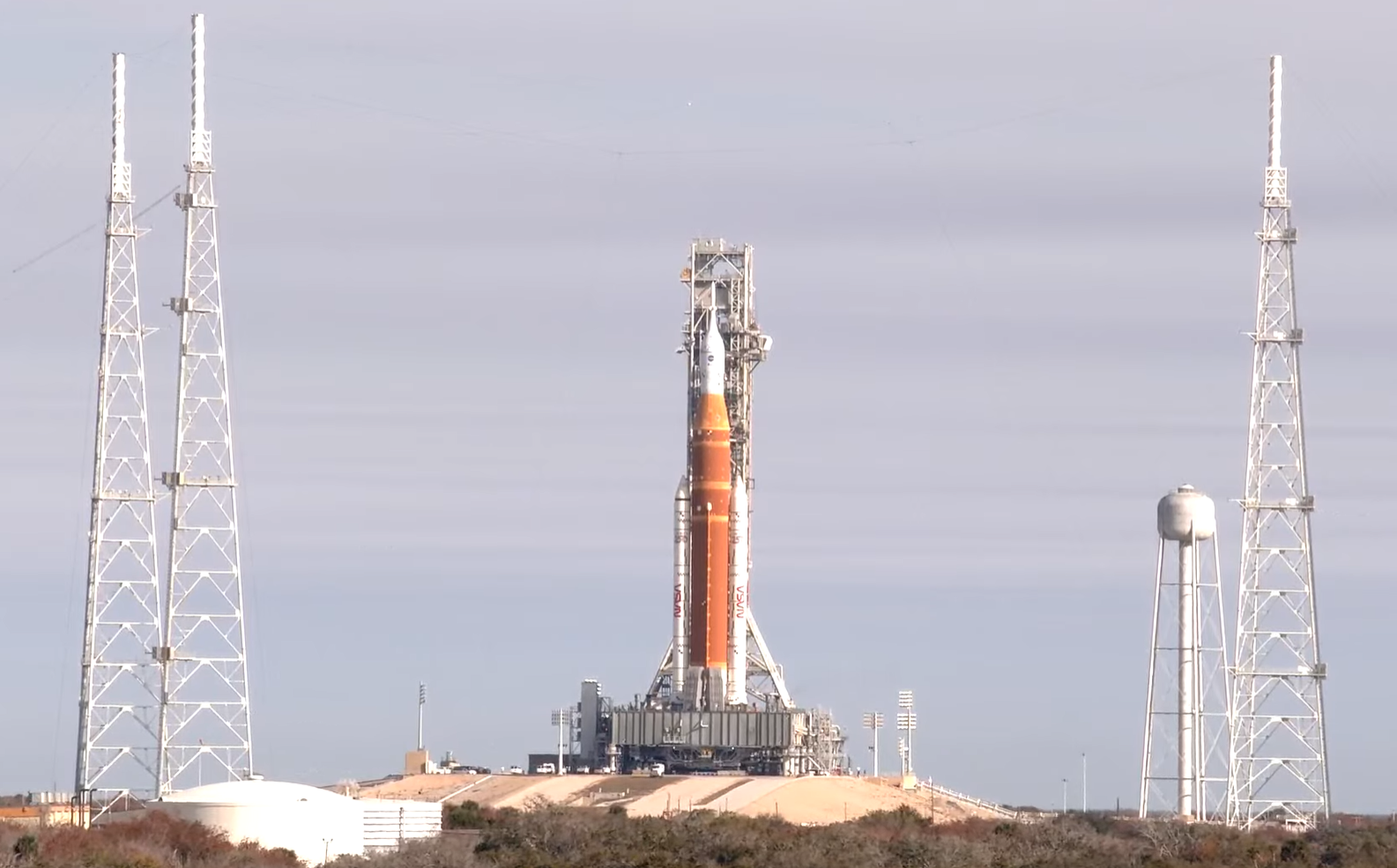
NASA Artemis II Rocket Rolls Back to Vehicle Assembly Building
Editor’s Note: The launch director gave the “go” for rollback at 9:28 a.m. EST followed by first motion 10 minutes later.
NASA’s SLS (Space Launch System) rocket and Orion spacecraft for the Artemis II mission began rolling off the launch pad at 9:38 a.m. EST, Feb. 25, at NASA’s Kennedy Space Center in Florida.
Rolling from Launch Pad 39B to the Vehicle Assembly Building at NASA Kennedy is expected to take up to 12 hours.
Once it arrives, technicians will establish platforms to diagnose the helium flow issue to the rocket’s upper stage and fix it. A livestream of the rollback will be streamed on the agency’s YouTube channel.
 www.nasa.gov
The US already won it over half a century ago.
There is the CNSA, but yes, the PLA has ultimate authority.The problem with China though is IIRC the PLA control their rocket programmes and that the PRC has no equivalent to NASA (Which is a civilian agency).
A Sherpa who did all the work for sahib maybe?Who was the 2nd to reach the summit of Mt Everest?


