
You are using an out of date browser. It may not display this or other websites correctly.
You should upgrade or use an alternative browser.
You should upgrade or use an alternative browser.
Alternative fighter for Argentine AF & Navy during Falklands war.
Rule of cool
ACCESS: Top Secret
- Joined
- 16 January 2024
- Messages
- 3,602
- Reaction score
- 4,550
The Gnat has little range no ? Could never fly from Argentina to Falklands and back. Not sure it could fly out of Port Stanley runway.
When tested by the RAF against the Hunter in the 1958 VRET it had a combat radius of 188nm against the required 240nm. Dunno about using Port Stanley runway, the VRET was done in the Middle East on at least 1 compacted sand runway, so the runway requirements were pretty tough.
Scott Kenny
ACCESS: USAP
- Joined
- 15 May 2023
- Messages
- 19,882
- Reaction score
- 28,539
That's marginal for a rejected takeoff. Add takeoff and landing lengths together and compare to runway length. 1350+m versus 1200m runway.And the following [Gnat F.1] performance numbers:
All in all the the runway take-off and landing performance is definitely compatible with Port Stanley's 1,200m runway. Thrust/weight is on par with high-performance aircraft like the F-8 and A-4M. Fuel fraction with the wet wing is decent but the max combat radius is limited unless you add external fuel tanks.
- 0.64 thrust/weight at take-off (clean). Similar to an F-8E Crusader and better than all A-4 Skyhawks except for the souped-up A-4M
- ~0.283 fuel fraction at take-off (clean). Similar to a clean Etendard IV with full fuel, or an F-8E Crusader or A-4 Skyhawk with 85% fuel
- ~700m take-off run lightly loaded with 2x AIM-9s (3,550kg), ~900m at 4,100kg max take-off weight
- ~650m landing run at 2,800kg landing weight (200kg fuel + 2x AIM-9s)
- ~200nm max range at sea level with allowances for take-off, landing and 2.5 minutes combat (this aligns with the Ajeet's combat radius of ~93nm with 2x 500lb bombs)
Your V1 decision point is going to be many seconds before your rotate speed.
Rule of cool
ACCESS: Top Secret
- Joined
- 16 January 2024
- Messages
- 3,602
- Reaction score
- 4,550
This thread time and time again has come back to those ribbons of tarmac being a key driver of air power.
Which is good, because it makes my obsession with them seem less unhealthy, or so I tell myself anyway.
Which is good, because it makes my obsession with them seem less unhealthy, or so I tell myself anyway.
Perfectly normal to have a gap between V1 and Vr during which you're putting your trust in your zero zero ejection seat. Especially in wartime.That's marginal for a rejected takeoff. Add takeoff and landing lengths together and compare to runway length. 1350+m versus 1200m runway.
Your V1 decision point is going to be many seconds before your rotate speed.
Scott Kenny
ACCESS: USAP
- Joined
- 15 May 2023
- Messages
- 19,882
- Reaction score
- 28,539
Not wrong, but it does mean that pretty much any rejected takeoff is writing off the plane in this stiuation. Not ideal. We're honestly back to sending the engineers in Wave 2, to add turning loops on both ends of the runway plus maybe 50m of marston matting eachPerfectly normal to have a gap between V1 and Vr during which you're putting your trust in your zero zero ejection seat. Especially in wartime.
Last edited:
- Joined
- 5 May 2007
- Messages
- 2,033
- Reaction score
- 4,317
Having done a little digging, the 1976 Shackleton Report found that the full economic potential of the islands couldn't be realised with the 1,250-metre runway then under construction. The recommendation to do so was the only thing underlined in the entire report.This thread time and time again has come back to those ribbons of tarmac being a key driver of air power.
An extension to 2,200 metres and strengthening to an LCN of between 65 and 70 would allow operation of 737, as well as 707s at light weights. Doing so at that time would have been relatively cheap as the plant and workforce were already on site for the work.
It goes without saying that such a runway would have been very useful for military purposes to whomever occupied the island. It didn't make it into the report - which had as an unofficial goal a raprochemment between the Falklands and Argentina - but Lord Shackleton made much the same point privately.
Rule of cool
ACCESS: Top Secret
- Joined
- 16 January 2024
- Messages
- 3,602
- Reaction score
- 4,550
Having done a little digging, the 1976 Shackleton Report found that the full economic potential of the islands couldn't be realised with the 1,250-metre runway then under construction. The recommendation to do so was the only thing underlined in the entire report.
An extension to 2,200 metres and strengthening to an LCN of between 65 and 70 would allow operation of 737, as well as 707s at light weights. Doing so at that time would have been relatively cheap as the plant and workforce were already on site for the work.
It goes without saying that such a runway would have been very useful for military purposes to whomever occupied the island. It didn't make it into the report - which had as an unofficial goal a raprochemment between the Falklands and Argentina - but Lord Shackleton made much the same point privately.
Funnily enough Argentina flew 737s (and BAC111s) into Port Stanley during their impressive airlift during the war.
carvalho2008
Naval alternative projects
- Joined
- 20 November 2015
- Messages
- 517
- Reaction score
- 632
There is also an unpaved section, despite the runway being only 1,250 meters long. Barring fog and rain, weather conditions are excellent for takeoffs: low temperatures, sea-level elevation, and relative winds of up to 30 knots, with an overall average of 16 knots. This remains fairly constant regardless of the month.Funnily enough Argentina flew 737s (and BAC111s) into Port Stanley during their impressive airlift during the war.
The issue with Port Stanley was always more landing: wet runway which increased landing distances and the risk of squalls reducing visibility below minimums with no suitable divert field available.There is also an unpaved section, despite the runway being only 1,250 meters long. Barring fog and rain, weather conditions are excellent for takeoffs: low temperatures, sea-level elevation, and relative winds of up to 30 knots, with an overall average of 16 knots. This remains fairly constant regardless of the month.
So losing fighters due to fuel starvation or runway excursions was a risk that had to be factored in.
Rule of cool
ACCESS: Top Secret
- Joined
- 16 January 2024
- Messages
- 3,602
- Reaction score
- 4,550
There is also an unpaved section, despite the runway being only 1,250 meters long. Barring fog and rain, weather conditions are excellent for takeoffs: low temperatures, sea-level elevation, and relative winds of up to 30 knots, with an overall average of 16 knots. This remains fairly constant regardless of the month.
Where was the unpaved section? IIRC only 1 end was suitable for extension as the ground at the other was too soft and boggy.
The whole area around the runway was soft & boggy. When it was extended after the War several thousand tons (IIRC) of stone had to be quarried, using machinery brought in from the UK, to stabilise the ground before the PSP surface could be laid.Where was the unpaved section? IIRC only 1 end was suitable for extension as the ground at the other was too soft and boggy.
Rule of cool
ACCESS: Top Secret
- Joined
- 16 January 2024
- Messages
- 3,602
- Reaction score
- 4,550
The whole area around the runway was soft & boggy. When it was extended after the War several thousand tons (IIRC) of stone had to be quarried, using machinery brought in from the UK, to stabilise the ground before the PSP surface could be laid.
Yes, it was such a massive job that I think there are strict limits to what a well planned an executed Argentine extension operation could achieve in a few weeks between the invasion and the response. Probably not much more than the rumoured 500m, an arrestor wire and maybe some PSP handstand and gravel access tracks.
I haven't read through the entire thread, but why not the F-5C? They were being heavily marketed around the time that the 1970 mirage purchases and at the time they could have purchased 2x as many fighters, and still had money left over for an expansion of their A4 fleet. Sure in 1978 they wouldn't have been able to purchase new F-5s from the US, but at that point they could have increased their Super Etendard purchase instead of getting IAI Neshers, and a larger order may have resulted in having more planes and missiles on hand for Exocet strikes.
The F-5C's were apparently pretty easy to modify for probe and drogue refueling, and shouldn't have an issue tanking from a C130, and with full drop tanks wouldn't even need to tank for combat air patrols over the Falklands.
The F-5C's were apparently pretty easy to modify for probe and drogue refueling, and shouldn't have an issue tanking from a C130, and with full drop tanks wouldn't even need to tank for combat air patrols over the Falklands.
Rule of cool
ACCESS: Top Secret
- Joined
- 16 January 2024
- Messages
- 3,602
- Reaction score
- 4,550
I haven't read through the entire thread, but why not the F-5C? They were being heavily marketed around the time that the 1970 mirage purchases and at the time they could have purchased 2x as many fighters, and still had money left over for an expansion of their A4 fleet. Sure in 1978 they wouldn't have been able to purchase new F-5s from the US, but at that point they could have increased their Super Etendard purchase instead of getting IAI Neshers, and a larger order may have resulted in having more planes and missiles on hand for Exocet strikes.
The F-5C's were apparently pretty easy to modify for probe and drogue refueling, and shouldn't have an issue tanking from a C130, and with full drop tanks wouldn't even need to tank for combat air patrols over the Falklands.
Argentina was under a US Arms embargo from 1977 but received 50 of 75 A4s (1st batch of 25 in 1966), 10 of 17 Mirage IIIs and 12 Canberra's in the 70s prior to the embargo and 7 Mirage IIIs, 39 Daggers and 5 Super Etendards after the 1977 embargo but before the 1982 war.
I'd say the Mirage III is a better fighter than the F5 and the A4 is a better attack aircraft, so choosing the F5 instead of those types is a retrograde step and would be a limiting factor once the embargo kicks in. In any case bringing about 100 jets into service in the decade before the war is a pretty good effort from a small-medium power.
In pure speed, yes the Mirage III is probably a better fighter, but the F5c even without refueling could fly to the Falklands from the mainland, have fuel for 15-30 minutes of combat before it would have to leave for the mainland to refuel. Against the Harrier, I would expect that the F5 would do equally as well one to one. If you substitue the initial 12 Mirage IIIs with F5c/a you'd have 20-30 fighter airframes you could mount a rotating combat air patrol with over the island and/or escort the A4s/Super Etendards in their strikes against the British surface vessels. The post 1977 purchases would have to be Mirage IIIs or their Israeli equivalents and Super Etendards as US and UK had them under arms Embargo. It would also give Argentina a better numerical advantage against the initial airwing on the Hermes and Invincible. I wouldn't suggest replacing the A4 purchases at all, but maybe further increasing them. If Argentina purchased 20 F5c/as they'd still have roughly 6 million left over from the OTL purchase of Mirage IIIs to spend on additional A4s.Argentina was under a US Arms embargo from 1977 but received 50 of 75 A4s (1st batch of 25 in 1966), 10 of 17 Mirage IIIs and 12 Canberra's in the 70s prior to the embargo and 7 Mirage IIIs, 39 Daggers and 5 Super Etendards after the 1977 embargo but before the 1982 war.
I'd say the Mirage III is a better fighter than the F5 and the A4 is a better attack aircraft, so choosing the F5 instead of those types is a retrograde step and would be a limiting factor once the embargo kicks in. In any case bringing about 100 jets into service in the decade before the war is a pretty good effort from a small-medium power.
Yodasgrandad
ACCESS: Restricted
- Joined
- 7 August 2025
- Messages
- 2
- Reaction score
- 0
On that first day of air-air fighting we saw that the Argie fast-movers did have the time and the fuel to conduct attempted fighter cover ops, and they loitered long enough to dogfight and maneuver and get themselves splashed.The Argentine planes didn't have 10-15 minutes 'spare' time over the islands in which attack aircraft could pick a good attack approach, drop their bombs and then turn around to face the Sea Harriers if intercepted. Similarly the few times Mirage IIIs did fly over the islands they didn't have 10-15 minutes time on a CAP station plus a fuel allowance for combat, like the Sea Harriers did.
This is why the airfield gets so much attention, even if only for minimum viable capability, as it transforms the FAA/COAN fuel situation under combat conditions. The (majority of?) missions that never encountered a Sea Harrier would happen as they did historically, but in the event of an interception an A4 or Dagger could turn and defend itself with guns to at least frustrate the interception, knowing that they could land at Port Stanley and with a quick turn-around leave before the RN could lay on naval gunfire or a bombing mission.
The same applies to Mirage III 'escort' or 'decoy' missions, if the opportunity came they could engage at high speed to frustrate the Sea Harriers and then do a quick turn-around at Port Stanley. Indeed this is exactly how the Sea Harriers used 'Sids Strip' once it became available, as well as that one time where they landed on Fearless and Intrepid after an interception ran their fuel down.
View attachment 817012
Facebook.
Why did the myth of “no time to hang around” get started?
Two reasons.
One involved the FAA removing Mirages from fighter cover in the theatre, for asset preservation, to let other aircraft do alternative missions. And so unlike the low-drag lightweight air-air weapons mix on the first day, the subsequent air-ship and air-ground ops conducted by the Argies involved heavy bomb loads with high drag, which consumed more fuel than when armed for air-air combat. Higher inbound fuel consumption, less loiter time.
Rule of cool
ACCESS: Top Secret
- Joined
- 16 January 2024
- Messages
- 3,602
- Reaction score
- 4,550
In pure speed, yes the Mirage III is probably a better fighter, but the F5c even without refueling could fly to the Falklands from the mainland, have fuel for 15-30 minutes of combat before it would have to leave for the mainland to refuel. Against the Harrier, I would expect that the F5 would do equally as well one to one. If you substitue the initial 12 Mirage IIIs with F5c/a you'd have 20-30 fighter airframes you could mount a rotating combat air patrol with over the island and/or escort the A4s/Super Etendards in their strikes against the British surface vessels. The post 1977 purchases would have to be Mirage IIIs or their Israeli equivalents and Super Etendards as US and UK had them under arms Embargo. It would also give Argentina a better numerical advantage against the initial airwing on the Hermes and Invincible. I wouldn't suggest replacing the A4 purchases at all, but maybe further increasing them. If Argentina purchased 20 F5c/as they'd still have roughly 6 million left over from the OTL purchase of Mirage IIIs to spend on additional A4s.
In air-to-air combat pure speed is not a 'nice to have', its a key ingredient and often a marker for 'energy'. It allows a fighter pilot to engage and disengage at will, to convert speed into position and a deficit of speed is very difficult to overcome.
You assume that budget is the prime driver of numbers, affording 10 Mirages means you can afford 20 F5Cs, but that isn't the case. There's no point in having 20 fighters if you can only crew and support 10 and only have room at your bases for 10. Buying 20 F5s might mean spending a fortune on expanding hardstand, hangar and HAS space, expanding training pipelines and building more accommodation, mess facilities, gyms and soccer pitches for these extra support staff. This is no small thing; in 1982 the southern airfields were considered 'packed' when the squadrons deployed to fight the war.
Rule of cool
ACCESS: Top Secret
- Joined
- 16 January 2024
- Messages
- 3,602
- Reaction score
- 4,550
On that first day of air-air fighting we saw that the Argie fast-movers did have the time and the fuel to conduct attempted fighter cover ops, and they loitered long enough to dogfight and maneuver and get themselves splashed.
Why did the myth of “no time to hang around” get started?
Two reasons.
One involved the FAA removing Mirages from fighter cover in the theatre, for asset preservation, to let other aircraft do alternative missions. And so unlike the low-drag lightweight air-air weapons mix on the first day, the subsequent air-ship and air-ground ops conducted by the Argies involved heavy bomb loads with high drag, which consumed more fuel than when armed for air-air combat. Higher inbound fuel consumption, less loiter time.
Mirage IIIs and Daggers when used in the air-to-air role had a 'loiter' time of 5-10 minutes over the Falklands, in contrast the Sea Harriers had a 15-minute CAP time over Port San Carlos. More than that, the Sea Harrier's 15-minutes CAP time was robust, properly factored into mission planning without restriction and was only exceeded once at which point the RN had a 'Plan B' of landing on the LPDs. It didn't rely on flying at high altitude and not coming down to fight, not using afterburner and using oversize and performance draining 'ferry' tanks like the Argentine Mirages and Daggers.
Darthmalgus
ACCESS: Restricted
- Joined
- 7 August 2025
- Messages
- 15
- Reaction score
- 3
Exactly,Mirage IIIs and Daggers when used in the air-to-air role had a 'loiter' time of 5-10 minutes over the Falklands, in contrast the Sea Harriers had a 15-minute CAP time over Port San Carlos. More than that, the Sea Harrier's 15-minutes CAP time was robust, properly factored into mission planning without restriction and was only exceeded once at which point the RN had a 'Plan B' of landing on the LPDs. It didn't rely on flying at high altitude and not coming down to fight, not using afterburner and using oversize and performance draining 'ferry' tanks like the Argentine Mirages and Daggers.
It was the Sea Harriers job to shoot them down. And they refused to be drawn up into the stratosphere to mess around.
And at that height, all the Mirage and Dagger advantages melted away.
Good tactics beats good paper stats.
Darthmalgus
ACCESS: Restricted
- Joined
- 7 August 2025
- Messages
- 15
- Reaction score
- 3
A year or two after the war the Royal Navy had the opportunity to put its Sea Harriers up against the Mirage IllOs of the Royal Australian Air Force - essentially the same as those flown by Argentina- in an exercise. It was a much more equal fight, the Australians using their jets in the way the Argentines should have.On that first day of air-air fighting we saw that the Argie fast-movers did have the time and the fuel to conduct attempted fighter cover ops, and they loitered long enough to dogfight and maneuver and get themselves splashed.
Why did the myth of “no time to hang around” get started?
Two reasons.
One involved the FAA removing Mirages from fighter cover in the theatre, for asset preservation, to let other aircraft do alternative missions. And so unlike the low-drag lightweight air-air weapons mix on the first day, the subsequent air-ship and air-ground ops conducted by the Argies involved heavy bomb loads with high drag, which consumed more fuel than when armed for air-air combat. Higher inbound fuel consumption, less loiter time.
Didn’t help in contrast, they had no practical experience of flying dissimiliar air combat training or operating under simulated wartime conditions. It’s pilots also did not enjoy the amount of monthly flying hours Royal Navy pilots did.
No matter what fighter Argentina could have mounted against the British Task Force the result would have been the same.
Had the British had HMS Eagle or a better condition Ark Royal with their F-4K Phantoms the Argentines would have had a much worse time of it.
With such a true aircraft carrier and the then-available mix of aircraft it could carry, and their associated AEW and ordnance capabilities, there would have been no “close run thing” but rather immediate air supremacy for the task force.
A more effective CAP to the point of being able to detect and intercept Argie aircraft long before they even approached the Falklands (the Fairey Gannet AEW role allowed bandit detection at 100 miles or so)
Last edited:
Rule of cool
ACCESS: Top Secret
- Joined
- 16 January 2024
- Messages
- 3,602
- Reaction score
- 4,550
A year or two after the war the Royal Navy had the opportunity to put its Sea Harriers up against the Mirage IllOs of the Royal Australian Air Force - essentially the same as those flown by Argentina- in an exercise. It was a much more equal fight, the Australians using their jets in the way the Argentines should have.
Didn’t help in contrast, they had no practical experience of flying dissimiliar air combat training or operating under simulated wartime conditions. It’s pilots also did not enjoy the amount of monthly flying hours Royal Navy pilots did.
No matter what fighter Argentina could have mounted against the British Task Force the result would have been the same.
Had the British had HMS Eagle or a better condition Ark Royal with their F-4K Phantoms the Argentines would have had a much worse time of it.
With such a true aircraft carrier and the then-available mix of aircraft it could carry, and their associated AEW and ordnance capabilities, there would have been no “close run thing” but rather immediate air supremacy for the task force.
A more effective CAP to the point of being able to detect and intercept Argie aircraft long before they even approached the Falklands (the Fairey Gannet AEW role allowed bandit detection at 100 miles or so)
With the RAAF Mirages was it an apples and apples comparison, or was it at much shorter range where the RAAF could use the small 'supersonic' drop tanks and liberal use of the afterburner?
Air combat is a never ending list of variables, which is why it's so interesting.
Have you run the F-5's range numbers?In pure speed, yes the Mirage III is probably a better fighter, but the F5c even without refueling could fly to the Falklands from the mainland, have fuel for 15-30 minutes of combat before it would have to leave for the mainland to refuel.
Using the CF-5A manual, the F-5 has only ~300lbs combat fuel available flying 380nm from Rio Gallegos to Falkland Sound, which is barely enough for 1min combat in afterburner or 3min combat in dry thrust. That's flying high altitude cruise with tip tanks, a centerline tank and 2x AIM-9 (drag index ~80), and with combat at 10-15k feet, return cruise having expended the missiles and centerline tank.
You can run your own numbers using the manual here: https://www.scribd.com/document/672748564/E0-05-205A-1
5,385lbs usable fuel (4410lbs internal + tip tanks, 975lbs centerline tank)
- 100lbs: 5min taxi
- 280lbs: max thrust take-off
- 820lbs: climb to 30,000ft outbound cruise altitude (85nm distance gained)
- 1400lbs: cruise out from 85nm to 380nm @ 0.21 nm/lb
- 300lbs: combat fuel allowance (1min reheat or 3min dry thrust @10-15k feet)
- 500lbs: climb from 10,000ft to 35,000 return cruise altitude (70nm distance gained)
- 1200lbs: cruise back from 310nm @ 0.25 nm/lb
- 550lbs: 20min fuel reserve on landing
- 220lbs: 5% internal fuel allowance
Rule of cool
ACCESS: Top Secret
- Joined
- 16 January 2024
- Messages
- 3,602
- Reaction score
- 4,550
That is insufficient to take the fight to the Sea Harriers if they are flying over East Falkland or if any allowance must be made for loitering, returning with unexpended missiles and the centerline tank... much worse than the Mirage III range performance under the same circumstances.
I didn't think such a small fighter could get such great range, but apparently it was pretty efficient and I'm no F5 expert. Actually, for such a good looking and efficient little plane I don't like it at all. In my mind 'nifty' doesn't equal effective and therefore cool, coolness being the only metric that matters.
The F-5's range performance was always penalized by two things:I didn't think such a small fighter could get such great range, but apparently it was pretty efficient
1) Using possibly the most gas guzzling engine in the West, and
2) The small thin wing
All well and good for a cheap point defense fighter. Not good at all for any longer ranged fighter or strike mission.Hrm, I didn't realize bumping up to a pair of tanks on the inboard pylons degraded performance as much as it does as shown by the charts. Using the F5 would require tanking. Yeah, not any better than the Mirage III at this point.Have you run the F-5's range numbers?
Using the CF-5A manual, the F-5 has only ~300lbs combat fuel available flying 380nm from Rio Gallegos to Falkland Sound, which is barely enough for 1min combat in afterburner or 3min combat in dry thrust. That's flying high altitude cruise with tip tanks, a centerline tank and 2x AIM-9 (drag index ~80), and with combat at 10-15k feet, return cruise having expended the missiles and centerline tank.
You can run your own numbers using the manual here: https://www.scribd.com/document/672748564/E0-05-205A-1
5,385lbs usable fuel (4410lbs internal + tip tanks, 975lbs centerline tank)
That is insufficient to take the fight to the Sea Harriers if they are flying over East Falkland or if any allowance must be made for loitering, returning with unexpended missiles and the centerline tank... much worse than the Mirage III range performance under the same circumstances.
- 100lbs: 5min taxi
- 280lbs: max thrust take-off
- 820lbs: climb to 30,000ft outbound cruise altitude (85nm distance gained)
- 1400lbs: cruise out from 85nm to 380nm @ 0.21 nm/lb
- 300lbs: combat fuel allowance (1min reheat or 3min dry thrust @10-15k feet)
- 500lbs: climb from 10,000ft to 35,000 return cruise altitude (70nm distance gained)
- 1200lbs: cruise back from 310nm @ 0.25 nm/lb
- 550lbs: 20min fuel reserve on landing
- 220lbs: 5% internal fuel allowance
carvalho2008
Naval alternative projects
- Joined
- 20 November 2015
- Messages
- 517
- Reaction score
- 632
Imagining Argentina with a fighter-and-missile combination capable of defeating the Harrier is a huge—truly huge—mistake! It is akin to debating the technical specs of trading-card albums while ignoring historical realities, or trying to turn the Argentina of that era into something it simply wasn't. After all, if they could have, they would have purchased and maintained the world's most powerful fighter... but they couldn't. They barely managed to maintain their best fighters—which were, in reality, nothing more than second- or third-rate models by global standards. There were many scenarios to consider. Chief among them was their reluctance to risk their best aircraft, which were absolutely vital for guarding against a potential Chilean counter-attack—a very real threat, given that Chile and Argentina had nearly gone to war (and some claim an invasion of Chile actually began) during the 1978 crisis, just four years earlier. Naturally, any combat entails losses, but there was an implicit limit: they couldn't afford losses that would leave them crippled and vulnerable to a two-front war should Chile join the conflict. How, then, could they allow their forces to rely on an air arm capable of both defensive operations and power projection *based out of the islands*? It would have to be a model capable of this task but not so critical to the backbone of their air force—something expendable in a cost-benefit analysis. That is why I have pointed to models like the MB-339, MB-326, A-37, or the Gnat/Ajeet... though, obviously, these models would have needed to exist in significant numbers within the Argentine inventory. They invested in the Pucará, but the Pucará wasn't suited for that scenario. If they had applied the same national effort they put into the Pucará toward manufacturing and widely operating the suggested models, they would have had—to a greater or lesser extent—the capability to keep the British fleet further away. This would have hampered operations at the margins, as evidenced by the difficulties the British faced regarding Harrier positioning and numbers. It is a mistake to think that only a victorious air-to-air combat engagement can achieve this; the example I gave of the Gnat is real—a ridiculous, minimalist fighter, yet one that would have caused a massive headache, with a clearly favorable cost-benefit ratio.Hrm, I didn't realize bumping up to a pair of tanks on the inboard pylons degraded performance as much as it does as shown by the charts. Using the F5 would require tanking. Yeah, not any better than the Mirage III at this point.
The F-5's fuel situation would be much much worse than a Mirage III.I didn't realize bumping up to a pair of tanks on the inboard pylons degraded performance as much as it does as shown by the charts. Using the F5 would require tanking. Yeah, not any better than the Mirage III at this point.
Running the same numbers, at least the Mirage IIIs could get to the Falklands with fuel to spare - about 700kg remaining in their big 1,700L tanks... enough for 10-15 minutes patrol time or for a supersonic acceleration. The Mirage's problem was their fuel situation the moment they dropped the tanks to engage in combat. At that point, with only 2,150-2,350kg internal fuel, they were down to a combat fuel allowance of 400-600kg before bingo (depending on whether they had the WLE - wing leading edge - tanks installed... I'm not sure if Argentina's Mirages had them). That's 2-3 minutes combat time given the Mirage's combat fuel flow of ~200kg/min with reheat.
Now 2-3 minutes combat time is much better than the F-5's 1 minute of combat time... but as we know from history, still not enough for pilots to fly aggressively.
carvalho2008
Naval alternative projects
- Joined
- 20 November 2015
- Messages
- 517
- Reaction score
- 632


- Joined
- 5 May 2007
- Messages
- 2,033
- Reaction score
- 4,317
In partial fairness, it's not like the Harriers could have used reheat even if they wanted to, and I'm not sure they had ferry tanks available on the carriers.It didn't rely on flying at high altitude and not coming down to fight, not using afterburner and using oversize and performance draining 'ferry' tanks like the Argentine Mirages and Daggers.
Weirdly enough, the Marut seems to have started out as a design for Argentina. It potentially works as an alternative to the A-4. Perhaps not a very good alternative... but a domestic one, and that can matter politically.India's Marut
That scenario does rather imply the IAe. 33 is developed to an operational standard, presumably in place of the F-86.
None of this is likely to help Argentina in 1982, though!
carvalho2008
Naval alternative projects
- Joined
- 20 November 2015
- Messages
- 517
- Reaction score
- 632


My AI is getting the proportions wrong.
Last edited:

Wotan
ACCESS: Secret
- Joined
- 18 April 2023
- Messages
- 454
- Reaction score
- 1,248
BTW...Consequences if Argentina licenses Ajeet/Gnat. Major shift if a bulk user of Bristol Orpheus turbojet.
India's Marut
Fiat G.91
Both used variants of this engine
https://migflug.com/afterburner/fiat-g91-gina-nato-lightweight-strike-fighter/
Specifically designed for rough field and short take off operation...
Rule of cool
ACCESS: Top Secret
- Joined
- 16 January 2024
- Messages
- 3,602
- Reaction score
- 4,550
In partial fairness, it's not like the Harriers could have used reheat even if they wanted to, and I'm not sure they had ferry tanks available on the carriers.
Both of things are true, the point being that the Sea Harrier's 15 minute CAP time was a hard and fast number that allowed the Sea Harrier to use all of it's tactical abilities. The Mirage's 5-10 minutes over the islands was hemmed in by a bunch of limitations that meant it couldn't use its considerable performance advantages, so in practice these advantages might as well not have existed.
To be fair while the Sea Harrier's had and used Plan B of landing on Fearless and Intrepid the Mirages also had a Plan B of landing at Port Stanley, but when that poor Mirage pilot tried it the AAA gunners shot him down on approach. I've often wondered what would have happened if made that landing, would it have changed the course of the war.
carvalho2008
Naval alternative projects
- Joined
- 20 November 2015
- Messages
- 517
- Reaction score
- 632
Great find!!!BTW...
https://migflug.com/afterburner/fiat-g91-gina-nato-lightweight-strike-fighter/
View: https://www.youtube.com/watch?v=RKMDuLUma3s
Specifically designed for rough field and short take off operation...
This one would also work well, especially the improved twin-engine version...
Fiat G91Y
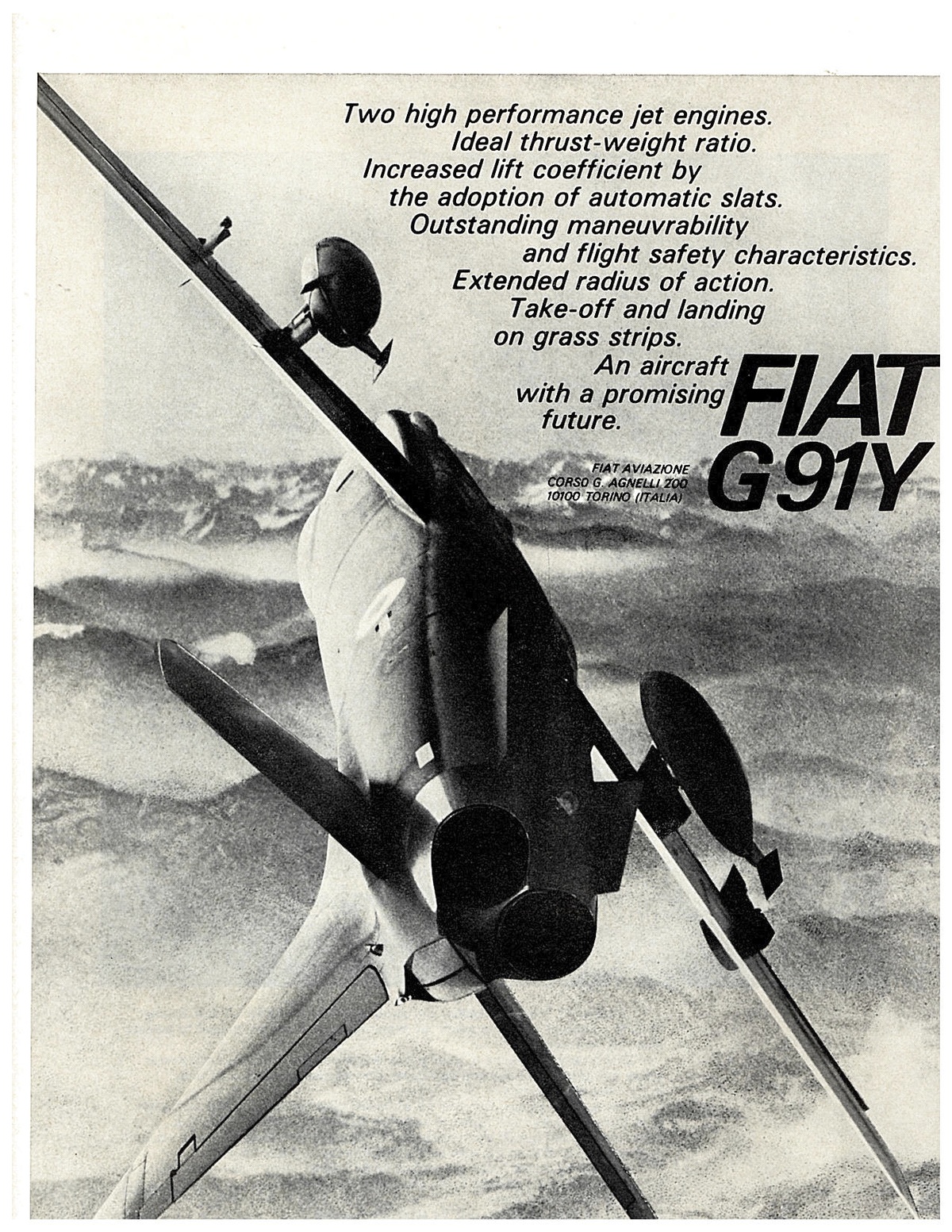
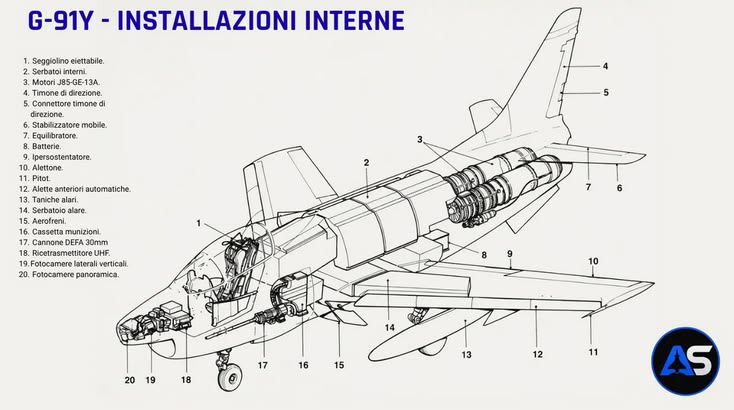
carvalho2008
Naval alternative projects
- Joined
- 20 November 2015
- Messages
- 517
- Reaction score
- 632
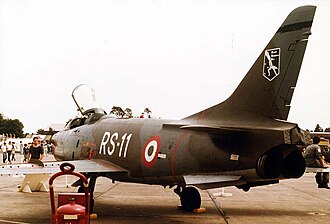
Specifications
Dimensions
Length 11.67 m (38.3 ft)
Wingspan 9.01 m (29.6 ft)
Height 4.43 m (14.5 ft)
Wing area 18.13 m² (195 sq ft)
Aspect ratio 4.5
Weight(s)
Empty weight 3,900 kg (8,600 lb)
Loaded weight 7,800 kg (17,200 lb)
Max. takeoff weight 8,700 kg (19,200 lb)
Propulsion
Engine(s) 2 x General Electric J85-GE-13A turbojets
Thrust (per engine) 1,850 kgf (18,100 N)
Performance
Maximum speed 1,110 km/h (599 knots)
Max. speed (Mach) Mach 0.95
Ferry range 3,400 km (2,110 mi)
Service ceiling 12,500 m (41,000 ft)
Rate of climb 86.36 m/s
Armament
Machine guns / Cannons 2 x 30 mm (1.18 in) DEFA cannons
Rule of cool
ACCESS: Top Secret
- Joined
- 16 January 2024
- Messages
- 3,602
- Reaction score
- 4,550
IIUC Argentina re-activated a sqn of F-86F Sabres during the war, if we're dreaming up what obsolete fighters could be put on the islands to get destroyed by naval gunfire and Sea Harriers why not those?
Hmm... if Argentina installs those land-based Exocets earlier that could eliminate the naval gunfire threat.IIUC Argentina re-activated a sqn of F-86F Sabres during the war, if we're dreaming up what obsolete fighters could be put on the islands to get destroyed by naval gunfire and Sea Harriers why not those?
Personally I think the winning strategy in the early weeks was to combine antiship missions against the task force's outer screen with escort fighters to defend if bounced by Sea Harrier CAP (rather than this idea of sending obsolete fighters on suicide missions to seek out air combat with the Sea Harriers). If 2-3 escorts get damaged then the landings might not be able to move ahead as the pre-conditions would not be there.
But... IMHO those antiship missions are better done with shuttle missions from the mainland, refueling at Port Stanley on the return leg. And with AS-30 missiles instead of Zuni rockets in order to actually do enough damage. Final requirement is the ability to ingress at high speed (540 knots+) in order to reduce exposure time by those critical few seconds and give pilots a chance to get past ship defenses and Harrier CAP (we know how hard it was for Skyhawks attacking the task force on May 30th, likewise the Canberras performed poorly on May 1st and their ability to aggressively engage targets was constrained by their slow 450 knot top speed).
Which all rules out most small / short-ranged light fighters... Skyhawk & Etendard both being a suitable platform.
Last edited:
The launch/guidance requirements of the AS-30 would have been brutal being a MCLOS weapon. Plus the Mirage V's / Mirage V equivalents could be armed with them, and Peru handed over their stocks of the AS-30 when they did the same with their Mirage V's to Argentina during the Falklands war. The same issue would be present if Argentina had purchased AGM-12 Bullpups for their A4s.Hmm... if Argentina installs those land-based Exocets earlier that could eliminate the naval gunfire threat.
Personally I think the winning strategy in the early weeks was to combine antiship missions against the task force's outer screen with escort fighters to defend if bounced by Sea Harrier CAP (rather than this idea of sending obsolete fighters on suicide missions to seek out air combat with the Sea Harriers). If 2-3 escorts get damaged then the landings might not be able to move ahead as the pre-conditions would not be there.
But... IMHO those antiship missions are better done with shuttle missions from the mainland, refueling at Port Stanley on the return leg. And with AS-30 missiles instead of Zuni rockets in order to actually do enough damage. Final requirement is the ability to ingress at high speed (540 knots+) in order to reduce exposure time by those critical few seconds and give pilots a chance to get past ship defenses and Harrier CAP (we know how hard it was for Skyhawks attacking the task force on May 30th, likewise the Canberras performed poorly on May 1st and their ability to aggressively engage targets was constrained by their slow 450 knot top speed).
Which all rules out most small / short-ranged light fighters... Skyhawk & Etendard both being a suitable platform.
Argentina would have been better off getting the armament manuals for the bombs they purchased from the US for their A4s so that they could disable/modify the minimum distance/flight time fuses. That would have had the tradeoff of potentially being in the danger zone of the bomb(s) when they detonated though.
Rule of cool
ACCESS: Top Secret
- Joined
- 16 January 2024
- Messages
- 3,602
- Reaction score
- 4,550
Hmm... if Argentina installs those land-based Exocets earlier that could eliminate the naval gunfire threat.
Personally I think the winning strategy in the early weeks was to combine antiship missions against the task force's outer screen with escort fighters to defend if bounced by Sea Harrier CAP (rather than this idea of sending obsolete fighters on suicide missions to seek out air combat with the Sea Harriers). If 2-3 escorts get damaged then the landings might not be able to move ahead as the pre-conditions would not be there.
But... IMHO those antiship missions are better done with shuttle missions from the mainland, refueling at Port Stanley on the return leg. And with AS-30 missiles instead of Zuni rockets in order to actually do enough damage. Final requirement is the ability to ingress at high speed (540 knots+) in order to reduce exposure time by those critical few seconds and give pilots a chance to get past ship defenses and Harrier CAP (we know how hard it was for Skyhawks attacking the task force on May 30th, likewise the Canberras performed poorly on May 1st and their ability to aggressively engage targets was constrained by their slow 450 knot top speed).
Which all rules out most small / short-ranged light fighters... Skyhawk & Etendard both being a suitable platform.
That's all quite reasonable, therefore it's impossible.

Firstly, the complete lack of planning, to the extent that what planning did exist was specifically told not to prepare for the defence of the Islands. After all they could probably scrounge up some high velocity guns for coastal defence. With the Exocets, I don't think they had any spare, they didn't start on the mobile trailer until the Navy returned to port after the Belgrano sinking and removed some launch canisters from a warship.
I share @taralon's concern about the AS30s launch and guidance, I think it might even put the aircraft into the Sea Cat's engagement envelope and certainly Sea Darts and Wolfs would have a field day and the 4.5" guns would put the wind up the pilots.
Similar threads
-
 Some questions about the modification of Argentine aircraft carrier ARA Veinticinco de Mayo
- Started by PreMars
- Replies: 7
-
 AX-04: Last Torpedo Bomber development of the 20th Century?
- Started by Grey Havoc
- Replies: 14