compton_effect

ACCESS: Confidential
Joined
13 June 2007
Messages
77
Reaction score
41
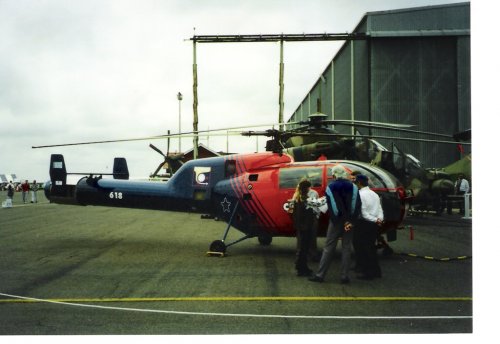
OK. Gents. I finally found my old pictures from the heady days of the early 90's when DENEL had a project for everything.
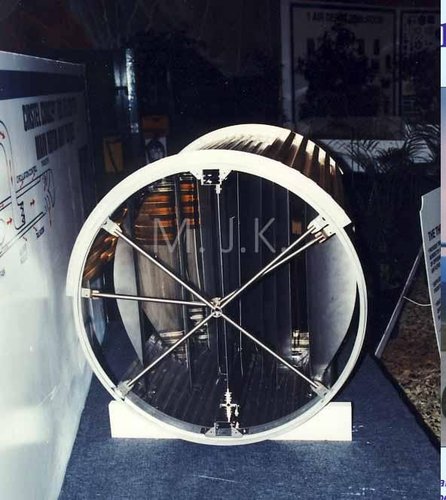
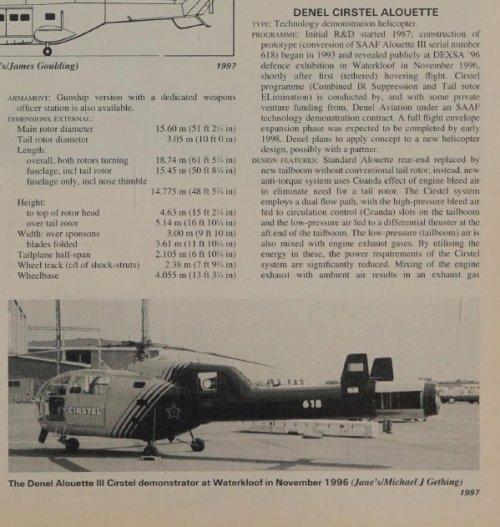
Anyone have any more information about this NOTAR style testbed that was show (static display only) at one of the 1'st SA Arms expo's?
I only have what's in the photos
 

Attachments

  • DEXA27.jpg
    DEXA27.jpg
    233.8 KB · Views: 910
  • DEXA28.jpg
    DEXA28.jpg
    245.4 KB · Views: 877
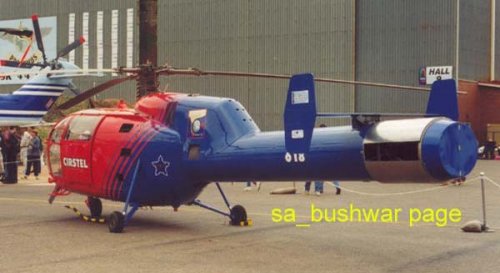
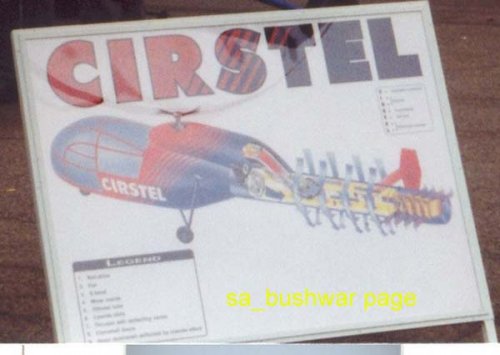
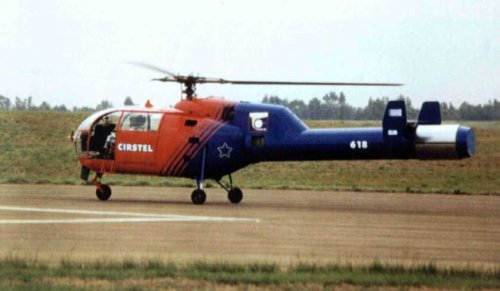
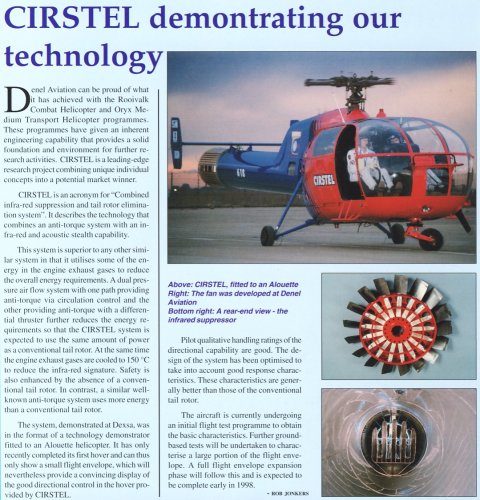
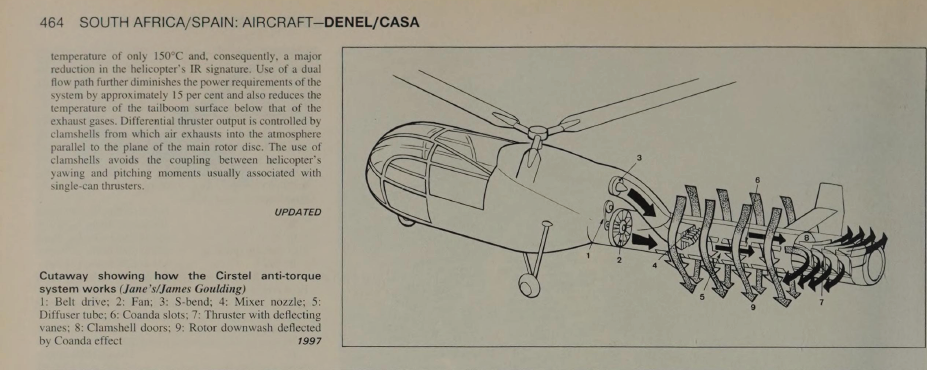
An SAAF Alouette III technology demonstration helicopter equipped with a new tailboom without a conventional tailrotor or a fenestron was shown by Denel Aviation. The project is known as Cirstel (Combined InfraRed Suppression and Tail rotor Elimination). Initial research and development workbegan in 1987 and construction of the prototype started in 1993. The demonstrator is due to make its maiden flight "in the next few months," according to project engineer Nols Fonternel. The workwas conducted by Denel under an SAAF technology contract. It was administered by Armscor. While Cirstel has some similarities to the McDonnell Douglas NOTAR(NO Tail Rotor) system, it is a different design, Fonternel said.Although, like NOTAR, it uses the Coanda effect of the engine bleed-air to eliminate the need for a tail rotor while also incorporating suppression of the exhaust's infrared signature. The Cirstel principle splits the high pressure air from the enginefor use in the Coanda slots, while the low pressure air is bled-off for the tail thruster and to mix and cool the engine exhaust. The thruster nozzle is a Denel-patented clamshell design, unlike McDonnell Douglas' `rotating can' concept. Denel intends "to apply the Cirstel to a new helicopter design, to be developed - hopefully - with a new partner," Fonternel said.

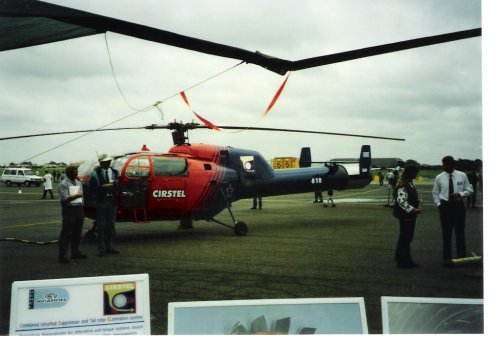
JDW 20 Nov 1996
http://www.janes.com/articles/Janes-Defence-Weekly-96/CIRSTEL-BREAKS-HELICOPTER-CONVENTIONS.html
 
Hmmmm... interesting. I wonder what that new helicopter design was? Obviously part of an Allouette replacement study?
 
Hmmmm... interesting. I wonder what that new helicopter design was? Obviously part of an Allouette replacement study?
Very likely - this was probably just a test bed, judging from the Alpha XH-1 project. I did hear rumours once that they tried to buy Dauphin plans. Around the same time that they were 'developing' the Oryx. Maybe this was part of indigenous Light Utility project that was started instead.
 
Here's an article from "Airviews" the in-house magazine for Atlas Aircraft/Denel Aviation. It was written by Rob Jonkers, who IIRC was the overall project manager for the Rooivalk program at one stage or another. It has a slightly nationalistic stance (being an in-house magazine), however it contains some interesting detail non theless. The three big advantages it had over the Hughes 500 NOTAR where the following:

1. It used far less power, the same as a conventional rotor - whereas the Hughes NOTAR needed far more power than a conventional rotor to work (apparently a big reason for the Hughes' lack of commercial success).
2. It also cooled the exhaust gas to 150 Degrees, drastically reducing it's infrared/heat signature - very handy for military operations - the Hughes NOTAR did not cool the exhaust gas.
3. It would have been cheaper to manufacture and operate.

I think it was simply a case of no funds being available, as with most South African projects at the time - commercially the lack of the Hughes NOTAR success also had strong impact on the future of CIRSTEL (the Hughes NOTAR was successful in it's own right, but it was not the great commercial success that it was expected to be).

This is a project that I think Denel should seriously reconsider, if they get it right (with the promise it had), they could potentially earn themselves a great monetary windfall on the world market with it.
 

Attachments

  • CIRSTEL 1-01.jpg
    CIRSTEL 1-01.jpg
    379.6 KB · Views: 270
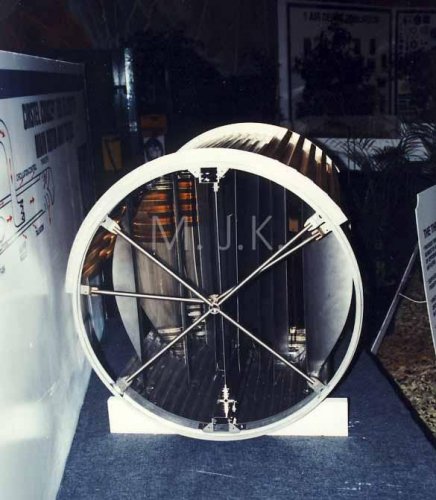
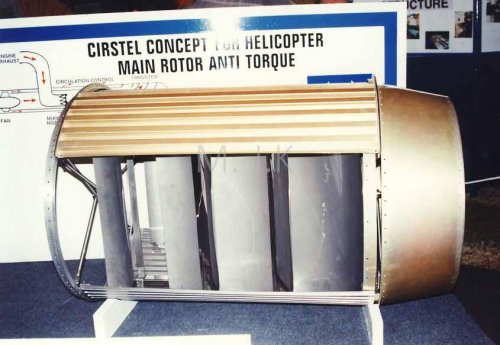
Some close-up pics I took at one of the DEXSA shows - I have some more info that I still need to dig up and post.
 

Attachments

  • Cirstel-04WM.jpg
    Cirstel-04WM.jpg
    51.8 KB · Views: 180
  • Cirstel-03WM.jpg
    Cirstel-03WM.jpg
    63.8 KB · Views: 150
Thanks Graugrun!

A real pity that this project suffered the massive budget slashes.

As you said, it would be interesting if they had continued with it, particularly if it performed as advertised it could have made considerable inroads into the helicopter market.
I was always surprised the Hughes NOTAR never utilised exhaust gases, which is, from what I understand, basically a waste product apart from nominal negligable thrust.
And that is apart from the huge potential to cool the exhaust simultaneously as was part of the CIRSTEL.

Look forward to any other pics/info.
 
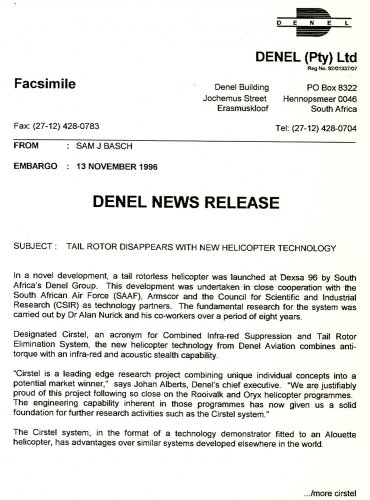
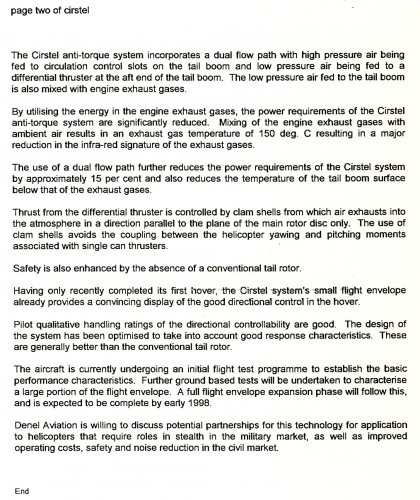
A small - but official Denel release when they unveiled CIRSTEL at the DEXSA '96 show, covering what they believed to be it's selling points and advantages.
 

Attachments

  • CIRSTEL-15.jpg
    CIRSTEL-15.jpg
    279.3 KB · Views: 138
  • CIRSTEL-16.jpg
    CIRSTEL-16.jpg
    348.7 KB · Views: 148
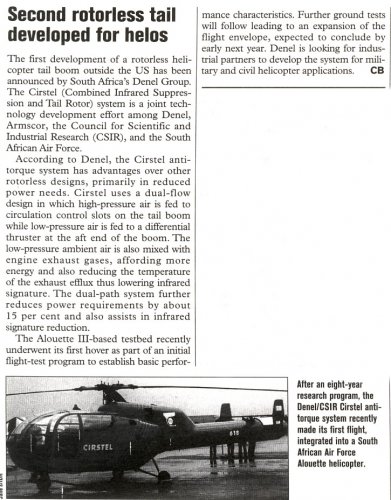
Article from Janes IDR covering CIRSTEL - Feb 1997
 

Attachments

  • Cirstel - IDR-02-1997.jpg
    Cirstel - IDR-02-1997.jpg
    205.3 KB · Views: 172
Graugrun is understating this technology's potential impact. This technology especially with capability to increase thrust out of the tail rotor for additional speed should define it as the BIGGEST discussion in helicopter technology. Why isn't in. Quiet, Stealthy jet choppers where are you?
 

Attachments

  • just add another turbine.jpg
    just add another turbine.jpg
    86.6 KB · Views: 138
  • opps no way to add a turbine.jpg
    opps no way to add a turbine.jpg
    37.3 KB · Views: 175
It will cool to add exaust air to NOTAR fan and we will have less heat around helicopter,that's will be cool for our ennemy infrared tracking
 
My guess is that CRISTEL was primarily developed to suppress IR exhaust.
Remember that South Africa had supported Rhodesia in its war against communist-backed freedom-fighters during the 1970s. The SAAF even supplied Alouette III helicopters and crews to support the Rhodesian Army.
During the 1980s and 1990s, South Africa backed Dr. Jonas Savimba's UNITA forces trying to prevent communist take-over of Angola. Russia and other communist nations might (?) have supplied heat-seeking missiles to communist freedom-fighters, similar to the way that the USA supplied Stinger missiles to UNITA and Afghan mujahaden.
The other factor is that the European communist bloc collapsed during the early 1990s, vastly reducing the number of arms given to communist freedom-fighters in Africa.
As the threat of communist invasion declined, South Africa reduced defense spending.
Finally, Nelson Mandela was elected President of South Africa in 1994, signalling the end of white rule. Again, defense spending dropped.

So CRISTEL may have been a valuable concept for fighting communist-backed freedom-fighters, but most of them quit during the 1990s as the the flow of arms from the Warsaw Pact ended.
 
It will cool to add exaust air to NOTAR fan and we will have less heat around helicopter,that's will be cool for our ennemy infrared tracking
A cooled exaust able to propel and balance horizontally has no current tecnological comparison therefore deserves more than a cursory look for helicopter, multi aspect stealth and flight efficiency.
 
Graugrun is understating this technology's potential impact. This technology especially with capability to increase thrust out of the tail rotor for additional speed should define it as the BIGGEST discussion in helicopter technology. Why isn't in. Quiet, Stealthy jet choppers where are you?
see above
 
There may be more (or less) to this concept than meets the eye. In the early nineties, SA/Denel still had good contacts with Aerospatiale and with Turbomeca. If this concept did provide marked advantages to helicopter propulsion, it would almost certainly have been picked up by Aerospatiale, I think. There were apparently flight trials. Maybe the trials did not conform to expectations and the whole thing died a quiet death?
 
There may be more (or less) to this concept than meets the eye. In the early nineties, SA/Denel still had good contacts with Aerospatiale and with Turbomeca. If this concept did provide marked advantages to helicopter propulsion, it would almost certainly have been picked up by Aerospatiale, I think. There were apparently flight trials. Maybe the trials did not conform to expectations and the whole thing died a quiet death?
This concept never took - off quite literally. It did not have the required control authority from the ducted air so did not get past attempted (emphisis on attempted) hover trials. Project funding must have dried up before further work to make it work could be completed.
 
Last edited:
Hmmmm... interesting. I wonder what that new helicopter design was? Obviously part of an Allouette replacement study?
Don't know if this is still relevant but I worked at Denel and knew various people on the Prototype Project.

Nols was an Aeronautical Engineer and the development was part of his advanced studies. My husband and his friend actually manufactured parts for the helicopter.

The major hurdle was not technical, there are always new developments that can make anything happen, the main hurdle at that point was the political will and a lack of funding into yet another project, the Rooivalk was already guzzling money into a an amazing invention, but the ROI was low and by the time I started in 96 theere had already been cutbacks that only intensified in the years to follow.

Cirssy, as we knew lovingly named her was never truely given up on and I remember conversations with many of the key players until the end of my involvement in 2006.

Another Prototype that we all loved but was a once off was the ACE a full composite trainer that had so much potential at a time when nobody even thought about this much cheaper and more responsive solution. Unfortunately she had a hard landing and was scrapped, along with her the opportunity to be the firts in groundbreaking design and innovation.

One thing you can never accuse the Engineering departments of the old Arms Manufacturing Companies in South Africa of was a lack of ingenuity and out of the box thinking.
 

Similar threads

Back
Top Bottom