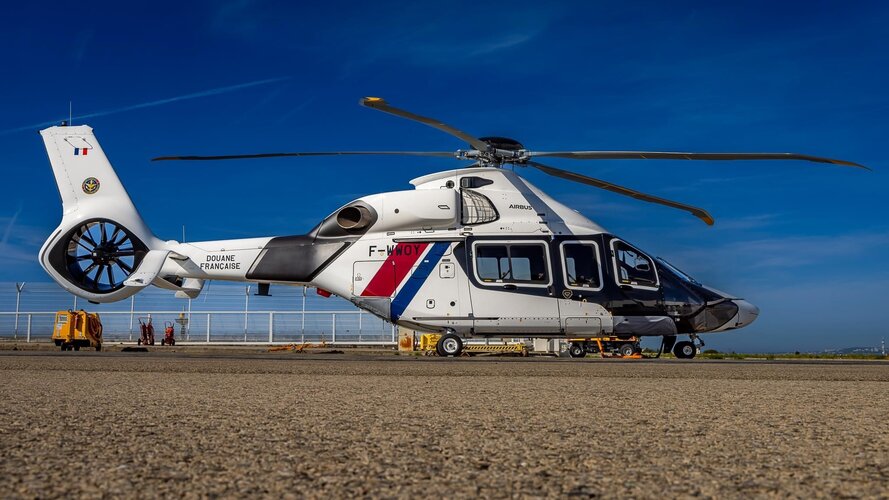
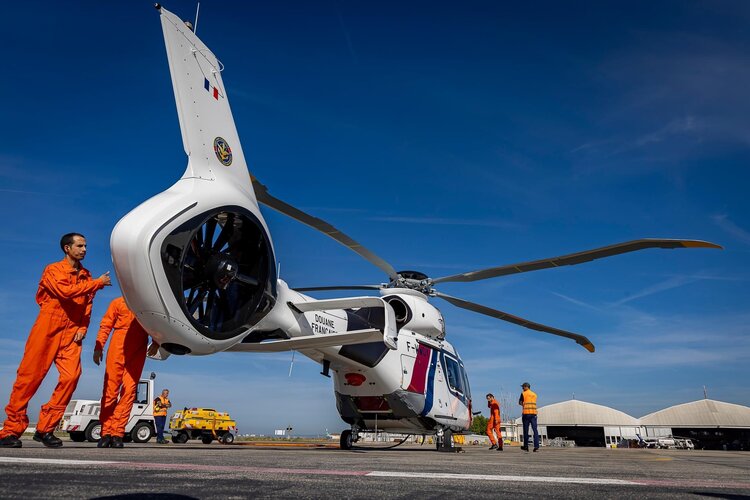
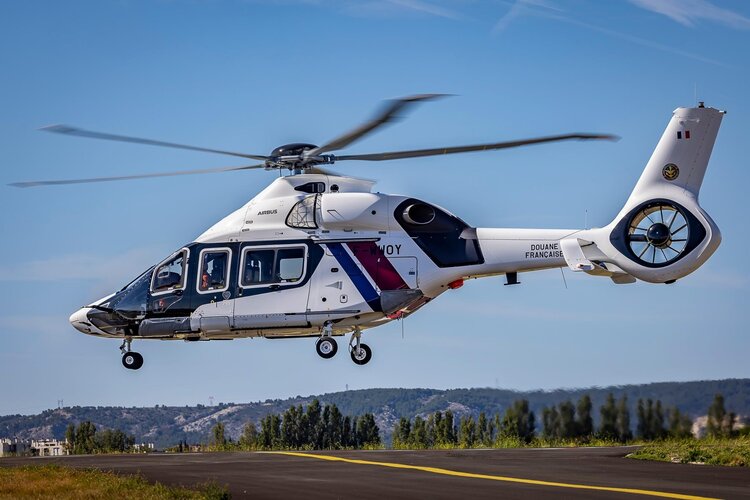
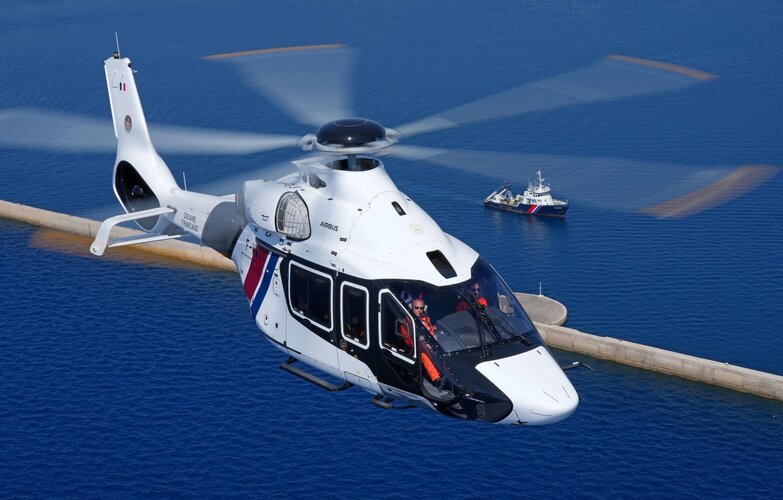
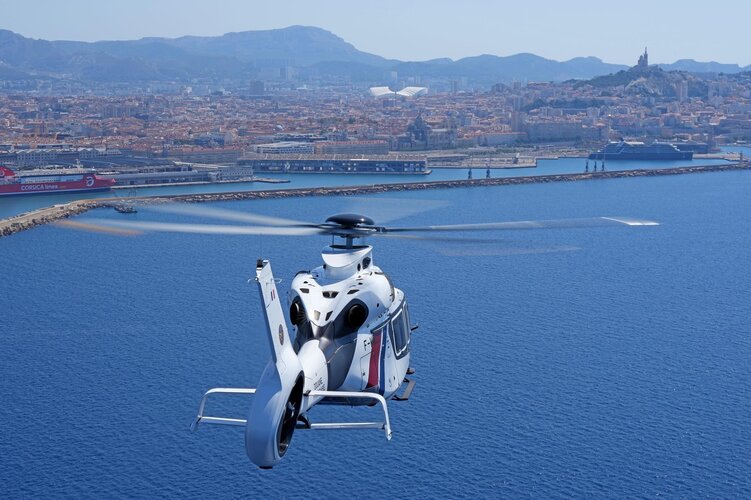
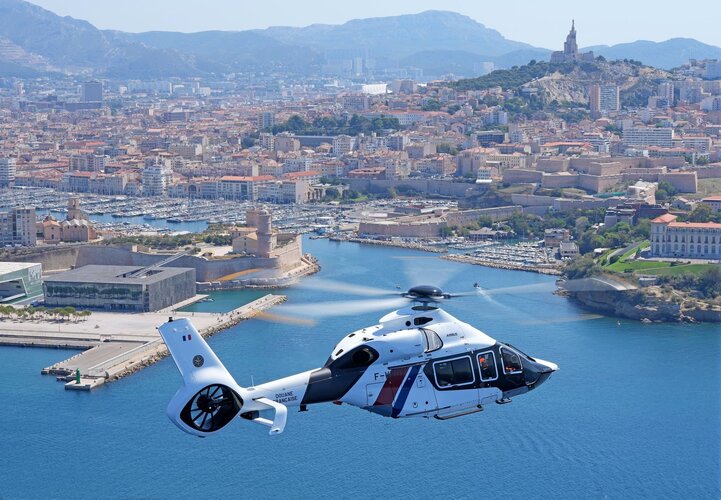
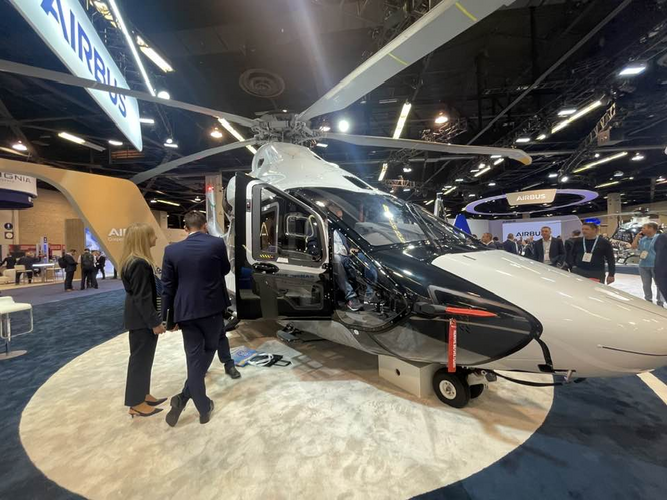
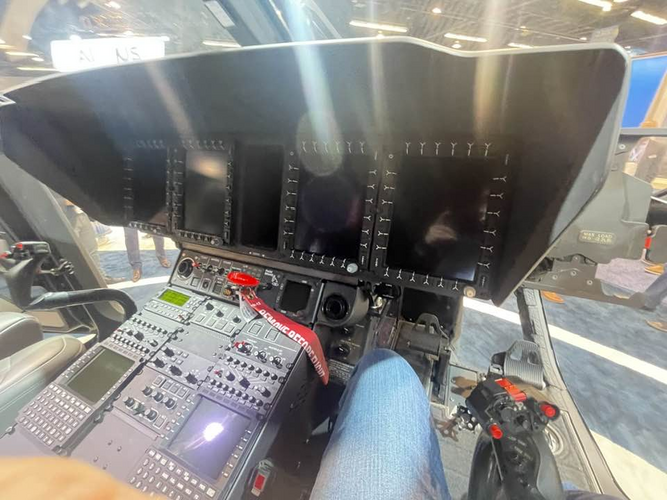
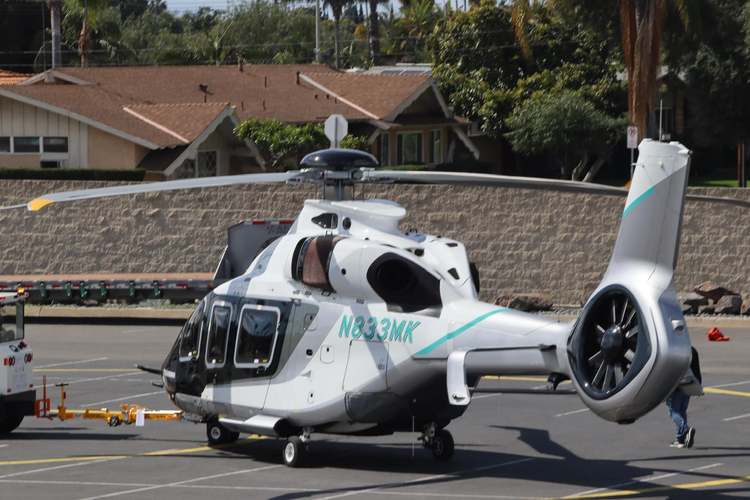
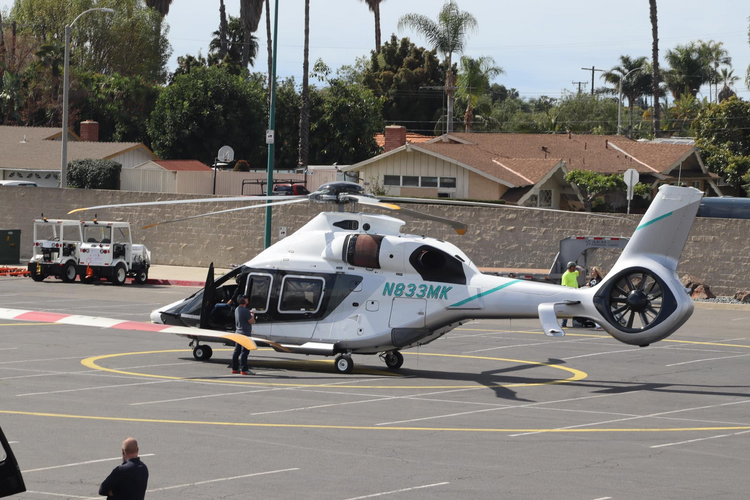
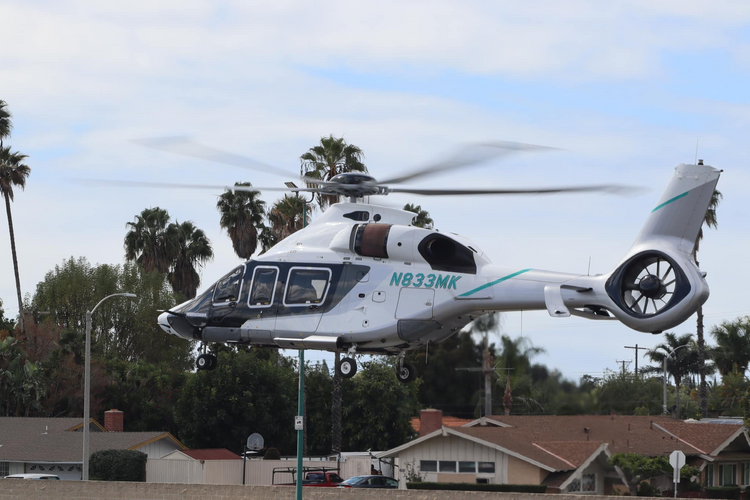
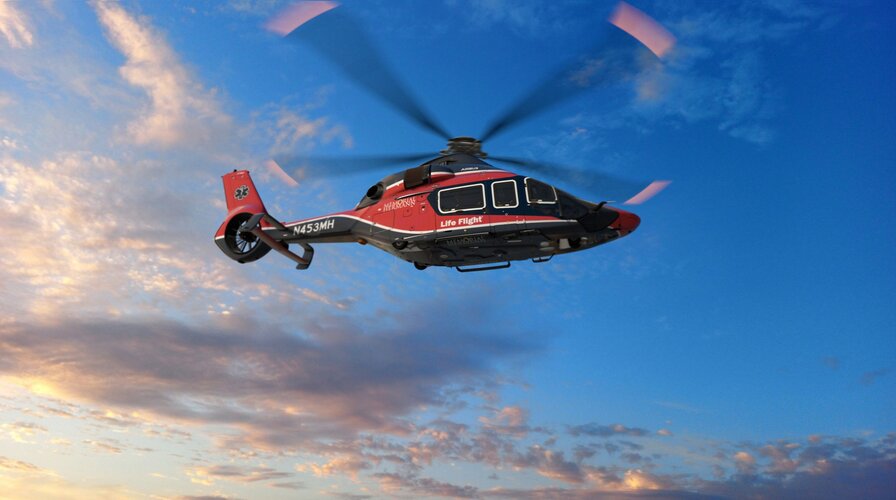
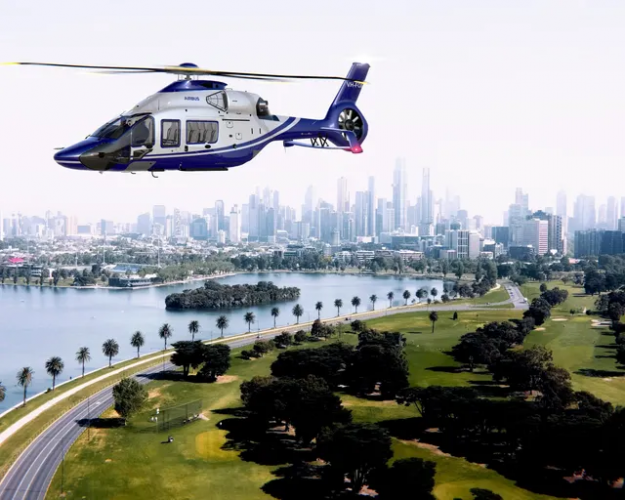
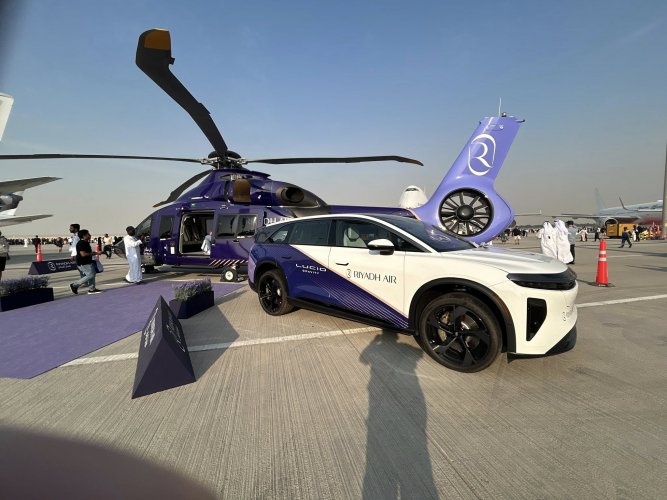
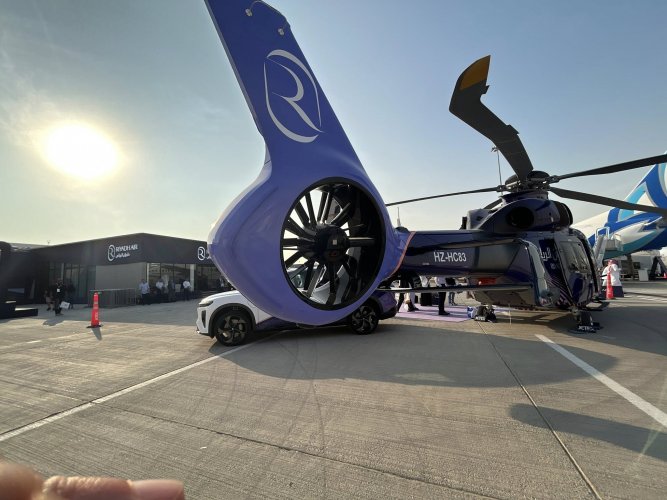
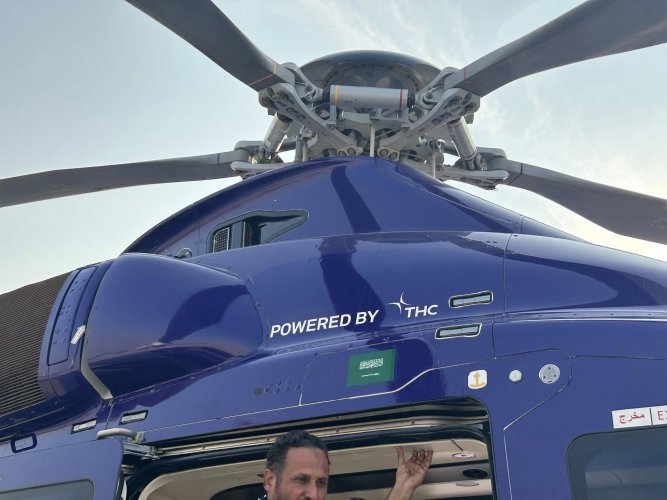
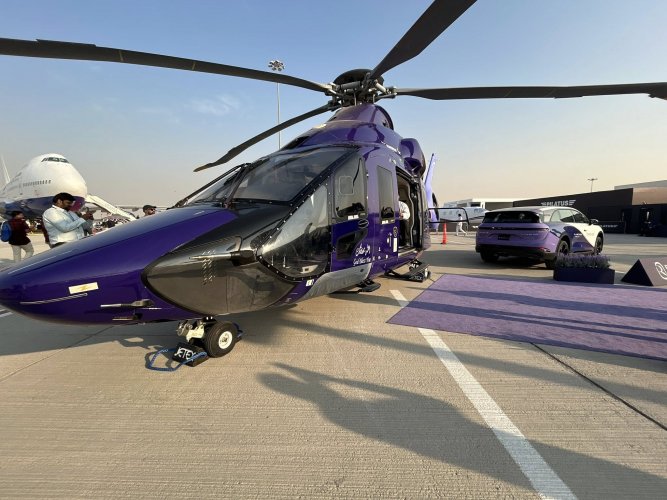
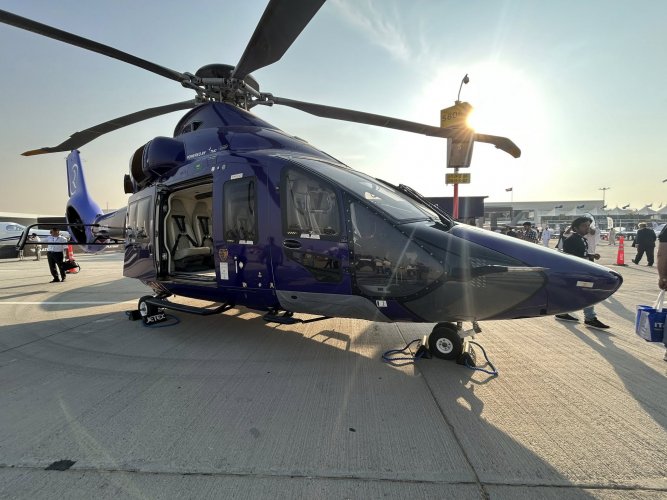
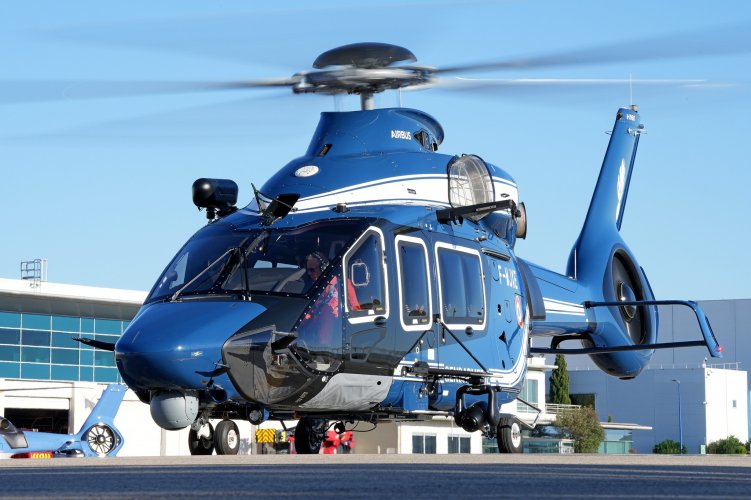
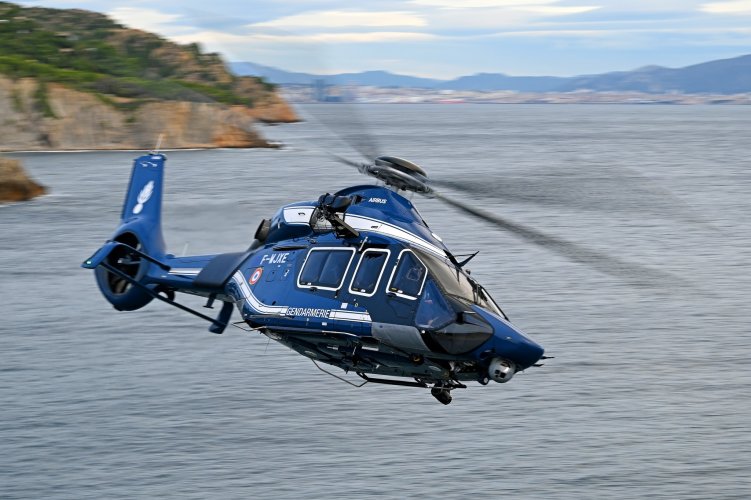
Airbus Helicopters H160 (formerly X4)


I am wondering laughingly if the original artists impression of what X4 be , may end up as X9 (replacement for H145) discussed on here
https://www.secretprojects.co.uk/threads/airbus-x9.41687/
https://interestingengineering.com/innovation/airbus-developing-h145-replacement
Going back to the lost Japanese Ground Self Defense Force UH-X competition, am sure a H160M would look great in their camouflage however speaking to one of my contacts at ILa Berlin 2018, he said the Airbus proposal to JGSDF was actually mystery designated X8....

cheers
 
Some more pics on Airbus website:

resize


resize


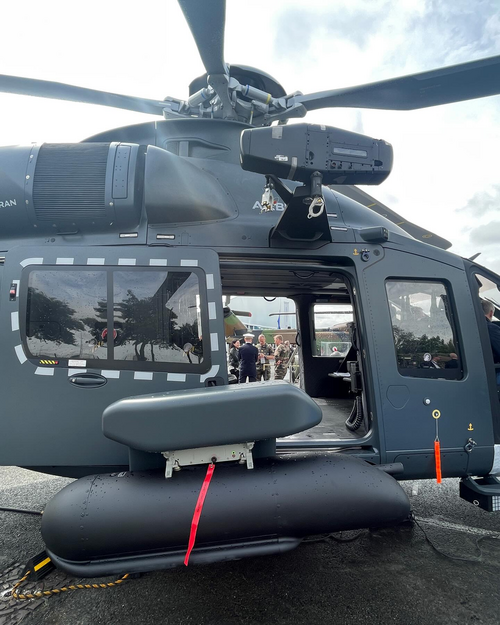
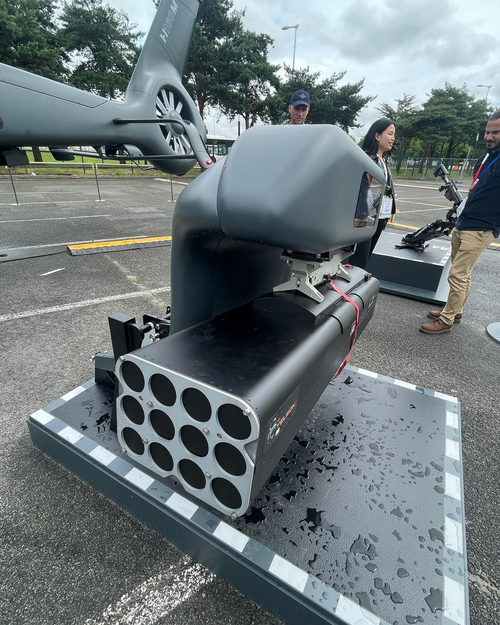
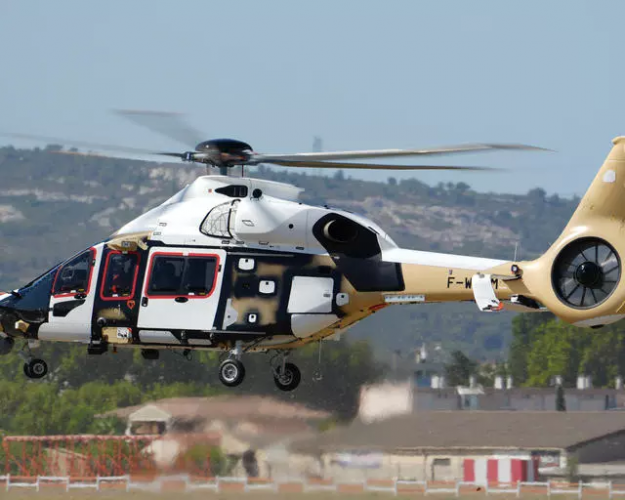
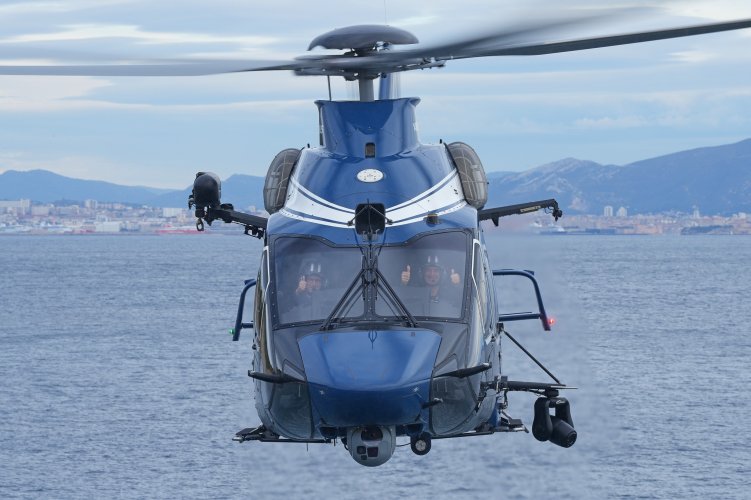
The pods and shape affixed to the landing gear are aero shapes added to the civilian H160 prototype for aerodynamic test and validation purpose.

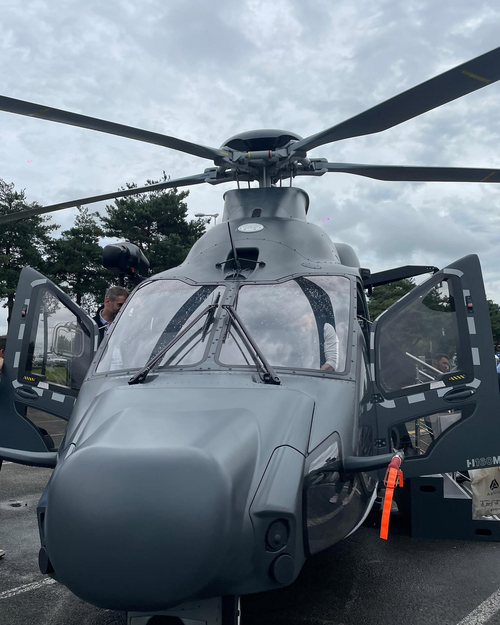
https://www.airbus.com/en/newsroom/stories/2024-07-the-h160m-takes-shape
Given that the design was already compromised in its efficiency by the design aspects (one major parameter was that it had to look good to buyer, I fear that the extra drag and inherent mass from the militarization process could leave its engines out of breath quickly...
 
Last edited:
Well they could do what the 160th SOAR (the ultimate developers of rotorcraft parasite drag) did. Shoe horn bigger engines into the engine bay and push the main module to its never exceed limit.
 
A 20mm canon with a rocket pod... Just like in the Gazelle... And the Alouette... The pilot will surely apreciate also the availability of the not so-sure 7.62 with the utmost feeling of marchinng toward ennemy lines with brave allure like the WWI dismounted cavalry.

Does he have to bring his own saber?
I'll bet you a bottle of your choice that every French helo pilot owns a saber and has figured out a place to carry it in the aircraft.


I was hoping that the helo would go under the bridges/signage... See how low you can get before leaving some aluminum behind on the track...


And that nose... What the heck are that extra useless 2m of designer wet dream?
Electronics, weather radar, the usual stuff found in the schnoz of a Dauphin.


Aren't those screw and washers surfacing (and exposed) from the fenestron hub cache scary enough for someone to do something soon enough?!

A close-up of one the picture above:
View attachment 674224
Depends on whether that is a rotating or fixed panel. Plus, I'm willing to bet that those are captive fasteners.


One presumes that they were channeling a certain Scottish engineer from classic Sci-Fi there....
Or their neighboring NASCAR race mechanics...
 
@Scott Kenny : since you like to bet, those washer and oversized screw are the sign of a defective part that was forced fit into place (see also the bulging around the mouthing holes). Those fasteners are certainly not the original ones. That was the object of my comment. You could have searched pictures of the H160 today and see how the design of this part has been altered.

I guess I somewhat won the bet? :rolleyes:
 
https://www.forcesoperations.com/ai...thon-capacitaire-pour-le-ministre-des-armees/
When deliveries to the french armed forces begin around 2028, the production line should deliver 20 H160M + 40 H160 a year.

Its funding must therefore guarantee the purchase or delivery of nearly 150 new aircraft before the end of the decade, explained Sébastien Lecornu.

Roughly speaking, that means 60 Guépard, 20 Caïman delivered to the Army, 8 Caracal delivered to the Air and Space Force, but also 42 upgraded Tigre and 14 upgraded NH90s, the minister’s office listed.

Example with the Guépard, this militarized version of the H160 that took off in July and will be delivered in 169 units to the three branches of the French armed forces. A military launch customer that will benefit from an assembly line already proven by the successes achieved with civilian operators.

For now, this line produces 20 units per year, but the goal is to fill the remaining capacity and expand production to triple the rate within two years. In the long run, this automated line will be able to roll out up to 20 Guépard or H160M helicopters each year, both for France and for future foreign customers.
 
Last edited:
https://www.flightglobal.com/aerosp...outs-growing-customer-interest/164931.article
3x H160M prototypes for the french armed forces:

1st prototype :
  • has already achieved its maximum speed, and delivered “outstanding” results.
  • Flight-testing will continue until late-January 2026 to further assessments of :
    • aerodynamics
    • vibration
    • thermal behaviour
    • navigation equipment.
  • Work will resume later next year to focus on mission systems testing and sensor integration.
2nd prototype :
  • is currently in assembly, will fly in the coming months
  • flight-loads testing and future hot and cold weather test campaigns.
3rd prototype :
  • French navy version of the Guepard
  • will feature a :
    • strengthened fuselage
    • strengthened landing gear
    • deck-harpoon
    • provisions to accommodate a maritime search radar.
  • First flight is due in 2027.

Production deliveries are scheduled to start in 2028 for the army, 2030 for the air force, and in 2032 for the navy.
 
https://verticalmag.com/news/airbus...y-line-with-production-target-of-60-per-year/
The company is targeting 40 civil deliveries per year, and 20 military — all from the same line. And to accommodate this, it is planning to extend the facility beyond its existing walls
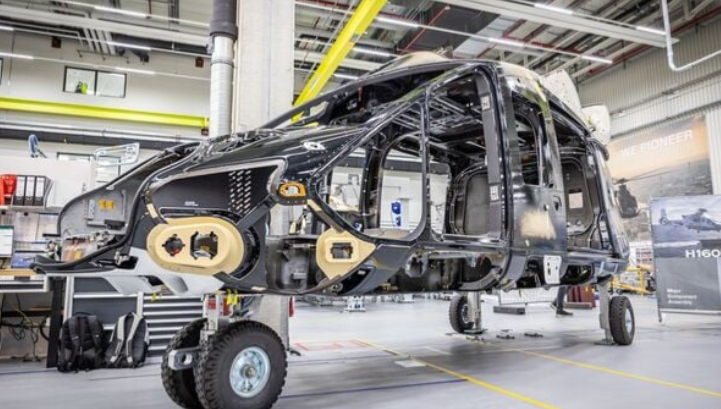
Militarization of the Guepards on the final assembly line will start at the very beginning of the process, as the Army requires the type’s airframe to cope with 25 percent more load than a civilian aircraft — and the Navy requires 20 percent more load than the Army. So the basic aircraft needs reinforcement to cope with this.


Also a lot of info on the military version here -->
https://verticalmag.com/news/program-head-details-h160m-guepard-prototype-test-progress/
 
Last edited:
Firefighting, not medevac?
Yes Firefighting
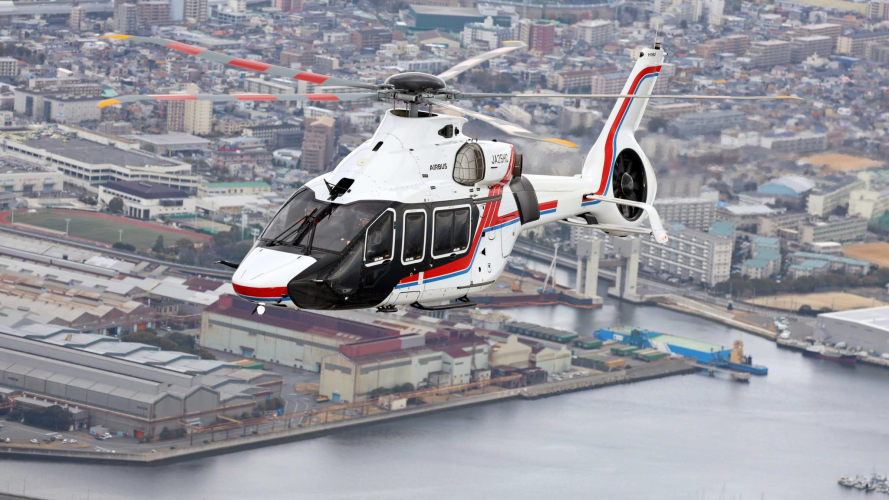
Hiroshima City Fire Services Bureau of Japan has taken delivery of its first Airbus H160, becoming the world’s first firefighting operator of the type.

The helicopter will enter into service in early 2026, and will be deployed for a wide range of public service missions including aerial firefighting, search and rescue, emergency medical missions, and disaster response operations such as reconnaissance of affected areas.

The H160 will be installed with a firefighting bucket, enhancing its capability to support ground crew in wildfire suppression efforts.


Also Nagoya City Fire Bureau ordered a H160 for the same purposes in July 2025
https://www.airbus.com/en/newsroom/...ns-nagoya-city-fire-bureau-orders-airbus-h160
The new H160 will be configured for search and rescue, and aerial firefighting missions, and can be installed with either a firefighting bucket or a belly-mounted water tank, enhancing its capability to support ground crew in wildfire suppression.
 
Very nice looking bird. A worthy successor to Dauphin. Although I must admit that every time I see a picture with the rotors not in motion my first reaction is to think that something is "wonky" with the camera lens.

Wonky - an American technical term for something being slightly "out of wack"
Out of Wack - an American technical term for something being slightly "wonky"
 
And landing you walk away from ... or swim from, is a good landing.

Kudo's to the crew who appear to have made a perfect emergency water landing.
 
https://verticalmag.com/news/pilots-felt-significant-vibrations-before-omni-h160-ditching/
Airbus Helicopters has released an Emergency Alert Service Bulletin (EASB) mandating the replacement of main rotor pitch rod ends after 165 hours in all H160s, following reports of “significant vibrations” in one of the manufacturer’s new mediums that forced it to ditch off the coast of Brazil Jan. 2.

...

The investigation into the ditching is being led by the Brazilian investigation board (CENIPA), assisted by the French investigation board (BEA).

“After recovery of the aircraft, damage was observed on the tail rotor drive line and on the main rotor, including rupture of a main rotor pitch rod,” said Airbus, in a statement announcing the release of the EASB.

It said the replacement of the main rotor pitch ends was “a precautionary measure.

“Our primary objective is to ensure the continued safe transportation of every person that flies in an Airbus helicopter,” the company said. This is why we are mandating the replacement of this component while the root cause of the fracture remains under investigation.”
 
It is noteworthy that with 50 airframe delivered that have achieved 15k flight hours to date and a mandatory replacement after only 165 FH, the probability of this problem being known prior to this incident is high.
I didn't think of that ! :eek:
So Airbus waited for an accident to inevitably occur before being forced to publish this AD anyway … really goes to show how little Airbus can be trusted.
I was being way to naive thinking this could be a first occurrence, especially since several French Navy aircraft have already exceeded 900 hours without any issues... but maybe the French Navy was in on it ?
 
I didn't think of that ! :eek:
So Airbus waited for an accident to inevitably occur before being forced to publish this AD anyway … really goes to show how little Airbus can be trusted.
I was being way to naive thinking this could be a first occurrence, especially since several French Navy aircraft have already exceeded 900 hours without any issues... but maybe the French Navy was in on it ?
Its' not an issue until it is. Then again it is a relatively new helicopter and things unanticipated do occur. But as stated in this case unfortunately fore knowledge does seem possible.
Having just read the article it reminds me that Airbus has received a black eye regarding rotorheads in the offshore market before this most recent event. The replacement directive may be an immediate response to reduce risk. Sometime a bad piece of equipment gets past the inspectors.
 
Last edited:

Similar threads

Back
Top Bottom