That is bad news about the possibility of it being bad fuel Moose, pus the fact that it suffered a suspected engine problem, that could explain what we saw in the moments leading up to the crash the sudden loss of altitude.
Was it a double failure? The 787 can fly on one engine, but takeoff, especially with the fuel for an international flight all the way to the UK would definitely be heavy.
What I was thinking. I can't think of a scenario where that would happen. The only cases of simultaneous dual engine failures (of which I am aware) are bird strikes, but that does not seem to be the case as seen in the videos.
Flaps not being lowered (at the moment) seems as the most concrete explanation to me. We know that the aircraft last reported a speed of 332km/h before stalling, which is close to the 787 stall speed without flaps. Now this also seems kind of unlikely because all sorts of alarms would have been going off if they simply did not lower the flaps, we've been through this, and we learned from it. At least I hope we did.
EDIT: Apparently the flaps were retracted at the time of the crash. When they were retracted is unknown.
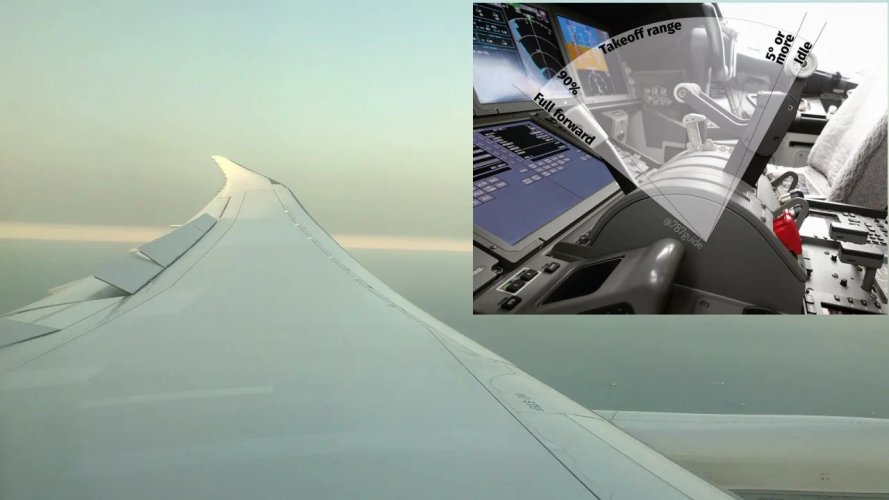
Here is a video by VASAvation that is pretty informative. Basically, and maybe this is just the video, but it looks like the air brakes deployed. Also, and again we will have to wait for a better confirmation, but it sounded like the Ram Air Turbine engaged on takeoff.
Eurofighter prototype DA6 crashed due to a spontaneous shutdown of both engines in 2002. ISTR it was a software configuration issue, but I can't recall the details.
After reviewing the video I am wondering if it simply wasn't that the flaps were raised inadvertently instead of the landing gear upon establishing a positive rate of climb. That sudden loss of lift could have been interpreted as a loss of power. The excessive drag of accidentally leaving the gear down placed the aircraft on the backside of the power curve creating a problem where extra power was needed. Believing they had an engine failure and concerns over asymmetric thrust the power was not increased, as some said that they did not hear any power changes.
Some have interpreted the gear being left down was to cushion the impact if the aircraft re-contacted the ground with a loss of lift on takeoff due to shear winds or if an off field landing were made. However, without any more available runway and the sprawling city that lay ahead raising the gear should have been a priority to reduce drag.
It will be interesting to see what the recorders show lead to the accident.
Unbelievable disaster. I thought out of 240, perhaps 10-30 might survive this kind of crach. Condolence for the victims.️
Unfortunately there were multi-level buildings in the way.
A decade back, i flew the 737 public simulators. For that i had to study the cockpit controls for few weeks. Regular public wouldn't care about it.
Numerous analysis vids are coming in, I watched many videos by professionals globally, civil & AF, active & retired. But very few explained some important cockpit contols & sub-systems.
Many airlines use cockpit camera. If Air India used it & if it survived the fire then it can give huge input.
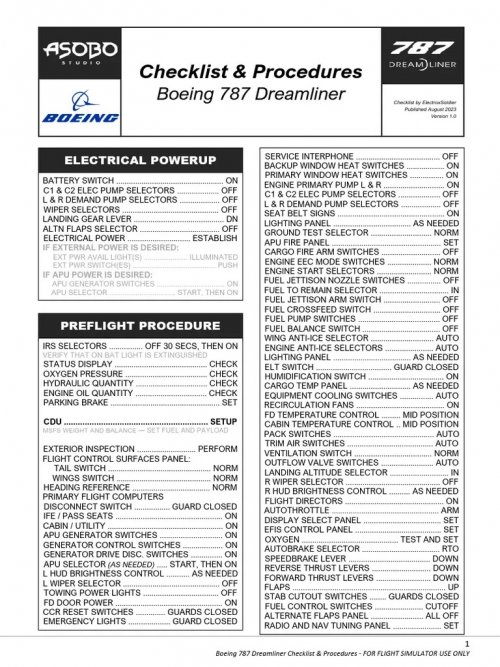
Pre-flight checklist includes everything we can imagine. It has become digital.
"Cold & dark start" videos of both sims & real jet are there on YouTube.
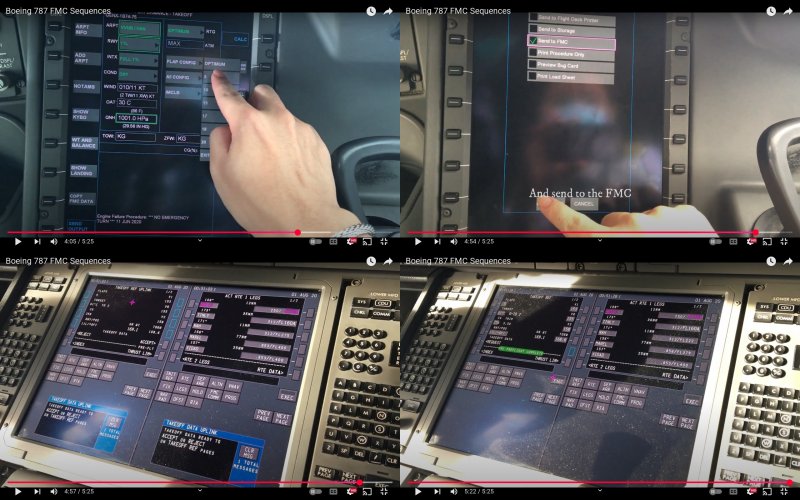
The pilot has to program the FMC (Fight Management Computer) before each flight about -
- source, route & destination
- weight carried / MTOW
- V1, V2, Vr
- weather conditions
- flight limits of RPM, speed, altitude, EGT (Exhaust Gas temp.), etc at take-off, flight.
OPTIMUM/AUTO options are avaiable for each parameterbut although highly unlikely but THEORETICALLY, if pilot sets inacurate limits then it can be disastrous.
This might be a hypothetical example if full throttle is opened then EGT goes high, but EGT limit is lower then it might reduce thrust & lift. so FMC programming needs to be done carefully.
Landing gears were down, so the pilots started facing problems immediately after takeoff.
Bird strike would cause engine flame, shattering, not visible in both videos.
Airports have many security guards & perimeter cameras which can give clue into 2engine bird strike.
I wonder if it could be overloading issue. I think Air India allows more luggage per person. But there is flight plan entry in FMC about weight to be carried + atmosphere conditions, etc to set the take off thrust & flaps setting required. If Air India allowed more luggage but THEORETICALLY wrong data to pilot was passed for FMC entry then it can be a coordination failure.
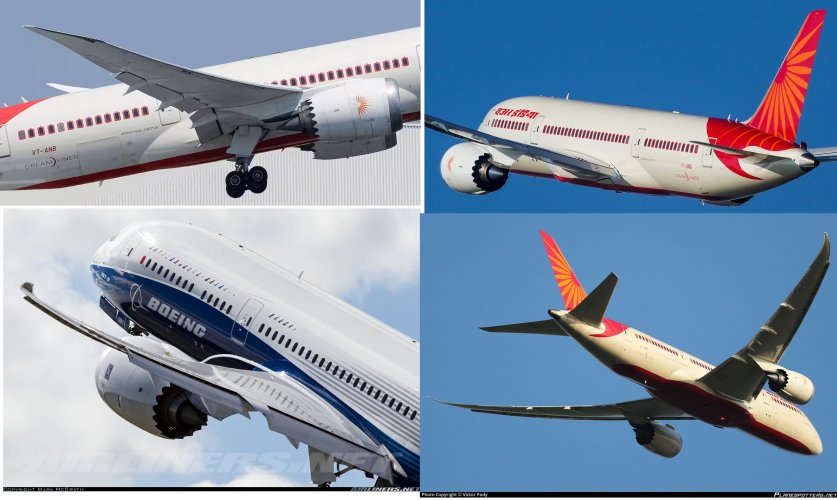
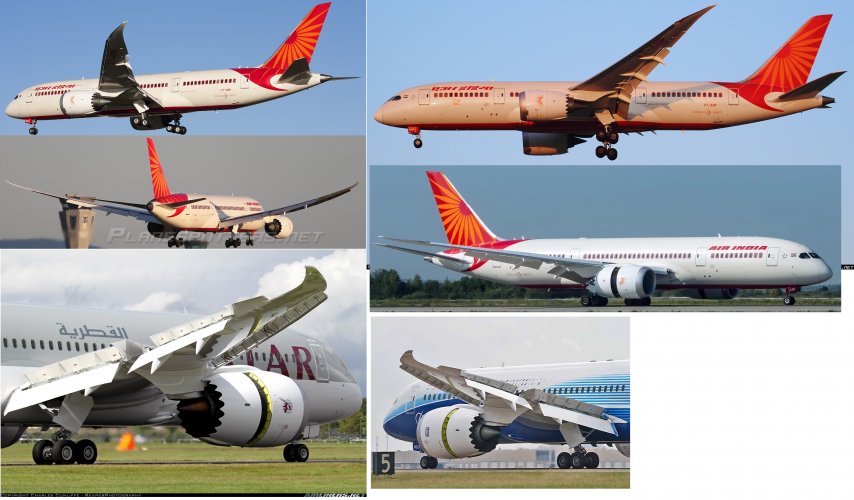
If we see the runway take off clip from left side, the flaps are down.
If we see the other video from right side, the flaps might still be down, but due to poor quality video & flexible shape of 787 wing it appears narrow.
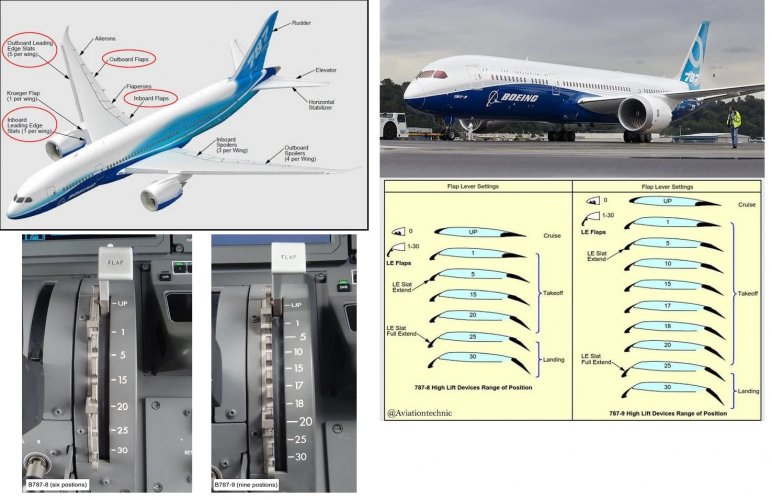
The 787 & all airliners cockpit have manual flap lever, that too put into metal notches, need to lift the lever & reposition into another notch up/down, unlike fighter jets.
So AFAIK here the FCS won't retract the flaps, especially at low speeds.
Moreover it is in the S/w to sound alarm if flaps not set properly at low speeds, stall detection, etc.
If the pilots accidentally retracted them then immediate alarm woud sound & they can correct the lever position & gain altitude.
Leading edge slats are also auto-deployed at low speeds.
Slat & flaps deployed at takeoff :
All spoilers up & flaps, slats down while landing :
Technically, if the speed-brake/spoiler is operated wrong then it can kill lift, but it has its settings for ground, takeoff, flight & is tied to FMC/FCS.
After it starts decending, It rolls slightly to right then left then centers.
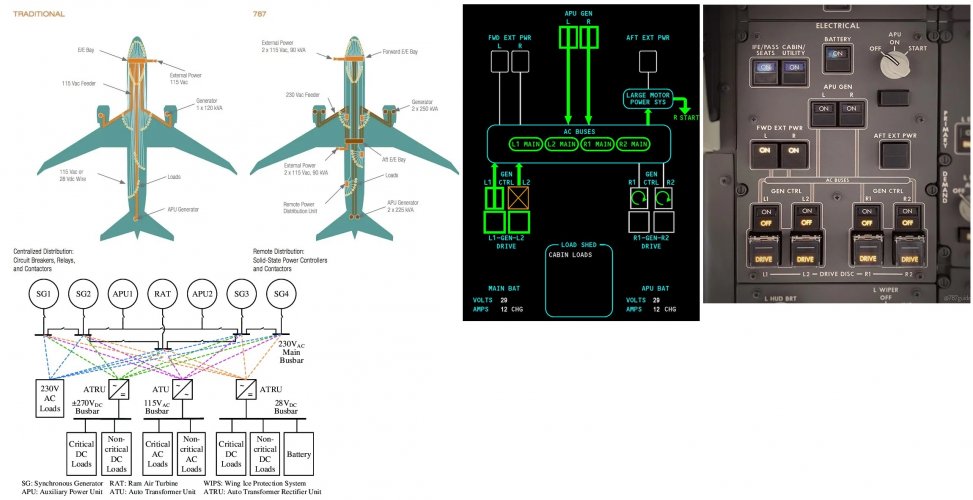
So electrical & hydraullic power to operate was there, which are redundant.
Li-ion battery problem was fixed. It is for initial system start & said to last 15 mins fully charged.
The APU is started & has 2x generators.
Engines have their own 2x generators. Then APU is shut down. 1x surviving engine can make the plane take off, fly around & do emergency landing.
The lone survivor said that after few seconds of takeoff electricity went out for few seconds & some say RAT was deployed. This way if engines lost power & with RAT they were restarted then there wasn't enough time to regain altitude.
But -
- The cockpit overhead panel has separate switches & knobs for cabin utility & HVAC, even for cargo compartment. - when diagram shows eletrical redundancies from 4 generators then how can both engines loose electricity?
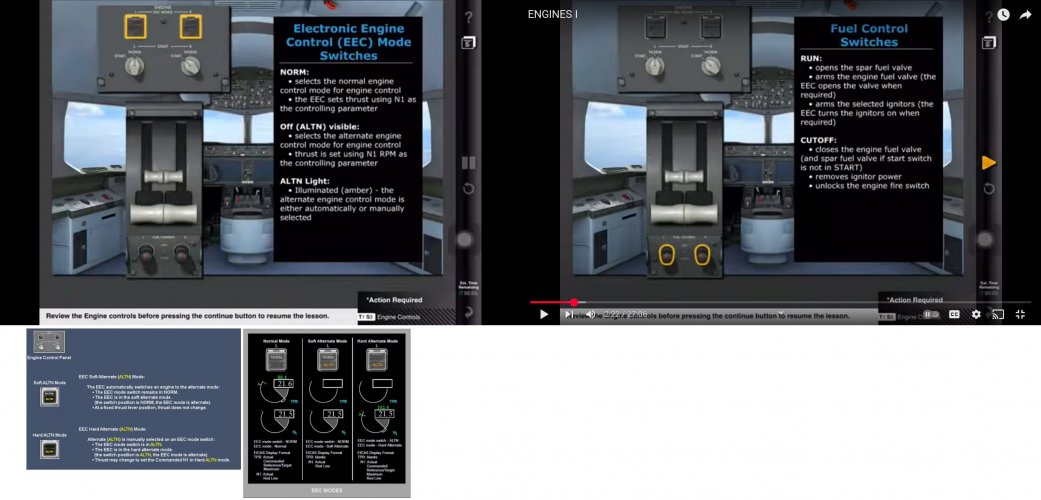
There is Electronic Engine Control or EEC also, After achieving sufficient N2 rotation, the EEC Is powered by its associated PMA, (Permanent Magnet Alternator).
It continiously monitors throttle, provides protection against flame-out during ecess rain, hail.
It monitors N1, N2, N3 spool speeds also & if RPM limit crossed then fuel flow would be reduced to lower the RPMs. The EEC shuts down the engine only if RPM limiting fails & overspeed condition occurs. If fuel-switch is accidentally shut off then EEC can electronically turn it & ignitors on.
There is TAP (Thrust Asymmetry Protection).
On ground it'll shut down engine if above idle speed and not decelerating normally. During take-off if 1 engine fails then TAP reduces thrust on surviving engine to safeguard rudder/yaw control.
TAP is only available when flight controls are in normal mode.
The Airborne Vibration And Monitoring System tracks engine vibration levels (Rotor Imbalance), which is displayed on the secondary engine display, including the source. i.e., N1, N2 or N3.
Poor quality fuel? The petroleum companies need to follow ISO & other standards, quality inspections. This violation would affect multiple jets & would be a huge scam.
Some say maintenance issues, clogged fuel lines/pumps/valves/filter, etc. But everything is redundant -
- fuel pumps (LP, HP),
- filters (LP, HP),
- igniters,
- combustion chambers are annular,
- fuel lines are redundantly cross fed too. AFAIK, IMO 1 or 2 pumps only could have clogging but will be taken care of by redundancy.
Last but not least, if the air data sensors are clogged then it can be big problem. Although there are multiple of them for redundancy but accidents due to them have happened.
As Michel Van has said, it does not seem like the flaps were not deployed. First image is from the CCTV footage, second is a conventional 787 on takeoff. Notice how the wing appears perfectly thin with all flaps retracted on the CCTV? Once again, only speculation, for the flaps may seem to be retracted on video due to poor quality or sun reflection. View attachment 773662View attachment 773663
On the mishap flight, the Landing Gear Bogies are trimmed nose down when they should be nose up. Also no main landing gear door auto opening. The bogie trim actuator simply responds to hydraulic pressure being available at the actuator. All this means there was no hydraulic pressure at the Landing Gear pretty much as it was alighting. Naturally the RAT may be deployed in the event of that kind of system loss (note the RAT won’t provide hydraulic pressure for the Landing Gear, but the bogie trim indicates a hydraulic system failure). I wonder what could cause that?
Loss of hydro pressure could also retract the flaps when the speed induces enough drag. That would explain the flaps retracting post takeoff while the gear stayed down with the boggies canted down as observed by @Zoo Tycoon .
High temperatures might be at play if the hydraulic fluid was not properly drained of condensation water, with steam or emulsions altering the property of the fluid.
This would also explain the reported RAT popping out (aux elect fuel pumps).
If the a/c was on auto throttle, the crew might have lagged dealing with the situation, especially if some noise abatement procedure were at play soon after takeoff.
Edit:
It came to me later on that this would also explain why the spoilers were seen deployed while the airplane gained some incidence: they were free floating.
Investigators have announced they are focussing on flaps, the engine, landing gear, and airline faults such as maintenance as possible causes. They think bird strike is unlikely. They have ordered Air India to perform a one off inspection of the take-off parameters on all GEnx powered Dreamliners by the 15th and that all engines power output should be verified within two weeks. They are considering possibly grounding General Electric powered Dreamliner's (though I imagine that would only be if they found an issue in the mandated inspections).
That is bad news Michel Van a potential double engine flame out? No doubt the truth of what caused the crash will come out when the investigators examine the recovered black box.
But how would both engines stop together?
We need to connect all other points too.
The perimeter secuirty guards & CCTV must have been checked for birds.
Bird strike would cause shattering, flame-out, spark, smoe, etc which we dont see.
Apart from rare dual engine bird stike what can be cause of both engines shut down?
The engine is controlled by EEC (Electronic Engine Control) unit, in turn commanded by FMC (Flight Management Computer).
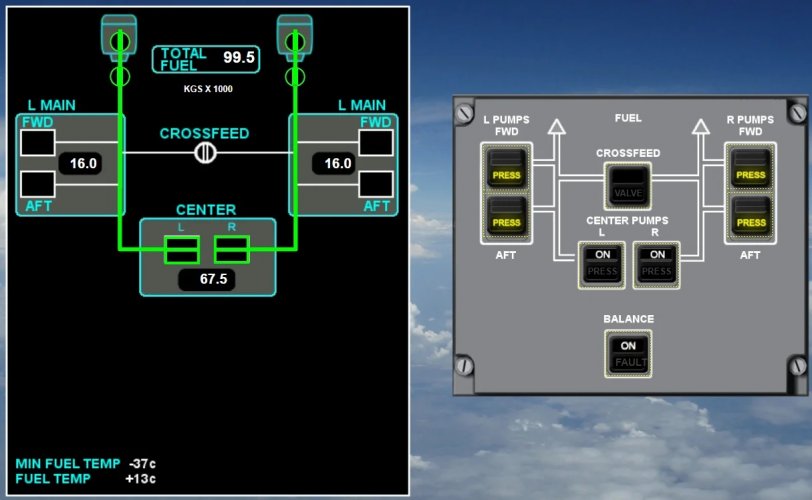
Supplying electricity to engine means to its EEC (Electronic Engine Control). The jet engine is a mechanical combustion engine, it doesn't need electricity to turn the spools but air & fuel.
This means for dual engine fail, the concurrent FMC would have a fault. Its H/w would be redundant FCS but S/w glitch can be problem which have been there in history of civil & military aviation.
A historical example of dual engine shutdown:
The ANA 787 incident happened in 2019 & if we deep-dive into the cause then it is complicated.
Boeing clarified that the engines can shutdown as thrust reverser were activated too quickly before ground condition achieved which activated the TCMA or Thrust Control Malfunction Accommodation system which guards against inadvertent asymmetrical high thrust situations. The TCMA would notice high thrust at idle or low speeds on ground w/o decceleration, so engine would be shutdown to reduce speed.
It is like FADEC logic suspects intentional suicidal kind of attempt by pilot & tries to prevent it w/o checking that the high thrust is for reverser, not forward thrust. Now that's obviously programming glitch.
But this is takeoff situation. So i can think of an ECC glitch, any other system glitch?
I already spoke of bad FMC programming with lower limits, but an intelligent FCS should be aware of flight mode/phase & required conditions/paramaters & avoid a potential crash.
Professional pilots should never over-react based on bad quality video, in this case initially a video of video.
And most Indian media is irresponsile to play the "video of video" to increase viewership of their channels & tons of global speculation.
But these days even pilots want popularity & make a video on the smallest scoop.
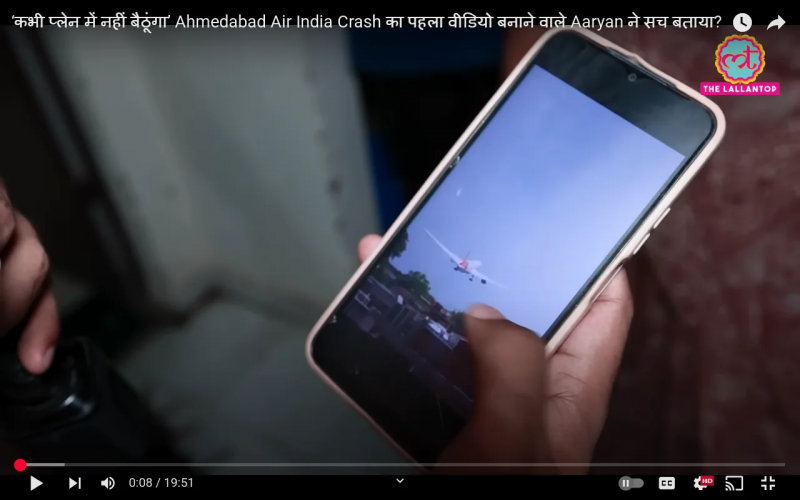
A few local channels found the 17yo boy wh made 1st video, they went to his house, showed the terrace, his video on cellphone, the file properties which show it to be 1920x1080p FHD file, 25 seconds clip, 49.1 MB file.
I couldn't find the original file.
Here is that local channel's video with screenshots:
When professional S/w will enhance the frames then it'll be more clear.
The flaps seem to be deployed in take-off position.
RAT seems deployed too. The engine sound seems to be far lower than at takeoff & climb phase.
But how would both engines stop together?
We need to connect all other points too.
The perimeter secuirty guards & CCTV must have been checked for birds.
Bird strike would cause shattering, flame-out, spark, smoe, etc which we dont see.
Apart from rare dual engine bird stike what can be cause of both engines shut down?
The engine is controlled by EEC (Electronic Engine Control) unit, in turn commanded by FMC (Flight Management Computer).
Supplying electricity to engine means to its EEC (Electronic Engine Control). The jet engine is a mechanical combustion engine, it doesn't need electricity to turn the spools but air & fuel.
This means for dual engine fail, the concurrent FMC would have a fault. Its H/w would be redundant FCS but S/w glitch can be problem which have been there in history of civil & military aviation.
A historical example of dual engine shutdown:
The ANA 787 incident happened in 2019 & if we deep-dive into the cause then it is complicated.
Boeing clarified that the engines can shutdown as thrust reverser were activated too quickly before ground condition achieved which activated the TCMA or Thrust Control Malfunction Accommodation system which guards against inadvertent asymmetrical high thrust situations. The TCMA would notice high thrust at idle or low speeds on ground w/o decceleration, so engine would be shutdown to reduce speed.
It is like FADEC logic suspects intentional suicidal kind of attempt by pilot & tries to prevent it w/o checking that the high thrust is for reverser, not forward thrust. Now that's obviously programming glitch.
But this is takeoff situation. So i can think of an ECC glitch, any other system glitch?
I already spoke of bad FMC programming with lower limits, but an intelligent FCS should be aware of flight mode/phase & required conditions/paramaters & avoid a potential crash.
Can you stop with the multiple colours? It makes your posts look like an early '90s website before we realised being able to read things was more important than their being colourful.
You can't presume that something that happened in 2019 is still valid, software upgrades happen frequently, even daily - been there, done that.
I actually wrote the weight-on-wheels code for the 757RT prototype for the 777 FCS, it really doesn't take that long to ascertain weight-on-wheels, and therefore aircraft on ground. There's a transitory condition where you have to protect against bounce, but the thrust reversers should not be able to be deployed until the weight-on-wheels discrete is true. That they were was a cock-up on Boeing's part (also the FADEC manufacturer, but Boeing should have caught it in safety analysis).
No, the FADEC does not suspect pilot intentions of suicide. Boeing's flight control philosophy is to always let the pilot override the aircraft on the assumption he knows best. Any limits in the FMC or FCS are set by Boeing, limits in the FADEC will be down to the engine manufacturer, but obviously the cockpit to FADEC interface is a joint responsibility.
Flight Control Computers aren't 'intelligent', they're a software implementation of a complex mathematical formula. If something hasn't been predicted, they don't have any ability to improvise, their job is to keep the aircraft stable to the best of their ability while responding to pilot inputs.
Can you stop with the multiple colours? It makes your posts look like an early '90s website before we realised being able to read things was more important than their being colourful.
LOL!
It is for quick reading to save time.
Red is something critical or -ve. Blue/Green for something +ve/factual. Yellow for something to think over.
otherise it appears like black & white novel.
But i'll try to reduce the coloring.
BTW, TV news channels also use multi-color running header/footer banners.
You can't presume that something that happened in 2019 is still valid, software upgrades happen frequently, even daily - been there, done that.
I actually wrote the weight-on-wheels code for the 757RT prototype for the 777 FCS, it really doesn't take that long to ascertain weight-on-wheels, and therefore aircraft on ground. There's a transitory condition where you have to protect against bounce, but the thrust reversers should not be able to be deployed until the weight-on-wheels discrete is true. That they were was a cock-up on Boeing's part (also the FADEC manufacturer, but Boeing should have caught it in safety analysis).
No, the FADEC does not suspect pilot intentions of suicide. Boeing's flight control philosophy is to always let the pilot override the aircraft on the assumption he knows best. Any limits in the FMC or FCS are set by Boeing, limits in the FADEC will be down to the engine manufacturer, but obviously the cockpit to FADEC interface is a joint responsibility.
Flight Control Computers aren't 'intelligent', they're a software implementation of a complex mathematical formula. If something hasn't been predicted, they don't have any ability to improvise, their job is to keep the aircraft stable to the best of their ability while responding to pilot inputs.
I'm pleased to meet another IT engineer.
I didn't expect to come across an actual aviation coder like you.
Yes, something in 2019 may not apply today but the example is just for analogy bcoz perfect state of S/w is never reached, that's why there are update patches, means glitches & scope of improvement will always be there. And that also means S/w is as good as their programmers. Every team won't be equally good.
So in case of ANA 787 why both engines shutdown?
In case of AI171, what do you think might have happened?
By intelligent i mean better situational awareness via sensors, like in military we say "sensor fused avionics". There is TCAS in civil aviation, but in some jet fighters there is GCAS which doesn't let the pilot crash & pulls up the jet automatically.
This is the era of AI/ML. The world is racing to make AI-UCAVs of 6gen jets.
May be future jets wil have day & IR cameras on nose for AI to have better situational awareness where pilots can be disoriented like at night, rain, etc.
You may understand that, but who else knows/uses that system? Your posts just appear to be random splodges of colour to me that make it far more difficult to read the text. If I was colour blind or using a screen reader, the distinctions would be invisible.
May be future jets wil have day & IR cameras on nose for AI to have better situational awareness where pilots can be disoriented like at night, rain, etc.
You may understand that, but who else knows/uses that system? Your posts just appear to be random splodges of colour to me that make it far more difficult to read the text. If I was colour blind or using a screen reader, the distinctions would be invisible.
We can't satisfy every person around us. But i'll try to remember your color issue.
This website is powered by XENFORO which powers many other forums with diferent GUI, themes, colors, banners, animations, etc. You'll have a tough time on those forums.
So the owners of this website can enable/disable any feature they wan't.
I'm not doing anything wrong or intentionally.
# of people who are color blind, using screen reader are rare.
Such people would also have problem watching TV news with banners but they won't change their screen layout.
I didn't say that.
I said only for situational awareness.
The decision making can still be with pilot.
Whether someone likes it or not, a new global AI race has already begun.
We can expect AI-co-pilot after 10-15 years, human pilots still there.
It would be like an observer to prevent human errors. it would perform pre/post flight checks faster.
That 20-30 year old tech is just the camera displaying night vision or IR image on the screen which pilot can reference. There is no intelligent digital image processing on it, or any proactive recommendation to pilot.
The limited adoption could be bcoz civil jet flies on a pre-defined route & maneuvers. Only the mountain area needs extra caution.
===============================================================
Kindly let us know your thoughts about ANA 787 & AI-171. Thanks.
The crash investigators have now found the voice data recorder from the crashed 787, and also there was another 787 that the pilot had to abort the flight half way through due to technical issues, strange that it was another Air India flight as well? What is going on with Air India these days?
The crash investigators have now found the voice data recorder from the crashed 787, and also there was another 787 that the pilot had to abort the flight half way through due to technical issues, strange that it was another Air India flight as well? What is going on with Air India these days?
They could have been sold unlicensed parts of products. I have an in mind the hydraulics fluid but it could be obviously many things like a pump, valve, anything central.
The crash investigators have now found the voice data recorder from the crashed 787, and also there was another 787 that the pilot had to abort the flight half way through due to technical issues, strange that it was another Air India flight as well? What is going on with Air India these days?
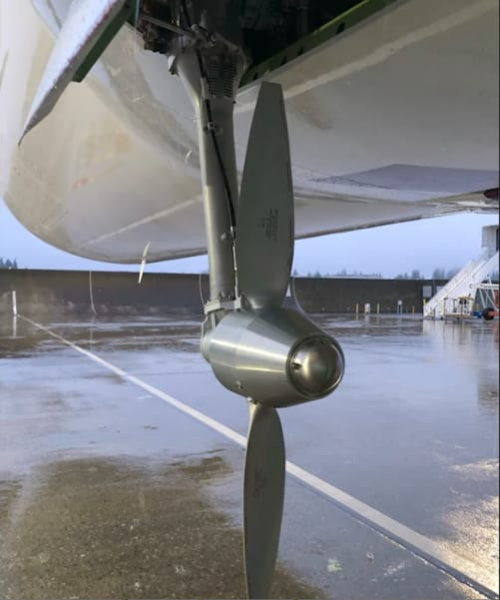
As unlikely as it seems there is now new evidence to support a dual engine failure scenario. It was found that the RAT system (Ram Air Turbine) was deployed at the time of the crash. The RAT is a small turbine with a propeller that is used for emergency electricity generation, and can be deployed by the pilots manually, or is deployed automatically after a total loss of engine thrust
It is doubtful that the pilots would have engaged such a system, for they would have been preoccupied with restarting the engines and/or attempting to gain altitude. Furthermore, the RAT creates additional drag and its deployment was completely unreasonable. This evidence points to the automatic deployment of the RAT system which happens after the loss of both engines.
As unlikely as it seems there is now new evidence to support a dual engine failure scenario. It was found that the RAT system (Ram Air Turbine) was deployed at the time of the crash. The RAT is a small turbine with a propeller that is used for emergency electricity generation, and can be deployed by the pilots manually, or is deployed automatically after a total loss of engine thrustView attachment 774461
It is doubtful that the pilots would have engaged such a system, for they would have been preoccupied with restarting the engines and/or attempting to gain altitude. Furthermore, the RAT creates additional drag and its deployment was completely unreasonable. This evidence points to the automatic deployment of the RAT system which happens after the loss of both engines.
On the 787 the RAT is also automatically deployed if there’s a double AC generator failure and if the pilots lose primary flight instruments. I think there’s one more flight condition that would auto deploy.
The more sensible observations that’s coming out about this accident, the more concerning it’s becoming. Mind you, there’s loads of nonsense being portrayed as facts.
On the 787 the RAT is also automatically deployed if there’s a double AC generator failure and if the pilots lose primary flight instruments. I think there’s one more flight condition that would auto deploy.
The more sensible observations that’s coming out about this accident, the more concerning it’s becoming. Mind you, there’s loads of nonsense being portrayed as facts.
While that is true, the AC generator failure and loss of primary flight instruments would not result in the aircraft loosing lift, at least not immediately thereafter. The chance that there were two simultaneous incidents (one resulting in the loss of lift and airspeed and the other in RAT deployment) is even lower. I believe it is reasonable at this stage to consider that the RAT was deployed either manually or after an engine failure, of which the latter is more probable.
Auto deploys in three conditions:
Double engine failure
Loss of hydraulic pressure
Loss of electrical power
Of course the first condition usually leads to the 2nd and 3rd but there are scenarios where hydraulic or electrical power could fail while the engines were still operational.
Auto deploys in three conditions:
Double engine failure
Loss of hydraulic pressure
Loss of electrical power
Of course the first condition usually leads to the 2nd and 3rd but there are scenarios where hydraulic or electrical power could fail while the engines were still operational.
The thing is the 2nd and 3rd options won't result in a near-immediate crash. Hydraulic pressure is not lost instantly, and not across the entire aircraft due to there being valves that will seal off the leaking part (thank United Flight 232). Loss of electrical power would not bring down a plane since thrust and lift are not impacted. Thus it is very, very unlikely that it was one of those issues that caused a RAT deployment.
I think people are being optimistic in assuming they can reliably determine flaps status from the video we've seen to date. It's not just lighting and quality, but also perspective - given a view from behind/below, is the flap going to project visibly below the wing when the aircraft is pitched slightly up and the flaps slightly down? There's going to be a whole range of position and attitude combinations where deployed flaps just get swallowed up in the apparent thickness of the wing, or are trailing-edge on to the observer.
Fuel issue. IIRC tropical airports are notorious for (edit) "algae" (technically fungal/bacteriological but it makes a stinky green slime) contamination, which plugs the fuel filters after a few minutes. Engines choke, plane becomes a glider.
[Ram Air Turbine] Auto deploys in three conditions:
Double engine failure
Loss of hydraulic pressure
Loss of electrical power
Of course the first condition usually leads to the 2nd and 3rd but there are scenarios where hydraulic or electrical power could fail while the engines were still operational.
Gotta love that jet engines will keep running without electrical power once they physically start. Turn the ignitors off, enjoy the silence. And unless there's been a physical failure inside the engine accessory gearbox, at least one hydraulic pump per engine will still work. (There's a mechanical hyd pump and a mechanical generator on each engine)
The thing is the 2nd and 3rd options won't result in a near-immediate crash. Hydraulic pressure is not lost instantly, and not across the entire aircraft due to there being valves that will seal off the leaking part (thank United Flight 232). Loss of electrical power would not bring down a plane since thrust and lift are not impacted. Thus it is very, very unlikely that it was one of those issues that caused a RAT deployment.
We have to consider that this is the 787, the "more electric" airliner and intentionally more dependent on electrical power than other aircraft, for instance the hydraulics are (mostly) electrically powered. There are likely failure scenarios that wouldn't occur on any other aircraft.
This site uses cookies to help personalise content, tailor your experience and to keep you logged in if you register.
By continuing to use this site, you are consenting to our use of cookies.