Active Stealth the Future?

PleaseSaveUsDonald

ACCESS: Restricted
Joined
7 September 2025
Messages
7
Reaction score
8
This is a discussion on the general future of passive stealth, but I will use the Strait of Taiwan and a possible near term conflict between the US and PRC to concretize it.

The main idea here is; With the emergence of multiple new multi-domain IUSS sensor networks, that not only have the old passive acoustic and towed arrays, but also active sensors in the form of UUVs, satellites, USVs and UAVs - will passive stealth be enough in the future, for offensive missions? Say you were a submarine, how would you get close enough to the an enemy coast to launch any sort of attack on a port or in land target?

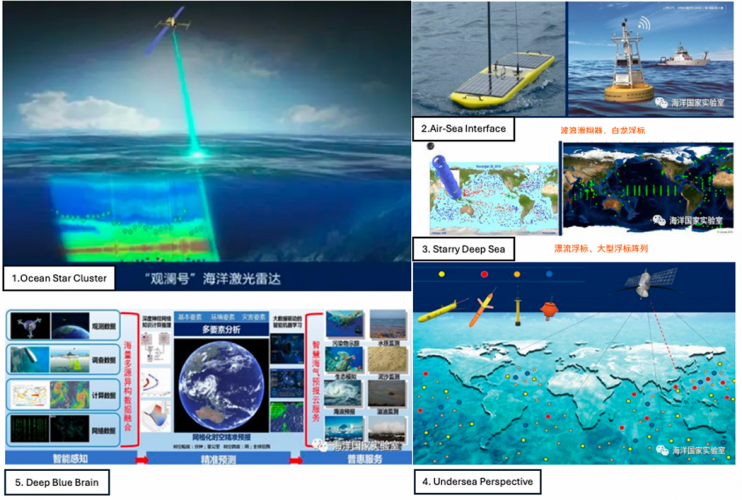
In the context of Taiwan, China's public IUSS goes under two different name, with the Transparent Ocean strategy being the overall encompassing system or pattern that is employed in various locations near the Chinese coast like the Taiwan Strait or the South China Sea.

1766171480299.png It is quite a formidable system, but by no means the only one; The UK, Australia, South Korea and lately the US (through a revamp) are building similar systems. The big difference is, however, that the Chinese system has been in development since approx. 2014 and it seems to be hooked up to a "Deep Blue Brain" which is a Peta-FLOP scale AI cluster somewhere deep in China, that suppossedly can do real-time simulations. To drive home the awe of this; It would essentially allow you to turn any set of sensor readings into a vision of the future, by simulating all possible scenarios that might have caused that specific reading and picking the most probable. Of course, no such system is ever going to be perfect,

I know that detection and identification are two different tasks; And this is exactly what will lay the foundation - according to me and Bryan Clark's belief - for future warfare. If you take inspiration from Ukraine's air war or the US-Navy's distributed maritime operation concept, it seems like the future of warfare will not rely on "stealth" in the traditional sense of the word, but rather noise or overwhelming your adversary with decisions, forcing them to either waste expensive fires, allow you to finish your operation or maybe just buy you enough time to finish your offensive operation.

For submarine forces specifically, it means that, apart from traditional passive stealth, they must invest in active stealth in the form of decoys, UUVs to finish last mile operations and EW.

I am eager to hear your thoughts on this. What - if any - major doctrinal changes do you believe these new technologies will usher forth? Do you believe that relying purely/primarily passive stealth (at least in littoral combat) is over? Please back up your points.
 
I can't speak about litorral combat as I'm not knowledgeable enough for that, but I think aerial combat can be a decent reflection of that still. Doctrinally speaking, I think what we currently see is the re-introduction of static warfare and the active stealth is the enabler for the passive stealth to do it's work.

Both the US and the PRC, in their descriptions of future warfare, has described warfare becoming friction between two complex systems - like two football teams playing a match of endurance against each other, or two pieces of sand paper grinding against each other or trench warfare. While this is new language, this theme isn't really new. Speaking strictly of aerial warfare, the dominance passive stealth enjoyed was somewhat similar to the superiority that cavalry enjoyed in the days before pike and shot warfare. But while pike and shot blunted heavy cavalry dominance, cavalry and it's usefulness never went away. Instead, when used in tandem with infantry and firearms, cavalry continued to thrive to this day. it's not that much different in concept - only that the front now stretches as far as an entire continental coastline, and as deep as the continent itself.

The static part:

This idea of systems of systems warfare fundamentally re-introduces greater emphasis on static warfare as the enabler for maneuver warfare. Highly networked warfighting precludes simply sending in a stealth package without being seen and promptly killed. Yet, you also can't simply not engage because the option of not engaging means that network either expands and destroys your fractured units, or that network prevents you from achieving objectives. So the answer necessarily requires you to field a similarly sized force to pin the enemy down. Only then can you enable your maneuver units to strike out and pick apart the opposing system's nervous system. To pin the enemy down, this counter network seeks to do the following:

1. Raise the fundamental signals baseline. Stealth aircraft, submarines, ships - anything really - can be detected only because it stands out relative to its background, but if you inject enough noise into the background in non-noticeable way, then you've created room for the low observable, high value assets to do their job. This can take the form of jamming, but it can also simply be degrading the EM spectrum as well. In the age of AI that seeks out targets and runs through scenarios, there is also adversarial AI, that seeks to confuse and disrupt the conclusions the opposing AI makes.

2. Overwhelm the algorithm with false positives. If the enemy wants to detect targets, then lets give them so many targets flying at them that they simply can't figure out which one is threatening and which one isn't.

3. Operate using multistatic sensors to ensure there is no profile your enemy can fly that will slip past your fielded network

4. Reconnoiter and pinpoint enemy signals, units and shooters

If this can be achieved, then you'd be able to keep the enemy system in check by forcing their sensors to emit, forcing their shooters to waste weapons on false targets, identify their nervous system and pick that apart. Realistically though, both sides will be doing this and it's the bare minimum to keep the opposing network at bay. It would be trench warfare or a pike clash in the sky, on the surface and in the sea.

The maneuver part:
The static element is persistent, and constantly in conflict. That places more requirements on your maneuver elements in addition to ever more stringent signature control requirements. Now, your maneuver element has the added requirement of being an edge control and processing node, where local (probably in the order of hundreds of nautical miles) information is processed and transmitted to the main control nodes while commands and actions are communicated back to the forward nodes. The sheer amount of information being processed (thanks to the sheer amount of actual platforms now occupyin the battlespace as compared to before) requires your maneuver elements to possess command and control abilities. Finally, these maneuver elements need to have high endurance and high ability to relocate as they will need to take advantage of the entropy produced as a result the friction between systems.

Operations

Naturally, this translates into two classes of mutually supportive platforms - very high end, high capability platforms, and low end, amassable, modular and easily deployed systems. More so than before, doctrines will begin to emphasize the utilization of assets as a whole organism in order to create any opportunity that can be taken advantage of - and any advantage created will only be a small window in time before it is backfilled by the opposing system. At the root of the system, operations are highly integrated, organized and communications are less likey to be jammed, spoofed and intercepted but commands will be coarse (like Area A has had logistics being interdicted regularly so we need to suppress the enemy in that area etc). As we move outwards, operations are likely to be adhoc, disaggregated, highly specific and opportunistic, and commands become more specific (Flank 40 miles and engage target Y). Edge units must operate and engage at their own initiative while working in tandem with locally adjacent units to create local superiority that can be taken advantage of as communications will be spotty due to signals management and EM spectrum degradation.

As a result, PCA/stealth platforms roles are no longer going to be midnight hammer kind of attacks but instead performing disaggregated local operations. That means they command UASs to create local advantage, then penetrate locally (within cover of EW and within the range of, say, 300 nmi) to surgically excise the enemy sensing and command nodes, then return back to the cover of UAS swarms and continue to listen, loiter, and wait for opportunity. This translates to slow and gruelling rolling back of the enemy networked system rather than maneuver induced collapsing of entire sections of the front line. Unless you are going into more permissive areas, this is essentially the only way to fight. This also has the added affect that even countries who cannot afford the materiel for offensive operations could make it harder for an attacker simply through cheap and massed effects.

So to conclude - I think while it was never one or the other between passive and active stealth, certain areas of conflict now require the teaming of both in order to successfuly dismantle highly networked area denial systems.
 
So to conclude - I think while it was never one or the other between passive and active stealth, certain areas of conflict now require the teaming of both in order to successfuly dismantle highly networked area denial systems.
Great analysis, and quite in aligment with my own assumptions! May I repost it (with credits, of course)?
 
I can't speak about litorral combat as I'm not knowledgeable enough for that, but I think aerial combat can be a decent reflection of that still. Doctrinally speaking, I think what we currently see is the re-introduction of static warfare and the active stealth is the enabler for the passive stealth to do it's work.

Both the US and the PRC, in their descriptions of future warfare, has described warfare becoming friction between two complex systems - like two football teams playing a match of endurance against each other, or two pieces of sand paper grinding against each other or trench warfare. While this is new language, this theme isn't really new. Speaking strictly of aerial warfare, the dominance passive stealth enjoyed was somewhat similar to the superiority that cavalry enjoyed in the days before pike and shot warfare. But while pike and shot blunted heavy cavalry dominance, cavalry and it's usefulness never went away. Instead, when used in tandem with infantry and firearms, cavalry continued to thrive to this day. it's not that much different in concept - only that the front now stretches as far as an entire continental coastline, and as deep as the continent itself.

The static part:

This idea of systems of systems warfare fundamentally re-introduces greater emphasis on static warfare as the enabler for maneuver warfare. Highly networked warfighting precludes simply sending in a stealth package without being seen and promptly killed. Yet, you also can't simply not engage because the option of not engaging means that network either expands and destroys your fractured units, or that network prevents you from achieving objectives. So the answer necessarily requires you to field a similarly sized force to pin the enemy down. Only then can you enable your maneuver units to strike out and pick apart the opposing system's nervous system. To pin the enemy down, this counter network seeks to do the following:

1. Raise the fundamental signals baseline. Stealth aircraft, submarines, ships - anything really - can be detected only because it stands out relative to its background, but if you inject enough noise into the background in non-noticeable way, then you've created room for the low observable, high value assets to do their job. This can take the form of jamming, but it can also simply be degrading the EM spectrum as well. In the age of AI that seeks out targets and runs through scenarios, there is also adversarial AI, that seeks to confuse and disrupt the conclusions the opposing AI makes.

2. Overwhelm the algorithm with false positives. If the enemy wants to detect targets, then lets give them so many targets flying at them that they simply can't figure out which one is threatening and which one isn't.

3. Operate using multistatic sensors to ensure there is no profile your enemy can fly that will slip past your fielded network

4. Reconnoiter and pinpoint enemy signals, units and shooters

If this can be achieved, then you'd be able to keep the enemy system in check by forcing their sensors to emit, forcing their shooters to waste weapons on false targets, identify their nervous system and pick that apart. Realistically though, both sides will be doing this and it's the bare minimum to keep the opposing network at bay. It would be trench warfare or a pike clash in the sky, on the surface and in the sea.

The maneuver part:
The static element is persistent, and constantly in conflict. That places more requirements on your maneuver elements in addition to ever more stringent signature control requirements. Now, your maneuver element has the added requirement of being an edge control and processing node, where local (probably in the order of hundreds of nautical miles) information is processed and transmitted to the main control nodes while commands and actions are communicated back to the forward nodes. The sheer amount of information being processed (thanks to the sheer amount of actual platforms now occupyin the battlespace as compared to before) requires your maneuver elements to possess command and control abilities. Finally, these maneuver elements need to have high endurance and high ability to relocate as they will need to take advantage of the entropy produced as a result the friction between systems.

Operations

Naturally, this translates into two classes of mutually supportive platforms - very high end, high capability platforms, and low end, amassable, modular and easily deployed systems. More so than before, doctrines will begin to emphasize the utilization of assets as a whole organism in order to create any opportunity that can be taken advantage of - and any advantage created will only be a small window in time before it is backfilled by the opposing system. At the root of the system, operations are highly integrated, organized and communications are less likey to be jammed, spoofed and intercepted but commands will be coarse (like Area A has had logistics being interdicted regularly so we need to suppress the enemy in that area etc). As we move outwards, operations are likely to be adhoc, disaggregated, highly specific and opportunistic, and commands become more specific (Flank 40 miles and engage target Y). Edge units must operate and engage at their own initiative while working in tandem with locally adjacent units to create local superiority that can be taken advantage of as communications will be spotty due to signals management and EM spectrum degradation.

As a result, PCA/stealth platforms roles are no longer going to be midnight hammer kind of attacks but instead performing disaggregated local operations. That means they command UASs to create local advantage, then penetrate locally (within cover of EW and within the range of, say, 300 nmi) to surgically excise the enemy sensing and command nodes, then return back to the cover of UAS swarms and continue to listen, loiter, and wait for opportunity. This translates to slow and gruelling rolling back of the enemy networked system rather than maneuver induced collapsing of entire sections of the front line. Unless you are going into more permissive areas, this is essentially the only way to fight. This also has the added affect that even countries who cannot afford the materiel for offensive operations could make it harder for an attacker simply through cheap and massed effects.

So to conclude - I think while it was never one or the other between passive and active stealth, certain areas of conflict now require the teaming of both in order to successfuly dismantle highly networked area denial systems.
I like the sand paper analogy and your analysis seems correct to me. Do you have any prior military experience by any chance? ;)
 
I like the sand paper analogy and your analysis seems correct to me. Do you have any prior military experience by any chance? ;)
No... Just a giant military nerd who loves reading all things military lol. I think much of the info here is stuff I read and learned from other people here, especially in the CCA threads.
 

Similar threads

Back
Top Bottom