9M730 Burevestnik (SSC-X-9 Skyfall) cruise nuclear-powered missile

It's main purpose is to serve as deterrence - a "dead hand" solution, that could be pre-launched during period of high tensions as a warning. The opponent planning a first strike would be forced to dealt not only with the possibility of pre-launched missiles getting attack order, but aslo with the possibility of them not getting cancel order. It makes decapitation strikes far less attractive; what the point of destroying enemy leadership, if pre-launched missiles would still get you, because you destroyed the ones that could told them not to?

This places a lot of faith in communications links, given it is an unmanned platform. I highly doubt it would be launched ahead of time, or if it did, I simply do not believe striking its target would be its default setting. And this scenario seems to assume the rest of the Russian deterrent is somehow vulnerable, which seems highly unlikely.
 
once they're in the air, they so slow and bright that they'll be easy to intercept
How do you figure they're going to be bright?

It's not going to be any hotter than any other jet engine of comparable thrust, and is honestly likely running a bit cooler than your typical modern dino-burner engine to have a wider gap between "normal operating temperature" and "core starts destroying itself temperature"
 
This places a lot of faith in communications links, given it is an unmanned platform. I highly doubt it would be launched ahead of time, or if it did, I simply do not believe striking its target would be its default setting. And this scenario seems to assume the rest of the Russian deterrent is somehow vulnerable, which seems highly unlikely.
The general idea is that the opponent would be forced to consider that possibility - thus making first strike planning much more complicated and dubious for him.

And this scenario seems to assume the rest of the Russian deterrent is somehow vulnerable, which seems highly unlikely.
In general, I agree, but - paranoia about sudden first strike is well-known part of our top ranks thinking starting from World War 2. Our silo-based systems were long considered vulnerable to pre-emptive strikes; our submarine fleets are forced to run gauntlet of enemy bases to reach ocean; and recent war in Iran demonstrated, that mobile launchers aren't as invulnerable as they were before. Also, the ballistic defense improved dramatically, which the same Iran-American war demonstrated.

So the old Russian leadership fear - that some American president might become bold (or stuipd) enough to start a sudden attack, hoping that ballistic defense would handle the few Russian missiles that would be able to launch - suddenly increased massively. Also, we have China on our borders, too, and while current relations are coridal, we can't completely rule them out as potential opponents.
 
nor a survivable second-strike weapon
It's exactly the survivable second-strike weapon. It's a low-altitude, hard to detect cruise missile, that could took any path approaching enemy territory, and could be pre-launched in advance, patrolling for days, maybe weeks. It's almost impossible to catch on surface, and very hard to protect the territory against - considering that it could approach from any direction, could fly around South Pole to reach American mainland.
 
The weapon is designed for one task mostly. To greatly complicate and increase the cost of the US Golden Dome by forcing US to invest a lot of resources into defeating this weapon.
 
The weapon is designed for one task mostly. To greatly complicate and increase the cost of the US Golden Dome by forcing US to invest a lot of resources into defeating this weapon.
True. According to public sources, its development was initiated in 2001 - soon after it become clear, that United States are gonna leave the missile defense treaty.
 
The weapon is designed for one task mostly. To greatly complicate and increase the cost of the US Golden Dome by forcing US to invest a lot of resources into defeating this weapon.
A generally sound assessment but have to look at it from further away, it's not only Burevestnik but Poseidon too to counter for the enemy. And looking at the orange Epstein's track history, i would bet good money that he would have ordered american equivalents, afterall he can't let the ruskies have a bigger schlong. THAT would be a ridiculous waste, so we can see how the russian MAD approach can make sense.

And about China, given the secrecy of their deterrent developments i would not be surprised if they are working on equivalents to Poseidon/Burevestnik, imo in their case it makes even more sense because of their still considerably lower number of warheads and ICBMs/SLBMs.

Lastly, let's not forget that the russians are already working on a supersonic successor to Burevestnik (iirc Mach 3 or even faster?), so really Burevestnik is only the initial capability, probably somewhat constrained by compromises (such as being subsonic) while the technology matures.
 
Last edited:
You have no understanding of deterrence, that's obvious. The Burevestnik mere existence make first strike against Russia more and more complicated - less attractive for potential adversaries. It's the very idea of deterrence; making sure, that attack against you would be met with sufficient retaliation for the enemy to not even try.
You wouldn't worry about Burevestnik in a first strike, you have half a day to shoot it down, and it's an easy shootdown.
 
You wouldn't worry about Burevestnik in a first strike, you have half a day to shoot it down, and it's an easy shootdown.
Shot it down when it is on standby somewhere at low altitude over the southern ocean?
Shooting it down it easy (it's just very big), but an absolutely unplanned guest making way through the Andes is certainly not something continental air/space defenses are built for.

Furthermore, not in the current shape(probably?), but a next and obvious stage for this weapon system is adding separate warheads, doing the penetration.
 
Shot it down when it is on standby somewhere at low altitude over the southern ocean?
Shooting it down it easy (it's just very big), but an absolutely unplanned guest making way through the Andes is certainly not something continental air/space defenses are built for.

Furthermore, not in the current shape(probably?), but a next and obvious stage for this weapon system is adding separate warheads, doing the penetration.
I think it was conceived to avoid ABMs at a time before satellite-based GMTI/AMTI were becoming a thing. It's no less vulnerable to a first strike than any mobile ICBM TEL, which is also highly at risk with SB-GMTI. AMTI will track it if launched and aircraft will be directed to it to shoot it down.

Just as with the Vought SLAM, technology has superceded its usefulness (and that supposedly could achieve M4-5 rather than being subsonic). The one useful thing that might fall out of it is an air-independent jet engine for space exploration on other planets but as a weapon it's pointless. I mean, sure it's nuclear-propulsion and that's new, but in terms of A-to-B delivery, what does it actually achieve that this didn't?

SM-62 Snark​

https://en.wikipedia.org/wiki/SM-62_Snark
 
Shooting it down it easy (it's just very big), but an absolutely unplanned guest making way through the Andes is certainly not something continental air/space defenses are built for.

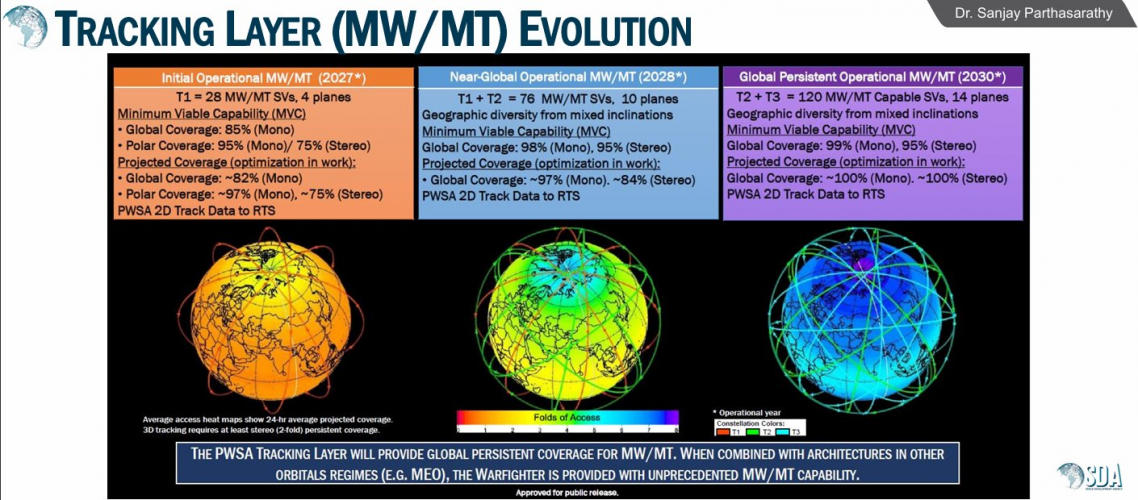
The vexity of this threat does make sense of the USAF's push for space-based AWACS.

At present even the USA has no technical means of tracking numerous small, loitering, doomsday aircraft over the vastness of the Pacific or the South American forests. They'd need an immense force of Wedgetails and tankers to even attempt to do so.

But if they had persistent, global, top-down coverage they could maintain continuous tracking from the moment of launch. Much easier to follow something from its origin than to find it later.
 
I think it was conceived to avoid ABMs at a time before satellite-based GMTI/AMTI were becoming a thing. It's no less vulnerable to a first strike than any mobile ICBM TEL, which is also highly at risk with SB-GMTI. AMTI will track it if launched and aircraft will be directed to it to shoot it down.
AMTI does not provide hemispherical, uninterrupted coverage of the entire globe - especially against a very low RCS target right on the deck. Satellites have obvious limitations (energy, downtime).
Otherwise, you will not be sending satellites; you'll have to send crewed NORAD radar battlestations into space.

If a couple dozen missiles will force that, they'd arguably fulfill their duty even before the launch.
 
The analysis is incoherent with the repeated reports of lack of measured radiation following the succesful tests, if it is direct cycle, they at the very least found a way to significantly reduce the leak of fission products in the exhausts.

https://www.thebarentsobserver.com/...estnik-missile-allegedly-flew-14000-km/439340
Depends which way the wind's blowing and flight altitude.
https://timesofindia.indiatimes.com...-backfire-on-russia/articleshow/131886840.cms

AMTI does not provide hemispherical, uninterrupted coverage of the entire globe - especially against a very low RCS target right on the deck. Satellites have obvious limitations (energy, downtime).
It is going to by the end of the decade.
Otherwise, you will not be sending satellites; you'll have to send crewed NORAD radar battlestations into space.
No just lots of smaller radars linked to NORAD on the ground.
If a couple dozen missiles will force that, they'd arguably fulfill their duty even before the launch.
AMTI was already going to be a thing even without Burevestnik, it's just a strategic advantage made possible by RLVs like Falcon 9. It's unfortunate for Burevestnik that it's been rendered redundant whilst still in testing, could have bought a lot of drones with that wasted money.

And like I said, it doesn't do anything that SM-62 didn't, except lower altitude flight, but that's a TERCOM improvement.

https://en.wikipedia.org/wiki/Nyonoksa_radiation_accident
 
It is going to by the end of the decade.
You missunderstand how satellites operate, and how it's different from the operations of, say, planes, ships, or static radar posts.
Satellites don't and can't operate in high power modes (say, detailed) 24/7/365. There's neither power nor cooling nor reliability for that.
 
Last edited:
AMTI does not provide hemispherical, uninterrupted coverage of the entire globe - especially against a very low RCS target right on the deck. Satellites have obvious limitations (energy, downtime).
Otherwise, you will not be sending satellites; you'll have to send crewed NORAD radar battlestations into space.
If a couple dozen missiles will force that, they'd arguably fulfill their duty even before the launch.

Well the goal, if AMTI ever becomes a thing, would be to track the thermal bloom of the booster at launch and then focus radar on the object then and hold the track, rather than search the entire earth for anything of relevance. I have my doubts as to how effective satellites can be in the active radar role and clearly Skyfall was designed long before that seemed like a realistic goal.

This and Poisiden/Status 6 were envisioned as a way of dealing with any potential US ABM defense. I think in reality there will never be a significantly effective system that can alter the outcome of a thousand warheads on hundreds of delivery systems (Golden Dome is IMO a pipe dream that will not survive the current administration). But it is understandable that Russia might want to develop alternatives just in case. I will however be quite surprised if we see any significant deployment, given cost involved and the fact Russia is very occupied right now.
 
Last edited:
But if they had persistent, global, top-down coverage they could maintain continuous tracking from the moment of launch. Much easier to follow something from its origin than to find it later.
Tracking is certainly nice and dandy, but seeing the machine gun that just unloaded straight into your direction won't stop the hail of bullets.

It's just quite amusing how people seemingly equate keeping track of a weapon with countering said weapon. I already brought up that there would be little means of interception, but another aspect to consider regarding space based tracking is that when ICBMs fly, Satellites will be among the very first targets that will go dark for good. Putting ones trust is some of the most fragile man-made objects for an all out war is certainly...something. Especially when every meaningful adversary has Anti-Satellite capabilities. Earth's Orbit will be dead upon the outbreak of WWIII. Which makes space based tracking somewhat dubious.
 
Last edited:
You missunderstand how satellites operate, and how it's different from the operations of, say, planes, ships, or static radar posts.
Satellites don't and can't operate in high power modes (say, detailed) 24/7/365. There's neither power nor cooling nor reliability for that.
They don't need to, they can hand over from one satellite to the another to achieve continuous coverage.

Tracking is certainly nice and dandy, but seeing the machine gun that just unloaded straight into your direction won't stop the hail of bullets.
Don't see how that relates to the price of fish.

It's just quite amusing how people seemingly equate keeping track of a weapon with countering said weapon. I already brought up that there would be little means of interception, but another aspect to consider regarding space based tracking is that when ICBMs fly, Satellites will be among the very first targets that will go dark for good. Putting ones trust is some of the most fragile man-made objects for an all out war is certainly...something. Especially when every meaningful adversary has Anti-Satellite capabilities. Earth's Orbit will be dead upon the outbreak of WWIII. Which makes space based tracking somewhat dubious.
That's why there's boost phase intercept and you would have to use quite a number of nukes in space to blot out all coverage. And if you need ICBMs just to give the Bureaucratnik a fighting chance, well... you've kind of just demonstrated its redundancy.

If SWAT officers were confronted by one man brandishing a firearm and another brandishing a frozen fish with intent, which one do they shoot first? And which one best describes ICBMs and which one best describes this missile? This doesn't mean that the guy with the frozen fish doesn't get shot, it just means it's easy and not a priority.
 
Last edited:
Tracking is certainly nice and dandy, but seeing the machine gun that just unloaded straight into your direction won't stop the hail of bullets.

It's just quite amusing how people seemingly equate keeping track of a weapon with countering said weapon. I already brought up that there would be little means of interception, but another aspect to consider regarding space based tracking is that when ICBMs fly, Satellites will be among the very first targets that will go dark for good. Putting ones trust is some of the most fragile man-made objects for an all out war is certainly...something. Especially when every meaningful adversary has Anti-Satellite capabilities. Earth's Orbit will be dead upon the outbreak of WWIII. Which makes space based tracking somewhat dubious.
Absolutely correct, the eyes and ears of the enemy would be the first targets, as well as any SAM/ABM/GBI systems within reach. So not only the notion of serenely detecting and perfectly tracking something like Burevestnik goes out the window, but also the idea that there will be any coherent air defence left to shoot them down. Which again, is the whole point, not only ICBMs and SLBMs (plus likely nuclear tipped shorter ranged Oreshniks and Iskanders, plus ALCMs, plus Kinzhals, likely even Tsirkons and Kalibrs) are coming but also Burevestniks, Poseidons and maybe even stuff we don't know about. So yeah good luck trying to counter all that.
 
Last edited:
You wouldn't worry about Burevestnik in a first strike, you have half a day to shoot it down, and it's an easy shootdown.
flying low altitudes by default makes it fly below the radar horizon allowing less radar tracking time to intercept the target how else you think Ukraine has constantly hit oil refineries in Russia? and it can come from any direction because of range. Having a low flying nuclear warhead in general already close to your city like a ukrainian drone to try to intercept is a bad idea because its close enough to just detonate and EMP every electronic and radar to hell when the next low flying nuclear warhead just goes deeper into territory repeating the domino effect.
 
flying low altitudes by default makes it fly below the radar horizon allowing less radar tracking time to intercept the target how else you think Ukraine has constantly hit oil refineries in Russia? and it can come from any direction because of range. Having a low flying nuclear warhead in general already close to your city like a ukrainian drone to try to intercept is a bad idea because its close enough to just detonate and EMP every electronic and radar to hell when the next low flying nuclear warhead just goes deeper into territory repeating the domino effect.
Forest Green is assuming sattelite tracking, not ground radars.
 
That's why there's boost phase intercept and you would have to use quite a number of nukes in space to blot out all coverage. And if you need ICBMs just to give the Bureaucratnik a fighting chance, well... you've kind of just demonstrated its redundancy.
The Burevestnik launch have basically the same signature as any cruise missile/drone launch. How exactly satellites would be able to discriminate specifically its booster burning? And while in flight, it emit no more heat than average turboject. How exactly satellites would be able to detect & track it?
 
even that is difficult to track because of low altitudes in comparison to BMs leaving orbit.
Fortunately, ballistic missiles have enough of a thermal bloom that their launch can be detected by stupid staring-IR satellites in geostationary orbit. How stupid were these satellites? "if IR >lots, send alarm signal" stupid. The DSP satellites would false-alarm on forest fires or oil well/field/refinery fires. But by then the radars would have detected ICBMs clearing the horizon or detected nothing and got a spy satellite retasked.

Whereas Burevestnik has maybe 10,000lbs thrust in a turbojet configuration. Basically the same thermal signature as an A-4 Skyhawk or AGM-28 Hound Dog.
 
even that is difficult to track because of low altitudes in comparison to BMs leaving orbit.
Nevertheless AMTI is a thing, so clearly it can be done.
https://www.ssc.spaceforce.mil/News...g-space-based-airborne-target-indicator-progr

Movement against a stationary background.

flying low altitudes by default makes it fly below the radar horizon allowing less radar tracking time to intercept the target how else you think Ukraine has constantly hit oil refineries in Russia? and it can come from any direction because of range. Having a low flying nuclear warhead in general already close to your city like a ukrainian drone to try to intercept is a bad idea because its close enough to just detonate and EMP every electronic and radar to hell when the next low flying nuclear warhead just goes deeper into territory repeating the domino effect.
Why would you wait for it to get that close? Once you know where it is due to AMTI, you just send a fighter (or X-Bat drone if a first strike has sucessfully knocked out all the fighters) out to down it with an APKWS. So you've gone from an ABM intercept costing $70-90m to a $20k intercept. And that's assuming that SB-GMTI doesn't render mobile TELs redundant the same way, but even disregarding that, I can't see how it's a step up from an ICBM. I don't know why I'm arguing, I think it's fantastic Russia is building it instead of more ICBMs.
 
Last edited:
The neat part is that Russia builds this on top of their existing ICBMs as well as newly developed and upgraded ICBMs, IRBMs and SRBMs. Just like Poseidon, Burevestnik is not an "instead" but an "additional".

Given that structural requirements should be much more modest than these of ICBMs and their RVs, Burevestnik can reasonably be assumed to be ultimately cheaper than something like Yars or Sarmat. Wouldn't be surprised if these will be deployed in the low to mid hundreds, good look to anyone thinking they could intercept them all on top of the entire nuclear armed ballistic missile and cruise missile stockpile plus Poseidon.
 
Nevertheless AMTI is a thing, so clearly it can be done.
https://www.ssc.spaceforce.mil/News...g-space-based-airborne-target-indicator-progr

Movement against a stationary background.


Why would you wait for it to get that close? Once you know where it is due to AMTI, you just send a fighter (or X-Bat drone if a first strike has sucessfully knocked out all the fighters) out to down it with an APKWS. So you've gone from an ABM intercept costing $70-90m to a $20k intercept. And that's assuming that SB-GMTI doesn't render mobile TELs redundant the same way, but even disregarding that, I can't see how it's a step up from an ICBM. I don't know why I'm arguing, I think it's fantastic Russia is building it instead of more ICBMs.
I am not saying it can't be done to track the nuclear powered missile, but earth atmosphere usually effects infrared satellites depending how high or low a target flies then BM that has to leave orbit which usually can be easily tracked by either a radar or infrared satellite.
 
I am not saying it can't be done to track the nuclear powered missile, but earth atmosphere usually effects infrared satellites depending how high or low a target flies then BM that has to leave orbit which usually can be easily tracked by either a radar or infrared satellite.
Large launch plume is detected by IR, missile is tracked by radar.

The neat part is that Russia builds this on top of their existing ICBMs as well as newly developed and upgraded ICBMs, IRBMs and SRBMs. Just like Poseidon, Burevestnik is not an "instead" but an "additional".

Given that structural requirements should be much more modest than these of ICBMs and their RVs, Burevestnik can reasonably be assumed to be ultimately cheaper than something like Yars or Sarmat. Wouldn't be surprised if these will be deployed in the low to mid hundreds, good look to anyone thinking they could intercept them all on top of the entire nuclear armed ballistic missile and cruise missile stockpile plus Poseidon.
Unless there exists a money tree, it's always instead, one way or the other.
 
The money tree works both ways though. It is probably more expensive to defend another very different threat than to defend more of the same threat.
 
The money tree works both ways though. It is probably more expensive to defend another very different threat than to defend more of the same threat.
No probably about it.

Extreme range cruise missiles force a whole additional tracking layer to be added to Golden Dome, likely thought to be the continuous deployment of AWACS and fighters with look-down-shoot-down radars by the Russians. And continuous air patrols like that burn airframe lifespan.

Space based AMTI/GMTI radars weren't really affordable until SpaceX made recoverable rockets.
 
The money tree works both ways though. It is probably more expensive to defend another very different threat than to defend more of the same threat.
Like I said AMTI was always going to be a part of the USSF anyway for many reasons, and fighters and drones armed with APKWS are there already for other reasons, so there's not really any additional demand. HGVs demand a whol new interceptor(s) but they also reduce the enemy's RVs per missile count, so it cuts both ways.
 
Nevertheless AMTI is a thing, so clearly it can be done.
AMTI is not global nonstop coverage.
This is not a good weapon, frankly. Any fighter jet equipped with a downward-looking radar and an active air-to-air missile could easily shoot it down.
Like any other cruise missile. This one is different in it's ability to come from absolutely any direction and with attack time window measuring many days.
 
AMTI is not global nonstop coverage.
It is by 2030.

https://www.spaceforce.mil/News/Art...ow-the-space-force-is-revolutionizing-airbor/
Spearheaded by the Portfolio Acquisition Executive (PAE) for Space-Based Sensing and Targeting (SBST), this ambitious initiative is designed to provide the Joint Force with persistent vigilance over the battlefield, tracking airborne threats continuously from space.

https://insideunmannedsystems.com/s...based-airborne-target-tracking-constellation/
The U.S. Space Force awarded SpaceX a $4.16 billion Other Transaction Authority contract today for the Space-Based Airborne Moving Target Indicator program, an effort to field a constellation of low-Earth orbit satellites capable of continuously detecting and tracking aircraft, cruise missiles, and hypersonic weapons from space.
The SB-AMTI program is designed to shift airborne surveillance missions from crewed aircraft to space, complementing and eventually reducing reliance on the Air Force’s E-3 Sentry AWACS fleet and the newer E-7 Wedgetail. The impetus is adversary investment in anti-access/area-denial systems that increasingly threaten the survivability of airborne surveillance platforms in contested environments.
Persistent overhead tracking of airborne threats at machine-readable latency is a prerequisite for the kind of autonomous kill chains — from detection through intercept or strike — that have defined U.S. force development since Operation Epic Fury.

https://investors.rocketlabcorp.com...awarded-397-million-contract-build-and-launch
The initiative, led by the Portfolio Acquisition Executive (PAE) for Space-Based Sensing and Targeting (SBST), aims to enhance global security by deploying a resilient space-based system to detect and track airborne threats in real time.
The Flatellite spacecraft and Neutron launch service will enable vendor diversity in the SB-AMTI program and increased capabilities for deploying the SB-AMTI architecture, which integrates cutting-edge sensors, secure communications, and robust ground processing systems to provide the U.S. military with persistent, real-time battlespace awareness in contested environments.

Burevestnik is DOA, possibly even DBA.
 

Attachments

  • 1788621468892.png
    1788621468892.png
    1 MB · Views: 11
Last edited:
This is not a good weapon, frankly. Any fighter jet equipped with a downward-looking radar and an active air-to-air missile could easily shoot it down.
When Burevestnik flies, it's more than likely that there aren't many fighters left to try and intercept it, as most of them would've been wiped out on the ground. And the probability of thinly spread and disorganized fighters intercepting a bunch of cruise missiles days or weeks after re-entry vehicles rained from the skies is beyond miniscule.

Burevestnik is the coup de grâce for a civilization, the weapon that's supposed to emerge at the horizon when the ICBM silos have gone quiet and the SSBNs vanished in the ocean depths. It's a counter value weapon that's supposed to introduce an additional vector of attack, an attack vector that can emerge with significant delay if necessary. Something that introduces another variable alongside ICBMs with multiple and maneuvering re-entry vehicles, SLBMs, ALCMs be it sub or supersonic, IRBMs and the Poseidon. Ensuring that no matter how advanced your BMD network is, your ass is getting nuked at the end of the day regardless. Ensuring that the balance of mutually assured destruction remains in place. Because no matter what the adversary does, their defense measures, their interceptor missiles, their magazine depth, it's limited. And all these multi-domain strategic weapons have the goal to make sure that every defensive countermeasure is exhausted before the last of them is launched. And given the recent performance of BMD in the near east of the former global super power, it's more than evident that missile warfare favors the attacker. And no amount of tracking increases kill probability or magazine depth. Seeing how someone shoots you in the face doesn't mean you're dodging the bullet.

In a way the sheer simplicity of Burevestnik in that strategic framework is oddly beautiful. It's just a missile intended to fly and loiter endlessly as long as it's reactor burns.
 
Last edited:
That problem is solved by having redundancy among the satellites, some emit while others monitoring same area recharge via solar arrays.
You have wrong idea of ratios of iddle and work time. Batteries aren't the main problem at hand.
But in that situation the ICBMs/SLBMs have already arrived. Oh and the ASAT missile was shot down by SBIs.
Card game warfare doesn't work in strategic exchange. It isn't a game. Orbital frying isn't done by ASAT, it's done by ballistic missiles on direct ascent. To intercept them, you need to have, at least, something like nuclear pumped lasers on orbit.
 
The promises of space based magical shields countering ballistic missiles are, unfortunately to some, just mere fantasy. Although the current US administration is pushing hard to sink significant sums into a conceptual failure that has already been exposed during the cold war. No surprise, the same people brought us the nuclear powered battleship in the 21st century.

Either way, may I ask how this is in any shape or form relevant to Burevestnik? There's a Golden Dome thread for this kind of fantastical ramblings.
 
I consider this missile rather pointless. It will arrive half a day after a strategic exchange already occurred. It only makes sense if one thinks ABM systems would actually be significantly effective in a large scale nuclear war, IMO.

I personally think the project might be more for long term technology development rather than a useful operational system.
 
It will arrive half a day after a strategic exchange already occurred.
It can also arrive days or weeks later, when the adversary population would think the worst has passed. It's something that strikes when an opponent is trying to collect itself after the initial strategic exchange, when interceptors and ballistic missiles have already been exhausted. Similarly Poseidon can do the same, picking off what's left of the opposing Navy and coastal infrastructure and cities. They are the clean up crew, as I said, nuclear coup de grâce.

The ICBMs, IRBMs and SLBMs obviously do the heavy lifting in a strategic exchange, having the task to destroy adversary silos, military and industrial infrastructure and decision making centers as well as depleting and avoiding interceptors which will be exhausted by going after them. Burevestnik, conceptually, means that less or perhaps even no ICBMs have to be allocated for counter value targets (population centers). That means more available stockpile for hard targets. It also means that Burevestnik can fulfill it's role easier because a given adversary would have been sufficiently softened and exhausted in the initial exchange. It ensures, and that's the clear goal here, that a strategic exchange against Russia will result in the wholesale destruction of whoever attacked them. It's the insurance that guarantees that millions will burn and even more millions will die of radiation sickness, starvation and illness. It's just one puzzle piece of a wider nuclear posture, one with it's roots deep in the cold war, but it's an important puzzle piece. Making sure that aggression is too costly for a hostile power.

This is why Russia maintains arguably the most diverse range of strategic weapons, arguably invests the most in them (for now even before China, far ahead of the US, UK and France) and why it's a part of their military that devours tremendous portions of funding and and it pools indigenous academic talent like no other military sector in Russia. The only thing that comes close to it with regards to favor are the submarine fleet, which is considered an essential part of wider national defence and strategic balance of power.
 

Similar threads

Back
Top Bottom