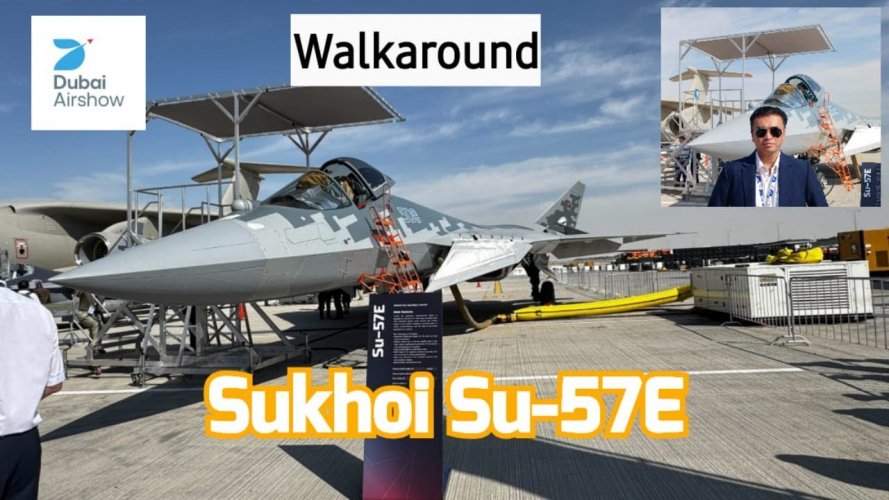
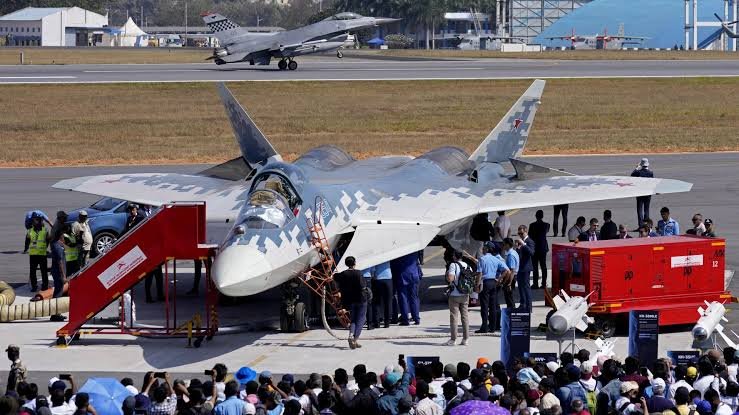
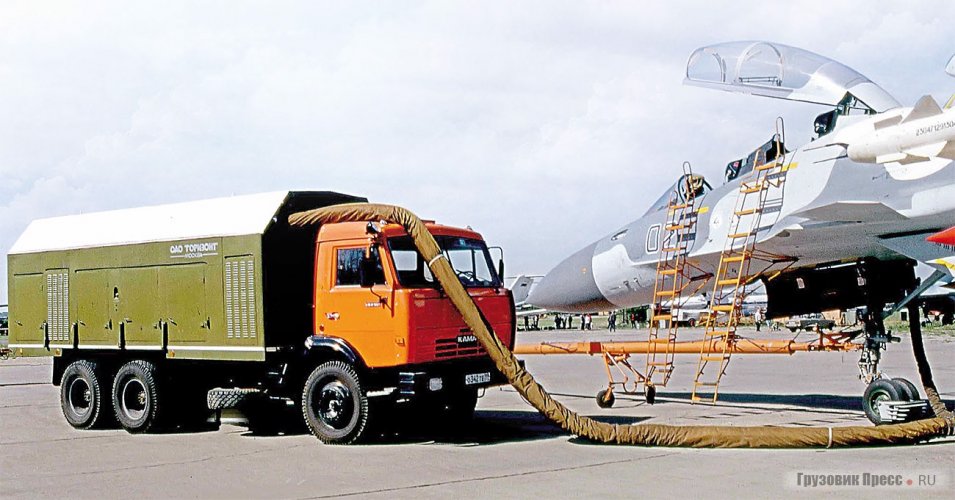
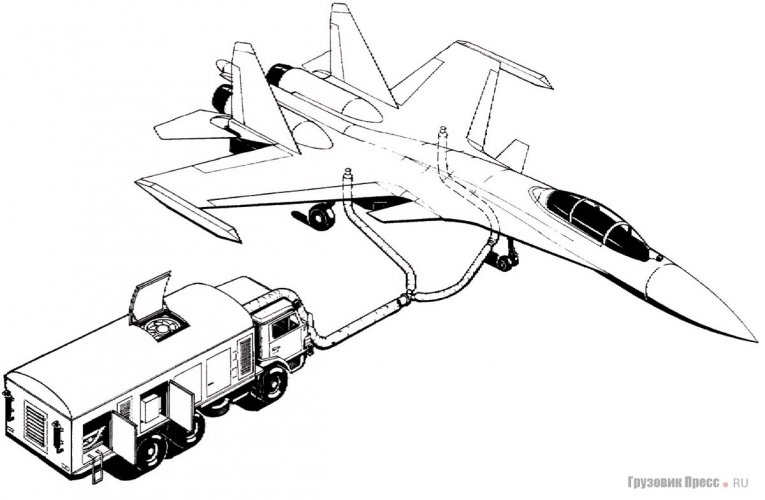
Again PCU-units and its wide hoses.

Yellow one and its big white 'source'.

maxresdefault (2).jpg

In this case, it is on the left side of the pic. On the right side is the 'source' of the AC-net.

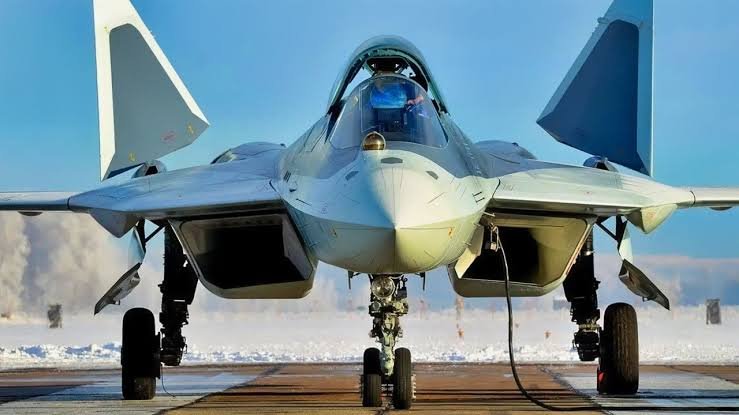
images (3).jpg

AC-net connection ( 115/200V, f≈400Hz).

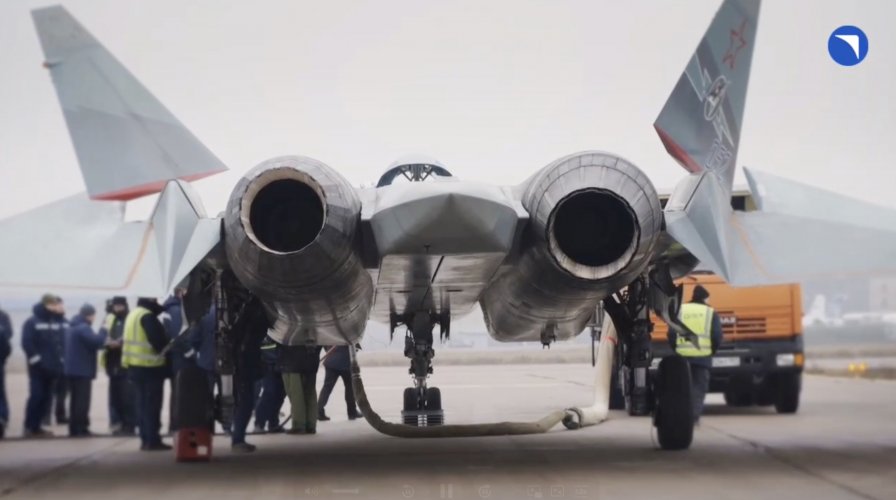
images (4).jpg

Both can be seen on this video and photo :

View: https://www.instagram.com/reel/DR7DYUDjK-Z/


https://upload.wikimedia.org/wikipedia/commons/5/57/Su-57E_at_Dubai_Airshow_2025.jpg

One more detail : If we better look on the main right wheel ( left side of the bottom pic) ,we can see one hanging wire. It is conductor of the static (accumulated) electricity.
 
Air starter.

Very interesting from you ,that detail about air starter,tnx . Yes ,there are two of them. Btw ,PCU unit ( A/C) which hose we can see is used for air conditioning of the electronic equipment ( in fact moisture elimination).

Now about that air starters.Take a look how famous Polishman described APU exhausts ( dark yellow color).

http://su57.mariwoj.pl/su57-serial-airintake-engine.html

Those are two exhausts for that air starters/APU and Su-57 doesn't need any ground APU on the tarmac to start the engines.This is old but very interesting video made during the first test flight of the second serial Su-57, '01 blue'. Be careful and take a look on the sequence exactly at 1:16. You can see white smoke coming from the left air starter exhaust.Right after air starter is turned on ,left engine is also turned.


View: https://www.youtube.com/watch?v=R0ykwDn9Tcs
 
Last edited:
George and others like Voevoda say it was engine issue soon after take-off, one engine failed then the other (bird strike? fuel issue?), so that's settled imo. Attempts by the ukrainians and their fanbase to spin it as they had something to do with it is just laughable propaganda.
View: https://x.com/GeorgeN28581/status/2080286819535458567

View: https://x.com/HEMemarian/status/2080305061868228613
 

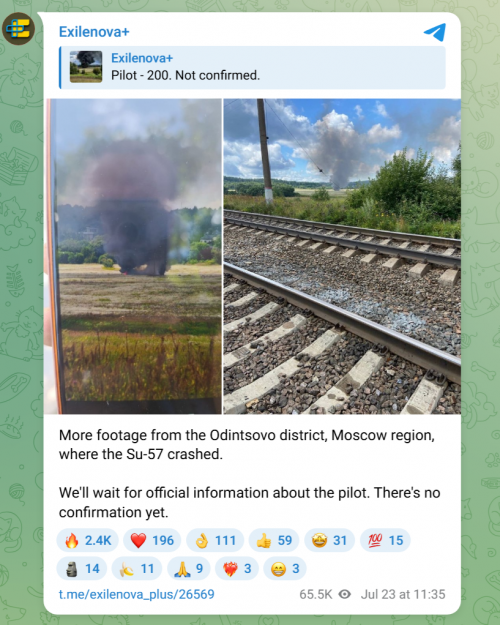
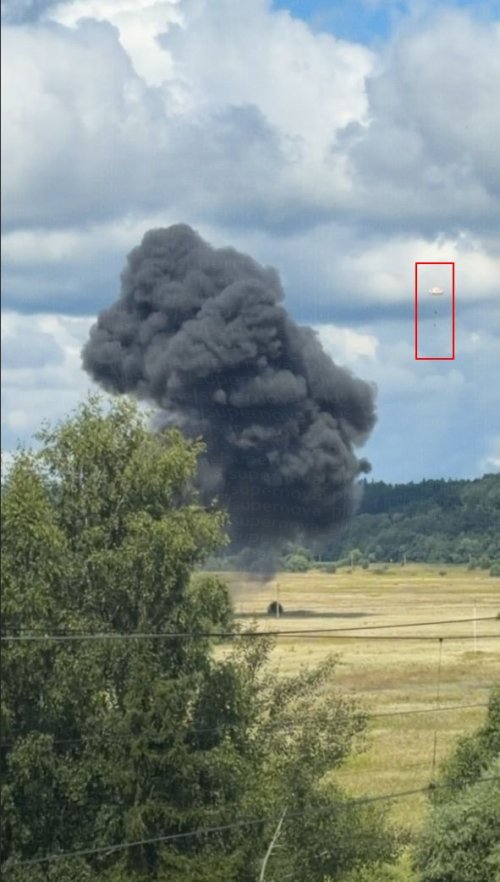
Is this black and thick smoke a consequence of the burning of composite materials?
 
Last edited by a moderator:

''Окрім того, на авіабазі "Кубинка" базується 237-й центр демонстрації авіаційної техніки. Тому цілком можливо, що Су-57Д міг виконувати демонстраційний політ для якоїсь іноземної делегації.''

Transl:

''Furthermore, the 237th Aviation Equipment Demonstration Center is based at the Kubinka airbase. Therefore, it is quite possible that the Su-57D was performing a demonstration flight for a foreign delegation.''

Kubinka AB is btw very close to the mentioned village.They mentioned some training flight? Training flight from the Kubinka AB? No way. Only from the Lipetsk-2 AB/ 968 IISAP (for the VKS operational units pilots).

Only thinking .... ( what happened to T-50-5 earlier ) :

''Damaged by fire of the right engine in 10th June 2014 in Zhukovsky when landing, pilot Kondratyev left airplane after landing, but plane was damaged beyond repair.''

It happened right in front of the eyes of the IAF delegation.

Uf what if, if same happened with the 'D' ( if it really was) ??? I pray that's not the case.


Only thinking ....
 
I'm not having a Twitter source war but I would look into both options
A double engine failure is slightly suspect in that it's not a high probability event, even by crash standards.

George and others like Voevoda say it was engine issue soon after take-off, one engine failed then the other (bird strike?)
Bird strike?
View: https://www.youtube.com/watch?v=uvRBUw_Ls2o&t=215s


''Окрім того, на авіабазі "Кубинка" базується 237-й центр демонстрації авіаційної техніки. Тому цілком можливо, що Су-57Д міг виконувати демонстраційний політ для якоїсь іноземної делегації.''

Transl:

''Furthermore, the 237th Aviation Equipment Demonstration Center is based at the Kubinka airbase. Therefore, it is quite possible that the Su-57D was performing a demonstration flight for a foreign delegation.''
So... are they buying?
 
Last edited:
With all the refinery strikes leaving Russia struggling with less supply and a higher than desirable sulphur content with what they do have, it has to affect operational readiness at the least.
Jet engines don't particularly care about sulfur in the fuel. Also, things like the fuel controller prefer jet fuel with a little sulfur in it because it lubricates the moving parts better.


Yes but I also thought not only fuel what is logic after take off but composites ( non-metallic skin structural materials) too considering what they are made of.
It's possible, even probable that the composites also burned, but a basic plane crash or fire training day with lots of jet fuel will make an equally large black smoke cloud.

Kerosene doesn't burn very cleanly except at high pressure.
 
It's possible, even probable that the composites also burned, but a basic plane crash or fire training day with lots of jet fuel will make an equally large black smoke cloud.

Kerosene doesn't burn very cleanly except at high pressure.

What I've found :

''Burning composite materials releases toxic gases, dense smoke, and fine airborne fibers because their plastic resins and organic binders are petroleum-based. When exposed to fire, these structures undergo rapid thermal breakdown, creating severe environmental and health risks.''

PS

Interesting first sentences from the Military Acceptance's author, Alexey Yegorov :

Т 50 Самолет невидимка. Военная приемка​


View: https://www.youtube.com/watch?v=sRRZZdB8QhQ


Aircraft ( of course skin only) , made from the polymers/oil.
 
Tbh, if it was a double engine failure, a problem with the fuel is one possibility, given the problems Ru refineries now faces.
I've seen vids online of Russians showing fuel bought from petrol stations, awful quality, some looked like jelly. And there are lots of report of engines being broken using it.
Now of course, AvGas is something else, and I suppose if their refining capacity has been so severely affected, the best fuels and AvGaz would be reserved to the army, but it's still possible that poor-quality fuel may have slipped through the checks and ended used there, causing this crash.
 
Last edited:
Tbh, if it was a double engine failure, a problem with the fuel is one possibility, given the problems Ru refineries now faces.
I've seen vids online of Russians showing fuel bought from petrol stations, awful quality, some looked like jelly. And there are lots of report of engines being broken using it.
Now of course, AvGas is something else, and I suppose if their refining capacity has been so severely affected, the best fuels and AvGaz would be reserved to the army, but it's still possible that poor-quality fuel may have slipped through the checks and ended used there, causing this crash.
I would suspect a bird strike causing a double engine failure before fuel.
 
People talk about "trouble with refineries" while you could genuinely wipe out half of Russias refineries 100% (something that never happened in history, not even WW2) and they'd still have more than the vast majority of other industrial nations. Not to mention that every gas station in Russia, every civilian airport, would starve of fuel before the VKS faces issues with fuel supply or quality.

As for engine failure, depending on the nature, you can have debris exit one nacelle at a high velocity and damage the other engine nacelle or intake, causing a second engine failure. Not common, but there have been stranger accidents in aviation history.
 
What I've found :

''Burning composite materials releases toxic gases, dense smoke, and fine airborne fibers because their plastic resins and organic binders are petroleum-based. When exposed to fire, these structures undergo rapid thermal breakdown, creating severe environmental and health risks.''
Absolutely correct.

Now, go find a day where the airport fire department is doing training with thousands of gallons of jet fuel, and see how black that smoke is.

You do not have to burn up all the composites to make nasty black smoke. The fuel alone will do that.
 

Similar threads

Back
Top Bottom