McDonnell-Douglas / Boeing F-15 Eagle

The Hornet drivers mistakes seem incomprehensible in regards to misidentifying three Strike Eagles.*

But I don't know what he though he was seeing. History is filled with pilots misidenifying aircraft in the lead up and during an engagement.

For all I know, he was just listening to the Sidewinder growl and tone when locking what his mind automatically assumed was a drone or cruise missile.

Serious screw up but not inconceivable.

*Assuming this wasn't intentionally malicious of course but no evidence so far for that.
 
Last edited:
I mean, it's common knowledge that Gulf pilots aren't the best of the best, add a high stress Situation with Iranian missiles and drones pounding Kuwait and other Gulf States, lots of contacts everywhere and then you have an adversary that flies US jets (and they did actually use their F-4s for strikes, as well as their Su-24s).

I admit, it's still weird, but I don't know how it must feel to be in the cockpit in the moment and see a definitely-not-hornet fly past during a large scale attack.

The US should start a 'Have Glasses' program for allied pilots.
 
Well, let´s not discard the scheme of a betrayal. 3 Eagles in a minute or so (do we have the time interval?) would suggest that those birds were close to their base or caping an High Value target against UAS (low alt). How would you ensure your dumb flying bombs could pass through such a screen of airborne defenses? The Trojan horse*.

It would be interesting to know what was hit nearby of those events and at what time of the day. Also what are the whereabout of this pilot? Did he land back? Was he shot down by another Allied asset? As was suggest by @Dreamflyer above, where was his wingman?

*Don´t forget the numerous cases of rogue soldiers gunning down their comrade in Afghanistan and
Iraq.
 
Last edited:
Assuming it's a mistake. It's difficult to comprehend how incompetent one would have to be to shoot down THREE jets on accident, including at least one (apparently) WVR. The lack of any official detail suggests this isn't a simple "oopsie". In the past at least the bare bones have been known relatively quickly. "Tornado shot down by Patriot", for example.

Kuwaiti F/A-18’s Triple Friendly Fire Shootdown Gets Stranger By The Day​

https://www.twz.com/air/kuwaiti-f-a-18s-triple-friendly-fire-shootdown-gets-stranger-by-the-day
 
Thanks

Given the -220 jets were the ones to be retired and the -229 retained in service losing three is a significant loss. They also won't just replace three lost jets, it would have to be done as a squadron or else the currency, training and maintenance would be a nightmare, aside from the fact the EX uses the F110 anyway.

Replacing a lost F-35A though is comparatively much much easier.

Replying here since it's not F-35 related.

Yes 3 out of a fleet of 99 is significant.
But on the other hand, they could replace them with additional F-15EXes quite easily.
Because Seymour Johnson will operate a mixed fleet anyway, 1 F-15E FTU and 1 F-15EX FTU.
A fleet of 96 jets is also more than enough for 2 operational squadrons plus an FTU. Esp. if one or both (unclear) of those operational squadrons at Mountain Home are only 18 jet squadrons.
 
Non-EX question regarding the original F-15E. I have seen in recent years that the USAF has indicated their repeated desire to divest a large portion of the F-15E fleet, specifically the birds powered by the lower-thrust F100-PW-220. That being said, I have often seen it written that the F-15E was designed with a common engine bay that could accept the then-forthcoming IPE, and thus the latter USAF deliveries came with the F100-PW-229 IPE.

Is there any reason why the lower-thrust birds were not re-engined in an F-14B-style effort, or any reason that they could not be re-engined now? (assuming the F100-PW-229 IPE is even still produced).

Obviously engines are a significant expense, but if the performance delta between the two types is enough to drive the retirement of the -220 birds, it would have seemed that perhaps a -229 re-engine program would have helped keep the full fleet on the ramps for decades to come.
 
Is there any reason why the lower-thrust birds were not re-engined in an F-14B-style effort, or any reason that they could not be re-engined now? (assuming the F100-PW-229 IPE is even still produced).
I'm curious about this topic too - though budget priority during the GWOT is the most likely answer. The A-10C was supposed to have a Propulsion Upgrade Program (PUP) based off CF34 components, but was cancelled. So enough money for lethality upgrades, but not enough for quality of life modifications. Lots of programs in the 2000s got squashed/delayed to fund the rapid MRAP acquisition race....

That said, there were probably plenty of -220 engines floating around as F-15 units were decommissioned in the 90s and 2000s. So it's a lot cheaper to raid the Boneyard for parts than to sideline half your Strike Eagle fleet for X amount of months for better takeoff performance for however many millions of dollars when you're occupying and rebuilding two foreign countries. o_O

There is absolutely a possibility that USAF leadership in the early 2000s were expecting a well funded F-22 fleet and "FB-22" like strike craft to replace the entire F-15 fleet. So why fund a huge modernization when you plan on retiring the F-15 fleet in the next ~15 years and the United States has no Peer/near-peer adversaries? But, here we are today!

All that said, the Air National Guard DID upgrade their Block 42 F-16s from -220s to -229s providing a 20% thrust increase. But the ANG has a different budget path and can fund their own bespoke projects like the CUPID avionics programs for Block 25 - 32 birds.
The F100-PW-229 engine is in the 29,000-pound thrust class and provides approximately 20 percent more thrust than the original F100-PW-220 engine in these aircraft.

"With the bigger engines, we can fly higher and faster, turn/climb/accelerate faster, take off in shorter distances with heavy payloads, and, with less use of afterburner, have more time on station," said Lt. Col. Steven R. Kopp, commander of the 125th Fighter Squadron, Oklahoma ANG, based at Tulsa. "These performance improvements are very important to our pilots flying peacekeeping missions over Iraq. Another benefit of the -229 over the -220 is its enhanced reliability."
 
Any idea how many F-15E have -220 and how many have the -229 at present? I recall reading about a proposed program back in the 1990s i think called F-100PW-220EPE to upgrade the -220 with -229 tech, the thrust being about 27,000lbs (12250kgf), is this still a thing nowadays?
 
Non-EX question regarding the original F-15E. I have seen in recent years that the USAF has indicated their repeated desire to divest a large portion of the F-15E fleet, specifically the birds powered by the lower-thrust F100-PW-220. That being said, I have often seen it written that the F-15E was designed with a common engine bay that could accept the then-forthcoming IPE, and thus the latter USAF deliveries came with the F100-PW-229 IPE.

Is there any reason why the lower-thrust birds were not re-engined in an F-14B-style effort, or any reason that they could not be re-engined now? (assuming the F100-PW-229 IPE is even still produced).

Obviously engines are a significant expense, but if the performance delta between the two types is enough to drive the retirement of the -220 birds, it would have seemed that perhaps a -229 re-engine program would have helped keep the full fleet on the ramps for decades to come.
It is more than just reengine. Those older -220 airframes have more flight hours on them but the USAF also has insufficient budget to keep sustaining the aircraft and upgrading the whole fleet. The EPAWSS upgrade for example will now only be applied to the -229 fleet.
Any idea how many F-15E have -220 and how many have the -229 at present? I recall reading about a proposed program back in the 1990s i think called F-100PW-220EPE to upgrade the -220 with -229 tech, the thrust being about 27,000lbs (12250kgf), is this still a thing nowadays?
The USAF notionally has 119 -220 aircraft and 99 -229 aircraft although that was down to 96 after the friendly fire incident and I'm not sure which fleet the most recent shootdown was from. The USAF actually has, as combat capable aircraft it can draw from, only 133 F-15E aircraft, the CCTAI number, and 105 PMAI. You can see the respective breakdown here,

The United States Air Force enters FY26 with 42 combat-coded F-15C/Ds, 133 F-15Es, and 27 F-15EXs, although the portion available for day-to-day operations is smaller because the service distinguishes between total combat-coded aircraft (CCTAI) and Primary Mission Aircraft Inventory (PMAI).

To understand these numbers, it helps to know how these metrics work. PMAI is the count of fighters configured, staffed, and ready for operational missions; CCTAI adds the aircraft kept as backup or attrition reserves. Thus, in FY26, the F-15C/D’s 42 CCTAI become 32 PMAI, the F-15E’s 133 become 105, and the F-15EX’s 27 remain 27 because every early-production EX is immediately missionized.
 
All that said, the Air National Guard DID upgrade their Block 42 F-16s from -220s to -229s providing a 20% thrust increase. But the ANG has a different budget path and can fund their own bespoke projects like the CUPID avionics programs for Block 25 - 32 birds.

That covered only about 40 jets/engines though (one of the 3 Block 42 units was BRAC'd)
And the F-15E with -220 engines was doing fine operating at MTOW until now. That makes it sort of hard to justify the cost.

It is more than just reengine. Those older -220 airframes have more flight hours on them but the USAF also has insufficient budget to keep sustaining the aircraft and upgrading the whole fleet. The EPAWSS upgrade for example will now only be applied to the -229 fleet.

The difference in flight hours shouldn't be that big. Most of the jets were built from 1988 to 1993 or something like that. One of the -220 jets was the first to reach 10k flight hours some years back.
Maybe it changed in recent years with LN jets being exceptionally busy.

The USAF notionally has 119 -220 aircraft and 99 -229 aircraft although that was down to 96 after the friendly fire incident and I'm not sure which fleet the most recent shootdown was from. The USAF actually has, as combat capable aircraft it can draw from, only 133 F-15E aircraft, the CCTAI number, and 105 PMAI. You can see the respective breakdown here,

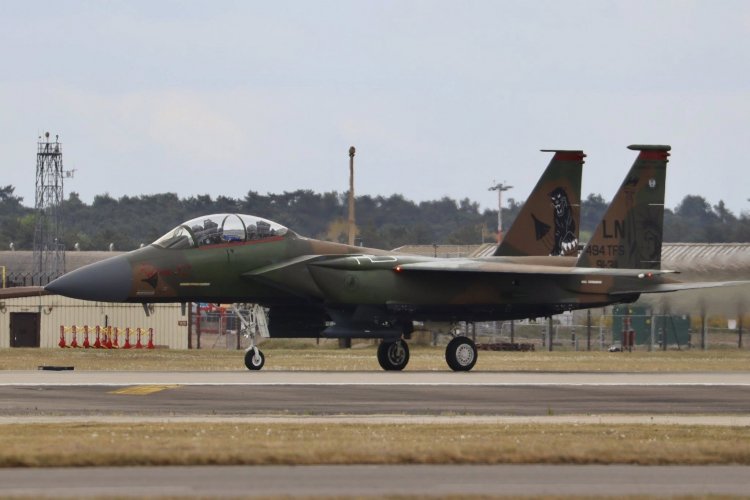
The most recent loss was an F-15E from the 494th FS (red markings), so a -229 jet.
 
Any idea how good is the radar warning system on the f-15Es flying over Iran? I saw a video where they said an upgrade was being started because the current system was not very good.
 
Last edited:
Any idea how good is the radar warning system on the f-15Es flying over Iran? I saw a video where they said an upgrade was bing started because the current system was not very good.
The upgrade is the EPAWSS system that had only been fielded on a few of F-15Es before the conflict started. The AN/ALR-56C is the standard RWR on the F-15E fleet. It is the legacy system used on the aircraft since initial production, https://www.baesystems.com/en-us/product/an-alr-56-radar-warning-receivers and while it likely has constant enhancement via threat programming and library changes there is a reason it is being replaced.
 
Should be the ALR-56M, not C. The C was for the F-15C/D.
The ALR-56M is the version used on the F-16 and the C-130. the ALR-56C is the version still used on the F-15E fleet.

From mid last year.
III. Description of supplies/services required to meet agency needs.
This requirement is to acquire engineering services to investigate and resolve Deficiency Reports (DR) for the ALR‐56C and ALR-56M systems, hereinafter referred to as 'ALR-56C/M'. This effort will resolve software and hardware issues experienced by both the Depot and Intermediate maintenance levels in support and maintenance of the ALR‐56C/M. The ALR‐-56C is the Radar Warning Receiver (RWR) system on the F‐15 and the ALR-56M is the RWR on the F-16 and C-130 aircraft. For these aircraft, hardware has been upgraded extensively to extend their usable life spans. However, the time duration for the ALR-56C/M sustainment requirement is limited due to the ALR-56C being replaced on F-15E/EX aircraft that is currently underway.
https://sam.gov/workspace/contract/opp/d03d6cc6e9614f3cab64e80f700177ac/view
 
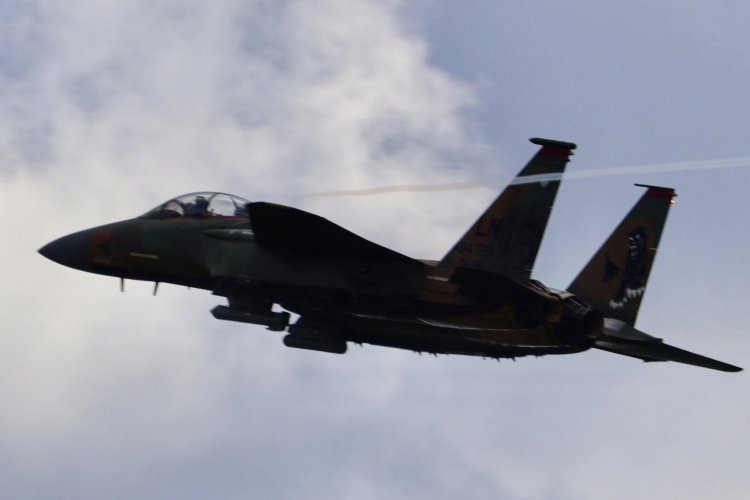
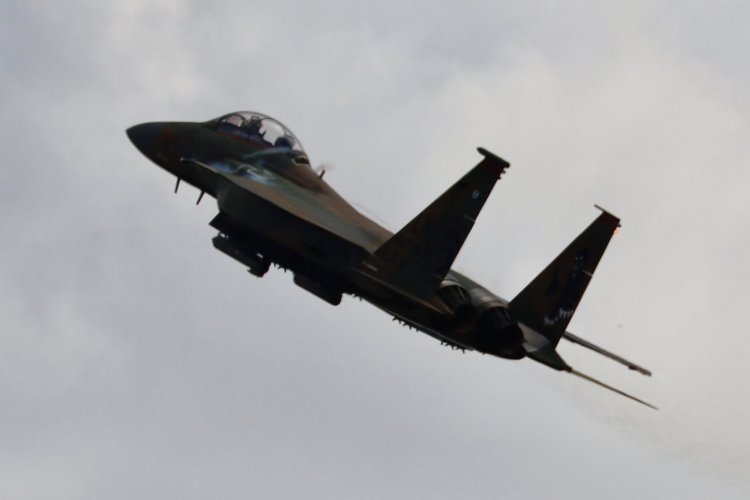
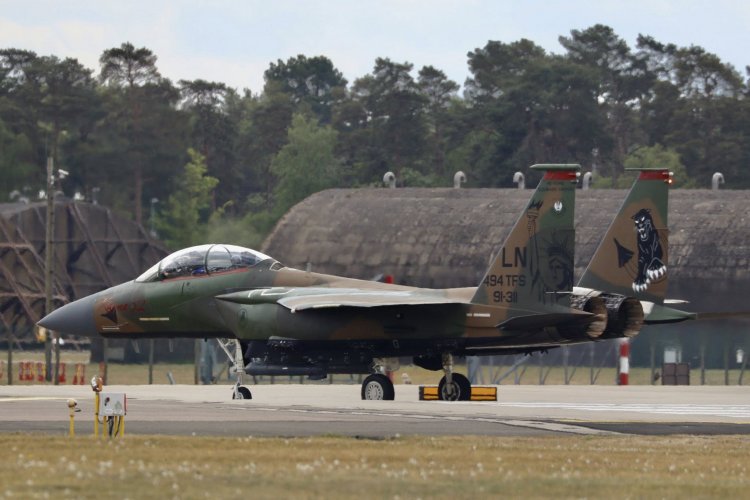
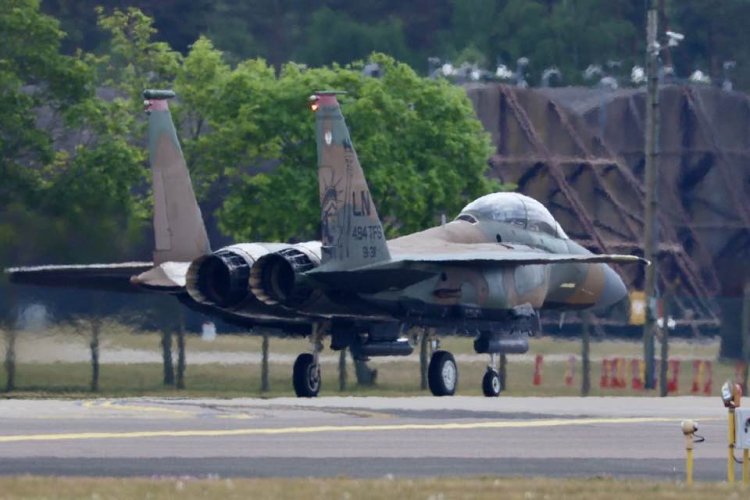
Slightly remiss of me not to post up but here at RAF Lakenheath commemorated Operation El Dorado Canyon April 1986, the air strikes against the terrorist training camps in Libya. The 48th Fighter Wing have commissioned a F-15E, in the color scheme of their predecessors which flew the air strikes with the General Dynamics F-1-11 Aardvark. The air strikes also involved the EF-1-11A Raven and from the navy side, the first combat debut of the then new F/A-18A Hornet.

So here are my photos below from yesterday when the painted F-15E flew (i missed it departing with full weapons load as it went to Holbeach range) when it came back.

el_dorado_canyon_1.jpg el_dorado_canyon_2.jpg el_dorado_canyon_3.jpg el_dorado_canyon_5.jpg el_dorado_canyon_7.jpg

cheers
 
The first 129 EXs will be used as intended. The AAA26 proposal has the total EX buy going to 329 aircraft as per @bring_it_on with the 130th aircraft and beyond meant to recapitalize the strike role served by the F-15E.

This would be in addition to a bigger Raider buy with a faster production cadence.
 
The first 129 EXs will be used as intended. The AAA26 proposal has the total EX buy going to 329 aircraft as per @bring_it_on with the 130th aircraft and beyond meant to recapitalize the strike role served by the F-15E.

This would be in addition to a bigger Raider buy with a faster production cadence.

As someone else noted on this forum, possibly even @bring_it_on, it seems like it would make more sense to replace the F-15E with EX now and let the ANG AD units absorb old Echos. It’s still a world of difference from a Charlie.
 
As someone else noted on this forum, possibly even @bring_it_on, it seems like it would make more sense to replace the F-15E with EX now and let the ANG AD units absorb old Echos. It’s still a world of difference from a Charlie.
Well the ANG political lobby is no joke - especially if you want to keep tapping into the dual qualified commercial airline flight officer pool, but I think many would agree with your point.
 
As someone else noted on this forum, possibly even @bring_it_on, it seems like it would make more sense to replace the F-15E with EX now and let the ANG AD units absorb old Echos. It’s still a world of difference from a Charlie.

How much life is left in those frames? I would assume they are all but clapped out.
 
How much life is left in those frames? I would assume they are all but clapped out.

They were reinforced for low level flight, and until a year ago my local ANG was still flying Charlie’s several times a week.
 
As someone else noted on this forum, possibly even @bring_it_on, it seems like it would make more sense to replace the F-15E with EX now and let the ANG AD units absorb old Echos. It’s still a world of difference from a Charlie.
War on the Rocks suggested that also back in 2019. More involved than just a straight swap though. EX has F110 engines so you need the entire maintenance unit to stand down and retrain on the new airframe including new engines and other systems.

In 2020 Goldfein said it was three months for an C SQN to swap to the EX, I expect an E would be similar.
Because of commonality, an F-15C/D squadron will be able to change over to the F-15EXs within about three months of getting them, Goldfein said, using a lot of the existing ground support gear and requiring little new military construction.
https://www.airandspaceforces.com/article/joining-up-on-the-f-15ex/

but I think that is overly ambitious and realistically it would be six months and likely even closer to nine. It also implies that all aircraft are available at the one time for that swap to occur. Given the slow production to date they wouldn't be able to swap a squadron every year.
 
15,000 flight hours for the oldest -220 Es? In that case they really need to be replaced with the newer EX before accidents start happening.
 

New F-15E Depot Line Will Speed Up Installs of EW System​

The Air Force Life Cycle Management Center has opened a “speedline” to accelerate installations of a new electronic warfare suite on board F-15E fighters, as the service looks to upgrade and expand its EW toolkit.

The new installation line will allow the center to add the Eagle Passive Active Warning Survivability System to the fourth-generation aircraft more rapidly than the previous plan of waiting to do so during regular depot maintenance, which occurs every 5-7 years, according to a May 26 release.

Established at the Warner Robins Air Logistics Complex in Georgia, “this independent line will significantly accelerate the installation and fielding of next-generation Electronic Warfare (EW) capabilities on F-15E aircraft,” according to the release.

The first F-15E will arrive on the line in June. The Air Force fielded its first two EPAWSS-enabled F-15Es in January 2025 at RAF Lakenheath, England. The 48th Fighter Wing said at the time that its 494th and 492nd Fighter Squadrons would get one apiece for training.

The new system extends the operational life of the already three-decade-old F-15E. The service’s plans call for adding EPAWSS to 99 F-15Es.
https://www.airandspaceforces.com/n...hlid=34e27a1c02c95febf73a8c95646a5076218a937b

Makes a lot of sense to run these jets through a separate upgrade line than wait for the 5 to 7 year depot maintenance slot. Clearly costs more but will get the upgrade out to the fleet much quicker.
 
Here's an interesting video I just stumbled across concerning the proposed McD F-15N Sea Eagle variant:


What if the F-15 Eagle had gone to sea?
In the early 1970s, McDonnell Douglas proposed a carrier-based version of the F-15 for the US Navy. Known as the F-15N, it promised extraordinary speed, a lighter airframe, and more advanced avionics. But adapting the Eagle for carrier operations meant solving one major problem: how to give it the fleet-defence capability of the F-14 Tomcat.

This is the story of the F-15N: the carrier modifications it would have required, the efforts to integrate the AIM-54 Phoenix missile, and the remarkable F-15N-PHX concept, which could have carried up to six Phoenix missiles.So why did the Navy ultimately walk away from an aircraft that looked so promising on paper?

CONTENT​
00:00 Intro
01:23 Background
06:47 Development
07:49 Advantages
09:20 Additions to the 15N
11:20 Upgrades
14:50 Conclusion
 
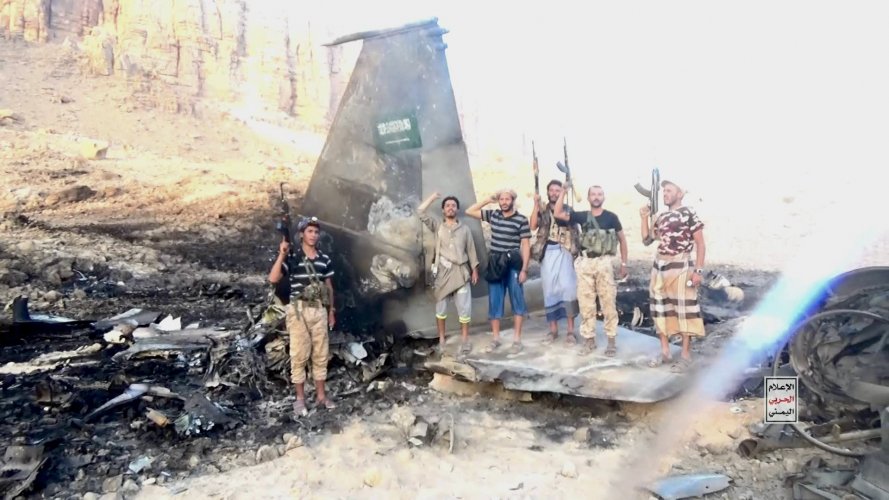
So apparently a video has been released that shows the wreckage of a Saudi F-15. Do the Houthis even have the ability to take down an F-15 or is this fake ?
Yes they do. Not even their first one.
They have some modern Iranian air defense systems, and at least partial ability to reproduce them locally.
 
So apparently a video has been released that shows the wreckage of a Saudi F-15. Do the Houthis even have the ability to take down an F-15 or is this fake ?

well, the Saudis don't operate the F-15EX, but they do have the related F-15SA.
Various social media is saying this is the 5529 or 5539, but to me the tail in the picture looks like it ends in an 8
 
Last edited:

Similar threads

Back
Top Bottom