Canada Future fighter capability project (ex-Next Generation Fighter Capability)

interim stop-gap + longer-term solution (e.g. second hand Eurofighters + GCAP)

This could actually be the most sensible move....

Canada needs a fighter sooner rather than later...specifically for air defence of Canada.

The ideal would be, if it were available now, GCAP due to its enormous range, payload capacity, LO etc etc...but most of all it will be ITAR free...Canada joining as an Observer clearly seems to see some value in it as well...

But getting the F/A-18 out to GCAP service entry is impossible. They're already pretty much committed to 30 x F-35A now...but they could do with another 50 or so interceptors, specifically for homeland defence. The F-35A can fill the deployable capability to NATO after all...

So...why not some secondhand Tranche 1 Typhoon to tide them over? Most are getting retired with at least half their airframe hours left....and its a spectacularly reliable, and accident free, platform...which is rather important for any flights over Canada's northern wastes...plus it will happily outclass any Russian aviation it actually comes close to....

There are 2 Tranche 1 users (UK and Italy) who would be very happy to get Canada 50 x Typhoon T1's at a very, very low price to tide them over until delivery of GCAP could be made....
 
Last edited:
This could actually be the most sensible move....

Canada needs a fighter sooner rather than later...specifically for air defence of Canada.

The ideal would be, if it were available now, GCAP due to its enormous range, payload capacity, LO etc etc...but most of all it will be ITAR free...Canada joining as an Observer clearly seems to see some value in it as well...

But getting the F/A-18 out to GCAP service is impossible. They're already pretty much committed to 30 x F-35A now...but they could do with another 50 or so interceptors, specifically for homeland defence. The F-35A can fill the deployable capability to NATO after all...

So...why not some secondhand Tranche 1 Typhoon to tide them over? Most are getting retired with at least half their airframe hours left....and its a spectacularly reliable, and accident free, platform...which is rather important for any flights over Canada's northern wastes...plus it will happily outclass any Russian aviation it actually comes close to....

There are 2 Tranche 1 users (UK and Italy) who would be very happy to get Canada 50 x Typhoon T1's at a very, very low price to tide them over until delivery of GCAP could be made....
I like the idea, only the issue of a dual fleet from a cost perspective makes it difficult but if they are coming cheaper as second hand airframes then it reduces that. T1s are also not meteor capable but I assume could use AIM-120D?
 
I like the idea, only the issue of a dual fleet from a cost perspective makes it difficult but if they are coming cheaper as second hand airframes then it reduces that. T1s are also not meteor capable but I assume could use AIM-120D?

AIM-120-C7/8 should be ok, Austria was pursuing it. Don't think they have had the D-3 variant integrated (the UK purchased the D-3 for the F-35B fleet in lieu of Meteor integration).

With the retirement of the Spanish and German T1's the only competition for spares would be Austria's small fleet until 2032/35 when they get retired (and become available), so Canada could definitely accumulate enough spares to operate well into the 2040's with no real issues whatsoever with spares, maintenance and flying hours.
 
Last edited:
While the trade war is real what isn't and has never been taken seriously by the Canadian Govt is the annexation claims. Were that to be the case then military cooperation would have ceased, it most certainly hasn't, and the ordering of new military equipment from the US would have ceased, it most certainly hasn't.

Most of our heavy equipment is located at a few centralised bases. The messaging to the Canadian public has been that our military simulations show our conventional armed forces being wiped out in a few days, and the contingency plans being considered would involve dispersing weapons among the public and engaging in a Guerrilla campaign. Under such a scenario, even if we felt there was a severe threat, then there might be more benefits for maintaining cooperation as the information we'd gain would be more useful than the information they would gain.

I cannot say for certain the view within the Prime Minister's office, or whether the plans to expand military training (etc.) are just for show to a domestic audience.

What I can say definitively is that a lot of Canadians, including a lot of Canadian veterans and service members, take these threats seriously. The mood on the ground is definitely that the threat to sovereignty is greater than the threat of unemployment due to a trade war.

What short strips does the RCAF use for fighter jets in the Canadian North? The answer is none because there are none. From a Billie Flynn blog here

He also has a second runway myth here worth reviewing.

Goose Bay is fairly far north. However, to reach the Western Arctic and even parts of the Central Arctic we've needed forward refuelling positions. There are no highways that far north (e.g. due to permafrost), so we're not talking about a Scandinavian approach to dispersal. But we're talking about icy runways, and relatively short strips, in very harsh conditions.

But in acquiring Gripen the RCAF spends more money. The acquisition cost is little different, the operating cost not enough to make up for duplicating all the things needed to support a dual fleet of fighters and the reason the RCAF went to a single fleet with the CF-18 and why the new Canadian fighter capability was also for a single fleet.

True. If we purchased the Gripen, it would make sense to sell the CF-35 portion of the fleet to an allied operator. A dual fleet doesn't make much sense for a country our size.


What technological transfer can Saab actually provide? What is unique about the Gripen that Canadian industry does not already understand? The radar isn't Swedish, the engine isn't Swedish, the IRST isn't Swedish. Only about 30% by content is actually Swedish origin.

You might be under-estimating the appeal of having avionics or systems made by other European countries: Sweden being an EU member who has partnerships with manufacturers in other European countries, it could act as a bridge to further defense cooperation.

You can look up the polling data and you'll find that Canadians currently support a pivot towards integrating with (or even joining) the EU... even more-so than strengthening ties with the Commonwealth. I agree that the Eurofighter or Rafale might have a more compelling case... and that the Gripen might be little more than an advance trainer to keep capacities up while waiting for FCAS though.

I feel I've answered all of your other points in previous points.
 
Canada needs a fighter sooner rather than later...specifically for air defence of Canada.

I wonder if Boeing has any BOMARCs left over?

P.S. On a serious note - if the airframes have enough hours, than I think the idea could have merit.
 
At the moment Saab does not project the A3 CCA arriving before 2035-40 timeframe and only capable of SEAD/DEAD after 2040 at the earliest...

timeline.png

What does Canada give up by aligning itself with a CCA that is likely going to be 5 years minimum behind US/UK systems and like the Gripen E probably be late into service.

Some basic observations (which might be a bit obvious in retrospect?):
- Requirements for CCAs and SEAD/DEAD CCAs don't need to be as stringent as they would be for manned aircraft. A simplified version of the Gripen NG avionics in a CCA platform will likely be relevant for one or two decades longer than an identical manned platform would be.
- Joining a program earlier in its development increases the likelihood of workshare, especially R&D workshare where more technology transfer is likely to happen. This actually make cooperation more attractive, not less.
- Sweden is a smaller country, so we'd be more equal partners in any negotiations.
 
Most of our heavy equipment is located at a few centralised bases. The messaging to the Canadian public has been that our military simulations show our conventional armed forces being wiped out in a few days, and the contingency plans being considered would involve dispersing weapons among the public and engaging in a Guerrilla campaign. Under such a scenario, even if we felt there was a severe threat, then there might be more benefits for maintaining cooperation as the information we'd gain would be more useful than the information they would gain.
This statement should not be taken seriously.
I cannot say for certain the view within the Prime Minister's office, or whether the plans to expand military training (etc.) are just for show to a domestic audience.

What I can say definitively is that a lot of Canadians, including a lot of Canadian veterans and service members, take these threats seriously. The mood on the ground is definitely that the threat to sovereignty is greater than the threat of unemployment due to a trade war.
I've seen the polling and it does not match what you are saying. Canadians overwhelmingly are not in favor of paying more for anything and a trade war is a far more important issue than the trolling threats of annexation.
Goose Bay is fairly far north. However, to reach the Western Arctic and even parts of the Central Arctic we've needed forward refuelling positions. There are no highways that far north (e.g. due to permafrost), so we're not talking about a Scandinavian approach to dispersal. But we're talking about icy runways, and relatively short strips, in very harsh conditions.
Again, there are no short runways in the north that either platform would operate from. Norway uses a drogue chute with the F-35A that would be more than sufficient for Canadian use and I believe has been ordered.
True. If we purchased the Gripen, it would make sense to sell the CF-35 portion of the fleet to an allied operator. A dual fleet doesn't make much sense for a country our size.
Why would anyone sell the F-35 to buy a Gripen. Doing so invalidates Canada's ability to meet their NOATO commitments for a start. Literally anyone who has had the opportunity to buy the F-35 over the Gripen has done so. The only reason the Gripen is being considered is because it is not the F-35 and was the last aircraft left in the race. It is not capable of meeting the missions the RCAF need, the evaluation made that clear.
You might be under-estimating the appeal of having avionics or systems made by other European countries: Sweden being an EU member who has partnerships with manufacturers in other European countries, it could act as a bridge to further defense cooperation.
And why then would those companies allow their products to be manufactured in Canada compared to their own domestic industries?
I agree that the Eurofighter or Rafale might have a more compelling case... and that the Gripen might be little more than an advance trainer to keep capacities up while waiting for FCAS though.
Canada has prided itself on meeting its international commitments. A Gripen does not allow that to happen and any Canadian GCAP is not coming until 2040 at the earliest. Meanwhile even if Canada decided on Gripen E today the first would not come out of a Canadian factory until approx 2032.
I feel I've answered all of your other points in previous points.
I don't think you have answered much at all. Just broad brush hand waving and not an actual appreciation for how poorly a decision it would be for Canada to acquire the Gripen.

Some basic observations (which might be a bit obvious in retrospect?):
- Requirements for CCAs and SEAD/DEAD CCAs don't need to be as stringent as they would be for manned aircraft. A simplified version of the Gripen NG avionics in a CCA platform will likely be relevant for one or two decades longer than an identical manned platform would be.
A leap that isn't based on any valid information. There is nothing special about Gripen E avionics that allows it to function till 2050/60. Even by 2035 the CCA market will have moved far beyond what Saab is promising with A3, it is just a means for them to get the Swedish Govt to continue to subsidize Saab manufacturing.
- Joining a program earlier in its development increases the likelihood of workshare, especially R&D workshare where more technology transfer is likely to happen. This actually make cooperation more attractive, not less.
- Sweden is a smaller country, so we'd be more equal partners in any negotiations.
Joining a program that doesn't deliver a meaningful product that would stand up in the face of modern threats isn't a viable business case. What about the A3 gives you confidence that Saab can deliver a product that the market wants? The Gripen A/C/E has proven that it has essentially no export appeal despite Saab promising for many years on prospects for 400 or more exports of each platform and again the evaluation conducted by Canada has proven has far behind the Gripen is to the F-35. Why would the A3 be any different?
 
I wonder if Boeing has any BOMARCs left over?

P.S. On a serious note - if the airframes have enough hours, than I think the idea could have merit.
The RAF ones are the most heavily used....and they're not even at half of their airframe hours...despite what some of the claims on the internet say under Project TyTan the RAF and BAE got cost per flight down to late model F-16 levels...availability with Typhoon is also spectacularly high. RAF believes its the most reliable combat aircraft its ever had...by a margin.

There will be well over 100 Tranche 1 coming available over the next 5 years...and all of the operating countries are close Canada allies who would be keen to keep Canada connected to Europe.
 
Most of our heavy equipment is located at a few centralised bases. The messaging to the Canadian public has been that our military simulations show our conventional armed forces being wiped out in a few days, and the contingency plans being considered would involve dispersing weapons among the public and engaging in a Guerrilla campaign. Under such a scenario, even if we felt there was a severe threat, then there might be more benefits for maintaining cooperation as the information we'd gain would be more useful than the information they would gain.

I cannot say for certain the view within the Prime Minister's office, or whether the plans to expand military training (etc.) are just for show to a domestic audience.

What I can say definitively is that a lot of Canadians, including a lot of Canadian veterans and service members, take these threats seriously. The mood on the ground is definitely that the threat to sovereignty is greater than the threat of unemployment due to a trade war.


Goose Bay is fairly far north. However, to reach the Western Arctic and even parts of the Central Arctic we've needed forward refuelling positions. There are no highways that far north (e.g. due to permafrost), so we're not talking about a Scandinavian approach to dispersal. But we're talking about icy runways, and relatively short strips, in very harsh conditions.


True. If we purchased the Gripen, it would make sense to sell the CF-35 portion of the fleet to an allied operator. A dual fleet doesn't make much sense for a country our size.


You might be under-estimating the appeal of having avionics or systems made by other European countries: Sweden being an EU member who has partnerships with manufacturers in other European countries, it could act as a bridge to further defense cooperation.

You can look up the polling data and you'll find that Canadians currently support a pivot towards integrating with (or even joining) the EU... even more-so than strengthening ties with the Commonwealth. I agree that the Eurofighter or Rafale might have a more compelling case... and that the Gripen might be little more than an advance trainer to keep capacities up while waiting for FCAS though.

I feel I've answered all of your other points in previous points.
This is the actual trade war situation and the mood at the moment between the canadian decision makers. And the european ones.

https://finance.yahoo.com/markets/stocks/articles/u-steel-materials-stocks-swing-193008928.html

https://www.bnnbloomberg.ca/busines...lk-away-from-us-trade-talks-former-pm-harper/

https://www.euronews.com/my-europe/2026/09/16/canada-to-become-first-associate-member-of-the-eu

"German Chancellor Friedrich Merz floated the idea last May of an “associate membership” for Ukraine, which is urgently seeking to enter the EU. In a letter sent to EU leaders, he argued that this status would grant Ukraine access to the decision-making bodies – the European Council, the European Commission and the European Parliament – without voting rights or a dedicated portfolio. It would also allow the country to tap into certain EU-funded programmes on a "step-by-step" basis.

It’s hard to see Canada in the same category as Ukraine, a country which is at war, but von der Leyen's announcement on Wednesday nonetheless sent a strong political signal in a volatile world where historical alliances are shifting.

“Europe and Canada believe in democracy. That power does not belong to the strongest, the richest, or the loudest – but to all of us,” she said. “Democracies have the freedom to choose with whom to work.”

She also called for a new alliance with Ottawa, which could include tech, defence, Arctic joint projects, but also energy, critical minerals and artificial intelligence.

“We will move from CETA to an Alliance for the Future to create a common prosperity and economic security space,” she said, referring to the 2016 EU-Canada trade agreement that removed tariff barriers between both sides and has been provisionally applied."

It seems that these two germans politicians have have found a way "to make Europe great again"... :)
View: https://www.youtube.com/shorts/r9CeJpKFT7U


The political decision taken today will have for sure results in the actual and future canadian aquisition programs.
 
This statement should not be taken seriously.

I've seen the polling and it does not match what you are saying. Canadians overwhelmingly are not in favor of paying more for anything and a trade war is a far more important issue than the trolling threats of annexation.

Again, there are no short runways in the north that either platform would operate from. Norway uses a drogue chute with the F-35A that would be more than sufficient for Canadian use and I believe has been ordered.

Why would anyone sell the F-35 to buy a Gripen. Doing so invalidates Canada's ability to meet their NOATO commitments for a start. Literally anyone who has had the opportunity to buy the F-35 over the Gripen has done so. The only reason the Gripen is being considered is because it is not the F-35 and was the last aircraft left in the race. It is not capable of meeting the missions the RCAF need, the evaluation made that clear.

And why then would those companies allow their products to be manufactured in Canada compared to their own domestic industries?

Canada has prided itself on meeting its international commitments. A Gripen does not allow that to happen and any Canadian GCAP is not coming until 2040 at the earliest. Meanwhile even if Canada decided on Gripen E today the first would not come out of a Canadian factory until approx 2032.

I don't think you have answered much at all. Just broad brush hand waving and not an actual appreciation for how poorly a decision it would be for Canada to acquire the Gripen.


A leap that isn't based on any valid information. There is nothing special about Gripen E avionics that allows it to function till 2050/60. Even by 2035 the CCA market will have moved far beyond what Saab is promising with A3, it is just a means for them to get the Swedish Govt to continue to subsidize Saab manufacturing.

Joining a program that doesn't deliver a meaningful product that would stand up in the face of modern threats isn't a viable business case. What about the A3 gives you confidence that Saab can deliver a product that the market wants? The Gripen A/C/E has proven that it has essentially no export appeal despite Saab promising for many years on prospects for 400 or more exports of each platform and again the evaluation conducted by Canada has proven has far behind the Gripen is to the F-35. Why would the A3 be any different?

So allow me to understand this correctly, your ultimate conclusions are:

1) There is no way that Canada can meet its NATO commitments without purchasing the F-35. It is impossible to meet our NATO committments through purchasing aircraft from other NATO members.

2) Middle powers should not attempt to build their own domestic industries, and certainly should not cooperate with each other to build each other's industries.

Let me know if this is an incorrect interpretation of your conclusions. I don't want to accidentally misrepresent you. It does seem like this is what you are saying though.

I would also be very interested in seeing any quantitative evidence you have to show that Canadians are more concerned with economic impacts of a trade-war than they are with threats of annexation or having our sovereignty diminished? This is consistent with either the last polling data I saw or the anecdotal evidence I have access to - but I'm open to being convinced by numbers (or any rigorous evidence really).
 
Why would anyone sell the F-35 to buy a Gripen. Doing so invalidates Canada's ability to meet their NOATO commitments for a start. Literally anyone who has had the opportunity to buy the F-35 over the Gripen has done so. The only reason the Gripen is being considered is because it is not the F-35 and was the last aircraft left in the race. It is not capable of meeting the missions the RCAF need, the evaluation made that clear.
Gripen is fully NATO compatible. Sweden, Hungary, Czech Republic and the United Kingdom operate the Gripen, and they are all NATO members. It has performed NATO air policing operations in Iceland and Baltic, without issues of cooperation with other NATO aircrafts or infrastructure.
 
Why would anyone sell the F-35 to buy a Gripen. Doing so invalidates Canada's ability to meet their NOATO commitments for a start. Literally anyone who has had the opportunity to buy the F-35 over the Gripen has done so.
The first country to tender them when gripen E is actually a product (i.e. reached production), leans toward Gripen. You can twist this both ways.
 
I don't understand why this thread continues to be spammed with Saab marketing nonsense
I keep coming across all sorts of F-35 marketing nonsense from L-M on this forum. Seeing some from a small Swedish plane maker just restores the balance a bit and is quite refreshing tbh.
 
Last edited:
Gripen is fully NATO compatible. Sweden, Hungary, Czech Republic and the United Kingdom operate the Gripen, and they are all NATO members. It has performed NATO air policing operations in Iceland and Baltic, without issues of cooperation with other NATO aircrafts or infrastructure.
Ahem... UK don't operate the Gripen.
 
Gripen is fully NATO compatible. Sweden, Hungary, Czech Republic and the United Kingdom operate the Gripen, and they are all NATO members. It has performed NATO air policing operations in Iceland and Baltic, without issues of cooperation with other NATO aircrafts or infrastructure.
Indeed, Gripen is being used by a number of NATO air forces, I don't see any issues with NATO compatibility if that's an issue.
But perhaps its not NATO but NORAD?

Despite all the talk on the internet and editorials, the Canadian government still seems committed to NORAD and Five Eyes compatibility. The Typhoon can provide five eyes, but none of the Eurocanards provide NORAD. The costs of integrating it is likely the reason why Dassault and Eurofighter dropped out, but Saab seems confident that they could do it cheaply.

https://www.canada.ca/en/department...r-jets/future-fighter-capability-project.html
https://www.canada.ca/en/department...re/2026/nddn-defence-industrial-strategy.html

Ahem... UK don't operate the Gripen.
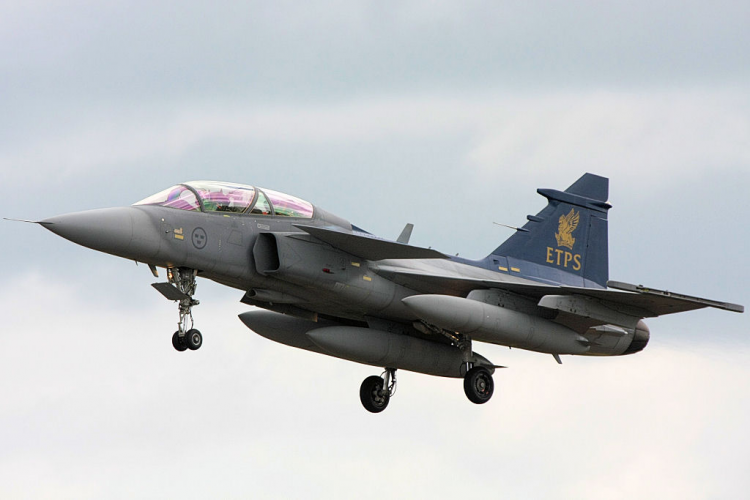
I see UK being brought up as a Gripen operator from time to time, but people are probably confusing Empire Test Pilot School in the UK, which used to lease Gripen Bs from Saab, and seemingly still operates Gripen Ds.
 
Indeed, Gripen is being used by a number of NATO air forces, I don't see any issues with NATO compatibility if that's an issue.
But perhaps its not NATO but NORAD?

Despite all the talk on the internet and editorials, the Canadian government still seems committed to NORAD and Five Eyes compatibility. The Typhoon can provide five eyes, but none of the Eurocanards provide NORAD. The costs of integrating it is likely the reason why Dassault and Eurofighter dropped out, but Saab seems confident that they could do it cheaply.
Not the costs.
I see UK being brought up as a Gripen operator from time to time, but people are probably confusing Empire Test Pilot School in the UK, which used to lease Gripen Bs from Saab, and seemingly still operates Gripen Ds.
Ah , didn't know the Empire test Pilot Scholl flew them.
 
Not the costs.

Ah , didn't know the Empire test Pilot Scholl flew them.
For the Typhoon at least its the cost
https://ottawacitizen.com/news/nati...ter-drops-out-of-canadian-fighter-jet-program

"Airbus and the UK Defence Ministry noted that its decision to withdraw was the result of a detailed review of Canada’s request for proposals which was released to industry on July 23. It pointed to the changes Canada made to the industrial benefits package to appease Lockheed Martin as well as the excessive security costs that U.S.-Canadian security requirements placed on a company based outside North America.

A detailed review has led the parties to conclude that NORAD security requirements continue to place too significant of a cost on platforms whose manufacture and repair chains sit outside the United States-Canada 2-EYES community,” the statement from Airbus and the UK Defence Ministry noted. “Second, both parties concluded that the significant recent revision of industrial technological benefits obligations does not sufficiently value the binding commitments the Typhoon Canada package was willing to make, and which were one of its major points of focus."
 
I keep coming across all sorts of F-35 marketing nonsense from L-M on this forum. Seeing some from a small Swedish plane maker just restores the balance a bit and is quite refreshing tbh.
Fair enough, but we don't get LM PR releases spammed verbatim on repeat at least.

I don't know why. I'm pretty sure no one on this forum is in a position to buy a fleet of fighters.
 
Fair enough, but we don't get LM PR releases spammed verbatim on repeat at least.

I don't know why. I'm pretty sure no one on this forum is in a position to buy a fleet of fighters.
judging by some of the comments made by various people over social media and here..
they want Canada to buy a fighter jet that is not-American, 100% ITAR free, cheap to operate, uses non-American weapons, creates lots of jobs, and can be delivered by 2032. NORAD optional.

From what I've read from the Canadian government, its largely focused on jobs/industry participation, NORAD/five eyes, 2030s delivery and Canadian control over sustainment and operations.
 
judging by some of the comments made by various people over social media and here..
they want Canada to buy a fighter jet that is not-American, 100% ITAR free, cheap to operate, uses non-American weapons, creates lots of jobs, and can be delivered by 2032. NORAD optional.

From what I've read from the Canadian government, its largely focused on jobs/industry participation, NORAD/five eyes, 2030s delivery and Canadian control over sustainment and operations.

I think that is about right.

On the other side of the equation there are existing contractual commitments, benefitting from the United States electronic warfare suite, potential integration with USAF/NORAD, likely better survivability against air-defenses and capable EOTS system...

So far the American government has threatened retaliation if we don't purchase the CF-35... (and taken some steps against Bombardier), but I think there is a lingering concern that they could reverse their stance and threaten to withhold support for the aircraft as a form of political leverage.
 
I think that is about right.

On the other side of the equation there are existing contractual commitments, benefitting from the United States electronic warfare suite, potential integration with USAF/NORAD, likely better survivability against air-defenses and capable EOTS system...

So far the American government has threatened retaliation if we don't purchase the CF-35... (and taken some steps against Bombardier), but I think there is a lingering concern that they could reverse their stance and threaten to withhold support for the aircraft as a form of political leverage.
My feeling is that among the stuff listed below
jobs/industry participation, NORAD/five eyes, 2030s delivery and Canadian control over sustainment and operations.

Canada may need to compromise on one or some of these in order to prioritize the others.
For example if they are prioritizing NORAD while trying to maintain 2030s delivery schedules, they may be limited to American jets.
If they're willing to change their stance on NORAD, there's a much wider field of options to choose from.

If its jobs/industry participation, the F-35 is obviously strong as Canada is already part of it. I'm a bit skeptical of the Saab claims as generally the market for Gripen has been small. Countries don't just buy jets for their performance, but also to strengthen relationships with another country. its where more influential countries such as the US, UK, France, China, etc have an advantage. Saab has even expressed frustration about political leverage. I also don't think Ukraine will end up with over 100 Gripens after the war either.
I'm also wondering how Canada would split Gripen production in Sweden and Brazil.

Typhoon production is up in the air and depends on further major orders, but may close soon. I can see Rafale production going on for a while because French planes hit that niche for countries that want "western" but don't want American. If Canada is willing to have a Rafale that operates independently of NORAD, perhaps Dassault could offer some production, it'll satisfy the point on industry and Canadian control.

If having more airframes by 2030s is the main priority, my pick would have Canada to lease aircrafts for 10 years, and invest money on a future platform (GCAP, the new French fighter, Korean, Turkish, etc) as well as co-developing a CCA, rather than investing heavily on a 4th gen airframe.
 
So allow me to understand this correctly, your ultimate conclusions are:

1) There is no way that Canada can meet its NATO commitments without purchasing the F-35. It is impossible to meet our NATO committments through purchasing aircraft from other NATO members.
What Canada commits to for NATO is long term high end capability over a long duration. Purchasing Gripen E would reduce the ability of Canada to meet its commitments. The RCAF evaluation of the F-35 and Gripen included NATO commitments

The briefing also provided an assessment of the global threat picture in which the new jet is expected to operate. Defence officials described an operational environment that will be more lethal and complex, complicated by an evolving cyber threat and contested control of the electro-magnetic spectrum. Adversaries are expected to deliver more advanced fighters and anti-access area denial (A2AD) surface-to-air missile systems, as well as other increasingly technologically advanced equipment.

“Our missions and roles and commitments have not changed,” one slide deck noted, emphasizing the importance of continuing to fulfil current NORAD and NATO requirements.

Among the critical criteria for the next jet will be seamless interoperability with key allies; the ability to upgrade to maintain an operational advantage over current and future threats; the range, endurance and speeds required in NORAD and NATO mission configurations; the ability to gather intelligence, detect, track, identify, assess in permissive and contested environments; and the survivability and lethality to be effective in those environments.

In particular, the RCAF emphasized interoperability and information processing, exploitation and dissemination with 5 Eyes and 2 Eyes allies. Canada, Australia, the United Kingdom, the United States and New Zealand comprise the first group, while Canada and the U.S. make up the second.
https://skiesmag.com/news/government-outlines-procurement-process-key-criteria-future-fighter/

It is evident from the RCAF evaluation ranking that the Gripen E scoring only 22% was not able to meet the mission performance requirements.
2) Middle powers should not attempt to build their own domestic industries, and certainly should not cooperate with each other to build each other's industries.
Canada already has a domestic industry building aircraft and aircraft parts for global partners. The question is not about building their own domestic industry, that exists already and is probably more advanced that the Swedish aviation industry; it is what value is there to Canada in doing so. You have projected selling F-35s to go all Gripen which would remove Canada from the F-35 industrial program. That would remove the opportunity for Canadian Industry to compete and win higher tech work than is available on Gripen and with a volume that is higher than Gripen will ever be able to offer. Even just as an industrial opportunity the F-35 program is substantially greater.
Let me know if this is an incorrect interpretation of your conclusions. I don't want to accidentally misrepresent you. It does seem like this is what you are saying though.
I think the above should be pretty clear.
I would also be very interested in seeing any quantitative evidence you have to show that Canadians are more concerned with economic impacts of a trade-war than they are with threats of annexation or having our sovereignty diminished? This is consistent with either the last polling data I saw or the anecdotal evidence I have access to - but I'm open to being convinced by numbers (or any rigorous evidence really).
That works both ways mate. You haven't provided any actual evidence to support your position.

As far as the trade war over annexation is concerned,

Reality of the issue actually being discussed are.
https://www.cbc.ca/news/politics/canada-ukraine-us-russia-annexation-war-economy-9.7343922

How Canadians really feel about the trade war and what they are willing to pay for
https://nationalpost.com/opinion/canadians-support-hard-line-against-u-s-but-dont-want-to-pay-for-it

We could dance around this issue all day and find polls that reflect both view points but my original point still stands and is supported by a broad swath of evidence, the US will not invade Canada and no one including the Canadian Govt expect and anticipates they will. What is a threat to Canada is the trade war.

The first country to tender them when gripen E is actually a product (i.e. reached production), leans toward Gripen. You can twist this both ways.
Who is this country you speak of...?

Gripen is fully NATO compatible. Sweden, Hungary, Czech Republic and the United Kingdom operate the Gripen, and they are all NATO members. It has performed NATO air policing operations in Iceland and Baltic, without issues of cooperation with other NATO aircrafts or infrastructure.
As I explained above. Canada selecting Gripen would not allow the RCAF to meet what they have determined as their commitments to NATO.
 
Who is this country you speak of...?
Canada.

Gripen only started resembling aircraft without significant development risks around 2025.
Before that point, everyone was rejecting a badly delayed ppt, one with aggressive marketing fairytales substituting hard data.

In a way, it's first direct competition with F-35 (which was perceived to be a known quantity since 2015) is indeed Canada; there's a good chance Sweden will get their share there.
 
Well that is a stupid statement...
Gripen only started resembling aircraft without significant development risks around 2025.
Before that point, everyone was rejecting a badly delayed ppt, one with aggressive marketing fairytales substituting hard data.

In a way, it's first direct competition with F-35 (which was perceived to be a known quantity since 2015) is indeed Canada; there's a good chance Sweden will get their share there.
The only reason Gripen is being talked about is because of the trade war. There is literally no other reason and had Trump not been elected in 2024 then this discussion would never have happened. it is not a re-evaluation of the Canadian requirements, to provide more work for Canadian industry or a re-run of the tender. It is about the biggest ticket military item that Canada can swing to try and influence trade discussions. It has absolutely nothing to do with the Gripen's progress as an airframe.

As already stated many times the irony of this situation is the Gripen is still dependent on the US and so choosing Gripen doesn't the non US brief anyway...
 
we're now on 12 pages of this back and forth, but I'm curious to what you all think Canada should choose, in your personal opinions.

For me, if they must have a split fighter buy, to lease something for 10 or so years and invest on a mix of CCAs and an upcoming manned aircraft. But rather than Sweden, work with the UK on GCAP or the French on their project. The UK and France are both close with Canada and likely will able to acquire a larger market share with their future jet. Canada can work with Sweden in other areas (Globaleye, Loyaleye, CCAs, corvettes, etc).
 
I love the Gripen but its just not the right plane for Canada. Eurofighter Mk1 is the right choice, cheap, available right now, great for air defense, two engines, zero US parts, step towards GCAP, Once the Mk1 reach end of life you could possibly trade the F-35s to the UK for their Mk4s, if GCAP isnt ready or even if it is. So you have Canada and the UK both consolidating around two airframes instead of 3.
 
Indeed, Gripen is being used by a number of NATO air forces, I don't see any issues with NATO compatibility if that's an issue.
But perhaps its not NATO but NORAD?

Despite all the talk on the internet and editorials, the Canadian government still seems committed to NORAD and Five Eyes compatibility. The Typhoon can provide five eyes, but none of the Eurocanards provide NORAD. The costs of integrating it is likely the reason why Dassault and Eurofighter dropped out, but Saab seems confident that they could do it cheaply.

https://www.canada.ca/en/department...r-jets/future-fighter-capability-project.html
https://www.canada.ca/en/department...re/2026/nddn-defence-industrial-strategy.html


I see UK being brought up as a Gripen operator from time to time, but people are probably confusing Empire Test Pilot School in the UK, which used to lease Gripen Bs from Saab, and seemingly still operates Gripen Ds.
Ah , didn't know the Empire test Pilot Scholl flew them.

Worth noting that the Gripen used by ETPS aren't even operated in the UK. Students go over to Sweden to fly the Gripen...its even in Swedish markings...with ETPS on the tail....its never been painted in Raspberry Ripple, Black or QinetiQ's schemes. It has visited the UK though for RIAT, and I think Boscombe Down...but its rare.

1789629941753.png
 
Back
Top Bottom