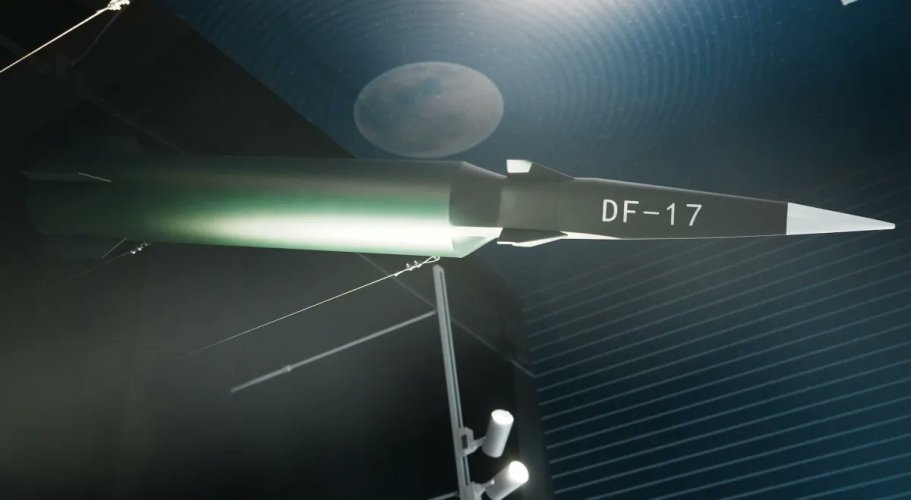
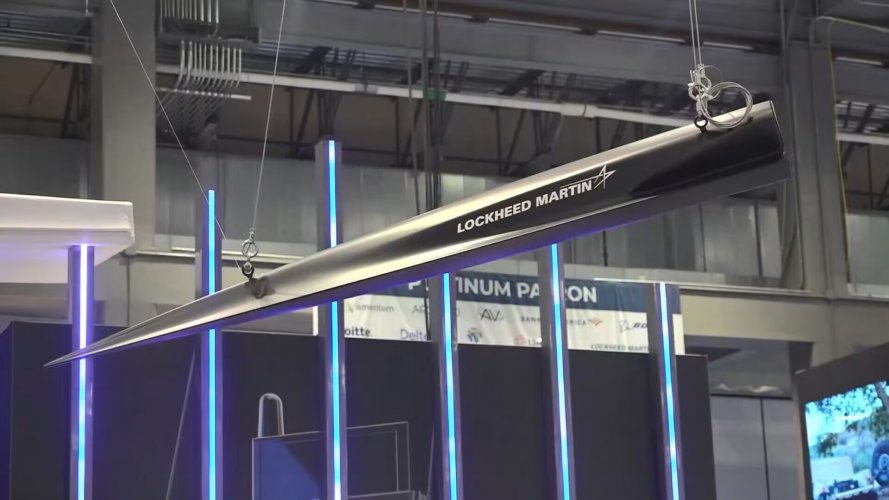
To be fair, US have a penetrating force able to do what others intends with their by hersonic/ballistic missiles. So in essence, the race is "lost" only for a couple of days at the beginning of hostilities (plus terror campaign). You do not win a war throwing such things above the FLOT. On the contrary, war are won by airplanes dropping quantities of precision munitions unabated.

The problem is that we follow the startups rethorics believing that a standoff force can do well. It does not.

US needs Hypersonic for time sensitive targets. That's what they have as purported above. But yes thy need more.
Speed can be the poor man's stealth.
 
While I am a military technology enthusiast I am not a engineer or technologist, however, I always figured putting a smart front end on a modified Roadrunner style booster was the quick and dirty way to produce a system quickly at scale accessible to the warfighter.

The scientists and engineers can laugh and mock my naivety :)
 
I think it would be more accurate to say the U.S. deprioritized all ballistic missiles larger than ATACMs. It is not just hypersonics, and the inventory of Iran, North Korea, and China are still mostly RVs not gliders. Part of this is of course INF Treaty. Part of it is the fact the U.S. has basing issues with medium ranged weapons. Obviously a big chunk of it is financial, and The War On Terror(TM) ate up a huge amount of money on top of the “peace dividend” before it.

INF had little role to play in it. It limited the Army from fielding anything significantly longer ranged than ATACMS. But the Army was during most of that period as much constrained by its inability to target at significantly longer ranges than ATACMS, and by the competence of its R&D and program management / acquisition portfolio management cadre, than the INF restrictions themselves. However, INF had absolutely no role to play in the long list of air and sea launched high speed weapon programs that failed to materialize into operational capability. This forum tracks all in great detail.

The problem is very much that neither of the three services really valued high speed strike as a capability enough to put real dollars against it. Even now, hypersonic investments as a function of overall procurement investments are fairly small. Certainly nowhere close for the entire industrial base to pivot and deliver those capabilities at scale even by US / western standard. Instead of changing that paradigm the Pentagon is instead focusing on industry's inability to pivot away from the incentive structure it itself built for the industry while hyping up new hypersonic startups pushing out questionable capability.
 
Last edited:
INF had little role to play in it. It limited the Army from fielding anything significantly longer ranged than ATACMS. But the Army was during most of that period as much constrained by its inability to target at significantly longer ranges than ATACMS, and by the competence of its R&D and program management / acquisition portfolio management carder, than the INF restrictions themselves. However, INF had absolutely no role to play in the long list of air and sea launched high speed weapon programs that failed to materialize into operational capability. This forum tracks all in great detail.

The problem is very much that neither of the three services really valued high speed strike as a capability enough to put real dollars against it. Even now, hypersonic investments as a function of overall procurement investments are fairly small. Certainly nowhere close for the entire industrial base to pivot and deliver those capabilities at scale even by US / western standard.
I’ve made the comment on that thread but S. Korea seems to understand the assignment so to speak.
 
Is there anybody here who bitches more than me about programs getting cancelled as soon as they hit a bump?

What I find irritating and baffling is the "Start-stop, start-stop" attitude to hypersonic research in the USA where they clearly don't seem to understand that such programmes are long-term R&D programmes that require steady and consistent funding to get results.

modified Roadrunner style booster

Remind us please what the Roadrunner is?
 
The point was that those who control the purse strings (Congress and administrations) and requirements (the three main services) did not think they needed these. HTV-2 had little support from the services which ultimately transition programs. The Air Force for its part put together a good roadmap under TBG and HAWC as a follow on partnership with DARPA and had we invested most if not all of the DOD's dollars into that roadmap we may be producing sub $10 Million hypersonic missiles now instead of 2-3 years from now. Instead, the department under the previous two administrations (red and blue) decided instead to pour the most amount of dollars into an effort (LRHW/CPS) that produces an all up round magazine that is unaffordable (2-3 such missiles for the cost of an F-35) with only a fraction of that going towards other high speed weapon programs that could deliver at costs ranging from 1/3 to 1/5 that amount.
HAWC was essentially a demonstrator project where the research was eventually taken to develop HACM so... isn't that still being pursued?

And is the design itself problematic? is it not enough orders placed? or is it that the industrial base surrounding it hasn't seen enough expansion yet? The HBG seems to be a problem since LM announced it was going to develop a much cheaper HBG for the weapon. It would seem too that the design itself hasn't really been completed either since there continues to be more tests going on. There's also been purchases of a number of aircraft to support hypersonic testing. So if the cost is, say 30 million per shot right now with full rate production much cheaper, then that seems understandable, but if it stays that way then it's certainly bad news.

Granted - I think hypersonic weapons are just one of many woes the military is trying to sort out right now. Everyone is busy trying to modernize and the transition that only began in 2016 - 18 ish is finally beginning to produce some results, but there's still, in my opinion, more dire issues that that money needs to address (air force readiness / 6th gen development, navy ship building etc).
 
What I find irritating and baffling is the "Start-stop, start-stop" attitude to hypersonic research in the USA where they clearly don't seem to understand that such programmes are long-term R&D programmes that require steady and consistent funding to get results.


Remind us please what the Roadrunner is?
I believe it’s the final stage that got this up to the sled record M8.4. Probably a propellant not safe for wartime??

View: https://m.youtube.com/watch?v=L5bPu58fSc0&pp=ygUgZmFzdGVzdCByb2NrZXQgc2xlZCBpbiB0aGUgd29ybGQ%3D&ra=m
 
I believe it’s the final stage that got this up to the sled record M8.4. Probably a propellant not safe for wartime??

"The Super Roadrunner motor developed specifically for the Hypersonic Upgrade Program produced 228,000 pounds of
thrust for 1.4 seconds and weighed only 1,100 pounds. The maximum acceleration of the sled was 157-g’s, or 157 times
the force exerted by gravity. When the payload impacted the target, it had 363 mega joules of energy – that’s equal to a
car impacting a brick wall at 2,020 miles per hour."


I actually got to talk to the guy who was the project engineer on this. The motor, specifically, not the entire project. Part of the reason it was so light is because the case had to be just strong enough to hold together under power- because they had to stop it at some point. Definitely wasn't something you could just drop into a missile.
 

Attachments

  • Super Roadrunner Rocket Motor.pdf
    575.2 KB · Views: 14
Last edited by a moderator:
"The Super Roadrunner motor developed specifically for the Hypersonic Upgrade Program produced 228,000 pounds of
thrust for 1.4 seconds and weighed only 1,100 pounds. The maximum acceleration of the sled was 157-g’s, or 157 times
the force exerted by gravity. When the payload impacted the target, it had 363 mega joules of energy – that’s equal to a
car impacting a brick wall at 2,020 miles per hour."


I actually got to talk to the guy who was the project engineer on this. The motor, specifically, not the entire project. Part of the reason it was so light is because the case had to be just strong enough to hold together under power- because they had to stop it at some point. Definitely wasn't something you could just drop into a missile.
Between the many highly energetic systems from Sprint to LOSAT/CKEM to this propellant there must be something we’ve tested, that could be an actual operational weapon, that could boost a warhead to M5+. I’m guessing the aerodynamics of the warhead and guiding it to the target would be the much harder thing.

I shouldn’t get so fixated maybe ;)
 
Between the many highly energetic systems from Sprint to LOSAT/CKEM to this propellant there must be something we’ve tested, that could be an actual operational weapon, that could boost a warhead to M5+. I’m guessing the aerodynamics of the warhead and guiding it to the target would be the much harder thing.

I shouldn’t get so fixated maybe ;)
Probably a piece of cake. But nobody (in the US anyway) has asked for one so. . . :(
 
Part of the reason it was so light is because the case had to be just strong enough to hold together under power- because they had to stop it at some point.

So the Roadrunner's rocket-motor is not flight-worthy?
 
HAWC was essentially a demonstrator project where the research was eventually taken to develop HACM so... isn't that still being pursued?
Yes. But contrast the DOD investments poured into LRHW/CPS with those poured into ARRW and HACM. Both ARRW and HACM would have delivered at scale a lot sooner and a lot cheaper than LRHW/CPS if the dollar commitment to those efforts and their precursors were reversed.
 
Yes. But contrast the DOD investments poured into LRHW/CPS with those poured into ARRW and HACM. Both ARRW and HACM would have delivered at scale a lot sooner and a lot cheaper than LRHW/CPS if the dollar commitment to those efforts and their precursors were reversed.
I sometimes wonder if it took Ukraine and Iran to convince the powers that be (in the US) that hypersonics were for real.
 
The US in the main, prioritized avoiding outright warfare with the Soviets, maintaining some degree of peace and stability and ultimately bring forward a world where US society would be able to redirect its resources to other human endeavors. There are many programs that had enormous promise that went abandoned because of worries of how the Eastern Bloc would perceive them or their deployment/use, fears that it would trigger another front in the arms race or would run counter to treaty-level goals. It wasn’t always a non technical bean counter or politician or strategic stupidity - although many times it was - that caused a worthy program to be marooned.

Turns out this that “this time is different” has a funny result. Peace dividends were actually predatory loans bearing usurious interest payments, just now coming due.
 
To be fair, if the Weat had not enabled China’s meteoric technological rise in the foolish belief that it would create a western style political system, the peace dividend would have been fine. Furthermore if the U.S. had not pointless exhausted its military and defense budget for two decades, there probably would have been a lot more R&D money.

But here we are, having invented the concept of hypersonic flight, scramjets, and boost gliders a half century ago with little to show for it.
 
Just remember that hindsight is 20/20.

When AHW/LRHW was prioritized over HTV-2 (due to test flight results), it was done because AHW was the cheaper, lower risk solution between the two Programs. HAWC was only just being proposed and TBG hadn’t even been formulated.

Based on the intent of the original Program, CPS/LRHW should have occurred a lot quicker. That being said, it was never going to be the cheap solution. However, between the original program (AHW) was led/sponsored by the Army and the lack of confidence in the ability of the Army to mature the solution along with the later split of the effort with the glide body being funded by the Army and the propulsion being funded by the Navy (through SSP) once the joint effort (CPS/LRHW) was started led to all sorts conflicts and planning stumbles.

Remember as well that the glide body (CHGB) production process was shared from Sandia National Labs to Dynetics. Sandia is not exactly known for high volume, low cost production.
 
@Josh_TN

The talent and hunger is still here. Stillness can seem like inaction when it is merely latency.

There certainly are some capabilities in the pipeline, and I think the U.S. can still retake the lead in air breathing hypersonics. But if you look at all of the promising technologies that could have bee fully developed and usable, even if not immediately used in a production weapon system, it seems like such a waste of time.
 
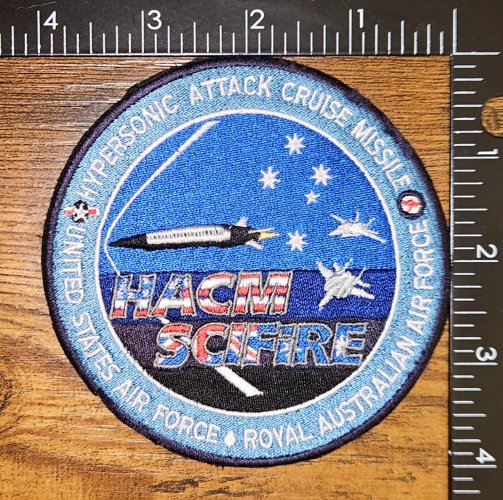
Did anyone ever figure out any information concerning the HCCW program? The acronym was leaked along with HACM, and that program is now out in the open. But I don’t think we ever even knew what HCCW stood for.
 

Attachments

  • s-l1600.jpg
    s-l1600.jpg
    832 KB · Views: 10
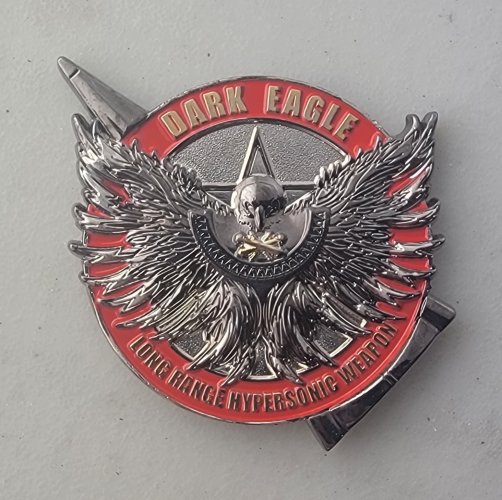
  • darkeagle-1a.jpg
    darkeagle-1a.jpg
    430.6 KB · Views: 7
  • darkeagle-1b.jpg
    darkeagle-1b.jpg
    319.1 KB · Views: 6
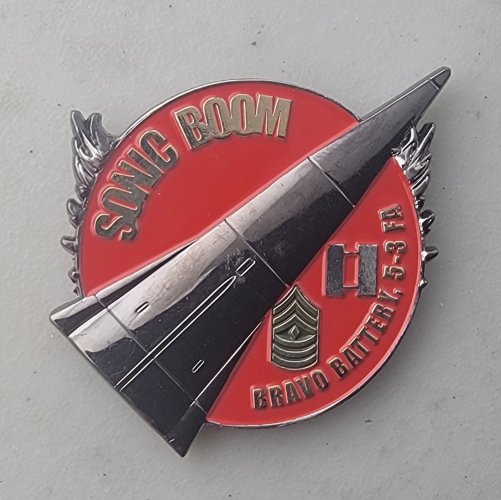
  • lrhwmug-1a.jpg
    lrhwmug-1a.jpg
    131 KB · Views: 7
  • hscwmug-1a.jpg
    hscwmug-1a.jpg
    346.8 KB · Views: 6
  • darkeaglemug-1a.jpg
    darkeaglemug-1a.jpg
    125.4 KB · Views: 4
  • darkeaglemug-1b.jpg
    darkeaglemug-1b.jpg
    167.3 KB · Views: 5
  • darkeaglemug-1c.jpg
    darkeaglemug-1c.jpg
    247.2 KB · Views: 5
  • darkeaglemug-1d.jpg
    darkeaglemug-1d.jpg
    131.5 KB · Views: 4
  • darkeaglemug-1e.jpg
    darkeaglemug-1e.jpg
    175.4 KB · Views: 4
  • darkeaglemug-1f.jpg
    darkeaglemug-1f.jpg
    121.2 KB · Views: 3
Last edited:
Any details at all? Ah, here we go:

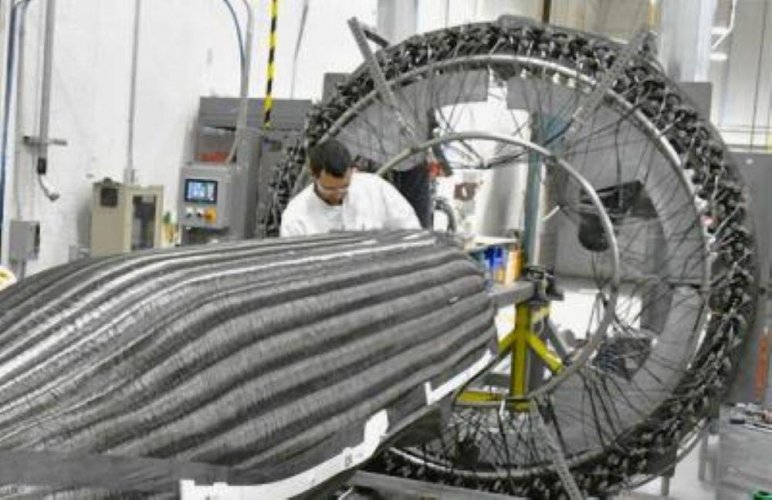
"HUNTSVILLE, Alabama—Albany Engineered Composites (AEC) will provide a 3D-woven, composite aeroshell for the Lockheed Martin Next Generation Glide Body (NXGB), Lockheed announced on Aug. 10.
The advanced thermal protection system by AEC becomes a critical part of Lockheed’s campaign to preserve a role in the U.S. Army’s Long Range Hypersonic Weapon (LRHW) program as service officials plan to switch to a low-cost, mass-producible alternative by fiscal 2029."


https://aviationweek.com/defense/mi...-albany-low-cost-hypersonic-missile-aeroshell

(Though that looks like JASSM in the picture.)
 

Attachments

  • lmta.job_.jpg
    lmta.job_.jpg
    88.2 KB · Views: 69
Any details at all? Ah, here we go:

"HUNTSVILLE, Alabama—Albany Engineered Composites (AEC) will provide a 3D-woven, composite aeroshell for the Lockheed Martin Next Generation Glide Body (NXGB), Lockheed announced on Aug. 10.
The advanced thermal protection system by AEC becomes a critical part of Lockheed’s campaign to preserve a role in the U.S. Army’s Long Range Hypersonic Weapon (LRHW) program as service officials plan to switch to a low-cost, mass-producible alternative by fiscal 2029."


https://aviationweek.com/defense/mi...-albany-low-cost-hypersonic-missile-aeroshell

(Though that looks like JASSM in the picture.)
The Army selected Lockheed in 2018 to integrate the CHGB with a Northrop Grumman-supplied two-stage booster. But now the service plans to move quickly to a different type of hypersonic weapon. The Army’s budget justification documents released in April show plans to buy 1,000 low-cost hypersonic missiles in fiscal 2029, followed by 2,000 each in 2030 and 2031.
 
It remains to be seen if there is actually anyone who can produce these weapons or whether they will be funded. The initiative to buy thousands of subsonic cruise missiles per year seems more credible.

Does anyone have a break down of the costs of LRHW? What I am curious about is the relative expense of the two booster stages vs the glider itself. Is the glider the most expensive part?
 
It remains to be seen if there is actually anyone who can produce these weapons or whether they will be funded. The initiative to buy thousands of subsonic cruise missiles per year seems more credible.

Does anyone have a break down of the costs of LRHW? What I am curious about is the relative expense of the two booster stages vs the glider itself. Is the glider the most expensive part?
It's sounding like it might be. A booster seems like something the industry as a whole has been doing for a long time. I mean, an Electron LV only cost $7.5-8.4m per flight, so there's no reason an LRHW booster should be ~4x as expensive.

Using Google AI, which is risky I know, suggests a figure of $100-200/kg for military rocket boosters with $400/kg for specialist, miniature stuff, so a booster weighing ~7t, should cost $2.8m absolute maximum and probably nearer half that or less. Even the more complex liquid engines are only $600-2,500/kg. So a good part of the LRHW is the RV plus guidance, or someone lining their pockets.
https://www.google.com/search?q=how+much+do+solid+booster+engines+for+rockets+cost+per+kg&newwindow=1&sca_esv=dcc11d9a3ee216b8&sxsrf=APpeQnsZhj2xoLB4dSxs2ES0Mlumurc9-w:1786547680535&ei=4I18auaYIKLNhbIP4euS2QQ&ved=0ahUKEwjmiP3esJuWAxWiZkEAHeG1JEsQ4dUDCBA&uact=5&oq=how+much+do+solid+booster+engines+for+rockets+cost+per+kg&gs_lp=Egxnd3Mtd2l6LXNlcnAiOWhvdyBtdWNoIGRvIHNvbGlkIGJvb3N0ZXIgZW5naW5lcyBmb3Igcm9ja2V0cyBjb3N0IHBlciBrZ0jmJlCmBlioG3ABeACQAQCYAWGgAa0FqgEBObgBA8gBAPgBAZgCAaACA8ICChAAGEcY1gQYsAOYAwCIBgGQBgiSBwExoAePDrIHALgHAMIHAzAuMcgHAoAIAQ&sclient=gws-wiz-serp

There's also a $2.7bn program cost for LRHW, but the government pays that along the way, so it shouldn't affect the end unit purchase cost if they've already paid it I would assume.
 
Last edited:
It's sounding like it might be. A booster seems like something the industry as a whole has been doing for a long time. I mean, an Electron LV only cost $7.5-8.4m per flight, so there's no reason an LRHW booster should be ~4x as expensive.
An LRHW booster is going to have more demanding requirements for shock, vibration, corrosion, etc.
 
"Three years later, the agency and AFRL partnered again on the Hypersonic Air-breathing Weapon Concept (HAWC), with multiple demonstrators achieving hypersonic speeds at unclassified ranges of more than 300 nm and altitudes above 60,000 ft."

Would sure like to know about that.

"The agency will consider options that are small enough to fit inside the internal weapons bays of tactical fighters. But other concepts that come with weapons so large that they must be carried externally by a heavy bomber also will be considered. Offering a clue of the trade space, the concepts should come with flight test telemetry systems capable of tracking test missions at ranges between 250-2,500 nm, the RFI said."


:cool:
 
Last edited:
"Three years later, the agency and AFRL partnered again on the Hypersonic Air-breathing Weapon Concept (HAWC), with multiple demonstrators achieving hypersonic speeds at unclassified ranges of more than 300 nm and altitudes above 60,000 ft."

Would sure like to know about that.

"The agency will consider options that are small enough to fit inside the internal weapons bays of tactical fighters. But other concepts that come with weapons so large that they must be carried externally by a heavy bomber also will be considered. Offering a clue of the trade space, the concepts should come with flight test telemetry systems capable of tracking test missions at ranges between 250-2,500 nm, the RFI said."

:cool:
Does the 2,500nm include the time it's attached to the launch aircraft though? Otherwise 4,600km is on heck of a range, but then, based on airspace closures during testing, LRHW already did ~4,500km in one test. Another unspecified hypersonic test covered 6,250km from Kodiak island to Kwajalein island.
 
It is a DARPA project that specifically has not given a weight or size limit to the end state. They are casing a wide net for new capabilities, and will contemplate oversized entries that deliver outsized gains in range and speed.

IMO, this is a good candidate for an RDE, assuming there is not already a black project that fills that roll.
 

Attachments

  • HPxcMJwW0AAlI0z (1).jpg
    HPxcMJwW0AAlI0z (1).jpg
    56.3 KB · Views: 52
  • Image_1786858963655.jpg
    Image_1786858963655.jpg
    212.3 KB · Views: 57
  • Image_1786858965995.jpg
    Image_1786858965995.jpg
    117.8 KB · Views: 53

Similar threads

Back
Top Bottom