
You are using an out of date browser. It may not display this or other websites correctly.
You should upgrade or use an alternative browser.
You should upgrade or use an alternative browser.
Northrop Grumman B-21 Raider (LRS-B)
- Thread starter TomS
- Start date
Attachments




Last edited:
Scott Kenny
ACCESS: USAP
- Joined
- 15 May 2023
- Messages
- 19,572
- Reaction score
- 28,042
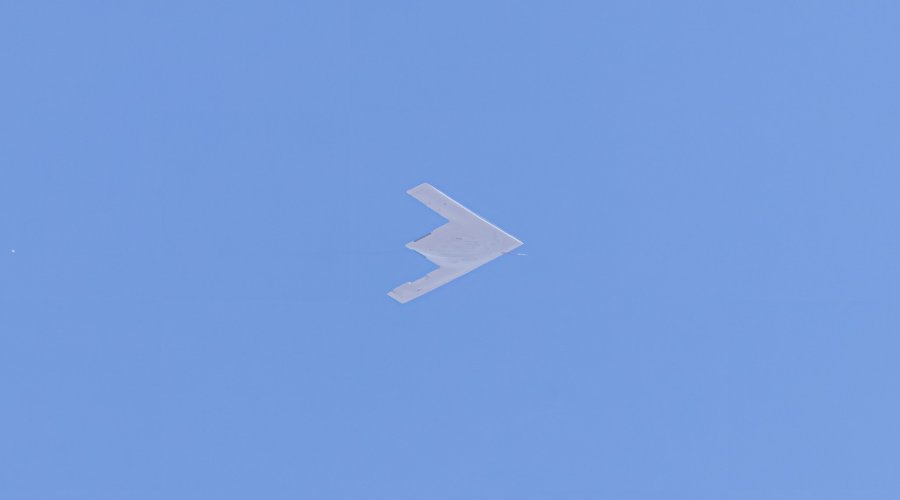
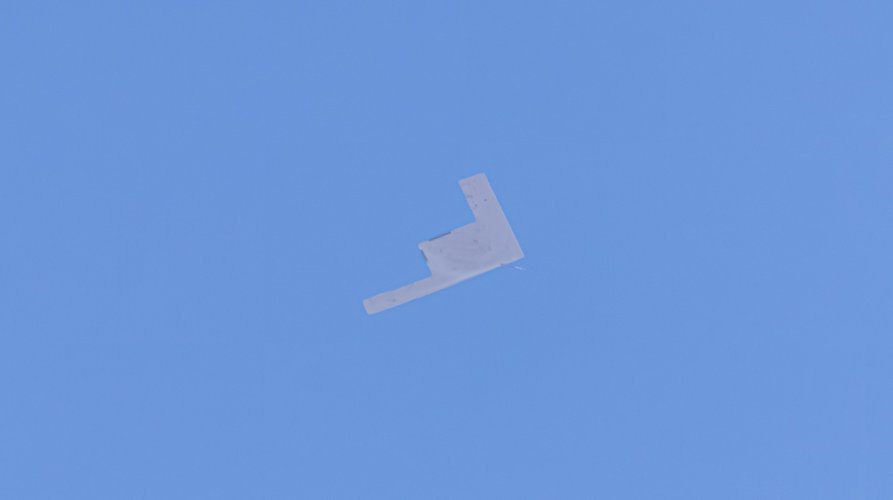
Photos like that make me think that the B-21 needs a little more blue in the haze gray camo.

Forest Green
ACCESS: USAP
- Joined
- 11 June 2019
- Messages
- 14,534
- Reaction score
- 31,602
Pathway To Larger B-21 Raider Fleet Was Baked Into Production Ramp-Up Deal
https://www.twz.com/air/pathway-to-larger-b-21-raider-fleet-was-baked-into-production-ramp-up-dealThe USAF previously framed the B-21 production boost deal as simply helping accelerate fielding of the bombers next year.

FighterJock
ACCESS: Above Top Secret
- Joined
- 29 October 2007
- Messages
- 7,243
- Reaction score
- 8,557
Let's see what happens in how many B-21s finally get ordered Forest Green and it will be interesting to see what happens to what airbases the extra B-21s eventually end up.
Of course, as we’re seeing with the F-35, there’s also a direct relationship between production capacity and fleet size because of the “tyranny of sustainment.” The larger the fleet, the more spare parts it’s going to consume.

- Joined
- 30 May 2023
- Messages
- 664
- Reaction score
- 1,436
Apologies for the confusion but are you suggesting the magic number of Raiders in terms of optimizing the balance of research & development, procurement, direct operational and sustainment costs with force size is below 100?

How is the required number of aircraft determined? Is it a magic number with two zeros, or is there a rationale behind it?
Scott Kenny
ACCESS: USAP
- Joined
- 15 May 2023
- Messages
- 19,572
- Reaction score
- 28,042
There's a couple different ways you could determine that. The simple way is 1-for-1 replacement of B-1s and B-2s, so that you're matching airframe numbers. The more complex way is roughly 3-for-1 replacement of B-1s and 2-for-1 replacement of B-2s, so that you're matching weapons capacity.How is the required number of aircraft determined? Is it a magic number with two zeros, or is there a rationale behind it?
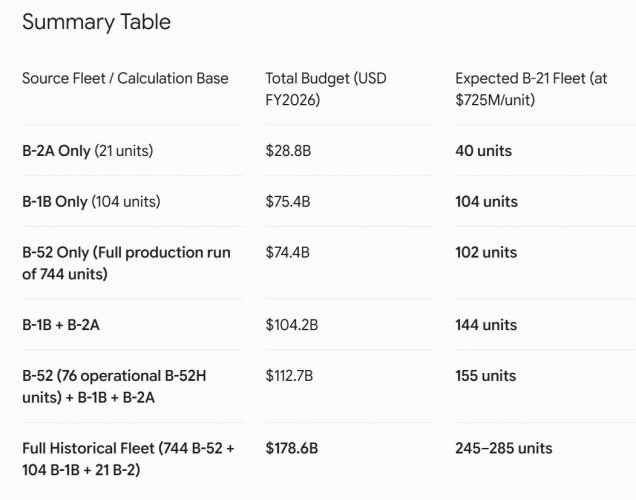
gemini.google.comConclusion
The procurement of 744 B-52 units took place at the height of the Cold War, when the strategy called for massive carpet bombing and nuclear strikes over vast enemy territories.Today's recalculation shows that the financial equivalent of that era's budget allocation ($178.6 billion) would allow the US Air Force to procure an extraordinary fleet of approximately 250–280 fifth-generation B-21 Raider aircraft. However, actual Pentagon requirements have settled at 145–200 units, which precisely corresponds to replacing all modern B-1Bs, B-2As, and the active operational force of B-52Hs.
In other words, 125 to 140 is the maximum possible number of aircraft
Attachments
Ainen
I really should change my personal text
- Joined
- 25 August 2011
- Messages
- 2,834
- Reaction score
- 4,939
Lifecycle missions assessment, force requirements(via modelling/wargaming), add in potential fleet attrition, and voila?How is the required number of aircraft determined? Is it a magic number with two zeros, or is there a rationale behind it?
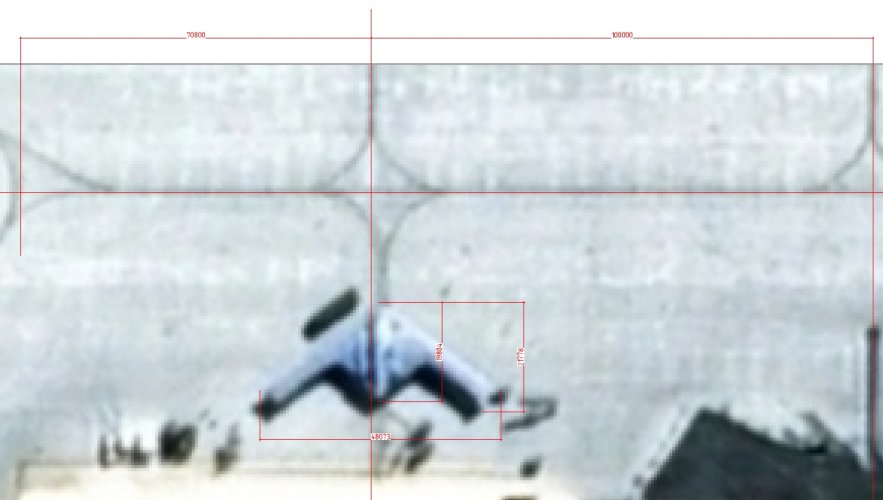
B-21 is a much smaller jet than B-52/B-1/B-2.

- Joined
- 21 April 2009
- Messages
- 14,360
- Reaction score
- 9,457
Maximum “possible” like forever? The production lines will self destruct like Mission Impossible after airframe 140 leaves the building?gemini.google.com
In other words, 125 to 140 is the maximum possible number of aircraft
This does not describe the ability of production to make the required number of aircraft, but rather the government's ability to pay for their creation and maintenance.

- Joined
- 1 April 2006
- Messages
- 12,279
- Reaction score
- 15,098
noB-21 is a much smaller jet than B-52/B-1/B-2.
Attachments
Scott Kenny
ACCESS: USAP
- Joined
- 15 May 2023
- Messages
- 19,572
- Reaction score
- 28,042
Only for doing 1-for-1 replacement of airframes.In other words, 125 to 140 is the maximum possible number of aircraft
Not for replacing the actual payload capacity.
Replacing the nuclear payload capacity is more like 2x B-21 for each B-2, 2.5x B-21 for each B-52, and 3x B-21 for each B-1.

EmoBirb
ACCESS: Top Secret
- Joined
- 18 January 2025
- Messages
- 2,702
- Reaction score
- 6,928
Which isn't really feasible, so not worth discussing reallyReplacing the nuclear payload capacity is more like 2x B-21 for each B-2, 2.5x B-21 for each B-52, and 3x B-21 for each B-1.
Scott Kenny
ACCESS: USAP
- Joined
- 15 May 2023
- Messages
- 19,572
- Reaction score
- 28,042
As if China isn't rapidly arming up. As if Russia isn't constantly threatening to nuke Europe and the US.Which isn't really feasible, so not worth discussing really
EmoBirb
ACCESS: Top Secret
- Joined
- 18 January 2025
- Messages
- 2,702
- Reaction score
- 6,928
This doesn't matter, because the USAF won't procure +300 B-21s in my lifetime. Acquisition, maintenance, running cost and arming these with munitions is a substantial financial commitment.
Something that's hardly justified given the US nuclear triad mainly relies on the sea based component, the fact that air warfare becomes increasingly distributed and network centric and that the USAF has expressed desire for a lower cost conventional bomber in the near to mid term future. All of the above make it rather unlikely that the AF commits to the B-21 at such a scale. I'd be positively surprised if they procure more than 100 airframes, more than 300 is pure fantasy right now. Especially as with each new bomber, the USAF procured less and less. Bombers have their distinct role and place, but they're not assets of which one would maintain a multi-hundred fleet of. Especially when it's mostly for conventional duties anyway.
Something that's hardly justified given the US nuclear triad mainly relies on the sea based component, the fact that air warfare becomes increasingly distributed and network centric and that the USAF has expressed desire for a lower cost conventional bomber in the near to mid term future. All of the above make it rather unlikely that the AF commits to the B-21 at such a scale. I'd be positively surprised if they procure more than 100 airframes, more than 300 is pure fantasy right now. Especially as with each new bomber, the USAF procured less and less. Bombers have their distinct role and place, but they're not assets of which one would maintain a multi-hundred fleet of. Especially when it's mostly for conventional duties anyway.
How is the required number of aircraft determined? Is it a magic number with two zeros, or is there a rationale behind it?
All the way back in 2011, once the long-range-strike AOA had been completed, USAF set a procurement goal of 80-100 aircraft for the LRS-B. Even back then, people were on record—including one Dave Deptula—asking for 180 aircraft.
100 aircraft as the program of record has therefore not changed since 2011, even while the PLA has advanced in capacity and sophistication by leaps and bounds.
In 2014, Gunzinger & Deptula argued in a CSBA paper that USAF needed 200 B-2s + B-21s. Their math was as follows: 10 Air Expeditionary Forces (of which 2 are forward deployed), one squadron of 12 bombers per AEF, for 120 PMAI bombers. Add 20% for test & training, add another 25% for backup aircraft inventory and attrition reserves, 174 total. Add a bit more for nuclear hold-back, 200 "advanced bombers" (B-2 and B-21) total, assuming a year 2045 force where B-52s and B-1Bs have all retired.
In 2015, Deptula looked at a modern Indo-Pacific-style conflict and asked what it would take to drop the same number of bombs as in 1991's Desert Storm. He assumed target sets more than 1500NM from base, with bombers carrying 20 bombs per, and 0.7 sorties per bomber per day. The resulting need was 250 bombers for this one conflict, as an unrealistic lower bound.
In 2018, Gunzinger and Birkey in a Mitchell Institute paper again argued for a fleet of 180 aircraft, using the same math as from 2014 and rounding up. They also pointed out that, in 2018, 8.5 bomber squadrons were being asked to do the work of 12, and there was zero surge capacity for any LSCO.
In 2019, Gunzinger et al. in a CSBA paper (mandated by Congress) went a bit further than they had previously. Here, they ran wargames to determine how many B-21s would be requested by war planners during LSCOs in the 2035-2040 timeframe. Wargamers were prevented from requesting more than what could "feasibly be in inventory in the 2035-2040 timeframe," so it isn't completely clear if wargamers were limited by inventory. But given the assumptions in the paper about recommended procurement rates (55 TAI by 2030 and procurement of 10-20 per year), it seems likely that wargamers were not in fact limited.
Here, wargamers for the European conflict requested 86 B-21 PMAI, while those for the Indo-Pacific requested 106, for a total of 192 PMAI for both conflicts simultaneously. This assumes a very optimistic mission capable rate of 80%. Wargamers "broke from orthodoxy" by using B-21s for not just "industrial complexes, airfields, and massed enemy forces" but also "to suppress air defenses, interdict enemy ground forces, and provide close air support."
The paper authors then added 14 B-21s for strategic deterrence hold-back, for 206 PMAI total. After adding test, training, backup & attrition reserves, recommended TAI ended at 288 B-21s. However, this assumes 20 B-2 Spirits still in inventory, along with 75 B-52s.
***
So we see, then, that most "recommended B-21 fleet size" numbers available to the public come from Gunzinger and Deptula, using the AEF force construct to arrive at 200 B-21 TAI, and Congressionally-funded wargames to arrive at 288 B-21 TAI.
Deptula also seems to put out a Mitchell Institute paper every 6 months in which he argues for "145 B-21s" (quoting the STRATCOM) boss, or "200 B-21s" (typically not even bothering to quote himself). The 2014 and 2019 CSBA papers are the only primary sources that actually justify their findings.
Oh, and how could I forget 19fortyfive.com, which puts out excellent high-quality analysis every single day about how the B-21 "has a message" for the USAF, the PLAAF, the Navy, FIFA, the moon, and my dead grandmother.
Only for doing 1-for-1 replacement of airframes.
Not for replacing the actual payload capacity.
Replacing the nuclear payload capacity is more like 2x B-21 for each B-2, 2.5x B-21 for each B-52, and 3x B-21 for each B-1.
That assumes only eight weapons, which I do not think is a safe assumption. That would be a bomb load of less than 8,000 lbs if B-61 was carried.
B-1s have been denuclearized for over a decade.
As if China isn't rapidly arming up. As if Russia isn't constantly threatening to nuke Europe and the US.
I think 300+ is quite off the table regardless of what China does.
Scott Kenny
ACCESS: USAP
- Joined
- 15 May 2023
- Messages
- 19,572
- Reaction score
- 28,042
Correct. It's also a bombload of about 3.2 Megatons.That assumes only eight weapons, which I do not think is a safe assumption. That would be a bomb load of less than 8,000 lbs if B-61 was carried.
How many weapons sit on the nuclear rotary racks? 8 per rack. Whether it's a bay long enough for ALCM/LRSO or only long enough for SRAMs or B61s.
True, but the treaty they were sacrificed for has collapsed, and their external weapons pylons are being reinstalled.B-1s have been denuclearized for over a decade.
Correct. It's also a bombload of about 3.2 Megatons.
How many weapons sit on the nuclear rotary racks? 8 per rack. Whether it's a bay long enough for ALCM/LRSO or only long enough for SRAMs or B61s.
That is the way current rotary launchers work. That is not necessarily how B-21 was designed to work. The B-21 bomb bay looks modestly longer than B-2 and might have bee Designed with two B-61s nose to tail in whatever rack system(s) was chosen for the nuclear mission. It seems likely a rotary would be used for AGM-181, but it is possible it was designed with enough length and attachments points for two B-61s per LRSO. It is also possible some completely different rack system was/will be created specifically for B-61s; potentially a PAL enabled SBRA.
I would not assume 8 weapons is the ceiling. B-83 might be that limited, but remember that around the time of the design freeze B-83 was going to be withdrawn. It seems likely B-61 was envisioned as the primary nuclear system, with LRSO integration probably a fall/back future proofing option.
True, but the treaty they were sacrificed for has collapsed, and their external weapons pylons are being reinstalled.
Currently B-1 is not part of the triad and there is no plan to nuclearize it, so from a nuclear point of view there is no need for extra B-21s in this role. From a conventional standpoint, I believe the idea is that B-21 can carry a larger load of glide bombs (JDAM-ER, SDB) than B-1 can carry cruise missiles. Additionally, modern loss cost cruise missiles might now be an option, particularly RAACM which is advertised as having a GBU-38 form factor.
I will believe that pylons are being put back on B-1s when I see it. So far that system seems to be used only for testing purposes. At a minimum I would guess that modification is only made to the B-1s that survive the initial B-21 introduction. My guess is that the force is down sized to two dozen machines as soon as possible to provide a source of parts for the survivors.
Ainen
I really should change my personal text
- Joined
- 25 August 2011
- Messages
- 2,834
- Reaction score
- 4,939
B-1 is a heavy, pen bomber that long since lost any capability of conducting penetration mission.True, but the treaty they were sacrificed for has collapsed, and their external weapons pylons are being reinstalled.
And as just a payload carrying truck, it's worse/more expensive than b-52 even before the upgrade of the latter.
It's a very different case from, say, Russia, where TU-95 is only really good at being cheaper, and Tu-160 is otherwise a far better truck.
I wonder what is the fly-away unit price of B-21... 300 is ambitious, but something close to that number can be potentially achievable, depending on the rest of the procurement structure.I think 300+ is quite off the table regardless of what China does.
- Joined
- 30 May 2023
- Messages
- 664
- Reaction score
- 1,436
The use of the Bone in the ME, pre Midnighterror or whatever it was called, actually blurred the lines of penetration and stand-in/off. Granted, that was with total air supremacy, but the ability of a properly supported B-1 to shrink space and time via speed, persistence and direct attack, glide & stand off precision weapons is a unique capability that will shrink as the B-1 flies further into the twilight.
The use of the Bone in the ME, pre Midnighterror or whatever it was called, actually blurred the lines of penetration and stand-in/off. Granted, that was with total air supremacy, but the ability of a properly supported B-1 to shrink space and time via speed, persistence and direct attack, glide & stand off precision weapons is a unique capability that will shrink as the B-1 flies further into the twilight.
Yeah, I have tried to go on record calling for a B-1 replacement, but unfortunately they won't allow me into the SASC hearings, instead directing me towards nearby "mental health resources" or whatever communist BS they are calling it these days. All true Americans understand we need a heavy supersonic bomber.

Reddington777
ACCESS: Top Secret
- Joined
- 23 March 2025
- Messages
- 833
- Reaction score
- 2,757
Do not touch by beautiful ghost gray.Photos like that make me think that the B-21 needs a little more blue in the haze gray camo.
In all seriousness, that shade of white is beautiful. I hope to god that the F-47 is like the renders show, which seems to be a similar shade.
Scott Kenny
ACCESS: USAP
- Joined
- 15 May 2023
- Messages
- 19,572
- Reaction score
- 28,042
I do think we're going to get a supersonic bomber to replace the B-52. But not started till about 2040.The use of the Bone in the ME, pre Midnighterror or whatever it was called, actually blurred the lines of penetration and stand-in/off. Granted, that was with total air supremacy, but the ability of a properly supported B-1 to shrink space and time via speed, persistence and direct attack, glide & stand off precision weapons is a unique capability that will shrink as the B-1 flies further into the twilight.
The use of the Bone in the ME, pre Midnighterror or whatever it was called, actually blurred the lines of penetration and stand-in/off. Granted, that was with total air supremacy, but the ability of a properly supported B-1 to shrink space and time via speed, persistence and direct attack, glide & stand off precision weapons is a unique capability that will shrink as the B-1 flies further into the twilight.
B-1 at this point in its life has no significant advantage over B-52. It’s a subsonic high altitude stand off bomber.
I do think we're going to get a supersonic bomber to replace the B-52. But not started till about 2040.
I almost guarantee we will not. By 2040, assuming bombers even exist, going supersonic will look like a road flare from orbit.
Scott Kenny
ACCESS: USAP
- Joined
- 15 May 2023
- Messages
- 19,572
- Reaction score
- 28,042
There were times in Afghanistan when a B-1 was closer in time to a unit calling for CAS than anything else in theater. Just because it could get up to M1.2 or whatever and everything else available couldn't.B-1 at this point in its life has no significant advantage over B-52. It’s a subsonic high altitude stand off bomber.
Ainen
I really should change my personal text
- Joined
- 25 August 2011
- Messages
- 2,834
- Reaction score
- 4,939
It's just too situational.There were times in Afghanistan when a B-1 was closer in time to a unit calling for CAS than anything else in theater. Just because it could get up to M1.2 or whatever and everything else available couldn't.
Whatever it is, countries will end up with a single most suitable non-stealth bomber out of their current line.
For the US it's B-52(J).
p.s. and I'd assume VKS would've really loved if Tu-160s were subsonic. But it is just not.

- Joined
- 3 June 2011
- Messages
- 20,935
- Reaction score
- 19,156
No. They want to replace capability, not airframe #s. One B-21 is not the equivalent of one B-2, B-1B, or B-52.gemini.google.com
In other words, 125 to 140 is the maximum possible number of aircraft

bring_it_on
I really should change my personal text
- Joined
- 4 July 2013
- Messages
- 4,208
- Reaction score
- 5,748
300+ B-21 fleet is off the table primarily because Northrop Grumman probably cannot build at rates that would require to field 3x the originally planned production run. At some point it is better to spend RDT&E and design something more modern rather than just extending production. There is a case to be made that the AF should explore a new bomber RDTE program starting the late 2030s early 2040s for a late 2040s fielding in case there is political and operational support to dramatically modernize and increase the size of the bomber force.I think 300+ is quite off the table regardless of what China does.
That is a very poor way of looking at things. If one were to draw a line somewhere in the 80s (following the build up) and look at force mix and force structure decisions and trades one would have basically said that the USAF would never be able to build itself the world's largest RPA fleet in the 2000s and 2010s because it was effectively maxed out in its ability to pay for its creation and sustainment. Yet, force structure decisions were made and this new structure was bedded down. Similarly, if a future construct demands that the total bomber inventory be dramatically increased then the numbers will be adjusted accordingly of course by trading something else away depending on the fiscal constraints. There is no consensus towards a dramatic increase presently. But there is enough to move up from 80-100 (original LRS-B plans) to something probably closer to 150 which is a pretty significant increase.This does not describe the ability of production to make the required number of aircraft, but rather the government's ability to pay for their creation and maintenance.
Last edited:
CCA and other UAS will probably take that role of armed persistence with quick reaction posture for TiC.There were times in Afghanistan when a B-1 was closer in time to a unit calling for CAS than anything else in theater. Just because it could get up to M1.2 or whatever and everything else available couldn't.
There were times in Afghanistan when a B-1 was closer in time to a unit calling for CAS than anything else in theater. Just because it could get up to M1.2 or whatever and everything else available couldn't.
I have heard this story before but I have never found a source for it. And more recently I have heard that the B-1 is not even rated/cleared to carry most conventional weapons at supersonic speeds.
I wonder if perhaps this is an urban myth, though I could easily see B-1s arriving much faster than A-10s just with high subsonic speeds.

- Joined
- 16 April 2008
- Messages
- 10,595
- Reaction score
- 18,148
Given that all weapons on the B-1B at the time were internal (only external load was the Sniper pod), supersonic carriage seems like a no-brainer. Supersonic release, OTOH, might well have been very hard or impossible. But supersonic transit slowing to subsonic for release and loiter is still an interesting capability. Especially the loiter.
We have a bit of a thread on the challenges of the aerodynamics of weapon release on the B-1B here. The capper is a Mach 0.94 drop.
Post in thread 'North American Rockwell / Boeing B-1 Lancer' https://www.secretprojects.co.uk/threads/north-american-rockwell-boeing-b-1-lancer.32762/post-412909
We have a bit of a thread on the challenges of the aerodynamics of weapon release on the B-1B here. The capper is a Mach 0.94 drop.
Post in thread 'North American Rockwell / Boeing B-1 Lancer' https://www.secretprojects.co.uk/threads/north-american-rockwell-boeing-b-1-lancer.32762/post-412909

