https://www.gao.gov/products/gao-26-108457Program officials stated that the Army will not field its first LRHW battery—including missiles—until at least the second quarter of fiscal year 2026. This is over 2 years later than its initial goal and 9 months later than our last assessment. The Army resolved launcher and missile quality issues, which we previously reported on, and conducted a successful end-to-end missile flight test—the first using its launch system—in
the first quarter of fiscal year 2025. Some of the problems discovered during earlier flight tests created a production bottleneck as the Army and Navy paused production until the missile was successfully tested. Officials stated that the contractor has continued to experience issues at its facility. The program worked with a third-party consultant to identify challenges and make recommendations to increase the rate
of missile production. The program said that it was working with the contractor and Navy to implement the recommendations.
The Army will also not meet one of its fielding goals for the LRHW MTA effort. Program officials stated that the Army will not field its second LRHW battery—including missiles—until the second quarter of fiscal year 2027 due to missile delivery delays of at least 6 months. The second battery also includes a missile with minor modifications, which has not been flight tested as of January 2026. Officials stated that production challenges delayed testing of this missile until the second quarter of fiscal year 2026. The third battery could also face similar delays because the Navy’s CPS program, which develops missiles for the LRHW program, has not finalized the design as of January 2026. The Army plans to field these missiles sooner than the Navy. The program stated that it is working with the Navy to finalize the design, but the time needed to test it remains a concern. Officials said the Army exercised the contract option for the third battery’s launchers and related equipment in the third quarter of
fiscal year 2025—6 months later than planned—due to funding delays associated with a continuing resolution. The program does not expect that delay to affect its fielding
goal.

You are using an out of date browser. It may not display this or other websites correctly.
You should upgrade or use an alternative browser.
You should upgrade or use an alternative browser.
Current US hypersonic weapons projects. (General)

Forest Green
ACCESS: USAP
- Joined
- 11 June 2019
- Messages
- 14,596
- Reaction score
- 31,707
This is the third quarter of 2026 and missile was fielded a while back. It was to be deployed to the Middle East.
https://www.fpri.org/article/2026/0...considerations-for-deploying-lrhw-to-centcom/
https://www.fpri.org/article/2026/0...considerations-for-deploying-lrhw-to-centcom/
Last edited:
Forest Green
ACCESS: USAP
- Joined
- 11 June 2019
- Messages
- 14,596
- Reaction score
- 31,707
U.S. Navy Eyes CPS Deployment from New VLS, Containers
https://www.navalnews.com/naval-news/2026/07/u-s-navy-eyes-cps-deployment-from-new-vls-containers/“Solutions can include, but are not limited to, containerized launchers, air-transportable launcher systems, or large Vertical Launch System (VLS) modification/integration into Navy surface and undersea platform,” reads the document.
jsport
what do you know about surfing Major? you're from-
- Joined
- 27 July 2011
- Messages
- 8,628
- Reaction score
- 6,930
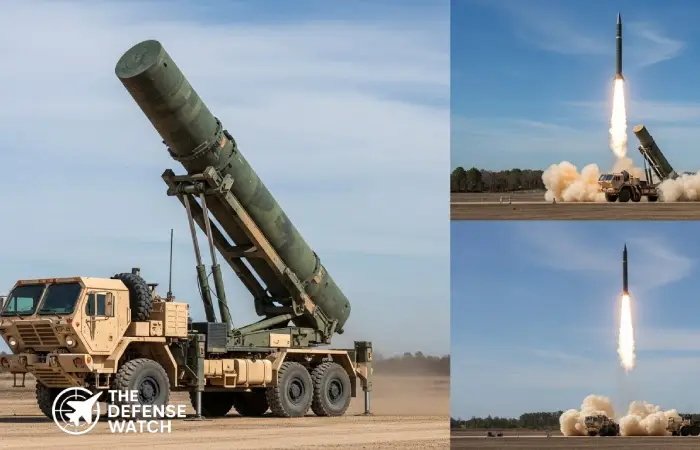
New compact TELIt's small but it's wider than an 876mm diameter missile?? Does not compute.
New Dark Eagle Hypersonic Weapon Details Emerge
https://www.twz.com/land/new-dark-eagle-hypersonic-weapon-details-emerge
TWZ is saying 30lb warhead, but that is definitely wrong, nothing that size weighs 30lbs, unless it's polystyrene or something.
https://thedefensewatch.com/militar...sile-signals-u-s-entry-into-global-arms-race/

- Joined
- 3 June 2011
- Messages
- 20,986
- Reaction score
- 19,254
I have. . .questions.
Attachments
Not James Stockdale
ACCESS: Secret
- Joined
- 29 August 2025
- Messages
- 256
- Reaction score
- 477
The 6x6 HEMTT is a nice touch lolI have. . .questions.
The article is from November 2025?
jsport
what do you know about surfing Major? you're from-
- Joined
- 27 July 2011
- Messages
- 8,628
- Reaction score
- 6,930
An AI Lie? That is one odd looking HEMTT missing an axle?The article is from November 2025?
why not at least 2 canisters? a single canister seems inefficient no?I have. . .questions.
That's a helluva quick flipover to vertical, and that launch tube is stowed quickly too. Must be that shoot 'n scoot you hear so much about nowadays.I have. . .questions.
The bogus launcher thing not withstanding, 40’ TEU for a pair of missiles would be possible if it did not exceed the weight limits typically associated with that size. I think that’s 34,000# of just missile.

wtna7
ACCESS: Confidential
- Joined
- 18 September 2025
- Messages
- 134
- Reaction score
- 369
https://aviationweek.com/defense/mi...ypersonic-weapon-strategy-meet-new-priorities
U.S. Adapts Hypersonic Weapon Strategy To Meet New Priorities
The U.S. strategy for hypersonic weapons is shifting from a focus on speed and range to a focus on usability, scalability, and cost.
The United States has been pursuing hypersonic technology for about eight years, a period marked by slow progress, high costs, and numerous testing issues; some programs—such as the Air Force’s ARRW—have even faced cancellation or repeated restructuring.
U.S. Adapts Hypersonic Weapon Strategy To Meet New Priorities
The U.S. strategy for hypersonic weapons is shifting from a focus on speed and range to a focus on usability, scalability, and cost.
The United States has been pursuing hypersonic technology for about eight years, a period marked by slow progress, high costs, and numerous testing issues; some programs—such as the Air Force’s ARRW—have even faced cancellation or repeated restructuring.
Attachments

Forest Green
ACCESS: USAP
- Joined
- 11 June 2019
- Messages
- 14,596
- Reaction score
- 31,707
U.S. Army Official Names Anduril As Potential Hypersonic Supplier
https://aviationweek.com/defense/mi...l-names-anduril-potential-hypersonic-supplierLozano’s goal now is to have a mix of exquisite and low-end capabilities. About 40% of the Army’s long-range missile stockpile should fall into the exquisite category, Lozano said. The remaining 60% should be low-cost alternative missiles.
“I want to be able to stand off at a very long distance and strike key command-and-control nodes. I want to be able to strike key radar sites. I want to be able to take out ballistic missile launch targets. I can do that with very exquisite GPS-denied capabilities, counter-electronic attack capabilities, [which is] a very highly capable, survivable weapon system,” Lozano said.

Reddington777
ACCESS: Top Secret
- Joined
- 23 March 2025
- Messages
- 849
- Reaction score
- 2,812
https://www.navytimes.com/industry/...c-missile-installation-on-zumwalt-destroyers/
“Lockheed Martin, the CPS missile body prime contractor responsible for production integration, faces significant production issues that it must address to build the missiles at anticipated rates and costs,” said GAO.
There have been problems with heat-resistant coatings, substandard parts and insufficient production capacity, with the factory only capable of producing six or seven missiles a year instead of the desired 12.
And also interestingly....In theory, the Army should have an easier time with its LRHW missile, which mainly differs from CPS in the launcher. Rather than the cold-gas ejection system that pops CPS from a tube before ignition, LRHW uses a hot-launch system.
However, GAO pointed out a concerning lack of coordination between the two services. For example, while the Navy is responsible for production of the missile body, the Army used its own consultant to study how to increase production.
Thus, “the Navy cannot make decisions in isolation since the Army is buying its own missiles and manages key aspects of production,” the report concluded. Without a joint development and procurement strategy, “the Navy and the Army create the potential for both additional delay and inefficient use of taxpayer funds.”
Ive got so many questions...Building the CPS missile has also proved too complex for some workers.
“According to Navy and Army program officials, the work instructions are largely written as engineering specifications, which the contractor provides to workers who have recently graduated from high school or vocational school,” the GAO report noted. “Navy production oversight officials said that it is unreasonable to expect workers to understand the instructions provided.”
Forest Green
ACCESS: USAP
- Joined
- 11 June 2019
- Messages
- 14,596
- Reaction score
- 31,707
At least the DDG-1000 has finally returned to fleet with missiles aboard though.
https://www.twz.com/sea/uss-zumwalt...r-long-anticipated-hypersonic-missile-upgrade
https://www.twz.com/sea/uss-zumwalt...r-long-anticipated-hypersonic-missile-upgrade

- Joined
- 21 April 2009
- Messages
- 14,366
- Reaction score
- 9,476
I have no insider knowledge, obviously, I don’t know if my opinion is even a valid one.
But this should be a massive humiliation for them. If workers are this poorly trained educated we’ve got huge problems. Apparently we need 400k more welders, machinists etc. just for the shipbuilding sector.
But this should be a massive humiliation for them. If workers are this poorly trained educated we’ve got huge problems. Apparently we need 400k more welders, machinists etc. just for the shipbuilding sector.

dannydale
ACCESS: Top Secret
- Joined
- 13 May 2007
- Messages
- 1,014
- Reaction score
- 1,634
It's almost like we underpaid our tradies for 40 years.I have no insider knowledge, obviously, I don’t know if my opinion is even a valid one.
But this should be a massive humiliation for them. If workers are this poorly trained educated we’ve got huge problems. Apparently we need 400k more welders, machinists etc. just for the shipbuilding sector.
- Joined
- 3 June 2011
- Messages
- 20,986
- Reaction score
- 19,254
When you turn our education system into a farce, tell everybody they're stupid losers if they want to go into a blue-collar profession, and praise anybody going to college (whether they're smart enough or not), and then keep this up for decades, well, the results should have been predictable. You can either have an ignorant, dependent citizenry, or a vibrant, independent one. The US gov chose the former. Anything positive today is in spite of them, not because of them.I have no insider knowledge, obviously, I don’t know if my opinion is even a valid one.
But this should be a massive humiliation for them. If workers are this poorly trained educated we’ve got huge problems. Apparently we need 400k more welders, machinists etc. just for the shipbuilding sector.
dannydale
ACCESS: Top Secret
- Joined
- 13 May 2007
- Messages
- 1,014
- Reaction score
- 1,634
Huge surplus of MBAs did no one any favors either. When everyone is taught to extract maximum rent at all times, this is the other half of what we get.When you turn our education system into a farce, tell everybody they're stupid losers if they want to go into a blue-collar profession, and praise anybody going to college (whether they're smart enough or not), and then keep this up for decades, well, the results should have been predictable. You can either have an ignorant, dependent citizenry, or a vibrant, independent one. The US gov chose the former. Anything positive today is in spite of them, not because of them.
Reddington777
ACCESS: Top Secret
- Joined
- 23 March 2025
- Messages
- 849
- Reaction score
- 2,812
Well its either the engineers / management here is stupid or the workers were not good enough. Either way this is is some next level idiocy for a program so direly needed....
- Joined
- 3 June 2011
- Messages
- 20,986
- Reaction score
- 19,254
Or you don't have enough who are qualified so they lower the bar to get enough bodies. (Which brings its own problems.)Well its either the engineers / management here is stupid or the workers were not good enough. Either way this is is some next level idiocy for a program so direly needed....
spikedpsycho
ACCESS: Secret
- Joined
- 14 March 2026
- Messages
- 336
- Reaction score
- 479
Thing about Hypersonic is their volatile nature. Russia launched more missiles tha it produces.
Ukraine has successfully intercepted many albeit not all.
US lag in Hypersonic development is more matter precision. We don't want them to fail. Of Russia, about 20% failed reach their targets. Almost 40% intercepted.
Dark Eagle.
Air Force versions later stage development.
Ukraine has successfully intercepted many albeit not all.
US lag in Hypersonic development is more matter precision. We don't want them to fail. Of Russia, about 20% failed reach their targets. Almost 40% intercepted.
Dark Eagle.
Air Force versions later stage development.
forgive me if I seem very rude but that sounds very delusional. The Us lags behind in hypersonic weapons because it never felt like it needed hypersonic weapons until it was a bit too late, now its playing catch up.Thing about Hypersonic is their volatile nature. Russia launched more missiles tha it produces.
Ukraine has successfully intercepted many albeit not all.
US lag in Hypersonic development is more matter precision. We don't want them to fail. Of Russia, about 20% failed reach their targets. Almost 40% intercepted.
Dark Eagle.
Air Force versions later stage development.
- Joined
- 21 April 2009
- Messages
- 14,366
- Reaction score
- 9,476
I have argued, understanding it will never get a perfect technology delineation, but “the new hypersonic(s) arms race” should only be referenced to air-breathing systems as we’ve had “hypersonic” ballistic missile RVs for 75 years. Even unpowered BGVs have been around almost as long.
You have RVs, HBGVs & my suggested HABs - hypersonic air breathers. Now we can say the new US AGM-456 HAB is under development.
Ps the designation above is made up for illustration purposes.
Pps this will never happen lol
You have RVs, HBGVs & my suggested HABs - hypersonic air breathers. Now we can say the new US AGM-456 HAB is under development.
Ps the designation above is made up for illustration purposes.
Pps this will never happen lol

bring_it_on
I really should change my personal text
- Joined
- 4 July 2013
- Messages
- 4,223
- Reaction score
- 5,769
Nice pics of Dark Eagle from Valient Shield. Remind me, how many years has the Army had these launchers (without operational missiles to launch from them) in service with operational units running around pretending as if it were an operational capability  .
.
The LRHW is pretty much a dead end novelty project unless someone can build hundreds of AUR's each year affordably.
. The LRHW is pretty much a dead end novelty project unless someone can build hundreds of AUR's each year affordably.
- Joined
- 3 June 2011
- Messages
- 20,986
- Reaction score
- 19,254
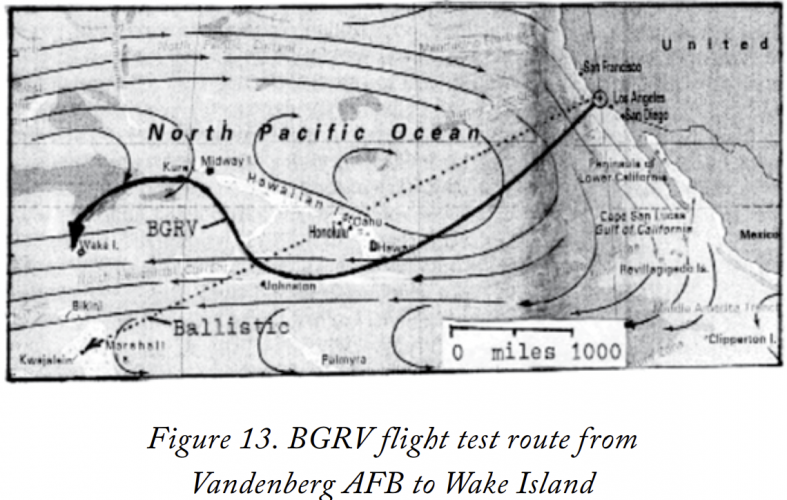
Which one has equaled this feat performed over half a century ago?forgive me if I seem very rude but that sounds very delusional. The Us lags behind in hypersonic weapons because it never felt like it needed hypersonic weapons until it was a bit too late, now its playing catch up.
"A typical BGRV flight trajectory and footprint is illustrated in Figure 12. In profile, the Atlas missile would fly to an altitude of about 130,000 feet, turn to horizontal flight to gain speed, and then would separate BGRV on a glide-path at over Mach 15 toward
110,000 foot altitude. The vehicle would spin up, establish a lifting angle of attack to offset gravity, and glide with little change in attitude, managing its energy to reach the desired destination. In the target area, programmed steering equations would take over and turn
the vehicle into a terminal dive and maneuver to the intended aimpoint."
Attachments

spikedpsycho
ACCESS: Secret
- Joined
- 14 March 2026
- Messages
- 336
- Reaction score
- 479
Making ballistic missiles, isn't the challenge. Skybolt from 1950s. Had speed Mach 12, range of ~1,100 miles.

Scramjet's are issue. Even other nations missiles encounter problems. Scramjet missiles are designed to deter tracking illusion of ballistic nuclear strike by flying mostly horizontal curve path. Had numerous failures.
it's a challenge for sure....

Scramjet's are issue. Even other nations missiles encounter problems. Scramjet missiles are designed to deter tracking illusion of ballistic nuclear strike by flying mostly horizontal curve path. Had numerous failures.
it's a challenge for sure....
I wasn't aware that it was an operational weapon. It's a shame that after gaining it apparently the US decided to destroy it's stockpiles, because something like that sure would be useful by now.Which one has equaled this feat performed over half a century ago?
"A typical BGRV flight trajectory and footprint is illustrated in Figure 12. In profile, the Atlas missile would fly to an altitude of about 130,000 feet, turn to horizontal flight to gain speed, and then would separate BGRV on a glide-path at over Mach 15 toward
110,000 foot altitude. The vehicle would spin up, establish a lifting angle of attack to offset gravity, and glide with little change in attitude, managing its energy to reach the desired destination. In the target area, programmed steering equations would take over and turn
the vehicle into a terminal dive and maneuver to the intended aimpoint."
- Joined
- 21 April 2009
- Messages
- 14,366
- Reaction score
- 9,476
Don’t believe “operationally deployed weapon system” was the standard he was using.I wasn't aware that it was an operational weapon. It's a shame that after gaining it apparently the US decided to destroy it's stockpiles, because something like that sure would be useful by now.
"Look at our one-off prototype that would be hilariously unrealistic as an active weapon" isn't much better.Don’t believe “operationally deployed weapon system” was the standard he was using.
- Joined
- 21 April 2009
- Messages
- 14,366
- Reaction score
- 9,476
You should have seen the Ivy-Mike device good thing that didn’t lead to any future weapons."Look at our one-off prototype that would be hilariously unrealistic as an active weapon" isn't much better.

EmoBirb
ACCESS: Top Secret
- Joined
- 18 January 2025
- Messages
- 2,714
- Reaction score
- 6,963
Not only does Russia produce significantly more missiles than they produce, for example Iskander-M production more than tripled, while usage remained mostly constant over the majority of the war, with individual usage spikes leaning into the build up stockpiles).Thing about Hypersonic is their volatile nature. Russia launched more missiles tha it produces.
Ukraine has successfully intercepted many albeit not all.
US lag in Hypersonic development is more matter precision. We don't want them to fail. Of Russia, about 20% failed reach their targets. Almost 40% intercepted.
Dark Eagle.
Air Force versions later stage development.
I have yet to see a succesful interception on tape though, although I've seen plenty of videos of Ukrainian assets burning after missile attacks. So your claimed percentages, themselves based on unverified claims which run contrary to empirical evidence, are entirely fictional. I don't even touch on something like Zircon, because so far these were only intercepted head on by buildings.
The US didn't invest significantly into hypersonic weaponry because for the majority of the recent past there existed something called the peace dividend, which saw decreased investment into high end, peer-to-peer military hardware. Instead the US shifted focus to counter insurgency and expeditionary warfare for three decades. On the realm of attack missiles, the US favored smarter, stealthier, low flying, subsonic missiles anyway. Examples are the TLAM, JASSM, LRASM, ACM and ALCM, they're representative for how the US approached missile strike for over half a century. Meanwhile countries like the USSR/Russia and now China favor high velocity and maneuverable missiles in an effort to overwhelm NATO defences, especially SAM networks consisting of Patriot and ship borne AA. The move to high speed maneuverable ballistic missiles, hypersonic airbreathers and hypersonic glide vehicles is a natural evolution of that approach.
These days the US sees itself in the need to catch up in that realm, as defensive complexes of adversaries evolved and in many ways have adapted to the subsonic bulk of US munitions. The renewed interest in high velocity strike weapons is a consequence of that assessment and the general desire of the Americans to not let adversaries outpace them in that particular realm of weaponry. CPS, Dark Eagle, HACW/HACM, the cancelled HALO and ARRW are the fruits of this refreshed interest and perceived need.
Subsequently, unlike what you suggested, I don't think it's accurate to claim there is a lag in hypersonic development in the US. As there are multiple concurrently ongoing programs in the pipeline as we speak. The US being up there with China and Russia, and in scale of investment only behind China, can't be described as lagging behind in any sense of the word.
- Joined
- 3 June 2011
- Messages
- 20,986
- Reaction score
- 19,254
It wasn't operational. It was a "hey, we might need to be able to do this" discovered they didn't and moved on.I wasn't aware that it was an operational weapon. It's a shame that after gaining it apparently the US decided to destroy it's stockpiles, because something like that sure would be useful by now.
- Joined
- 3 June 2011
- Messages
- 20,986
- Reaction score
- 19,254
"Hilariously unrealistic"? How so? Specifically. This was in the late 60s."Look at our one-off prototype that would be hilariously unrealistic as an active weapon" isn't much better.
For something more modern there was HTV-2. Launched by a Peacekeeper. 15 years ago. Again, if this was something they thought they needed as a weapon they could have kept developing it.
https://en.wikipedia.org/wiki/Hypersonic_Technology_Vehicle_2
Last edited:
You should have seen the Ivy-Mike device good thing that didn’t lead to any future weapons.
The point was that someone pointeed out that the USA is lagging in hypersonic weapons development."Hilariously unrealistic"? How so? Specifically. This was in the late 60s.
For something more modern there was HTV-2. Launched by a Peacekeeper. 15 years ago. Again, if this was something they thought they needed as a weapon they could have kept developing it.
https://en.wikipedia.org/wiki/Hypersonic_Technology_Vehicle_2
This is true.
They might have had all that knowledge, but they didn't do anything with all that knowledge all this time.
bring_it_on
I really should change my personal text
- Joined
- 4 July 2013
- Messages
- 4,223
- Reaction score
- 5,769
Again, if this was something they thought they needed as a weapon they could have kept developing it.
The point was that those who control the purse strings (Congress and administrations) and requirements (the three main services) did not think they needed these. HTV-2 had little support from the services which ultimately transition programs. The Air Force for its part put together a good roadmap under TBG and HAWC as a follow on partnership with DARPA and had we invested most if not all of the DOD's dollars into that roadmap we may be producing sub $10 Million hypersonic missiles now instead of 2-3 years from now. Instead, the department under the previous two administrations (red and blue) decided instead to pour the most amount of dollars into an effort (LRHW/CPS) that produces an all up round magazine that is unaffordable (2-3 such missiles for the cost of an F-35) with only a fraction of that going towards other high speed weapon programs that could deliver at costs ranging from 1/3 to 1/5 that amount.
We are now consumed by the VC backed startup portfolios that now want to sell the services a Mach 5 rockets with 100 lb payloads and call them breakthroughs. So again, what could have, should have happened doesn't matter. The US simply lacks the capability to field capable hypersonic weapons at scale. All indications are that China, North Korea and even Iran do not have that problem. And as recent conflict has shown they have good-enough capability and plenty of quantities to outlast whatever defensive or offensive capability we throw at them.
I have for long tracked what percentage of the overall DOD budget and the DOD's procurement budget is dedicated to high speed weapons. If one were to do that exercise over the last 20 years one can easily see that no one making real decisions actually thinks investing in this capability is serious enough for this to consume a serious chunk of dollars. Whereas if you look at capabilities being fielded by Iran and Noko, these investments are majority of their defense investments. PLA likewise built up a rocket force through a significant investment in ballistic and maneuvering high speed missiles. In all cases the commitment to such systems was many folds greater than that of the US DOD. You get what you prioritize.
Last edited:
- Joined
- 3 June 2011
- Messages
- 20,986
- Reaction score
- 19,254
I'm the last person who would disagree with that. All I'm saying is that it's not like we've never done hypersonics before. (Which also isn't to say we haven't lost institutional knowledge.) Is there anybody here who bitches more than me about programs getting cancelled as soon as they hit a bump?The point was that those who control the purse strings (Congress and administrations) and requirements (the three main services) did not think they needed these. HTV-2 had little support from the services which ultimately transition programs. The Air Force for its part put together a good roadmap under TBG and HAWC as a follow on partnership with DARPA and had we invested most if not all of the DOD's dollars into that roadmap we may be producing sub $10 Million hypersonic missiles now instead of 2-3 years from now. Instead, the department under the previous two administrations (red and blue) decided instead to pour the most amount of dollars into an effort (LRHW/CPS) that produces an all up round magazine that is unaffordable (2-3 such missiles for the cost of an F-35) with only a fraction of that going towards other high speed weapon programs that could deliver at costs ranging from 1/3 to 1/5 that amount.
We are now consumed by the VC backed startup portfolios that now want to sell the services a Mach 5 rockets with 100 lb payloads and call them breakthroughs. So again, what could have, should have happened doesn't matter. The US simply lacks the capability to field capable hypersonic weapons at scale. All indications are that China, North Korea and even Iran do not have that problem. And as recent conflict has shown they have good-enough capability and plenty of quantities to outlast whatever defensive or offensive capability we throw at them.
I have for long tracked what percentage of the overall DOD budget and the DOD's procurement budget is dedicated to high speed weapons. If one were to do that exercise over the last 20 years one can easily see that no one making real decisions actually thinks investing in this capability is serious enough for this to consume a serious chunk of dollars. Whereas if you look at capabilities being fielded by Iran and Noko, these investments are majority of their defense investments. PLA likewise built up a rocket force through a significant investment in ballistic and maneuvering high speed missiles. In all cases the commitment to such systems was many folds greater than that of the US DOD. You get what you prioritize.
I think it would be more accurate to say the U.S. deprioritized all ballistic missiles larger than ATACMs. It is not just hypersonics, and the inventory of Iran, North Korea, and China are still mostly RVs not gliders. Part of this is of course INF Treaty. Part of it is the fact the U.S. has basing issues with medium ranged weapons. Obviously a big chunk of it is financial, and The War On Terror(TM) ate up a huge amount of money on top of the “peace dividend” before it.
Long story short, it is absolutely fair to say the IS lags behind in hypersonic gliders specifically and conventional ballistic more more generally. And it is hard to imagine that changes; LRHW is far to expensive and slow to produce to be relevant outside a very tiny high value target set. The US might still yet achieve more comparative success with air breathing hypersonics; HACM seems designed to scale well and equip tactical jets from the beginning.
Long story short, it is absolutely fair to say the IS lags behind in hypersonic gliders specifically and conventional ballistic more more generally. And it is hard to imagine that changes; LRHW is far to expensive and slow to produce to be relevant outside a very tiny high value target set. The US might still yet achieve more comparative success with air breathing hypersonics; HACM seems designed to scale well and equip tactical jets from the beginning.
To be fair, the US have a penetrating force able to do what others intends with their by hypersonic/ballistic missiles. So in essence, the race is "lost" only for a couple of days, at the beginning of hostilities (plus terror campaign). You do not win a war throwing such things above the FLOT. On the contrary, war are won by airplanes dropping quantities of precision munitions unabated.
The problem is that we follow the startups rhetoric believing that a standoff force can do well. It does not.
US need more Hypersonic weapons to deal with time sensitive targets. That's what they have yet, as exemplified above. But for sure, they do need more. But not at the expense of other assets.
The problem is that we follow the startups rhetoric believing that a standoff force can do well. It does not.
US need more Hypersonic weapons to deal with time sensitive targets. That's what they have yet, as exemplified above. But for sure, they do need more. But not at the expense of other assets.
Last edited:
Similar threads
-
-
DARPA APO Next Generation Responsive Strike (NextRS)
- Started by GeorgeA
- Replies: 22
-
-

-
 Lockheed Martin AGM-183 Air-Launched Rapid Response Weapon (ARRW)
- Started by Moose
- Replies: 730