Well, the issue is that they're not hugely difficult to stop, it's that nobody has tried very hard to build a dedicated way to stop them because it's a new threat. One could readily put together some long endurance uncrewed escorts with Spike-NLOS / Fiber Optic drones and then some uncrewed maritime patrol assets with your bog-standard modern surface search AESA, and you've got a escort force in the making.It appears that to me that a moderately funded nation can really inflict large naval losses while being extremely difficult to stop with current naval defenses.
Just smuggle USVs or even better, UUVs with standard ISO containers everywhere and just home AIS. (maybe just move parts and assemble on site) There isn't remotely enough escorts without hugely inefficient convoying. Equipping transports with sensors and weapons is also hugely problematic.
Imagine the level of FUBAR this can inflict when the budget of a large naval warship is thrown at such a plan.

You are using an out of date browser. It may not display this or other websites correctly.
You should upgrade or use an alternative browser.
You should upgrade or use an alternative browser.
Naval Drones
- Thread starter Forest Green
- Start date
As with most unmanned vehicles, the problem is generally initial detection and potentially numbers. A USV is not super hard to kill; most any gun or missile can do the job with sufficient guidance or firecontrol.

Forest Green
ACCESS: USAP
- Joined
- 11 June 2019
- Messages
- 14,534
- Reaction score
- 31,604
Philippine Navy develops prototypes of autonomous logistics drones
https://www.navalnews.com/naval-new...ps-prototypes-of-autonomous-logistics-drones/It looks like Ukraine's USVs are in the process of being deployed to the strait of Hormuz at the behest of Gulf states such as Dubai and the UAE:
I can see in the near future Ukraine's USVs and their associated tactics effectively neutralising the IRGC blockade of the strait of Hormuz.
Today, there are major developments in the Strait of Hormuz.
Here, Ukraine has recently deployed its latest naval drones to secure the Strait of Hormuz, with patrols starting now across one of the most critical maritime corridors in the world. At the same time, Ukraine is extending its Black Sea drone experience into a permanent security role not just in Europe but the entire Middle East more than ever before.
Ukraine is now moving its naval drone expertise toward the Gulf as part of a broader defense relationship with regional states. This comes as tensions around the Strait of Hormuz increase and regional actors look for more flexible ways to secure shipping without escalating to large scale naval deployments. Instead of sending warships, Ukraine is transferring the same small, remotely controlled surface vessels it uses in the Black Sea, along with the tactics that allowed them to operate. In this environment, those drones are used to continuously monitor shipping routes and detect threats early in a region where even short disruptions can affect global energy supply.
Hormuz is a narrow and heavily trafficked chokepoint where Iran can threaten shipping through mines, fast attack craft, and short range strikes launched from nearby coastlines. In their most recent statement, Iran has explicitly warned about the presence of naval mines in the strait, confirming that this threat is already shaping how ships operate in the area. This creates a need for constant monitoring along fixed routes, where a threat of Iranian strikes is disrupting global energy flow. Naval drones address this by providing continuous real time data, allowing threats to be identified early without exposing crewed vessels to risk. Ukraine is using this model to turn its wartime experience into a deployable system, offering both the drones and the operational knowledge needed to integrate them into existing maritime security structures.
Ukraine’s allies are moving in the same direction, which makes this effort part of a broader military trend rather than a one off idea. Britain is preparing to deploy underwater naval drones for seabed scanning and for mine destruction, using vessels as a mothership to launch and support these systems from. At the same time, the United States has already deployed maritime drones in the region for patrol missions, using them to monitor activity without relying on traditional vessels. They learned from Ukraine that unmanned systems can reshape how fleets operate, opening the door for deeper cooperation as drones take on constant monitoring and operate in high risk areas while crewed ships move into a supporting role.
The Gulf states see clear value in this model because they need continuous control over busy shipping lanes without overextending their naval forces. They have already shown interest in Ukrainian interceptor drones, and Ukraine has stated it is ready to supply naval drones if requested. At sea, this translates into maintaining constant presence along fixed routes, tracking movement in real time, and responding quickly to small scale threats without deploying large warships. That is why acquiring naval drone fleets is attractive for Gulf states such as Saudi Arabia, the United Arab Emirates, and Qatar, which want to manage day to day maritime security with their own systems rather than depend entirely on foreign naval deployments.
Ukraine’s first advantage is monetary, because selling naval drones brings in direct income and increases production of these systems, which allows Ukraine to produce more units at scale. Continued investment, support and upgrades keep that income flowing over time, turning wartime innovation into a stable and repeatable source of funding for the country.
This continued investment also turns Ukraine’s advantage geopolitical, because integrating into Gulf defense cooperation gives it a place inside regional security planning. As Ukrainian systems and expertise are proliferated, Kyiv builds direct ties with Gulf states and becomes part of how maritime security decisions are made, increasing its political weight beyond Europe.
This position also creates a strategic effect, because this position allows it to shape security outcomes around the Strait of Hormuz. By supporting maritime monitoring and patrol systems, Ukraine contributes to limiting Iran’s ability to pressure shipping in the region, which weakens a key Russian partner without direct confrontation.
Overall, Ukraine is using naval drones not only to address an immediate maritime security problem, but also to build a long term role in Gulf defense. The most likely outcome is a gradual shift from patrol support to deeper technical cooperation and long term unmanned partnerships with regional states.
I can see in the near future Ukraine's USVs and their associated tactics effectively neutralising the IRGC blockade of the strait of Hormuz.
Forest Green
ACCESS: USAP
- Joined
- 11 June 2019
- Messages
- 14,534
- Reaction score
- 31,604
Royal Australian Navy names autonomous systems unit
https://www.navalnews.com/naval-news/2026/04/royal-australian-navy-names-autonomous-systems-unit/The Royal Australian Navy has formally named the Maritime Autonomous Systems Unit (MASU), marking a key step in Navy’s transition to a more integrated and highly advanced technology‑enabled future force.
MASU has been created through Project SEA 1200 to accelerate the development, integration and operational employment of maritime autonomous systems, optimised for persistent, long‑range intelligence, surveillance, and reconnaissance and strike missions.
The unit will operate multiple complementary capabilities, including the Ghost Shark extra-large autonomous underwater vehicle (XL-UUV), Bluebottle uncrewed surface vessel (USV) and the Speartooth large uncrewed underwater vehicle (LUUV).
Forest Green
ACCESS: USAP
- Joined
- 11 June 2019
- Messages
- 14,534
- Reaction score
- 31,604
Anduril announces partnership with Kraken for small USVs
https://breakingdefense.com/2026/04/anduril-announces-partnership-with-kraken-for-small-usvs/
Forest Green
ACCESS: USAP
- Joined
- 11 June 2019
- Messages
- 14,534
- Reaction score
- 31,604
NATO DIANA’s Rapid Adoption Service enables first R&D contract between Allies and industry
https://www.navalnews.com/naval-new...irst-rd-contract-between-allies-and-industry/
- Joined
- 21 April 2009
- Messages
- 14,360
- Reaction score
- 9,457
Bgray
I really should change my personal text
- Joined
- 1 February 2012
- Messages
- 81
- Reaction score
- 34
It strikes me that for now at least one thing about naval drones is that they 1. represent a capability where everyone is closer in terms of skill since it's new. 2. Cheaper, which means midsized and smaller nations are more capable ot fielding credible forces, and 3. Cut back on crew needs, which lets face it, is becoming a big deal for many nations.
Forest Green
ACCESS: USAP
- Joined
- 11 June 2019
- Messages
- 14,534
- Reaction score
- 31,604
Textron awarded DIU contract to provide Tsunami USV to U.S. Navy
https://www.navalnews.com/naval-new...-contract-to-provide-tsunami-usv-to-u-s-navy/jsport
what do you know about surfing Major? you're from-
- Joined
- 27 July 2011
- Messages
- 8,603
- Reaction score
- 6,908
Forest Green
ACCESS: USAP
- Joined
- 11 June 2019
- Messages
- 14,534
- Reaction score
- 31,604
Mystery USV Possibly Linked to Ukraine Found by Greek Fishermen
https://www.navalnews.com/naval-new...y-linked-to-ukraine-found-by-greek-fishermen/DANAE project: A fleet of Armed USV for the French Navy by 2027
https://www.navalnews.com/naval-new...eet-of-armed-usv-for-the-french-navy-by-2027/DATUM Introduces Strike-Capable Sinarit XLUUV
https://www.navalnews.com/naval-news/2026/05/datum-introduces-strike-capable-sinarit-xluuv/Accompanying article:
Video: New Comet and Chaser USV by BlackSea Technologies
https://www.navalnews.com/naval-new...omet-and-chaser-usv-by-blacksea-technologies/
Last edited:
Forest Green
ACCESS: USAP
- Joined
- 11 June 2019
- Messages
- 14,534
- Reaction score
- 31,604
SubSea Craft Advances MARS USV as Production Begins
https://www.navalnews.com/naval-news/2026/05/subsea-craft-advances-mars-usv-as-production-begins/
Forest Green
ACCESS: USAP
- Joined
- 11 June 2019
- Messages
- 14,534
- Reaction score
- 31,604

Titus K
ACCESS: Top Secret
- Joined
- 6 September 2025
- Messages
- 819
- Reaction score
- 2,783
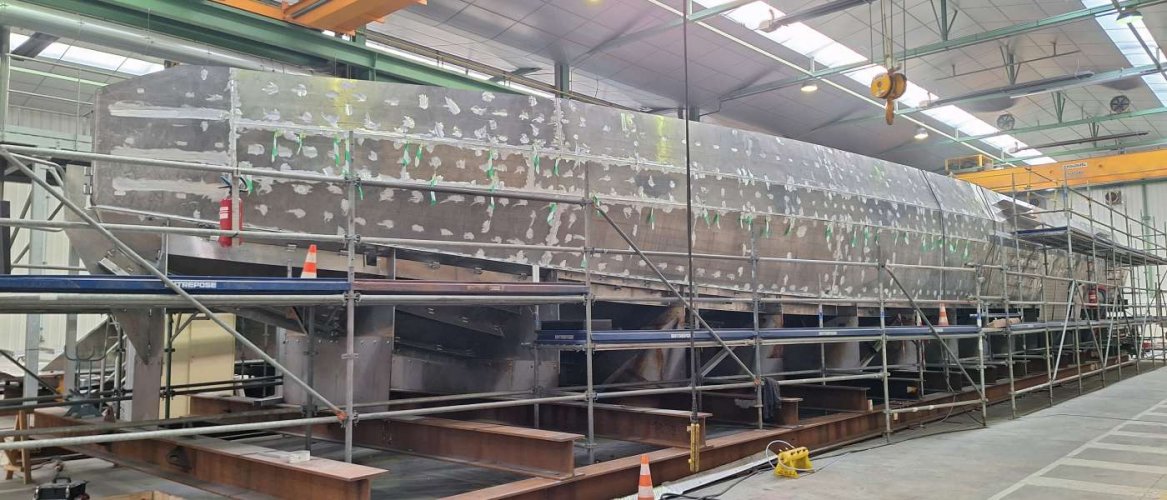
CMN in Cherbourg is building a 32m USV
https://www.meretmarine.com/fr/defe...avire-de-combat-autonome-de-plus-de-30-metres
Based on the HSI32 interceptor
https://www.meretmarine.com/fr/defe...avire-de-combat-autonome-de-plus-de-30-metres
Based on the HSI32 interceptor
- 32 m long
- 7 m wide
- speed of 40 knots
- 800 nautical miles at 12 knots
- 30 mm Rheinmetall Sea Snake artillery
- rear deck capable of carrying 10 tons of equipment :
- LOGIR rocket launcher or Thales LMM
- Marte Mk2 anti-ship missiles
- Manpads
- drones
The UHSI 32 was deliberately designed to be operable with a crew, remotely operated, or fully autonomous. This, without modification, avoids the need to multiply platforms. It is therefore a fast interceptor-type vessel but intended for multi-mission use thanks to a modular approach.
The UHSI32 can thus carry out a wide range of missions, from surveillance to intelligence gathering, as well as electronic warfare and combat operations in all environments, either alone or in swarms.
The demonstrator currently under construction in Cherbourg is expected to be launched around September and to begin sea trials at the end of the year. While CMN’s initiative is already said to be attracting interest from several naval forces, particularly within NATO, the UHSI32 already has a test campaign scheduled for early 2027 with a major Northern European navy.


- Joined
- 15 July 2020
- Messages
- 2,086
- Reaction score
- 7,460
Forest Green
ACCESS: USAP
- Joined
- 11 June 2019
- Messages
- 14,534
- Reaction score
- 31,604
BlackSea Technologies Demonstrates GARC USV Capabilities in Norway
https://www.navalnews.com/naval-new...demonstrates-garc-usv-capabilities-in-norway/Shield AI expands Hivemind maritime autonomy in Taiwan with Thunder Tiger partnership
https://www.navalnews.com/naval-new...omy-in-taiwan-with-thunder-tiger-partnership/
Forest Green
ACCESS: USAP
- Joined
- 11 June 2019
- Messages
- 14,534
- Reaction score
- 31,604
Forest Green
ACCESS: USAP
- Joined
- 11 June 2019
- Messages
- 14,534
- Reaction score
- 31,604
johnpjones1775
ACCESS: Top Secret
- Joined
- 27 May 2023
- Messages
- 1,373
- Reaction score
- 767
Yep. We need to see a return to large secondary/tertiary batteries and these will be largely mitigated as a threat…assuming those batteries can out range the weapons we see being put on them.Well, the issue is that they're not hugely difficult to stop, it's that nobody has tried very hard to build a dedicated way to stop them because it's a new threat. One could readily put together some long endurance uncrewed escorts with Spike-NLOS / Fiber Optic drones and then some uncrewed maritime patrol assets with your bog-standard modern surface search AESA, and you've got a escort force in the making.
You really don't need more than one or two naval guns (i.e. 5"/100mm/76mm) and some off the shelf NLOS missiles (spike, FPVs, whatever). IMO it's a solved problem, just needs the right effort to bring it all together.Yep. We need to see a return to large secondary/tertiary batteries and these will be largely mitigated as a threat…assuming those batteries can out range the weapons we see being put on them.
Forest Green
ACCESS: USAP
- Joined
- 11 June 2019
- Messages
- 14,534
- Reaction score
- 31,604
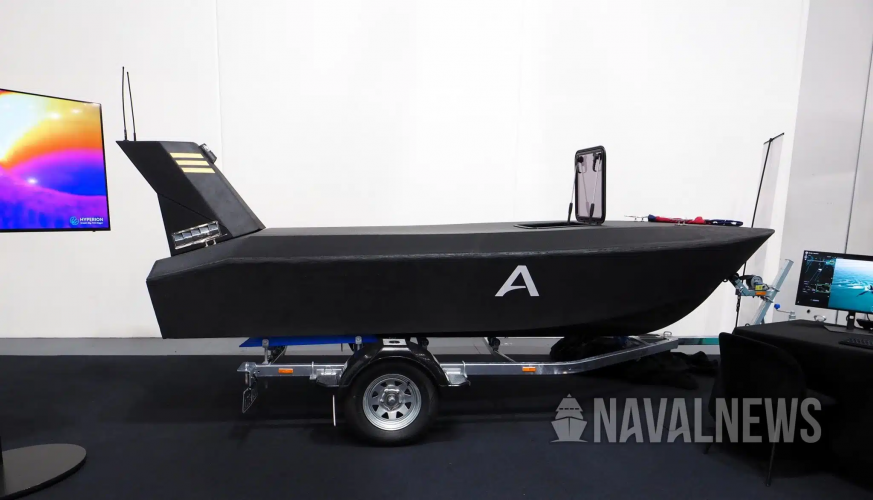
Hyperion Shows 3D Printed Astra 460 USV, TitanCell ‘Factory In A Box’ At IODS 2026
https://www.navalnews.com/naval-new...-usv-titancell-factory-in-a-box-at-iods-2026/Australian company Hyperion Systems has revealed a compact uncrewed surface drone dubbed the Astra 460, featuring a 3D-printed hull at this week’s Indian Ocean Defence and Security Conference (IODS) 2026 in Perth, Western Australia. Hyperion specialises in additive manufacturing, also called 3D printing, in conjunction with portable robotics for civilian and military applications.
HII Showcased ROMULUS 151 at Combined Naval Event 2026
https://www.navalnews.com/event-new...sed-romulus-151-at-combined-naval-event-2026/HII is also highlighting several recent milestones demonstrating the rapid advancement of autonomous naval capabilities, including:
- A recent U.S. Defense Innovation Unit (DIU) contract award to deliver a submarine Torpedo Tube Launch and Recovery (TTLR) system designed to autonomously deploy and recover HII’s REMUS UUVs from U.S. Navy submarines.
- Successful forward-deployed torpedo tube launch and recovery operations of an HII-built REMUS 600 UUV from USS Delaware (SSN 791), marking a significant advancement in autonomous manned-unmanned teaming for intelligence, surveillance, and reconnaissance (ISR) missions.
- Expansion of HII’s unmanned systems presence in Europe through the recently enlarged Portchester, U.K., facility, which serves as a regional hub supporting allied naval customers, sustainment operations, training, and future deployment of autonomous systems.
- Continued progress toward scaled production of HII’s ROMULUS USV family, including construction of multiple ROMULUS 151 vessels and development of advanced manufacturing initiatives designed to accelerate delivery of autonomous maritime capability to allied fleets.
https://www.navalnews.com/event-new...tine-submarine-launched-auvs-to-the-u-s-navy/
Being pitched as a TT launched & recovered "collaborative" UUV for US submarines. The "dive buddy".
Being pitched as a TT launched & recovered "collaborative" UUV for US submarines. The "dive buddy".
flammaster
ACCESS: Restricted
- Joined
- 21 May 2026
- Messages
- 2
- Reaction score
- 3
Saronic Launches First Marauder Medium Unmanned Surface Vessel
https://www.navalnews.com/naval-new...irst-marauder-medium-unmanned-surface-vessel/
https://medium.com/saronic-technolo...ilt-and-launched-in-under-a-year-7bce1207cf24
https://www.navalnews.com/naval-new...irst-marauder-medium-unmanned-surface-vessel/
https://medium.com/saronic-technolo...ilt-and-launched-in-under-a-year-7bce1207cf24

Forest Green
ACCESS: USAP
- Joined
- 11 June 2019
- Messages
- 14,534
- Reaction score
- 31,604
Japan is developing a new unmanned AAV which will bring MUM-T to Amphibious Operations
https://www.navalnews.com/naval-new...ch-will-bring-mum-t-to-amphibious-operations/Japan began developing a domestically produced unmanned amphibious armored vehicle (AAV) in 2024, and materials recently disclosed by the Ministry of Defense have revealed its detailed performance characteristics.
Forest Green
ACCESS: USAP
- Joined
- 11 June 2019
- Messages
- 14,534
- Reaction score
- 31,604
Forest Green
ACCESS: USAP
- Joined
- 11 June 2019
- Messages
- 14,534
- Reaction score
- 31,604
Bulgarian shipbuilder reveals new Medium USV concept
https://www.navalnews.com/naval-news/2026/06/bulgarian-shipbuilder-reveals-new-medium-usv-concept/jsport
what do you know about surfing Major? you're from-
- Joined
- 27 July 2011
- Messages
- 8,603
- Reaction score
- 6,908
Forest Green
ACCESS: USAP
- Joined
- 11 June 2019
- Messages
- 14,534
- Reaction score
- 31,604

shin_getter
ACCESS: Top Secret
- Joined
- 1 June 2019
- Messages
- 1,490
- Reaction score
- 2,191
The missile boat optimized to fight what you field always have more range than your ship with mix of defensive in non-dedicated offensive weapons. This works at all scales. As long as offense is cheaper than defense, the right sized missile and boat defeat all other combination of normal weapons. (excluding likes of carriers, which leverage sensor advantages)You really don't need more than one or two naval guns (i.e. 5"/100mm/76mm) and some off the shelf NLOS missiles (spike, FPVs, whatever). IMO it's a solved problem, just needs the right effort to bring it all together.
I'm not sure that's the case! It remains to be proven that defensive weapons are fundamentally behind the cost curve of offensive, imo.The missile boat optimized to fight what you field always have more range than your ship with mix of defensive in non-dedicated offensive weapons. This works at all scales. As long as offense is cheaper than defense, the right sized missile and boat defeat all other combination of normal weapons. (excluding likes of carriers, which leverage sensor advantages)
I'm not sure that's the case! It remains to be proven that defensive weapons are fundamentally behind the cost curve of offensive, imo.
It seems to be the case in most scenarios. Gun fire and interceptor drones are probably cheaper than their targets against certain types of slower UAVs/loitering munitions, and the APKWS seems to hold some promise against same. But particularly as you get faster flying munitions, the costs seem to scale up rapidly with speed.
That said, shooting down UAVs with lower performance than a WWII torpedo bomber should not be challenging for most any gun system that is not being aimed manually.
There's been a LOT of low cost interceptor R&D and S&T programs that have been kicking around forever. I'll be very curious to see how things like the seeker for NGSRI end up working out. That seems promising.It seems to be the case in most scenarios. Gun fire and interceptor drones are probably cheaper than their targets against certain types of slower UAVs/loitering munitions, and the APKWS seems to hold some promise against same. But particularly as you get faster flying munitions, the costs seem to scale up rapidly with speed.
That said, shooting down UAVs with lower performance than a WWII torpedo bomber should not be challenging for most any gun system that is not being aimed manually.
Of course there's also the hope that costs for current interceptors come down with some better economies of scale, but that's all up in the air.
Well it would appear that the USN's drone fleet is bigger than we thought, from Sandboxx:
After the crew of an AH-64 Apache was rescued by an American small unmanned surface vessel (USV) called the Corsair, we decided to dive into the Navy’s rapidly expanding (and highly secretive) fleets of unmanned boats, ships, and submarines. And what we found was one of the fastest-growing drone programs on the planet.
Forest Green
ACCESS: USAP
- Joined
- 11 June 2019
- Messages
- 14,534
- Reaction score
- 31,604
Well it would appear that the USN's drone fleet is bigger than we thought, from Sandboxx:
So it seems likely the USN is sitting on almost a thousand USVs and that there is a capstone build about a thousand more per year (just taking Black Sea and Saronic into account)? That’s actually pretty startling. I have heard of TF 59 and all of these USV models before but I had never come across information regarding major purchases.
Scott Kenny
ACCESS: USAP
- Joined
- 15 May 2023
- Messages
- 19,572
- Reaction score
- 28,044
I think the trick is that the Navy has only been buying a few of any one thing at a time.So it seems likely the USN is sitting on almost a thousand USVs and that there is a capstone build about a thousand more per year (just taking Black Sea and Saronic into account)? That’s actually pretty startling. I have heard of TF 59 and all of these USV models before but I had never come across information regarding major purchases.
Let's see here. SSNs and SSGNs might have 2 53cm UUVs each. Which makes less than 150. Plus, those USVs are essentially fishing boats or 47ft MLBs, and those are considered "too cheap to announce purchase orders".
Seems like most of those USVs are small ones that aren't going to self deploy across the ocean, which begs the question of how much range they have and in what sea states. Perhaps some of them are intended to launch from islands or amphibs.
Saronic's 7m Corsair has 1000NM range, and 12m Mirage has over 2000NM. Sounds like useful sizes to run from amphibs, and could launch from trailers if land based.
Saronic's 7m Corsair has 1000NM range, and 12m Mirage has over 2000NM. Sounds like useful sizes to run from amphibs, and could launch from trailers if land based.
Similar threads
-

-
 Lambda Automata 'Outpost' autonomous surveillance tower system
- Started by Grey Havoc
- Replies: 1
-
-