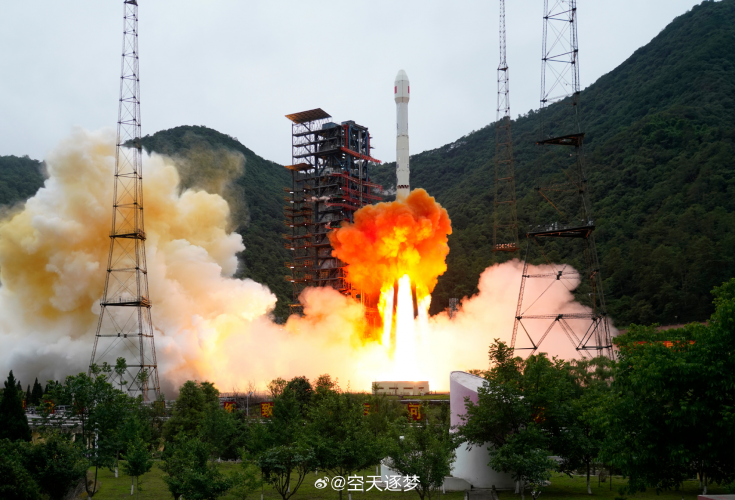
Shenzhou-23 astronauts enter Tiangong space station.

The three astronauts aboard China's Shenzhou-23 spaceship have entered the Tiangong space station and met with another astronaut trio on Monday, starting a new round of in-orbit crew handover.

Xinhua Headlines: China launches Shenzhou-23 spaceship, for new in-orbit stay record, cutting-edge space science.

China on Sunday successfully launched the Shenzhou-23 crewed spaceship, which will send three astronauts to its orbiting Tiangong space station for new tests on long-duration stay and frontier scientific experiments.
 
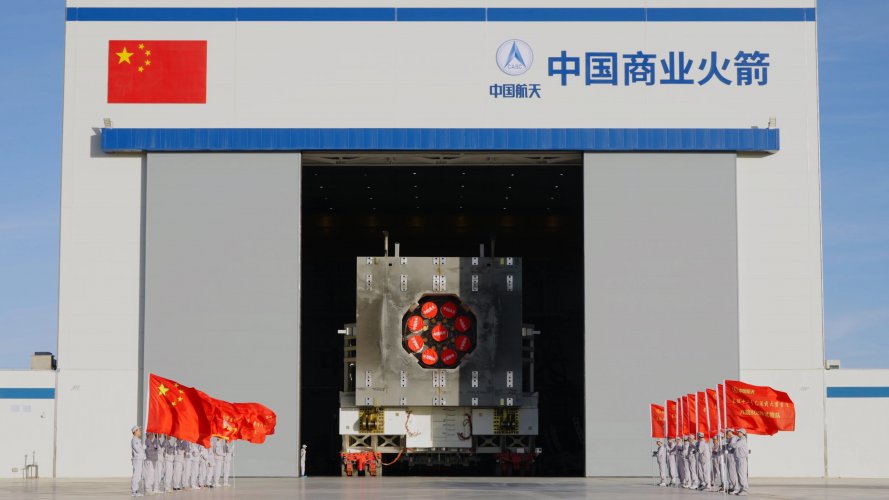
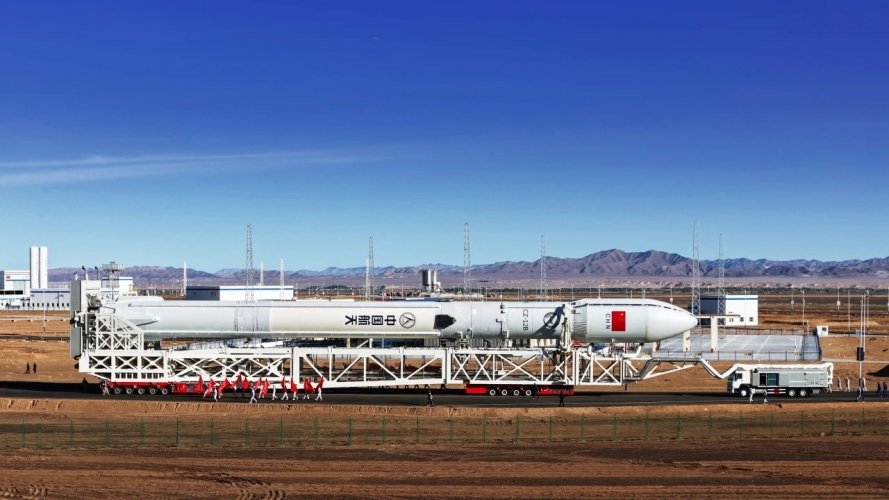
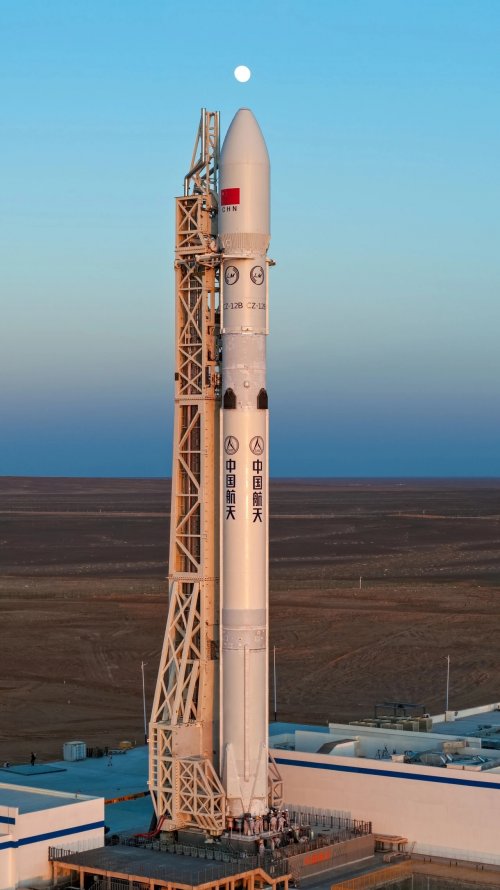
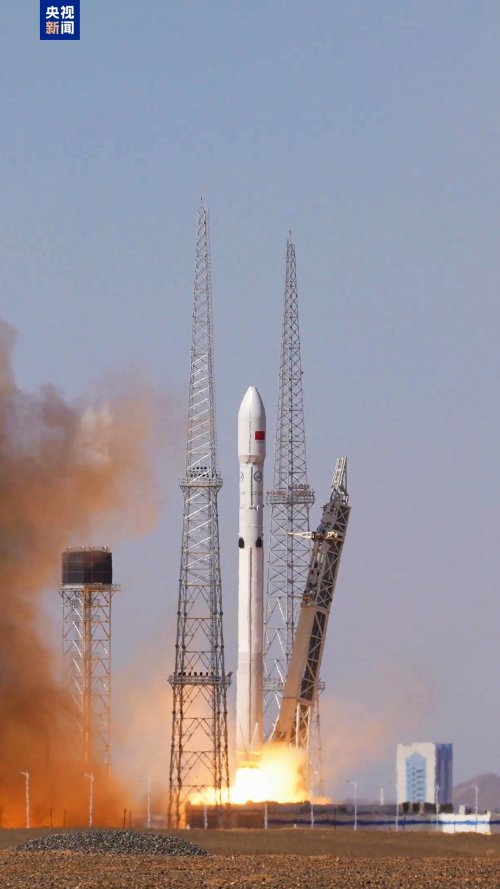
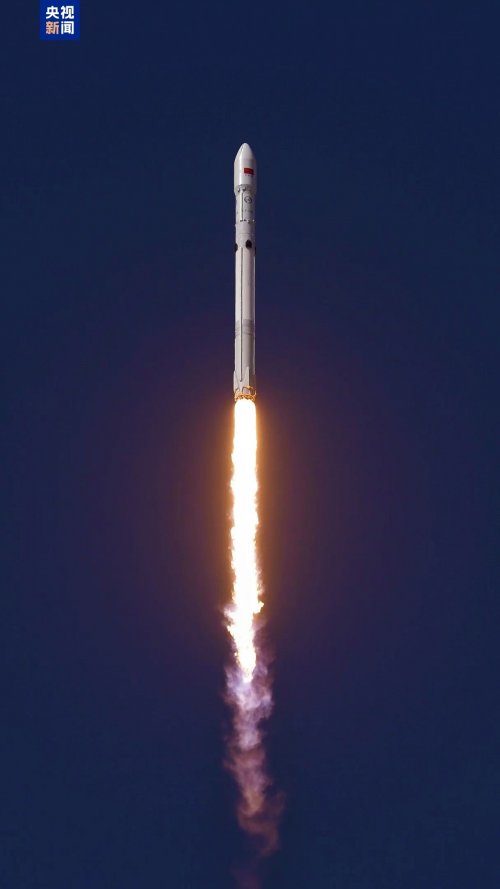
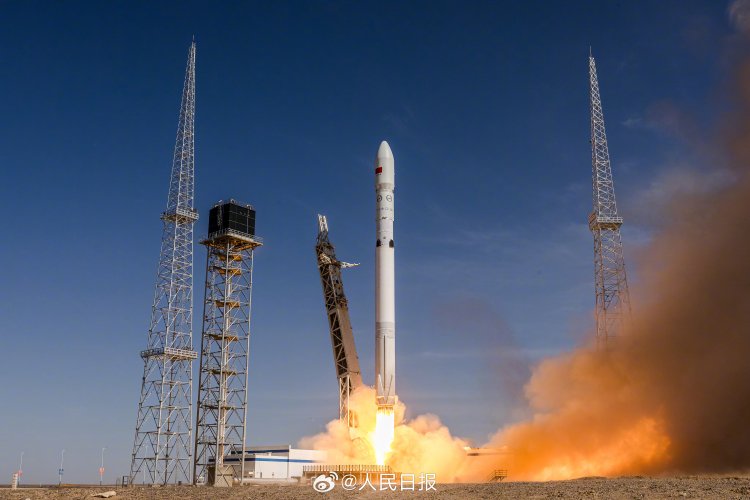
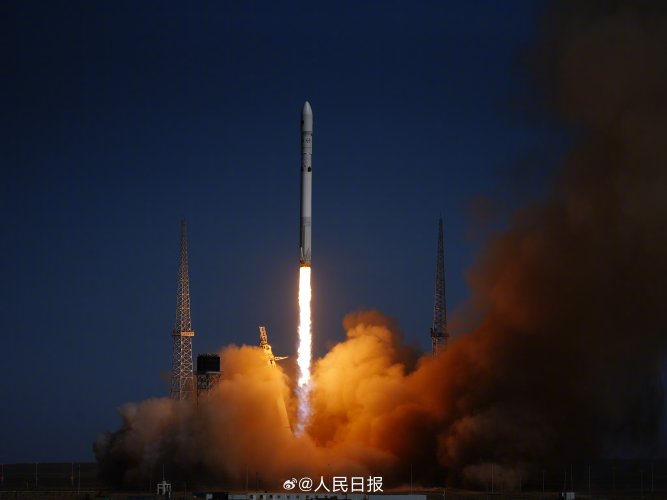
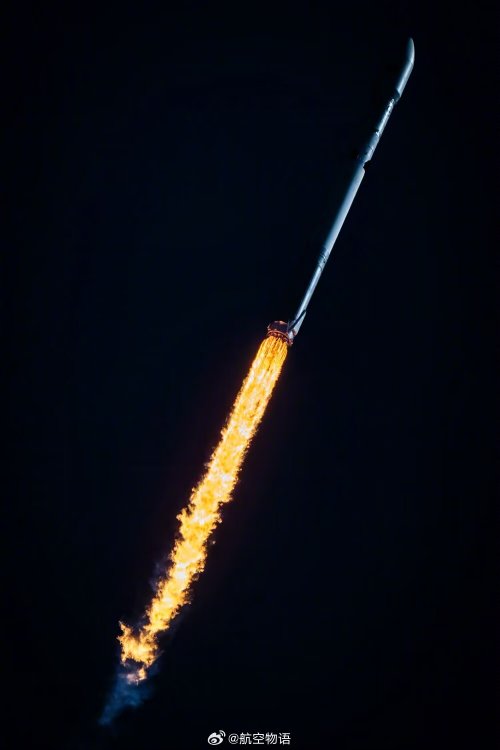
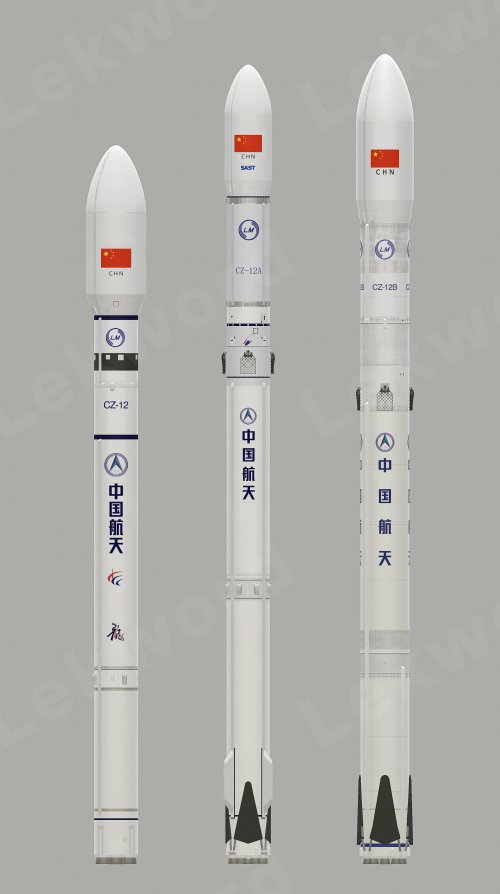
The Long March 12B has successfully first launched. This flight made no attempt to recover the first stage. Strangely, no NOTAM was issued in advance for this launch.
 

Attachments

  • 006aWhMSgy1idpxs3goskj32yo1o0h71.jpg
    006aWhMSgy1idpxs3goskj32yo1o0h71.jpg
    781.5 KB · Views: 47
  • 006aWhMSgy1idpxs5if8mj30zk0k0462.jpg
    006aWhMSgy1idpxs5if8mj30zk0k0462.jpg
    282.1 KB · Views: 23
  • 006aWhMSgy1idpxs6dkghj30zk1r8dvi.jpg
    006aWhMSgy1idpxs6dkghj30zk1r8dvi.jpg
    574.4 KB · Views: 24
  • 006aWhMSgy1idpxs03f1mj30xr1nz4bt.jpg
    006aWhMSgy1idpxs03f1mj30xr1nz4bt.jpg
    489.2 KB · Views: 21
  • 006aWhMSgy1idpxs0en92j30xr1nzgqj.jpg
    006aWhMSgy1idpxs0en92j30xr1nzgqj.jpg
    187.5 KB · Views: 21
  • 0033ImPzly1idpy8w9x6wj62bc1jk1ky02.jpg
    0033ImPzly1idpy8w9x6wj62bc1jk1ky02.jpg
    2 MB · Views: 25
  • 0033ImPzly1idpy8xxyf4j64sw3lse8402.jpg
    0033ImPzly1idpy8xxyf4j64sw3lse8402.jpg
    4.4 MB · Views: 26
  • 0033ImPzly1idpy8vypubj619n1wgago02.jpg
    0033ImPzly1idpy8vypubj619n1wgago02.jpg
    248.3 KB · Views: 33
Any idea why they didn't try to land? Seems strange they'd leave the grid fins and legs on but not try to land.
 
Any idea why they didn't try to land? Seems strange they'd leave the grid fins and legs on but not try to land.

One thing that these grid-fins would be useful for would to steer the descent trajectory of the spent first-stage so that it impacts on uninhabited land and not someone's house or village (And yes that has happened).
 
No landing pad
Does it use a different pad than 12A? :confused:

Zhuque-3 Augered in next to pad.
Long March 12A - Augered in some distance from pad.
Long March 12B - No landing attempt.


(Not trying to shit on Chinese launchers. Just trying to keep the various attempts straight. Nobody in the US got it right the first time either.)
 
Does it use a different pad than 12A? :confused:

Zhuque-3 Augered in next to pad.
Long March 12A - Augered in some distance from pad.
Long March 12B - No landing attempt.


(Not trying to shit on Chinese launchers. Just trying to keep the various attempts straight. Nobody in the US got it right the first time either.)
12A is from another company, they don't use the same pad.
 
Does it use a different pad than 12A? :confused:

Zhuque-3 Augered in next to pad.
Long March 12A - Augered in some distance from pad.
Long March 12B - No landing attempt.


(Not trying to shit on Chinese launchers. Just trying to keep the various attempts straight. Nobody in the US got it right the first time either.)
Might just be that there are no suitable landing pad yet. I recall both Zhuque-3 landing pad and Long March 12A landing pad being relatively close for down range landing. So these prior two rocket recovery attempt came in at a very steep angle and thus very fast, perhaps contributing to their failure.
 
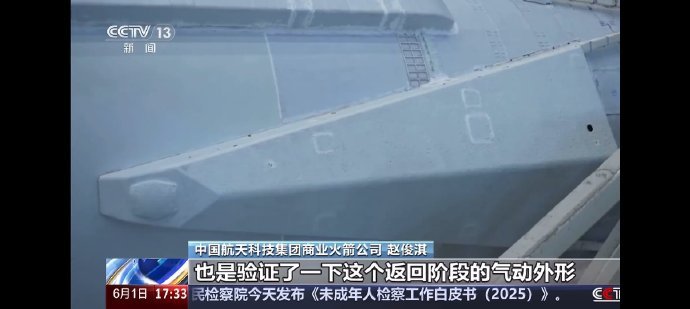
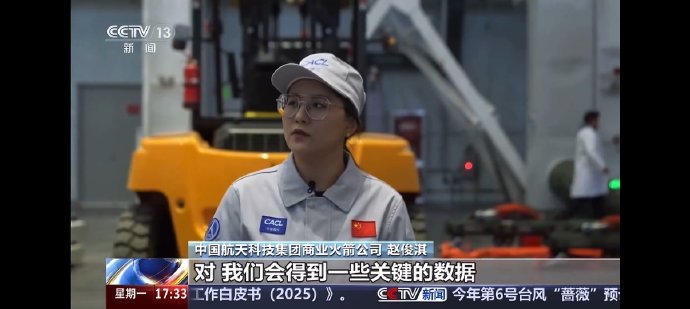
I think they just want to be cautious, which is why they haven't actually attempted a first-stage recovery. In subsequent interviews, the researchers mentioned things like "validating the aerodynamic shape for the return phase" and "obtaining some key data."

Maybe next time.
 

Attachments

  • 00686eaKgy1idpywrskcsj31v00u0dnx.jpg
    00686eaKgy1idpywrskcsj31v00u0dnx.jpg
    48 KB · Views: 23
  • 00686eaKgy1idpywsb562j31v00u0aeo.jpg
    00686eaKgy1idpywsb562j31v00u0aeo.jpg
    29.2 KB · Views: 19
  • 00686eaKgy1idpywsu1i8j31v00u0jwx.jpg
    00686eaKgy1idpywsu1i8j31v00u0jwx.jpg
    35 KB · Views: 31
Is the idea to use a pad, barge, or wire catch for 12B?
AFAIK CZ-12 series all use pad via landing legs despite all being made by different companies. Wire catch is only applicable out at sea, but for either CZ-12A and B, the only launch pad is deep inland at Jiuquan.
 
It went to polar orbit to deploy Qianfan sats (only 2 of them, I believe they are demonstration satellite for Gesi Aerospace's new production batch, they're one of the two companies making the Qianfan and their satellite were the least reliable and they paused deliveries for a year to solve that), such trajectory overflies the Tibetan plateau, construction of a landing pad there is harder as well as associated logistics of bringing the rocket back, also the higher altitude probably makes landing slightly harder (but that's probably not a huge issue)

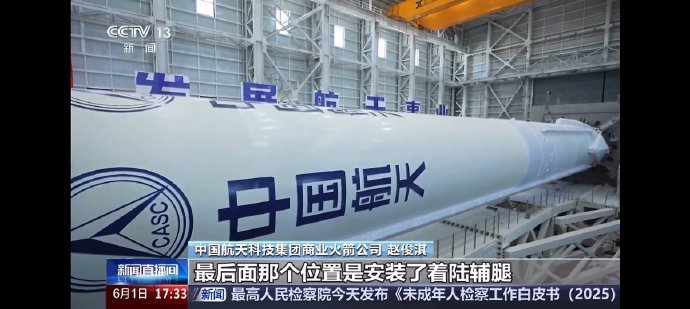
Also, the landing gears didn't seem functionnal, and the fact that they didn't try engine restarts (only attitude control tests with gridfins and RCS) tell me the hardware simply wasn't ready for a landing attempt.

Nevertheless, the 21 months development of this launcher is impressive and China now technically has a 2nd heavy launcher beside CZ-5 (the advertised LEO capability of the CZ-12B is of 20t in its initial version and 23t in its stretched version whose launch is targeted for H2 2026)

image_23.jpg
 
It went to polar orbit to deploy Qianfan sats (only 2 of them, I believe they are demonstration satellite for Gesi Aerospace's new production batch, they're one of the two companies making the Qianfan and their satellite were the least reliable and they paused deliveries for a year to solve that), such trajectory overflies the Tibetan plateau, construction of a landing pad there is harder as well as associated logistics of bringing the rocket back, also the higher altitude probably makes landing slightly harder (but that's probably not a huge issue)

Also, the landing gears didn't seem functionnal, and the fact that they didn't try engine restarts (only attitude control tests with gridfins and RCS) tell me the hardware simply wasn't ready for a landing attempt.

Nevertheless, the 21 months development of this launcher is impressive and China now technically has a 2nd heavy launcher beside CZ-5 (the advertised LEO capability of the CZ-12B is of 20t in its initial version and 23t in its stretched version whose launch is targeted for H2 2026)

View attachment 814213

To be fair the landing gear could be perfectly functional and it may still make sense to not attempt a controlled landing with engine restart, it really depends on how ambitious they wanted to be the first time around, and doing a first launch with all relevant full spec hardware needed for a landing, is still quite useful from a development process.

As for the capacity of this rocket, in addition to being the second highest capacity overall, this is also technically now the most capable single core (i.e. no side boosters or any sort) rocket in the PRC.
 
https://www.hkcd.com.hk/content_app/2026-06/08/content_8758926.html

At approximately 11:20 AM on June 7, 2026, Tianwen-2 successfully performed a capture maneuver, rendezvousing with the near-Earth asteroid 2016 HO3 (Kamoʻoalewa) and entering a co-orbital flight state, marking the successful completion of a crucial step in China's first asteroid sample return mission.

This asteroid, approximately 40 to 100 meters in diameter, is a "quasi-satellite" of Earth with a unique orbit. It has long orbited the Sun alongside Earth, but is not truly bound by Earth's gravity. Due to its extremely weak gravity and rapid rotation (period of approximately 28 minutes), the probe needed to rely on its own propulsion system for high-precision velocity matching and orbital control to achieve this "chase and companion" maneuver.

After successfully capturing the asteroid, Tianwen-2 will enter a detailed exploration phase lasting approximately 10 months. Next month, in early July, it will reach an altitude of 20 kilometers above the asteroid for close-up observation. Asteroid sample collection is expected in April 2027.
 
The official article about CZ-12B.

https://mp.weixin.qq.com/s/2knrjAd7bliUuEL4KsPQZQ

On June 1, the Long March 12B carrier rocket successfully completed its maiden flight at the Dongfeng Commercial Space Innovation Pilot Zone. From project approval to first flight, this rocket—developed under the leadership of China Commercial Rocket Company, a subsidiary of China Aerospace Science and Technology Corporation—took only about 21 months.
Almost all technical trade-offs on the Long March 12B rocket stem from the fact that it is first and foremost a commercial "product"—one that needs to rapidly achieve reliable, low-cost capability with limited investment and time.

On the design side: weight reduction means cost reduction. Weight is especially critical for the final stage, where every extra kilogram reduces payload capacity by one kilogram. The second stage of the Long March 12B features a large 4.37-meter-diameter common bulkhead tank, eliminating the length and weight of one intertank section. Unlike previous sandwich-type common bulkheads, the Long March 12B adopts a lighter single-layer common bulkhead with a sprayed polyurethane foam coating. Compared to the sandwich design, this approach reduces manufacturing lead time by approximately 85% and cost by about 90%.

On the supply chain side: the rocket explored the use of commercial-grade components. During its maiden flight, it tested a batch of automotive-grade components. According to Yan Feng from CASC, unlike traditional aerospace methods that rely on extensive screening to pick qualified parts, automotive-grade chips ensure quality through process control during manufacturing. The defective parts per million (DPPM) on a production line can be controlled to within a few parts per million, resulting in stable products and significantly lower costs.

Additionally, technologies such as flexible printed cables and TSN (Time-Sensitive Networking) were also validated on this mission. Flexible printed cables transform traditional wire bundles into flat, flexible "films" that conform to structural surfaces, reducing cable weight by about 40%. While mature in other industries, this is the first time the technology has been applied to a launch vehicle. TSN, a next-generation time-sensitive Ethernet, enables deterministic transmission of multiple information types within microseconds. Yan Feng noted that TSN represents a generational upgrade for rocket avionics, with related products expected to be progressively adopted over the next two years.
 
Apparently CZ-9 assembly building also have interesting point to note.

The central Chinese government have not approve the funding for CZ-9 yet.

The construction of the assembly, will be funded by Hainan province government and CALT (CZ-9 designer and manufacturer).
 
Do you know if either is going to try to land this time?
ZQ-3 is certainly going for it if the rumors are to be believed, no clue about 10B.

There are rumors Zenk Space's ZH-1 (ULA style engine recovery architecture) is also close to its maiden flight maybe within next week, no clue if they'll make a recovery attempt.

edit; Re-reading this post I'm very frustrated with how much I have to write "rumors", their launch environment is quite opaque to our detriment.
 
Right now, in a forgotten corner, Tianwen-2 has finally caught up with that asteroid, though it’ll be a while before it can collect samples.
 
The launch schedule might change. It seems a few new rockets have appeared. As long as the satellite gets into the sky and the launch site doesn’t get blown up, it’s considered a success.:p
 

Attachments

  • 1000009896.png
    1000009896.png
    692.3 KB · Views: 34
谷神星二号(遥一)运载火箭飞行故障通过归零评审
Ceres-2 (YY1) launch vehicle's flight malfunction has passed zero-defect review.

Recently, Galactic Energy Corporation convened a technical review meeting to address the flight failure of the first-stage engine of the Ceres-2 (Y1) launch vehicle. The review concluded that the problem was clearly identified, the mechanism was clear, the problem was reproduced, the measures taken were verified to be effective, and the lessons learned were applied to other situations; therefore, the failure could be resolved.

On January 17, 2026, the Ceres-2 (Y1) commercial launch vehicle was launched from the Jiuquan Satellite Launch Center. The rocket experienced an anomaly during flight, resulting in a failed maiden flight. Following the failure, the company quickly established a zero-defect task force to conduct a comprehensive and in-depth investigation into the cause of the failure. Through a series of tasks, including reviewing the design and production processes, constructing a fault tree, identifying underlying events, locating the problem, and analyzing the mechanism, the cause of the flight failure was finally determined. The failure mode was reproduced through ground tests and simulations, and the improvement measures taken were verified to be effective through ground tests.

The flight failure was identified as stemming from insufficient design margin in the rear support structure of the throat liner of the rocket's first-stage engine. This caused displacement of the rear throat liner during operation, creating a gas passage with the front throat liner, leading to ablation of the throat liner back wall, structural failure, nozzle damage, and ultimately, mission failure.

Galactic Energy Aerospace will learn a profound lesson from this flight failure, adopting a more respectful attitude towards the aerospace industry, a more rigorous and meticulous approach, and a more standardized and comprehensive system. We will implement quality improvement measures covering the entire process from design, production, testing, to launch, comprehensively enhancing our quality control capabilities and product reliability. For the Ceres-2 relaunch mission, the company is conducting a series of engine reliability growth tests to ensure the mission's complete success.

We thank all relevant government departments and industry experts for their concern, guidance, and assistance in the process of recovering from this flight failure. We also thank our mission customers, partners, and friends from all walks of life for their understanding, tolerance, and support.

Galactic Energy Aerospace will always adhere to the principle of quality first, providing the market with more reliable products and higher-quality services, and contributing positively to the development of China's commercial aerospace industry.
 
Long march 3B successfuly returns to flight 5 months after its failure, launching the Shijian 31 satellite to a mid-inclination Medium Earth orbit, similar launch trajectories on CZ-3B have recently been used to launch Early warning TJS satellites, built by SAST like Shijian-31, in Molniya orbit , although the use may be different given the different name, Shijian 31 is officially used for "space environment exploration". The cause of the failure on the previous flight was not disclosed.

1781647550200.png
 
[Chinese astronauts are divided into three categories: Astronauts, Flight Engineers, and Payload Specialists] Currently, astronauts in China are divided into three categories: Astronauts, Flight Engineers, and Payload Specialists. What are their respective characteristics?

● Spacecraft: The core position for spacecraft operation and control

Among the three categories, the one we are most familiar with is the astronaut. They are usually the core roles in spacecraft operation and control, with on-orbit work covering flight control, system maintenance, emergency support, and crew coordination. In previous missions, space pilots usually served as commanders, playing a key role in ensuring mission safety and smooth execution.

The selection criteria for aerospace pilots are extremely strict, mainly selecting the best from active pilots, requiring excellent physical fitness, psychological resilience, flight experience, and emergency response capabilities. Previously, several other astronauts such as Yang Liwei, Fei Junlong, and Nie Haisheng also participated in flight missions.

● Payload Specialist: Responsible for the operation and management of the space station's payloads, etc

Payload experts are mainly responsible for the operation, management, maintenance, and repair of payloads on the space station, conducting over a hundred space science experiments and trials in fields such as microgravity physics, aerospace medicine, space life sciences, and new space technologies and applications, including the collection, organization, and analysis of experimental data and results.

They have more specialized technical fields, and as astronauts, their physical fitness requirements are extremely demanding from selection to training. Previously, two comrades, Gui Haichao and Zhang Hongzhang, participated as payload specialists in flight missions. For this Shenzhou-23 mission, the crew was selected for the first time as a payload expert from the Hong Kong region, fully demonstrating the country's emphasis and support for technological development in Hong Kong and Macau.

● Aerospace Flight Engineer: Operates and manages spacecraft and related tasks

The main tasks of aerospace flight engineers are to directly operate and manage spacecraft, as well as conduct related technical experiments, such as controlling manned spacecraft to dock with the space station, operating robotic arms for extravehicular activities, as well as caring for and managing the entire space station platform and maintaining related equipment and facilities. Currently, the main selection is from engineering and technical personnel specializing in aerospace and related fields.

Previously, astronauts Zhu Yangzhu and Wang Haoze were China's first selected space flight engineer and the first female space flight engineer, respectively. Astronauts Wang Jie and Wu Fei participated in missions as flight engineers in the Shenzhou 20 and Shenzhou 21 crews, respectively.

Although the crew had clear divisions of responsibilities, during mission preparation, the three astronauts still had to undergo comprehensive training in spacecraft piloting, platform maintenance, and conducting scientific experiments to ensure mutual backup during work.

【我国航天员分三种类别:航天驾驶员、航天飞行工程师和载荷专家-哔哩哔哩】 https://b23.tv/z39MU3T
 
A spacecraft developed by Tsinghua University is set to join international missions to study the asteroid Apophis during its close approach to Earth in 2029.

The Student-led Threatening Asteroid Reconnaissance of Tsinghua, or START, mission is a low-cost smallsat led by a team of more than 20 undergraduate students at Tsinghua University in Beijing. It aims to launch in early 2028 in preparation for when Apophis passes within 32,000 kilometers of Earth on April 13, 2029, bringing it closer to Earth than satellites in geostationary orbit.

The 200-kilogram class spacecraft will launch on a Zhuque-3 rocket in early 2028 as a rideshare payload provided for free by Landspace, leaving START in a roughly 1,000-kilometer, 55 degrees inclined orbit. From there, the spacecraft will use its Xenon solar electric propulsion system to raise its orbit to 31,600 km over the course of 200 days to prepare for the arrival of Apophis.

“This is a ‘doorstep’ deep space target,” said Bin Cheng, the mission’s chief scientist, presenting remotely from Beijing at the Apophis T-3 workshop here. The approach removes the need for a multi-year interplanetary cruise, he said, cutting both cost and mission complexity.

At closest approach, following a series of trajectory correction maneuvers, START will pass within 7 kilometers of the 340-meter asteroid at a relative velocity of 8.74 kilometers per second. The spacecraft will rely on autonomous tracking to keep its cameras locked on Apophis through the brief encounter, extending what would otherwise be a fleeting observation window.

The payload suite includes narrow and wide-field cameras plus dual visible-to-near-infrared hyperspectral imagers, aimed at achieving a peak resolution of 8 centimeters per pixel, allowing START to resolve individual boulders and track changes to the asteroid’s surface driven by Earth’s tidal forces.

START’s budget is pegged at around $2.8 million, funded through a mix of university support, donations and sponsorship that the team says includes the launch rideshare, electric propulsion hardware and camera components.

Cheng frames START as filling a niche alongside three flagship missions converging on Apophis around the same period. Japan’s DESTINY+ will fly past the asteroid in January 2029 ahead of the encounter, followed by ESA’s RAMSES, a rendezvous mission expected to operate at Apophis from February through August 2029 launching on an H3 rocket with DESTINY+. NASA’s OSIRIS-APEx will rendezvous with the asteroid in April 2029, beginning an 18-month observation campaign. START would be timed to capture the window of peak tidal-stress, delivering data the team says complements the observations from the larger missions.

The project was initiated at Tsinghua in April 2025 and has completed spacecraft system design and is moving into subsystem integration, with prototype development scheduled to begin in September 2026 ahead of a planned spacecraft delivery in September 2027.

An extended mission would see START visit further near-Earth asteroids to provide additional science, and raise its orbit to test the limits of a low-cost solar electric propulsion mission.

Chinese scientists had earlier proposed mission concepts to study Apophis—the close approach of which offers a rare and unique planetary science and planetary defense opportunities—including a cubesat swarm mission and the CROWN/Apophis mission.

China has a growing interest in asteroid missions and planetary defense. The country is planning an asteroid deflection test around 2027, including separate impactor and observer spacecraft, while its Tianwen-2 spacecraft is currently on approach to near Earth object Kamo’oalewa and expected to arrive at the asteroid in early July.

Source: https://spacenews.com/chinese-unive...id-apophis-during-close-encounter-with-earth/
 
Long March 7A Rocket Launches TJSW-26A:

View: https://www.youtube.com/watch?v=N93sUP4bopw

https://mp.weixin.qq.com/s/SMLAR0cC5nvxT7uQljL05Q

Warm congratulations on the complete success of the launch of the Communication Technology Test Satellite No. 26A!

The Communication Technology Test Satellite No. 26A is the eighth satellite launched by the Eighth Academy in the field of application satellites for the year 2026, and the 173rd satellite developed and launched with the Shanghai Institute of Satellite Engineering serving as the overall system integrator. The satellite is primarily intended for services such as satellite communications, broadcasting, and data transmission, as well as for conducting relevant technical verification tests.


Faced with the severe challenges of tight schedules, heavy workloads, and complex task overlaps, the project's chief commanders and chief designers led by example. They planned ahead and organized implementation, streamlining key processes—such as final assembly, electrical testing, specialized tests, propellant loading, and satellite-rocket integration. They adopted a multi-line parallel operational model characterized by "steady progress on the main line, advance execution of auxiliary tasks, and multi-party collaborative support." By focusing deeply on process optimization and efficiency through meticulous attention to detail, they addressed critical stages—such as the simultaneous execution of six different project models in the assembly hall and the overlapping deployment of multiple active satellite components. Through methods like optimized assembly line design for tooling and facilities, as well as a "simulate-rehearse-execute" workflow, they coordinated and optimized the sequencing of operations and precisely balanced task progress. Work plans were established on an hourly basis, and a "daily review and completion" management mechanism was enforced. Adhering strictly to the operational principle of "striving for perfection and achieving success on the first attempt," the team refined key elements—including task lists, personnel and material allocation, and logistical support—ensuring coordinated scheduling and efficient collaboration. These optimization measures proved effective in overcoming the challenges posed by the heavy workload; united in purpose and effort, the entire test team ensured the efficient and orderly progress of all mission objectives. ·

https://mp.weixin.qq.com/s/BgcMGaEY84DlQgWQpTKbew
Another Ten-Launch Milestone: Long March-7A Achieves New Success
[Image]
At 10:10 AM on June 23, the Long March-7A (Y20) launch vehicle—assembled by the company [Tianjin Long March Launch Vehicle Manufacturing Company of CALT] —soared into the sky, precisely delivering the Communication Technology Test Satellite-26A into its intended orbit and marking a complete success for the mission. Following the milestone of the 50th launch, the team once again joined forces to overcome challenges and successfully complete a new cycle of ten launches. This also represents the company's 60th launch mission since its inception, continuing a track record of high-density, high-precision, and high-reliability launches.
[Image]

For this mission, the company's test team faced the rigorous challenge of executing three overlapping launch tasks simultaneously. Preparations, assembly, testing, and support operations were conducted concurrently, making high-intensity, focused effort a defining characteristic of the mission. Confronted with multiple simultaneous operations, personnel constraints, and extreme pressure, the team united to tackle difficulties head-on and proactively shoulder their responsibilities. Personnel across all roles and processes collaborated closely, upholding a work ethic of "rigor, caution, meticulousness, and pragmatism" while striving for excellence. They coordinated the seamless transition between different tasks and efficiently completed all work, including interface integration, final assembly, testing, and launch support.

In alignment with directives from higher authorities regarding quality, safety, and special quality rectification, the team formulated a dedicated quality control plan for this mission's launch site operations. The quality management team advanced the comprehensive pre-delivery quality review to the acceptance stage, reinforcing requirements for technical configuration verification, process quality control, and on-site physical inspections. Launch site quality management focused on the closed-loop implementation of technical configuration changes and strictly managed 46 specific quality control items. Key operational steps underwent "pre-mission rehearsals" and "post-mission reviews," with rigorous benchmarking and verification to ensure the mission's success.
Throughout the mission, the system remained stable and processes flowed smoothly. The company’s standardized, refined, and efficient operational system fully demonstrated its robust capabilities, providing a solid foundation for future routine, high-intensity, and high-frequency launch missions.
https://www.spacechina.com/n25/n2014789/n2414549/c4636473/content.html
For this mission, a specialized testing and launch team assumed full operational duties for the first time, marking a shift to a specialized operational mode. This move further advances the standardization of launch site procedures, the professionalization of operational teams, and the regulation of mission management, thereby better meeting the demands of high-frequency launch schedules. Currently, the rocket's technical configuration, testing and launch procedures, and management systems are mature and stable, with the launch site processing time optimized from the initial 35 days to 19 days.
 

Similar threads

Back
Top Bottom