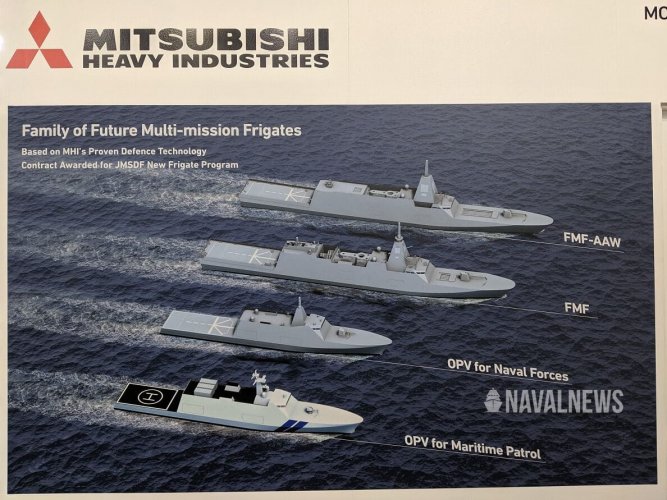
Some speculation today as to whether New Zealand will follow Australia's selection to also replace their ANZACs.

I really wonder if New Zealand actually needs a navy or just a highly capable coast guard. Replacing the ANZACs with ice-hardened OPVs might be a better call, honestly.
 
I really wonder if New Zealand actually needs a navy or just a highly capable coast guard. Replacing the ANZACs with ice-hardened OPVs might be a better call, honestly.
Ice hardened ships for the RNZN would be a waste. Yes, they do go south, but they also go north just as much if not more.
 
I really wonder if New Zealand actually needs a navy or just a highly capable coast guard. Replacing the ANZACs with ice-hardened OPVs might be a better call, honestly.
The policy is that the RNZN is able to support allies, so ships that can operate with other navies in other parts of the world are needed.
 
Last edited:
The RNZN ANZACs (HMNZS Te Kaha and Te Mana) were both produced towards the start of the ANZAC class production. Therefore they are older than most of the class. While they have undergone the ANZAC Frigate Systems Upgrade (FSU) programme, this is arguably far more austere than the ANZAC Mid-life Capability Assurance Programme (AMCAP) the RAN ones have had. It wouldn't surprise me if the RAN and RNZN have been discussing the options of the RNZN taking up some options under the RAN build program for the new ships.
 
The RNZN ANZACs (HMNZS Te Kaha and Te Mana) were both produced towards the start of the ANZAC class production. Therefore they are older than most of the class. While they have undergone the ANZAC Frigate Systems Upgrade (FSU) programme, this is arguably far more austere than the ANZAC Mid-life Capability Assurance Programme (AMCAP) the RAN ones have had. It wouldn't surprise me if the RAN and RNZN have been discussing the options of the RNZN taking up some options under the RAN build program for the new ships.
Yes, the Mogami looks like a good choice to me. A variant on the British Type 26 is likely to be too expensive. The current government is determined to cut costs in everything and coming to office, it cancelled an interisland ferry replacement programme, claiming that it was unaffordable. Since then we've had ferries breaking down, running aground, and refusing to get out of bed in the morning - all deeply embarrassing. They've started over in a classic example of penny wise and pound foolish. In any case, they'd want to avoid a repeat with elderly frigates falling apart as well.
 
The comments coming out of this week's meetings between the Australian and New Zealand PMs adds further credence to this sort of thinking:

Prime Ministers commended progress over the last year to intensify defence cooperation and move towards an increasingly integrated Anzac force, including star‑ranked officer exchanges and an increased tempo of exercises, operations and presence together in the Indo-Pacific region. Prime Ministers acknowledged the alignment of Australia’s National Defence Strategy and New Zealand’s recently released Defence Capability Plan, as a basis to drive interoperability, including through combined procurement and co-sustainment of common platforms and systems. This will better position us to promote our shared security, deter actions inimical to our interests, and respond with decisive force if necessary.
 
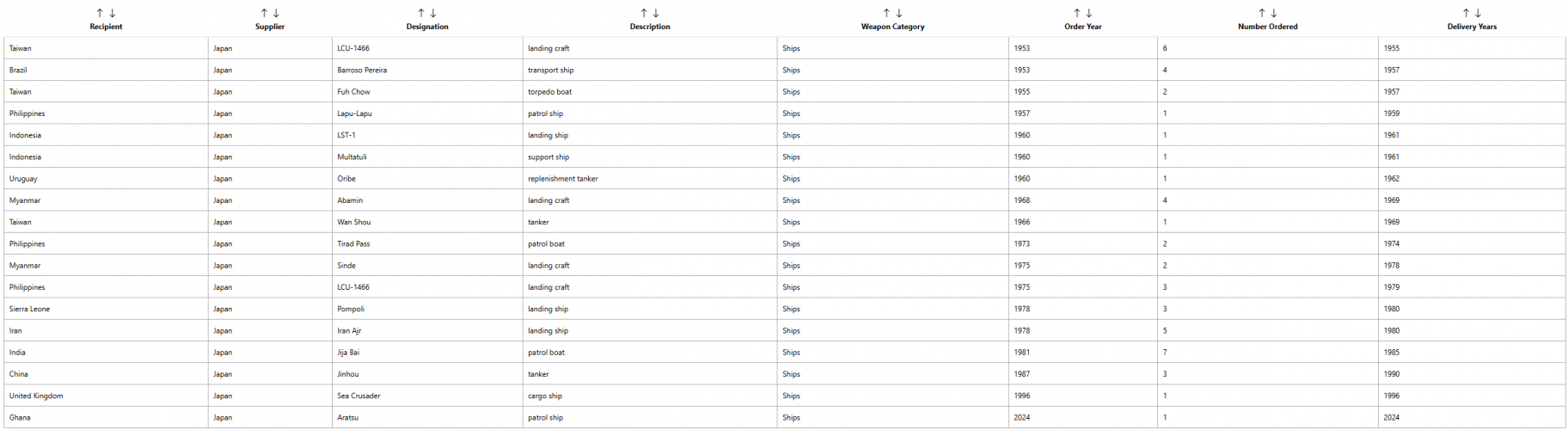
Also interesting to see Japan export surface combatants for the first time since....?
Ever, I think. Or at least first time since the Tokugawa Shogunate in the 1600s.

I stand corrected. Since before 1945.
 
Last edited:
I mean it goes a lot more recent than that if you want to count CG patrol ships since they have been actively building patrol ships for the PCG with the the Kunigami-class being 96m long. Malaysia also received some retired JCG ships in 2017.
Here is what SIPRI has on file that is partially incomplete.

1767392709248.png
 
Ice hardened ships for the RNZN would be a waste. Yes, they do go south, but they also go north just as much if not more.

And for purposes of going south, the RNZN already have two Otago class OPVs in service meeting Ice Class 1C anyway.
 
Residents here will be surprised to learn that not a single new FFM has yet begun construction. Mitsubishi Heavy Industries has acknowledged that while the initial plan was to start building two ships in 2025, this was reduced to one ship, and even that has not yet commenced. However, they state that the Australian order remains on schedule.
Neither the Defense Agency nor the companies involved have made any announcement regarding the reason for the lack of construction.
 
I really wonder if New Zealand actually needs a navy or just a highly capable coast guard. Replacing the ANZACs with ice-hardened OPVs might be a better call, honestly.
You realise that a navy is for defence as opposed to rescues? Anyway, RNZN already does some coastguard duties with its OPVs, and can host customs or fisheries officers if needed. They occasionally also support conservation missions to subantarctic islands. But those are not combat ships.
The comments coming out of this week's meetings between the Australian and New Zealand PMs adds further credence to this sort of thinking:
Defence minister does seem to favour following Oz, but i wonder about our various requirements. Could we keep our MU90s? And would Mitsubishi integrate our CAMM missiles (and probably add some CAMM-ER)? And would Japan sell air defence and antiship missiles to NZ so that we don't have to go all in with SM2?

I doubt the current government would insist on waiting for an Australian build though, more efficient to buy direct from Japan.
And for purposes of going south, the RNZN already have two Otago class OPVs in service meeting Ice Class 1C anyway.
I think they come up for replacement soon after the frigates, and vaguely recall talk of needing something bigger for the Southern Ocean. Theres a video somewhere of waves crashing over the bridge.
 
You realise that a navy is for defence as opposed to rescues?

I do. And I sincerely do wonder if New Zealand actually needs maritime defenses in the form of combat warships, or just robust SAR and fisheries enforcement capabilities in the form of highly capable OPVs. What is the external military threat to NZ that two frigates can meaningfully address?
 
I do. And I sincerely do wonder if New Zealand actually needs maritime defenses in the form of combat warships, or just robust SAR and fisheries enforcement capabilities in the form of highly capable OPVs. What is the external military threat to NZ that two frigates can meaningfully address?
NZ faces the same threat as Australia or French New Caledonia & Polynesia - all imports & exports are dependent on keeping sea lanes open. Any campaign against commercial shipping would be sufficient to force NZ to negotiate significant concessions.

Having 2 frigates would allow NZ to join any international coalition of countries protecting sea lanes, and benefit from the protective umbrella of that coalition.
 
NZ faces the same threat as Australia or French New Caledonia & Polynesia - all imports & exports are dependent on keeping sea lanes open. Any campaign against commercial shipping would be sufficient to force NZ to negotiate significant concessions.

Having 2 frigates would allow NZ to join any international coalition of countries protecting sea lanes, and benefit from the protective umbrella of that coalition.

That's our Naval policy. The frigates are there to operate within multinational forces or at least relieve those forces in patrol duties. Hence interoperability is a high priority in procurement. If the Australians are buying Mogamis, then I expect that we will too.

There's also the diplomatic aspect - again, the ability and willingness to support allies in their times of need cements those alliances. Assuming they know what reciprocity means of course...

A proper blue-water capability is also necessary to maintain ties throughout the Pacific, which has historically, culturally and demographically been essential for NZ and Pasifika nations. The largest Samoan population is not in Samoa but NZ's city of Auckland for example. Disaster relief is also an area where a frigate or large support vessel (we rather embarrassingly managed to sink one recently) can be vital. Delivery of supplies, evacuation, and providing on-board generator capacity are all things that OPVs can't do.


No frigates and a fleet of OPVs for search and rescue and fisheries protection would make economic sense, but less political sense, and ultimately less military sense as a result.
 
Last edited:
The main threat currently is that somebody might go and start a war in Asia. This would affect allies of the participants, shipping lanes, and travel/imports/exports of every island nation in the Pacific.

Not sure if NZ government has limited it the only 2 frigates this time around but that debate is ongoing. We used to have 4 back in the day.
 
The main threat currently is that somebody might go and start a war in Asia. This would affect allies of the participants, shipping lanes, and travel/imports/exports of every island nation in the Pacific.

Not sure if NZ government has limited it the only 2 frigates this time around but that debate is ongoing. We used to have 4 back in the day.

The RNZN is already having manpower shortages. Adding more frigates (even reduced crew ones) would just add to their problems.
 
How is this supposed to take place by means other than introducing mandatory military service (a deeply unpopular practice)?
Crew reduction might be a better path. Singapore operates its Formidable-class frigates with a core crew of ~70, excluding aviation and other detachments. Mogami is also in the same ballpark (90 crew in peacetime, 60 in wartime). While this is clearly insufficient for long deployments or high-intensity operations (Red Sea...), it should be fine for the RNZN's normal deployment areas.

Perhaps build up to 4 crews for 2 frigates (still less than 2x full Anzac crews) and aim for maximum sea time. This also opens up the possibility of doing crew swaps when forward deployed (e.g. Singapore, Guam) saving 3-4 weeks on the roundtrip and increasing patrol times even further.
 
Last edited:
Crew reduction might be a better path. Singapore operates its Formidable-class frigates with a core crew of ~70, excluding aviation and other detachments. Mogami is also in the same ballpark (90 crew in peactime, 60 in wartime). While this is clearly insufficient for long deployments or high-intensity operations (Red Sea...), it should be fine for the RNZN's normal deployment areas.
Crew reduction combined with much better onboard accommodations and nobody living on ship while in port would help a whole lot.

But you really need to design that into the ship from the beginning. Automation is expensive as hell to retrofit. So are access hatches large enough to quickly refit a ship (no cutting required, just open the barn doors and roll out the old kit then roll in the new stuff).


Perhaps build up to 4 crews for 2 frigates (still less than 2x full Anzac crews) and aim for maximum sea time. This also opens up the possibility of doing crew swaps when forward deployed (e.g. Singapore, Guam) saving 3-4 weeks on the roundtrip and increasing patrol times even further.
If it was possible to have more frigates that would be better operationally. With so few ships it's very easy to have Boat 1 broken for 1 reason and Boat 2 broken for another reason at the same time.

That said, if you can dual crew 4 ships would let you keep 3 deployed in general situations.

Aren't the French doing dual-crew on pretty much their entire navy?
 
Aren't the French doing dual-crew on pretty much their entire navy?
Dual crews on 4 frigates, 8 SSN/SSBNs, 10 auxiliary/support ships and 2 patrol vessels. It's a very good model to maximize sea time and forward deployed presence (using crew swaps), while also helping with personnel retention thanks to more predictable deployment schedules.

Less used for patrol vessels that are already based overseas or for the carrier, amphibs and their escorts which operate on a pre-planned deployment/alert schedule.
 
Dual crews on 4 frigates, 8 SSN/SSBNs, 10 auxiliary/support ships and 2 patrol vessels. It's a very good model to maximize sea time and forward deployed presence (using crew swaps), while also helping with personnel retention thanks to more predictable deployment schedules.

Less used for patrol vessels that are already based overseas or for the carrier, amphibs and their escorts which operate on a pre-planned deployment/alert schedule.
Thank you!

So Dual-crewing RNZN frigates and OPVs would be completely viable operationally, if they can get the crew for them.
 
So Dual-crewing RNZN frigates and OPVs would be completely viable operationally, if they can get the crew for them.
And not just the RNZN. IMHO dual crewing new frigates should be a no brainer for navies like the RN and RAN who are literally running out of frigates because they didn't replace their old ones on time. Plus the prospect of operating brand new ships (+ more predictable sea time) is highly motivating and should help with personnel retention issues.

Once fleet renewal is >50% complete then you can always start shifting some of those extra crews to new frigates - or continue with dual crews if manpower is available.
 
And not just the RNZN. IMHO dual crewing new frigates should be a no brainer for navies like the RN and RAN who are literally running out of frigates because they didn't replace their old ones on time. Plus the prospect of operating brand new ships (+ more predictable sea time) is highly motivating and should help with personnel retention issues.
I dunno, being out as much as SSBN sailors was pretty hard on the home front.


Once fleet renewal is >50% complete then you can always start shifting some of those extra crews to new frigates - or continue with dual crews if manpower is available.
No, leave them dual crewed.
 
How is this supposed to take place by means other than introducing mandatory military service (a deeply unpopular practice)?
It might involve money and allowances for housing, Devonport isn't the cheapest suburb to live in Auckland. Nicer ships with more advanced weapons probably helps with retention.
Thank you!

So Dual-crewing RNZN frigates and OPVs would be completely viable operationally, if they can get the crew for them.
Would also reduce the time away from home. Once had a flatmate that shutdown our flat and moved furniture to his mum's because Te Kaha deployed for 6 mths.
 
It might involve money and allowances for housing, Devonport isn't the cheapest suburb to live in Auckland. Nicer ships with more advanced weapons probably helps with retention.
Building good housing on base (or off base) would be an option. Apparently the USN finally got the message about how sailors should not be forced to live on ship while the ship is in port this year.


Would also reduce the time away from home. Once had a flatmate that shutdown our flat and moved furniture to his mum's because Te Kaha deployed for 6 mths.
Yes, one of the rental houses in Bremerton had IIRC 4-6 guys renting rooms and they were on several different crews. Any given dude would be out for ~3 months. And when that dude transferred to a new command in 3 years, they'd let someone else in from the same ship to keep the rotation working.
 
Building good housing on base (or off base) would be an option. Apparently the USN finally got the message about how sailors should not be forced to live on ship while the ship is in port this year.


Yes, one of the rental houses in Bremerton had IIRC 4-6 guys renting rooms and they were on several different crews. Any given dude would be out for ~3 months. And when that dude transferred to a new command in 3 years, they'd let someone else in from the same ship to keep the rotation working.
NZDF has spent money on housing, but options tend to be limited when the base is literally beside a cliff at the end of a peninsula, surrounded by oldish upmarket suburbs. Some cheaper suburbs back along the peninsular before it gets even more upmarket.
 
NZDF has spent money on housing, but options tend to be limited when the base is literally beside a cliff at the end of a peninsula, surrounded by oldish upmarket suburbs. Some cheaper suburbs back along the peninsular before it gets even more upmarket.
Time to dust off the old archology and seastead proposals...
 

Japan’s MHI awarded contract to build three Upgraded Mogami-class Frigates​

 
NZDF has spent money on housing, but options tend to be limited when the base is literally beside a cliff at the end of a peninsula, surrounded by oldish upmarket suburbs. Some cheaper suburbs back along the peninsular before it gets even more upmarket.
Eminent-domain the properties along the edge of the base in all directions for a couple of blocks?

But that's getting deep into politics.
 
Eminent-domain the properties along the edge of the base in all directions for a couple of blocks?

But that's getting deep into politics.

And into economics and ownership rights.

Outside of the US, 'eminent domain' is usually known as expropriation or compulsory acquisition. In New Zealand, compulsorily acquiring private land falls under the Resource Management Act (RMA). And it follows a bureaucratic process.

Kiwi landowners faced with compulsory acquisition [1] have the right to full market value of their land as well as disturbance payments and/or compensation for any resulting business losses, increased mortgage payments on replacement properties, etc.

Base housing isn't directly related to the Mogami class but it does beg the questions of whether bases market housing should have been allowed around bases and whether existing bases in built-up areas should be retained. Compared to funding new bases, procuring a few Mogami class will look like a bargain ... :eek:

______________________________________________________________

[1] AFAIK, compulsory acquisition under the RMA assumes the actual use of acquired properties ... not just holding on to lands that might be handy in future. Indeed, if the land is not repurposed immediately, resident owners have the right to stay on the property until its use is reallocated. Point being, it is a potentially messy process that dictates careful planning and scrupulous execution.

 

Similar threads

Back
Top Bottom