View: https://www.youtube.com/watch?v=VfWeGHGQJYc


Excerpts I've pulled out from the transcript. craft / systems.

00:24:15
... So there's something called Augustine's law, and Augustine was an individual in the US
Air Force in the 60s or even earlier I believe who plotted all the cost of combat aircraft over time and he notices an exponential curve.

Norm Augustine was the head of Lockheed Martin. His laws were published in 1984, and law 16 states:
"In the year 2054, the entire defense budget will purchase just one tactical aircraft. This aircraft will have to be shared by the Air Force and Navy 3½ days each per week except for leap year, when it will be made available to the Marines for the extra day."

Not impressed by the speaker's background research - it's the kind of point I'd expect someone in that position to know anyway.

00:24:49
just last few years under the FCAS program, but beyond that is developing those core technologies. Those core skills around low observability, for example, with the Tyrannis program last decade,
I'll blame the speel-chucker, but that should be Taranis. (And 'last decade' is technically correct, but rather pushing it when the Taranis/nEUROn merger was 2014).
 
Last edited:
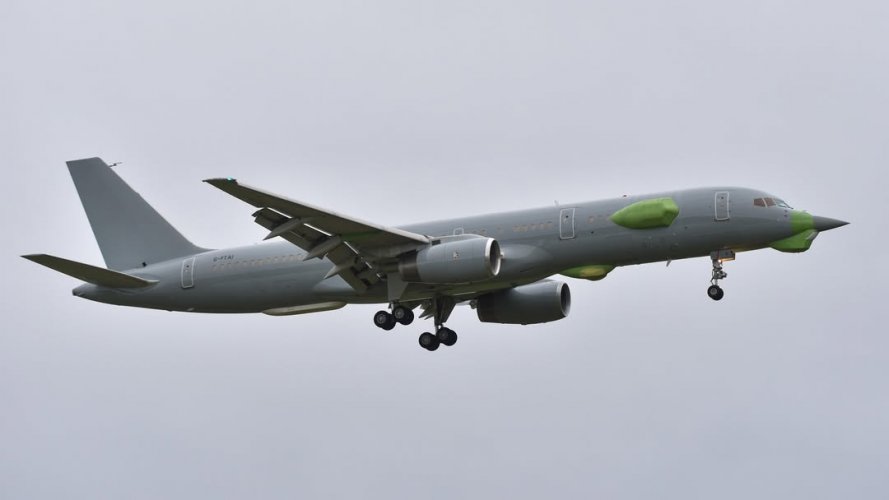
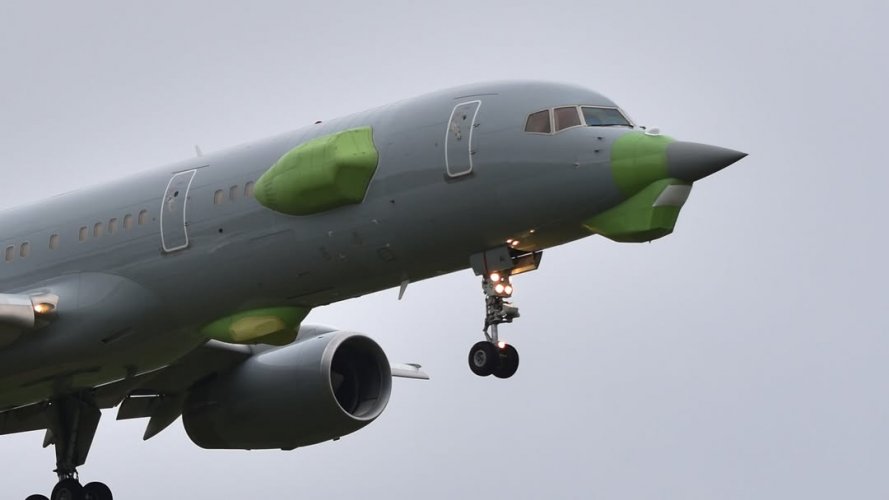
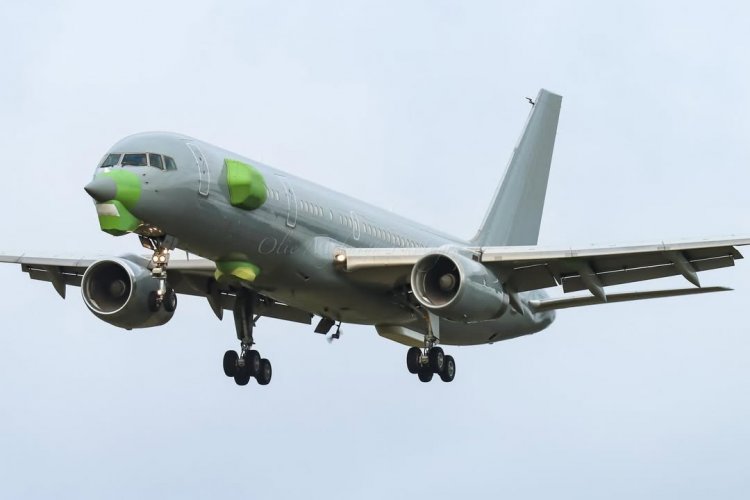
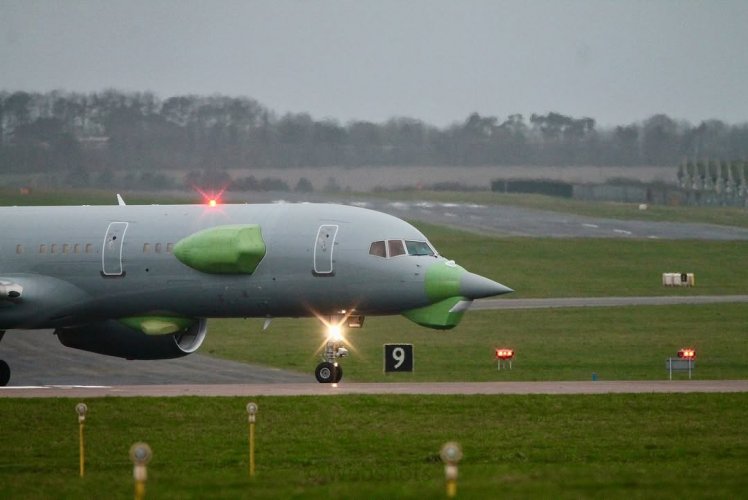
More seriously, could the big panel on the back be a conformal SATCOM antenna? Maybe the plan is to enable the multi-role GCAP to act as a Battlefield Airborne Communication Node (BACN) like the E-11A or Global Hawk when required. Combat Wi-Fi put simply.

Also, if GCAP gets a long central weapon bay you could fit large optical and sideways looking radar arrays for U-2S style ISTAR missions.

More on weapon bays later.
 
Definitely think satellite comms is going to be a feature. Probably a AESA based system.

That and MANet based comms via attendant UAVs.
 
More seriously, could the big panel on the back be a conformal SATCOM antenna?
Certainly could be a SATCOM antenna.


Maybe the plan is to enable the multi-role GCAP to act as a Battlefield Airborne Communication Node (BACN) like the E-11A or Global Hawk when required. Combat Wi-Fi put simply.
IIUC, BACN was about letting more USAF and USArmy radios be netted together, when they had not been designed to be able to do so.
 

Attachments

  • IMG_0319.jpeg
    IMG_0319.jpeg
    28.3 KB · Views: 103
  • IMG_0320.jpeg
    IMG_0320.jpeg
    34.4 KB · Views: 71
  • IMG_0321.jpeg
    IMG_0321.jpeg
    43.7 KB · Views: 65
  • IMG_0322.jpeg
    IMG_0322.jpeg
    63 KB · Views: 58
  • IMG_0323.jpeg
    IMG_0323.jpeg
    67.5 KB · Views: 57
  • IMG_0324.jpeg
    IMG_0324.jpeg
    64.3 KB · Views: 53
  • IMG_0325.jpeg
    IMG_0325.jpeg
    70.2 KB · Views: 51
  • IMG_0326.jpeg
    IMG_0326.jpeg
    29.7 KB · Views: 89
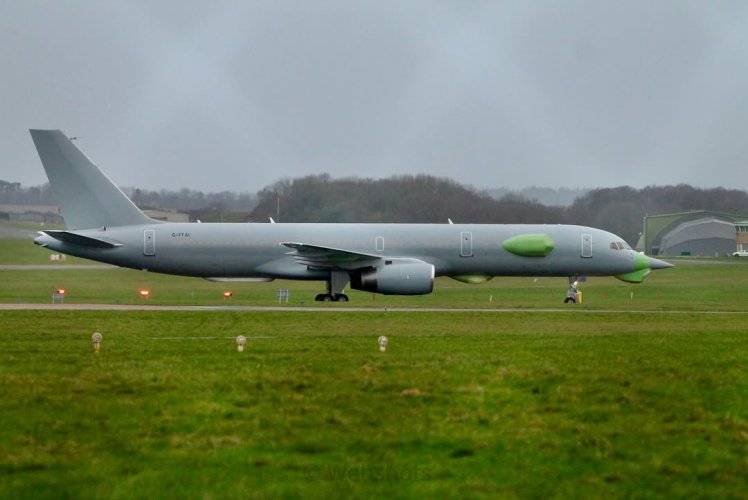
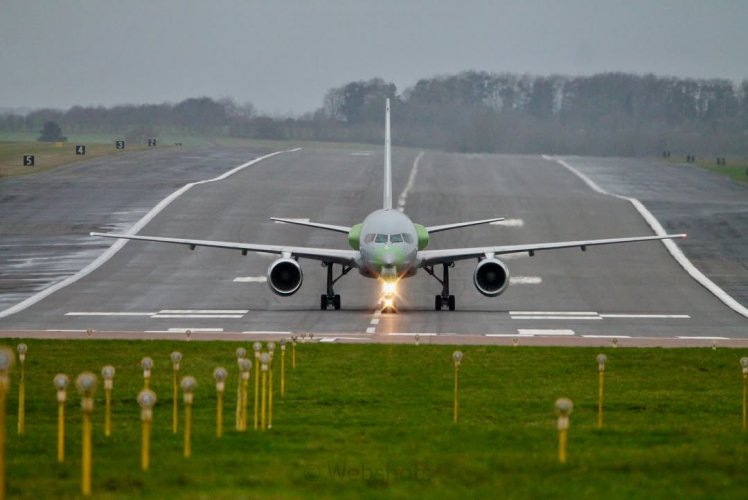
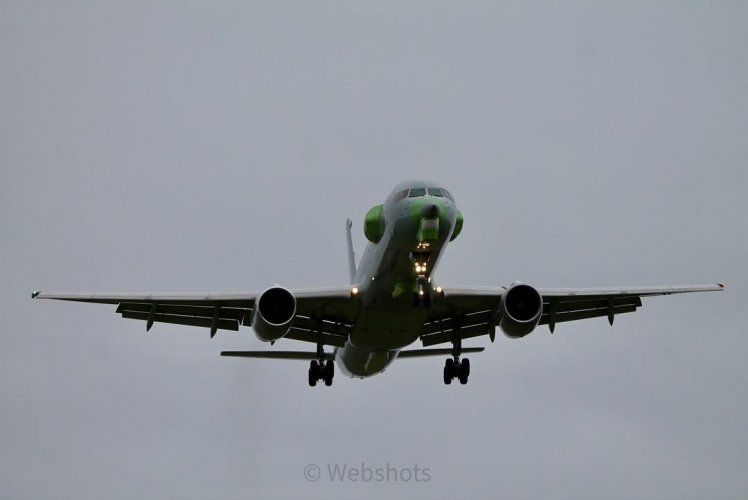
Some very weird shapes going on there.
What part of the aircraft is that bulge on the side supposed to represent? It looks quite deliberate but strangely concave.
And that twin antenna thing on the boto..
 
Some very weird shapes going on there.
What part of the aircraft is that bulge on the side supposed to represent? It looks quite deliberate but strangely concave.
And that twin antenna thing on the boto..

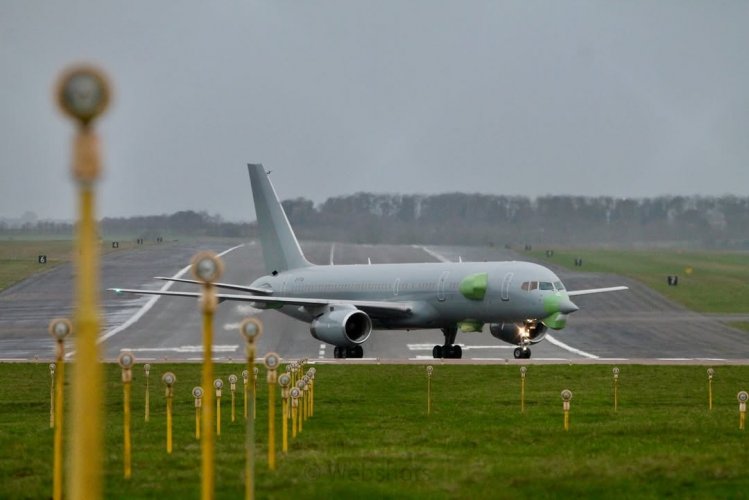
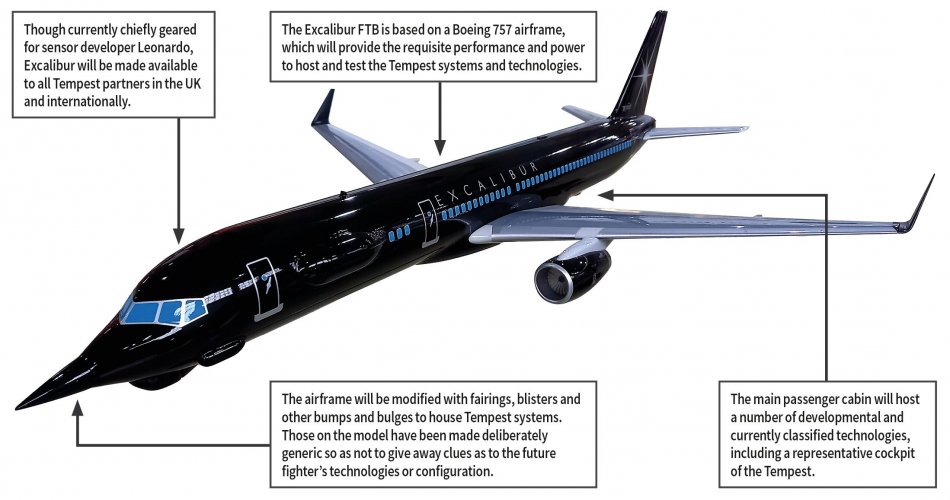
The airframe will be modified with fairings, blisters and other bumps and bulges to house Tempest systems.
Those on the model have been made deliberately generic so as not to give away clues as to the future fighter's technologies or configuration.
 

Attachments

  • IMG_0328.jpeg
    IMG_0328.jpeg
    231.2 KB · Views: 105
It's clear that what's on Excalibur now is different from what's shown on that model. But is Excalibur also different from the GCAP aircraft itself? I would expect so but that must get in the way of testing somehow.
 
 
GCAP designs shown so far are ""representative models" (i.e. not the actual airframe design?)

00:23:10
In terms of the next step we are absolutely now working through a set of engineering milestones further maturing the detail of the concept. We're pretty clear on what it needs to look like and the characteristics. Yes, we've shown some representative models to give people a sense of what we're talking about and I think the reaction to that has been really interesting. People can see that this is really different from what they've seen before. It's very much complimentary and differentiated from what F-35 can give.

[My note on above excerpt - concept images so far are "representative models to give people a sense of what we're talking about". My reading - don't take the concept images too literally. They give indications as to design attributes - size, range etc, but is unlikely to be the actual airframe design, it may look quite different.]
Shame, the current render is pretty.
 

[Frankfurt = Hideki Hayashi] Sweden’s Minister of Defence, Jonson, stated regarding the country’s next-generation fighter aircraft that Sweden is “approaching with an open attitude” the possibility of participating in the joint development project being carried out by Japan, the United Kingdom, and Italy. While indicating that this is one of the available options, he added, “By 2027, we will decide on a policy of whether to develop it independently or in cooperation with other countries.”
 
Well GCAP is likely to be cleared for integration of some nuclear store.....

And has the range for deep strike.
 
They've already discussed adding the Saudis as buyers. I don't believe the Germans would get more than their names on the order sheet.
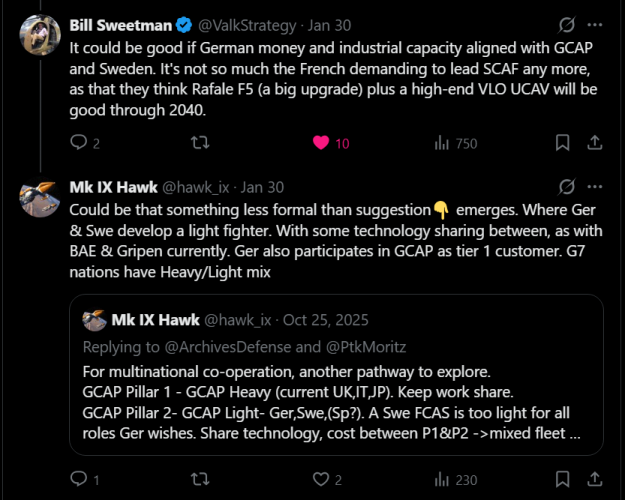
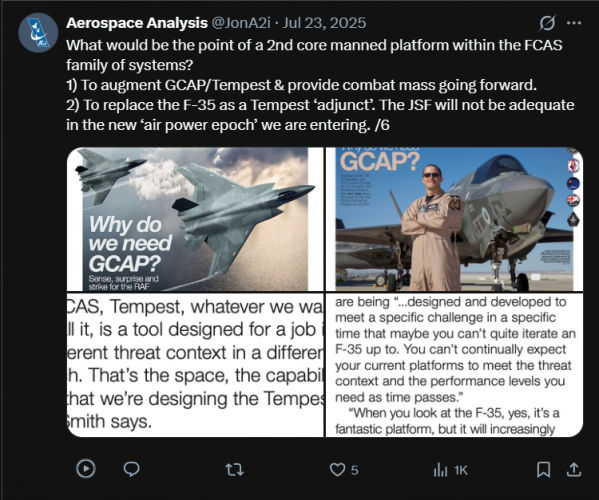
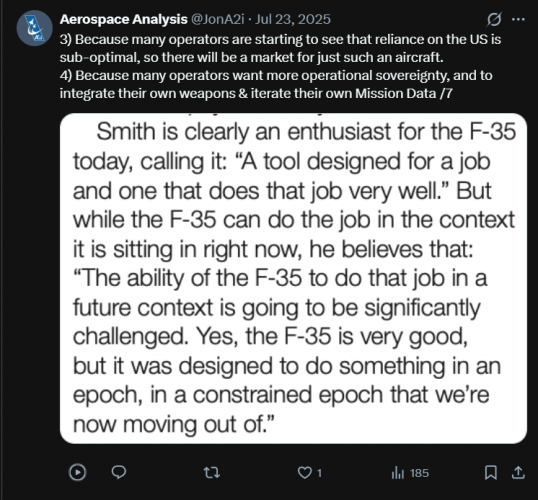
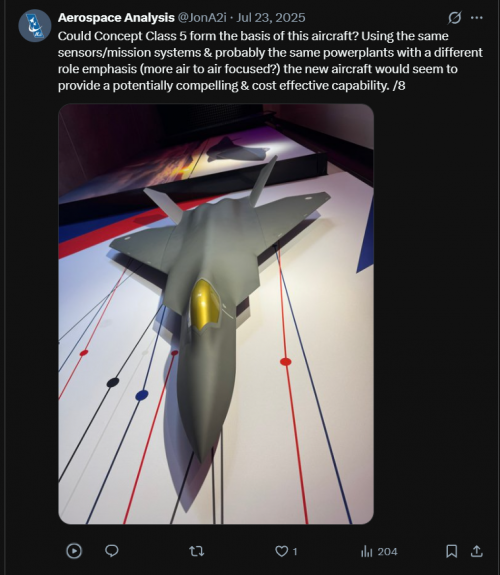
Expanding on the point I made from the X post above & replying to ^ quoted.

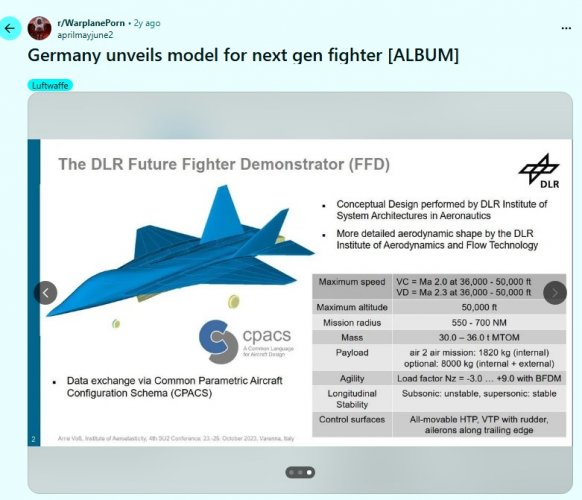
Leading to the question of if Germany would develop a light fighter with Sweden, whilst also being a GCAP customer. Not every mission requires the range, payload of GCAP, especially in Europe (& if keeping Swe concept of operations - road based dispersal). However Ger is unlikely to be interested in a fleet which only consists of a light fighter - wanting the GCAP capabilities for deep strike etc. This route would mean Ger has GCAP heavy (le.g. with some industrial work share of production in country) and also the industrial benefits & export opportunities for co-developing GCAP light with Swe.

As far as I’m aware procurement cost and running costs are somewhat correlated to aircraft size/ weight, number of engines etc. Will it be sufficient to acquire GCAP “heavy” and create combat mass with CCAs/ACPs or would a light fighter help to give a high/low mix with a higher number of manned fighters than having only heavy. Or less cost to running the overall fleet, without dropping the number of manned aircraft from current / near future numbers (loosing trained pilots).

Given that Ger & Swe would need to acquire a “6th gen” engine (power, cooling, efficiency etc), and that the European companies that can provide the sensors needed are a short list. Would this lead to a more formal co-operation between Ger, Swe and the GCAP project - i.e. GCAP heavy, GCAP light. Where nations with G7 levels of GDP buy a heavy only or heavy/light mix, with non G7s buying light only.

Or only technology sharing under distinct products (i.e. as Gripen) rather than being in a family of systems with two airframes under the same family.

Having GCAP heavy & light could provide cost burden sharing where -

-Ger buy’s into GCAP main/ heavy project early, with a projected number of airframes and looking to produce components locally (perhaps final assembly plant).
-Ger & Swe collaborate on GCAP light - using as much common sub systems as possible - engine, radar tech, other sensors.
-Given Swe work on partitioned flight control and mission software on the Gripen E, there is already co-operation between BAE and SAAB on some aspects - perhaps software, and certainly hardware integration.
-There could be an avenue of co-production of the software & combat cloud of GCAP/FCAS where Ger & Swe contribute.
-Economies of scale of increased volume of purchases of the sub components that make up GCAP heavy & light.

Later reply to the above X thread:

View: https://x.com/valkstrategy/status/2017602680214954190?s=61

As a side note - on potential for a carrier version.

If a GCAP light developed with Swe, it would require a certain level of STOL, which may put it in a position to be developed for carrier capability either from the outset or a later date. E.g. see proposed Sea Gripen. Would it be possible for a light GCAP to be twin engined, but with a smaller airframe, smaller sensor sizes (reduced cost), and different airframe characteristics than GCAP heavy. This could provide (additional) motivation for UK, Japan & Italy to bring Swe/Germ into the GCAP family, as all three will likely be looking for an F-35B replacement at somepoint.

 
Last edited:
Well GCAP is likely to be cleared for integration of some nuclear store.....

And has the range for deep strike.

And the Germans do want French and British nuclear sharing to replace the capability the Americans have indicated they might reduce or withdraw.

 
From podcast Jan 2026 - "FULL EPISODE | Future Combat Air: Countering threats and strengthening deterrence"

00:42:48
Host - Viktorija Starych-Samuolienė: "To conclude our discussion today, when we think about the immediate future 2026, we know that the Farnborogh Air Show is coming up later this year. Maybe there will be some announcements on GCAP before during the show?"

Guest - Herman Claesen, Managing Director, Future Combat Air Systems at BAE Systems.
"Well, we have quite a good track record of every year making some big announcements. So, no doubt we will
make a good attempt next year again to [laughter] make some announcement."

"next year"... seems to have slightly miss spoken given Farnborogh is this year in July. And the host mentioned in their question "immediate future 2026". Likely means "...in the next year"
 
There is no need for "Hi/Lo" in the next generation of combat aviation. The "Hi" is simply the manned component that's the conductor of the unmanned orchestra, the "Lo" is represented by these unmanned air combat, strike and sensor focused aircraft.

If you don't have a network centric aircraft at your hands, you don't have a next gen aircraft at your hands. Operating two aircraft, one foreign sourced, to do the same thing is pointlessly redundant and just a way to burn money.
 
It's rather questionable that GER will commit to develop a light fighter that they don't need and want. What would be the purpose of that? It's akin to specifically build an aircraft for export only and given the complexity, costs and timescales it's not feasible, or even realistic. Even Sweden may now have different requirements, given that it is no longer neutral and bothered only with selfdefense. CCAs are more likely to provide the combat mass aspect.
 
It's rather questionable that GER will commit to develop a light fighter that they don't need and want. What would be the purpose of that? It's akin to specifically build an aircraft for export only and given the complexity, costs and timescales it's not feasible, or even realistic. Even Sweden may now have different requirements, given that it is no longer neutral and bothered only with selfdefense. CCAs are more likely to provide the combat mass aspect.
Agree. The only way to make the "light" fighter useful would be to turn it into a medium fighter in the same size class as Rafale/Eurofighter/Hornet. And even that would require a lot of weight optimization to keep it from growing into the next size up (Super Hornet/F-15/KF-21 class).

Saab has in fact already published a lot of info on their stealth concept, known as FS2020 GFF (Generic Future Fighter"). The target weights were 10t empty, 23.5t MTOW with a single F135-class engine (170kN thrust). Somehow they expected to fit 6,200kg fuel and weapon bays for 4x Meteor AAMs + 2 short range AAMs inside that lightweight fuselage... which sounds rather optimistic. (The weapon bays would be optimized for air-to-air missiles, with limited capacity for air-to-ground munitions aside from 250lb class SDBs or equivalent, with heavier bombs & missiles carried underwing or by UCAVs).

bmnsb-jpg.169066


P.S. @Scorpion82 I'm curious about your thoughts on Germany's options right now. I don't see the GCAP partners giving away any significant R&D work share to Airbus & MTU. At best they get some component assembly and a final assembly line. Hensoldt might be luckier as Germany could pay to develop & integrate their own avionic and sensor suite. All in all sounds like a recipe for high cost and limited industrial return. The alternative of a German-led fighter design with support from Spain and/or Sweden seems equally problematic given critical gaps in expertise that would take a lot of time, money and risk to address. I've also already mentioned the engine problem which is currently dependent on French goodwill and continued cooperation within EUMET - I understand you don't like that and that angers you, but now that NGF is dead I wonder what good reasons there would be for anyone to give away their most precious technology and enable a competitor without something in return?
 
It's rather questionable that GER will commit to develop a light fighter that they don't need and want. What would be the purpose of that? It's akin to specifically build an aircraft for export only and given the complexity, costs and timescales it's not feasible, or even realistic. Even Sweden may now have different requirements, given that it is no longer neutral and bothered only with selfdefense. CCAs are more likely to provide the combat mass aspect.
I imagine a collaboration with Saab on a light fighter drone would be closer the mark, with GCAP commanding the battlespace.

I agree, no way would they want a light fighter when a top tier drone would solve their problems both military, politically and also give them manufacturing and assembly.

Now, if they can get MRO/FACO for their own GCAP purchase as well, for a small price of entry of an associate member. Then maybe they could be temped, lowering the overall price for all.
 
Agree. The only way to make the "light" fighter useful would be to turn it into a medium fighter in the same size class as Rafale/Eurofighter/Hornet. And even that would require a lot of weight optimization to keep it from growing into the next size up (Super Hornet/F-15/KF-21 class).

Saab has in fact already published a lot of info on their stealth concept, known as FS2020 GFF (Generic Future Fighter"). The target weights were 10t empty, 23.5t MTOW with a single F135-class engine (170kN thrust). Somehow they expected to fit 6,200kg fuel and weapon bays for 4x Meteor AAMs + 2 short range AAMs inside that lightweight fuselage... which sounds rather optimistic. (The weapon bays would be optimized for air-to-air missiles, with limited capacity for air-to-ground munitions aside from 250lb class SDBs or equivalent, with heavier bombs & missiles carried underwing or by UCAVs).

bmnsb-jpg.169066
I think it's doable. Remember that F-35 mission weight with full internal fuel and 2x2000lb/2xAMRAAM is on the order of 52klbs, 23.6tonnes. And if you don't need to carry 2000lb weapons internally you save a lot of internal volume.

Also, what does SAAB mean by "Design Weight" in this slide? I know there's a big difference between US "empty weight" and European "empty weight" since the Europeans use completely dry weight and the US uses "with all residual fuel and a full oil tank"

However, I also think it's stupid to design an AAM+SDB-only fighter in this day and age. That said, IIRC a 1000lb Mk80 series fits into the same box as an AMRAAM or Meteor (certainly fits into F-22 bays!), so that is a thing SAAB seems to be ignoring.


I don't see the GCAP partners giving away any significant R&D work share to Airbus & MTU. At best they get some component assembly and a final assembly line.
That's certainly how I see it.
 
Expanding on the point I made from the X post above & replying to ^ quoted.

Leading to the question of if Germany would develop a light fighter with Sweden, whilst also being a GCAP customer. Not every mission requires the range, payload of GCAP, especially in Europe (& if keeping Swe concept of operations - road based dispersal). However Ger is unlikely to be interested in a fleet which only consists of a light fighter - wanting the GCAP capabilities for deep strike etc. This route would mean Ger has GCAP heavy (le.g. with some industrial work share of production in country) and also the industrial benefits & export opportunities for co-developing GCAP light with Swe.

As far as I’m aware procurement cost and running costs are somewhat correlated to aircraft size/ weight, number of engines etc. Will it be sufficient to acquire GCAP “heavy” and create combat mass with CCAs/ACPs or would a light fighter help to give a high/low mix with a higher number of manned fighters than having only heavy. Or less cost to running the overall fleet, without dropping the number of manned aircraft from current / near future numbers (loosing trained pilots).
I don't think that it's a good idea to build a "GCAP light." If you need mass, that's what CCAs are for. Fly an F-35 or GCAP/SCAF to lead the mission.


As a side note - on potential for a carrier version.

If a GCAP light developed with Swe, it would require a certain level of STOL, which may put it in a position to be developed for carrier capability either from the outset or a later date. E.g. see proposed Sea Gripen. Would it be possible for a light GCAP to be twin engined, but with a smaller airframe, smaller sensor sizes (reduced cost), and different airframe characteristics than GCAP heavy. This could provide (additional) motivation for UK, Japan & Italy to bring Swe/Germ into the GCAP family, as all three will likely be looking for an F-35B replacement at somepoint.
The catch is that right now, the GCAP partners don't have carriers with arresting gear. (pardon the pun)

A STOL plane would still require arresting gear on the carriers, even if it did not require catapults.
 
From podcast Jan 2026 - "FULL EPISODE | Future Combat Air: Countering threats and strengthening deterrence"

00:42:48
Host - Viktorija Starych-Samuolienė: "To conclude our discussion today, when we think about the immediate future 2026, we know that the Farnborogh Air Show is coming up later this year. Maybe there will be some announcements on GCAP before during the show?"

Guest - Herman Claesen, Managing Director, Future Combat Air Systems at BAE Systems.
"Well, we have quite a good track record of every year making some big announcements. So, no doubt we will
make a good attempt next year again to [laughter] make some announcement."

"next year"... seems to have slightly miss spoken given Farnborogh is this year in July. And the host mentioned in their question "immediate future 2026". Likely means "...in the next year"
Guess I’m going to Farnborough this year
 
Also, what does SAAB mean by "Design Weight" in this slide?
Design weight is typically combat weight for the primary mission, in this case air-to-air. That’s what is used to determine the maximum structural loads while maneuvering.

So the 15,400kg design weight is right where you’d expect it given the stated 10,000kg empty weight, A2A load out of 4 Meteor + 2 short range IR missiles, and a typical 60% internal fuel load. But that’s assuming the 10,000kg empty weight is credible (and Saab don’t have a great track record with Gripen E being significantly overweight compared to initial promises).
 
Last edited:
I don't think that it's a good idea to build a "GCAP light." If you need mass, that's what CCAs are for. Fly an F-35 or GCAP/SCAF to lead the mission.
CCAs aren't mass, they're something else entirely.

They're simpler/more rigid missions by themselves and they're distributed aircraft (which in fact can be as big as necessary, and can be adapted easier).
And the main irony is of course CCAs as a general trend will benefit two types of air forces: either most advanced and largest ones, or more directed and GCI-integrated ones. Which isn't NATO at all, other than Sweden.

Entire problem is IMHO GCAP big is built entirely to complement pre-2025 world, it's a complementary aircraft assuming that actually important tasks are sorted out all by themselves, and GCAP instead can look into ambitious niches which were long since half-abandoned.
Without guaranteed USAF it's however just a very expensive and inefficient way to generate combat power, compared to something much lighter and simpler.

It was weird enough when many EU nations went head on into clean F-35 structures, and now encountering what it means. Now they're building in effect two smaller J-36s, but missing half the point. While not having F-35 replacement even in consideration. Tornado, run 2, but way worse.
 
Last edited:
ntire problem is IMHO GCAP big is built entirely to complement pre-2025 world, it's a complementary aircraft assuming that actually important tasks are sorted out all by themselves, and GCAP instead can look into ambitious niches which were long since half-abandoned.
Without guaranteed USAF it's however just a very expensive and inefficient way to generate combat power, compared to something much lighter and simpler.

What a strange comment. Does it actually mean anything?
 

Similar threads

Back
Top Bottom