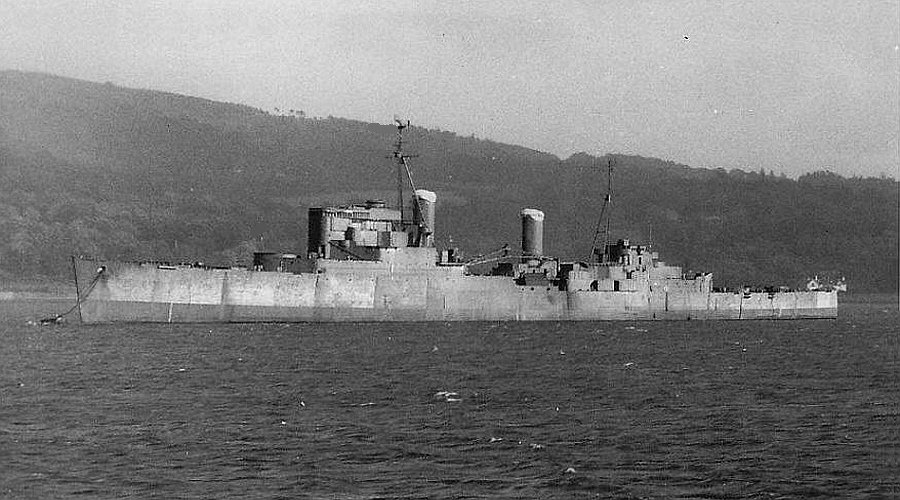
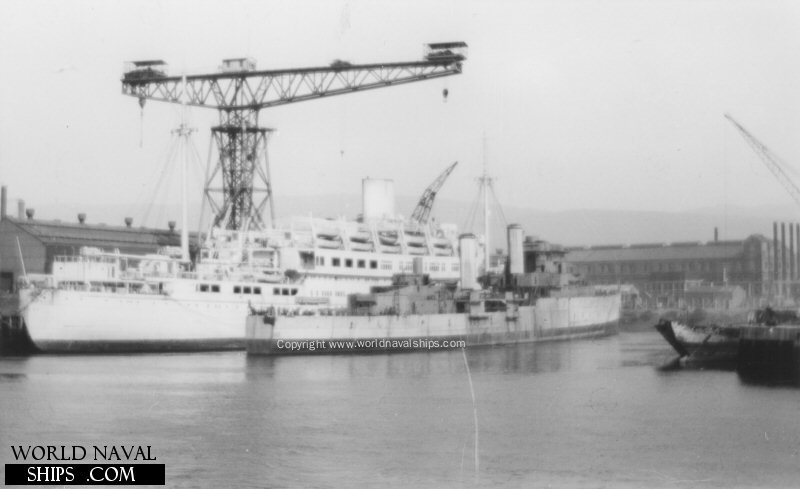
Alternate Post War Royal Navy Carrier Rebuilds

No one has yet produced that 1949 report to allow us to see what the problems really were. So rumours about twisted keels, bent hangar beams, unrepaired kamikaze damage circulate today.
Logic suggests something deep in the hull. Hanger beams and deck damage would be irrelevant in a reconstruction.

But warping of the keel or frames would be a real problem to deal with.

The Big AH question could then be "what if HMS Formidable was in better condition and not taken off the list for reconstruction "?

Because having two Victorious Standard Carriers does change things.
 
Good Gods!
August 51!
I think I have posted the timeline for development of the angled deck before on this site. But it is worth repeating.

7 Aug 1951 – the angled deck is first proposed by Capt Dennis Cambell.
Aug / Sept 1951 – ‘Winkle’ Brown departs for the USA having been briefed on the angled deck proposal. Cambell meets with USN officers in Britain.
Jan/Feb 1952 – approach trials flown to a painted deck on HMS Triumph (touch and goes deemed unsafe due to the small size of her deck)
May 1952 – approach and touch and go trials flown to a painted deck on the USS Midway.
Sept-Dec 1952 – Antietam refitted in New York Navy Yard with an angled deck on a “rudimentary” sponson for trial purposes.
May 1953 - Antietam visits UK to demonstrate the angled deck to the RN.

The RN was actively pursuing the angled deck around this time. In Aug 1953 a quote was sought from Albion’s builders for fitting it (and the mirror landing sight). Her sister Centaur, commissioned with an axial flight deck in Sept 1953, was taken in hand between Oct 1953 and April 1954 to be refitted with an angled deck. Her sisters Albion & Bulwark completed with it in May and Oct 1954. Plans were changed for Ark Royal at this time and Eagle was refitted with an angled deck between Jun 1954 and Mar 1955. 5.5 degrees was the maximum angle that could be fitted to these carriers without major structural modifications.

This was a period of great co-operation between the USN & the RN. HMS Perseus with its prototype steam catapult visited the USA in Jan / Feb 1952 to demonstrate it to the USN with Winkle Brown flying the first manned launches from it. Steam catapult timeline is as follows.

1936 – Slotted tube / cylinder steam catapult was conceived by Colin Mitchell of MacTaggart, Scott & Co and patented in 1938.
1944- Renewed interest and development by RAE at Farnborough as a result of the discovery of technology used in the V1. Cdr Colin Mitchell and MacTaggart, Scott & Co also become involved again. The result was a shore based prototype and an Admiralty decision in 1946 to adopt the slotted-cylinder catapult for its carriers with plans for a shipborne prototype finalised in 1948.
1949 - HMS Perseus refitted with a prototype BXS-1 steam catapult on her flight deck.
1950 – Perseus begins steam catapult trials in June 1950 which last through until March 1952.
1950 – In Nov HMS Ark Royal’s completion schedule amended to allow incorporation of steam catapults.
1951 – USN formulates plans for the SCB-27C Essex class modernisation with a single powder C-10 slotted tube catapult (as well as a single hydraulic H-8). Delays to its development and problems with the stowage and protection of the charges for it coincide with appearance of the steam catapult.
1952 – Perseus spends Jan/Feb with the USN demonstrating the steam catapult with ‘Winkle’ Brown flying the first manned tests.
1954 – USS Hancock (Feb), Intrepid (Jun) and Ticonderoga (Sept) re-enter service following SCB-27C refits, fitted with 2*C-11 steam catapults (those on Hancock and Ticonderoga being built in the UK) followed by the SCB-125 conversions in 1955.
1955 – First British BS.4 steam catapults go to sea in February in HMS Ark Royal followed by HMAS Melbourne in Oct.


And the timeline for development of the mirror landing sight, much of which Friedman skips over:-

1945 – postwar research into the landing problem begins at RAE Farnborough with radar & talk down systems considered but great difficulties encountered.
1951 – Mirror sight conceived by Lt Cdr Nick Goodhart, assistant to Capt Dennis Campbell, and published in a paper in Dec.
1952 – RAE begin tests with very basic temporary ground based setup using Goodhart’s paper.
1952 – July the temporary setup was transferred to HMS Illustrious for trials at sea. Development continues.
1952 – Illustrious is fitted out with the first permanent unit for trials in Oct.
1953 –Development continues with stabilisation & smaller mirror. Another installation is made in Illustrious in Oct with trials in Nov. USN test pilots on exchange also get to take part in these trials and report back to the USN by the end of the year.
1954 – It is believed that Albion became the first carrier with a permanent system (completed May).
1955 – August first USN trials with an installation in the USS Bennington.
 
Somewhere inside that timeline, the french must have asked the british for 171 ft BS.5 catapults. Must have been in 1954.
PA54 Clemenceau was funded late 1953, laid down in November 1955 and launched on December 21, 1957. With PA55 Foch they were built from the keel up with angled deck.
 
I think I have posted the timeline for development of the angled deck before on this site. But it is worth repeating.

7 Aug 1951 – the angled deck is first proposed by Capt Dennis Cambell.
Aug / Sept 1951 – ‘Winkle’ Brown departs for the USA having been briefed on the angled deck proposal. Cambell meets with USN officers in Britain.
Jan/Feb 1952 – approach trials flown to a painted deck on HMS Triumph (touch and goes deemed unsafe due to the small size of her deck)
May 1952 – approach and touch and go trials flown to a painted deck on the USS Midway.
Sept-Dec 1952 – Antietam refitted in New York Navy Yard with an angled deck on a “rudimentary” sponson for trial purposes.
May 1953 - Antietam visits UK to demonstrate the angled deck to the RN.

The RN was actively pursuing the angled deck around this time. In Aug 1953 a quote was sought from Albion’s builders for fitting it (and the mirror landing sight). Her sister Centaur, commissioned with an axial flight deck in Sept 1953, was taken in hand between Oct 1953 and April 1954 to be refitted with an angled deck. Her sisters Albion & Bulwark completed with it in May and Oct 1954. Plans were changed for Ark Royal at this time and Eagle was refitted with an angled deck between Jun 1954 and Mar 1955. 5.5 degrees was the maximum angle that could be fitted to these carriers without major structural modifications.

This misses a huge amount of activity. The RAE Naval Aircraft Department produced Technical Memo N.A.45 in October 1951 proposing a 7 degree angle deck and trials to investigate its practicability. DNC produced a drawing of Ark Royal with a 9 degree angled deck in the same month, circulating it to various Directors on 3rd November 1951, though at that point it included a 36ft long ramp that was to be 6ft tall at its summit (corresponding to 9.5 degrees). Based on the pilot observations from the February 1952 Triumph trials, report N.A.242 was produced in March concluding that the idea was feasible. An attempt to draft a staff requirement was overtaken by the success of the trials and DAW and DTSD concluded that it was now a matter of implementing the angled deck in the carrier fleet. On May 1st 1952 DNC wrote that his department was preparing drawings of the Ark Royal, Hermes, Victorious and Colossus class with angled decks. DAW wrote that an angled deck would be a requirement for the then planned new construction carrier on May 22nd 1952. The Board accepted the installation of an angled deck in Hermes, but rejected one for Victorious, in July 1952.
 
Last edited:
Could HMS Indomitable also get a victorious style rebuild?

No. If it had to be carried out it would have to be similar to the Implacables due to her hangar and a half layout. But with its shorter upper hangar as built (416 v 456ft) and other internal differences, it would have required a separate modernisation plan
 
Consequences of expedient solutions of a short term nature.

There's a war on
Just through this crisis
And another and another.

Don't worry about the long-term, just modify an existing design.

Eventually the crunch comes and only supreme acts of will can chase reality.

In the deeper sense of Elite behaviour.
Foxes degrade order and structure.
Lions destroy the corrupted structures and build new ones.
 
There's no panacea for the RN, its depressing.
This thread makes me feel as though the best way forward fpr the RN would have been. Cancelling Victorious rebuild, possibly Ark Royal depending on her material condition and completing hermes to the same standard as her sisters. Then build 5 - 6 of the 1952 Fleet Carrier design.
Not sure what to do with Eagle weather you rebuild her or try n sell her. Once the 1952 class start entering services convert the Centuars into commando carrier.
This at least would mean by the mid 60s the RN would have 6 to 7 modern carriers. So there would be no CVA01 vs TSR scenario. Saving the RNs carrier force though the number in service would probably be reduced
 
This thread makes me feel as though the best way forward fpr the RN would have been. Cancelling Victorious rebuild, possibly Ark Royal depending on her material condition and completing hermes to the same standard as her sisters. Then build 5 - 6 of the 1952 Fleet Carrier design.
Not sure what to do with Eagle weather you rebuild her or try n sell her. Once the 1952 class start entering services convert the Centuars into commando carrier.
This at least would mean by the mid 60s the RN would have 6 to 7 modern carriers. So there would be no CVA01 vs TSR scenario. Saving the RNs carrier force though the number in service would probably be reduced

There's no cash Chopper........ here......... no cash!
 
There's no cash Chopper........ here......... no cash!
The eatimated cost of the 1952 was 26million. Victorious rebuild costed 30million, Eagle rebuild costed 31million, Hermes rebuild costed 18million. So cancelling these gives u enough money if the price doesnt increase, there is enough money for 3 1952 class carriers. Probably more if u cancel Ark Royal as well
 
There's no panacea for the RN, its depressing.
There be potential AH divergence that might alter the outcome.

I've questioned the decision to alter the Illustrious design, and just build more Illustrious class. It wouldn’t save enough to actually result in more carriers during the war. It slightly shorterns the build rate and entry into service for some.
But just having 6 or so of the same design.
Does it effect the outcome of War by any significant margin?
I'm not convinced, since the FAA struggled to get enough aircraft.

Ewan goes through the details, but I don't see much that is game changing for The War if this AH had happened.

However post war, the consequences be several rebuilt to Victorious standard and the staving off of next generation carrier program for a decade or more.
-------
Here's an intriguing thing to note.
JCF Fuller did post a picture of a Medium Fleet Carrier study and it's clearly post '54 when the future is Scimitar and Buccaneer.
Having just 220ft pull put distance on the arrestor wires and a Scimitar like aircraft depucted on the 150ft stroke catapult.

It doesn’t have a overall length figure but going by the 500ft long hanger, the overall flight deck length seems to be somewhere between 765ft and 775ft.
The latter figure is the same as Victorious's flight deck....
 
There be potential AH divergence that might alter the outcome.

I've questioned the decision to alter the Illustrious design, and just build more Illustrious class. It wouldn’t save enough to actually result in more carriers during the war. It slightly shorterns the build rate and entry into service for some.
But just having 6 or so of the same design.
Does it effect the outcome of War by any significant margin?
I'm not convinced, since the FAA struggled to get enough aircraft.

Ewan goes through the details, but I don't see much that is game changing for The War if this AH had happened.

However post war, the consequences be several rebuilt to Victorious standard and the staving off of next generation carrier program for a decade or more.
-------
Here's an intriguing thing to note.
JCF Fuller did post a picture of a Medium Fleet Carrier study and it's clearly post '54 when the future is Scimitar and Buccaneer.
Having just 220ft pull put distance on the arrestor wires and a Scimitar like aircraft depucted on the 150ft stroke catapult.

It doesn’t have a overall length figure but going by the 500ft long hanger, the overall flight deck length seems to be somewhere between 765ft and 775ft.
The latter figure is the same as Victorious's flight deck....

I'd go back to the interwar period, and even then there's likely 3 decisions that need to be changed.
  • The 1923 decision to keep the FAA in the RAF rather than return it to the RN
  • the 1931 decision not to give the Army's research work into 'radar' further consideration
  • the 1936 decision to keep to the 2LNT tonnage limits rather than take the escalator clause
 
You ignore Britain' dire financial state.

In 1945 the original Eagle was about 23% complete. Money spent £1.95m. Money saved by scrapping £5.5m (about £308m today) + whatever extra you need to spend to get her to your proposed standard.

Other savings in Dec 1945 achieved included
Majestic, Leviathan, Powerful & Terrible (all 60-80% complete) - £7.33m spent & £3.18m saved
4 cruisers - £0 spent £17.8m saved
4 Weapon class destroyers (50-60% complete)- £1.65m spent £ 1.15m saved.

Then figure in that many yards were keen to clear their slips as soon as possible to allow construction of profitable merchant ships. So Centaur, Albion & Bulwark were allowed to continue to the launching stage in 1947/48 to then be laid up incomplete.

The Admiralty were paying to keep Ark Royal & Hermes (ex Elephant) on the slips with some degree of preservation.
Some queries about the above.
  • Does your source say how much was saved by:
    • cancelling Hawke outright?
    • And stopping work on Blake, Lion and Tiger?
  • Are the 4 cruisers upon which nothing had been spent the Neptune class?
    • Because AFAIK 6 Neptune class were on order.
    • That is 5 ordered in 1944 plus one ordered as a Swiftsure/Tiger and re-ordered as a Neptune.
  • Which were the 4 Weapon class that were cancelled? Because AFAIK:
    • 16 were on order at VJ Day of which 12 had been laid down and none had been launched.
    • 12 were cancelled between October 1945 and January 1946.
    • None of the 12 that were cancelled had been launched before they were cancelled.
    • However, 2 were launched after they were cancelled to clear their slipways.
    • That left 4 that were completed 1947-48.
  • Does it say how much money was saved by cancelling 16 out of 40 Battle class? AFAIK:
    • All 40 were laid down before VJ Day of which 25 had been launched and 5 completed.
    • Another 19 would be completed from VJ Day to May 48 bringing the total to 24.
      • 22 of the 24 had been launched before VJ Day.
      • The 2 launched after VJ Day were Vigo launched on 27.09.45 and Jultand launched on 20.02.46.
    • The other 16 were cancelled in October 1945.
      • But as I've already written all 16 were laid down before VJ Day of which 3 had been launched.
      • Another 2 were launched between VJ Day and their cancellation.
      • And 4 were launched after they were cancelled to clear their slipways.
      • So a total of 9 out of 16 cancelled Battle class destroyers were launched.
      • Which should come to a total of 33 because 33 out of 40 Battle class were launched.
I'm counting VJ Day as 2nd September 1945, when the Instrument of Surrender was signed. According to the Unauthorised History of the Pacific War Pocast, Toshikazu Kase (1903-2004) who was one of the Japanese signatories was an uncle of Yoko Ono.

 
Source was Moore " Building For Victory" p128.

Some queries about the above.
  • Does your source say how much was saved by:
    • cancelling Hawke outright?
No. But he notes on p137 that her boilers and machinery were complete and the main armament virtually ready. She had been laid down at Portsmouth RN Dockyard on 1 July 1943 and cancelled on 15th October 1945, with the cancellation "promulgated" on 23rd Oct (per Waters "British Fiji Class Cruisers and Their Deriviatives"). Some of that material had come from Vickers-Armstrong (Tyne) where it had been gathered for the original Tiger, the third cruiser of the 1941 Supplementary Programme, ordered on 18 Dec 1941. She was renamed Bellepheron and reordered as the sixth Neptune class vessel to be cancelled on 28th Feb 1947.
    • And stopping work on Blake, Lion and Tiger?
As for these three
Defence (renamed Lion in 1957) launched 2nd Sept 1944 at Scotts.
Tiger (ex Bellerophon) launched 25th Oct 1945 at John Brown
Blake launched 20th Dec 1945 at Fairfield

Work was allowed to continue according to Waters, with discussions about revised requirements lasting through until March 1946. Work on these ships slowly ground to a halt. But it wasn't until May 1946 that it was ordered that Defence, the most advanced, should be laid up. The plan then was for her to go to Devonport for completion once the light carrier Terrible was completed for the RAN as HMAS Sydney.

Fairfield were told to suspend work on Blake in late 1946. John Brown received similar instructions in Sept 1947 but sought a stay of execution to April 1948. Exactly when work on her stopped is not clear according to Waters, but may have been around Jan 1948.


  • Are the 4 cruisers upon which nothing had been spent the Neptune class?
    • Because AFAIK 6 Neptune class were on order.
    • That is 5 ordered in 1944 plus one ordered as a Swiftsure/Tiger and re-ordered as a Neptune.
No explanation given, but it has to be Neptune class ships.
  • Which were the 4 Weapon class that were cancelled? Because AFAIK:
    • 16 were on order at VJ Day of which 12 had been laid down and none had been launched.
    • 12 were cancelled between October 1945 and January 1946.
    • None of the 12 that were cancelled had been launched before they were cancelled.
    • However, 2 were launched after they were cancelled to clear their slipways.
    • That left 4 that were completed 1947-48.
19 originally ordered. Three ships from Scotts cancelled on 23rd Dec 1944.

8 were cancelled on 15th Oct 1945. Only 5 of these had already been laid down (4 by VJ Day + Sword)

Another 4 were cancelled on 23rd Dec 1945. It was these ships that I was referring to in my previous post. All 4 had been laid down.

Rifle had been suspended at Denny on 25th Sept 1945 before cancellation on 23rd Dec 1945 and was broken up on the slip. Denny received approx £94k in cancellation charges for hull & machinery work done on her & Spear (cancelled 15th Oct).

Work continued on Culverin (at Thornycroft), Cutlass (at Yarrow) & Carronade (at Scotts) to bring them to a condition whereby they could be safely launched to clear the slips. They were then scrapped. Cancellation message for Carronade reached the yard on 5th Jan 1946.

So 16 on order at VJ Day. 12 laid down by VJ Day + Sword laid down on 17th Sept1945 for a total of 13.

8 cancelled on 15th Oct 1945 (4 laid down by VJ Day + Sword)
4 cancelled on 23rd Dec 1945 (all of which had been laid down in 1944)
4 completed 1947/48 (all of which had been laid down in 1944)

Additional information from "Obdurate to Daring" by John English.
  • Does it say how much money was saved by cancelling 16 out of 40 Battle class? AFAIK:
    • All 40 were laid down before VJ Day of which 25 had been launched and 5 completed.
    • Another 19 would be completed from VJ Day to May 48 bringing the total to 24.
      • 22 of the 24 had been launched before VJ Day.
      • The 2 launched after VJ Day were Vigo launched on 27.09.45 and Jultand launched on 20.02.46.
    • The other 16 were cancelled in October 1945.
      • But as I've already written all 16 were laid down before VJ Day of which 3 had been launched.
      • Another 2 were launched between VJ Day and their cancellation.
      • And 4 were launched after they were cancelled to clear their slipways.
      • So a total of 9 out of 16 cancelled Battle class destroyers were launched.
      • Which should come to a total of 33 because 33 out of 40 Battle class were launched.

No mention of savings on Battles. I think we agree on most of the numbers.

There were 16 x 1942 Battles and 26 (not 24) x 1943 Battles ordered. Two of the 1943 ships, Ypres (at Fairfield) & Vimiera (at Cammell Laird), ordered on 5th June 1943 were reordered as Daring class in 1944/45 and renamed Disdain & Danae respectively. The former was laid down on 5th Sept 1946 and the latter was cancelled on 13th Dec 1945.

Completion of the 1942 Battles was delayed due to late delivery of the Mk.VI directors. Barfleur, the lead ship ran trials without it before being laid up for a short period until it became available. Then 4 were diverted to Anson.

So, 15 of the 16 launched by VJ Day (Vigo was launched on 27th Sept 1945), with 5 completed by VJ Day + another 3 by the end of 1945 and the remaining 8 between Jan & Dec 1946.

All remaining 24 1943 Battles in the Programme had been laid down by the end of June 1945, with 10 having been launched before VJ Day of which 7 went on to be completed. The final ship completed (Jutland ex Malplaquet) was launched on 20th Feb 1946.

16 were cancelled on 15th Oct 1945 with 6 being brought to a stage of completion sufficient to allow a safe launch (to add to the 3 already in the water by VJ Day but not completed). The rest were scrapped on the slip. Some of the incomplete hulls were used for trials before being scrapped.

The cancellation message for Talavera at John Brown, reached the yard on 4th Dec 1945. The Admiralty paid £300k for the work on her. They also paid £281k to John Brown in respect of Trincomalee. Auxiliary machinery for the pair was purchased by the Admiralty in 1948 for £34.7k for transfer to Australia for their Battles.

The Admiralty had obtained agreement from the USA to acquire Mark 37 directors for all 26 of the 1943 Battles originally planned. I don't know how many were delivered (The order included directors for the Vanguard & 3 Audacious class carriers as well).

It was hoped that the final flotilla of 1943 Battles would receive the new Mk.VI turrets as trialled on Saintes in 1946/47.


I'm counting VJ Day as 2nd September 1945, when the Instrument of Surrender was signed. According to the Unauthorised History of the Pacific War Pocast, Toshikazu Kase (1903-2004) who was one of the Japanese signatories was an uncle of Yoko Ono.
 
Last edited:
There was a bigger issue for the RN in rebuilding their carriers to meet postwar needs. That is, that on British carriers, the flight deck was part of the hull girder. That is, the flight deck contributed to the ship's structure. Changing that was a major issue as it changed the whole ship's strength girder and stability.

On US carriers, the hanger deck was part of the hull girder. Everything above it, hanger and flight deck were superstructure. That meant razing the ship to the hanger deck had no real effect on the rigidity of the hull girder and could easily be accomplished. This was true for both the Essex and Midway classes. Easy to modify, the engineers only had to worry about stability and weight.

This difference made modifying British carriers both far more difficult and expensive.
 
  • Are the 4 cruisers upon which nothing had been spent the Neptune class?
    • Because AFAIK 6 Neptune class were on order.
    • That is 5 ordered in 1944 plus one ordered as a Swiftsure/Tiger and re-ordered as a Neptune.
I've done a bit more digging in the library.

Firstly, AFAIK the Neptunes were not "on order". They were planned but no design was ever formally approved by the Admiralty nor orders formally placed. It does seem however that it was anticipated that they would be built by, John Brown, Hawthorn Leslie, VA (Barrow), Swan Hunter, Harland & Wolff plus Bellerophon at VA (Tyne).

Friedman in his "British Cruisers. Two World Wars and After" states the following on p267 during his detailing of the development of the Neptune class:-

"The Neptune project survived the end of the war. In November 1945 First Lord decided that two ships should be laid down as soon as possible (Controller suggested waiving tender rules so that information could be forwarded to firms by April 1946)."

So the 13 Dec 1945 paper that was discussed by the Admiralty Board later that month showed a saving of £17,814,000, with nothing spent, for four cruisers, because at that stage it was only being proposed to fund construction of two per the First Lord's decision of Nov 1945, at least in the short term.

Rereading Moore regarding the Dec 1945 cancellations, there appears to have been a bit of disagreement between the politicians (i.e. the First Lord) and the Sea Lords (i.e. the professional sailors). The Sea Lords wanted to retain the four cruisers, 2 or 4 of the 1942 light fleet carriers (Leviathan, Majestic, Powerful, Terrible) and two of the four Weapon class (Culverin at Thornycroft and Cutlass at Yarrow). According to Moore the desire for the two Weapons was to avoid dislocation in the yards. Moore goes on:-

"Mottershead of the Admiralty Private Office, however, made the telling point that positive financial saving must weigh heavily against the possible dislocation of labour."

The Sea Lords were however prepared to accept the cancellation in Dec 1945 of the second flotilla of Daring class destroyers, the Gallant class destroyers and the remaining two Maltas.

The First Lord in Nov/Dec 1945 was A V Alexander under PM Atlee. He had returned to the post following the election of the Labour Govt in July 1945, having previously held the post in Churchill's wartime coalition Govt between 1940 and May 1945.
 
Defence (later Lion) laid up on the Gareloch sometime between 1946 & July 1955 when she was towed to Swan Hunter on the Tyne for completion to a much modified design.
1777906853363.jpeg


Tiger in the John Brown fitting out basin at Clydebank around 1947.
1777906703832.jpeg
 
According to Friedman Implacable's machinery occupied 40% of her underwater hull volume compared to 30% for Victorious, so less hull volume for all the other stuff to be fitted.
If I recall correctly that’s because they squeezed in another shaft while keeping the beam exactly the same as the Illustrious class.

In all seriousness though the only ships what were really worth keeping on in the fleet carrier role were the Audacious’.

Faffing about rebuilding the treaty limited carriers was always going to cause a headache, if not initially, about a 5-10 years down the line when they’re too small to operate modern aircraft abs you’re suddenly back to square one with little to show for it.
 
I'm not sure that the F-4Ks would be able to operate off an Implacable... Small landing area, short catapults.
They were able to land on Vic but they weren’t able to be launched with a useful combat load due to the Cats being too short, and not being able to be extended due to the placement of the forward elevator (she did launch one lightly loaded which had come from an American carrier if i remember correctly)

I doubt the layout would have been any better on an Implacable rebuild.
 
Back
Top Bottom