- Joined
- 1 April 2006
- Messages
- 12,276
- Reaction score
- 15,089
Thank you, CO. And LM and Boeing concepts ARE LO BWBs when Dzyne/JetZero IS not - and it's OML/aerodynamics itself is patented know-how that barely LO.BWB can be shaped for LO.

Thank you, CO. And LM and Boeing concepts ARE LO BWBs when Dzyne/JetZero IS not - and it's OML/aerodynamics itself is patented know-how that barely LO.BWB can be shaped for LO.

https://aviationweek.com/defense/ai...iting-stealth-tankers-under-new-usaf-analysisNATIONAL HARBOR, Maryland—The U.S. Air Force’s renewed look at the future of its aerial refueling fleet is again prioritizing stealthy, new-build aircraft—provided the service can afford it.
The service in August posted a new solicitation to industry to relook at potential designs for its Next General Aerial Refueling System (NGAS), with responses due in the coming weeks. Air Mobility Command boss Gen. John Lamontagne said the solicitation was approved by Air Force Secretary Troy Meink, with the goal of refining cost estimates for aircraft with technology to reduce its overall signature.
“That is really to help us better understand some cost estimates,” Lamontagne told reporters Sept. 22. “When we did the first analysis of alternatives on NGAS last winter, I would say those cost estimates were really rough on what a signature-managed platform might look like.”

The U.S. tanker fleet aircraft needs a new kind of air-to-air interceptor that can shoot down incoming missiles, the Air Force’s top acquisition official for mobility aircraft says.
It's a tanker, give them some Sidewinder rails!
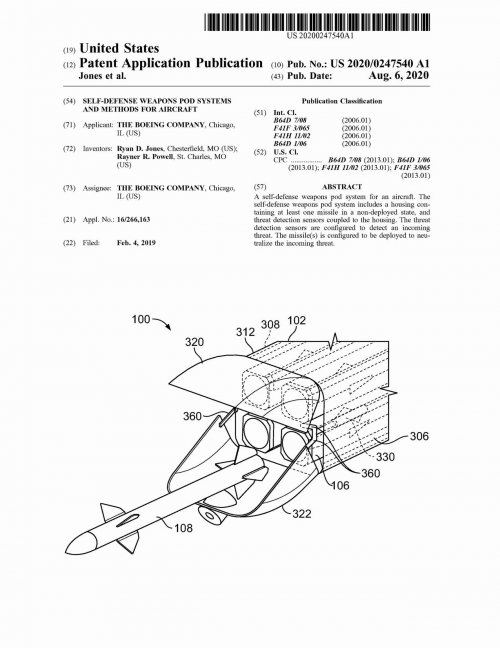
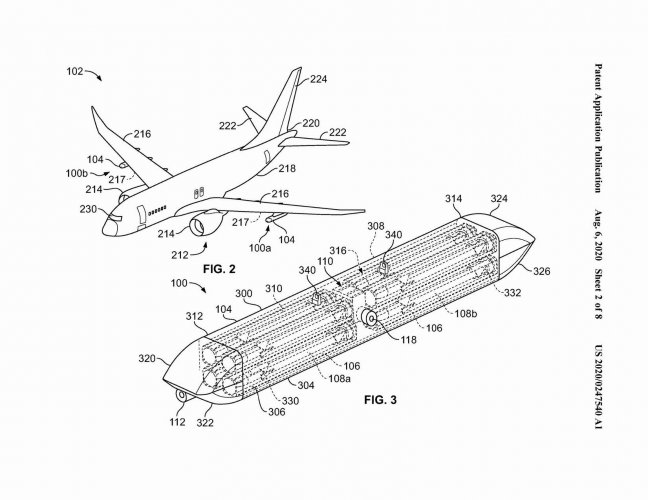
Don't be that cheap... a missile pod at least.It's a tanker, give them some Sidewinder rails!
So MDSM still lives...

Yes, a pod would be less drag.Don't be that cheap... a missile pod at least.
Only if they have a rear ramp.A little lateral thinking perhaps but, could they not also use a LO tanker as an 'Arsenal airframe"? Somewhat similar to the suggested us of heavy lift airframes.
Possibly even a 'palletised' system akin to 'Thunderbird 2'?
For tanker self protection...?Wouldn't a YAL-1 style laser be ultimately better than stuffing missiles on a tanker?
Only in terms of where to mount the laser. IIRC, the laser was an oxygen-iodine chemical laser and the tankage for that took up a lot of internal volume. If we were talking a fiber laser or something it'd be a lot more viable.Wouldn't a YAL-1 style laser be ultimately better than stuffing missiles on a tanker?

Why not? Not only has laser technology advanced since then, unlike YAL-1 it wouldn't have to be powerful enough to deal with ICBMs in their terminal stage over long distances but defeat slower, smaller, AAMs that are so kind to come it's way.For tanker self protection...?

I think 8 - 12 CCAs, 2 manned fighter escorts per 1 - 2 tankers forming a defense in depth would probably be a more desirable defense. The best way to avoid being shot at is to keep shooters at an arms length away.So MDSM still lives...
The intent should also be to couple a few CCA to the tanker orbits as a primary defensive asset.
Yal-1 was boost stage intercept against very vulnerable and bright type of target(fuelled liquid-fuelled missile).Why not? Not only has laser technology advanced since then, unlike YAL-1 it wouldn't have to be powerful enough to deal with ICBMs in their terminal stage over long distances but defeat slower, smaller, AAMs that are so kind to come it's way.
My bad, point stands though that YAL-1 had a more difficult mission profile.Yal-1 was boost stage intercept against very vulnerable and bright type of target(fuelled liquid-fuelled missile).
Why not? Not only has laser technology advanced since then, unlike YAL-1 it wouldn't have to be powerful enough to deal with ICBMs in their terminal stage over long distances but defeat slower, smaller, AAMs that are so kind to come it's way.
In the long term it seems more logical to me than throwing a dozen of Sidewinders on the aircraft which could very well fail or be tricked by chaff (in a world where cruise missiles have flares, I can imagine that large long range AAMs could also see the usage of flares if such countermeasures like defensive missile armaments were introduced).
You cannot really do that with a laser. But yeah cooling, power and initial development and procurement cost would be significant hurdles.
Point was that when we move into the realm of active protection systems for large aircraft, lasers seem to more viable.
The point being it would be threat dependant but I doubt that manned fighters are really necessary.I think 8 - 12 CCAs, 2 manned fighter escorts per 1 - 2 tankers forming a defense in depth would probably be a more desirable defense. The best way to avoid being shot at is to keep shooters at an arms length away.
The downside is that may or may not be too many resources devoted to escort. If the tanker is flying over an already well defended area then you could probably do away with less.
I thought lasers on aircraft had problems with jitter/staying on target and possibly effected by weather conditions too. Though maybe thats more of the case for smaller aircraft than a large aircraft with higher power lasers and more stability in flight.
I get that but even looking to equip every aircraft with a system like what your suggesting would be expensive. A cheaper alternative is to scale/power up the existing DIRCM installs.When I talked about YAL-1 I generally meant the placement of the laser and the general idea of active missile defense. Not to re-introduce the system 1:1
That's true, comparatively speaking. But dedicated tankers are for one not really cheap either way and not the entire tanker fleet needs to be able to defend itself against threats in a general patch of air space. So in actuality the amount of aircraft procured and equipped with such a system would not be vast, not small either, but it wouldn't be the entirety of the tanker force in the inventory. Just how not every tactical aircraft in a given fleet needs to be a high end stealth aircraft.I get that but even looking to equip every aircraft with a system like what your suggesting would be expensive.
I believe there are many factors in favor and many factors against unmanned tankers. It depends a lot on the platform, it's mission and who uses it. The MQ-25 makes a lot of sense for the USN carrier force, but it won't replace KC-46s. I'd argue large, high volume, high capability tankers will remain manned for a long time, simply due to how they operate. And such high value assets could benefit from high end countermeasures. While smaller, cheaper, unmanned tanker aircraft could be more expendable. I think both concepts can coexist.Frankly though future tankers should be unmanned and conduct autonomous refuelling.
That seems highly unlikely. All the MSDM talk has been much bigger than that.I'm hoping the Mini Self-Defense Missiles can be small enough to fit into the Flare launchers.
Problems are two.Overboosted DIRCM may be an option, though a single big laser turret may be more viable in terms of cost of systems.
I'm hoping the Mini Self-Defense Missiles can be small enough to fit into the Flare launchers.

Autonomous refueling is a ways off due to the vagaries of aerial refueling.
I'm aware it's a big ask for something roughly the size of a 24oz can but we don't need huge range here. Just enough that the incoming AAM's fragments can't reach the plane, maybe 1-2KM flight range.Problems are two.
First is target. AAMs are small and fast - intercepting them consistently is hard, especially with small a2a interceptors.
Second is nesessary sensor feed. You need significant MAWS/FCS sensor feed to support engagement. This is effectively a ~su-57-like suit on a tanker(Japanese P1 also has something broadly similar on big aircraft, but i am not sure it's meant for active defenses). Kinda extravagant.
My company has been pinged for unmanned refueling platforms in regards to refueling hardware and systems. This capability is not far off. MQ-25 is one of these. NGAS may be used for refueling these unmanned CCAs and unmanned tankers including the manned platforms. Some of the unmanned platforms are be developed for dual-duty, strike, ISR and tankers.Not really, several different types of autonomous refueling have been developed and flight tested over the last 20 years, much of it to support LRS-B and related programs.
As far as defensive systems for tankers, as usual only a small fraction of the story is being reported. The services are looking at layered defense in depth for large aircraft. Several different types of systems working together.

The US has been planning for micro missiles for nearly a decade. The size will be a 70mm tube that is approximately half of the length of the APKWS. The 6th gen fighters and B-21 will have a internal launcher dedicated for this calibre.I'm hoping the Mini Self-Defense Missiles can be small enough to fit into the Flare launchers.
You need to generate FC solution, especially for a weapon so compact.It is only a matter of time for the F-35 to get a unique guided hit-to-kill decoy that fits the existing towed decoy/flare dispenser area. Dropping from the rear of the aircraft should cover the vast majority of threats. The F-35 simply needs to turn so the incoming missiles is coming from the lower rearward direction.
The AN/AAQ-37 Distributed Aperture System provides 360 degree IR coverage and is designed for missile detection.You need to generate FC solution, especially for a weapon so compact.
F-35 can provide one (by itself) only frontally.
IR coverage(esp. wide angle one, as per my understanding you can't really machine learn your way out) is 2D picture without depth...without second sensor it won't give you distance to target.The AN/AAQ-37 Distributed Aperture System provides 360 degree IR coverage and is designed for missile detection.
If you're absolutely within range and don't care about trajectory efficiency - yes.IR missiles don't need range or directional data of the target like with a long range radar guided missile.
The AN ALQ 260 decoy is under $10,000 each and that includes a radar transmitter inside. An IR seeker is even cheaper.IR coverage is 2D picture without depth. Without second sensor it won't give you distance to target.
If you're absolutely within range and don't care about trajectory efficiency - yes.
Otherwise, interceptor just wasted itself...
If you buy life saving interceptor - you're buying your life, not saving money.The AN ALQ 260 decoy is under $10,000 each and that includes a radar transmitter inside. An IR seeker is even cheaper.
Eventually. When? And if there's more than one hot object in the sky, how do you LOAL what you want, when true signature is so small?As the SAMs will be climbing towards the F-35 the hit-to-kill munition will always be in range.
It's impossible to base defense on a solution which you don't really know when to use. Especially if you fit it instead of continiously working towed decoy.Taking out a $3 million SAM with a $5,000 hit-to-kill munition the size of a can of coke is definitely not a waste. It will transform combat.
The missiles are easy to track. The nose of a long range SAM exceeds 500 degrees due to aerodynamic heating. The radar seeker in the missile is also transmitting. I can't see the large SAMs getting their own countermeasures.Also, IR seeker capable of locking attacking, burnout missile is not commercial.
This means the enemy is firing multiple $3 million SAMs per aircraft. This is getting expensive. The hit-to-kill decoys will continue to become smarter. If there is multiple incoming missiles the decoys can then each select a target.Eventually. When? And if there's more than one hot object in the sky, how do you LOAL what you want, when true signature is so small?
The F-35 has a towed decoy in addition to 60 2x1x8 inch decoys. The hit-to-kill decoys would drop out of the normal 218 dispenser. The new expendable radar transmitter decoys drop out of the 218 dispenser. It then replaces a few of the flares and the towed decoy can still be used.It's impossible to base defense on a solution which you don't really know when to use. Especially if you fit it instead of continiously working towed decoy.