dont think china or the US will ever go full scorched earth on eachother. Closest thing we might get is a Chinese naval blockade of the taiwan strait and some serious fingerwagging on both sides.

In times when international treaties about guaranteed protection in case of military aggression and land-seizure are being broken (as in the Ukraine case), Taiwan (in which case there aren´t any such treaties) might become a PRC/CCP holiday-resort without (too) much fuss.
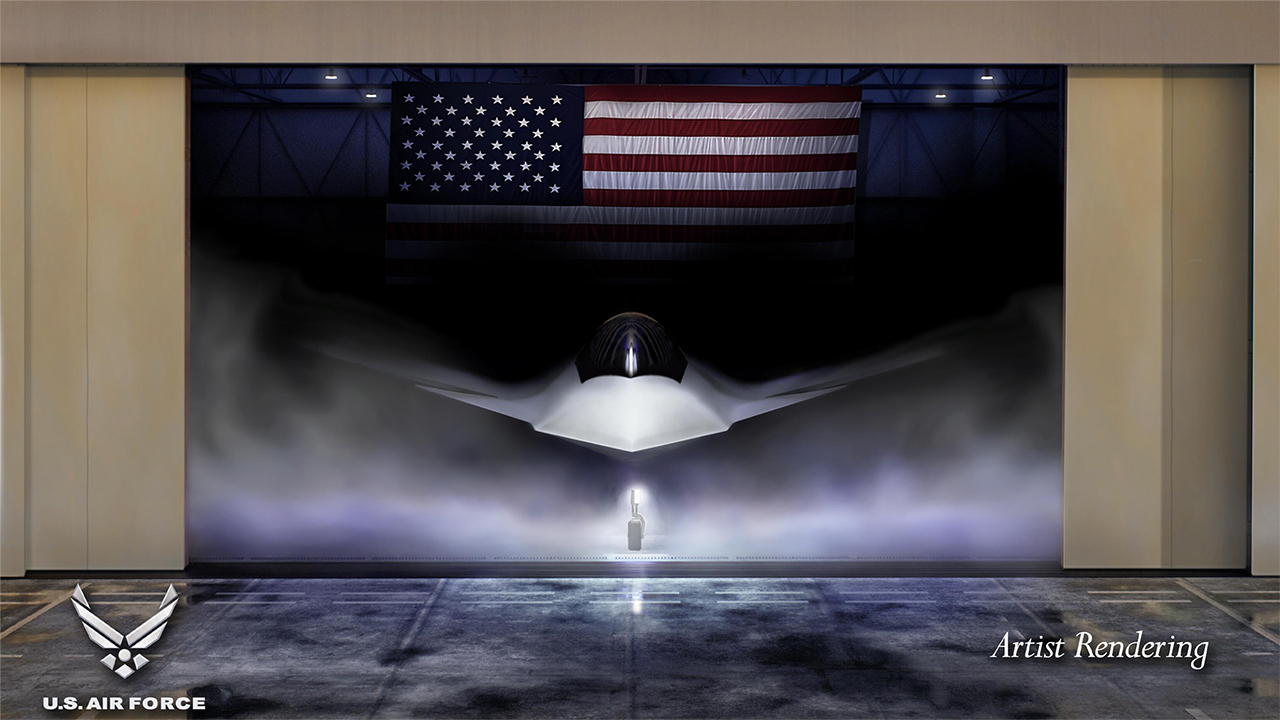
But that´s rather off-topic with regard to F/A-XX, I guess?
 
It depends entirely on the timing.
If it's before 2031 the US likely has a chronic shortage of B-21s and the B-2s will still take the blunt of penetrating strike. 19 plus give or take 30 operational birds is not going to bomb airfields, they are going after the military political command centers, large swaths of industrial ground (manufacturing and extraction) and utility generating systems like energy plants and stations, water treatment plants, foodstuff storage, stuff that when gone makes the populace reallyyy angry.
And the blunt of strikes on military targets will fall on cross Pacific missiles and in theater forces like naval air arms and Japan/Korea based fighter bombers. Which needs extensive standoff and stealth because they would be crossing massive counter air belts.

I don't think America has the socio-industrial grit to sustain OPTEMPO rolling up China's bastion layer by layer anymore. At some point the incumbent POTUS will have to consider an alpha strike on the Three Gorges Dam (to give a rough analogue of the desperation here) or risk losing WestPac military parity and political control of the unter-Manchuria region and the SCS entirely.

They really need more stealth bombers.

I do not see the U.S. attacking such a large target set. The priority targets inside China would probably be offensive missile TELs and associated strike equipment, along with aircraft and air defense equipment. I do not see a long term strategic bombing campaign as likely and certainly that would not be the priority initially. And while agree that the U.S. desperately needs more pvombers in general and more penetrating bombers specifically to hold anything like the size of even that limited target set at risk, I do not think the USN can be of much help in that regard. It would be better utilized by creating a safe zone free of opposing fighters and clearing opponent air defense ships on the water.
 
Yes, but for strikes against naval forces (thus LRASM being crucial).

Any attack against mainland China would see the US being turned into an irradiated wasteland devoid of life. Not really something the US would be interested in, not over something as insignificant in the grand scheme as Taiwan.

I cannot imagine that China has the same respect for US sovereign territory. If there are large scale attacks on US bases, and especially against US territory (eg Guam), I think we can assume that PRC bases will receive the same treatment as soon as it is militarily practical. It may well be that initially there are too many targets at sea to support a determined effort against land assets, but if nuclear weapons do not deter China it is hard to see them deterring the U.S.
 
Despite not being at war for decades and not being at total war since WWII, the national debt now higher than where it was post-WWII as a percent of GDP, over $38T and growing by almost $2T per year.

In addition to the decreased tax revenues, entitlement spending (social security, medicare, etc.) also rose dramatically. Approximately $3.8T of the national budget goes to interest on debt and social welfare entitlements.

Spot on josh^2. I've been complaining about this to my wife :( for a while now.

More notably, the former CJCS, Adm Mike Mullen, warned of this looming crisis at least 15 years ago. In his June 2011 testimony to Congress, he said:

As we look to our military’s posture and budget, we recognize that our country is still reeling from a grave and global economic downturn and is maintaining nearly historic fiscal deficits and national debt. Indeed, I believe that our debt is the greatest threat to our national security. If we as a country do not address our fiscal imbalances in the near-term, our national power will erode. Our ability to respond to crises and to maintain and sustain influence will diminish.

We're there folks. A languishing F/A-XX may be a symptom.
 

Attachments

  • testMullen06152011.pdf
    159.3 KB · Views: 30
I fully expect that the FAXX bay is designed around "the longest possible weapon that can fit on the weapon elevators" which currently happens to be the AIM174B.

Designing a platform that has to remain competitive for dozens of years around ordnance that isn't optimized for internal carriage (especially one intended to be an interim solution, with at least two missile programs aiming at filling a similar role already in testing phase) would be a terrible engineering decision, driving size and cost up by a significant margin.
Now if by some chance (tandem bays with removable bulkhead maybe) the AIM-174B fits, that's cool.
 
But that´s rather off-topic with regard to F/A-XX, I guess?
FAXX is designed around a conflict with China, just as much as F-47 is.

Kinda hard to avoid discussing how that impacts design and use.


Designing a platform that has to remain competitive for dozens of years around ordnance that isn't optimized for internal carriage (especially one intended to be an interim solution, with at least two missile programs aiming at filling a similar role already in testing phase) would be a terrible engineering decision, driving size and cost up by a significant margin.
Now if by some chance (tandem bays with removable bulkhead maybe) the AIM-174B fits, that's cool.
Again.

The AIM-174 fits into a 21" square box with tail fins folded, 15'6" long. Which happens to be the longest possible weapon to fit onto weapon elevators.

LRASM is 18x22" and 14'6". 3" shallower than the AIM-174's box size, but likely still using a weapons bay deep enough to hold an AIM-174.

A ~16ft long (usable distance) weapons bay will hold everything that could possibly fit onto the weapons elevators.

And as @Reddington777 and @VTOLicious have shown, that size weapons bay does fit into the F-47 airframe.
 
I dont think china or the US will ever go full scorched earth on eachother. Closest thing we might get is a chinese naval blockade of the taiwan strait and some serious fingerwagging on both sides. In terms of the f/a-xx- I think theyve realized the f35 can operate up to 8 drones at once, and the economic deterrence of a full blown war may be scarier than a fancy new jet. As a wise man once said "Nothing ever happens"
Too much money to lose on both sides.
 
FAXX is designed around a conflict with China, just as much as F-47 is.

Kinda hard to avoid discussing how that impacts design and use.


Again.

The AIM-174 fits into a 21" square box with tail fins folded, 15'6" long. Which happens to be the longest possible weapon to fit onto weapon elevators.

LRASM is 18x22" and 14'6". 3" shallower than the AIM-174's box size, but likely still using a weapons bay deep enough to hold an AIM-174.

A ~16ft long (usable distance) weapons bay will hold everything that could possibly fit onto the weapons elevators.

And as @Reddington777 and @VTOLicious have shown, that size weapons bay does fit into the F-47 airframe.
Coincidentally also about SRAM size!
 
You still need something to carry said missiles. The F-18 needs a replacement program.
The MQ-25 will cover some of this role. Boeing has already shown a rendering with four underwing pylons. The current two pylons are inboard of the wing fold mechanism so there is plenty of room for two extra wing pylons.

The MQ-25 should comfortably carry 4 LRASM much further than any Super Hornet could. Or 2 LRASM well beyond 1,000nm.

The MQ-25 being able to offload 16,000lb of fuel at 500nm suggests it consumes very little fuel for itself. We can look Global Hawk and Triton weights that uses the same engine as the MQ-25. The MQ-25 should easily have a 6,000+ nm ferry range if it could use that 16,000lb fuel for itself. This flat payload range curve means the range quickly drops as you trade fuel for heavy missiles assuming the MTOW is fixed.

It is logical for Boeing to provide a MTOW bump and thrust bump to allow a strike MQ-25 to take off with 100% fuel with 4 large missiles. That would then be an ideal bomb truck.
 
Too much money to lose on both sides.

The money argument has been used before. It does not stop a country (or worse, a single man) that has decided money is irrelevant. I doubt the war in Ukraine was good for Russian long term economic benefit, even if the goal had been quickly achieved.
 
The MQ-25 will cover some of this role. Boeing has already shown a rendering with four underwing pylons. The current two pylons are inboard of the wing fold mechanism so there is plenty of room for two extra wing pylons.

A rendering is not a plan, it's wishful thinking. For this to happen someone has to pay for the development (Boeing or USN), there is a long process to make it happen that includes flight testing. None of this has been funded. A this time the Navy has no plans to do any of this. They are focused on learning how to operate unmanned aircraft from a carrier and getting the MQ-25 to do it's primary job as a tanker.
 
Vago Steve JJ and John had interesting comments on an AirPower podcast - all in all bullish on F/A-XX getting going and Vago suggests NG will be awarded the contract…
I mean, yes, giving it to NG would make sure that Boeing could focus on the F-47.

And that is the thinking I had for how it'd go.

LockMart is all wrapped up in F-35, NG was very busy with B-21 but now they're on the testing phase, and Boeing needs one of those two contracts to preserve 3 primes.
 
There’s more detail in the pod but one interesting topic is where F/A-XX would be manufactured, regardless of which prime “wins” the contract…which then begs the sub question of how might NG might deliver more Raiders, faster, if the monies were there.
 
Agreed Scott Kenny, giving the F/A-XX to Boeing would mean that we would end up with a similar situation to what we had with Lockheed when they won the ATF and JSF competitions.
 
There’s more detail in the pod but one interesting topic is where F/A-XX would be manufactured, regardless of which prime “wins” the contract…which then begs the sub question of how might NG might deliver more Raiders, faster, if the monies were there.
If NG won then NG would have two independent program lines, staff accordingly and would have the separate team for F/A-XX and where B-21 still is its own entity, could be a good thing due to the platforms being so different but they could share relevant, common tech between the two. I'm not hot on the idea of Boeing having both programs but if Boeing's F/A-XX is a derivative of the F-47, now we are back to the F-4 Phantom type era where you get the services bickering regarding what they don't like about the dual-service aircraft especially the F-4 was designed for the USN. The USN did not like the A-7 initially but turned out to be a great attack platform.

With that said, F-35 as an example seems to be working for all three services and while not perfect the aircraft is being built in large numbers and being used by quite a few other nations. But USAF and USN missions are different and these services need the best aircraft in order to carry out their missions. All new high-tech aircraft programs especially ones which push tech are going to have teething problems, anyone who has worked in the aerospace field for a reasonable amount of time knows and has experienced this, I know I have in my career.
 
If NG won then NG would have two independent program lines, staff accordingly and would have the separate team for F/A-XX and where B-21 still is its own entity, could be a good thing due to the platforms being so different but they could share relevant, common tech between the two. I'm not hot on the idea of Boeing having both programs but if Boeing's F/A-XX is a derivative of the F-47, now we are back to the F-4 Phantom type era where you get the services bickering regarding what they don't like about the dual-service aircraft especially the F-4 was designed for the USN. The USN did not like the A-7 initially but turned out to be a great attack platform.

With that said, F-35 as an example seems to be working for all three services and while not perfect the aircraft is being built in large numbers and being used by quite a few other nations. But USAF and USN missions are different and these services need the best aircraft in order to carry out their missions. All new high-tech aircraft programs especially ones which push tech are going to have teething problems, anyone who has worked in the aerospace field for a reasonable amount of time knows and has experienced this, I know I have in my career.
Nobody is going to make a naval aircraft that is a derivative of land based aircraft, as the changes are too numerous and difficult. The F-35 was designed with all three services in mind and it still had to be massively redesigned to handle the USN requirements.

Having said that, in the AII program, Boeing's design was geared towards the Navy, while Lockheed's was more USAF based. I say that because they were demonstrators, not prototypes. But in so doing, I wonder if Boeing actually designed their F/A-XX first and that the F-47 is actually a derivative of that design? Or basically, they were engineered at the same time? From an engineering perspective, that would make sense.

But, the main problem as I see it is how you get around the weight problem. A naval aircraft is always going to be heavier than a land based aircraft due to the CAT/Trap requirements and that imposes a penalty on any land based design, which is one of the many reasons the USAF is against using naval aircraft. But if they could have a different core (center fuselage), but maybe a common nose section and some flight surfaces I could see where that might possibly work.
 
We should look beyond outward similarity.

Two designs from the same company would likely look sonewhat similar, as they may be from the same lineage of designs (JAST? Bird O' prey?), but unless they look almost identical, then its doubtful even two similar planes would be derivatives of each other when they not only the difference between a naval fighter and a land based fighter but also two different roles. That likely means different internal arrangements, different arrangements etc in addition to the usual structural differences.

Just engines alone might mean a size difference for both aircraft. I forget where we talked about engine dimensions, but if PWs revealed engine is really representative of the NGAP engine, then you are looking at something like 11 - 12 ft for the NGAP engine without nozzles assuming a 51 inch max diameter compared to a 15 ft F110-GE-129 engine. Depending on the planform, that may or may not a small difference to account for.

In addition to this, depending on how many 2klb weapons you want to carry internally (2 or 4) you should be looking at a thicker or wider planform already. So even if similar, I think its doubtful that they will be derivatives in any traditional sense.

As weve been through before in some detail, the F4 and F35 were the products of at least some significant amount of shared requirements between AF and Navy. This doesnt seem to be the case for F/A-XX
 
Last edited:
I suspect F/A-XX will have a planform that is unique and distinct from F-47 - even if built by Boeing; gotta nail that sweet spot of carrier approach speed, AoA & bringback plus bolter insurance at a minimum.

Here’s a question: anyone here can quickly recall the rough ordnance bringback for Intruder, Tomcat and Super Hornet? That will probably be an interesting thing to consider…

@Hydroman I think they made a comment about NG having the Melbourne site - but interestingly they claim NG is quietly looking for more real estate….
 
The maximum bring back weight of the Super Hornet is 9900 lbs (F/A-18E) or 9000 lbs (F/A-18F) according to Boeing.


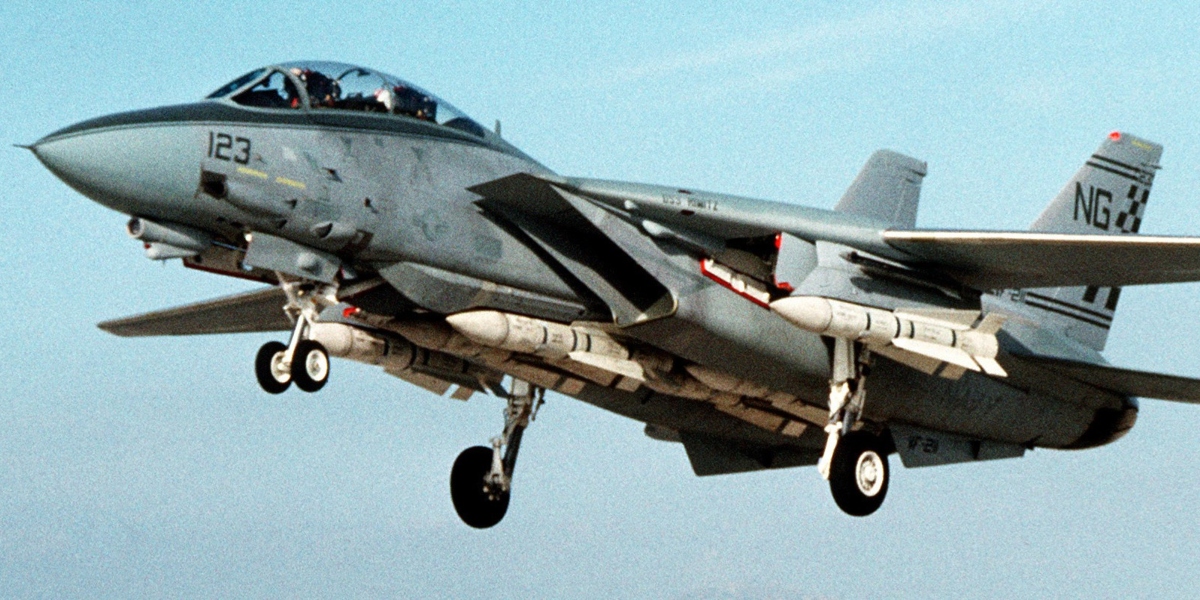
As for the F-14 Tomcat, the figure is also 9000 lbs. And yes it could (marginally) trap with six AIM-54 (at 1000 lbs apiece). Interestingly, the maximum bring back capability of the proposed Tomcat 21 was to be upped to 16,000 lbs thanks to the new leading edge flaps and trailing edges.


As for the bring-back question...
 
Last edited:
We should look beyond outward similarity.

Two designs from the same company would likely look sonewhat similar, as they may be from the same lineage of designs (JAST? Bird O' prey?), but unless they look almost identical, then its doubtful even two similar planes would be derivatives of each other when they not only the difference between a naval fighter and a land based fighter but also two different roles. That likely means different internal arrangements, different arrangements etc in addition to the usual structural differences.

Just engines alone might mean a size difference for both aircraft. I forget where we talked about engine dimensions, but if PWs revealed engine is really representative of the NGAP engine, then you are looking at something like 11 - 12 ft for the NGAP engine without nozzles assuming a 51 inch max diameter compared to a 15 ft F110-GE-129 engine. Depending on the planform, that may or may not a small difference to account for.

In addition to this, depending on how many 2klb weapons you want to carry internally (2 or 4) you should be looking at a thicker or wider planform already. So even if similar, I think its doubtful that they will be derivatives in any traditional sense.

As weve been through before in some detail, the F4 and F35 were the products of at least some significant amount of shared requirements between AF and Navy. This doesnt seem to be the case for F/A-XX
Indeed, best example: Northrop ATF vs NATF ;)
 
I long for an FA-XX decision, not for the good of the USN, but for the end of fruitless and often uninformed speculation on this thread.
Well the biggest red flag for me was Trimble saying that if XX doesn’t go forward IIRC by YE then it will have to be rebid. If it doesn’t happen soon, in my ignorance I’d be incrementally pessimistic but I don’t know enough to effectively interrogate STs point
 
Having said that, in the AII program, Boeing's design was geared towards the Navy, while Lockheed's was more USAF based. I say that because they were demonstrators, not prototypes. But in so doing, I wonder if Boeing actually designed their F/A-XX first and that the F-47 is actually a derivative of that design? Or basically, they were engineered at the same time? From an engineering perspective, that would make sense.
That wouldn't be a terrible idea.

Witness F-4 and A-7. Though note that the USAF mods to the A-7 really made the definitive version that even the USN ended up buying.


Here’s a question: anyone here can quickly recall the rough ordnance bringback for Intruder, Tomcat and Super Hornet? That will probably be an interesting thing to consider…
Tomcat can just barely land at 55,000lbs total weight, which works out to about 6x Phoenix and ~2-3000lbs fuel, 200rds of ammo.

And that's the weight I did my mental model of FAXX around. Ended up at ~40k empty, ~12k internal weapons, and 28k internal fuel. Possibly another 12k external, but you're not landing on a carrier with all that.
 
Well the biggest red flag for me was Trimble saying that if XX doesn’t go forward IIRC by YE then it will have to be rebid.
Steve Trimble's comment makes sense. I surmised in late August that B and NG had recently submitted revised bids.
https://www.secretprojects.co.uk/threads/us-navy-6th-gen-fighter-f-a-xx.45777/page-34#post-826243
Year-end would be 120 days, which is usually the outer limit of a proposal's price validity.

Never mind that the technical teams have been on ice so long they have freezer burn, or have left for warmer climes.
 
Hegseth is relying on the strong opinions of this ally. https://www.cape.osd.mil/about He is 'yessing' everyone else.

Not much more complicated than that ... except, if Payne et al think carriers are not for peer/near-peer conflicts then 'why' are they continuing to fund new Ford-class carriers (Enterprise, Miller, Clinton)? Or is this a question of 'when' that shoe drops?
With today's USS Defiant announcement, the 1st of up to 25 Trump-class 30-40Kton battleships, we may now have the answer to the 'why' and 'when' questions above ... the Ford-class carriers Enterprise, Miller and Clinton are budget wedges, to be redirected to pay for the Trump-class ships. Meanwhile, Congress keeps their shipyard "job programs". Win-win.

Seems to me that OSD used the industrial base capacity concern as a (somewhat plausible) excuse, a smoke screen to delay (i.e., effectively kill) the F/A-XX in favor of the F-47.

With the way Trump's Pentagon operates, I wouldn't be surprised if we never get an official statement that F/A-XX is dead. We'll have to wait for a Naval Aviation advocate in Congress to state what has become obvious to some of us.
RIP F/A-XX.
 
Having said that, in the AII program, Boeing's design was geared towards the Navy, while Lockheed's was more USAF based. I say that because they were demonstrators, not prototypes. But in so doing, I wonder if Boeing actually designed their F/A-XX first and that the F-47 is actually a derivative of that design? Or basically, they were engineered at the same time? From an engineering perspective, that would make sense.
I said this in my very first post on this forum.

It is good to see other people are coming to the same obvious conclusion. Think of the French Rafale as the perfect comparison.

But, the main problem as I see it is how you get around the weight problem. A naval aircraft is always going to be heavier than a land based aircraft due to the CAT/Trap requirements and that imposes a penalty on any land based design, which is one of the many reasons the USAF is against using naval aircraft. But if they could have a different core (center fuselage), but maybe a common nose section and some flight surfaces I could see where that might possibly work.

USN 7.5G rated + high landing loads
USAF 9G rated + low landing loads

Both variants could use the same centre fuselage as the overall loads would be similar.

The Navy variant gets a much beefier landing gear just like the Rafale family.
 
With today's USS Defiant announcement, the 1st of up to 25 Trump-class 30-40Kton battleships, we may now have the answer to the 'why' and 'when' questions above ... the Ford-class carriers Enterprise, Miller and Clinton are budget wedges, to be redirected to pay for the Trump-class ships. Meanwhile, Congress keeps their shipyard "job programs". Win-win.
Let's be honest here - with the state and speed of shipbuilding, by the time the man himself leaves office, this ship will still be nothing more than a render - for better or for worse. I think I'm less worried about the carriers. I'm more worried about DDG(X). The USNI article on this seems to indicate DDG(X) getting the axe in place of this:

The new ships will replace the Navy’s next-generation DDG(X) program, which was projected to be about half the size of this proposed battleship.

The implications of that can (and should) be in it's own thread so I won't go into that

I still don't think F/A-XX is going anywhere. Yes - I could be wrong - but I think there really isn't another option that sensibly replaces the capability F/A-XX brings for naval aviation. It makes little sense why this administration would beat around the bush for F/A-XX when they have not at all been shy or hesitant about killing or starting new programs. For an administration who really isn't known for being subtle, if they really wanted to axe F/A-XX, they would have come out and done that - and then patted themselves on the back for "cutting dead weight"

I've said this before, but I still get the sense that the navy hasn't sold congress or the powers that be on the use case and cause for any of their programs, especially compared to the air force. Before anyone thinks I mean different - I'm not trying to say F/A-XX's intentions weren't clear in the normal sense - F/A-XX was from the start a strike fighter replacement for the hornet. What I AM trying to say is packaging this as a strike fighter replacement for the hornet really isn't enough of a sell for politicians.

The USAF has not only been clear, but also very demanding in both the equipment they need for the future as well as how they will be operated. From the NGAD concept to CCAs and distributed operations - they've been vocal, clear and focused on that all the way back in the mid 2010's (and possibly earlier). They didn't just run about with the PCA part and dabble in CCAs. They framed their use case, their operational concept and defined in sensible terms which pieces of equipment would enable that operational concept. Even with Kendall's review, the focus and the core operating concept still has not changed, even as the USAF has rolled back a large number of organizational changes. At the very least, the past 10 years of this messaging has yielded real fruits - LSRB was awarded and built, two incr1 CCAs prototypes are in testing, the F-47 contract awarded, and recently another 9 vendors for incr2 chosen for prototyping. In contrast, the navy seems hesitant and 10 years late to commit to a number of things the USAF have gone balls deep into - NGAP engines, CCAs, distributed sensing etc. It's plan for shipbuilding and ship procurement is and has always been a mess. MASC/MUSV/LUSV seems to have major program changes every year or two. Now S-M-L USV programs all got collapsed down to the MUSV/MASC program. DDG(X) remains a power point render (and now completely gone apparenlty). The only thing off the top of my head that the navy seems to have done successfully in the past 10 years was work on CPS and that was done in tandem with the Army. Otherwise, the navy seems to have trouble deciding what to do, what can be done, and how to go about it.

I've been digging through the past threads on NGAD and F/A-XX and it's extremely fascinating to see how much the focus has been on NGAD and not on F/A-XX. NGAD's unmanned and PCA elements have been screamed about for at least 10 years now. During these last 15 years, the MSM, the government and all the way down to us forum nerds have talked and talked NGAD and NGAD's PCA / unmanned elements to death and back. We've gone through relevant technologies, we've dug out patents and most importantly, from these technologies, we've been able to piece together the ways in which NGAD, CCAs, distributed sensing and EW and F-47 PCA will work together, but F/A-XX has almost always been the after thought. We're on page 45 of this discussion and at least half of this thread has just been us reiterating and chewing on past info. Even as we say the words "strike fighter", what does that entail in terms of capabilities, weapons carried, required technologies and operational use? Is it a pure strike fighter like the A-12? Is it strike + a good enough air to air complement like the F-18's were in their heyday? Will it be carrying out the EW role too? When officials say it complements the F-35's role, what does that really entail? Which roles is it performing that an F-35 can't? How does that fit into the navy's plan to fight a high end war? What does the navy's plan for fighting the high end war even look like? Does the navy even have a coherent plan?

We have good guesses. We have authoritative forum members who have given us valuable information, but what we don't have is the kind of clear, consistent and bold messaging. Indeed, much of what the navy desparately needs can't really be packaged neatly into a shiny new operational concept like USAF's agile combat employment could (even though I'm 100% certain I've seen the navy put out their own version of this, just named differently). But even so - a more active and coherent job could be done here I think. You can say what you say about Allvin and Kendall, but they did a terrific job selling what they wanted.

I can feel two glowing laser eyes staring holes into my back so I'll say it before he says it - yes, I could play the FOI game with the government quellish, but ultimately, the slightly more informed people like us forum nerds aren't the ones making decisions. The good-for-nothing politicians, and by extension the general chock-full'o-idiots public, who may or may not know what the F-18 hornet actually does, or ever thought about how an operational concept might fair in an opening clash with the enemy - those are the ones making the decisions. If the nerds here aren't willing to do FOI, those guys certainly aren't going to take the time to think through these ideas. The navy doesn't owe us clear answers about anything, but then people are free to think whatever they want about your demands. Then when the next administration enters office and appoints people that were not in the know before, it isn't surprising that they've formed their own, no so friendly opinion of you. So if the navy fails to make it clear to them why F/A-XX is important and frame it's importance as dire enough (and that might be hard to do given the nature of the program), then delay after delay is the logical conclusion when times are tough. And in decisions concerning the department of the navy, times have never been tougher.
 
Last edited:
Nobody is going to make a naval aircraft that is a derivative of land based aircraft, as the changes are too numerous and difficult.
The Sukhoi Su-33 is a naval variant of the existing land based Su-27. The changes weren't that numerous or difficult. Sukhoi made the carrier variant on a shoe string budget in only a couple years.

The wing had larger flaps but the span remain unchanged.

The Mig-29K was also a naval variant based on the existing land based variant. The changes were slightly more extensive but this was primarily to add range and fuel capacity to the relatively short range land based design. The initial Mig-29 carrier versions had minimal changes.

Based on these examples it would be easy for Boeing to develop a design that can satisfy both the Navy and USAF with very high commonality.

Also Korea is proposing a carrier version of the KF-21 but this depends if their Navy orders a light carrier.
 
Last edited:
The Sukhoi Su-33 is a naval variant of the existing land based Su-27. The changes weren't that numerous or difficult. Sukhoi made the carrier variant on a shoe string budget in only a couple years.
That's because....
Both were designed for similar missions
The Mig-29K was also a naval variant based on the existing land based variant. The changes were slightly more extensive but this was primarily to add range and fuel capacity to the relatively short range land based design. The initial Mig-29 carrier versions had minimal changes.
That's because....
Both were designed for similar missions

J-35 air force / navy version - Both were designed for similar missions
F-4 - Both flew similar missions

Both were designed for similar missions...
Based on these examples it would be easy for Boeing to develop a design that can satisfy both the Navy and USAF with very high commonality.
Only if...

Both were designed for similar missions...

It's not a question of can it be done. Ofcourse it can. It's a question of whether sharing a design makes any sense. We aren't in the age of slapping shit onto an external rack anymore. We are in the age where many munitions need to fit inside weapon bays. So realistically, the only time it makes sense (assuming you can make the weapon bays, internal arrangements and what not work as well) is if... they have two similar missions.

If your air superiority fighter has bays that can carry around 2000+ lb munitions, it ain't doing much air superiority.

If your strike fighter (even if multi-role) needs to carry 2000+ lb munitions externally, or it can only carry SiAWs internally, it ain't doing much striking.
 
Last edited:
Both were designed for similar missions...

Only if...

Both were designed for similar missions...
The F-22 is the primary air superiority fighter of the USAF and has an extremely potent secondary air-to-surface capability with JDAM and SDB.

The Super Hornet is the primary air superiority fighter of the US Navy and it also has an extremely potent secondary air-to-surface capability. Don't forget the F-35C is tasked as the primary air-to-surface aircraft.

Both the Super Hornet and F-22 are now performing similar missions. Their replacements NGAD and FAXX will then have similar missions.

This means a shared design is possible.

It's not a question of can it be done. Ofcourse it can. It's a question of whether sharing a design makes any sense. We aren't in the age of slapping shit onto an external rack anymore. We are in the age where many munitions need to fit inside weapon bays. So realistically, the only time it makes sense (assuming you can make the weapon bays, internal arrangements and what not work as well) is if... they have two similar missions.

If your air superiority fighter has bays that can carry around 2000+ lb munitions, it ain't doing much air superiority.

If your strike fighter (even if multi-role) needs to carry 2000+ lb munitions externally, or it can only carry SiAWs internally, it ain't doing much striking.
The solution is so simple. The same shared desgn has a large internal volume. The USAF version simply carries more internal fuel and less weapons. Fuel equals speed. The USAF version uses that extra fuel to fly a faster and longer mission profile.

There is no compromise for having the large shared weapons bays if they can also be used to increase fuel capacity. This can be achieved by fitting a simple fuel tank into the weapon bays like has been done on the F-117, F-111, B-1B and Bucaneer. Or a more elegant and optimised solution would involve making the weapons bays shorter and shallower in the USAF version. However I expect the USAF to allow the F-47 to gain air-to-ground capability just like the F-15 and F-22 did. So large weapon bays of the Navy design then becomes perfect for a future F-15E replacement.

What is the range, supercruise speed, maximum speed and overall agility of NGAD?

What is the range, supercruise speed, maximum speed and overall agility of F/A-XX?

Most expect NGAD to have slightly more range, slightly faster speed and slightly higher agility. The range part is achieved by having more internal fuel instead of large weapons. The land based Rafale is slightly faster and more agile than the Navy variant because it has a lower empty weight. The land based variant has a better wing loading and bettee thrust to weight.

Boeing can easily satisfy both requirements with zero compromise while maintaining 80% commonality.
 
Last edited:
The solution is so simple
Many many people have shown you why its not so simple in this thread. You simply refuse to believe any kind of evidence laid before you. You still go on twisting anything you can get your hands on to fit your narrative.

The F-22 is the primary air superiority fighter of the USAF and has an extremely potent secondary air-to-surface capability with JDAM and SDB.
Extremely potent? As in ... TWO JDAMs max?
The Super Hornet is the primary air superiority fighter
And here you go again twisting things to fit your narrative. Fleet defense and combat aircraft patrol CAPABLE does not make it an air superiority fighter.
Both the Super Hornet and F-22 are now performing similar missions.
What a joke. Two fighters performing the same mission hardly means they were designed for the same mission. Having a capability does not mean it can do something well.

Also, every single example youve given has been that of a multirole to multirole variant, or strike fighter to strike fighter variant. In the case of the J-35 its air superiority to air superiority variant. You have yet to provide a single *unequivocal* example of a conversion from a pure land based air superiority fighter converted to a naval multi role strike fighter or a naval dtrike fighter converted into a dedicated air superiority fighter. Not a single one.

Is a kitchen knife and an axe the same? According to you, they are the same because you can cut a tree down using a kitchen knife and you can cut a sandwich in half using an aaxe.

Their replacements NGAD and FAXX will then have similar missions.
No... no they are not. You are the single greatest source of speculative bullshit on this thread because you keep repeating this bullshit based on faulty logic and delusion.
The solution is so simple. The same shared desgn has a large internal volume. The USAF version simply carries more internal fuel and less weapons. Fuel equals speed. The USAF version uses that extra fuel to fly a faster and longer mission profile.
However I expect the USAF to allow the F-47 to gain air-to-ground capability just like the F-15 and F-22 did.
Do you actually know what any of your simple suggestions costs on an airframe? As I said before. Its not a matter of whats possible. Its a matter of what it costs.

Fuel does not equal speed unless you are on a rocket. Speed comes from a function of drag, thrust and tangentially weight, with fuel calculated to reach the desired thrust for the desired endurance.

What you are suggesting for the air superiority variant is an increase in volume AND weight(not even just empty volume) compared to a non compromised design, which necessarily means you pay the penalty with a larger wing, increased drag to stay at altitude. Consequently, this also means if you want to go the same speed, you now need more powerful engines to try and brute force the problem. This in turn translates to poorer thermal management for the greater drag and sustained speed. NGAD isnt just an air superiority fighter. Its supposed to be the PCA component and every cost you've just paid with your proposal goes in directions opposite of what that mission requires.

Let me, for a moment entertain your weapon bay commonality idea.

There are largely two available weapon bay arrangements for any stealth fighter aircraft. The first being weapon bays under the intakes, and the second being tandem weapon bays shoved in between the engines. If you want to fit strike munitions for a strike fighter and cut down from any of them, you'd find it a lot harder than it appears.

1. Option 1: munitions under the intakes. If you want all racks to be able to carry strike munitions, say 4 SiAW sized munitions across, you will already need a thicker and/or wider airframe for nearly the same width as your air superiority fighter. Why? because SiAW isn't going to fit with enough clearances under the intakes. That space on the F-22 is already a tight fit for an AAM. Realistically in this arrangement, you'll fit two large munitions on the centerline and that's pretty much it. You can maybe stack munitions but you'll be cutting into significant fuel space then. Once you drop the weapon bay space and go back to an air superiority fighter's reduced weapon bay space, that incurred width / depth expansion becomes a drag, thrust and heat problem are now things that a proprietary design wouldn't have - all for useless space that isn't large enough to fit meaningful fuel volume in.

2. Option 2: munitions between the engines. You are now limited by how wide your engines can be in addition to engine heat management, fire retardant material in the aft bays plus whatever generators and accessory devices go on the engine. Your air frame and fuselage must necessarily be wider given the expanded engine placement width. That again becomes a drag, thrust, and heat problem compared to a proprietary design with the same problem of penalties incurred for space that really isn't being used - all for the sake of commonality.

In either of these circumstances, and by definition of most "variants" and "derivatives" your internal configurations are not changing. Which means your air superiority fighter variant gets thicker/wider and longer than it needs to be. Your bulkheads and structural supports still must account for the larger bay volume without actually having that larger bay volume. Your intakes, engine placements, exhaust ducts, thermal signature management materials and even landing gears (especially landing gears actually) all needs to change accordingly to accommodate commonality. Your added volume, width, and fuselage thickness is now a drag problem and with drag comes a greater thrust requirement to reach speed and altitude and with those two things comes an increase in thermal signature (and in some cases, RCS). At most you are looking at two similar looking fighters possibly sharing the same planform but not in the same dimensions, and internally no longer two derivatives or variants let alone some 80% commonality lol.

Again in the end its not about what is possible engineering wise or whether they can or cannot fly similar missions. Its about how well it can fly its intended missions and for that reason alone, an air superiority fighter shares little mission overlap with a multi role strike fighter. The more specialized an aircrafts mission is, the less it wants to / should be paying for unneeded compromises. likewise, if youve paid the compromise, then you necessarily are not doing as well in your designed mission as you should be doing that is unless the design was a jack of all trades fighter from the outset. In today's inhospitable environments, you really don't want to pay those signature compromises if you can help it.

The f22 carries 2 2klb munitions MAX at the cost of two AMRAAMs. F-47 carrying two SiAW (1k lb each) is about the most one can ask for. Two 1klb A2G munitions MAX is a pretty bad load out even for a multirole strike fighter. Conversely, in what world would you need the space required to pack 2 LRASM or 4 SiAW into an air superiority platform again when you likely cant even recover half of that same volume for fuel? If I didn't care for clearance and machinery/plumbing spaces, ducting, engine placement, landing gear folding mechanisms, fuel tank arrangements, I could shove anything I want into an airframe volume and call it *easy*.
-117, F-111, B-1B and Bucaneer
... strike fighters and bombers .... similar role..
What is the range, supercruise speed, maximum speed and overall agility of NGAD?

What is the range, supercruise speed, maximum speed and overall agility of F/A-XX?

Most expect NGAD to have slightly more range, slightly faster speed and slightly higher agility. The range part is achieved by having more internal fuel instead of large weapons. The land based Rafale is slightly faster and more agile than the Navy variant because it has a lower empty weight. The land based variant has a better wing loading and bettee thrust to weight.
Pay your incurred penalties first, then tell me how you can make those relative judgements on speed, range and agility, then reconcile that with your conclusions first before continuing to push bullshit.

Also regarding the rafale, repeat after me:

Because they have same missions profiles...

Because they have same missions profiles...

Because they have same missions profiles...
Boeing can easily satisfy both requirements with zero compromise while maintaining 80% commonality.
......... said LM a decade ago.

You have no idea what you are talking about.

Its really sad that at least half of these 45 something pages of this thread plus another dozen of pages in the LM secret plane thread is just you repeating this idea over and over and over again in the face of all information and evidence spoken by both people on this forum and government officials who were responsible for managing the project.

This is worse than arguing about how certain chinese planes are copies of US planes. Even if two designs look similar on the outside, that still doesnt always equate to being a derivative or whatever version term you want to use. Even NATF and ATF designs were far enough apart that they weren't simply just derivatives - and those were going for the same mission profiles, just land and sea variants, let alone two different mission profiles.

 
Last edited:

Similar threads

Back
Top Bottom