The solution is so simple
Many many people have shown you why its not so simple in this thread. You simply refuse to believe any kind of evidence laid before you. You still go on twisting anything you can get your hands on to fit your narrative.
The F-22 is the primary air superiority fighter of the USAF and has an extremely potent secondary air-to-surface capability with JDAM and SDB.
Extremely potent? As in ... TWO JDAMs max?
The Super Hornet is the primary air superiority fighter
And here you go again twisting things to fit your narrative. Fleet defense and combat aircraft patrol CAPABLE does not make it an air superiority fighter.
Both the Super Hornet and F-22 are now performing similar missions.
What a joke. Two fighters performing the same mission hardly means they were designed for the same mission. Having a capability does not mean it can do something well.
Also, every single example youve given has been that of a multirole to multirole variant, or strike fighter to strike fighter variant. In the case of the J-35 its air superiority to air superiority variant. You have yet to provide a single *unequivocal* example of a conversion from a pure land based air superiority fighter converted to a naval multi role strike fighter or a naval dtrike fighter converted into a dedicated air superiority fighter. Not a single one.
Is a kitchen knife and an axe the same? According to you, they are the same because you can cut a tree down using a kitchen knife and you can cut a sandwich in half using an aaxe.
Their replacements NGAD and FAXX will then have similar missions.
No... no they are not. You are the single greatest source of speculative bullshit on this thread because you keep repeating this bullshit based on faulty logic and delusion.
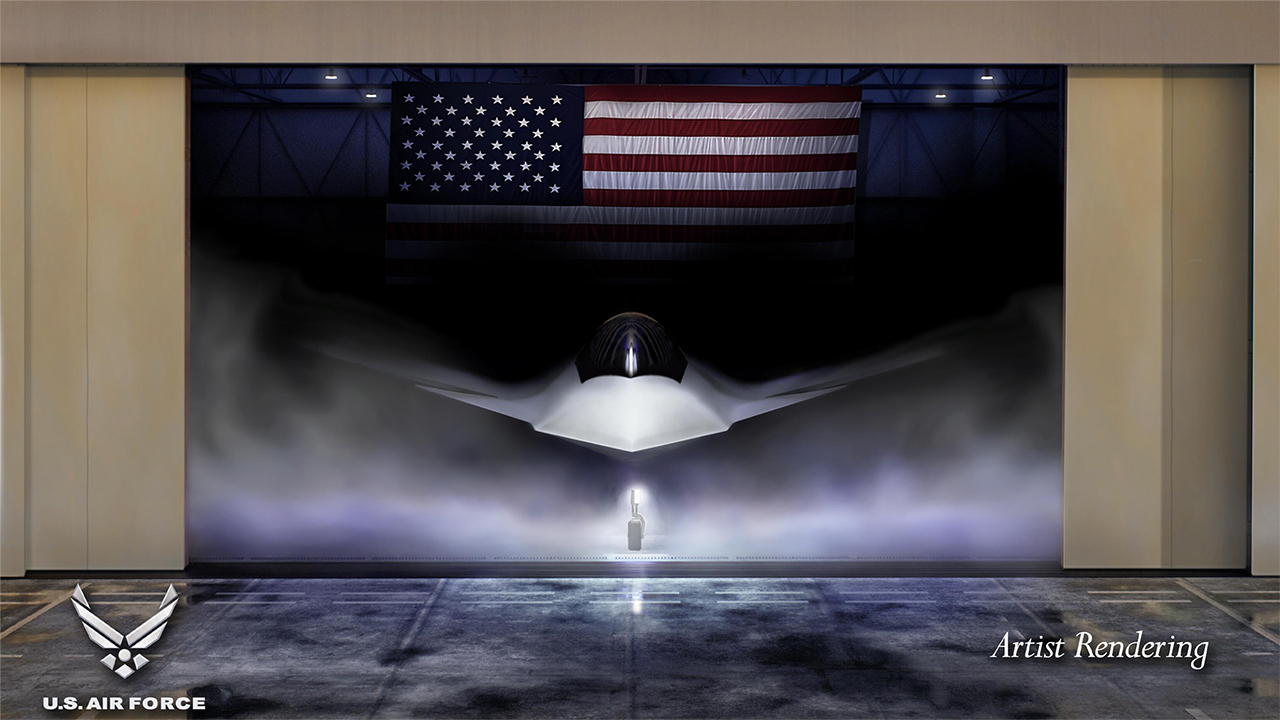
The solution is so simple. The same shared desgn has a large internal volume. The USAF version simply carries more internal fuel and less weapons. Fuel equals speed. The USAF version uses that extra fuel to fly a faster and longer mission profile.
However I expect the USAF to allow the F-47 to gain air-to-ground capability just like the F-15 and F-22 did.
Do you actually know what any of your simple suggestions costs on an airframe? As I said before. Its not a matter of whats possible. Its a matter of what it costs.
Fuel does not equal speed unless you are on a rocket. Speed comes from a function of drag, thrust and tangentially weight, with fuel calculated to reach the desired thrust for the desired endurance.
What you are suggesting for the air superiority variant is an increase in volume AND weight(not even just empty volume) compared to a non compromised design, which necessarily means you pay the penalty with a larger wing, increased drag to stay at altitude. Consequently, this also means if you want to go the same speed, you now need more powerful engines to try and brute force the problem. This in turn translates to poorer thermal management for the greater drag and sustained speed. NGAD isnt just an air superiority fighter. Its supposed to be the PCA component and every cost you've just paid with your proposal goes in directions opposite of what that mission requires.
Let me, for a moment entertain your weapon bay commonality idea.
There are largely two available weapon bay arrangements for any stealth fighter aircraft. The first being weapon bays under the intakes, and the second being tandem weapon bays shoved in between the engines. If you want to fit strike munitions for a strike fighter and cut down from any of them, you'd find it a lot harder than it appears.
1. Option 1: munitions under the intakes. If you want all racks to be able to carry strike munitions, say 4 SiAW sized munitions across, you will already need a thicker and/or wider airframe for nearly the same width as your air superiority fighter. Why? because SiAW isn't going to fit with enough clearances under the intakes. That space on the F-22 is already a tight fit for an AAM. Realistically in this arrangement, you'll fit two large munitions on the centerline and that's pretty much it. You can maybe stack munitions but you'll be cutting into significant fuel space then. Once you drop the weapon bay space and go back to an air superiority fighter's reduced weapon bay space, that incurred width / depth expansion becomes a drag, thrust and heat problem are now things that a proprietary design wouldn't have - all for useless space that isn't large enough to fit meaningful fuel volume in.
2. Option 2: munitions between the engines. You are now limited by how wide your engines can be in addition to engine heat management, fire retardant material in the aft bays plus whatever generators and accessory devices go on the engine. Your air frame and fuselage must necessarily be wider given the expanded engine placement width. That again becomes a drag, thrust, and heat problem compared to a proprietary design with the same problem of penalties incurred for space that really isn't being used - all for the sake of commonality.
In either of these circumstances, and by definition of most "variants" and "derivatives" your internal configurations are not changing. Which means your air superiority fighter variant gets thicker/wider and longer than it needs to be. Your bulkheads and structural supports still must account for the larger bay volume without actually having that larger bay volume. Your intakes, engine placements, exhaust ducts, thermal signature management materials and even landing gears (especially landing gears actually) all needs to change accordingly to accommodate commonality. Your added volume, width, and fuselage thickness is now a drag problem and with drag comes a greater thrust requirement to reach speed and altitude and with those two things comes an increase in thermal signature (and in some cases, RCS).
At most you are looking at two similar looking fighters possibly sharing the same planform but not in the same dimensions, and internally no longer two derivatives or variants let alone some 80% commonality lol.
Again in the end its not about what is possible engineering wise or whether they can or cannot fly similar missions. Its about how well it can fly its intended missions and for that reason alone, an air superiority fighter shares little mission overlap with a multi role strike fighter. The more specialized an aircrafts mission is, the less it wants to / should be paying for unneeded compromises. likewise, if youve paid the compromise, then you necessarily are not doing as well in your designed mission as you should be doing that is unless the design was a jack of all trades fighter from the outset. In today's inhospitable environments, you really don't want to pay those signature compromises if you can help it.
The f22 carries 2 2klb munitions MAX at the cost of two AMRAAMs. F-47 carrying two SiAW (1k lb each) is about the most one can ask for. Two 1klb A2G munitions MAX is a pretty bad load out even for a multirole strike fighter. Conversely, in what world would you need the space required to pack 2 LRASM or 4 SiAW into an air superiority platform again when you likely cant even recover half of that same volume for fuel? If I didn't care for clearance and machinery/plumbing spaces, ducting, engine placement, landing gear folding mechanisms, fuel tank arrangements, I could shove anything I want into an airframe volume and call it *easy*.
-117, F-111, B-1B and Bucaneer
... strike fighters and bombers .... similar role..
What is the range, supercruise speed, maximum speed and overall agility of NGAD?
What is the range, supercruise speed, maximum speed and overall agility of F/A-XX?
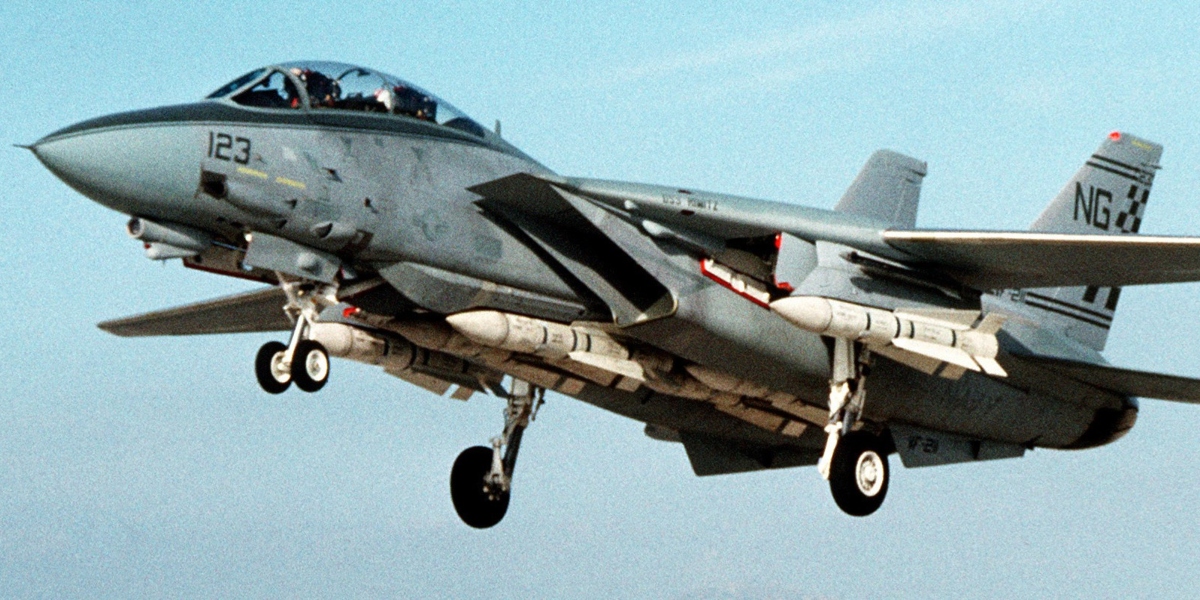
Most expect NGAD to have slightly more range, slightly faster speed and slightly higher agility. The range part is achieved by having more internal fuel instead of large weapons. The land based Rafale is slightly faster and more agile than the Navy variant because it has a lower empty weight. The land based variant has a better wing loading and bettee thrust to weight.
Pay your incurred penalties first, then tell me how you can make those relative judgements on speed, range and agility, then reconcile that with your conclusions first before continuing to push bullshit.
Also regarding the rafale, repeat after me:
Because they have same missions profiles...
Because they have same missions profiles...
Because they have same missions profiles...
Boeing can easily satisfy both requirements with zero compromise while maintaining 80% commonality.
......... said LM a decade ago.
You have no idea what you are talking about.
Its really sad that at least half of these 45 something pages of this thread plus another dozen of pages in the LM secret plane thread is just you repeating this idea over and over and over again in the face of all information and evidence spoken by both people on this forum and government officials who were responsible for managing the project.
This is worse than arguing about how certain chinese planes are copies of US planes. Even if two designs look similar on the outside, that still doesnt always equate to being a derivative or whatever version term you want to use. Even NATF and ATF designs were far enough apart that they weren't simply just derivatives - and those were going for the same mission profiles, just land and sea variants, let alone two different mission profiles.



 for a while now.