I'm going to be real, analytically the survivability and relevance of CSGs in modern high end fights has been a settled question for anyone who has done the math in a serious manner for decades. They're incredibly useful platforms and the fact that we don't have to worry about 200+ kiloton nuclear warheads really takes a lot of stress away from the survivability side. Like the fact that people think the CVN is more vulnerable now than in, say, 1975 is astounding to me. Pop up CHARLIE SSGNs (or some missile boats) firing a bunch of nuclear tipped STARBRIGHT or SIREN is much more unpleasant than today's threats, relative to defensive capabilities.EMALs vs steam is just a subquestion of the relevancy of CSGs in modern high end fights given the proliferation of potent ASMs.

You are using an out of date browser. It may not display this or other websites correctly.
You should upgrade or use an alternative browser.
You should upgrade or use an alternative browser.
US Navy 6th Gen Fighter - F/A-XX
- Thread starter overscan (PaulMM)
- Start date

- Joined
- 3 June 2011
- Messages
- 20,028
- Reaction score
- 17,213
The way people go on about hypersonics though, you'd think things like Backfires, Oscars, Kh-22s, P-500, 700, 1000, Charlies, Victors, Alfas, etc. never existed.Any ship is vulnerable to any attack, CVN, smaller carrier, cruiser, destroyer, etc, especially with modern weapons.

- Joined
- 30 May 2023
- Messages
- 560
- Reaction score
- 1,202
I don’t think it takes anything away from the past to properly appreciate and consider the unique challenges of current and future peer threats, but regardless I didn’t propose or condone abandoning the CSG as a concept fit for a WESTPAC.
I merely pointed out that DOW actions seem to telegraph the clear prioritization of some services and related programs, over others.
I merely pointed out that DOW actions seem to telegraph the clear prioritization of some services and related programs, over others.
Scott Kenny
ACCESS: USAP
- Joined
- 15 May 2023
- Messages
- 16,974
- Reaction score
- 24,080
Hypersonics have a very limited time window to engage, and require very fast fuzes in order to deal with the closing velocity.The way people go on about hypersonics though, you'd think things like Backfires, Oscars, Kh-22s, P-500, 700, 1000, Charlies, Victors, Alfas, etc. never existed.
Emmm, compared with carriers, why do some people think the runway of the AF is more suitable for the operational environment in the Western Pacific, so that the priority of F-47 is higher than that of F/A-XX??Not in this case.
Hegseth is relying on the strong opinions of this ally. https://www.cape.osd.mil/about He is 'yessing' everyone else.
Not much more complicated than that ... except, if Payne et al think carriers are not for peer/near-peer conflicts then 'why' are they continuing to fund new Ford-class carriers (Enterprise, Miller, Clinton)? Or is this a question of 'when' that shoe drops?

Scott Kenny
ACCESS: USAP
- Joined
- 15 May 2023
- Messages
- 16,974
- Reaction score
- 24,080
Well, the FAXX is stated to be +25% range, but I have not succeeded in finding whether that's +25% over a Super Bug or over an F-35C.I'm gonna own up to it. I opened that can of worms about carriers relevance in peer conflict. Let's close it unless we're talking how f/a-xx can extend the range of carriers or protect it from threats etc.
+25% over a Super Bug puts you into the same range as an F-35C, give or take. ~650-670nmi.
+25% over an F-35C puts you about 800nmi.
Don't need a fuse for HTK, as PAC-3 intercepting Kinzhal shows! Also all the KKVsHypersonics have a very limited time window to engage, and require very fast fuzes in order to deal with the closing velocity.
jsport
what do you know about surfing Major? you're from-
- Joined
- 27 July 2011
- Messages
- 8,117
- Reaction score
- 6,390

Navy's Caudle: F/A-XX fighter decision needs to come 'quickly' - Breaking Defense
"My job is to pressurize that decision, because the war fighting imperative, I think, is there, and and I'm trying to build a compelling case to get that decision made quickly," Chief of Naval Operations Adm. Daryl Caudle said.
Caudle said “of course” he wants the F/A-XX because “in no world will what flies off of [a carrier] shouldn’t be the highest-end platform possible to penetrate deep into a weapon engagement zone and have confidence with longer-range munitions that it can close that kill chain.”
If the CNO is going mix Long range Air-to-Air, and Air-to-Ground munition capabilities like this, than it would appear a common missile form factor and a new craft centered on a payload bay which carries these common form factor munitions would appear to naturally follow.

FighterJock
ACCESS: Above Top Secret
- Joined
- 29 October 2007
- Messages
- 6,692
- Reaction score
- 7,911
Preferably within the first quarter of next year jsport, that is when I would like to see the reveal of the winner of the F/A-XX competition.
Scott Kenny
ACCESS: USAP
- Joined
- 15 May 2023
- Messages
- 16,974
- Reaction score
- 24,080
Ever heard of lethality enhancers?Don't need a fuse for HTK, as PAC-3 intercepting Kinzhal shows! Also all the KKVs
I don't think that an AMRAAM-sized missile is capable of mission-killing a modern ship.If the CNO is going mix Long range Air-to-Air, and Air-to-Ground munition capabilities like this, than it would appear a common missile form factor and a new craft centered on a payload bay which carries these common form factor munitions would appear to naturally follow.
jsport
what do you know about surfing Major? you're from-
- Joined
- 27 July 2011
- Messages
- 8,117
- Reaction score
- 6,390
Pretty sure no particular missile was mentioned. The focus is on what ever makes physical sense in a future payload space when one starts mixing a-a & a-g,Ever heard of lethality enhancers?
I don't think that an AMRAAM-sized missile is capable of mission-killing a modern ship.
Last edited:
jsport
what do you know about surfing Major? you're from-
- Joined
- 27 July 2011
- Messages
- 8,117
- Reaction score
- 6,390
So would I, but am not sure how that relates to what the CN0 seems to be implying.Preferably within the first quarter of next year jsport, that is when I would like to see the reveal of the winner of the F/A-XX competition.
Scott Kenny
ACCESS: USAP
- Joined
- 15 May 2023
- Messages
- 16,974
- Reaction score
- 24,080
"common missile form factor" implies that the AAM would be the same size as the ASM.Pretty sure no particular missile was mentioned. The focus in on what ever makes physical sense in a future payload space when one starts mixing a-a & a-g,
Lethality Enhancer, I hardly knew her!Ever heard of lethality enhancers?
(Yes, though KKVs are a counterpoint. You're not wrong though.)
Not without the limitless power of our friend, the humble 14 MeV NeutronI don't think that an AMRAAM-sized missile is capable of mission-killing a modern ship.
jsport
what do you know about surfing Major? you're from-
- Joined
- 27 July 2011
- Messages
- 8,117
- Reaction score
- 6,390
" penetrate deep into a weapon engagement zone and have confidence with longer-range munitions that it can close that kill chain""common missile form factor" implies that the AAM would be the same size as the ASM.
CNO is not distinguishing aams & air to grd wpn engagement zones which can imply extraordinary commonality.
I think if anything this might refer to some other multi domain missile. It seems incredibly unlikely AIM-120/260 would be used this way even if that were a capability, if only for cost and effectiveness reasons. If something like AIM-260 does have a ground mode (and it would not be difficult given a two way datalink and GPS; see SM-6), it would probably be reserved as an emergency SEAD weapon or a soft but critical target of opportunity.
Scott Kenny
ACCESS: USAP
- Joined
- 15 May 2023
- Messages
- 16,974
- Reaction score
- 24,080
And if you're throwing those around, the blast would likely sink the target anyways.Not without the limitless power of our friend, the humble 14 MeV Neutron
I'm not disagreeing with that, I'm just questioning how it works in practice when a single ~45lb warhead hits your ship." penetrate deep into a weapon engagement zone and have confidence with longer-range munitions that it can close that kill chain"
CNO is not distinguishing aams & air to grd wpn engagement zones which can imply extraordinary commonality.
What would be interesting would be if your AAMs and AShMs have the same ballistics/flight profiles.
100% agree.If something like AIM-260 does have a ground mode (and it would not be difficult given a two way datalink and GPS; see SM-6), it would probably be reserved as an emergency SEAD weapon or a soft but critical target of opportunity.
jsport
what do you know about surfing Major? you're from-
- Joined
- 27 July 2011
- Messages
- 8,117
- Reaction score
- 6,390

AIM-174B Gunslinger - Wikipedia
this damn thing stays in the conversation as well.. beckoning a larger bay.
G-AI
The primary difference is that the AIM-174 is an existing, air-launched version of the SM-6 missile, while the AIM-260 is a new, next-generation air-to-air missile being developed to succeed the AIM-120 AMRAAM. The AIM-174 is noted for its exceptionally long range and versatility, capable of engaging a wide array of targets including bombers and reconnaissance aircraft at hundreds of miles away. The AIM-260 is designed to counter advanced enemy missiles with a long-range capability, fitting into the standard AMRAAM size for internal carriage on fighters like the F-22 and F-35.
ll.
Last edited:

Reddington777
ACCESS: Top Secret
- Joined
- 23 March 2025
- Messages
- 688
- Reaction score
- 2,216
Or, like mentioned before, SiAW in a secondary air to air role
Or, like mentioned before, SiAW in a secondary air to air role
I consider that strongly possible but still not necessarily what is being referred to. All I will say is that I am confident he is not referring to the AIM-120/260 form.
SiAW? SM-6? Technically options, but I would bet against both. But it is implied that there might a multi domain weapon or alternatively there are weapons with different missions that are similarly sized.
Again, I won’t read too deep into that, if only because there are multiple interpretations.

shin_getter
ACCESS: Top Secret
- Joined
- 1 June 2019
- Messages
- 1,323
- Reaction score
- 1,972
Have anyone really thought about what a optimized fleet defense fighter would look like, instead of strike? Strike is a non-starter against China, you don't win peer air war against airfields dug into mountains with carriers, (and I'd rather fund a secret program to have missile dispensers off a starship~~ hypersonics ho ho ho~) it is not like carriers are all that stealthy or fast in this era.
On the other hand, protecting logistics resupplying the asian allies would be needed to close out the war and that is a harder problem than sinking the Chinese landing fleet.
On the other hand, protecting logistics resupplying the asian allies would be needed to close out the war and that is a harder problem than sinking the Chinese landing fleet.
Have anyone really thought about what a optimized fleet defense fighter would look like, instead of strike? Strike is a non-starter against China, you don't win peer air war against airfields dug into mountains with carriers, (and I'd rather fund a secret program to have missile dispensers off a starship~~ hypersonics ho ho ho~) it is not like carriers are all that stealthy or fast in this era.
On the other hand, protecting logistics resupplying the asian allies would be needed to close out the war and that is a harder problem than sinking the Chinese landing fleet.
I am pretty confident the USN knows what it wants, and that strike makes it work. I also think they are not thinking about mainland and more thinking about killing PLAN.

EmoBirb
E.S.T
- Joined
- 18 January 2025
- Messages
- 2,209
- Reaction score
- 5,622
Oh sweet summer childI am pretty confident the USN knows what it wants
yeetmahboi
ACCESS: Top Secret
- Joined
- 6 April 2022
- Messages
- 957
- Reaction score
- 1,332
So you just bomb the openings, duh.Strike is a non-starter against China, you don't win peer air war against airfields dug into mountains with carriers
In any case the easiest way to annihilate airpower is to render it unusable in a first strike. In this case the PLAAF would be initiating hostilities, but you get the idea.
Not having a plan to strike in the heart of your enemy is how you lose the air war, plain and simple. Unless you think they will pull out specops in a Splinter Cell type miracle.

In_A_Dream
ACCESS: Top Secret
- Joined
- 3 June 2019
- Messages
- 763
- Reaction score
- 861
The USN should back seat a cutting edge strike aircraft period and just focus on fleet defense to maintain the waterways. Strike can be carried out by USAF aircraft and USA & USN stand off munitions. How many strike missiles can the USN field for the estimated cost of a single FA-X/X? 60-150? One has a much higher likelihood of being mass produced, more cost effective, more attritable, and just as mission capable without being another cinderblock tied to the Navy's ankle.
The USN should back seat a cutting edge strike aircraft period and just focus on fleet defense to maintain the waterways. Strike can be carried out by USAF aircraft and USA & USN stand off munitions. How many strike missiles can the USN field for the estimated cost of a single FA-X/X? 60-150? One has a much higher likelihood of being mass produced, more cost effective, more attritable, and just as mission capable without being another cinderblock tied to the Navy's ankle.
You still need something to carry said missiles. The F-18 needs a replacement program.
Scott Kenny
ACCESS: USAP
- Joined
- 15 May 2023
- Messages
- 16,974
- Reaction score
- 24,080
I fully expect that the FAXX bay is designed around "the longest possible weapon that can fit on the weapon elevators" which currently happens to be the AIM174B.As the RIM-174/SM-6 is capable of anti-ship and anti-ground strikes, the possibility exists for the AIM-174 to be utilized in such capacities.[60][61] Derived from the SM-6 family — whose variants are capable of anti-ship missile defense and anti-ballistic missile launches — the AIM-174 will likely retain such anti-missile capabilities.[62][63] The United States Missile Defense Agency has also indicated that the Gunslinger has "counter-hypersonic missile" capabilities.[64]AIM-174B Gunslinger - Wikipedia
en.wikipedia.org
this damn thing stays in the conversation as well.. beckoning a larger bay.
In_A_Dream
ACCESS: Top Secret
- Joined
- 3 June 2019
- Messages
- 763
- Reaction score
- 861
You still need something to carry said missiles. The F-18 needs a replacement program.
With long range strike, they can use a boat!
the real answer to solving all issues is up the military defence budget to the trillions. US's current defence budget is like 4% of the gdp? or something like that compared to the 1960's with 15% of the GDP going towards the military. idk but 3x the defence budget allows for- (pardon my language) shit to be built and have fuck you money to throw at whatever, it allows for major improvement programs to ignite, major design overhauls to be feasible which also make that weapon system much more effective and it allows the MIC to invest into manufacturing and development plants so it can spit out new systems in the matter of months rather than years.
thats just my hot take though obviously the press would push back against this and many would think we are heading for war but thats how society has always been, you spend a bunch to make shit to make yourself better at war. anyone imo who opposes otherwise may be a chinese nationalist praying for it to not happen just like they did when trump announced golden dome
thats just my hot take though obviously the press would push back against this and many would think we are heading for war but thats how society has always been, you spend a bunch to make shit to make yourself better at war. anyone imo who opposes otherwise may be a chinese nationalist praying for it to not happen just like they did when trump announced golden dome
the real answer to solving all issues is up the military defence budget to the trillions.
The United States ran up a large national debt following WWII thanks to the large deficit expenditures of the war and also of the prior Great Depression. The debt-to-GDP peaked after WWII at about 120% in 1946.
Following WWII, and despite the Cold War, Korean War, and Vietnam War, the debt burden steadily decreased as budgets were nearly balanced (small deficits usually) and GDP rose.
Reagan started his term with $1T in national debt. One trillion dollars. He quickly cut tax rates ("trickle-down economics") and increased defense spending. Military enthusiasts look back on the increased military spending with rose-tinted glasses but often forget about the irresponsible fiscal policies.
Starting with Reagan, deficit spending increased drastically and the national debt skyrocketed, with only a brief but small budget surplus under Clinton.
Despite not being at war for decades and not being at total war since WWII, the national debt now higher than where it was post-WWII as a percent of GDP, over $38T and growing by almost $2T per year.
In addition to the decreased tax revenues, entitlement spending (social security, medicare, etc.) also rose dramatically. Approximately $3.8T of the national budget goes to interest on debt and social welfare entitlements.
Expenditures need to be cut by $2T per year, or tax revenues need to rise by $2T per year to even have a shot at inflating away the debt over the coming century.
Otherwise, financial collapse is inevitable. The weakening of the dollar, hastened along by the waning military power of the United States and the rise of a new superpower in the economic center of the world, will cause interest rates to rise as the world financial system gradually moves away from US treasuries as the global reserve asset. Soft power is not possible without hard power, but hard power is now unaffordable.
I agree that a $1.5T defense budget is probably necessary today, but we won't get it. Instead, our middle class will continue to die as growth stagnates and value consolidates in the hands of a small unproductive hoarder class, S&P gains pushed forward by a putrid assembly of AI stocks that promise magic.
#38T in debt. $2T in deficit spending. A dying middle class, decrepit manufacturing, collapsing educational systems and betrayal of allies.
But good luck with the F/A-XX, I guess. That's probably all we need to beat China.
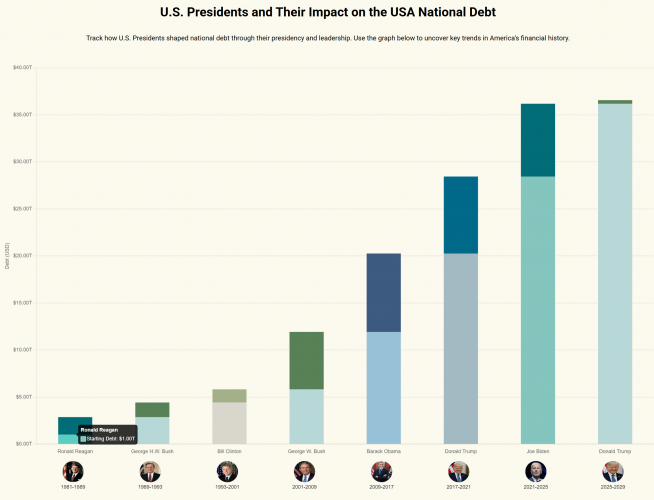
yeetmahboi
ACCESS: Top Secret
- Joined
- 6 April 2022
- Messages
- 957
- Reaction score
- 1,332
It is already reaching parity with historical peaks.Like the fact that people think the CVN is more vulnerable now than in, say, 1975 is astounding to me.
By all metrics the combined PLA can generate firepower no worse than what the Sovs could muster, and they are still widening the gap.
There's an entire EUWest between Sov land based missile and the Atlantic.
Between PLAAF strikers (temu Flankers and Lavis with a mix-match of supersonic and subsonic missiles) and JH-7s, and PLAN CVW strikers, and their coastal missile regiments easily totaling about 10+ brigades operational at any notice, each with some 20 TELs toting supersonics and the follow on reloads, plus long range cruise missiles and the Dongfengs. And their surface and subsurface fleet, and the H-6s pumping fists for a final fight.
The more bullish analysis I've seen put out a, counting PLANAF fires alone, 600+ initial salvo. And that was typed down before J-36, 5 different models of CCAs and 5 new hypersonics were a thing.
It depends entirely on the timing.Striking air bases is probably not the USN priority. They probably would count themselves quite lucky if they ran out of PLAN targets.
If it's before 2031 the US likely has a chronic shortage of B-21s and the B-2s will still take the blunt of penetrating strike. 19 plus give or take 30 operational birds is not going to bomb airfields, they are going after the military political command centers, large swaths of industrial ground (manufacturing and extraction) and utility generating systems like energy plants and stations, water treatment plants, foodstuff storage, stuff that when gone makes the populace reallyyy angry.
And the blunt of strikes on military targets will fall on cross Pacific missiles and in theater forces like naval air arms and Japan/Korea based fighter bombers. Which needs extensive standoff and stealth because they would be crossing massive counter air belts.
I don't think America has the socio-industrial grit to sustain OPTEMPO rolling up China's bastion layer by layer anymore. At some point the incumbent POTUS will have to consider an alpha strike on the Three Gorges Dam (to give a rough analogue of the desperation here) or risk losing WestPac military parity and political control of the unter-Manchuria region and the SCS entirely.
They really need more stealth bombers.
EmoBirb
E.S.T
- Joined
- 18 January 2025
- Messages
- 2,209
- Reaction score
- 5,622
Yes, but for strikes against naval forces (thus LRASM being crucial).They really need more stealth bombers.
Any attack against mainland China would see the US being turned into an irradiated wasteland devoid of life. Not really something the US would be interested in, not over something as insignificant in the grand scheme as Taiwan.
Any attack against mainland China would see the US being turned into an irradiated wasteland devoid of life.
And the PRC would quickly be destroyed by the US counter-strike if that happened, while China's strategic nuclear arsenal is growing it's still dwarfed by the US strategic arsenal.

baseball801802
ACCESS: Restricted
- Joined
- 4 November 2025
- Messages
- 34
- Reaction score
- 46
I dont like trump as much as the next guy, but how did the guy who made that graph figure out the data from 2026-2029?The United States ran up a large national debt following WWII thanks to the large deficit expenditures of the war and also of the prior Great Depression. The debt-to-GDP peaked after WWII at about 120% in 1946.
Following WWII, and despite the Cold War, Korean War, and Vietnam War, the debt burden steadily decreased as budgets were nearly balanced (small deficits usually) and GDP rose.
Reagan started his term with $1T in national debt. One trillion dollars. He quickly cut tax rates ("trickle-down economics") and increased defense spending. Military enthusiasts look back on the increased military spending with rose-tinted glasses but often forget about the irresponsible fiscal policies.
Starting with Reagan, deficit spending increased drastically and the national debt skyrocketed, with only a brief but small budget surplus under Clinton.
Despite not being at war for decades and not being at total war since WWII, the national debt now higher than where it was post-WWII as a percent of GDP, over $38T and growing by almost $2T per year.
In addition to the decreased tax revenues, entitlement spending (social security, medicare, etc.) also rose dramatically. Approximately $3.8T of the national budget goes to interest on debt and social welfare entitlements.
Expenditures need to be cut by $2T per year, or tax revenues need to rise by $2T per year to even have a shot at inflating away the debt over the coming century.
Otherwise, financial collapse is inevitable. The weakening of the dollar, hastened along by the waning military power of the United States and the rise of a new superpower in the economic center of the world, will cause interest rates to rise as the world financial system gradually moves away from US treasuries as the global reserve asset. Soft power is not possible without hard power, but hard power is now unaffordable.
I agree that a $1.5T defense budget is probably necessary today, but we won't get it. Instead, our middle class will continue to die as growth stagnates and value consolidates in the hands of a small unproductive hoarder class, S&P gains pushed forward by a putrid assembly of AI stocks that promise magic.
#38T in debt. $2T in deficit spending. A dying middle class, decrepit manufacturing, collapsing educational systems and betrayal of allies.
But good luck with the F/A-XX, I guess. That's probably all we need to beat China.
View attachment 795246
baseball801802
ACCESS: Restricted
- Joined
- 4 November 2025
- Messages
- 34
- Reaction score
- 46
And the PRC would quickly be destroyed by the US counter-strike if that happened, while China's strategic nuclear arsenal is growing it's still dwarfed by the US strategic arsenal.
I dont think china or the US will ever go full scorched earth on eachother. Closest thing we might get is a chinese naval blockade of the taiwan strait and some serious fingerwagging on both sides. In terms of the f/a-xx- I think theyve realized the f35 can operate up to 8 drones at once, and the economic deterrence of a full blown war may be scarier than a fancy new jet. As a wise man once said "Nothing ever happens"Yes, but for strikes against naval forces (thus LRASM being crucial).
Any attack against mainland China would see the US being turned into an irradiated wasteland devoid of life. Not really something the US would be interested in, not over something as insignificant in the grand scheme as Taiwan.
I dont like trump as much as the next guy, but how did the guy who made that graph figure out the data from 2026-2029?
The bottom color of each two-toned bar is the starting national debt at the beginning of the term, while the top color is the additional debt added during the term (or, in the current case, the additional debt so far).
baseball801802
ACCESS: Restricted
- Joined
- 4 November 2025
- Messages
- 34
- Reaction score
- 46
Aaaaaah I seeThe bottom color of each two-toned bar is the starting national debt at the beginning of the term, while the top color is the additional debt added during the term (or, in the current case, the additional debt so far).
Similar threads
-
 Leonardo TH-73 US Navy Advance Helicopter Training System
- Started by RavenOne
- Replies: 17
-
 USAF/USN 6th Gen Fighters - F/A-XX, F-X, NGAD, PCA, ASFS News & Analysis [2008- 2025]
- Started by Matej
- Replies: 10K
-

-
Northrop Gamma 3 series (U.S. Navy XFT-1 and XFT-2, Gamma 3A)
- Started by Justo Miranda
- Replies: 2
-
