- Joined
- 16 April 2008
- Messages
- 10,614
- Reaction score
- 18,236
What is the Freedom Class LCS doing these days?
The Independence Class has mine warfare.
What is Freedom's focus?
Anti-surface warfare. Same mission as the new FF(X), more or less.

What is the Freedom Class LCS doing these days?
The Independence Class has mine warfare.
What is Freedom's focus?
Eh, that's basically the role of the Freedoms. Bear in mind the Freedom class has the SLA for upgrades built in, they've begun testing a laser weapons system for it iirc. It's like filling a gap that is already filled and the Freedoms can do it in a more hostile environmentI meant replacing the patrol mission, not MCM or ASW.
My baseline expectation is that this is supposed to be a Freedom replacement with potentially lower operating costs, but I have no idea if that's grounded in reality. Why the USN needs an OPV when the coastguard exists is beyond my understandingEh, that's basically the role of the Freedoms. Bear in mind the Freedom class has the SLA for upgrades built in, they've begun testing a laser weapons system for it iirc. It's like filling a gap that is already filled and the Freedoms can do it in a more hostile environment

There's no G for the new program, it's FF(X). And it's not "clearly" about anything. It is presented as being about building ships fast, with nothing but "trust me, Bro" to back it up. It's presented as moving quickly, yet they awarded it to a shipyard that has a very large backlog. Its presented it as about making shipbuilding broadly more healthy, but the shipyard doing the building is already responsible for half the surface combatant fleet and nearly all the Amphib fleet.The U.S. Navy finally got it — numbers matter, and they can't afford to wait anymore. The new FFG(X) program is clearly all about building ships fast.
The new FFG(X) should be better than the LCS, but only slightly better.
But 16 NSMs? That's still way too many. I don't get it.
The operating costs are an unconvincing argument for replacing Freedom with a ship that has less capability for a higher per unit costMy baseline expectation is that this is supposed to be a Freedom replacement with potentially lower operating costs
what are you talking about??? It has less capability than LCS! It has less SLA! It has literally none of the good things LCS has. Please, for the love of god, don’t comment if you don’t have facts to back up your claimsThe new FFG(X) should be better than the LCS, but only slightly better.

It's not just size. As I explained. If they want to do sub hunting, they gonna have to redesign basically a new ship from inside out.An NSC will never be built to the same requirements as the Constellations.
It is a smaller ship. At best it will be a light frigate.
The first iteration is more of a blue-water, high-endurance corvette.
8th
At the time the LCS surface warfare was conceived, Iranian boghammer swarms were the major concern.
They expected LCS to be fighting large numbers of Iranian speed boats and RIBs.
*Make it ASW capable to the requierments that created the FFG(X).
While ity definitely not bad but it can't compete with any dedicated ASW hunter
There's no G for the new program, it's FF(X). And it's not "clearly" about anything. It is presented as being about building ships fast, with nothing but "trust me, Bro" to back it up. It's presented as moving quickly, yet they awarded it to a shipyard that has a very large backlog. Its presented it as about making shipbuilding broadly more healthy, but the shipyard doing the building is already responsible for half the surface combatant fleet and nearly all the Amphib fleet.

The cost per boat just went from cost per hull + overall programme costs/6 to cost per hull + overall programme costs/2. Sudden price rises in this situation are 1) inevitable and 2) meaningless (it's a sunk cost) and 3) potentially politically useful for misleading the ill-informed*Didn't Phelan say the cost was now 80% of a Burke? Maybe he was speaking out of turn or maybe he has access to information we don't?
A deleted Tweet from Fincantieri US in response to SECNAV announcing the Legend Class cutter's selection as FF(X).
View attachment 795867
Where's the top-heavy come from? The GAO reported them as 759t overweight in the Weapon Systems Annual Assessment in June (quoting Navy figures from October 24), but with no mention of stability concerns. Compared to FREMM, FFG(X) is longer (27.5ft pp), beamier (3.5ft wl) and has a generally lower superstructure, while being 500t greater displacement by design; 759t extra is going to make them sit lower in the water and increase wetted area, with potential impact on speed, but whether it affects stability depends on precisely where the weight growth is within the ship.The last we heard, the design was severely overweight, top heavy and would not make the speed requirement.

Across the bow? Or is that too on the nose?A little shot at NAVSEA there.
SLA = Service Life Allowance = margin?Eh, that's basically the role of the Freedoms. Bear in mind the Freedom class has the SLA for upgrades built in, they've begun testing a laser weapons system for it iirc. It's like filling a gap that is already filled and the Freedoms can do it in a more hostile environment
Where's the top-heavy come from? The GAO reported them as 759t overweight in the Weapon Systems Annual Assessment in June (quoting Navy figures from October 24), but with no mention of stability concerns. Compared to FREMM, FFG(X) is longer (27.5ft pp), beamier (3.5ft wl) and has a generally lower superstructure, while being 500t greater displacement by design; 759t extra is going to make them sit lower in the water and increase wetted area, with potential impact on speed, but whether it affects stability depends on precisely where the weight growth is within the ship.

Great. I am Chinese.what are you talking about??? It has less capability than LCS! It has less SLA! It has literally none of the good things LCS has. Please, for the love of god, don’t comment if you don’t have facts to back up your claims
Ok and?Great. I am Chinese.
They will have about the same service life and LCS will need a dedicated replacement anyway given that NSC can’t do MCM.That being said, perhaps the service life of the FF(X) could surpass that of the LCS, which might be an advantage. This is important. The boys on the LCS get a place to go, and they can keep asking Congress for money to maintain a frigate fleet for a long time (longer than the LCS).
It can’t? It can only do patrol frigate duties. LCS can do patrol, MCM, and proper surface warfare.can also perform more missions than the LCS
“Source: I made it up”that the average service life of the LCS is only 10 years
It wouldn’t be a win at the cost of capability.If the FF(X) can achieve an average service life longer than that of the LCS, that would be a win. And for now, it seems feasible.
Really quite ridiculous, absolutely shameful that this is how defence is being run in 2025.A deleted Tweet from Fincantieri US in response to SECNAV announcing the Legend Class cutter's selection as FF(X).
View attachment 795867
yes, same problem OHP had funnily enoughSLA = Service Life Allowance = margin?
Not needing the 40+knot top speed and that maintenance-heavy combining gear would make life a lot cheaper.The operating costs are an unconvincing argument for replacing Freedom with a ship that has less capability for a higher per unit cost
Correct, the Zs were supposed to be the high-capability ASW ship replacing the Sprucans.There has not been a USN dedicated ASW since Spruance. Zoomies were probably the next closest thing.
Their operational costs differ.They will have about the same service life and LCS will need a dedicated replacement anyway given that NSC can’t do MCM.
"Proper surface warfare", what armament should be used? NSM? Does the FF(X) not have it? The 30mm gun and Hellfire missiles aren't really "proper." It wouldn't be difficult for the FF(X) to match the capabilities of the LCS SUW module.It can’t? It can only do patrol frigate duties. LCS can do patrol, MCM, and proper surface warfare.
The seven retired LCSs had an average service life of less than 10 years—no need for me to list them all out, right? The average service life of all LCS vessels may exceed 10 years. It's not that the LCS is so great, but rather that its replacements aren't fast enough for sufficient numbers.“Source: I made it up”
Then the Constellation-class should continue to move forward.It wouldn’t be a win at the cost of capability.

I love me some NAVSEA slander in the morningA deleted Tweet from Fincantieri US in response to SECNAV announcing the Legend Class cutter's selection as FF(X).
View attachment 795867
For love of God, the ship is too noisy for sub hunting missions. Everything in this ship vibrates. The whole ship need redesign to do sub hunting. Sub hunting isn't just simply attaching towed sonars to any ship.If the baseline configuration of the FF(X) is as we've recently seen, and with towed sonar and fixed sonar arrays (the towed sonar can be placed on the stern platform, while anti-ship missiles are reduced to eight), that configuration would already be pretty solid.
These fill the SURFACE WARFARE element of their CONOPS. God almighty, that's half the point of them. And 40 knot speeds are a significant help as has been asserted by the USN and USCG for surface warfare missions. RAM is also needed as standard now because MCM happens in contested environmentsA dedicated mine-countermeasures vessel doesn't require a speed of over 40 knots, waterjets, LM2500 and MT30 engines, SUW modules, or even RAM systems.
You do realize that maintaining the fleet is a cost that is accounted for? FF(X) is being bought on top of LCS not supplanting them so it is a net increase in cost for the Navy to foot. Arguably they are saving money only because they cost less to maintain than Constellation.I don't believe the performance advantages of the LCS over the FF(X) are significant enough for the U.S. Navy to overlook its higher maintenance costs. Cost will make the U.S. Navy more than happy to replace the LCS with the FF(X).
Surface warfare is maneuverability, responding to incoming threats (RAM and DEWs), and returning fire via missiles and gunfire. All elements that are fulfilled better by Freedom. Additionally Independence class LCS can simultaneously engage in MCM."Proper surface warfare", what armament should be used? NSM? Does the FF(X) not have it? The 30mm gun and Hellfire missiles aren't really "proper." It wouldn't be difficult for the FF(X) to match the capabilities of the LCS SUW module.
lmao, that is not how you calculate service life but ok. A google search would show you that those hulls were cut because the Navy believed they could sufficiently fill roles without them. LCS numbers fill the MCM and PF roles as is, they do not need FF(X)The seven retired LCSs had an average service life of less than 10 years—no need for me to list them all out, right? The average service life of all LCS vessels may exceed 10 years. It's not that the LCS is so great, but rather that its replacements aren't fast enough for sufficient numbers.
Duh? This is arguably the most obvious statement anyone has ever saidThen the Constellation-class should continue to move forward.
YOU CAN'T JUST DO THIS, HOW MANY TIMES MUST IT BE REITERATED TO YOUIf the baseline configuration of the FF(X) is as we've recently seen, and with towed sonar and fixed sonar arrays (the towed sonar can be placed on the stern platform, while anti-ship missiles are reduced to eight), that configuration would already be pretty solid.
Is there any news coverage on this? It should at least be quieter than the LCS's waterjet, right?For love of God, the ship is too noisy for sub hunting missions. Everything in this ship vibrates. The whole ship need redesign to do sub hunting. Sub hunting isn't just simply attaching towed sonars to any ship.
Oh my god, the LCS doesn't do ASW anymore, it is one of many failures in the LCS program. The NSC also does not do ASW, although a roll on TA was considered but cancelled. Constellation is a design based primarily around being quiet and supporting a TA and VDS for ASW. NSC is primarily designed to do law enforcement around the globe.Is there any news coverage on this? It should at least be quieter than the LCS's waterjet, right?
You mean the last 3?The seven retired LCSs had an average service life of less than 10 years—no need for me to list them all out, right? The average service life of all LCS vessels may exceed 10 years. It's not that the LCS is so great, but rather that its replacements aren't fast enough for sufficient numbers

It's not just engines, but pumps, generators, all sort of rotating machinary. Techniques such as rafting, Prairie-Masker, and other noise reducing/absorbing mounts for noisy parts, etc to reduce the transmission of noise. These are costly, add weight and space. There's no requirements for coast guards to have these features on the NSC to begin with. To do sub hunting, major internal redesign need to be done.Is there any news coverage on this? It should at least be quieter than the LCS's waterjet, right?
Maybe they should have.....It's not just engines, but pumps, generators, all sort of rotating machinary. Techniques such as rafting, Prairie-Masker, and other noise reducing/absorbing mounts for noisy parts, etc to reduce the transmission of noise. These are costly, add weight and space. There's no requirements for coast guards to have these features on the NSC to begin with. To do sub hunting, major internal redesign need to be done.
In a large-scale conflict with the Chinese Navy, a speed exceeding 40 knots is an unnecessary capability.These fill the SURFACE WARFARE element of their CONOPS. God almighty, that's half the point of them. And 40 knot speeds are a significant help as has been asserted by the USN and USCG for surface warfare missions.
"Contested environments", in this kind of "contested environment," what exactly defines "contested"?RAM is also needed as standard now because MCM happens in contested environments.
Since you don't consider the FF(X) a replacement for the LCS, do you think there will be any follow-on classes to the Freedom class and Independence class? I don't think there will be. Even if there are, the numbers won't be large.You do realize that maintaining the fleet is a cost that is accounted for? FF(X) is being bought on top of LCS not supplanting them so it is a net increase in cost for the Navy to foot. Arguably they are saving money only because they cost less to maintain than Constellation.
Maneuverability — yes, that's right, the LCS is faster.Surface warfare is maneuverability, responding to incoming threats (RAM and DEWs), and returning fire via missiles and gunfire. All elements that are fulfilled better by Freedom. Additionally Independence class LCS can simultaneously engage in MCM.
The Burke-class can also fill the PF mission... Fill it, yes—but fit for it? Neither the Burke-class nor the LCS is well-suited for the PF mission.lmao, that is not how you calculate service life but ok. A google search would show you that those hulls were cut because the Navy believed they could sufficiently fill roles without them. LCS numbers fill the MCM and PF roles as is, they do not need FF(X)
I also agree that the Constellation-class program should continue.Duh? This is arguably the most obvious statement anyone has ever said
Is there any article or evidence to support the claim that the NSC is too noisy to conduct anti-submarine warfare missions?YOU CAN'T JUST DO THIS, HOW MANY TIMES MUST IT BE REITERATED TO YOU
Neither LCS nor FF(X) are designed for direct engagement with the Chinese navy so why does that matter? Also exceeding 40 knots provides greater tactical mobility which makes it harder for the Chinese navy to kill, as well as the LCS having a lower RCS iirc.In a large-scale conflict with the Chinese Navy, a speed exceeding 40 knots is an unnecessary capability.
That which is similar to the Middle East"Contested environments", in this kind of "contested environment," what exactly defines "contested"?
The purpose of RAM is to kill that which has penetrated other layers of air defense. RAM is indeed suited for operations in high risk zones because those operations will take place within the AD envelope of DDGs. Also the munitions to which you refer could've got that close for any reason, it means very little in the grand scheme of things.Even ammunition from the Houthis has penetrated within one nautical mile of a Burke-class destroyer. Ships equipped only with RAM systems are simply not suited for operations in high-risk zones—they're better off in areas with lower threats. But in lower-threat areas, what's the difference between an LCS with RAM and a dedicated minesweeper without RAM?
Yes, but they will likely take a different form. For one the Freedom class will focus more on large bays to support UxVs as they are the future of MCM. The Freedom class replacement is harder to predict due to the rapidly shifting nature of systems atm. They will both come online in about 20 years iirc.do you think there will be any follow-on classes to the Freedom class and Independence class?
There is literally a program to deploy themDEWs are not yet widely deployed on the LCS
This is not at all true. As a matter of fact the USN is betting big on DEWs and they are already combat proven for taking down loitering munitions and the like.and the actual effectiveness of current DEW systems remains questionable.
This is an inherently bad argument because you separate factors which are intrinsic to each other. Maneuverability allows the LCS to engage small boats aggressively and to maneuver away from the engagement envelope of threats. They all work together in a way that an NSC derived PF cannot. It's like comparing an F-15 to a P-8, they both kill things but do it in different ways and one is far better at engaging in the surface warfare required of the PF.Maneuverability — yes, that's right, the LCS is faster.
Defense — the LCS doesn't perform significantly better than the FF(X); both the LCS and FF(X) are equipped with RAM and only RAM. While the more powerful LCS could theoretically mount higher-power DEWs, DEWs are not yet widely deployed on the LCS, and the actual effectiveness of current DEW systems remains questionable.
Attack — the LCS doesn't perform significantly better than the FF(X); both carry the same 57mm gun. The LCS has enhanced anti-small boat capability, but scenarios where this can be effectively employed are limited. The FF(X) carries more NSM missiles than the LCS.
Why is the Freedom class LCS bad for the PF mission? The only way the NSC wins out is in endurance but that is such a minor concern when compared to other ships such as the Burke itself. Sensors, guns, etc. are all superior on the Freedom class.The Burke-class can also fill the PF mission... Fill it, yes—but fit for it? Neither the Burke-class nor the LCS is well-suited for the PF mission.
Literally common sense. NSC is a CODAG design with no serious concern for quieting because it does law enforcement missions. It has no provisions for a TA or VDS. It is probably about as quiet as a Burke which is to say too noisy to be a dedicated ASW platform. It also has no space to support UxVs which are the next major frontier in shipboard ASW. Ok, I guess you could argue it can "do" ASW but the capability is so negligible over a Burke that it is essentially useless.Is there any article or evidence to support the claim that the NSC is too noisy to conduct anti-submarine warfare missions?
How else do people learn but by asking questions?Those who do not know, should not speak
It's not slander if it's true.I love me some NAVSEA slander in the morning
Does SPY-6 that much necessary? 054B lives just fine w/o Type 346A from 052D.Thanks, in that case we are all doomed...
It's much worse to have a useless ship (incapable of ASW or AAW even with a modified NSC) than no ship. As it takes away procurement, operational, and maintenance money away from actually useful programs, will lead to deaths that could be otherwise avoided when these are put into the wrong place, and reduces political will from Congress as they will say we just bought you ships. You don't need more.For naval development, today is not 2025—today is 2035, it is 2045. Building a fleet takes a very long time, and any delay now means a shrinking fleet size of the future. Once it shrinks past a certain point, expanding it again becomes difficult.
Personally, I believe that since the U.S. Navy has chosen the FF(X), it should push forward steadily without fantasizing about some more perfect "Constellation." In my view, the only discussion worth having is what configurations a major variant of the FF(X) might feature. (But, the NSC's tonnage isn't that large, and its remaining potential isn't exactly ideal. It's disappointing, really.)
As for the baseline FF(X), further debate is unnecessary because it must move forward—the U.S. Navy needs to act. When the first batch of FF(X) is completed, Congress, design departments, industry, and the U.S. Navy itself will receive a tremendous boost. And this momentum will be invaluable for future programs like DDG(X).
If the baseline configuration of the FF(X) is as we've recently seen, and with towed sonar and fixed sonar arrays (the towed sonar can be placed on the stern platform, while anti-ship missiles are reduced to eight), that configuration would already be pretty solid.
This would require a complete redesign of the ship's superstructure and consquently a redesign of most of the ship. It has no place to mount fixed panels that have a clear line of sight of the surroundings.What i could see is in the future maybe the FF(X) having the An/Spy-6v2 and then using its small vls + LCS as supplements when greater air defense is needed
Yes, the USN will face a larger missile threat from the Chinese than the other way around. A crappy radar also means you can't use these ships are radar pickets to detect and hand off engagement of super/hypersonic missiles further away from the main fleet. As due to the speed of those, early detection is a must.Does SPY-6 that much necessary? 054B lives just fine w/o Type 346A from 052D.
You can launch ESSM just fine w/o it, and 50km range of ESSM is pretty good for a frigate. 16 Mk-41 for it would be more than enough.
I'd say the main issue is complete lack of ASW, which would require bigger hangar, redesign of a hull for bow sonar and for towed/VDS.
An-Spy-6v2 is the rotating single radar panel. While a redesign is likely needed for this larger heavier radar it still would be mutch easier and 6v3 which has 3 of those.This would require a complete redesign of the ship's superstructure and consquently a redesign of most of the ship. It has no place to mount fixed panels that have a clear line of sight of the surroundings.
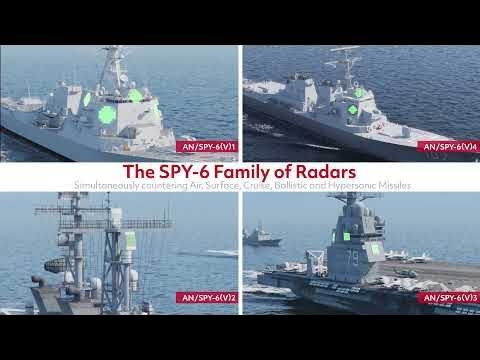
Sorry I misread that as SPY6v3. The v2 won't be sufficient for something that needs to operate alone due to latency issues with detecting fast moving targets and also much low detection ranges. You wouldn't be able to act as eyes for a long range engagement. There is a reason all new build FFG and similar in decent navies use fixed arraysAn-Spy-6v2 is the rotating single radar panel. While a redesign is likely needed for this larger heavier radar it still would be mutch easier and 6v3 which has 3 of those.
View attachment 795909