Astronomy and Planetary Science Thread

Three Earth-sized planets discovered in a compact binary system

An international team of researchers has just revealed the existence of three Earth-sized planets in the binary stellar system TOI-2267 located about 190 light-years away. This discovery, published in Astronomy & Astrophysics, is remarkable as it sheds new light on the formation and stability of planets in double-star environments, which have long been considered hostile to the development of complex planetary systems.

"Our analysis shows a unique planetary arrangement: two planets are transiting one star, and the third is transiting its companion star," says Sebastián Zúñiga-Fernández, researcher and member of the ExoTIC group at the University of Liège (ULiège) and first author of the study. "This makes TOI-2267 the first binary system known to host transiting planets around both of its stars."


Related paper:

 
JUICE and 3I/ATLAS: An Unexpected Encounter in Space (MPS)

On its eight-year journey to Jupiter, ESA’s space probe JUICE is meeting up with an unexpected diversion: In the coming weeks, the probe will have a good view of the interstellar object 3I/ATLAS.

For JUICE, observational conditions will be favorable in the coming weeks. At a distance of 210 million kilometers, 3I/ATLAS reached its closest point to the Sun yesterday, within the orbit of Mars. Under the influence of the Sun, frozen gases are likely to evaporate in increasing quantities from the surface of the well-traveled guest over the next few days and weeks, carrying dust particles with them and thus enveloping the cosmic visitor in a comparatively easily recognizable cloud of gas and dust. JUICE is currently only about 60 million kilometers away from this spectacle. Telescopes on Earth will have little chance of seeing the interstellar object in the coming days. Our planet now almost exactly on the other side of the Sun.

The members of the JUICE team at MPS are particularly interested in the water that sublimates from 3I/ATLAS into space. The spacecraft’s Submillimetre Wave Instrument (SWI), which was developed and built under the leadership of MPS, captures radiation with wavelengths between approximately 0.25 and 0.5 millimeters. In this wavelength range, water molecules leave characteristic signatures. With its extremely high spectral resolution, SWI can provide information such as whether the water molecules originate from the surface of the interstellar object itself or additionally from ice grains in its coma. “We hope that SWI will enable us to take the first high-resolution measurements of water on 3I/ATLAS,” says MPS scientist Paul Hartogh, SWI Principal Investigator. “Among other things, this may help us understand the near surface water ice distribution of this active body”, he adds.

In the coming days, JUICE's Particle Environment Package (PEP) will also be switching on one of its sensors. The sensor captures energetic neutral atoms such as hydrogen, helium, or oxygen. These are created when charged solar wind particles collide with the gas cloud surrounding 3I/ATLAS – and the more gas the interstellar object spews into space, the more numerous they are. “The measurements can tell us which gases sublimate from the surface of 3I/ATLAS and in what quantities,” explains Elias Roussos, PEP team member from MPS. Since very few neutral particles are expected to be produced, PEP will measure for twelve days straight, hopefully capturing enough particles.

With a little luck, 3I/ATLAS will be particularly active in the next few days. While the object currently produces around two tons of water vapor per second, it could suddenly release even larger quantities shortly after passing the Sun. Such outbursts are known from comets and would facilitate the planned measurements.

Measurements under time pressure

The JUICE instruments that will be looking at 3I/ATLAS will be operating between November 2 and 25. From an operational point of view, the campaign is tricky. Probe and interstellar object are traveling in different directions, with 3I/ATLAS tearing through space at a speed of approximately 220,000 kilometers per hour. In addition, JUICE can only look directly at its target for no more than 30 minutes per day as to avoid exposing its sensitive side to too much solar radiation. Only PEP, with its significantly larger field of view, can measure for twelve days at a time despite the spacecraft slewing.

Whether JUICE’s efforts were successful will only become clear in February next year. Only then will the observational data be transmitted to Earth – a kind of delayed souvenir photo of a unique encounter.
 
Astrum has a new video out about how TRAPPIST-1e could be Earth 2.0:


You might have heard of TRAPPIST-1. Discovered in 2017, this system of rocky planets orbiting a red dwarf star has been hailed as the most promising place to search for life outside our solar system.​
And now, one of these planets has just got even more exciting. New observations from the James Webb Telescope reveal the most compelling evidence yet: planet TRAPPIST-1e might have an Earth-like atmosphere. Join us to see what JWST found and why this could be huge.​
You can check out Astrum's previous video on the TRAPPIST-1 system here: / vkg8gugsg0 https://youtu.be/vKg8GUgSG0
▀▀▀▀▀▀
0:00 TRAPPIST-1e
2:01 The TRAPPIST-1 System
5:03 JWST Observations
7:32 TRAPPIST-1e’s Atmosphere
13:05 Red Dwarf Star Flares
15:46 Could It Be Habitable?
17:44 What’s Next?
▀▀▀▀▀▀
References:“TRAPPIST-1 Is Older Than Our Solar System”, via nasa.gov https://astrumspace.info/trappist1nasa
“All About TRAPPIST-1”, via nasa.gov https://astrumspace.info/trappistfacts
“The TRAPPIST-1 Star”, via stellarcatalog.com https://astrumspace.info/trappist1_starhttps://www.youtube.com/redirect?ev...astrumspace.info/trappist1_star&v=iTYEAvuhWeM
“Temperate Earth-Sized Planets Transiting a Nearby Ultracool Dwarf Star”, via eso.org https://astrumspace.info/trappistdisc...
“JWST Transmission Spectroscopy of Trappist-1 e”, via iop.org https://astrumspace.info/trappist1e
“JWST’s Secondary Atmosphere Constraints for TRAPPIST-1 e”, via iop.org https://astrumspace.info/trappist1e_atm
“Homogeneous model for the TRAPPIST-1e planet”, via aanda.org https://astrumspace.info/trappist1e_m...https://www.youtube.com/redirect?ev...trumspace.info/trappist1e_model&v=iTYEAvuhWeM
“Possible Planetary Atmospheres in the TRAPPIST-1 System”, via springer.com https://astrumspace.info/trappistplanets
“Frequent flaring in the TRAPPIST-1 system”, via arxiv.org https://astrumspace.info/trappist1flares
“Predicted Habitability and Radio Emission of TRAPPIST-1e”, via aanda.org https://astrumspace.info/trappist1e_hab
▀▀▀▀▀▀
Credits:
Writer: Chris Bartlett
Video Editor: Nick Shishkin
Researcher: Shourya Shrivastava
Script Editor: Damaris McColgan
Thumbnail Designer: Peter Sheppard
Publishing Lead: Georgina Brenner
Production Manager: Raquel Taylor
Edit Producer: Poppy Pinnock
Head of Astrum: Jess Jordan
Creator of Astrum: Alex McColgan
With special thanks to:NASA/ESO/ESA
 
Moon struck?

simulated

Moon Issues

Lunar optics and geology

The Sun

Io and other finds

Cubesat

Great…

Do what now?
 
Last edited:
As the construction of ESO’s Extremely Large Telescope (ELT) continuously develops, its performance needs to be secured at every step. Today’s Picture of the Week is a timelapse of an important milestone: the first movement of one of the dome’s giant doors.

The ELT dome and its doors guard the telescope from the harsh conditions of the Atacama Desert in Chile. Each of the doors will weigh approximately 650 tonnes once completed, including walkways, ducts for heating, ventilation and air conditioning, and other related mechanisms already installed. Moving these massive doors is no small feat, and the test shown in this timelapse, captured in early October, is key to ensuring that everything works as it should.

Once both doors are fully installed and operational they will be closed, providing a more stable and controlled environment inside the dome for the upcoming construction phases. These include installing critical systems like the hydrostatic oil bearings that will allow for a smooth and precise movement of the telescope. Once the ELT is in operation the doors must respond quickly to protect the telescope against sudden changes in the external conditions. At night, the doors will allow the biggest eye on the sky to scrutinise Chile’s uniquely dark skies.

Credit:
ESO/ACe

View: https://youtu.be/FuMvka1-dA4
 
Alien Worlds May Be Able To Make Their Own Water
Using diamond anvils and pulsed lasers, researchers managed to re-create the intense temperatures and pressures present at the boundary between these planets' hydrogen atmospheres and molten rocky cores. Water emerged as the minerals cooked within the hydrogen soup. Because this kind of geologic cauldron could theoretically boil and bubble for billions of years, the mechanism could even give hellishly hot planets bodies of water -- implying that ocean worlds, and the potentially habitable ones among them, may be more common than scientists already thought. "They can basically be their own water engines," says Quentin Williams, an experimental geochemist at the University of California Santa Cruz who was not involved with the new work.

Published in Nature, link to article
 
Paper on quadruple star systems:

 
Alien Worlds May Be Able To Make Their Own Water


Published in Nature, link to article

In this scenario wouldn't the formation of a global ocean lead to the underlying magma cooling fast and forming a rocky-crust under that ocean?
 
As the article explains no this still doesn’t mean it’s some alien spacecraft.

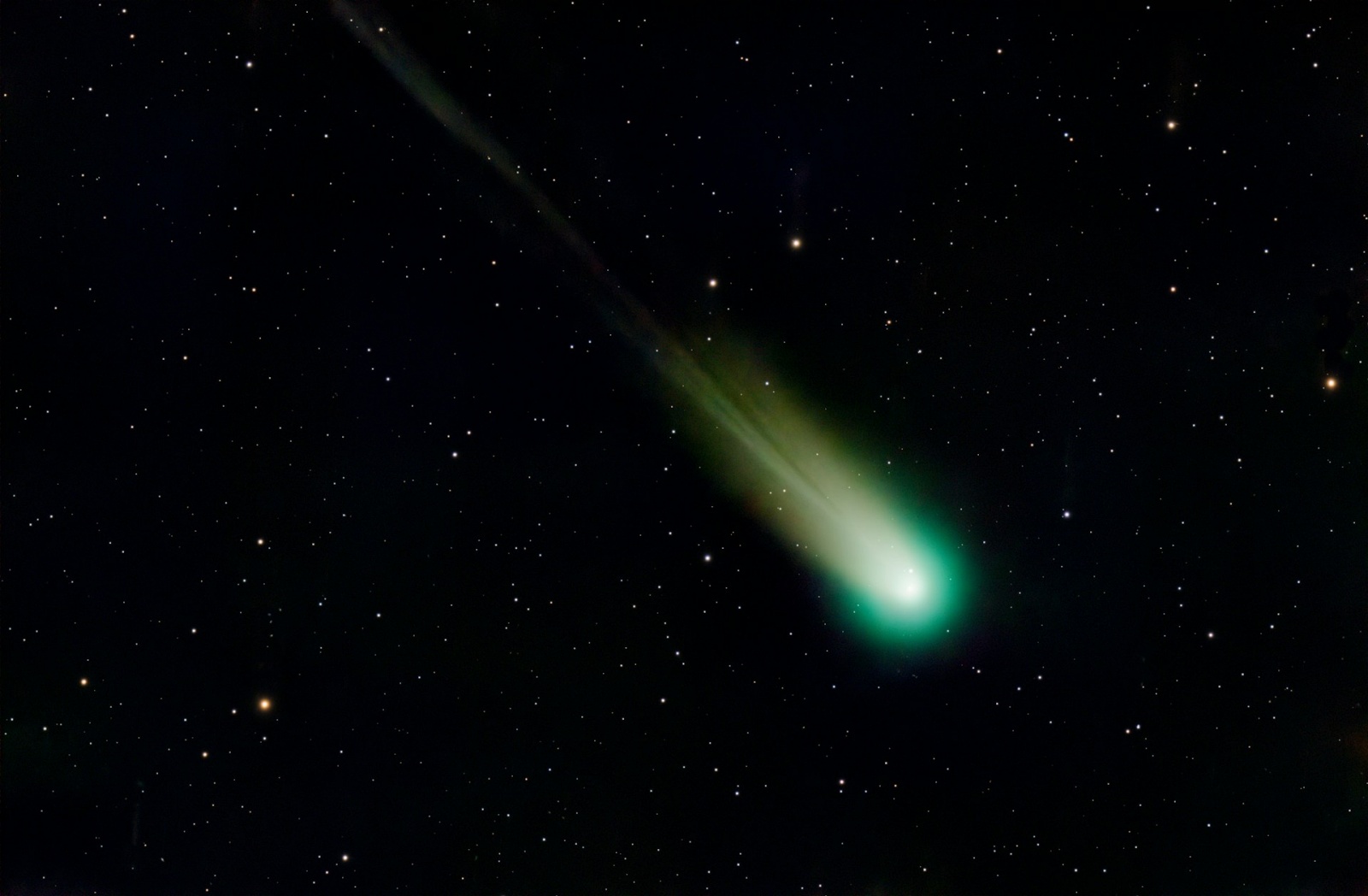
So, what have we learned as the object approached perihelion? In a new study, which has not yet been peer reviewed, astronomers report that the comet appears to have changed color (for the second time). Using Solar TErrestrial RElations Observatory (STEREO), SOlar and Heliospheric Observatory (SOHO), and weather satellite GOES-19, the team was able to observe 3I/ATLAS as it approached perihelion on October 29.

The team found that the object has brightened significantly, to around magnitude 9, making it brighter than many Herschel 400 galaxies, and visible with a small telescope or a decent pair of binoculars. They add that "color photometry shows the comet to be distinctly bluer than the Sun". However, as yet there is not a satisfactory explanation for its rapid brightening, which is far in excess of the rate of brightening seen in more-frequently-seen Oort cloud comets.


Meanwhile, observations reported by Davide Farnoccia, a navigation engineer at NASA’s Jet Propulsion Laboratory, indicate that the comet appears to exhibit signs of "non-gravitational acceleration," or acceleration not caused by gravity alone.

"The non-gravitational acceleration was measured at the perihelion distance of 1.36 times the Earth-Sun separation (defined as an astronomical unit or `au’), equivalent to 203 million kilometers," Loeb explains in a blog post, adding that it showed a "radial acceleration away from the Sun of 135 kilometers (=9x10^{-7}au) per day squared" and a "transverse acceleration relative to the Sun’s direction of 60 kilometers (=4x10^{-7}au) per day squared".

Before you scream "DARK FOREST ATTACK" and start building a bunker world around Jupiter, non-gravitational acceleration does not mean that the object moved by itself. In fact, this may be further evidence of its cometary behavior; its acceleration changed as it approached the Sun and began outgassing, losing mass as it did so.

"For a thermal ejection speed of a few hundred meters per second, the evaporation half-life of 3I/ATLAS is 6 months," Loeb writes. "This implies that over the month it takes 3I/ATLAS to cross a spatial scale of order its perihelion separation from the Sun, 3I/ATLAS would lose about a tenth of its mass. Such a massive mass loss should be detectable in the form of a large plume of gas surrounding 3I/ATLAS during the upcoming months of November and December 2025."

 
From PBS Eons on how scientists figured out the Dinosaur-killer was an asteroid:


66 million years ago a giant space rock crashed into our planet and killed the dinosaurs. In the span of just four decades, we’ve gone from not knowing there was a space rock at all to knowing exactly where that planet-killer came from.
 
Astronomer captures 2 meteors slamming into the moon (video)

Two bright meteors were caught slamming into the moon on Thursday (Oct. 30) and Saturday (Nov. 1), by Japanese astronomer Daichi Fujii, curator of the Hiratsuka City Museum. The flashes, visible from Earth for just a split second, were caused by space rocks striking the lunar surface at high speed, producing brief but brilliant explosions of light.

 
Anton Petrov has a video out about new discoveries concerning bizarre chemistry in Titan's atmosphere and more:


0:00 Titan - the moon of Saturn
1:40 Weather and atmosphere surprises - convection and methane rain
3:45 Methane volcanism
4:50 Atmospheric wobble
6:00 Mystery of missing river deltas
7:15 Strange chemistry that nobody expected
9:15 Astrobiology implications
9:50 Protocell formation and possibility of life
11:40 Winds are super strong
12:50 Future helicopter mission
13:50 Conclusions
 
Self-Replicating Probes Could be Operating Right now in the Solar System. Here's How We Could Look for Them
A new study proposes how we could look for signs of self-replicating (Von Neumann) probes that would prove that the Solar System has been explored by an advanced extraterrestrial intelligence (ETI).
 
UBCO study debunks the idea that the universe is a computer simulation

It’s a plot device beloved by science fiction: our entire universe might be a simulation running on some advanced civilization’s supercomputer.

But new research from UBC Okanagan has mathematically proven this isn’t just unlikely—it’s impossible.


Related paper:

 
Wormholes?

For obvious reasons, we do not know what the inside of a black hole looks like. But thanks to theoretical physics, we can ask what the inside should look like if Einstein's theory of gravity and the rules of quantum mechanics are both true. A new study published in the journal Physical Review Letters has done exactly this by concentrating on two black holes that are deeply entangled (linked together by quantum rules).


A plumber was called in to fix a leak at a top-secret science lab.

While working on a complex pipe system near a large, humming machine, he accidentally activated a wormhole generator and was sucked into the anomaly.


When he finally emerged, he had a look of intense confusion was on his face. The head scientist rushed over and asked , "What happened? Where did you go?"

The plumber, wiping his hands on his coveralls, just shook his head and said, "it was all just a bunch of weird curves, gravity distortions, and unfamiliar dimensions."

The astrophysicist was amazed. "Wow, that sounds incredible!"

"Yeah," the plumber replied, "The plumbing in the 4th dimension? It was exactly like trying to find the source of a leak behind a built-in bathtub. Same old crap, different time!"

You should have seen the bill...
 
Last edited:
Here's a video about deep-space discovery the two Voyager probes made:


NASA’s Voyager spacecraft discovered something extraordinary at the edge of our Solar System — a superheated plasma “wall” reaching up to 50,000 kelvin. This region, known as the heliopause, marks the boundary between the Sun’s solar wind and the interstellar medium. Despite its name, this “wall of fire” is nearly empty space — yet it changed how we understand our cosmic neighborhood.​
Chapters:
00:00 Introduction
00:44 DISCOVERY
02:43 SCIENTIFIC IMPORTANCE & THEORIES
05:31 IMPLICATIONS & WHAT’S NEXT
07:45 Outro
08:07 Enjoy
 
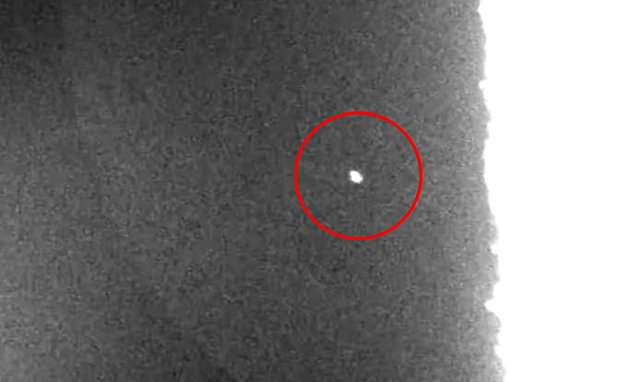
Chinese Spacecraft Around Mars Sends Back Intriguing Gif Of Interstellar Comet 3I/ATLAS

From the orbit of Mars, China's Tianwen-1 sent back new and intriguing images of our interstellar visitor. An animation shows it move across the sky.

 
SciShow has a video out about what is known about how Gold is created:


Astronomers have spent the past century (roughly) trying to figure out where all the elements on the Periodic Table come from. For example, the oldest hydrogen emerged when the universe was just a baby (Big Bang nucleosynthesis). And the carbon inside every living thing on Earth was made inside the bellies of stars (stellar nucleosynthesis). But the origin story for several heavy elements, including gold and platinum, has been more elusive. Enter, the r-process, and the extreme astrophysical phenomena where it can actually happen.​

Edit: Kilonova sounds a late 70s dance you'd do in a Disco, perhaps something Tony Manaro would do;):D.
 
Last edited:
There is a new camera system that may be of use to cubesats, drones, etc.

"We're asking the question, 'What if a lens didn't have to focus on just one plane at all?'" says Qin. "What if it could bend its focus to match the shape of the world in front of it?"
View: https://www.youtube.com/watch?v=WNPkUB9o2Fo

I thought that was called Lytro, but...

Life

GRB find

Atlas
 
Last edited:
More weirdness concerning 3I/ATLAS:


0:00 3I/ATLAS updates
1:40 What happened during the closest approach?
2:20 Brighter than ever before
3:10 Dramatic color shift to blue
4:20 JWST discovers a strange crust
6:40 Interstellar comets as sources of planetary formation
8:30 Second phase of observations just began
9:40 Closest to Earth approach and departure
10:50 Conclusions and what's next?
 

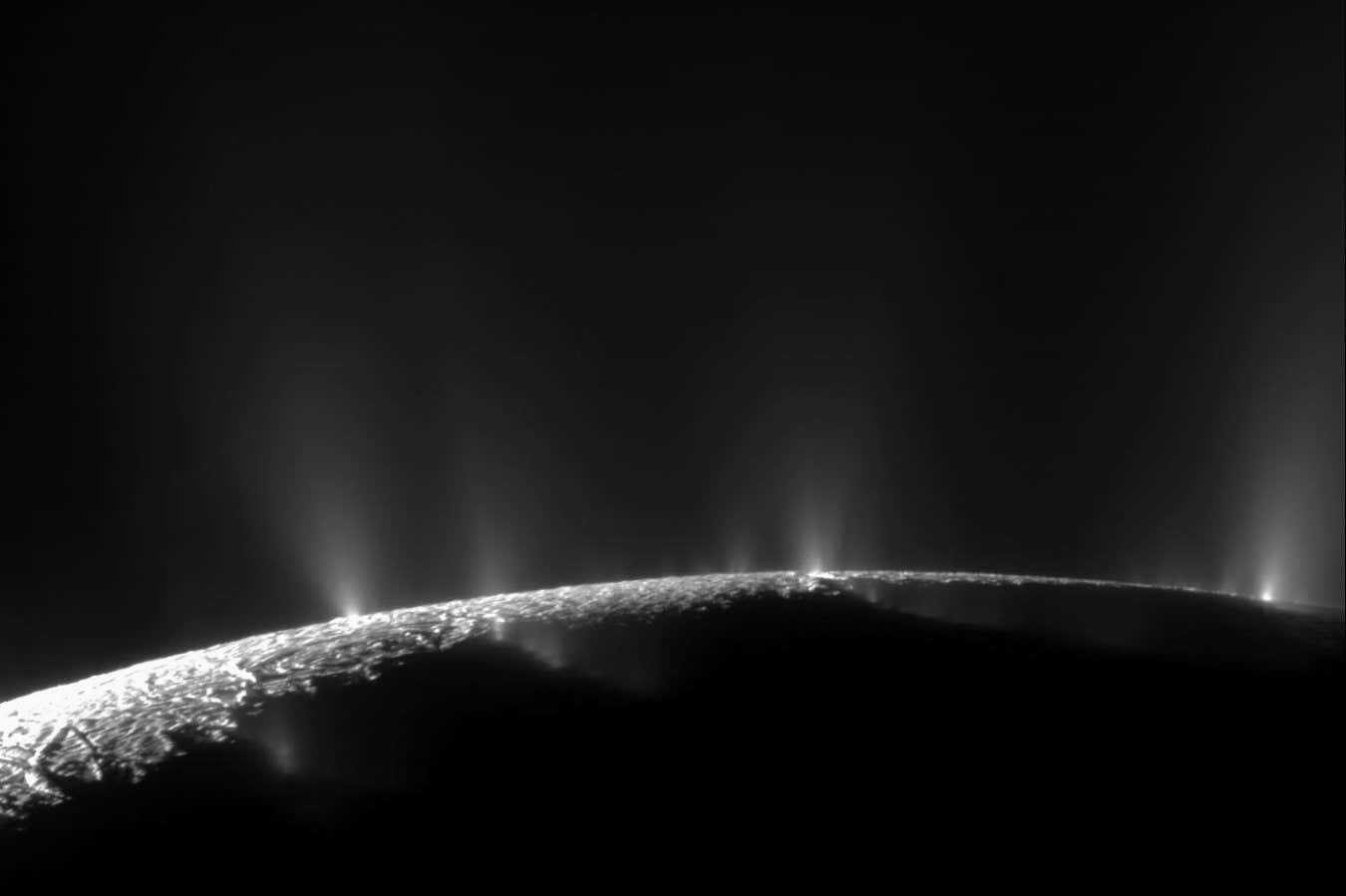
“For the first time we can say with certainty that Enceladus is in a stable state, and that has big implications for habitability,” says Carly Howett at the University of Oxford. “We knew that it had liquid water, all sorts of organic molecules, heat, but the stability was really the final piece of the puzzle.”

Linked within


NASA has just released 20 new photographs from the HST, JWST and Chandra space telescope:


Take a journey across space and time through some of NASA’s newest images captured by the James Webb Space Telescope, Hubble, and Chandra.​
From the glowing wings of the Butterfly Star and the fiery heart of Cassiopeia A, to entire galaxies shaped by dark matter — each image reveals a different side of the universe. Webb’s infrared eyes, Hubble’s timeless vision, and Chandra’s X-ray gaze together uncover the places where stars are born, where they die, and where galaxies continue to evolve.​
 
Anton Petrov has a video about a discovery concerning Einstein rings:


0:00 Mystery of dark matter and lensing effects
2:30 Remarkable chunk of dark matter
3:01 Dark matter halo and discovery in the Milky Way
4:45 How this was discovered and what this lens is
7:10 Very massive
8:05 What is this though?
9:20 Additional mysteries
10:30 Conclusions
 
Some more revelations concerning the CMB, from Anton Petrov:


0:00 CMB - cosmic microwave background is insane
1:50 How it was produced after the Big Bang
4:30 Initial observations and what they showed us
5:55 What this confirmed about the Big Bang
6:40 New data and observations from ACT
8:15 Cosmic web evidence
9:00 Can we see beyond the CMB? Neutrinos and xrays
14:00 Conclusions
 
And in a related video Anton Petrov has a video about how the Universe was twice as hot seven billion years ago:


0:00 Temperature of the universe in the past
1:00 Temperature today compared to before
2:05 How to prove this? CMB - cosmic microwave background
3:30 Predictions of what we should see
4:30 Using quasars to measure this
6:50 Previous attempts to measure this
7:15 New precise measurements and what this means
9:10 Previous studies from even farther away
10:30 Implications and why this matters
12:10 Conclusions and what's next?
 
I was hoping there was a time where the universe was at 1 atm and room temperature both…

Solar weather

Exoworlds

Mergers

The universe's mass

Space physics via A.I.

More astronomy topics

The Ronco crystal....wait

Unruh again

Astronaut needs

Commercial space

Astronomy challenges

The overview effect
 
Last edited:
Saturn’s icy moon may host a stable ocean fit for life, new study finds

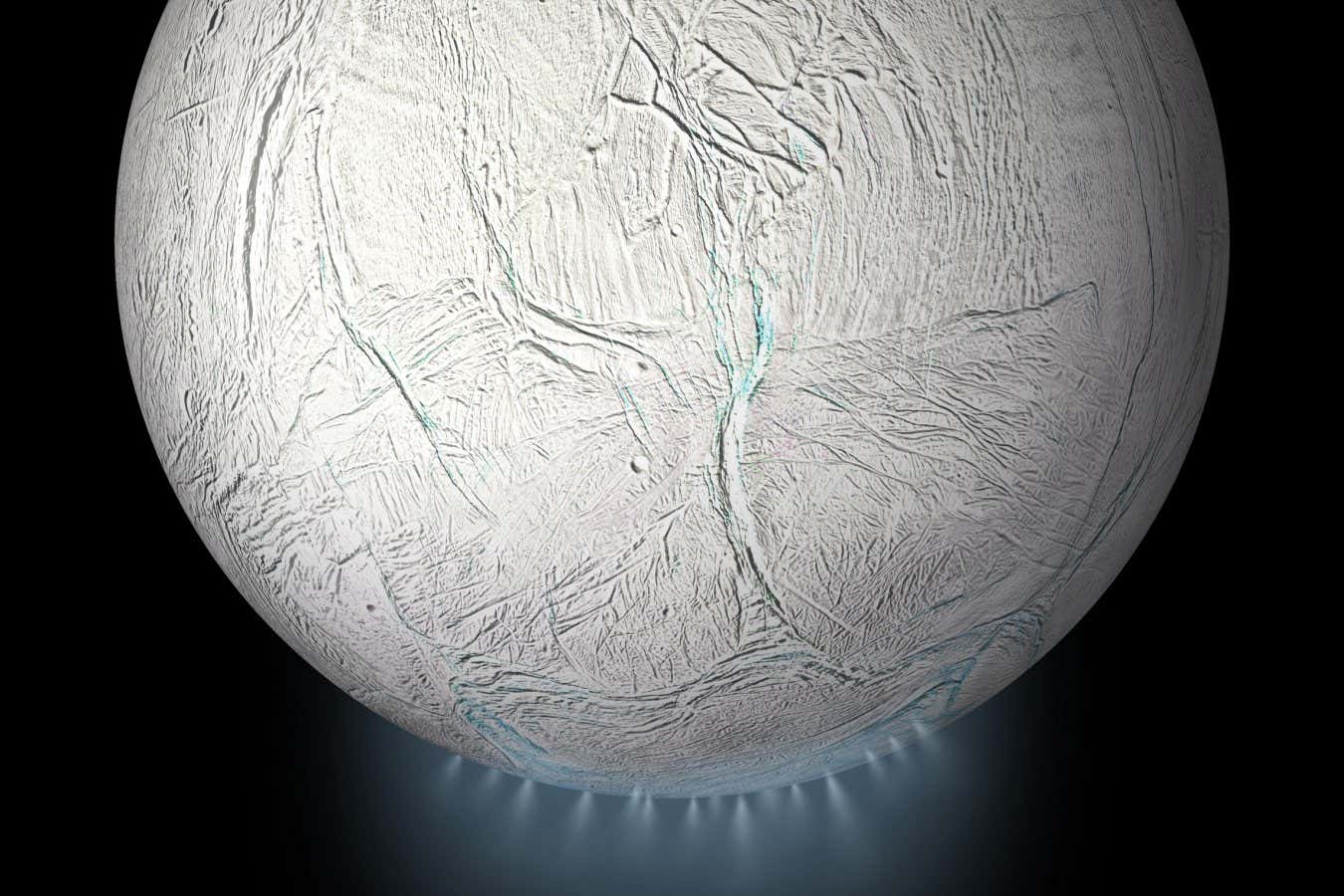
New findings from NASA’s Cassini mission show that Enceladus, one of Saturn’s moons and a top contender for extra-terrestrial life, is losing heat from both poles – indicating that it has the long-term stability required for life to develop. The findings have been published in Science Advances.


A new study led by researchers from Oxford University and Southwest Research Institute and the Planetary Science Institute in Tucson, Arizona has provided the first evidence of significant heat flow at Enceladus’ north pole, overturning previous assumptions that heat loss was confined to its active south pole. This finding confirms that the icy moon is emitting far more heat than would be expected if it were simply a passive body, strengthening the case that it could support life.


The study also demonstrated that thermal data can be used to independently estimate ice shell thickness, an important metric for future missions planning to probe Enceladus’ ocean, for instance using robotic landers or submersibles. The findings suggest that the ice is 20 and 23 km deep at the north pole with an average of 25 to 28 km globally - slightly deeper than previous estimates obtained using other remote sensing and modelling techniques.


Related paper:

 
Looks like Cassini is still providing science decades after its final plunge into Saturn's atmosphere.

Decades? Cassini's destructive reentry happened on September 25, 2017 so it has been just over eight years since its end.

Edit: I think you might've confused the Cassini orbiter with the Galileo orbiter which was de-orbited on September 21, 2003 (Just over 22 years ago).
 
Last edited:
Anton Petrov has a video out about how a magnetic anomaly may've helped start multi-cellular life 600 million million years ago during the Ediacaran period:


0:00 Ancient Earth and Ediacaran period
2:03 Why during this period though? Magnetosphere anomaly?
4:15 Why was the field failing during this time?
5:30 What restarted the field
6:55 Connection to oxygen and complexity of life
8:40 Additional studies suggesting chaotic anomalies
10:30 What all of this means
 
Last edited:
Interstellar Object 3I/ATLAS Shows Evidence Of "Galactic Cosmic Ray" Processing. That's Not Great News

Now that the silly stuff is out of the way, on to the science. In a new paper examining the spectra of the comet, which has not yet been peer reviewed, a team of astronomers from Belgium and the USA took a close look at the object's chemical makeup. One particular puzzle, revealed by the JWST and Spectro-Photometer for the History of the Universe, Epoch of Reionization, and Ices Explorer (SPHEREx), is the odd ratio of carbon dioxide to water observed in the comet's coma.

"The ratio measured for the amount of CO2 gas relative to H2O is among the highest ever observed in a solar system comet, demonstrating that the coma of 3I/ATLAS is very CO2-rich," NASA explained, prior to the new paper. "This may indicate that 3I/ATLAS was exposed to higher levels of radiation than comets from inside the solar system or that it formed in a region of its original planetary disk where CO2 ice naturally freezes out from the gas."


Unfortunately, they found these to be a worse fit for the observations than galactic cosmic ray (GCR) processing. In this scenario, galactic cosmic rays convert carbon monoxide into carbon dioxide, creating an organic-rich, irradiated crust on the comet's nucleus over around a billion years. If this is correct, it is not great news for humanity's chance to learn about the environments of other star systems.

"Laboratory experiments demonstrate that GCR irradiation efficiently converts CO to CO2 while synthesizing organic-rich crusts, suggesting that the outer layers of 3I/ATLAS consist of irradiated material which properties are consistent with the observed composition of 3I/ATLAS coma and with its observed spectral reddening. Estimates of the erosion rate of 3I/ATLAS indicate that current outgassing samples the GCR-processed zone only (depth ∼15–20 m), never reaching pristine interior material," the team explains in their paper.

"Rather than being pristine messengers from distant planetary systems, interstellar objects may instead carry signatures of processed material shaped by Gyr-scale cosmic-ray exposure both in the distant reservoirs of their parent stellar systems, prior to ejection, and during their interstellar transit to the solar system."


Related paper:


Similar threads

Back
Top Bottom