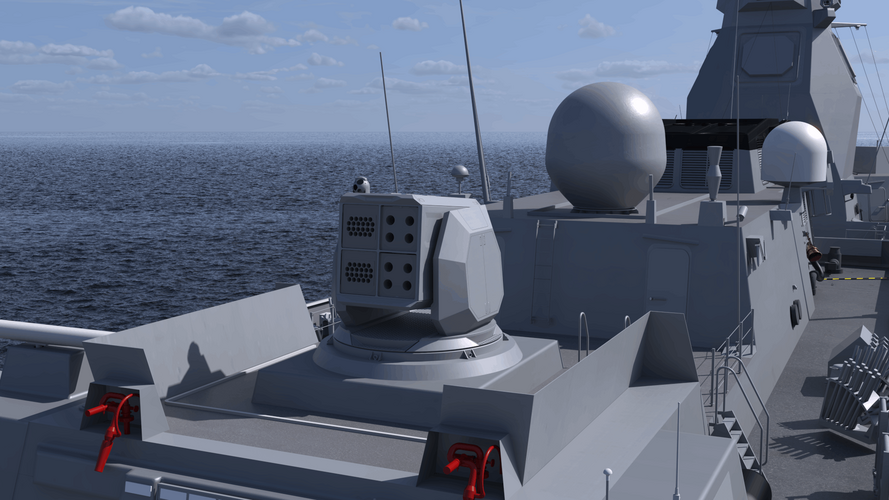
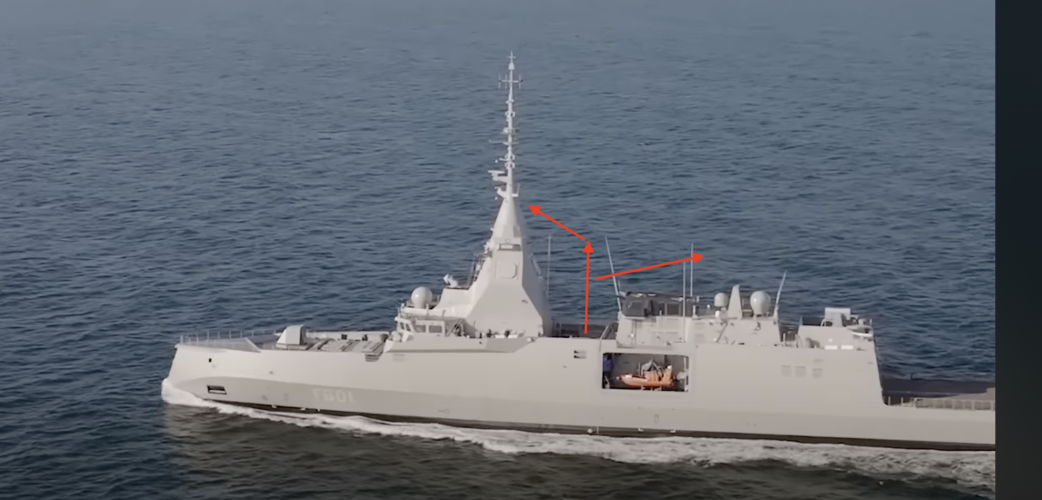
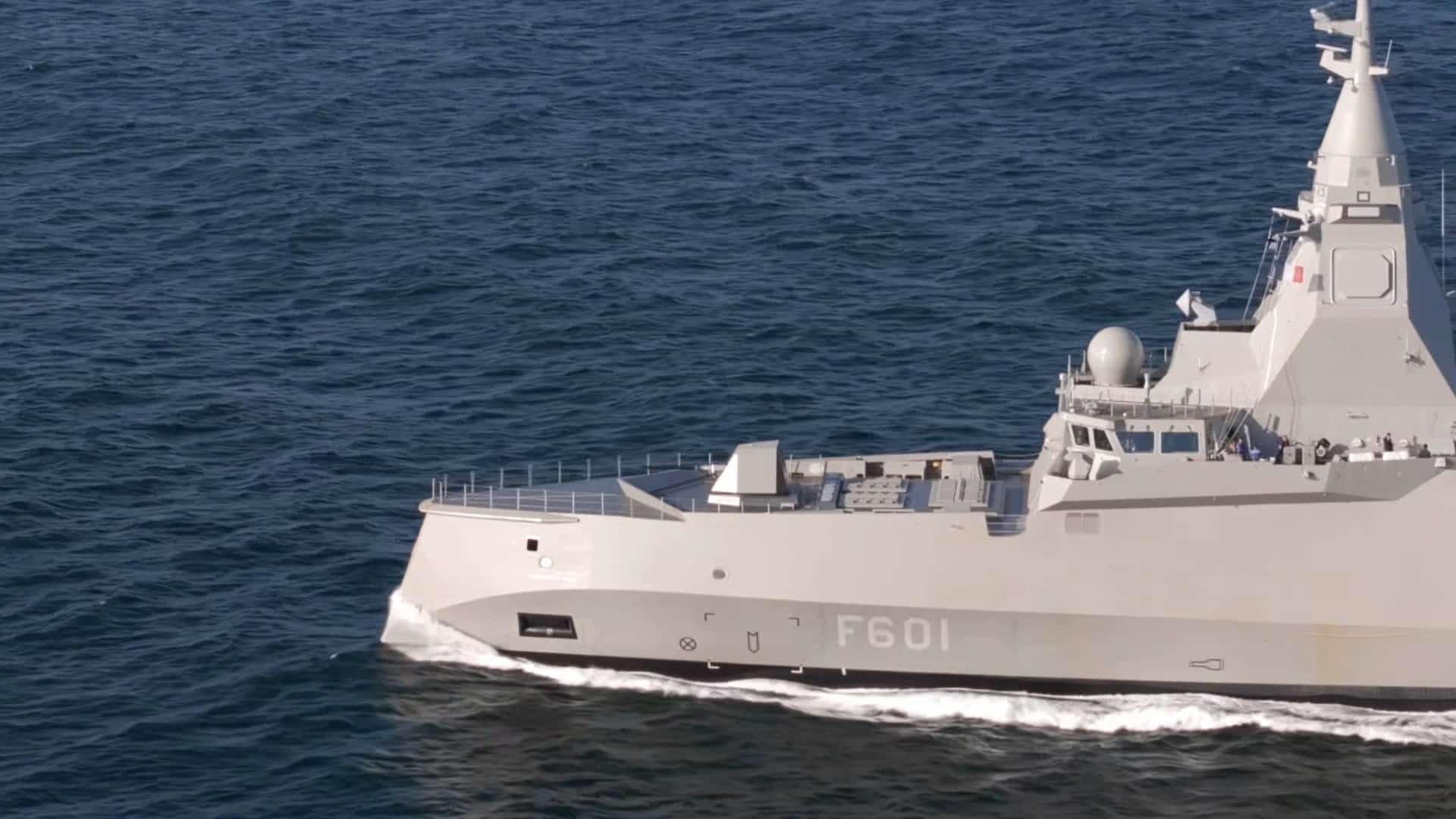
Will be interesting to see how this bow shape plays out in real life... looking a little wet based on the first video published.
View: https://www.youtube.com/watch?v=gSefKMpxtqk&t=24s

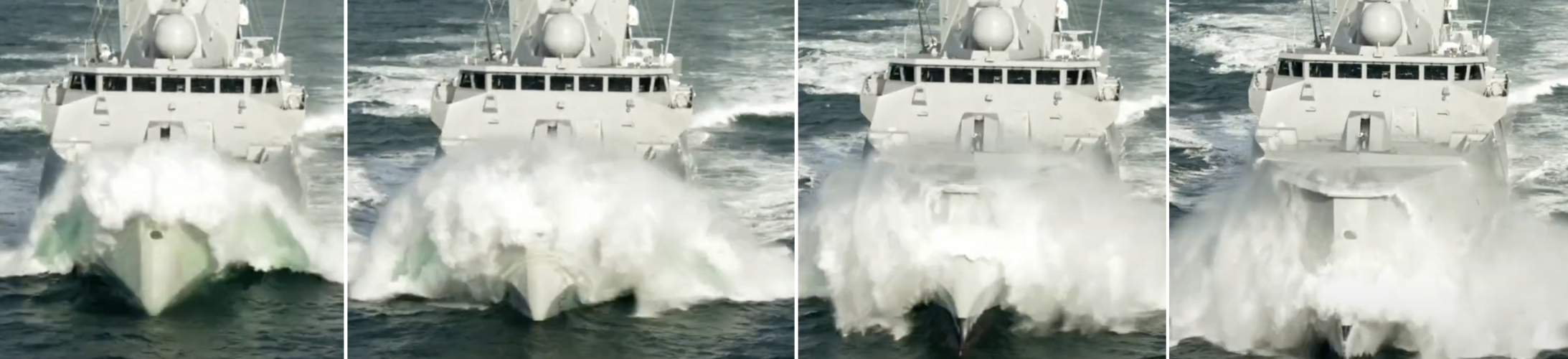


Will be interesting to see how this bow shape plays out in real life... looking a little wet based on the first video published.
View: https://www.youtube.com/watch?v=gSefKMpxtqk&t=24s
View attachment 744447
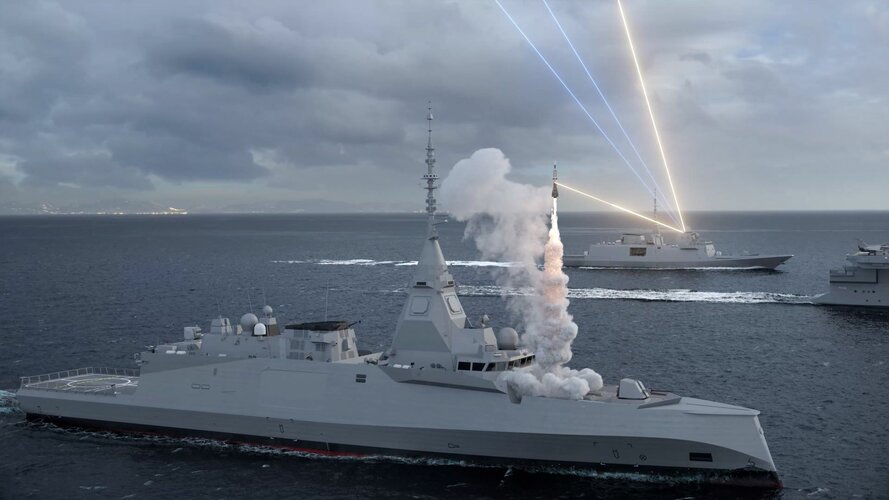
Hrm... That MLPS is a good idea. I suspect that the typical load is going to be some 8x Mistral SAMs, 22x laser guided rockets, plus decoy rockets.From Euronaval 2024, an FDI frigate with "full options":
- 32x Sylver VLS
- New MLPS multipurpose launcher on the hangar roof (for up to 16x Mistral SAMs or 88x laser guided rockets or a mix of weapons including decoy rockets)
- RapidFire 40mm CIWS (also on hangar)
- Other self-protection including: Jammers (Thales?), 2x CMLS torpedo decoy launchers (Naval Group) and 4x Sylena decoy mortars
The only option missing apparently is Strales guided 76mm rounds for the main gun (Leonardo), but that might be overkill!
https://www.naval-group.com/fr/euro...es-derniers-travaux-issus-de-lopen-innovation

If i remember it right wasn't it reported before that the greek FDI's still had an Option for another 16 cells? I need to look for it.From Euronaval 2024, an FDI frigate with "full options":
- 32x Sylver VLS
- New MLPS multipurpose launcher on the hangar roof (for up to 16x Mistral SAMs or 88x laser guided rockets or a mix of weapons including decoy rockets)
- RapidFire 40mm CIWS (also on hangar)
- Other self-protection including: Jammers (Thales?), 2x CMLS torpedo decoy launchers (Naval Group) and 4x Sylena decoy mortars
The only option missing apparently is Strales guided 76mm rounds for the main gun (Leonardo), but that might be overkill!
https://www.naval-group.com/fr/euro...es-derniers-travaux-issus-de-lopen-innovation
View attachment 746040
LMP launcher below:

With sea trials complete, the Admiral Ronarc'h begins a docking period in Lorient
The first of class of the new defense and intervention frigate (FDI) program, Admiral Ronarc'h, has successfully completed its fourth and final series of sea trials, to the great satisfaction of its builder, Naval Group, as well as the French Navy. The French Navy was able to appreciate the at times unprecedented capabilities of this new ship, which is scheduled to arrive in Brest at the end of the summer. Until then, the vessel will undergo a lengthy docking period.
The Admiral Ronarc'h returned to Lorient on Friday, April 11, after completing the fourth and final phase of its sea trials, which began in October. The ship, which has already demonstrated exceptional capabilities in many areas, according to sailors and Naval Group employees interviewed on board by Mer et Marine, arrived at Dock 3 of Naval Group's Lorient shipyard on Tuesday, April 22. The new French frigate will remain there for an extended period of time, approximately 16 weeks, which will allow for corrective work to be carried out and the frigate to be prepared for delivery, which is scheduled for the second half of the year.
Following completion of the maintenance period, the Admiral Ronarc'h is due to arrive in Brest, where it will be based, in September. This will be followed by a military qualifications & training phase with a view to entering active service in 2026. The ship, which has already fired a practice torpedo, is also due to carry out its first Aster surface-to-air missile launch after delivery.
The inverted bow, a real success
After the four phases of sea trials, in different weather conditions, the nautical qualities of the new French frigate were also demonstrated. The fin stabilizers make it roll less than the FREMMs, and the inverted bow designed by Naval Group's architects is considered a resounding success. In heavy weather, the ship does not slam into waves, it cuts through them and diverts the wave energy to the sides, which limits pitching and ensures no green water reaches the foredeck. This results in better seakeeping and therefore increased comfort for the crew. But above all, a more stable platform improves the operation of its sensors and certain weapons (such as the cannon and vertical launchers), while the absence of nose diving into waves prevents possible damage to the foredeck. Finally, the fact that the bow does not slam into the waves reduces the stress on the structure and therefore hull fatigue. The only side effect, when the swell is quite strong, is that the metal "spray rail" which protrudes from the top of the bow generates sea spray. But the sailors clearly consider this to be only a slight inconvenience, which can be dealt with simply by turning on the wipers on the bridge windows, and which is very much offset by the advantages provided by the inverted bow.
Great news, I wonder how much the seakeeping qualities of the FDI would be improved by the 10m plug they announced as an option some years ago ...Update on sea trials and positive feedback on the inverted bow. The first Greek frigate is due to start sea trials shortly (in June).

FDI doesn't have a tumblehome hull, it's a relatively conventional flared hull, just with a an inverted bow with the benefits of added waterline length, additional useful volume forward and greater freeboard to reduce spray.So the tumblehome has returned to the French Navy - not seen since pre-dreads 120 years ago. Mercifully the related Jeune Ecole has not returned, let it buried at the bottom of the Mariana trench. Also the FDI are top of the list ships, not floating horrors.
The first Greek frigate is due to start sea trials shortly (in June).



This is liable to put the cat among the pigeons:
https://tboverse.com/viewtopic.php?t=3504
I could have sworn that I had posted a bit on the planned Luleå-class somewhere in the forum before (including a proposal that would have basically turned the design into a Type 31 variant), but can't find said posts at the moment.
EU level politics may be playing a role here. Personally, I think the original Visby derived design was the right approach for a design that the Royal Swedish Navy needs yesterday.What exactly would Sweden hope for by procuring this oversized Corvette rather than following through with the Type 31 based design?
Now give it some CAMM, RBS-15, SLWT, 57mm and its good to go
Now give it some CAMM, RBS-15, SLWT, 57mm and its good to go

Looks like a configuration for sweden's Lulea class tender ... you could also add a bofors 40 on the hangar (the 40CTA Rapidfire fits there)For whom? The Greeks already have ASTER, RAM, Exocet, and a 76mm gun.
Looks like a configuration for sweden's Lulea class tender ... you could also add a bofors 40 on the hangar (the 40CTA Rapidfire fits there)
It seems feasible but you would have to replace some Sylver launchers by ExLS to be able to use the CAMM missiles
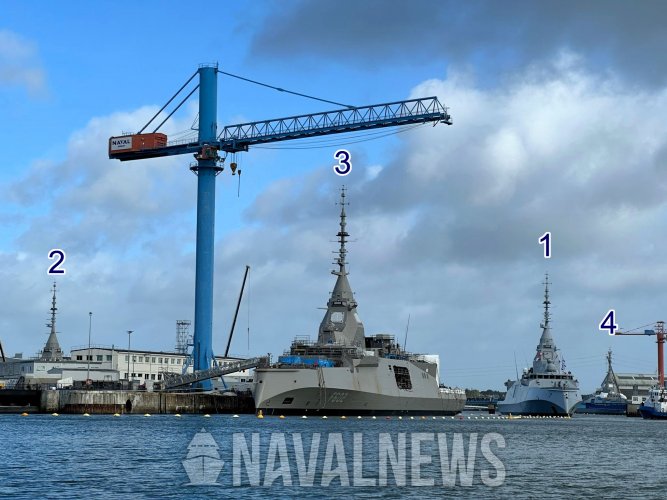
Nice picture of a busy shipyard
View attachment 784939
Yes, I meant CAMM for the sake of commonality with the Visbys, and as a replacement (upgrade) for the Aster 15.Ah, yep. Sweden is lined up for ExLS/CAMM on the Visbys. With CAMM already in the pipeline, I'd think Sweden would prefer CAMM MR over ASTER, which would probably mean Mk 41 (as in the Polish Arrowheads). Not sure if Naval Group has ever offered an LM VLS though.
Yes, I meant CAMM for the sake of commonality with the Visbys, and as a replacement (upgrade) for the Aster 15.
As for replacing Aster 30s with CAMM-MR, I think that’s a pretty misguided idea, to be honest.
CAMM-MR doesn’t really exist yet—there’s very little information available, and development only started two years ago. It’s still years away from being operational.
Even then, CAMM-MR will likely be significantly less capable than the Aster 30 B1NT:
I also doubt there will be much in common between CAMM and CAMM-MR, so I don’t really see why Sweden would feel tied to the whole CAMM family just because of the Visbys.
- Aster 30 B1NT: <150 km range, up to 25 km altitude, Mach 4.5, 450 kg
- CAMM-MR: claimed <100 km range ... with unknown altitude, speed, and weight (but double-packing in Mk41 kinda tells the story already)
Naval Group previously sold ESSM on its Gowind corvettes to the UAE, which would have been fitted with 16x Mk56 VLS, so there's some precedent.The industrial issues of getting LM launchers into a French-built ship might be a significant hurdle, though. Seriously, I'm blanking on any examples of Mk 41 (or ExLS) in a French design.
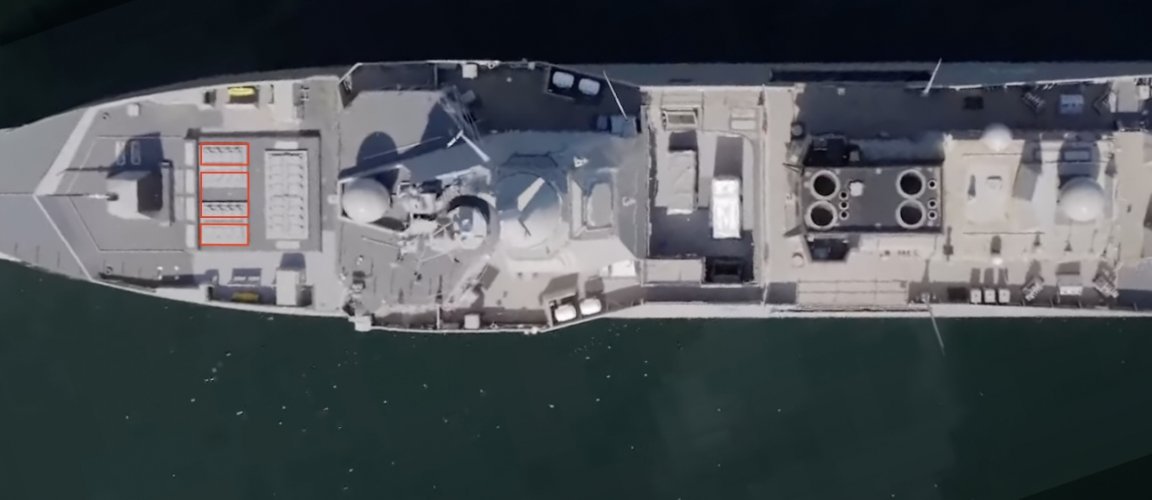
Why not, but is there actually enough free space beneath those ramp launchers ?That’s probably the best place for EXLS launchers. You could fit 4x 3-cell EXLS for 48 CAAM. And still have 32x Sylver forward.
Good points but I think there should be less redesign needed for VLS amidships, as moving VLS locations forward will require structural changes on at least 2 decks inside the hull, plus rerouting maintenance pathways.With the forward position, you avoids a full redesign of the ship’s layout, since that space already accommodates the two A50 launchers.
Another reason I was leaning toward placing the ExLS as far forward and to the sides as possible is safety, in case of a CAMM misfire from the soft launcher.
The forward position also provides the widest possible launch arcs... inversely, wouldn't installing the CAMMs amidships introduce limitations when firing forward or aft ?
Maybe? Depends on how high the missiles pop up before tipping over.inversely, wouldn't installing the CAMMs amidships introduce limitations when firing forward or aft ?