Very interesting!

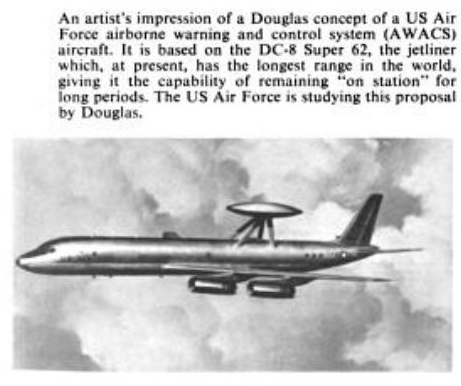
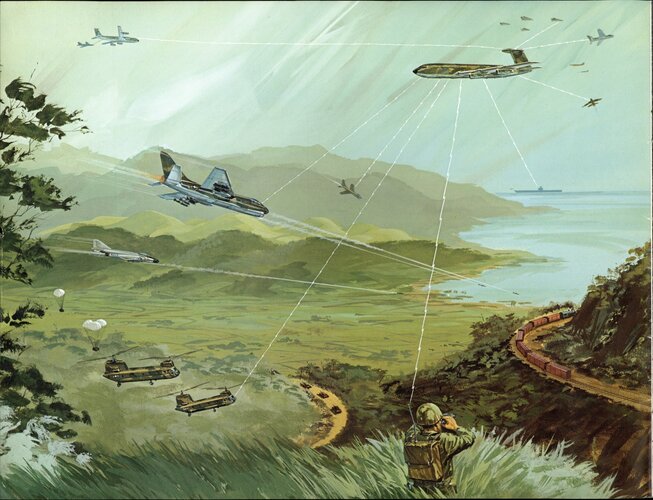
I wonder why nobody thought of placing a radar antenna on a B-52 to create a 8,800 mile radius AWACS
The Soviet Tu-126 was based on the civilian version of the Tu-95, so that's roughly comparable, but it was far from an AWACS in capability. I'm not sure there's enough room inside a B-52 for all the electronics, operators, stations etc of a full AWACS, at least with 1970s era electronics.

The Tu-126 had the fuselage of the Tu-114, which has a similar fuselage diameter as the B707, and it's longer.

Yep, the civilian version of the Tu-95, with a larger diameter fuselage.
 
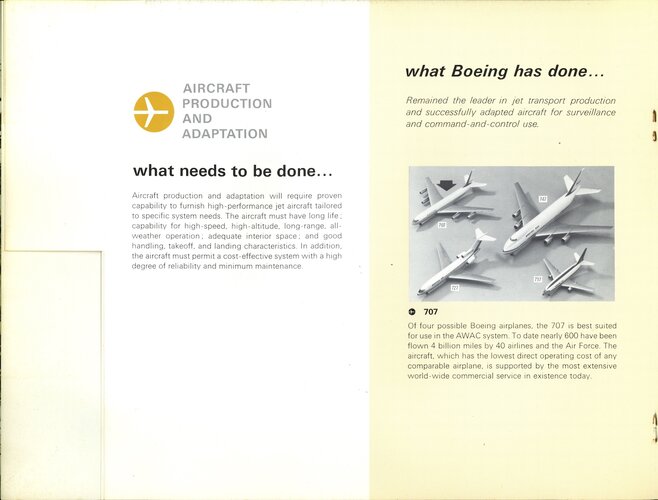
So, if the DC-8 has better range etc, why go for the B 707? I could easily guess at cost but I'd rather have the truth. Thanks.
 
So, if the DC-8 has better range etc, why go for the B 707? I could easily guess at cost but I'd rather have the truth. Thanks.
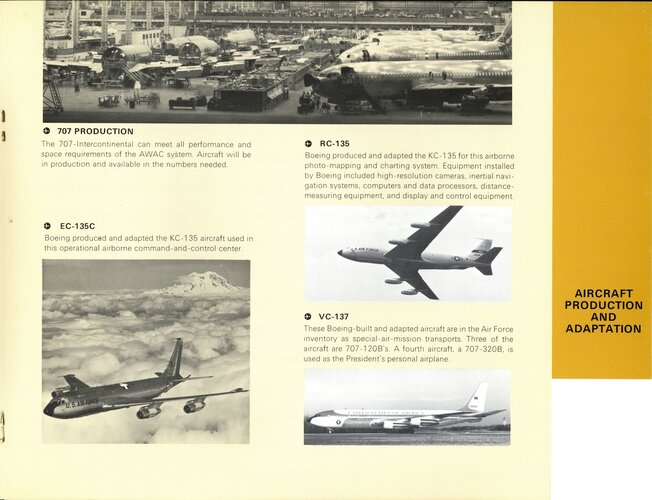
I can't give you the truth, but I can give a good surmise: 707s were in USAF service, and DC-8s weren't
 
Thanks mate, being in current service would have made them cheaper to run at least.
 

Attachments

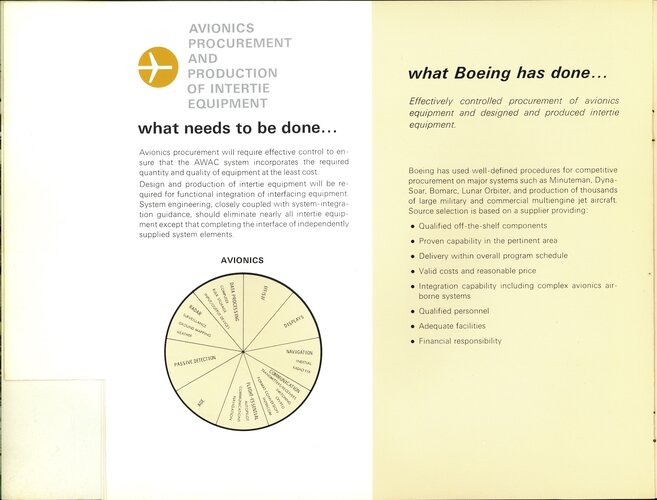
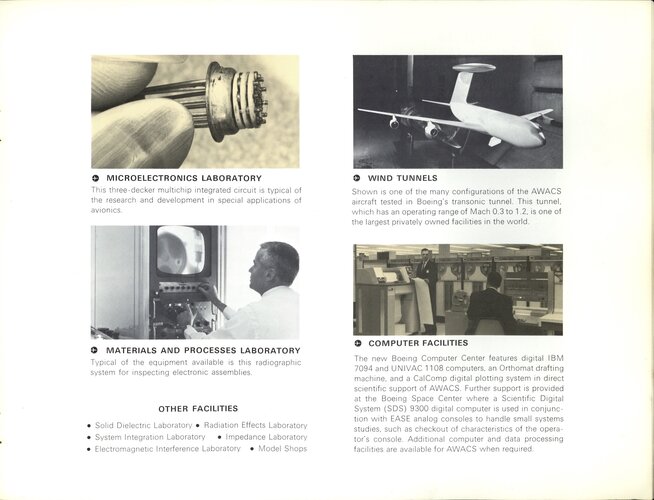
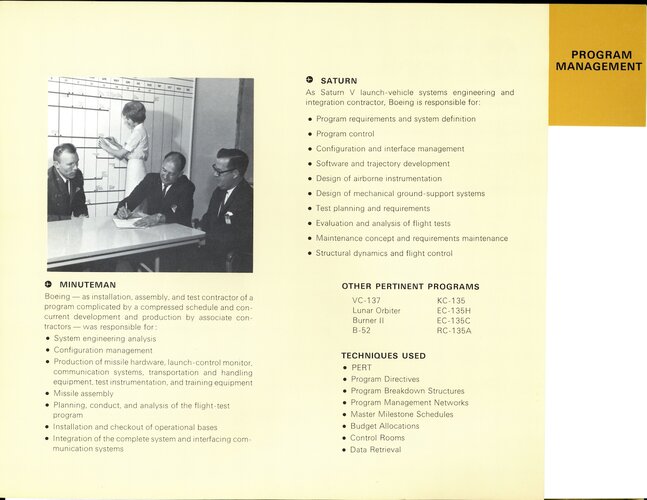
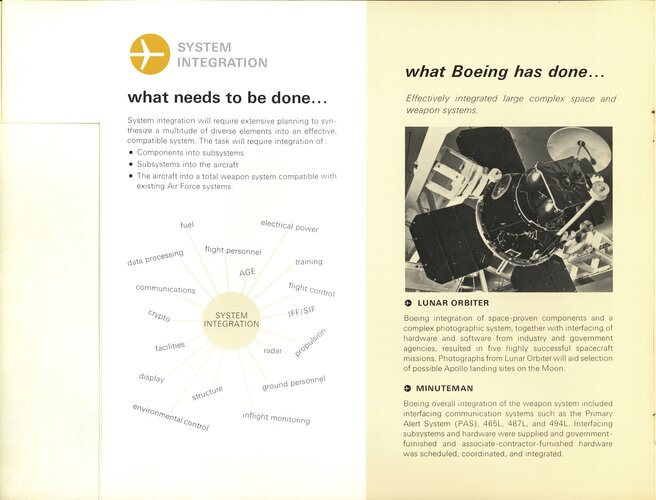
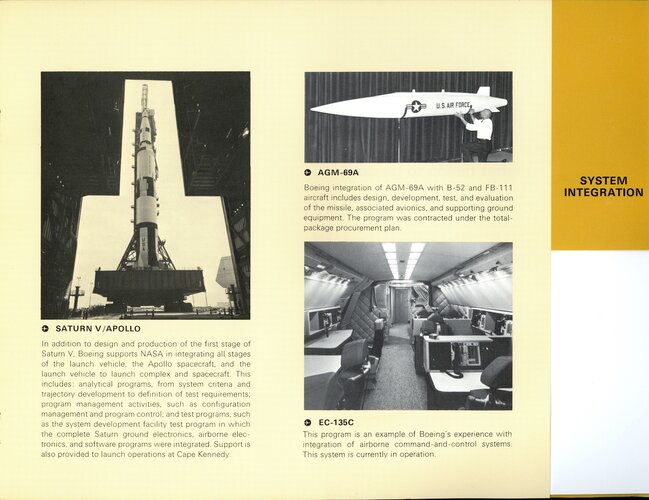
  • Boeing-Airborne-Warning-and-Control-System-Brochure-Dec-1967_-P11.jpeg
    Boeing-Airborne-Warning-and-Control-System-Brochure-Dec-1967_-P11.jpeg
    459.3 KB · Views: 130
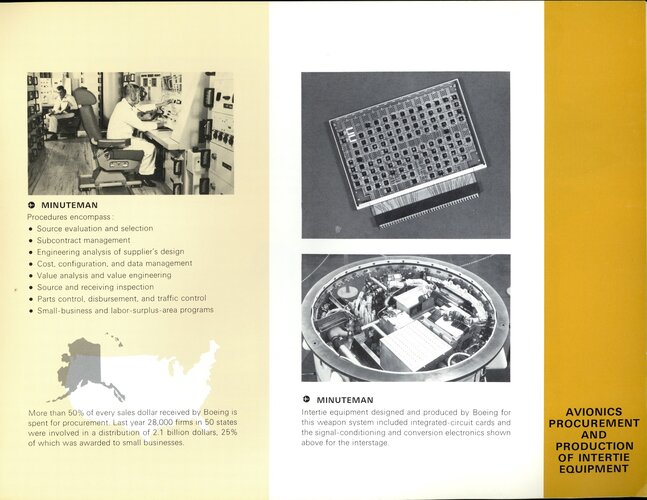
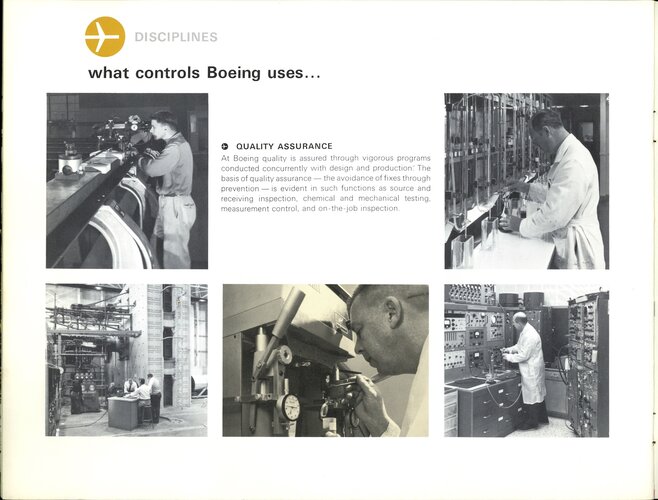
  • Boeing-Airborne-Warning-and-Control-System-Brochure-Dec-1967_-P12.jpeg
    Boeing-Airborne-Warning-and-Control-System-Brochure-Dec-1967_-P12.jpeg
    630.5 KB · Views: 107
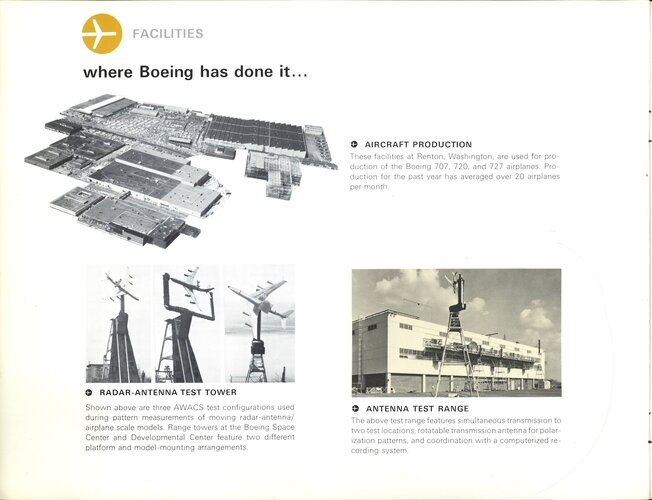
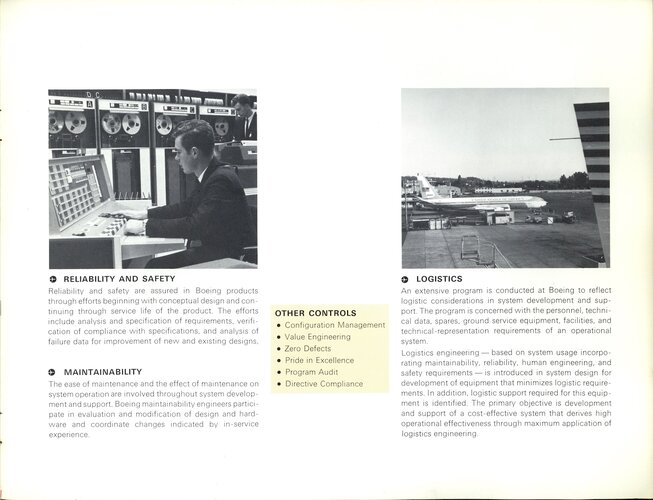
  • Boeing-Airborne-Warning-and-Control-System-Brochure-Dec-1967_-P13.jpeg
    Boeing-Airborne-Warning-and-Control-System-Brochure-Dec-1967_-P13.jpeg
    424.2 KB · Views: 105
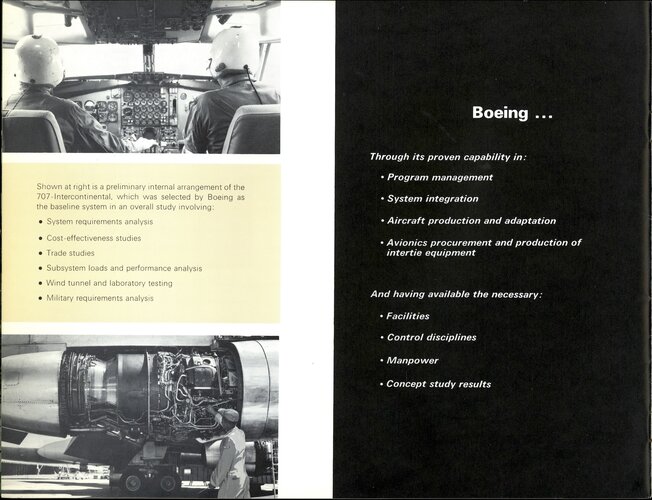
  • Boeing-Airborne-Warning-and-Control-System-Brochure-Dec-1967_-P14.jpeg
    Boeing-Airborne-Warning-and-Control-System-Brochure-Dec-1967_-P14.jpeg
    480 KB · Views: 105
  • Boeing-Airborne-Warning-and-Control-System-Brochure-Dec-1967_-P15.jpeg
    Boeing-Airborne-Warning-and-Control-System-Brochure-Dec-1967_-P15.jpeg
    541.7 KB · Views: 100
  • Boeing-Airborne-Warning-and-Control-System-Brochure-Dec-1967_-P16.jpeg
    Boeing-Airborne-Warning-and-Control-System-Brochure-Dec-1967_-P16.jpeg
    498.6 KB · Views: 102
  • Boeing-Airborne-Warning-and-Control-System-Brochure-Dec-1967_-P17.jpeg
    Boeing-Airborne-Warning-and-Control-System-Brochure-Dec-1967_-P17.jpeg
    814.1 KB · Views: 111
  • Boeing-Airborne-Warning-and-Control-System-Brochure-Dec-1967_-P18.jpeg
    Boeing-Airborne-Warning-and-Control-System-Brochure-Dec-1967_-P18.jpeg
    324.3 KB · Views: 169
  • Boeing-Airborne-Warning-and-Control-System-Brochure-Dec-1967_-P10.jpeg
    Boeing-Airborne-Warning-and-Control-System-Brochure-Dec-1967_-P10.jpeg
    655.7 KB · Views: 119
  • Boeing-Airborne-Warning-and-Control-System-Brochure-Dec-1967_-P9.jpeg
    Boeing-Airborne-Warning-and-Control-System-Brochure-Dec-1967_-P9.jpeg
    390.9 KB · Views: 118
  • Boeing-Airborne-Warning-and-Control-System-Brochure-Dec-1967_-P1.jpeg
    Boeing-Airborne-Warning-and-Control-System-Brochure-Dec-1967_-P1.jpeg
    648 KB · Views: 240
  • Boeing-Airborne-Warning-and-Control-System-Brochure-Dec-1967_-P2.jpeg
    Boeing-Airborne-Warning-and-Control-System-Brochure-Dec-1967_-P2.jpeg
    935.9 KB · Views: 146
  • Boeing-Airborne-Warning-and-Control-System-Brochure-Dec-1967_-P3.jpeg
    Boeing-Airborne-Warning-and-Control-System-Brochure-Dec-1967_-P3.jpeg
    703.8 KB · Views: 133
  • Boeing-Airborne-Warning-and-Control-System-Brochure-Dec-1967_-P4.jpeg
    Boeing-Airborne-Warning-and-Control-System-Brochure-Dec-1967_-P4.jpeg
    360.3 KB · Views: 104
  • Boeing-Airborne-Warning-and-Control-System-Brochure-Dec-1967_-P5.jpeg
    Boeing-Airborne-Warning-and-Control-System-Brochure-Dec-1967_-P5.jpeg
    408.4 KB · Views: 97
  • Boeing-Airborne-Warning-and-Control-System-Brochure-Dec-1967_-P6.jpeg
    Boeing-Airborne-Warning-and-Control-System-Brochure-Dec-1967_-P6.jpeg
    499.8 KB · Views: 99
  • Boeing-Airborne-Warning-and-Control-System-Brochure-Dec-1967_-P7.jpeg
    Boeing-Airborne-Warning-and-Control-System-Brochure-Dec-1967_-P7.jpeg
    486.7 KB · Views: 99
  • Boeing-Airborne-Warning-and-Control-System-Brochure-Dec-1967_-P8.jpeg
    Boeing-Airborne-Warning-and-Control-System-Brochure-Dec-1967_-P8.jpeg
    668.1 KB · Views: 118
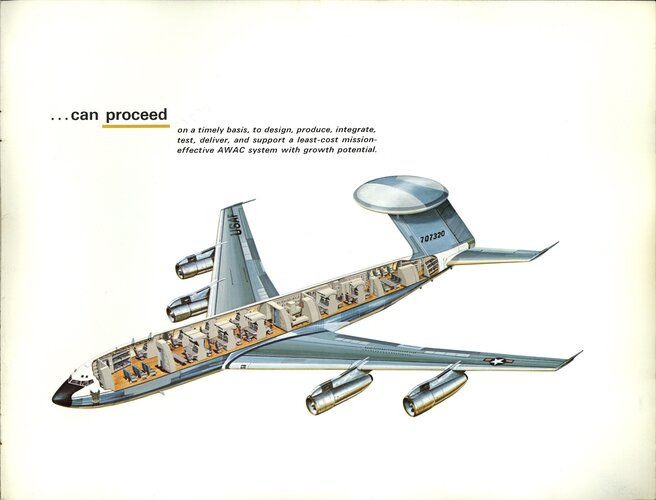
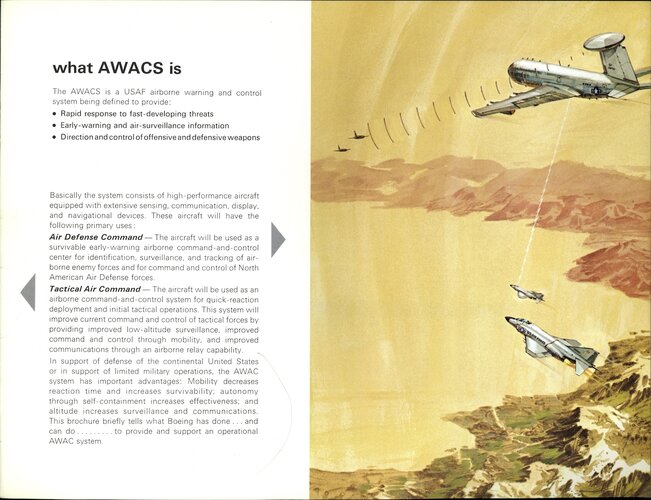
Why did they dropped the "radome on inverted tail" ? Just being curious. Doesn't seem to have bothered the Soviets and their An-74 madcap (geez, what a codename !)
 
I did see that. was wondering if you had an original 1967 brochure
 
Last edited by a moderator:
1969
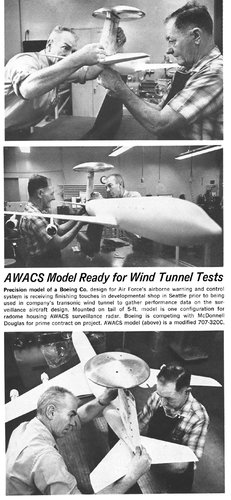
Boeing proposal is identical to E-3 but it was powered by 8 engines instead of 4.
Engine selected was GE TF-34-GE-2 (40 kN) turbofans in order to match the required unrefuelled endurance specification.
rockwell-slim-png.776624

In this SLIM artwork from 1972 (h/t overscan), it is difficult to make out, but I think that is the eight engined version in the background.
 
From the aforementioned presentation:
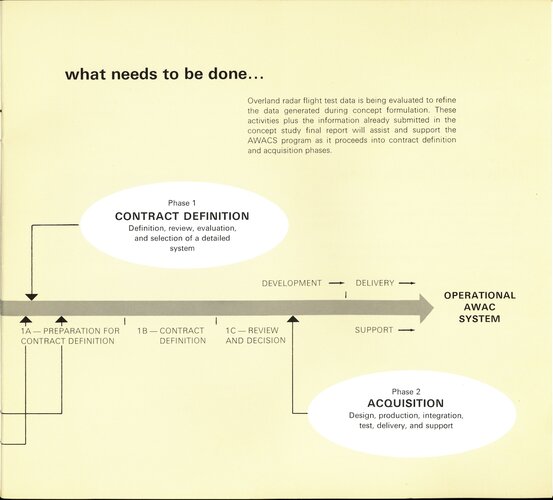
Response to SOR 206

AIRFRAME Proposals: Boeing, Douglas, Lockheed (later dropped)

RADAR Proposals: Westinghouse, Hughes, Raytheon, GE, 3 others

AIR FORCE: SAB determined proof of concept needed,
ASD formulated Overland Technology Program(ORT)
DOD funded ORT program – 1964


SAB=Air Force Scientific Advisory Board

ASD=AF Aeronautical Systems Division (Wright-Pat)

DOD=Department of Defense
 
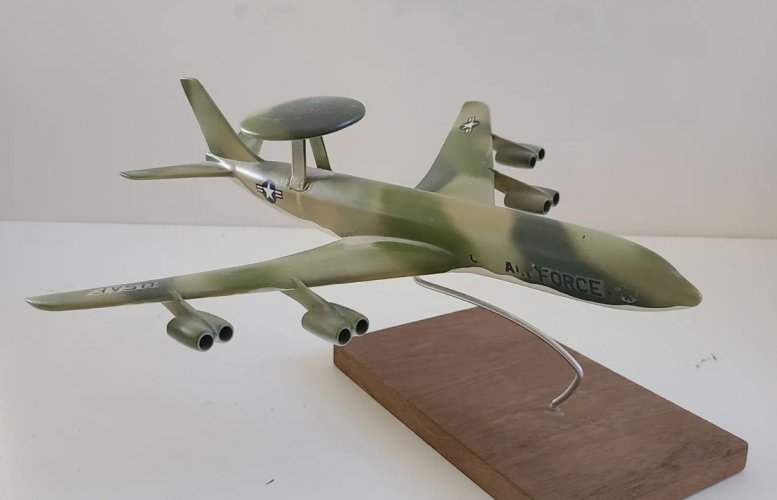
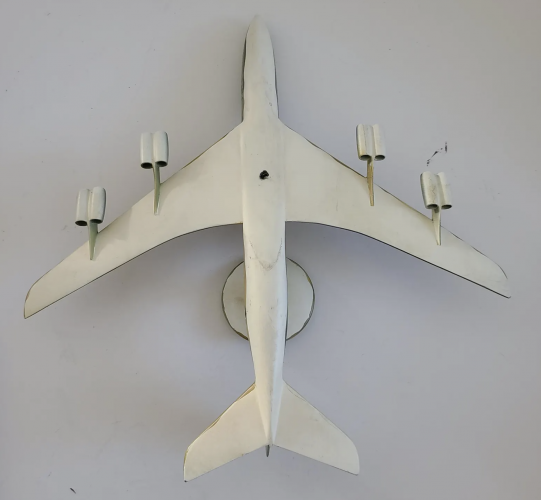
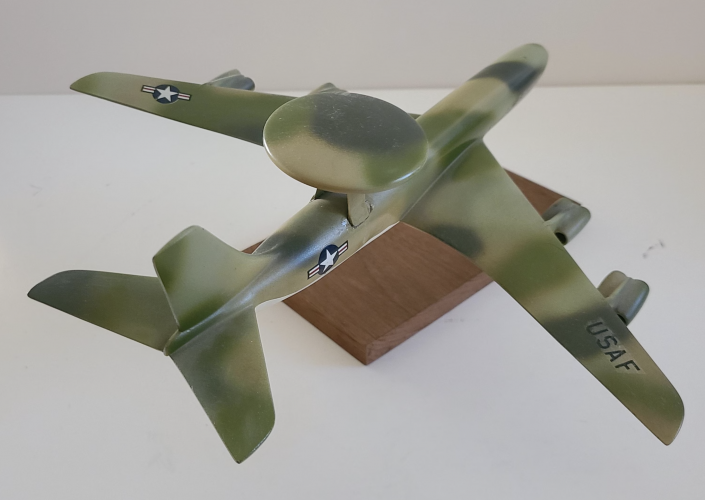
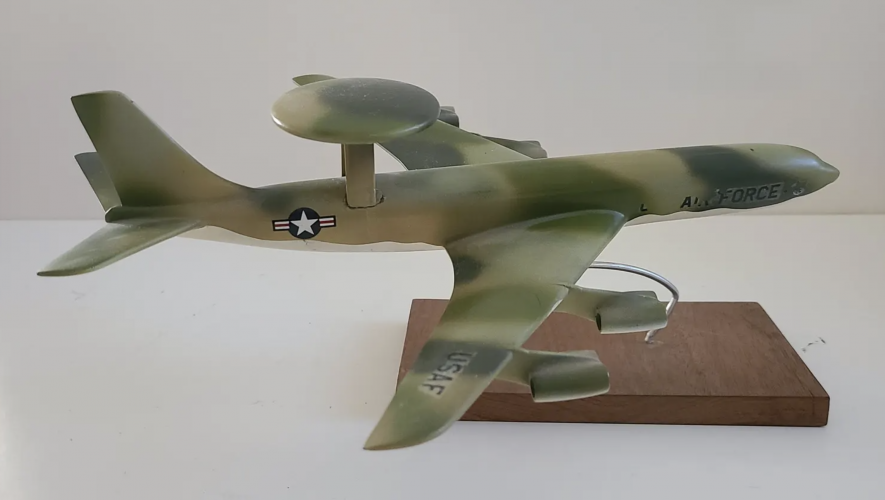
VERY rare prototype AWACS 707 model in Camo. Original stand was missing. Looking for one.

D784B723-63A3-4A3A-B57B-CEA25953D442_1_105_c.jpeg
 

Attachments

  • Screenshot 2024-11-30 at 8.43.11 PM.png
    Screenshot 2024-11-30 at 8.43.11 PM.png
    1.4 MB · Views: 50
  • Screenshot 2024-11-30 at 8.43.45 PM.png
    Screenshot 2024-11-30 at 8.43.45 PM.png
    3.1 MB · Views: 47
  • Screenshot 2024-11-30 at 8.43.28 PM.png
    Screenshot 2024-11-30 at 8.43.28 PM.png
    1.8 MB · Views: 54
Not sure if this has been asked before but was the B-52 engine version for fleet commonality or just for survivability or both
 
Not sure if this has been asked before but was the B-52 engine version for fleet commonality or just for survivability or both
I do not know. I do not think they ever actually built one, just drawings I believe.
 
Not sure if this has been asked before but was the B-52 engine version for fleet commonality or just for survivability or both
If I recall correctly, it was proposed primarily for higher performance, but was rejected because said performance was not obviously necessary and could not justify the additional cost.
 
If I recall correctly, it was proposed primarily for higher performance, but was rejected because said performance was not obviously necessary and could not justify the additional cost.
Makes sense, they just used turbofans from the Boeing 707's.
 
Not sure if this has been asked before but was the B-52 engine version for fleet commonality or just for survivability or both
The initial E-3s did use the same engine - the TF33 - as the B-52H. Four on the former, eight on the latter. The eight-engine version of the E-3 was to have used TF34s, the same engine as the S-3 and A-10, seemingly mostly for increased endurance. The later CFM56-engined versions got there without needing to double the number of engines.
 
The initial E-3s did use the same engine - the TF33 - as the B-52H. Four on the former, eight on the latter. The eight-engine version of the E-3 was to have used TF34s, the same engine as the S-3 and A-10, seemingly mostly for increased endurance. The later CFM56-engined versions got there without needing to double the number of engines.
Thanks I've known they were TF33 anyway but had no idea they for the eighth engine version were TF34's considering the KC-135 and IFR was still very new increased endurance before needing more fuel would be important
 
Why Boeing moved the radome from the tail.

AvWeek, 23 June 1969:

Boeing Co has changed its radar antenna location from the tail to atop the fuselage on its ... AWACS design as an answer to engine-out stability problems on take-off.

Going back a bit:

AvWeek, 19 May 1969:

One of the two airframe competitors ... recently discovered that the giant search radar can cause serious aircraft instabilities during take-off in event of engine failure. The company has not yet officially advised the Pentagon. One possible fix would be to use eight engines instead of four.
 

Similar threads

Back
Top Bottom