shin_getter

ACCESS: Top Secret
Joined
1 June 2019
Messages
1,325
Reaction score
1,974
As we know, drone air combat is currently being developed at a rapid rate, and it is a good time to speculate and form designs for drone air superiority aircraft.

The main lesson from drone air combat is that air combat works with different tiers and there is no universal air superiority aircraft that can cover everything that flies. As such, the first task is to break down coverage into different aircraft types:

Personally, I see the following categories in a air superiority role:
1. Tail sitter EVTOL with gun. (manpack-able) Leveraging electric aircraft's extremely low operating and production costs, VTOL capability and agility while maximizing speed and efficiency. It is hard to imagine another long range projectile or vehicle having significantly lower costs that can defeat such a vehicle.

2. Microturbojet RATO with gun. (launched from large pickup bed to 10ton truck) Electric aircraft is limited in stored energy, flying above its envelope is a logical way to bypass defense based on it. With very cheap medium and high attitude aircraft (perhaps air launched to cut engine and fuel requirements) it can be close to or cheaper than traditional rocket powered medium and high attitude missiles, and as such a reusable solution would be needed.

3. Low Observable Small Turbojet with high subsonic speed with 1 BVRAAM in payload bay. Previous class of drones generally do not threaten high performance targets, however this category can. In a lot of cases would operate with micromissiles to target smaller drones.

4. Traditionally scaled fighter aircraft, which may or may not be manned

Other, vehicles I'd expect in this air warfare environment:
1. Low cost attritable cost penetrating medium/high attitude recon/strike (see #2)
2. High-payload-Fast specialized "glide range booster" Cutting on board sensors/compute/agility/defensive systems for payload throughput.
3. VLO passive sensor craft operating on standoff supporting command and control of air war
4. Radar Emitter aircraft (separated out in its own role due to being more threatened: either attritable or packed with defenses)
5. DEW specialized aircraft (unique requirements and high cost of DEW means it probably need an airframe built around it)

So what do you think are the air platforms needed for air superiority in the drone age?
 
Last edited:
So what do you think are the air platforms needed for air superiority in the drone age?
In general, I think we're going to see EVTOL fighter drones as a thing. Probably ~10lbs payload, just big enough to carry a pair of MP7s or P90s; and their sensor is a wide FOV EO eyeball, maybe even comparable to the F35 DAS. Their targets are FPVs and ATGM-sized loitering munitions. Probably have 1-3 of these per squad of infantry. The wide FOV EO also helps with infantry scouting and situational awareness, but these are intended to be working Air Superiority. The grunts would have smaller drones for recon.

I'm doubting the microjet size would happen at all. I think it would be cheaper to build more of the Minijet (call it Q-58 sized) and arm with several packs of APKWS for the "flying over EVTOL altitudes" missions, or a pair of AAMs for larger targets. If we're trying to get this right with the first iteration, I'd make it have space for 1-2 BVRAAM and a pair of 7-shot APKWS pods (or built-in APKWS tubes in the bay doors). This is mostly because any drone big enough to get above EVTOL heights is likely going to take a lot of rifle-caliber shooting to knock down, but a single APKWS will do the job.

Traditional fighter-sized drones are assumed to happen, my guess on desired CCA end-state is for one manned plane to be able to control an entire fighter sweep or strike package. Probably starting at one manned plane with 3x CCA wingmen, so a single squadron is functionally closer to a wing in capability, USAF side. USN/USMC side they have maybe half the pilots in a typical Carrier Air Wing of today.

===========================
Low cost attritable recon/strike? So, Predator/Reaper? Probably. Need people whose attitude on hearing about one getting shot down is the Jeremy Clarkson "Oh no. So, anyways..." They'd need basic LO shaping and internal weapons, or else you have Houthis blowing them out of the sky.

Not exactly sure about a "bomber" drone. I mean, yes, the Army CAS will have such "flying spear carriers" to pack all the Hellfires etc. The USAF has not been talking about a bomber CCA.

I'm not sure about a VLO sensorcraft for air superiority, but I am absolutely expecting them for ground attack. It'd be a BSAX/TACIT BLUE type providing data to the Army's artillery and Air support. Possibly built on an AGM-158 airframe for stealth, and either catapult or RATO launched from the ground. I'm assuming Army controlled, with Army kicking USAF out of the Close Air Support business entirely. USAF keeps the Battlefield Air Interdiction role.

I think the AEW/radar emitter is going to be packed with defenses, because the radar proper is too expensive to be attritable.

We might eventually see DEW-armed aircraft, but I think it's going to take a while. We need another generational leap in laser/HPMW power density. Also, a DEW-armed aircraft would still need to get relatively close to the target to get enough energy on target. It'd just not need to get into a dogfight. I expect that you'd have the DEW set up to roll the airframe out of the way while it's shooting.
 
This is slightly off-topic, but it's still "where I see drones/CCAs developing"

Army side:
Individual squads, maybe even individual fireteams, have their own fighter drone, plus tiny recon drones.
Platoons and Companies have loitering munitions and recon drones.
Battalion has recon drones like Gray Eagles.
Brigade owns the CAS and Attack Helos (which may be merged, or may be two separate battalions).

Army CAS has a drone quarterback in whatever replaces the Apache (probably a skinny-fuselage V280). The quarterback has a gun for those times troops are within danger close. There is a VLO recon drone or two orbiting overhead, in the BSAX/TACIT BLUE role, providing radar targeting data for artillery and the CAS drones. The CAS drones may be as big as an Apache/replacement, packing ~8x ATGMs or ALEs, ~38x APKWS, and a pair of small fast ARMs like Sidearms. I'm expecting the quarterback and CAS drones to be tiltrotors, not helicopters, but UCAR might make a return.

Air Force tactical CCAs, as I mentioned in my previous post, are built around the idea of a single manned fighter quarterbacking the entire strike package, on the level of a full squadron or more of CCAs per quarterback. Quarterback and a trio of fighter CCAs for air cover, at least 4x strike CCAs for the mission, a couple of VLO recon birds for pre/post strike, plus a stand-in EW CCA or two with ARMs. I expect the fighter CCAs to have about the same radar return as the quarterback, even if they're physically smaller aircraft. Strike CCA and stand-in EW CCA could share the same airframe, they both need to carry 2-4x weapons the size of AARGM-ERs.

I think that the USArmy and USAF VLO recon bird will not be the same design, because the Army doesn't need the same range as the USAF. The Army recon bird could be as simple as a modified AGM-158 airframe, with a radar installed in place of the warhead and a recovery system added, and I'd expect it to look a lot like the AGM158 or TACIT BLUE anyways. I'd expect the USAF bird to be a flying wing.

Air Force strategic CCAs are likely to be two options. One is a subsonic VLO extreme altitude recon bird like a U2, but intended for penetrating into defended airspace to find the road-mobile ICBMs. The other is a supersonic (V)LO extreme altitude recon like the SR-71, but probably only M2.5ish cruise to reduce themal signature. So that when it launches at the same time as the B-21s, it can get ahead of them. The supersonic bird may not be VLO, but I'm sure the USAF would prefer it to be. Tankers may end up as drones as well.

US Navy CCAs. The Navy can't go as deep into CCAs as the USAF because the Navy has limited space on the flight deck. So I'm leaning towards a flip of the USAF tactical package: Quarterback with the strike CCAs, flights of fighter CCAs without a manned plane, stand-in EW CCA with some ARMs, VLO recon for BDA, unmanned tankers.

I expect pretty much all militaries to organize about like the Army and Air force writeups. I'm not sure how the PLANAF carrier wings will end up, they're writing their own doctrine.
 
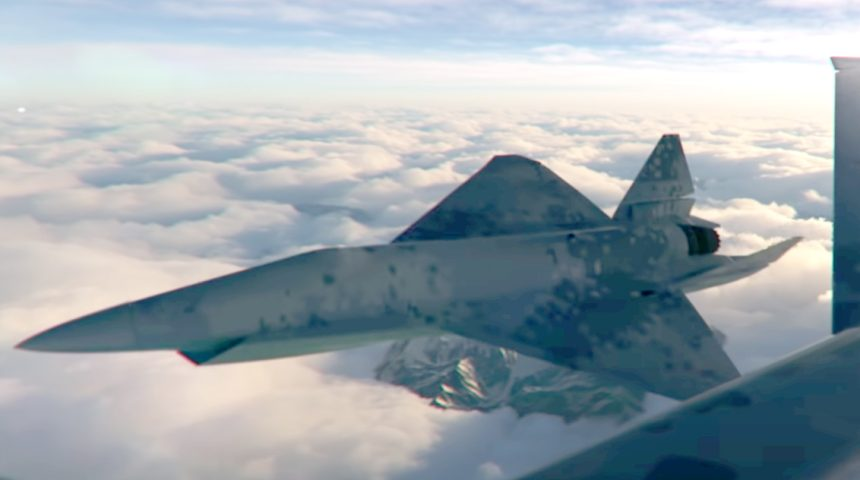
I think it would be the unmanned Su-75 for point number 4 or any country pursuing the same thing might find similar solutions the Russians might be implementing on their own large UAV project.
1744428254648.png
By default, an unmanned stealth aircraft will always have far superior stealth than a manned stealth aircraft in air superiority because of the absence of a cockpit and cockpits offer a lot of surface area. Also, stealth UAVs would get more aircraft fuel storage that could be used for further flights since the replacement of no cockpits. Maneuverability is still important to position your aircrafts at a better stealth angle in comparison to the adversary aircraft so with the absence of a pilot and depending how good the body of the aircraft is, it can perform maneuvers with G-loads a human can't handle regardless of special suits used.
However, with the recent crash of the Su-70, a lot of difficulty for a supersonic stealth aircraft to function properly before hitting the production stage will push dates far back but exactly how far back can we estimate the time frame.

Electronic systems the Russians are developing and need in order to achieve a functional supersonic stealth UAV for set production.

1. https://tass.ru/armiya-i-opk/11935661 https://vz-nn.ru/news/promyshlennost/60404/?ysclid=m9dqo0835d622890999
Currently the S-111 is stated to use 1,500 km communication range in HF-VHF frequency but data rate bit exchange is unknown. The same company Polet that made the S-111 made a breakthrough last year that makes communication possible at a 6,000 km range to be handled with better noise immunity and reliability. This would allow an airbase or another aircraft, drone to communicate with the Su-75 for mission planning on what actions to take.

2. https://tass.com/science/1932217 https://tass.com/science/1905195 https://russianelectronics.ru/2025-03-13-mfti/
Major satellite production is ensured to happen between this year to 2030 and funding is taking place to allow satellites to communicate with UAVs. The third article states electric propulsion engines for microsatellites and using AESA arrays for communication.

3. https://nauka.tass.ru/nauka/23616409?ysclid=m9abs197e5725330368 https://www.cnews.ru/news/top/2024-08-30_v_rossii_sozdali_analogovogo?ysclid=m9dsui34zl682254280
A photonic computer is to be created in 2027 and such computers allow processing speeds in finding solutions to problems 100-1000 times faster than traditional computers using GPU/CPUs. Can recognize and classify objects in a live video stream 100's of times faster than current computers. Based on the performance of the avionics used on aircrafts it can use such data to classify targets and its own decision making based on the data it received.

4.https://new.skoltech.ru/news/startap-skolteha-fisteh-vpervye-v-rossii-proizvyol-i-protestiroval-fotonnye-chipy?ysclid=m8z6mhs1rh621244314 https://russianelectronics.ru/programmiruemyj-fotonnyj-chip-na-osnove-niobata-litiya/
Russia and Hong Kong have proven that photonic radars operating at frequencies higher than X-band and using 6G network requirements work using photonic integrated chips, along with high protection from interference. Photonic radars can process radar data through graphic images than the traditional dot on screen and the processing of those graphical images through live feed data would allow the photonic computer to make a decision or communicate to make a decision on how it will handle a task.

I am looking at 2030-2040 for the testing and production phase for the unmanned Su-75s but no idea what progress other countries have made to ensure they would operate a supersonic stealth UAV or what measures they have taken to offer better control for their UAV projects/
 
I'm doubting the microjet size would happen at all. I think it would be cheaper to build more of the Minijet (call it Q-58 sized)
Microjet is sized to match around Iranian 358 missile which can be organic to ground formations. A Q-58 scaled asset is too big to hide in formations of tactical vehicles and also have ranges that makes it a theater asset that would logically be centrally controlled.

Large numbers of APKWS is also over kill against infiltration attempts by single aircraft. Larger number of aircraft can cover the front better. Larger assets with large ammo load would be held in reserve to counter swarm/mass attacks.

It would be there to counter the likes of orlan-10 (costs like $80k base)/scaneagle/V-bat/etc fitted with standoff sensors or speed/range upgrade to avoid "FPV" interceptors. Sure with long range sensors the field of view would be awful in return on a platform that cheap, but without low cost drones it would be difficult to stop as even SAMs are too expensive.

I'm not sure about a VLO sensorcraft for air superiority, but I am absolutely expecting them for ground attack.
Without Aerial sensors, cruise missiles as primitive as cessnas can do the job. AEW with active radar is a hard target to protect, as seen in Russio-Ukraine war even against a inferior opponent, while passive sensors should be fairly safe.

That VLO passive sensorcraft is also useful for ground attack is a bonus. I do expect a flying wing form factor for endurance though.
We might eventually see DEW-armed aircraft, but I think it's going to take a while. We need another generational leap in laser/HPMW power density. Also, a DEW-armed aircraft would still need to get relatively close to the target to get enough energy on target. It'd just not need to get into a dogfight. I expect that you'd have the DEW set up to roll the airframe out of the way while it's shooting.
DEW would mostly be either defensive covering force multipliers like AEW/tankers or in operations like "close air support."

People talk about close air support as ability to kill someone with a machinegun, but everything with a micro-PGM can do it and machineguns generally suppresses and doesn't actually kill that much. What is really needed in the modern is something to kill all the drones and missiles that opponents would throw at a land force to kill them.

Sure it might be throwing hundreds of millions at at opponents spending merely thousands, but I mean, the afghan war happened right.

Army CAS has a drone quarterback in whatever replaces the Apache (probably a skinny-fuselage V280). The quarterback has a gun for those times troops are within danger close.
There'd be swarms of air superiority drones with a gun for just about any op above the squad level and they can just strafe.

And why baddies would be within danger close when even drug gangs are adapting drone warfare. Or more correctly, attack heli autocannon can not stop a robot missile crashing into friendlies at 300kph+, maybe DEW can disable it fast enough.

The CAS drones may be as big as an Apache/replacement, packing ~8x ATGMs or ALEs, ~38x APKWS, and a pair of small fast ARMs like Sidearms.
It is unclear why one would want an aircraft with large warload instead of lots of cheap aircraft with small warload. With lighter aircraft, even light and compact launch and recovery gear enables a conventional (non-VTOL) configuration with good range and speed, and you can have swarms that each carry a single "ATGM", but no one really should care about anti-tank anymore, what is really needed is air defense suppression missile (including anti-EOIR/anti-weapon), after which air defense suppression is inflicted you can land copters on top of tanks to demand surrender.

Air Force tactical CCAs
Personally I think loyal wingmans currently shown is all quite conservative and would end up as bomb/missile trucks and pickets in a peer fight. They just don't have the speed/energy/sensors to do particularly much on their own.

In the spirit of this forum, I do wonder about a new generation of high, fast and superhumanly agile aircraft that kinematically challenges missiles. The existence of reusable rocketry suggests even more radical ideas....
 
Microjet is sized to match around Iranian 358 missile which can be organic to ground formations. A Q-58 scaled asset is too big to hide in formations of tactical vehicles and also have ranges that makes it a theater asset that would logically be centrally controlled.
Correct. A Q-58 is big enough to be a battalion or brigade asset, not a platoon/company asset. And Brigade is currently where all Army Aviation assets are organized, both attack helicopters and transports plus Gray Eagles.


Large numbers of APKWS is also over kill against infiltration attempts by single aircraft. Larger number of aircraft can cover the front better. Larger assets with large ammo load would be held in reserve to counter swarm/mass attacks.
I'm only expecting it to expend a single APKWS per drone intercept, the deep magazine is because I expect it to operate in a cab rank overhead.


It would be there to counter the likes of orlan-10 (costs like $80k base)/scaneagle/V-bat/etc fitted with standoff sensors or speed/range upgrade to avoid "FPV" interceptors. Sure with long range sensors the field of view would be awful in return on a platform that cheap, but without low cost drones it would be difficult to stop as even SAMs are too expensive.
If the EVTOLs armed with guns can't take those down, there's a problem.


Without Aerial sensors, cruise missiles as primitive as cessnas can do the job. AEW with active radar is a hard target to protect, as seen in Russio-Ukraine war even against a inferior opponent, while passive sensors should be fairly safe.
I'm not sure how effective passive RF sensors would be versus modern aircraft (5th and 6th generation stuff).

An LPI air-search radar would probably be better for that job.


That VLO passive sensorcraft is also useful for ground attack is a bonus. I do expect a flying wing form factor for endurance though.
The attempts to install both AWACS and JSTARS on the same airframe had significant issues with EM interference between the two antennas.

And yes, VLO+long range = flying wing in terms of Form Factor. The BSAX was only talking about a 600nmi range, though, so what amounts to a glorified JASSM airframe would do the job.


DEW would mostly be either defensive covering force multipliers like AEW/tankers or in operations like "close air support."
Still needs another order of magnitude better power density right now.


People talk about close air support as ability to kill someone with a machinegun, but everything with a micro-PGM can do it and machineguns generally suppresses and doesn't actually kill that much. What is really needed in the modern is something to kill all the drones and missiles that opponents would throw at a land force to kill them.

Sure it might be throwing hundreds of millions at at opponents spending merely thousands, but I mean, the afghan war happened right.
CAS is attacking via air when the enemy is within firefight range. 300m or less. You can't drop a 2000lb bomb on someone when they're that close. I'm not sure you should be dropping 250lb bombs that close.

Crud, even a 40mm grenade has a 150m danger close range to it.

20x102mm was chosen because it outranged every AA gun up to and including 23mm. I believe that 30x113 has a similar range (less shell velocity, bigger shell). 30x173mm has a 65m danger close range.


There'd be swarms of air superiority drones with a gun for just about any op above the squad level and they can just strafe.
Like I said, I'm expecting 1-3 air superiority drones per squad as is. Problem is, any drone strafing is one that needs to be reloaded and is one that is unavailable for air superiority.

The catch is that a modern machine gun is a heavy load to carry. ~8kg (or more, M240B is 12.5kg), plus ammo. 800 rounds of linked 7.62x51 is 50lbs/22.5kg. Total load with a single gun is 30-35kg.


And why baddies would be within danger close when even drug gangs are adapting drone warfare. Or more correctly, attack heli autocannon can not stop a robot missile crashing into friendlies at 300kph+, maybe DEW can disable it fast enough.
If we have working anti-drone defenses, we have a requirement to get humans up close and personal.


It is unclear why one would want an aircraft with large warload instead of lots of cheap aircraft with small warload. With lighter aircraft, even light and compact launch and recovery gear enables a conventional (non-VTOL) configuration with good range and speed, and you can have swarms that each carry a single "ATGM", but no one really should care about anti-tank anymore, what is really needed is air defense suppression missile (including anti-EOIR/anti-weapon), after which air defense suppression is inflicted you can land copters on top of tanks to demand surrender.
Range/loiter time.


Personally I think loyal wingmans currently shown is all quite conservative and would end up as bomb/missile trucks and pickets in a peer fight. They just don't have the speed/energy/sensors to do particularly much on their own.
Exactly the problem, but making something better raises the costs and makes it hard to afford many of them.


In the spirit of this forum, I do wonder about a new generation of high, fast and superhumanly agile aircraft that kinematically challenges missiles. The existence of reusable rocketry suggests even more radical ideas....
I'm looking forward to the equivalents of the X-9 Ghost from Macross Plus, too. The kind of monster that does 25+gee turns in a dogfight.

I don't think we'll see rocket-powered drones, though. Rocket fuels are too ugly to try to work with when people are shooting at you.
 
I ran across an interesting discussion about the use of helicopters that The Chieftain was mentioning on his "No, the Attack Helicopter is not dead" video from a few months back.

Video for reference:
View: https://www.youtube.com/watch?v=t1E6FXHQhDQ


Attack helos aren't "fires" units anymore. Not at the Division level. Attack helos are maneuver units, and should be operating a couple hundred km beyond the front lines.

So it may be acceptable to drop guns from the equipment of the "drone quarterback" aircraft that will replace the Apache. Though whatever is getting used in the "over the shoulder attack" CAS/Fire Support role will still need guns.
 
I ran across an interesting discussion about the use of helicopters that The Chieftain was mentioning on his "No, the Attack Helicopter is not dead" video from a few months back.

Video for reference:
View: https://www.youtube.com/watch?v=t1E6FXHQhDQ


Attack helos aren't "fires" units anymore. Not at the Division level. Attack helos are maneuver units, and should be operating a couple hundred km beyond the front lines.
It just plain sounds like army aviation discovered air interdiction and try to do it with awful aircraft. (likely argued for political reasons, since disbanding hurts careers) Helicopters are slow, short ranged, non-stealthy, have poor payload and only have the advantage of hover, VTOL and turn radius compared to airplanes.

It is hard to imagine how slow speed performance would add much to a hundreds km deep mission, there isn't even enough fuel or time to slow down much in such a role. Very low attitude penetration is also outdated when the defender can and would have look down sensors everywhere across the strategic depth, just look at the top down videos of helicopters at war.

If the air force is capable of SEAD/Air superiority to enable helicopter attacks, the air force can run recon assets and conduct their own attacks. Payload for an helicopter is worst than fighter bombers, never mind throwing actual bombers at the problem.

now for some old topics:
I'm not sure how effective passive RF sensors would be versus modern aircraft (5th and 6th generation stuff).

An LPI air-search radar would probably be better for that job.
Passive sensors can be quite cheap and stealth shaping isn't expensive either so I'd expect passive sensor craft to line the front.

LPI seems to me like the EW arms race with unstable outcomes for a given conflict. Which is to say it can work great or terribly depending on what the opponent have.

CAS is attacking via air when the enemy is within firefight range. 300m or less. You can't drop a 2000lb bomb...Crud, even a 40mm grenade has a 150m danger close range to it.

20x102mm was chosen because it outranged every AA gun up to and including 23mm.
At this point, drones are dropping incendiaries without all the chaos of flying frag. Alternatively, offensive grenade that work by concussive effect works. Then there is "kinetic kill" ramming drones, just use a sharp pointy stick!

On the other hand, if all the infantry have interceptor drones on call, out ranging AA guns means nothing.

There is more ways to close support than guns.

Like I said, I'm expecting 1-3 air superiority drones per squad as is. Problem is, any drone strafing is one that needs to be reloaded and is one that is unavailable for air superiority.
So bring more drones. If the problem can be solved by having more generalist platforms, a specialist need to be much better of the role needs to be that important. (conflicts are not decided on CAS of the classic type)

If we have working anti-drone defenses, we have a requirement to get humans up close and personal.
Just because there is drone defenses, doesn't mean there is drone immunity. Just because an AEGIS can defeat a lot of missiles doesn't mean the correct way to conduct anti-ship attack is to use the 5inch. Defenses just means the opponent needs to put in more resources, not that the optimal tactic is to use previous generation concepts.

Range/loiter time.
Smallish and cheap drones can have a lot of range too, as a 5kg drone (TAM5) managed to cross the atlantic. Large vehicles are more efficient of course, but one really have to need that efficiency for it to make sense.
 
It just plain sounds like army aviation discovered air interdiction and try to do it with awful aircraft. (likely argued for political reasons, since disbanding hurts careers) Helicopters are slow, short ranged, non-stealthy, have poor payload and only have the advantage of hover, VTOL and turn radius compared to airplanes.

It is hard to imagine how slow speed performance would add much to a hundreds km deep mission, there isn't even enough fuel or time to slow down much in such a role. Very low attitude penetration is also outdated when the defender can and would have look down sensors everywhere across the strategic depth, just look at the top down videos of helicopters at war.

If the air force is capable of SEAD/Air superiority to enable helicopter attacks, the air force can run recon assets and conduct their own attacks. Payload for an helicopter is worst than fighter bombers, never mind throwing actual bombers at the problem.
As I understand it from that video, Division HQ's job is to make the fight coming in 72 hours as hilariously unfair as possible. That means getting recon assets and the capability to delete an entire Armored brigade running around back there. Divisional and Corps artillery has a 300km range with ATACMS, and over 500km with PrSM.

A US Armored Brigade can cover 150km off-road in about 4 hours, Abrams and Bradleys are fast. HEMTTs can catch up to that position within 6 hours, and that assumes that Division isn't playing shenanigans with slinging fuel bladders forward via H-47s. 2 hours to refuel and rearm and the division is back on the march, 8 hours from starting off.

I will be rude and assume that T72 formations can only make half that speed, so 8 hours to cover 150km and ~16 before they can be back on the march.

That still means that a unit 300km away is going to be fighting you tomorrow. Not 72 hours from now, a unit that is 72 hours away is roughly 1000km out.

Bluntly, the USAF is not the right tool for that job. Wrong priorities, they're not even looking at what an Army unit is concerned about.


now for some old topics:

Passive sensors can be quite cheap and stealth shaping isn't expensive either so I'd expect passive sensor craft to line the front.
Disagree about passive, but yes I expect that there's going to be passive sensorcraft all over the place. LPI radar and EO eyeballs everywhere, BSAX/Tacit Blue reduced in size to a drone. Gray Eagles looking more like Predator-Cs or JASSMs with landing gear, and having ZELL rockets for takeoff.


At this point, drones are dropping incendiaries without all the chaos of flying frag. Alternatively, offensive grenade that work by concussive effect works. Then there is "kinetic kill" ramming drones, just use a sharp pointy stick!
Incendiaries have Law of War issues.

Drones dropping mortar shells are just a fancy way of precision-guiding mortars which may not be less expensive than the M395 Precision Guidance Kit.
 
I think truly obnoxious open rotor VTOL concepts are thankfully in the most vulnerable category with respect to interdiction.
 
@shin_getter Do you have an example of the type of EVTOL you were talking about for type 1?
I've got the 358 missiles for Type 2, Q-58 for type 3, and the USAF FQ-42/44 for type 4.
 
As I understand it from that video, Division HQ's job is to make the fight coming in 72 hours as hilariously unfair as possible... Divisional and Corps artillery has a 300km range with ATACMS, and over 500km with PrSM....

...I will be rude and assume that T72 formations can only make half that speed, so 8 hours to cover 150km and ~16 before they can be back on the march.

That still means that a unit 300km away is going to be fighting you tomorrow. Not 72 hours from now, a unit that is 72 hours away is roughly 1000km out.

Bluntly, the USAF is not the right tool for that job. Wrong priorities, they're not even looking at what an Army unit is concerned about.
Apache have combat range of under 500km. HIMARS hit on Russian helicopters are a known thing, as are Russian TBM hits on Ukraine ones. Helicopters just don't have the range, while something like shahed have 2000+km range depending on configuration.

(I guess that is why MV-75 is needed to save army aviation and it was right to dump FARA for it.)

The entire fleet of T-72s ever built in formations without heavy air defenses can't even cross 5 lines of trenches against drones plus standard artillery/atgm/mines. It is usually not a serious threat and the air force have better things to do generally.

Given the strategic freedom of air power, attacking the center of gravity for decisive effects is more effective than a extremely tactical view of air power employment. Plinking tanks, the best armored vehicle in the battlefield is low efficiency compared to the likes of destroying ammo and fuel dumps, bridges and transportation choke points and attacking vulnerable yet powerful assets like counter battery radar and the supply system.

There are times where land forces uniquely have the capability for force a decision via maneuver, however that is highly situational and air power can be allocated on the fly to this main effort. In times where land forces lack the opportunity of exploiting enemy vulnerability, air power should be free to pursue alternative theory of victory.


@shin_getter Do you have an example of the type of EVTOL you were talking about for type 1?
I've got the 358 missiles for Type 2, Q-58 for type 3, and the USAF FQ-42/44 for type 4.
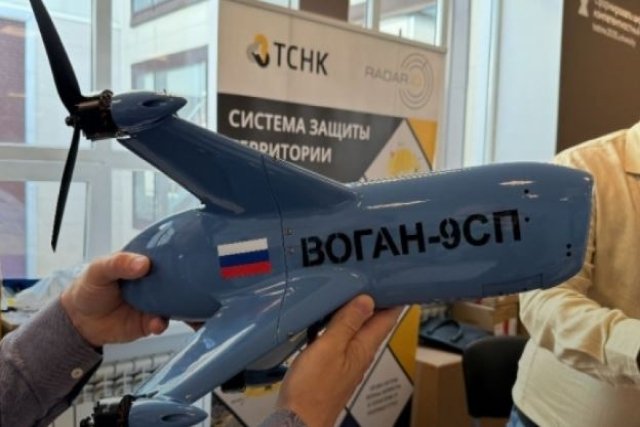
Something like: Vorgan 9sp here 9_1719838158.jpg
or Viper-1
SpearUAV-VIPER-I-1536x1094.jpg

or this polish design
Interceptor_drone_APS.jpg


Kamikaze/warhead fitted types are easiest to make work, but I think a gun equipped variant can be used for patrol against low end (mavic/quadcopter) threats if fire control can be worked out. Kamikaze types with more payload in battery would likely be better against higher speed/attitude threats where every bit of stored energy is needed and return is unlikely.

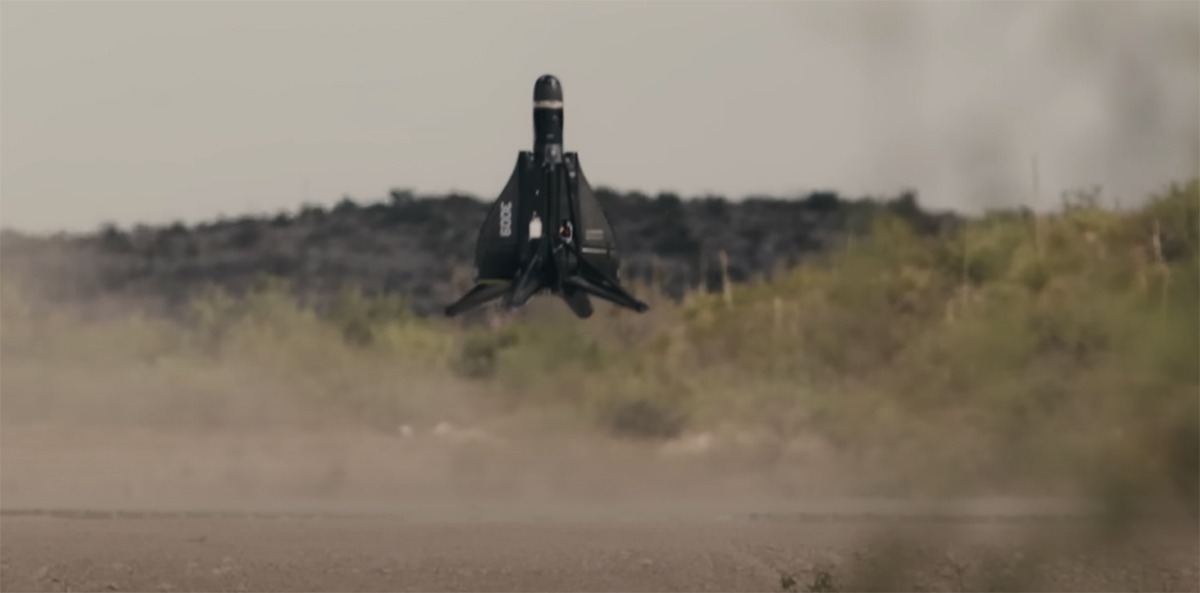
As for type-2, the aduril roadrunner is the closest thing available
anduril-roadrunner-01.jpg

This thing plus some sensors (like arrays of acoustic sensors in the form of cellphones on a stick that is now used to detect shaheds) will also make helicopter penetrations kinda comical.
 
Last edited:
Thank you!

The entire fleet of T-72s ever built in formations without heavy air defenses can't even cross 5 lines of trenches against drones plus standard artillery/atgm/mines. It is usually not a serious threat and the air force have better things to do generally.
That's what the division, or rather their component Brigades/Battalions, is fighting right now. Again, Division HQ is looking at what the fight will be in 72 hours.


This thing plus some sensors (like arrays of acoustic sensors in the form of cellphones on a stick that is now used to detect shaheds) will also make helicopter penetrations kinda comical.
Yes, crossing the FLOS, the Forward Line of Sensors, is going to be a challenge in modern warfare. To put it mildly.
 
Last edited:
View: https://www.youtube.com/watch?v=CvZjPDl2bp4

That's what the division, or rather their component Brigades/Battalions, is fighting right now. Again, Division HQ is looking at what the fight will be in 72 hours.

Thinking about the whole 72 hour thing, I think that is actually a trick of rhetoric, as without it the whole deep strike idea sounds like the exact same as the old one that resulted in karbala.

It is also plain simply strange to measure airpower in the domain of time and thus more difficult to form reflexive counterarguments and the claim is also very vague (unfair? does this mean anything). There is also no logic showing why that this unit of time is important as opposed to some other.

The lack of apparently logic and detail on the surface of the claim means the reader/listener have to use their own imagination to fill in the gaps and self rationalize the idea if one trusts the speaker. From a skeptics perspective, none of the claims tie into details and logics of how modern land warfare is understood.

For example, 72 hours is nothing in a years long struggle and dozens of tanks does not impact balance of power in the front.
 
Thinking about the whole 72 hour thing, I think that is actually a trick of rhetoric, as without it the whole deep strike idea sounds like the exact same as the old one that resulted in karbala.

It is also plain simply strange to measure airpower in the domain of time and thus more difficult to form reflexive counterarguments and the claim is also very vague (unfair? does this mean anything). There is also no logic showing why that this unit of time is important as opposed to some other.

The lack of apparently logic and detail on the surface of the claim means the reader/listener have to use their own imagination to fill in the gaps and self rationalize the idea if one trusts the speaker. From a skeptics perspective, none of the claims tie into details and logics of how modern land warfare is understood.

For example, 72 hours is nothing in a years long struggle and dozens of tanks does not impact balance of power in the front.
72 hours is tactically and operationally significant to a Division. "What will we be fighting tomorrow, the day after, and the day after that?"

24 Apaches is somewhere between 384 destroyed tanks and 192 destroyed tanks plus 912 destroyed softskins, depending on loadout. All Hellfires? 384 tanks. 8x hellfires and 38x APKWS? 192+912.
 
72 hours is tactically and operationally significant to a Division. "What will we be fighting tomorrow, the day after, and the day after that?"

24 Apaches is somewhere between 384 destroyed tanks and 192 destroyed tanks plus 912 destroyed softskins, depending on loadout. All Hellfires? 384 tanks. 8x hellfires and 38x APKWS? 192+912.

This is thinking you get to punch the enemy, but not thinking that the enemy can punch back.

Now imagine an actual "near peer" that would have tech and formation parity, thus lets try a mirror image battleplan. Lets say two dozen Chinese Z-21 conduct an attack and destroys 300 American tanks and put American army groups within 500km of the front into paralysis and unable to react effectively to Chinese maneuvers for 72 hours. Is this what seems reasonable to you, even if USAF is busy somehow?

Or maybe you take this at straight face value. In that case, why even have mechanized forces, a single air sortie neutralize forces within hundreds of kilometers.

---
Now for non-peers: Imagine you understand that you have no effective air defense and rely on your tanks to fight and can be defeated by a single divisional helicopter sortie: would you even bother fight a war against the united states, and would you even man the tanks as opposed to disperse crew as light infantry hiding amongst civilians? Would you have any chance of winning even if some other air asset conducts the attack at some different point in time? Would you win the war if the USAF have to SDB-II and maverick your formations instead?
 
Last edited:
That's what the division, or rather their component Brigades/Battalions, is fighting right now. Again, Division HQ is looking at what the fight will be in 72 hours.
That's the aspiration, and is has been aspired to by the U.S. Army since the 80's.

Back to reality; in 2003 OIF divisional staffs were hours BEHIND brigade staffs, which were hours BEHIND battalion commanders and nobody was good at anticipating anything.
Moreover, supply may have been planned days in advance, but often failed to arrive, with battalion battlegroups often not receiving any supplies for 48 hrs in a row.

So the doctrine and the reality diverged and not much of consequence has been done about it.


Back in 1940 German Panzer division commanders like Rommel weren't really able to command more than a Vorausabteilung (ad hoc vanguard force), with the rest being in a default mode of following the vanguard under orders of the Chief of Staff (usually a Colonel).

Now we've got video screen generals watching small unit actions and being tempted to intervene with orders (micromanagement).

They're capable of commanding the battle as it's presented to them on table or screen, but that battle is still a different one than the real battle.

Long story short; tactical command should not happen above the level of a (not very big) brigade.
 
Speed and reach and operational range have changed recently but have not been adopted wildly yet. It would take probably 20 more years to be standard everywhere.

The rule of thumb time table remain the same, imho they are unlikely to ever change due to complexity as a whole.
An army does not advance in single file (as seen early in some cases with Russian forces) it advances as a front with each unit having their expected width and depth of responsibility.

Yes, this is more about the rule/text book and empirical rule of thumb approach rather than actual on site situation or conditions. That's what commanders are for to adapt past experiences and lessons.

This is thinking you get to punch the enemy, but not thinking that the enemy can punch back.

Now imagine an actual "near peer" that would have tech and formation parity, thus lets try a mirror image battleplan. Lets say two dozen Chinese Z-21 conduct an attack and destroys 300 American tanks and put American army groups within 500km of the front into paralysis and unable to react effectively to Chinese maneuvers for 72 hours. Is this what seems reasonable to you, even if USAF is busy somehow?

It is exactly this what people where seeing in past war games that most experts were misguided in their accessment of how the Ukraine invasion would go. If only they were relying on time tables, empirical metrics and what mattered they would have made the right prediction as me.
 
Mortar rounds with a bit more oomph and a bit less fuse might down drones via fragmentation.

The rounds would look a bit like RPGs but instead of focusing a jet at a tank --the back cone is a wide angle shot gun...you are thumping an aerodynamic claymore at the drone --but with less danger to the soldier behind it.

He can duck down for rounds with more explosive in it.
 
Just give us the XM25 (XM29 OICW) with quick-shot proximity-fuze airburst rounds.
 
Chieftain has another drone video out.


Early on, he makes the point that drone operations are going to end up looking like Air Force operations, which means sending (enlisted) Army drone operators to Air Force (O3-O5 officer) career schools. And it's going to take dedicated drone operators, because those career schools are just as intensive as teaching someone how to be a good infantryman or a tank crew.
 

Similar threads

Back
Top Bottom