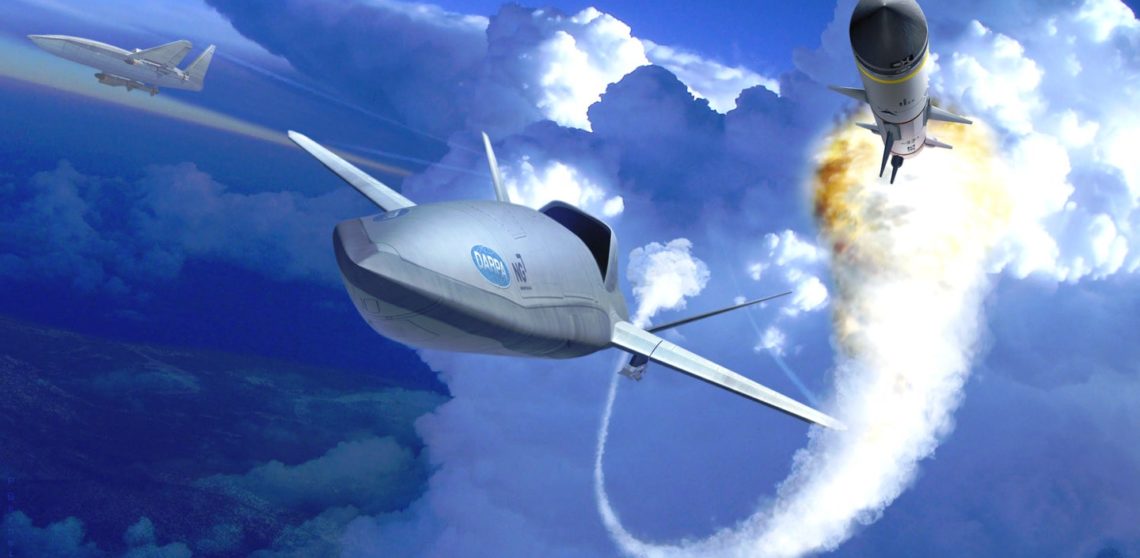
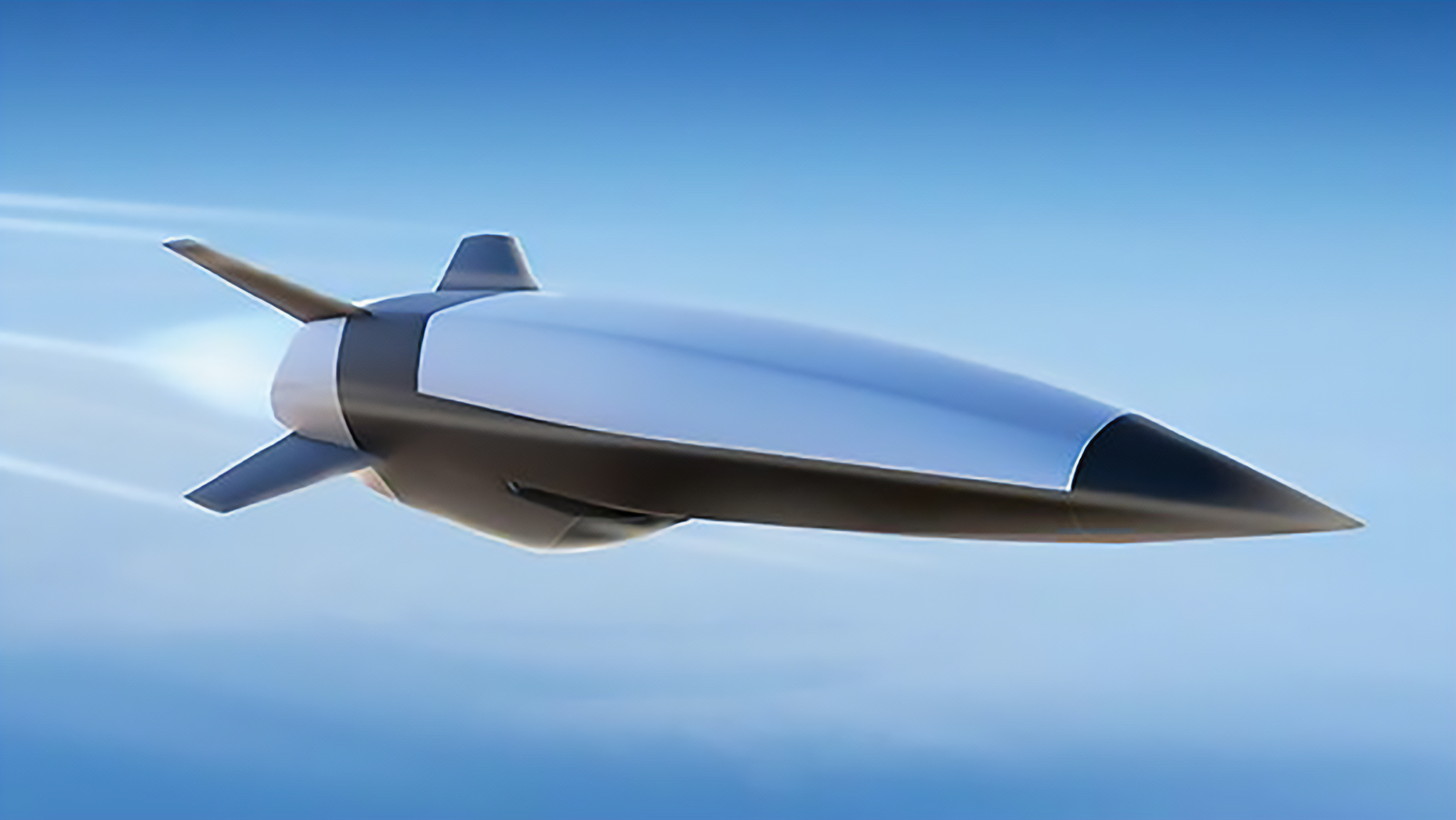
DARPA Gambit

(Article currently free)
LE BOURGET—RTX says they have achieved positive thrust with a rotating detonation combustor (RDC) in a turbine engine in a relevant thrust class for a weapon.

The disclosure during the Paris Air Show on June 17 signals the growing maturity of a new combustion method that promises dramatic reduction in the fuel burn and size of future military and perhaps commercial turbofan engines.

One of the early challenges for RDC developers is sustaining and managing the rotating waves of detonations long enough to produce positive thrust. But a recent series of demonstrations proved the viability of the concept enough for RTX and DARPA to invest in a new round of tests, aiming to achieve the flight of an RDC-based propulsion system integrated into a vehicle.

“We have tested RDC, and we have reached positive thrust,” said Jill Albertelli, president of Pratt & Whitney Military Engines.

The testing has been a part of DARPA’s Gambit program, which selected RTX in 2023 to demonstrate a missile with an RDC-based propulsion system.

The technology is becoming increasingly popular among propulsion developers. GE Aerospace plans to integrate a RDC-based dual-mode ramjet with a high-speed turbine engine to power hypersonic air vehicles, including DARPA’s proposed Next Generation Reconnaissance Strike prototype, which the agency aims to fly by the end of the decade.

RTX officials declined to comment on the transition plans for their RDC technology, assuming the next round of tests is successful.

But cruise missiles generally require thrust in a range between 1,000-3,000-lb. thrust, and the RTX ground test rig was sized to power a relevant weapon system.

The RDC-based rig also functioned using a normal fuel in the U.S. military’s regular inventory, not a specialized fuel reserved for high-speed applications, said Juan de Bedout, the RTX chief technology officer.

 

"“Blackbeard GL [Ground Launch] is not a replacement to the Long Range Hypersonic Weapons (LRHW) as it will not reach similar velocities nor range,” the service wrote. “The goal of Blackbeard GL is to deliver approximately 80 (percent) of the Precision Strike Missile (PrSM) Increment 4 capability at a significantly reduced cost.”"

I'd note that specifying 'Ground Launch' heavily implies there's another launch modality out there, though air, surface or subsurface would fall outside of Army responsibility.
 
So I guess now the remaining Navy tests are:

Canister launch from land;
Canister launch from sea at surface;
Canister underwater in controlled environment; and
Canister underwater launch at sea.
Multiple of each launch condition, but yes. That's the series you get.


There was a document floating around that indicated a 90” booster at 20” diameter. I am guessing that is what you need to push the cruiser into envelope sans 49,000 feet trip.

Perhaps something the reverse of an AAM dual grain? Slower burn to align and get to altitude; hard thrust to Mach 4-5 once you get there?
I'd actually expect a pretty quick burn of the booster to get above 10,000ft and most of the atmosphere. Then a slower burn to line up and climb, and a final hard burn for speed.


SP is running the Navy's hypersonic program?!? No wonder it's FUBAR.
 
Defense Updates has a new video concerning India's new Extended Trajectory Long Duration Hypersonic Cruise Missile (ET-LDHCM):


During Operation Sindoor, approximately 15 BrahMos missiles, launched from Su-30 MKI fighters and ground platforms, struck Pakistani Air Force bases, causing significant damage to runways, command centers, and radar sites.None of the missiles were intercepted.For example, Nur Khan Air Base, which is located in Rawalpindi, adjacent to the capital city of Islamabad, holding immense strategic significance for Pakistan’s military was struck by BrahMos even though the Chinese origin HQ-9P air defense system was stationed there.​
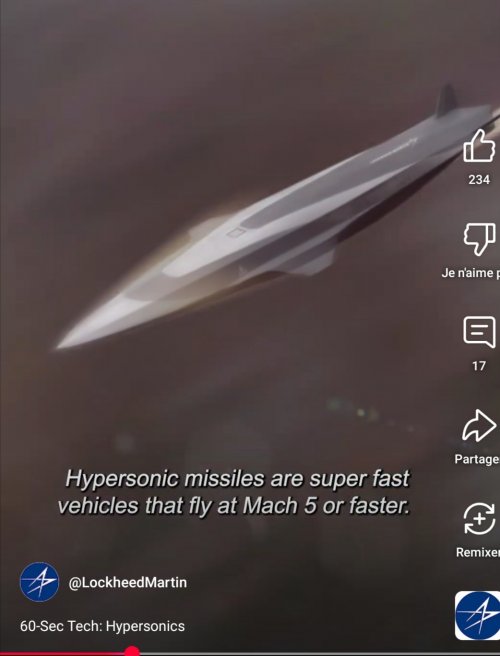
While BrahMos is a pretty impressive weapon, another weapon with far more lethality is taking shape.India has reportedly conducted a test of a new hypersonic missile capable of reaching speeds up to Mach 8—eight times the speed of sound—and striking targets at distances of up to 1,500 kilometers (approximately 930 miles). Known as the Extended Trajectory Long Duration Hypersonic Cruise Missile (ET-LDHCM), the weapon is being developed under the Defence Research and Development Organization’s (DRDO) Project Vishnu.​
In this video, Defense Updates analyzes how ET-LDHCM boosts India’s deterrence?
#defenseupdates #hypersonicmissile #hypersonicweapons
Chapters:
0:00 TITLE
00:11 INTRODUCTION
01:29 SPONSORSHIP - NordVPN
02:03 HYPERSONIC WEAPONS
04:14 ET-LDHCM
06:40 ANALYSIS
 
I don't see how a PrSM designed to fit in a F-35 internal bay would have any different range than SiAW/AARGM-ER which is designed around those same constraints.
Has there been work on having stealthy, conformal "shells" around outsized external-mount missiles?

Drop the unit---and it clamshells apart once away.
 
Has there been work on having stealthy, conformal "shells" around outsized external-mount missiles?

Drop the unit---and it clamshells apart once away.
Why the hell would you do that? Just make the OML stealthy, like JASSM.
 
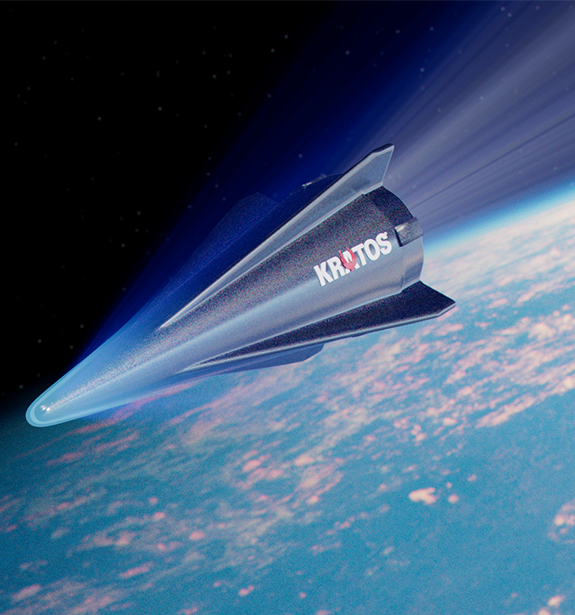
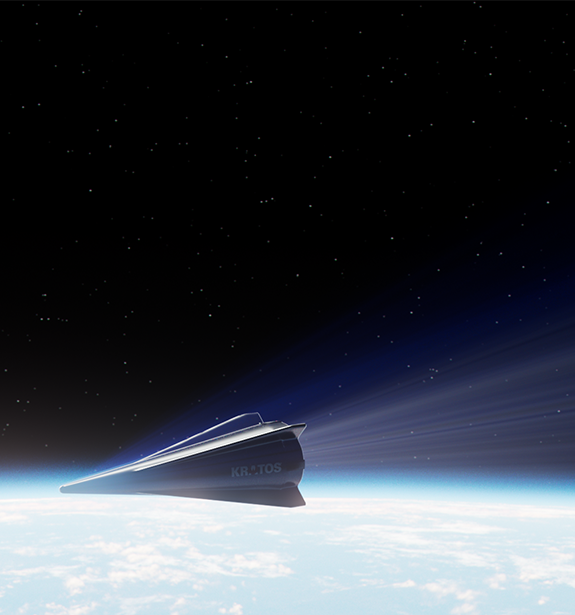
Hmm, I actually don't think the vehicle pictured is the "Dark Fury" vehicle in question. If you go to the Kratos Hypersonic Systems website you can see they list two hypersonic vehicles: Erinyes and Dark Fury. The pictures used for both vehicles are basically the same, just different perspectives.

Erinyes
Erinyes-fifty-fifty.png


Dark Fury
dark-fury-fifty-fifty.png


So its possible that the rendering represents the Erinyes vehicle or doesn't represent either vehicle and is just an artist rendering. I don't think it represents Dark Fury because the description for the vehicle mentions, "breakthrough propulsion".

Erinyes
Kratos’ Erinyes hypersonic flyer is a leading-edge technology designed for high-speed, long-range missions. It leverages advanced materials and aerodynamics to achieve unmatched performance, maneuverability, and precision. Capable of traveling at hypersonic speeds, Erinyes enhances strategic capabilities by delivering rapid response and high-impact solutions. Its state-of-the-art design ensures exceptional reliability and adaptability for various defense applications.

Dark Fury
Kratos’ Dark Fury hypersonic flyer is engineered for extreme velocity and accuracy, optimizing rapid strike capabilities. Utilizing breakthrough propulsion and aerodynamic technologies, Dark Fury achieves superior speed and range. Its robust design ensures reliability, high maneuverability, and adaptability for critical defense applications. Dark Fury exemplifies advanced engineering, enabling swift and effective responses to emerging threats.

Anyway, its just a website posting so it could totally just be wrong and not have any impact on the vehicle in question.
 
This should be the right thread for this Scott Manley video:


NASA Ames hosts a massive gun designed to throw tiny spacecraft models at orbital speeds to verify the aerodynamics of potential reentry vehicles. This is the only such facility in the US, not only can it project models at over 17000 miles per hour, it can take shadowgraph images showing shockwave structures and other details.
 
“The ARRW is propelled to hypersonic speed by an ATACMS missile, then glides and maneuvers to its target. The HACM is longer-ranged because it carries an air-breathing propulsion system. ”

This publication needs to stop using AI for its stories.
Doesn't ARRW use the ATACMS rocket motor as the booster, though?
 
Hmm, I actually don't think the vehicle pictured is the "Dark Fury" vehicle in question. If you go to the Kratos Hypersonic Systems website you can see they list two hypersonic vehicles: Erinyes and Dark Fury. The pictures used for both vehicles are basically the same, just different perspectives.

Erinyes
Erinyes-fifty-fifty.png


Dark Fury
dark-fury-fifty-fifty.png


So its possible that the rendering represents the Erinyes vehicle or doesn't represent either vehicle and is just an artist rendering. I don't think it represents Dark Fury because the description for the vehicle mentions, "breakthrough propulsion".
It's worth pointing out that the Erinyes are the Greek equivalents to the Roman Furies. So the apparently unconnected names are in fact closely linked, and likely indicate different parts of a single family. In which case the two illustrations could indeed be the two different variants, they're just close enough relatives not be be easily discernible as different.
 

Similar threads

Back
Top Bottom