
You are using an out of date browser. It may not display this or other websites correctly.
You should upgrade or use an alternative browser.
You should upgrade or use an alternative browser.
Saab Gripen E/F (Gripen NG)
- Thread starter arc3371
- Start date
Ainen
I really should change my personal text
- Joined
- 25 August 2011
- Messages
- 2,113
- Reaction score
- 3,599
Yep, and given what we just saw, I am now quite skeptical whether it'll get new orders beyond Brazil after that.Sweden did join NATO.
No need to be more skeptical than the terrible underperforming export of either the C or E. It has been a failure on the export market, there is no other way to describe it.Yep, and given what we just saw, I am now quite skeptical whether it'll get new orders beyond Brazil after that.
WatcherZero
ACCESS: Top Secret
- Joined
- 22 May 2023
- Messages
- 1,037
- Reaction score
- 2,642
C/D sold to Czech Republic, South Africa, Hungary and Thailand,
E/F sold to Brazil, Peru, Thailand
Export to Argentina and Pakistan was blocked, Colombia has said this year it firmly intends to place an order, been half a dozen more bids where it has generally lost out to the Rafale or second hand F-16's.
E/F sold to Brazil, Peru, Thailand
Export to Argentina and Pakistan was blocked, Colombia has said this year it firmly intends to place an order, been half a dozen more bids where it has generally lost out to the Rafale or second hand F-16's.
Peru and Colombia are not done deals yet.C/D sold to Czech Republic, South Africa, Hungary and Thailand,
E/F sold to Brazil, Peru, Thailand
Export to Argentina and Pakistan was blocked, Colombia has said this year it firmly intends to place an order, been half a dozen more bids where it has generally lost out to the Rafale or second hand F-16's.
Scott Kenny
ACCESS: USAP
- Joined
- 15 May 2023
- Messages
- 16,974
- Reaction score
- 24,080
But generally only a dozen or two per sale.C/D sold to Czech Republic, South Africa, Hungary and Thailand,
E/F sold to Brazil, Peru, Thailand
That's not a recipe for success!
WatcherZero
ACCESS: Top Secret
- Joined
- 22 May 2023
- Messages
- 1,037
- Reaction score
- 2,642
Better foreign sales than Russian SU-57 or SU-75 have achieved. Especielly when you look at how well the flanker and Mig-29 did in exports.
An interesting bar to measure against especially given Su-75 is at this point just concept art. The other issue with Gripen export is almost all A/C exports were just remanufactured aircraft, not new builds.Better foreign sales than Russian SU-57 or SU-75 have achieved. Especielly when you look at how well the flanker and Mig-29 did in exports.
Saab have talked up big exports for over 25 years, often speaking of exports in the hundreds but that has never materialised.
If New Zealand government decides to reverse Helen Clarke's bit of high-treason when she disbanded the RNZAF's air-combat wing 2002 and restore I have no doubt that the Griffen E/F would be at the top of the list.
Scott Kenny
ACCESS: USAP
- Joined
- 15 May 2023
- Messages
- 16,974
- Reaction score
- 24,080
I'd actually expect FA50s or M346s to be higher. Cheaper to operate and adequate for air policing.If New Zealand government decides to reverse Helen Clarke's bit of high-treason when she disbanded the RNZAF's air-combat wing 2002 and restore I have no doubt that the Griffen E/F would be at the top of the list.
There is zero chance of that happening. With what NZ has to afford over the next 20 years including replacement of the ANZACs, new transport aircraft to replace the 757, new naval helicopters, long range drones etc per the 2025 capability plan there is no money to return to manned fighter aviation.If New Zealand government decides to reverse Helen Clarke's bit of high-treason when she disbanded the RNZAF's air-combat wing 2002 and restore I have no doubt that the Griffen E/F would be at the top of the list.
Scott Kenny
ACCESS: USAP
- Joined
- 15 May 2023
- Messages
- 16,974
- Reaction score
- 24,080
If the Kiwis are lucky, they can just buy new fighter-CCAs in 20-30 years. Drone fighters that can fight without needing a quarterback.There is zero chance of that happening. With what NZ has to afford over the next 20 years including replacement of the ANZACs, new transport aircraft to replace the 757, new naval helicopters, long range drones etc per the 2025 capability plan there is no money to return to manned fighter aviation.
It's all well and nice to have a soulful automotive industry, but an industry cannot survive on being soulful alone. In the end, it has to make a profit.And sold the soul of their automotive industry to China...
Which is why Ford sold off Volvo to Geely.
The recent debacle of Novo (the partnership b/w Volvo and the crazy startup Northvolt) wasn't that much profitable with billions of losses that halted/hampered Volvo investments... 
A soul makes you follow self preservation instincts and adhere to sanity, which in the industry simply translates by putting knowledge owners in charge instead of screaming monkeys.
A soul makes you follow self preservation instincts and adhere to sanity, which in the industry simply translates by putting knowledge owners in charge instead of screaming monkeys.
Gripen sales have time and again been kneecaped by US on bogus ITAR grounds only to sell F16 with same gear . And not only Gripen , when croatia wanted to buy Used F16 from israel ,US knecaped that sale as well , French picked up the pieces of that spat ,by providing political services US could not.
Besides BAE that was in charge of Gripen international sales kinda burned trough their budgets for hookers and blow they were pushing to sell Eurofighters in addition to billion dolar bribes that got laundered in public . Left Gripen bribes,hookers and blow budget dry.End of the day that is what sells jet fighters.
Gripen is also not very price competitive compared to F16 variants let alone used f16
End of the day Gripens foreign part content makes it easy to block sales , US and UK both do .But its also only way countries like Korea ,Turkey or Sweden can make a jet by having 80+% foreign content.
As for chinese cars, Volvo would likely not exist anymore without them and end up like Saab ,same story with UK car industry
Besides BAE that was in charge of Gripen international sales kinda burned trough their budgets for hookers and blow they were pushing to sell Eurofighters in addition to billion dolar bribes that got laundered in public . Left Gripen bribes,hookers and blow budget dry.End of the day that is what sells jet fighters.
Gripen is also not very price competitive compared to F16 variants let alone used f16
End of the day Gripens foreign part content makes it easy to block sales , US and UK both do .But its also only way countries like Korea ,Turkey or Sweden can make a jet by having 80+% foreign content.
As for chinese cars, Volvo would likely not exist anymore without them and end up like Saab ,same story with UK car industry
Last edited:
Yes quite the chequered run...Gripen sales have time and again been kneecaped by US on bogus ITAR grounds only to sell F16 with same gear . And not only Gripen , when croatia wanted to buy Used F16 from israel ,US knecaped that sale as well , French picked up the pieces of that spat ,by providing political services US could not.
Besides BAE that was in charge of Gripen international sales kinda burned trough their budgets for hookers and blow they were pushing to sell Eurofighters in addition to billion dolar bribes that got laundered in public . Left Gripen bribes,hookers and blow budget dry.End of the day that is what sells jet fighters.
Gripen is also not very price competitive compared to F16 variants let alone used f16
I don't think anyone doubts that but if you build a fighter and plan to export it then using a significant portion of US parts including the engine then you limit your market to only those countries that the US will let you deal with. I expect that Saab was hoping Swedish entry in NATO might also open up some additional sales but there is sufficient impending competition to make the Gripen E less appealing now than it might have been years ago when it was supposed to originally IOC.End of the day Gripens foreign part content makes it easy to block sales , US and UK both do .But its also only way countries like Korea ,Turkey or Sweden can make a jet by having 80+% foreign content.

- Joined
- 6 June 2006
- Messages
- 14,666
- Reaction score
- 20,604
Just live Viggen before it, in the 1970's - India, for a start.Gripen sales have time and again been kneecaped by US on bogus ITAR grounds only to sell F16 with same gear
Yes quite the chequered run...
I don't think anyone doubts that but if you build a fighter and plan to export it then using a significant portion of US parts including the engine then you limit your market to only those countries that the US will let you deal with. I expect that Saab was hoping Swedish entry in NATO might also open up some additional sales but there is sufficient impending competition to make the Gripen E less appealing now than it might have been years ago when it was supposed to originally IOC.
Like said that was an unavoidable choice Swedes had to make , and at the time export was not first priority, 404 is a good engine made in huge numbers. Euro engines were not on the table at the time plus likely cost much more than 404 or 414 ,EJ200 and M808 are practicaly coach built ,given the low manufacturing numbers i would not be supprised if they are 2x the cost or more , and if they ever came head to head French ,EU would block them as well.

EmoBirb
E.S.T
- Joined
- 18 January 2025
- Messages
- 2,209
- Reaction score
- 5,622
Better foreign sales than Russian SU-57 or SU-75 have achieved. Especielly when you look at how well the flanker and Mig-29 did in exports.
You're comparing a single engine, rugged budget fighter to a heavy twin engine stealth fighter (most likely double the cost, maintenance not included) and an aircraft in development yet to make its first flight.
That aside, weren't the Gripens in Hungary or Czechia just on a lease too? I remember reading once that a country just leased the Gripen, I think it was in eastern Europe.
Last edited:
EmoBirb
E.S.T
- Joined
- 18 January 2025
- Messages
- 2,209
- Reaction score
- 5,622
C/D sold to Czech Republic, South Africa, Hungary and Thailand,
E/F sold to Brazil, Peru, Thailand
Export to Argentina and Pakistan was blocked, Colombia has said this year it firmly intends to place an order, been half a dozen more bids where it has generally lost out to the Rafale or second hand F-16's.
South Africa probably regrets their purchase in retrospect
EmoBirb
E.S.T
- Joined
- 18 January 2025
- Messages
- 2,209
- Reaction score
- 5,622
@Mr.T the thing is that now that every former F-16 user is switching over to the infinitely more capable F-35 the market is flooded with used F-16s, some of which not even that old. Add to that an ocean of spare parts, people with technical know how and decades worth of experience having fixed most issues, it's just far more attractive than the still rather pricey Gripen E/F which has none of the above really. Just look at SA being not able to keep their Gripens flying, it's after all still a very expensive machine, it's in a sense a luxury item.
And in a market where on the NATO side of things the F-35 gets picked up by everyone who's allowed to get them, the use F-16s being thrown out at bargain prices and select few opting for advanced Eagles or the Dassault Rafale there isn't much space for the Gripen.
While many countries more on the neutral side of things gravite to mixed air forces of various origins or much cheaper alternatives like light combat aircraft or second hand fighters.
As it stands in the current environment the Gripen, as much as I love it and I truly do, isn't a convincing offer. Especially when it cannot edge out competitors on technical grounds and not even on political grounds anymore. It's unfortunate but that's how things played out
And in a market where on the NATO side of things the F-35 gets picked up by everyone who's allowed to get them, the use F-16s being thrown out at bargain prices and select few opting for advanced Eagles or the Dassault Rafale there isn't much space for the Gripen.
While many countries more on the neutral side of things gravite to mixed air forces of various origins or much cheaper alternatives like light combat aircraft or second hand fighters.
As it stands in the current environment the Gripen, as much as I love it and I truly do, isn't a convincing offer. Especially when it cannot edge out competitors on technical grounds and not even on political grounds anymore. It's unfortunate but that's how things played out

- Joined
- 29 November 2010
- Messages
- 2,104
- Reaction score
- 4,666
@Mr.T the thing is that now that every former F-16 user is switching over to the infinitely more capable F-35 the market is flooded with used F-16s, some of which not even that old. Add to that an ocean of spare parts, people with technical know how and decades worth of experience having fixed most issues, it's just far more attractive than the still rather pricey Gripen E/F which has none of the above really. Just look at SA being not able to keep their Gripens flying, it's after all still a very expensive machine, it's in a sense a luxury item.
And in a market where on the NATO side of things the F-35 gets picked up by everyone who's allowed to get them, the use F-16s being thrown out at bargain prices and select few opting for advanced Eagles or the Dassault Rafale there isn't much space for the Gripen.
While many countries more on the neutral side of things gravite to mixed air forces of various origins or much cheaper alternatives like light combat aircraft or second hand fighters.
As it stands in the current environment the Gripen, as much as I love it and I truly do, isn't a convincing offer. Especially when it cannot edge out competitors on technical grounds and not even on political grounds anymore. It's unfortunate but that's how things played out
The Czechs have a lease for the older model. Hungary has a lease and buy, and by next year they'll fully own it.
The Gripen series as a whole, has generally been relatively successful for Saab/Sweden. It's achieved more exports than the Viggen (none), and the Draken. Both in terms of number of countries operating them and total numbers exported. I believe the total numbers built, its about the same as the Rafale.
However at the end of the day, most countries prioritize strategic interests when buying warplanes or other major weapon systems. Buying American, French, Chinese, Russian, or the UK, means you're also buying into their support system (whether its spares, or political support). For countries that have an active threat or high security concerns, building such connections are important. Hence why a country like Qatar went nuts buying American, French, and UK products around the time when its neighbors started ganging up on them.
Sweden in contrast, is a smaller country with less global influence, and until now, a neutral foreign policy. I think they punch above their weight in what they've accomplished in the defense sector, but at the end of the day, they're limited on what they can do, and end up having to rely on foreign suppliers for a number of things.
It doesn't mean the Gripen is a no-go for these countries, but that it is at a disadvantage to products from the P5.
For countries without a major threat, the Gripen has more appeal, especially if that country has a policy where it does not want to lean too heavily to any of the P5 members. These are countries like Thailand (which ended up with Gripens), Brazil, or Malaysia (not a Gripen user but fits the category as well as having a foreign policy where they lean west but also wants to keep some independence from them).
The thing is, many of these countries, don't really have a strong demand for fighter jets because they're generally at peace, so orders numbers are generally low (12-24).
Gripen E/F, has a high price tag, equal or higher than the F-35. But supposedly a low sustainment cost, which means the savings will be more noticeable over its lifetime. But that high unit price tag might also deter some countries, especially as there's a ton of much cheaper used F-16s. Spare parts are plenty and the F-16 will likely continue to be produced for a while, perhaps longer than the Gripen. Due to its widespread use and history, the F-16 does offer alternatives for potential users. For example, if a user doesn't have access to the latest AMRAAM missile, they can use European or Israeli missiles instead. Even the Turks are rapidly developing a wide variety of munitions for the F-16. I believe that was the case for Chile or another country, where the US initially refused to export the AMRAAM, so they went with Israeli weapons.
Ainen
I really should change my personal text
- Joined
- 25 August 2011
- Messages
- 2,113
- Reaction score
- 3,599
There's the so-called time involved.Better foreign sales than Russian SU-57 or SU-75 have achieved. Especielly when you look at how well the flanker and Mig-29 did in exports.
Su-57 appeared a few years ago right into the war. Su-75 isn't even a true index (plane doesn't exist, it's a proposal). It's a future Aircraft.
Current Russian sales portfolio is Su-35s, Su-30sm2 and Mig-29M2. Outselling gripen under CAATSA and 2022-.
Gripen is with us for over 3 decades. It had some success playing the affordable/neutral card, but by now it lost both. It never had the tech transfer one, as there's not that much to transfer. Of course it never had any political services or equal offsets.
Now it's only card ironically is "advanced", but it's a tough card to play when you're small and 4.5 gen.
4.5 gens bruteforce your perceived advancedness, and being "advanced" when you can't even fight the world standard on even terms is a very tough sell.
In this case, the only option seems to be pro-american Latin America, if someone, for some reason, doesn't want second hand F-16 and US can live with it.
Last edited:
- Joined
- 6 June 2006
- Messages
- 14,666
- Reaction score
- 20,604
Basically Gripen is squeezed between a) second-hand F-16s that are dirt cheap b) Rafale (or Typhoon) as european alternatives if no F-35 possible and c) F-35 itself, full stealth.
The Grippen should thrieve on being "cheap because single engine" unfortunately the F-16, first hand or second hand, is crushing that market.
The Grippen should thrieve on being "cheap because single engine" unfortunately the F-16, first hand or second hand, is crushing that market.
Ainen
I really should change my personal text
- Joined
- 25 August 2011
- Messages
- 2,113
- Reaction score
- 3,599
They had an opportunity at a great sales pitch in Ukraine (just 1-2 meteor ambushes would've made it name and history), but Sweden somehow failed to grasp even that (half assed it), despite sending many times more money to Ukraine.The Grippen should thrieve on being "cheap because single engine" unfortunately the F-16, first hand or second hand, is crushing that market.
And it would've hidden another glaring downside of gripen order - that Sweden can't add the main requirement for making interceptor effective - it can't provide air defences.
Bad luck, lil fighter.
Last edited:
- Joined
- 6 June 2006
- Messages
- 14,666
- Reaction score
- 20,604
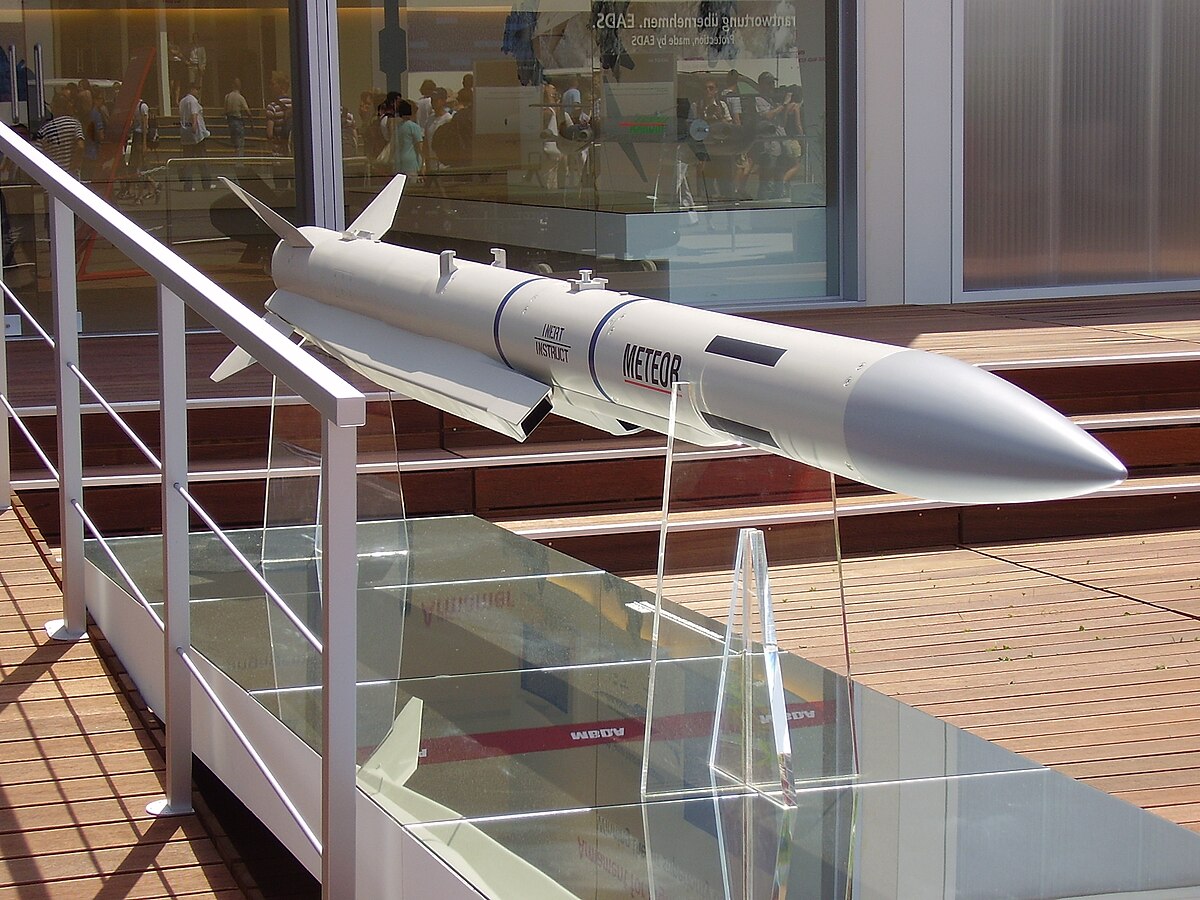
You're right of course, Gripen has Meteor, F-16 hasn't. So in theory it's an advantage, but Meteor sales are sensitive and can be vetoed by France (Rafale) and Europe (Typhoon) AFAIK ?
 en.wikipedia.org
Meteor (missile) - Wikipedia
For countries without a major threat, the Gripen has more appeal
While Sweden doesn't directly border Russia, Gripen definitely is designed for a geostrategic situation where a major threat exists. The requirement originates from the days of Sweden's neutrality, no less (albeit there were de facto bilateral security guarantees from the U.S). Swedish fighter export efforts have some very idiosyncractic challenges, it being more of a networked system within a network of total defense systems; I'm unsure as to how much its current export clients have wanted or been able to emulate that. They've made their decisions regardless.
The Gripen's "natural" environment is the arctic and the Baltic region (Brazil's involvement with their aviation sector may yet result in some localization). Denmark and Norway's procurement history is more tied to NATO, Finland went with the F-35 as well, the Baltic countries can't afford fighter wings individually, and SAAB couldn't possibly have scaled up to Poland's urgent needs so they went with U.S. and South Korean products, and so forth. Circumstances and trends somewhat impossible to predict during the commercial life of a fighter.
Some of Gripen's qualities certainly would be a good fit for Ukraine; too bad a Gripen "U" production line based on the C/D apparently isn't in the cards. I certainly wondered (even aloud) whether enough legacy equipment exists/existed for that to happen/have happened. A complicated proposition in any case.
- Joined
- 29 November 2010
- Messages
- 2,104
- Reaction score
- 4,666
yeah thats a good point and one I wanted to bring up earlier but didn't. Gripen, like the Viggen, was designed for Sweden's defense needs first and foremost, which means integrating it with its other defense systems, that might be lacking in some potential customer countries.
On the topic of the FA-50, that's another potential rival to the Gripen in addition to used F-16s. The FA-50 has overlaps slightly with the F-16, but the Gripen overlaps both.
the FA-50 has the same engine as the Gripen, and in terms of exports, about the same number has been exported. The current FA-50 isn't as capable as the older Gripen, let alone the Gripen-E, but it wins out in low unit and sustainment costs. The upgrades the Poles are pushing for (AESA, AMRAAM, etc) will put the FA-50 on par with the older Gripens. Which for some air forces, is good enough to do air policing.
On the topic of the FA-50, that's another potential rival to the Gripen in addition to used F-16s. The FA-50 has overlaps slightly with the F-16, but the Gripen overlaps both.
the FA-50 has the same engine as the Gripen, and in terms of exports, about the same number has been exported. The current FA-50 isn't as capable as the older Gripen, let alone the Gripen-E, but it wins out in low unit and sustainment costs. The upgrades the Poles are pushing for (AESA, AMRAAM, etc) will put the FA-50 on par with the older Gripens. Which for some air forces, is good enough to do air policing.
This remains a bit of a wildcard:

 www.saab.com
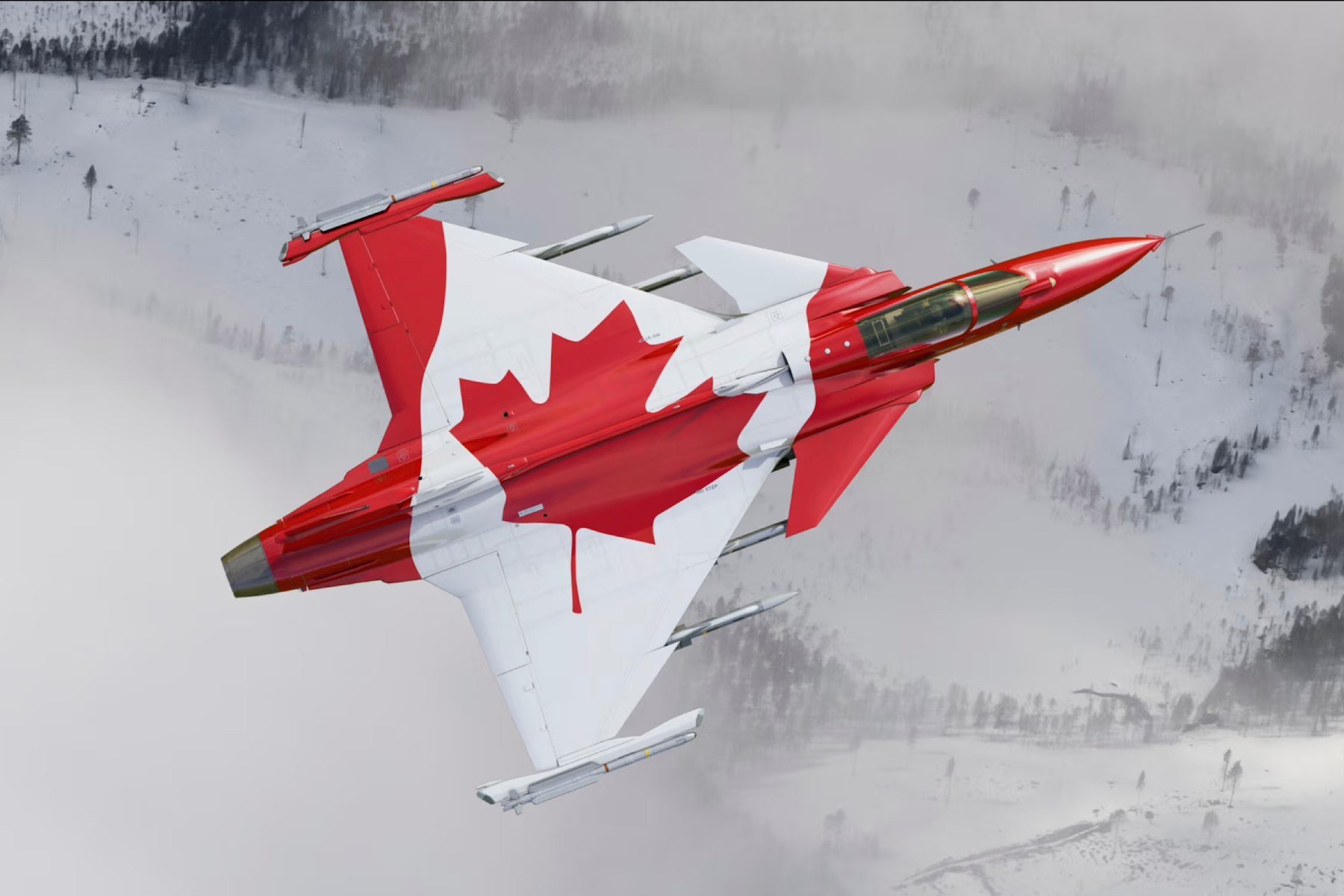
A recent article going over the same considerations debated here, from a Canadian perspective (May 27, 2025):
 thewalrus.ca
But as fighter plane and other defense salesfolk go around, they also come around (slightly dated, April 15, 2025):
Gripen for Canada | Saab
Canada is choosing a new fighter. A decision that will see a new fighter defend Canada, deter her opponents and meet her international commitments. The decision on which a fighter Canada choses is a once in a lifetime opportunity. One of those choices is Gripen from Saab.
www.saab.com
SAAB said:Gripen for Canada
The "no compromise" choice for Canada's new fighter. Gripen offers advanced capabilities, the best economic benefits and budget stability - a once in a generation opportunity.
Made, maintained and upgraded in Canada
Gripen is the only remaining competitor offering a guaranteed price and economic benefits. The newest and fastest fighter on offer, Gripen was built for Canada's climate conditions and strategic requirements. It has the longest range and best fuel efficiency. Best of all, Gripen is a revolutionary breakthrough in fighter design that makes technological upgrades fast and easy - a critical feature for military equipment intended to serve for decades.
Gripen and Aerospace R&D Centers
Saab has teamed with leading Canadian companies such as CAE, IMP Aerospace and Defence, Peraton and GE on the Gripen offer. As part of the industrial package for Canada Saab will establish two new aerospace centers in the Greater Montreal Region. These centers will help support a resurgent aerospace industry in Canada, building on domestic excellence, while spurring development in new areas of research and giving the next generation of talented Canadians a career route and future.
A recent article going over the same considerations debated here, from a Canadian perspective (May 27, 2025):
What Would It Take for Canada to Build Its Own Fighter Jets Again? | The Walrus
Carney throws a grenade into the F-35 defence deal as the US becomes a less reliable ally
thewalrus.ca
But as fighter plane and other defense salesfolk go around, they also come around (slightly dated, April 15, 2025):
Ainen
I really should change my personal text
- Joined
- 25 August 2011
- Messages
- 2,113
- Reaction score
- 3,599
Well, Canada is indeed a political opportunity for Saab (in a same way one German AF Commander lost his job mentioning F-35 too much...at least anecdotally), opened by last election.
But CAF will fight bitterly against it.
Though, if successful, this will of course outdo any opportunities gripen had before this point.
But CAF will fight bitterly against it.
Though, if successful, this will of course outdo any opportunities gripen had before this point.

Funny how despite it being over 20years since then, including two conservative ones, there has been no effort to reverse. Maybe this is because it wasn't treason but rather, considered, sensible policy generally supported in New Zealand.If New Zealand government decides to reverse Helen Clarke's bit of high-treason when she disbanded the RNZAF's air-combat wing 2002 and restore I have no doubt that the Griffen E/F would be at the top of the list.
And no needThere is zero chance of that happening. With what NZ has to afford over the next 20 years including replacement of the ANZACs, new transport aircraft to replace the 757, new naval helicopters, long range drones etc per the 2025 capability plan there is no money to return to manned fighter aviation.
On the "bit of a wildcard" scenario:

 www.flightglobal.com
A very clarifying article. SAAB is apparently trying to offset any F-35 supply contract losses Canada might face with their "made in Canada" offer. Undoubtedly Gripen doesn't require nearly the kind of infrastructure investment the F-35 does, being designed for easy maintenance and dispersed operations by conscripts and reservists from the get go. I'm also half seriously wondering whether Gripens (at least two seaters) could somehow be classified as "advanced trainers"; this also raises the possibility that Canada will end up with far less than 88 F-35s but a whole heap of "KAI FA-50C" advanced trainer/light combat jets. In any case Canada could get ~1.5 times Gripens and ~2 times FA-50Cs for the price of every F-35, perhaps even more, considering infrastructure and maintenance.
Audit projects Canadian F-35 acquisition costs will nearly double
The total cost of acquiring 88 Lockheed Martin F-35As will rise to more than C$33 billion ($24 billion), according to a Canadian government auditor, nearly double the originally estimated C$19 billion.
www.flightglobal.com
Ryan Finnerty said:...
A report from the office of the Canadian Auditor General finds the Royal Canadian Air Force (RCAF) will ultimately pay nearly twice the 2022 estimate of C$19 billion ($13.8 billion) to field 88 Lockheed Martin F-35As.
...
Notably, that projection does not include an additional C$5.5 billion in spending on munitions and infrastructure upgrades that will be required to reach full operational capability on the F-35 fleet.
...
The RCAF is in the process of fielding an entirely new fleet of training aircraft, but has notably not yet identified an advanced jet trainer to prepare aviators to operate the complex F-35A.
...
Canadian Prime Minister Mark Carney, who was swept into office riding a wave of anti-Trump sentiment in Canada, has directed the Department of National Defence to review the planned F-35 acquisition, including looking at alternative options.
However, the RCAF will field at least a portion of the 88 F-35s currently planned, for which Ottawa is already contractually committed.
“We’re taking delivery of a number of F-35s already under the existing contract,” Carney said in April.
“What we’re reviewing, in effect, is the back end of the contract to ensure that we’re getting value for money, that we’re sure that we’re maximising not just our ability to protect Canada, but the economic benefits here in Canada — and we are considering it in the context of alternatives,” he added.
...
In a March editorial, retired General Tom Lawson argued that abandoning the F-35 would harm Canada far more than it would the USA, both in terms of military capability and in the likely loss of lucrative supply contracts that dozens of Canadian aerospace firms won under the F-35 programme.
...
By contrast, former Canadian air force chief Lieutenant General Yvon Blondin has urged caution, describing the current F-35-only solution to fighter modernisation as “irresponsible” and likening it to “hoping for the best”.
...
Both officers acknowledge the financial and logistical challenge that a small force like the RCAF would face in operating a mixed-fleet of multiple fighter types, should Ottawa opt to reduce its F-35 buy and also procure Dassault Aviation Rafales or Saab Gripen E/Fs.
A very clarifying article. SAAB is apparently trying to offset any F-35 supply contract losses Canada might face with their "made in Canada" offer. Undoubtedly Gripen doesn't require nearly the kind of infrastructure investment the F-35 does, being designed for easy maintenance and dispersed operations by conscripts and reservists from the get go. I'm also half seriously wondering whether Gripens (at least two seaters) could somehow be classified as "advanced trainers"; this also raises the possibility that Canada will end up with far less than 88 F-35s but a whole heap of "KAI FA-50C" advanced trainer/light combat jets. In any case Canada could get ~1.5 times Gripens and ~2 times FA-50Cs for the price of every F-35, perhaps even more, considering infrastructure and maintenance.
- Joined
- 29 November 2010
- Messages
- 2,104
- Reaction score
- 4,666

Colombian Gripens could undergo final assembly in Brazil, Embraer says
Saab's hoped-for finalisation later this year of a deal to supply the Colombian air force with Gripen E/Fs is also likely to represent good news for Embraer: the airframer's industrial partner on the fighter programme.
www.flightglobal.com
Embedded AI agent tested successfully in BVR fight 3 times:
 news.cision.com
Notice that this would compare to the Old SAGE system maneuvring F-86D, F-94, F-89 and others Grandma airframe. The accent being put on Dogfighting AI agent by US DoD has always been to demonstrate that if it can do that, it will certainly do all the other more pertinent things...
During the flights, Gripen E successfully handed over control of the aircraft to Centaur, which autonomously performed complex maneuvers in a BVR combat environment* and gave the pilot instructions to fire.
– This is an important milestone that demonstrates Saab's technologically advanced capabilities. We have in a short time both integrated and successfully test-flown Helsing's AI in Gripen E, which is proof of the rapid increase in capabilities we can offer our customers. We look forward to continuing to develop and explore how we can use this and other AI agents in our combat aircraft. [...]
Gripen E's unique design means it can fly with the AI software fully integrated and onboard the aircraft, meaning that flight tests are not limited to being carried out at military test sites or with experimental aircraft.
– We explore and blur the boundaries between today and the future. With software, it is no longer a question of fighter aircraft generations, but rather of the speed of development, says Peter Nilsson.
The third flight, conducted on the 3rd of June, focused specifically on the performance of the Centaur, pitting it against a real Gripen D aircraft in a series of dynamic BVR* scenarios with real-time data integration, using sensor data to track the target aircraft.
Saab genomför första flygningarna med AI i Gripen E
Saab har, i samarbete med Helsing, framgångsrikt genomfört de första tre flygningarna med Helsings
news.cision.com
Notice that this would compare to the Old SAGE system maneuvring F-86D, F-94, F-89 and others Grandma airframe. The accent being put on Dogfighting AI agent by US DoD has always been to demonstrate that if it can do that, it will certainly do all the other more pertinent things...
Last edited:
DefenseNews take on this:

 www.defensenews.com
Saab, Helsing let Gripen fighter fly with AI in charge
According to the company’s math, the AI prep work produced the equivalent of 50 years of human pilot experience.
www.defensenews.com
WatcherZero
ACCESS: Top Secret
- Joined
- 22 May 2023
- Messages
- 1,037
- Reaction score
- 2,642
Peru order of 24 Gripen E to replace their Mig-29 and Mirage 2000 is to be formally signed on the 10th of July for $3.5bn beating out Rafale F4 and F-16 Block 70 in the procurement competition. Saab won by promising the order could be delivered within 24 months of contract signature rather than the 60 months of F16/Rafale and being a third cheaper than either of its competitors. Peru has stipulated that at least two aircraft must be delivered by July 23, 2026 for its air force day celebration
Last edited:
The whole order delivered in 24 months or just the first two aircraft?Peru order of 24 Gripen E to replace their Mig-29 and Mirage 2000 is to be formally signed on the 10th of July for $3.5bn beating out Rafale F4 and F-16 Block 70 in the procurement competition. Saab won by promising the order could be delivered within 24 months of contract signature rather than the 60 months of F16/Rafale and being a third cheaper than either of its competitors. Peru has stipulated that at least two aircraft must be delivered by July 23, 2026 for its air force day celebration
They won't be getting those from the Brazilian line in that timeframe so the Swedish Air Force will have to give up their first deliveries to make this happen.
Not sure an air force selecting an aircraft based on its delivery timeframe over capability or potentially cost is the right pathway forward.
Hide-n-seek.
Not for nothing, as there are goings-on like this in close proximity to Swedish strategic sites like Västerås airfield.
Last edited:
Similar threads
-
-
 Swedish Missiles and Missile Projects.
- Started by Tzoli
- Replies: 50
-
 SAAB, Svenska Aeroplanaktiebolaget, Svenska Aeroplan AB, Saab AB aircraft list.
- Started by blockhaj
- Replies: 41